
Jackie Orr

Jackie Orr is Associate Professor Emeritus in the Sociology Department at Syracuse University.
Working Group Affiliation:
Nadja Eisenberg-Guyot
Nadja Eisenberg-Guyot is a postdoc in Sociomedical Sciences at the Mailman School of Public Health, Columbia University and an abolitionist and trans liberation organizer in NYC. Focusing on the experiences of trans and cis working class women, primarily women of color, who use drugs, their work exposes how liberal imaginaries of rehabilitation actually function to extend carceral punishment under new, "gender-responsive," “therapeutic” guise.
Nadja Eisenberg-Guyot
Nadja Eisenberg-Guyot is a postdoc in Sociomedical Sciences at the Mailman School of Public Health, Columbia University and an abolitionist and trans liberation organizer in NYC. Focusing on the experiences of trans and cis working class women, primarily women of color, who use drugs, their work exposes how liberal imaginaries of rehabilitation actually function to extend carceral punishment under new, "gender-responsive," “therapeutic” guise.
Working Group:
Chloé Samala Faux

Chloé Samala Faux
Chloé Samala Faux is a doctoral candidate in the Department of Anthropology. Her dissertation, “African Renaissance as Primal Scene: Fantasies of Death and Rebirth after Apartheid,” interrogates the historical and emergent dilemmas of black reproductivity in post-apartheid South Africa by way of black critical thought, political economy and the institutional and intellectual developments of anthropology and psychoanalysis. Remarking a homology between originary accumulation, the incest taboo, and Frantz Fanon’s elaboration Negro Myth, the manuscript turns ethnographic scrutiny to the specters of sexual violence, illegal abortion, and the occult that dominate contemporary thematizations of South Africa’s crises in social reproduction. By way of the conjoined and redoubling discourses of psychoanalysis and anthropology, she interrogates the psychosexual and sociopolitical (re)-structuring of the family, to understand both the failures of 'transition' in South Africa and the insufficiencies of the culturalism that animates much black radical criticism. Chloé is also affiliated with The Institutes for Comparative Literature and Society and the Study for Sexuality and Gender.
Working Group Affiliations:
Salma Ismaiel
Salma Ismaiel is a second year American Studies MA student. Her research interests intesect at Islamic feminism and Muslim American cultural studies. Some of her research has taken a look at how faith based legal models may serve young Muslim American women as they consult contemporary feminist issues in the United States.
Salma Ismaiel
Salma Ismaiel is a second year American Studies MA student. Her research interests intesect at Islamic feminism and Muslim American cultural studies. Some of her research has taken a look at how faith based legal models may serve young Muslim American women as they consult contemporary feminist issues in the United States.
Working Group:
Kerwin Kaye
Kerwin Kaye is an Associate Professor of Feminist, Gender & Sexuality Studies at Wesleyan University. He is the author of Enforcing Freedom: Drug Courts, Therapeutic Communities, and the Intimacies of the State (Columbia University Press, 2019). He has also written on the history and politics of male sex work.
Working Group:
Samuel Kelton Roberts, Jr.
Dr. Samuel Kelton Roberts, Jr., PhD, PhD, is Associate Professor of History (Columbia University School of the Arts and Sciences) and Sociomedical Sciences (Columbia University’s Mailman School of Public Health), and is also a former Director of Columbia University’s Institute for Research in African American Studies (IRAAS).
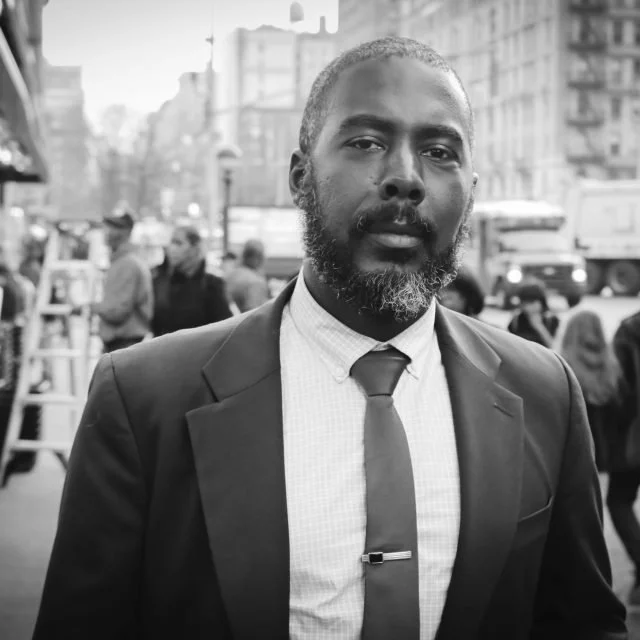
Dr. Samuel Kelton Roberts, Jr., PhD, is Associate Professor of History (Columbia University School of the Arts and Sciences) and Sociomedical Sciences (Columbia University’s Mailman School of Public Health), and is also a former Director of Columbia University’s Institute for Research in African American Studies (IRAAS). Dr. Roberts writes, teaches, and lectures widely on African-American urban history, especially medicine, public health, and science and technology. His widely acclaimed book, Infectious Fear: Politics, Disease, and the Health Effects of Segregation (University of North Carolina Press, 2009), is an exploration of the political economy of race and the modern American public health state between the late nineteenth century and the mid-twentieth century, a period which encompasses the overlapping and mutually-informed eras of Jim Crow segregation and modern American public health practice.
Roberts currently is researching and writing a book-length project on the United States’s troubled history of race and recovery, examining the social and political history of heroin addiction treatment from the 1950s to the early 1990s. This project traces urban policy at the beginning of the postwar heroin epidemic, the emergence of therapeutic communities, the politics of state-run addiction rehabilitation facilities, the adoption of methadone maintenance treatment in the 1960s and 1970s, the emergence of “radical recovery” movements and harm reduction and syringe exchange in the 1980s and 1990s.
Working Group:
Marisa Solomon
Assistant Professor, Department of Women’s, Gender and Sexuality Studies, Barnard College
Marisa Solomon is an Assistant Professor of Women’s, Gender and Sexuality Studies at Barnard College, where she is affiliated with The Earth Institute. Her work draws upon Black feminist Marxism, queer of color critique, feminist intersectional science studies, and standpoint epistemologies to explore how scales of racial and ecological injury are linked from the body, to the neighborhood, to the region, to the Black Atlantic.
Marisa Solomon
Assistant Professor of Women’s, Gender and Sexuality Studies, Barnard College
Marisa Solomon is an Assistant Professor of Women’s, Gender and Sexuality Studies at Barnard College, where she is affiliated with The Earth Institute. Her work draws upon Black feminist Marxism, queer of color critique, feminist intersectional science studies, and standpoint epistemologies to explore how scales of racial and ecological injury are linked from the body, to the neighborhood, to the region, to the Black Atlantic. Broadly, Solomon’s work tracks how embodiment in an anti-Black world contours how, when, and for whom constitutions of matter matter. Her book project, tentatively titled, Mapping Trash Talk: Black Environments and Feminist Cartographies of Black Thought ethnographically situates what it means to “know” waste in the daily refusals of those overburdened by its emplacement and signification. Exploring the Black grammars, aesthetics, and gendered politics that challenge easy definitions of waste and degradation, Mapping Trash Talk locates Black ecopolitical praxis in the fugitivity of disposability. She has published on the materiality of waste and anti-Black histories of urban planning and gentrification in the Journal of International Labor and Working-Class History.
Working Group Affiliation
Black Atlantic Ecologies, Project Director
Amy Zhou
Amy Zhou is an Assistant Professor of Sociology at Barnard College. Her research and teaching interests include healthcare, inequality, race/ethnicity, development, and science and technology studies. Professor Zhou's research has examined health inequalities in both the US and global setting.
Working Group: