
Women Mobilizing Memory in Harlem
In September 2014, vendors hawked mussels and shoppers slipped into H&M while Women Mobilizing Memory moved with a different purpose through Istanbul’s Istiklal Street. Our CSSD working group was embarking on a “gendered memory walk,” an activist-scholar intervention coined by our counterparts in Turkey. Ayşe Gül Altınay, anthropology professor and Director of SU Gender at Sabancı University, and several graduate fellows, including Bürge Abiral, Armanc Yildiz, and Dilara Çalışkan, organized the walk as part of the Curious Steps Program. Their goal was to highlight memory sites central to political movements towards feminist and queer liberation that risked being subsumed in history and the changing face of the city.
They led us through the bustling foot traffic on Istiklal and up steep medieval side streets to recognize landmarks we would have missed otherwise. Contemplating the ghosts behind these sites of social change, we beheld spaces like an independent bookstore known for selling radical literature and an LGBTQI organization persisting in human rights work despite being virtually illegal under President Recep Tayyip Erdoğan’s regime. In the essay titled “Curious Steps: Mobilizing Memory through Collective Walking and Storytelling in Istanbul” in our new anthology, Women Mobilizing Memory, our counterparts scrutinize their conception of this public humanities project in their own words.
As we prepared to bring these colleagues from Chile and Turkey to New York for the first time in 2015, the gendered memory walk in Istanbul stood out as one of the most inspiring events we had shared. The walk not only brought us together to bear witness to marginalized histories at risk for cultural amnesia; it also democratized academic knowledge as an activity that could be simultaneously interesting and freely available to the public sphere.
When we decided to stage our own walk in New York, we navigated some difficult questions. Whose history was most threatened by erasure in New York City? To what extent did we, as a group of highly educated, middle-class and predominantly white activist-scholars, have the right to represent that history? And which neighborhood was best positioned to address these questions?
Because our transnational peers had rooted their public interventions in critiques of the collective traumas that most deeply affected their nation’s histories, we aimed to do the same. Although the 9/11 terrorist attack is the trauma most readily associated with New York, we felt a more persistent and insidious history deserved a spotlight: the founding of America in the transatlantic slave trade, and the long history of racial animus that has instigated wide-ranging injustices from police brutality to gentrification in the present.
In this light, Harlem emerged as an important choice for many reasons— not the least of which was our own university’s ongoing colonization of one of the most famous Black neighborhoods in the U.S. Historically, Harlem has also been a contested zone for cross-cultural contact, influenced by an exceptionally wide range of competing desires, claims, and identities. Before gaining its international reputation as “Black Mecca,” Harlem was an entertainment epicenter where many performers were Black at venues that only served whites. An emphasis on entertainment also made the area a vibrant hub for queer nightlife in an era when homosexuality was strictly policed. The “Harlem Renaissance” started with the Renaissance Theater, also known as the Rennie, where Black patrons were allowed access for the first time; as time wore on, this theater hosted not only films and plays but also sports events and grassroots political meetings.
Collaboration in Harlem was historically intersectional, too. Women of color helped each other across social classes at Utopia Children’s House. White and Black book collectors desegregated libraries starting with the Schomburg Center for Research in Black Culture. Artists across the sexual identity spectrum, like Zora Neale Hurston and Langston Hughes, threw rent parties to keep each other solvent at community living spaces like 267 House. Thus the neighborhood was a vital center of intellectual, cultural and artistic creativity in New York City long before becoming stigmatized for criminal activity through the crack epidemic of the 1980s.
Our team of graduate students from Columbia University and New York University, including Henry Castillo, Andrea Crow, Alyssa Greene, Rüstem Ertuğ Altınay, Leticia Robles-Moreno, and myself, spearheaded the project. We strove to juxtapose well-known landmarks like the Apollo Theater alongside long-ago demolished businesses, like the row of queer-friendly bars that once occupied the block where a massive luxury condominium complex now stands. We also connected the stories of spaces on our route to broader national crises surrounding race relations, like the accelerating rise of white supremacy and white nationalism, the ongoing problem of police brutality disproportionately affecting Black men and transwomen of color, and the pervasiveness of gentrification pushing lifelong residents out of their homes.
We are thrilled to re-release the Harlem Memory Walk as an independent digital experience in anticipation of the debut of Women Mobilizing Memory. The walk is now available to anyone in the public sphere via PocketSights, a free mobile app on Apple and Android. Download the app, and search for the walk (if it doesn’t appear automatically) by searching for Columbia’s zipcode (10025 or 10027). For those who do not have smartphones, an updated version of the walk can also be accessed via Google Docs. We hope you will share the memory walk widely and thank you in advance for joining us on our journey.
Submitted by Nicole Marie, Gervasio, Ph.D.
August 30, 2019
On the Frontlines: A Student's Reflections on Ebola Crisis Oral History Research Trip to Sierra Leone and Liberia
I had the privilege of joining the Center for the Study of Social Difference working group, On the Frontlines: Nursing Leadership in Pandemics on a week long trip to Freetown, Sierra Leone and Monrovia, Liberia in August of 2019. While there, we recorded oral histories of nurses and midwives who were active during the Ebola crisis that afflicted both Sierra Leone and Liberia between 2014 and 2016. These interviews recorded perspectives from nurses working at the level of ministries of health, to those engaged on the front-lines. Nurses interviewed included some who treated the earliest cases, and others who were there as the last patients were discharged from the Ebola treatment centers. Two of the nurses interviewed were themselves survivors of Ebola and everyone the project encountered had a personal story of loss from that time.
This trip marked my first foray into the field of global health work. My responsibilities mainly revolved around handling the logistics of recording the interviews, taking photos of the participants, and ensuring that the group could function efficiently over the course of a very short trip. In the process, I was able to sit with and listen to the stories of those who came to give their testimonies. We interviewed almost 40 nurses and midwives and met many other everyday heroes who told us their stories about Ebola. As someone in the process of applying to medical school, this trip gave me a new perspective on the role of nurses, why they have so often been sidelined in the decision-making process, and the remarkable lengths to which they go daily to serve their patients.
The interviews of nurses were conducted exclusively by nurses. Our delegation included two professors from Columbia University, Dr. Jennifer Dohrn of the School of Nursing and Dr. Susan Michaels-Strasser of the School of Public Health. They were joined by two other leaders in the fields of nursing and midwifery, Dr. Annette Mwansa Nkowane, formerly WHO Headquarters Technical Advisor for Nursing and Midwifery in the Department for Human Resources for Health, and Dr. Margaret Phiri, formerly WHO AFRO Nursing Technical Advisor and Maternal Health Advisor for the WHO in Sierra Leone.
Prior to departure, we participated in an oral history training session with Professor Mary Marshall Clark, Director of the Columbia Center for Oral History Research. Professor Clark went over the fundamental principles of the life story approach to oral history. She also led our group in developing a set of areas of inquiry to guide us in the field.
Getting to Sierra Leone is not a simple endeavor. Freetown was founded by formerly enslaved people from the United States, with a group of British abolitionists, on a protected and mountainous peninsula that juts out into the Atlantic Ocean. With no flat land on which to build an airport closer to the city, visitors must fly into Lungi on the mainland and take a ferry across the mouth of Tagrin Bay. We rode across the bay on the bow of a small ferry. Bouncing in the waves, happy to be out of a plane after so many hours, that little jaunt foreshadowed a week of adventure.
Upon arrival our delegation was welcomed by the project’s local leader Dr. Joan Shepherd, who walked us through our schedule for the coming days. Dr. Shepherd is the Principal of the National School of Midwifery and was a tremendous resource. She identified all of the nurses and midwives to be interviewed and led the delegation to meet with local leaders. We were all extremely grateful for the assistance of Dolphine Buoga and the rest of the ICAP Sierra Leone team who hosted the project in their facility.
Eid al-Adha fell on Monday August 12th in Sierra Leone. As a result, the ICAP offices were closed for regular business, leaving plenty of space for the interviews. It was the rainy season and the sound of intermittent downpours can be heard in the background of nearly every recording.
Fonti Kargbo, an Ebola survivor and advocate, was interviewed on that first morning. Fonti spoke about the death of his wife Hawa Kamara, also a nurse, who contracted the virus after being directed to wash the body of a recently deceased patient. Fonti wore a shirt printed with the names and faces of all of the healthcare workers who died as a result of contact with that single patient.
The second day of interviews included Josephine Sellu, a nurse who had worked alongside the late Dr. Sheik Umar Khan, who led the country’s early efforts against Ebola and lost his life to the disease. Josephine was profiled in a front-page story in the New York Times on August 23rd, 2014. She was quoted in that story as saying, “You have no options. You have to go and save others. You are seeing your colleagues dying, and you still go and work.” Josephine’s story has remained central to Professor Dohrn’s class on the subject, but until this trip the two nurses had never met.
The afternoon of August 13th included a meeting at the office of the Chief Nursing Officer, Mary Fullah, who had been interviewed the day before. The meeting was an opportunity to introduce the team, explain the purpose of the project and to get feedback and input. That meeting included Senesie Margao, also interviewed by the project, who was the president of the Sierra Leone Nurses Association during the Ebola crisis.
Later that afternoon, we toured the Princess Christian Maternity Hospital where a model ward is supported by ICAP. The hospital is adjacent to Magazine Wharf, a neighborhood which was one of the hotbeds of Ebola.
Before leaving Sierra Leone, on our final morning in that country, Hassinatu Kanu Karoma, the former Chief Nursing Officer, who was in that role during Ebola, sat for an interview. She had featured prominently in many of the stories told in the preceding days and collecting her own story was an important step towards understanding the experiences of nurses during that time.
Upon arrival in Monrovia, Liberia, we were warmly welcomed by the Liberian Board for Nursing and Midwifery. The board’s offices contain space for the staff of a number of local organizations and associations, all related to nursing and midwifery. Our group is indebted to the staff of the board and its leader, Cecelia Kpangbala, for their hospitality and critical assistance in bringing together a diverse group of nurses and midwives to be interviewed. As Cecelia was unfortunately unable to participate due to a scheduling conflict, Darboi Korkoyah led the team during the visit.
Stepping through the board’s front door, visitors are immediately confronted by a powerful sight: on a simple bulletin board, an informal memorial to 32 nurses who died battling Ebola.
After a brief introduction, Darboi escorted us to meet with Liberia’s Chief Nursing and Midwifery Officer, Tarloh Quiwonkpa and her deputy Diana Sarteh who would be interviewed the following day. Quiwonkpa, who was trained in the US after leaving Liberia as a child with her family and seeking refuge in the US, oversees 400 clinics and hospitals across the country.
In addition to interviewing Darboi, the project was introduced to the leadership of the Liberian Nurses Association and the Liberian Midwifery Association. In each case, oral histories were also collected.
Among the front-line nurses interviewed in Liberia was Marthalyne Freeman. Marthalyne’s story is an incredible one because it includes her care of her own daughter, now a survivor, in an Ebola treatment center. What struck the team about this interview was the inclusion of a simple question from Marthalyne herself. She asked, “Why has it taken five years to do this?” Like so many of the nurses interviewed, she knew that her story needed to be recorded and shared, and that nurses and midwives must be given the recognition for the sacrifices and valor they demonstrated.
On the last day in Liberia, one of the nurses interviewed, James Harries, came to the board’s offices after having worked a 48 hour shift. Instead of going home to sleep, he came to tell his story. His and every other interview showcased the hunger that still exists in these healthcare workers to be heard, acknowledged, and respected.
In Liberia, we encountered stories of nurses who worked through the entire Ebola crisis without being compensated and others who were cast out by their families and forced to sleep in the hospital for a year. The interviews recorded in great detail the complicated precautionary decontamination rituals nurses found necessary to ensure their family’s safety from becoming infected with the Ebola virus when they came home at night, if they did come home at all.
Finally, before the trip came to a close, the stories of Dr. Phiri and Dr. Mwansa were collected. These two nursing leaders, active themselves during the crisis at the level of international policy, offered their own synthesis of the stories collected, lessons learned and the necessary next steps which must be taken to prevent future disasters.
The On the Frontlines working group is grateful to the Center for the Study of Social Difference’s support. This fall, we will begin the analysis of the interviews collected during this incredible trip in earnest.
This trip pulled back the lid on a valuable, and largely untapped resource: the collective wisdom of nurses and midwives who have served with dignity and perseverance despite the lack of any recognition or equitable compensation. I was deeply moved by the sacrifices of these healthcare workers and hope to be able to honor them through our project over the coming year.
Contributed by Jeremy Orloff, Premedical Post Baccalaureate Student, General Studies, Columbia University and On the Frontlines working group Coordinator
Disrupting Money: Puerto Rican Community Currency Project Makes Its Way to New York for the 2019 Loisaida Festival
Following a successful launch earlier this year, Puerto Rican artists will begin circulating Puerto Rican ‘pesos’ at the Lower Manhattan Festival ahead of one-month residency in the city.
NEW YORK, NY - On May 26, Valor y Cambio, an interactive community currency project that seeks to challenge austerity policies in Puerto Rico and beyond, will have its New York City premiere at the 2019 Loisaida Festival, followed by a one-month residency that will include collaborations with local businesses and other venues. The project is part of Pasado y Presente: Art After the Young Lords 1969-2019, an exhibition produced by Loisaida Inc. in partnership with Nathan Cummings Foundation, that will open on May 31.

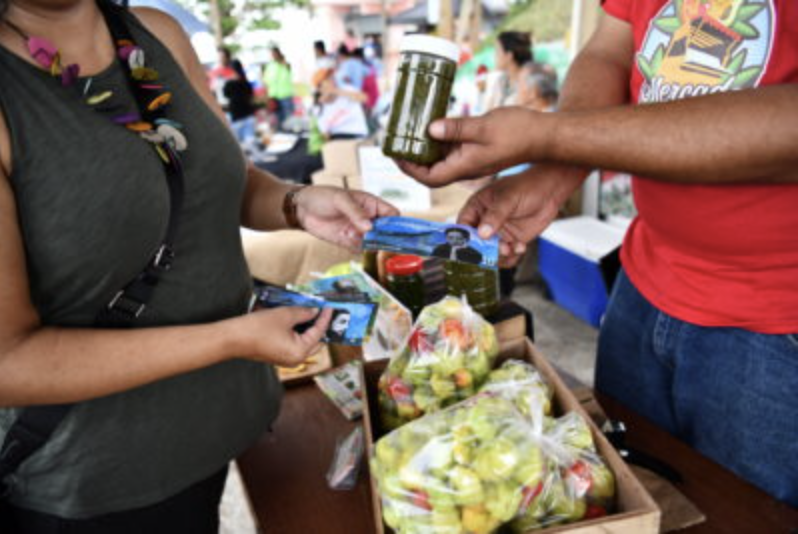
At the core of Valor y Cambio (#ValorYCambio) is a community currency, the peso of Puerto Rico, inspired by Puerto Rican figures recognized both locally and internationally for their contributions to social justice. Building on the research of Unpayable Debt, a working group at the Columbia University Center for the Study of Social Difference, artists Frances Negrón-Muntaner and Sarabel Santos Negrón first launched the project in Puerto Rico in February 2019. The pesos were available at partner businesses and organizations, through an ATM machine, which dispensed the bills in return for participants recording a short video about what they value. Over a thousand people shared their thoughts and stories during the project’s first week.
By combining art, storytelling, and solidarity economy principles, Valor y Cambio started a broad conversation about what is a just economy and how to foster collective empowerment in the face of austerity policies. “Through engaging with local communities and businesses that are willing to use the currency for a specific period of time, the project provides "an experience about how the economy can better respond to the needs of most people,” explains Frances Negrón- Muntaner. “It also allows participants to create a different conception of wealth based not on extraction and profit, but full access to education, environmental protection, and racial and gender equity, among other fundamentals."
Community currencies are increasingly used around the world to value the skills, stories, and talents of communities with limited access to the official currency. These currencies do not substitute the official one, but they enable communities to exchange work, time, and resources to meet their needs. There are thousands of community currencies circulating in the world, including in the United States.
The Puerto Rican peso has six denominations, each featuring a figure or community selected for their commitment to the project’s four core values: solidarity, equity, justice, and creativity. They are: the siblings Gregoria, Celestina, and Rafael Cordero, pioneers of Puerto Rico’s modern public education system; the abolitionist physician Ramón Emeterio Betances; feminist and labor organizer Luisa Capetillo; poet Julia de Burgos; human rights advocate and MLB Hall of Famer Roberto Clemente; and the eight communities of the Martín Peña channel in San Juan.
"Each bill tells a story and invites a conversation about the contributions that these figures and communities made toward a more equitable world, and what is needed to continue the work that they started,” says Negrón-Muntaner.
While Valor y Cambio emerged in response to Puerto Rico’s current debt crisis, many of the economic challenges facing Puerto Ricans there have been, and continue to be, present in the Puerto Rican diaspora and other New York communities. Moreover, mass migration itself is a result of economic and political crisis. Not surprisingly, all of the iconic figures that appear on the Puerto Rican pesos experienced the impact of forced migrations in their lifetimes, and several, such as Betances, de Burgos and Capetillo, share a deep connection to New York City.
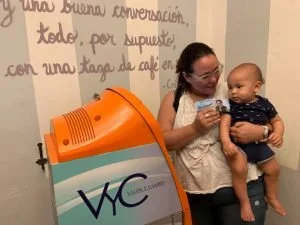
Valor y Cambio will be present at the 2019 Loisaida Festival, which each year celebrates the diasporic heritage of this historic Puerto Rican neighborhood characterized by a strong sense of community pride, creativity, and innovative resilience. The Puerto Rican pesos will be available through a refurbished ATM called VyC, for Valor y Cambio. "Participants just have to record their responses about what they value. The machine records the video and offers the pesos, which businesses will accept in exchange for some items,” explains Santos Negrón. These recordings will be part of a documentary about the project.
"In both Puerto Rico and New York, many assume that the talents of people without access to dollars have no economic, cultural, or social value. Our project questions that idea and suggests that crisis moments offer an opportunity to rethink an unjust economic system, and to explore creative community-centered initiatives,” concludes Negrón-Muntaner.
For details about the historical figures featured on the bills and more information on social currencies around the world, visit www.valorycambio.org.
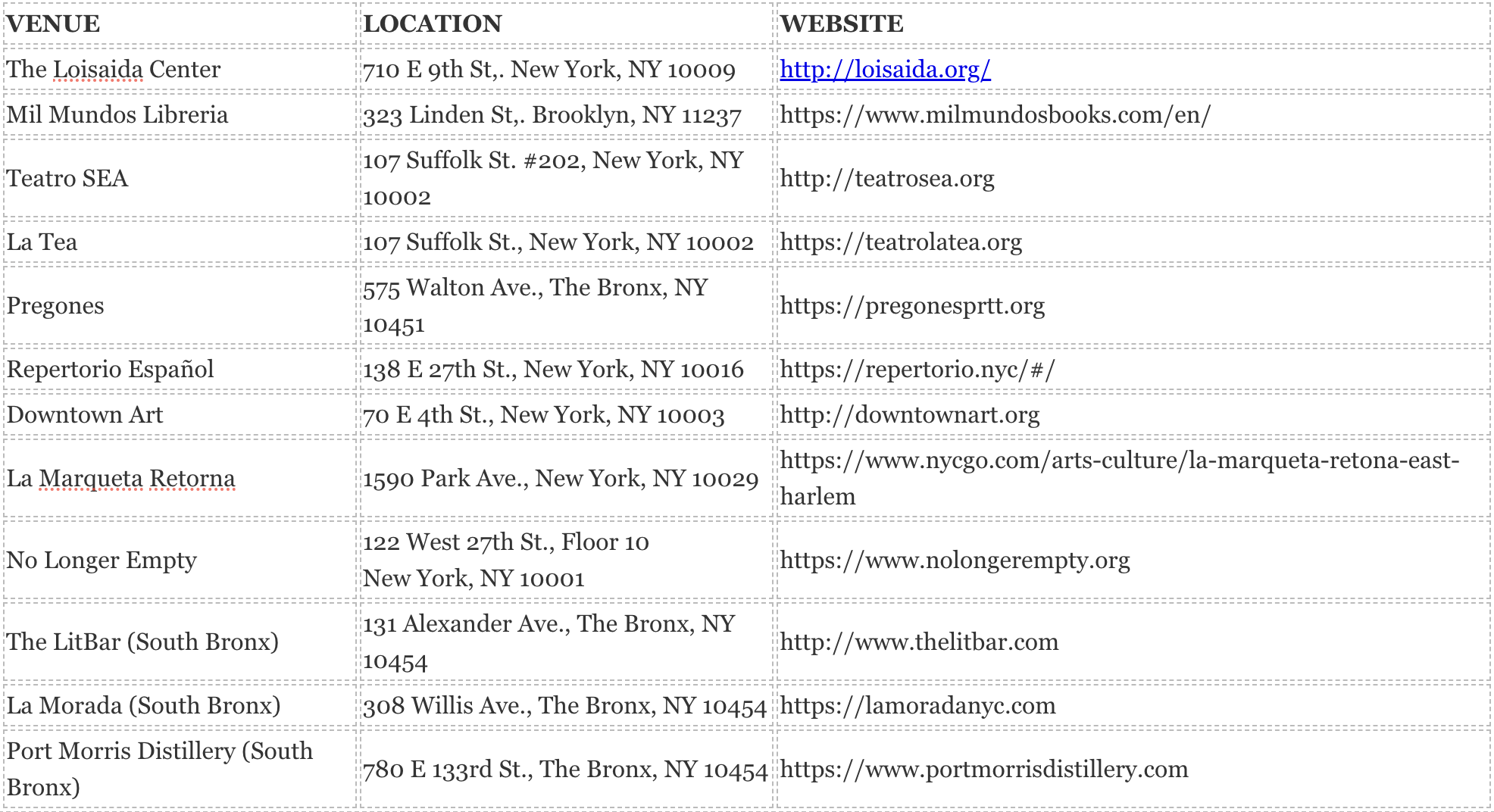
To take part in Valor y Cambio NYC, visit the Loisaida Festival and seek participating businesses and organizations that will accept pesos. These include:
Booths at the Loisaida Center, on May 26.

City-wide, from May 26 to June 30
###
About the Artists
Frances Negrón-Muntaner is a filmmaker, writer, curator and a professor at Columbia University (New York), where she founded the Latino Arts and Activism Archive. Some of her publications are: Boricua Pop: Puerto Ricans and the Latinization of American Culture (CHOICE Award, 2004), The Latino Media Gap (2014), and Sovereign Acts: Contesting Colonialism in Native Nations and Latin America (2017). Some of her films: Brincando el charco: Portrait of a Puerto Rican (1994), Small City, Big Change (2013), and War for Guam (2015). She has been recognized as a scholar and filmmaker with fellowships by Ford, Truman, Rockefeller and Pew foundations. She is also the recipient of the Lenfest Award, one of Columbia University's most prestigious recognitions for excellence in teaching and scholarship (2012), an inaugural OZY Educator Award (2017), and the Frank Bonilla Public Intellectual Award, presented by the Latin American Studies Association (2019). She currently directs the Media and Idea Lab at Columbia University and co-directs Unpayable Debt, a working group on the global debt crisis, supported by the Center for the Study of Social Difference.
Sarabel Santos Negrón is a multidisciplinary artist, an educator and a professional in museology. Her work focuses on the experience and the memories of nature and landscapes of Puerto Rico and the Caribbean. She has curated several projects in the United States and is the current director of the Bayamón Museum of Art in Puerto Rico. Some of her projects: Entre Reinos (2016), Casa Roig, Humacao; Portraits of Nature (2013), Pierced Gallery, New Jersey; and Encuentro (2012), Pontificia Universidad Católica, Ponce. She has also had exhibitions at: Steps Peace Museum, New York; Anytime Department Gallery, Cincinnati; Espacio Tres50, Chiapas, Mexico; Rigss & Leidy Gallery, Maryland; Saatchi Gallery, London; and Arsenal Museum of the Spanish Navy, among other spaces. In 2016, the Maryland Institute College of Art awarded her a merit scholarship for graduate studies.
About Loisaida Inc: Founded in 1978, the mission of Loisaida Inc. is to address the serious economic and social disenfranchisement of Latinx residents while offering multi-generational programming that appeals to the social and cultural sensibilities of the Lower East Side.
About Acacia Network: The Acacia Network, the parent company of Loisaida Inc., is an integrated care organization with offices in New York City, Buffalo and Albany, Orlando and Puerto Rico. It is the 2nd largest Hispanic nonprofit organization in the country. Their mission is realized through three main service delivery systems; Primary Health Care, Behavioral Health Care, and Housing.
#LoisaidaFest2019 #LoisaidaFest #LESHistoryMonth
Loisaidafest.org | Facebook.com/LoisaidaFest | @loisaidafest
Valorycambio.org |Facebook.com/valorycambiopr/
For media inquiries, contact: n.davidpastor@gmail.com or vb2239@columbia.edu