
The Future of Disability Studies
Project Director: Rachel Adams
The study of disability engages some of the most pressing debates of our time, questions about the beginning and end of life, prenatal testing, abortion, euthanasia, eugenics, accommodation in schools, public transportation and the workplace, technologies for the medical correction and “cure” of the non-normative body, disease, wartime injuries, post-traumatic stress, and healthcare. These questions could not be more relevant, given that people with disabilities are the largest minority group in the United States, and that everyone who lives long enough will eventually become disabled. But beyond the numbers, the study of disability matters because it forces us to interrogate charged ethical and political questions about the meaning of aesthetics and cultural representation, bodily identity, and dynamics of social inclusion and/or exclusion.
The Future of Disability Studies approached disability as an embodied condition, a mutable historical phenomenon, and a social, political, and cultural identity; it explored some of the key debates within Disability Studies and identified new directions for the future of the field. Among other questions, this project's working group asked: How might we complicate the opposition between medical and social models of disability? What are the grounds for productive dialogue and intersection between Disability studies and Medical Humanities? How can we reconcile a commitment to the autonomy and self-representation of people with disabilities with the commitment to include people with the severest forms of intellectual and physical disability? How can Disability Studies further understand its relationship to other phenomena of embodied identity, such as race, ethnicity, and gender? How should Disability studies approach scientific developments in genetics, new reproductive technologies, augmentative communication devices, prosthetics etc.? How can the study of disability cast light on political debates over about healthcare, war, and education policy? And how is our consideration of these dynamics complicated and enhanced by putting them in historical and/or transnational perspective?
News
The director of the Future of Disability Studies working group spoke about how she has updated her class for the pandemic.
Rachel Adams, a Faculty Director of the CSSD Precision Medicine project, is taking her interdisciplinary research interests to the next level, and she is recording her progress online.

Past Events

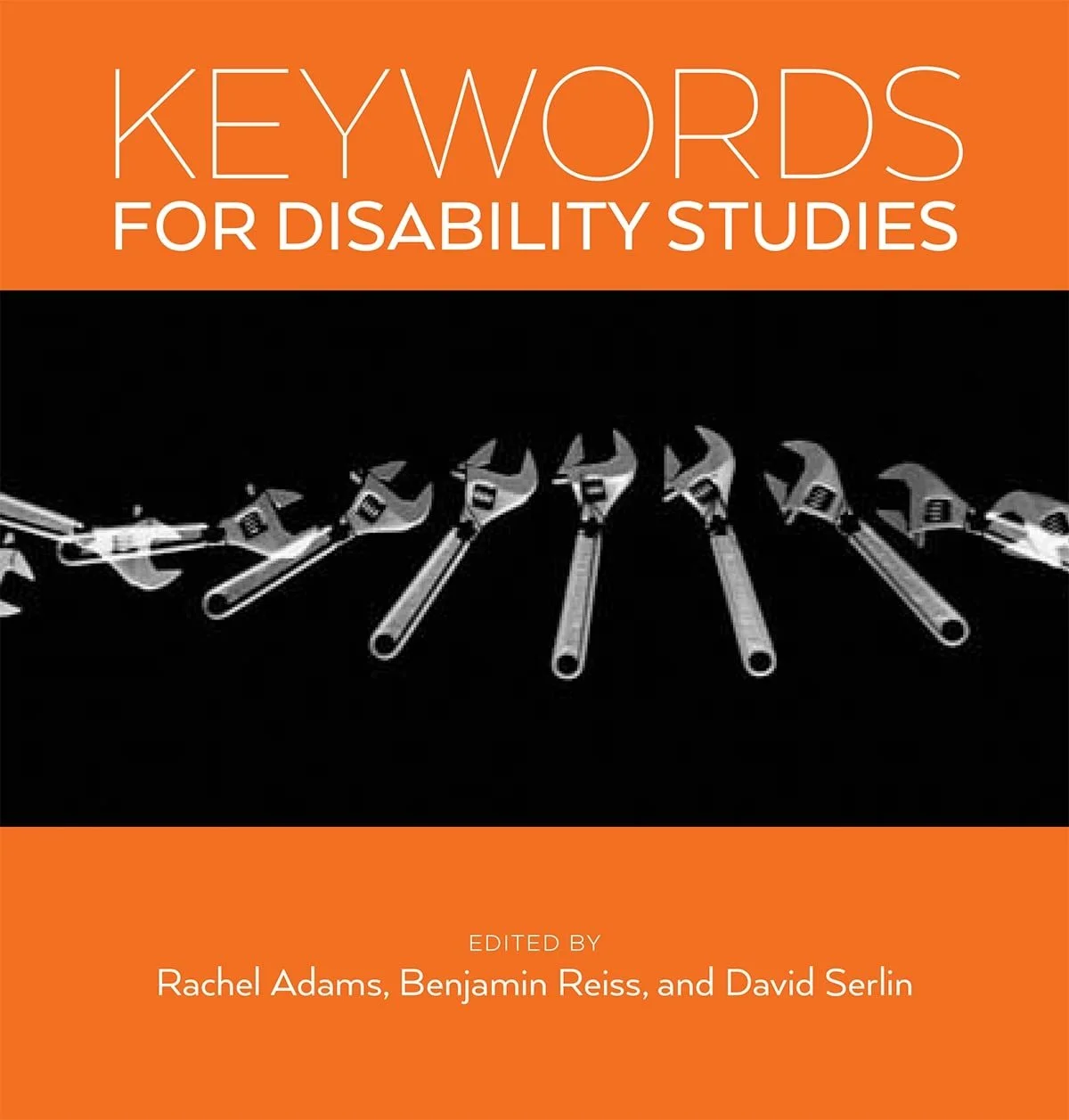
A symposium to celebrate the 25th anniversary of the Americans with Disabilities Act, The Future of Disability Studies project, and the publication of Keywords for Disability Studies.
Pulitzer Prize-winning journalist and author Ron Suskind spoke at Columbia in March about pursuing a demanding career in investigative journalism while raising his autistic son Owen.
As part of the Heyman Center for the Humanities Disciplines Series:
Evaluation, Value, and Evidence, authors Alison Piepmeier, George Estreich, and Rachel Adams take up many of the questions raised in the November 2013 event on "Genes, Children, and Ethics" (featuring Michael Berube, Faye Ginsberg, and Rayna Rapp) in their discussion of "Parenting, Narrative, and Our Genetic Futures." Jordana Mendelson will chair.
Cosponsored by the Future of Disability Studies project.
Evan is a young man with Down Syndrome who lives with his mother in a poor, working-class town hit hard by the recent economic recession. When he unexpectedly comes into a large amount of money, Evan uses it to romantically pursue Candy, a girl from town whom he has loved since high school. Candy, now a barely-employed single mom, is facing financial debt, possible eviction, and the inability to rid herself of Russ, her abusive and volatile ex-boyfriend.
A talk by Tobin Siebers (Department of English, University of Michigan) with a response by Elizabeth Leake (Department of Italian, Columbia University)
This panel will explore the the conflicts and common ground between two fields that have often been in tension with one another. Speakers will be asked to share their insights into this tension, identifying spaces of possibility where the two might intersect/collaborate/learn from one another.
We begin our project with a panel of students, faculty, and staff who discuss the ways the university has both accommodated and excluded people with disabilities. What are some of the surprising and innovative ways that Columbia has sought to include people with disabilities in its community? Conversely, how has it managed to maintain ADA compliance, while creating an unwelcoming environment for people with disabilities? Our campus will serve as a starting place for a broader discussion about disability, access, and higher education.
Publications
Fellows

Professor, Department of English and Comparative Literature, Columbia University
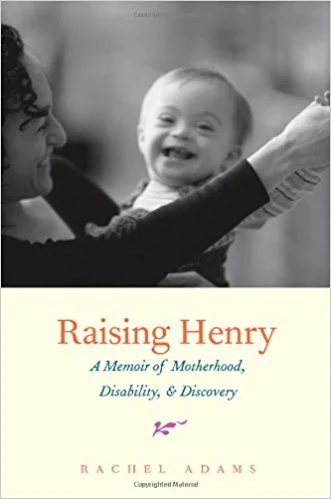
Rachel Adams is the director of the “Precision Medicine: Ethics, Politics and Culture.” She is Professor of English and American Studies at Columbia University, where she specializes in 19th- and 20th-century literatures of the United States and the Americas, media studies, theories of race, gender, and sexuality, medical humanities and disability studies.

Fellow, Theater, Brooklyn College
Margaret Araneo-Reddy is a New York-based scholar and theatre artist. She is currently a doctoral candidate at the Graduate Center, City University of New York and an Instructor of Drama at New York University. Her current research focuses on the intersection of neuropsychology and popular performance in the late nineteenth and early twentieth centuries. Using a cultural model of disability, Margaret examines the ways the small forms of cabaret and vaudeville (in Paris and New York respectively) both represent and embody neurological diversity in performance.

Professor, Department of English, Barnard College
Professor Baswell rejoins the faculty at Barnard and Columbia after a period as Professor of English and Associate Director of the Center for Medieval and Renaissance Studies at UCLA, 2001-2008. Baswell’s earliest research was in the reception and transformation of classical literature, especially narratives of empire and dynastic foundation, in the vernacular cultures of the European Middle Ages. He has approached these issues through the optic of original manuscripts, and in the light of the multilingualism of medieval France and England.
Fellow, American Studies and English, Yale University
James Berger is Senior Lecturer in American Studies and English at Yale University. He is author of After the End: Representations of Post-Apocalypse and editor of Helen Keller's The Story of My Life: The Restored Edition. He is currently completing The Disarticulate: Language, Impairment, and the Narratives of Modernity, to be published by New York University Press.

Doctoral Student, Oral History, Columbia University
Nicki Pombier Berger is an oral historian, educator, and interdisciplinary artist.
Nicki is on the faculty at The New School College of Performing Arts, where she teaches in the Drama BFA program. In collaboration with playwright Suli Holum, she is currently working as dramaturg on THE BAKKEN, an investigation of the Bakken shale, a rock formation roughly 350 million years old sitting deep below the surface of North Dakota.
PhD Student, English and Comparative Literature, Columbia University
Liz Bowen is a Ph.D. candidate in English and comparative literature who works at the intersections of 20th and 21st century American literature, disability studies, and critical animal studies. Her dissertation, “Animal Abilities: Disability, Species Difference, and Aesthetic Innovation in the Long 20th Century,” traces the intertwined deployments of disability, animality, and cognitive otherness as sites for literary experimentation, from Faulkner to the Harlem Renaissance to contemporary poetics.

Fellow, English, Hunter College
Sarah Chinn teaches nineteenth century literature at Hunter College, CUNY. Her work primarily explores questions of race, embodiment, sexuality, and gender in U.S. literature and culture, particularly in the 19th century. She is the author of Technology and the Logic of American Racism: A Cultural History of the Body as Evidence (Continuum, 2000) and The Invention of Modern Adolescence: Children of Immigrants in Turn-of-the-Century America (Rutgers University Press, 2008).
Fellow, Disability Studies, Hofstra University
G. Thomas Couser retired in 2011 from Hofstra University, where he was a professor of English and founding director of the Disability Studies Program.
Fellow, English, New York Institute of Technology
Elizabeth J. Donaldson is Associate Professor of English at New York Institute of Technology, where she teaches courses in American literature, writing, and medical humanities. She has published essays on mental illness in film, antipsychiatry in Lauren Slater’s memoirs, physiognomy and madness in Jane Eyre, teaching Melville online, and the poetry of Amy Lowell, among other subjects. She is a member of the editorial board of the Journal of Literary and Cultural Disabilities Studies and is co-editor (with Catherine J.
Fellow, Anthropology, New York University
Faye Ginsburg is David B. Kriser Professor of Anthropology at NYU where is is also Director of the Center for Media, Culture and History, Co-Director of the NYU Council for the Study of Disability, and Co-Director of the Center for Religion and Media. Prizewinning author/editor of four Her research focuses on movements for social transformation, from her early work on abortion activists, to her longstanding research on indigenous media, to her current work, with Rayna Rapp, on cultural innovation and learning disabilities.

Assistant Professor of Theater, City University of New York
Amy E. Hughes is Assistant Professor and Deputy Chair for Graduate Studies in the Department of Theater, Brooklyn College (CUNY). Her work focuses on the relationship between theater/performance and visual, print, and material culture in nineteenth-century America.

Fellow, Musicology, Brooklyn College
Stephanie Jensen-Moulton, Assistant Professor of Musicology at Brooklyn College, has published articles on women in hip-hop, the 19th-century piano prodigy "Blind Tom" Wiggins, feminist pedagogy and other topics in American music. She has presented papers and lecture-recitals at numerous national and international conferences, including IASPM Rome and national meetings of the Society for American Music and the American Musicological Society. She received the Ph.D.

Fellow, English, University of Delaware
Stephanie Kerschbaum (B.A. The Ohio State University, M.A., Ph.D. University of Wisconsin-Madison) conducts research focused on diversity issues and the teaching of writing. She is an associate professor of English at the University of Delaware where she teaches writing, rhetoric, and composition theory in the University of Delaware Writing program and special topics courses. She is a Faculty Scholar affiliated with UD’s Center for the Study of Diversity. She also teaches undergraduate courses on diversity and higher education and teaches graduate seminars in composition theory and pedagogy.

Fellow, Feminist Studies, Barnard Center for Research on Women
Ynestra King is a feminist teacher, writer and oral historian. She is an ecofeminist theorist, and a founder of Women and Life on Earth and the feminist anti-militarist movement, as well as the Committee on Women, Population and Environment. Her current work is on disability narratives and body politics, focusing particularly on women and disability. She is also at work on a memoir tentatively entitled Falling. She was previously visiting Scholar at the Barnard Center for Research on Women.
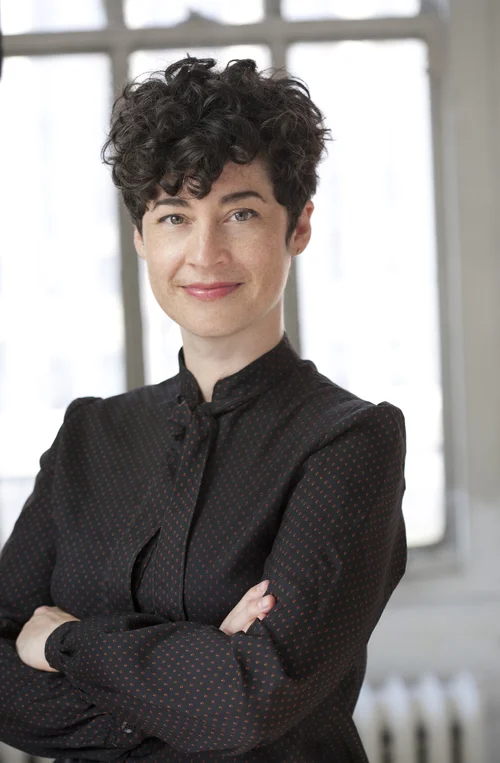
Fellow, Sociology, University of Connecticut
Laura Mauldin's research draws from the fields of medical sociology, science and technology studies (STS), and disability studies. She uses ethnographic methods to show how individual experiences are situated within institutional structures and a larger sociocultural context. All of her research is concerned with how science, technology, and medicine shape contemporary life and is based on the contention that disability – like race, class, or gender - is a political and social category. Her aim is to give voice to the experiences of individuals and families who utilize healthcare services and/or medical technologies in order to show the ambivalent qualities of technoscientific change, the politics of disability and illness, and to suggest what healthcare policies or issues need to be further researched or improved.

Sociology, The New School for Social Research
Ariel Merkel is a Sociology PhD candidate at the New School for Social Research, with a focus on disability studies. She earned her MA at NSSR in May 2011, and holds a BA (cum laude) in Cultural Anthropology from Wells College, a small women’s college in the Finger Lakes region of New York State. Upon graduation in 2005, she was awarded the Carter A. Woods Prize for her thesis, which analyzed the strategies of Kanaka Maoli (indigenous Hawaiian) activists involved in the Cultural Revitalization Movement.
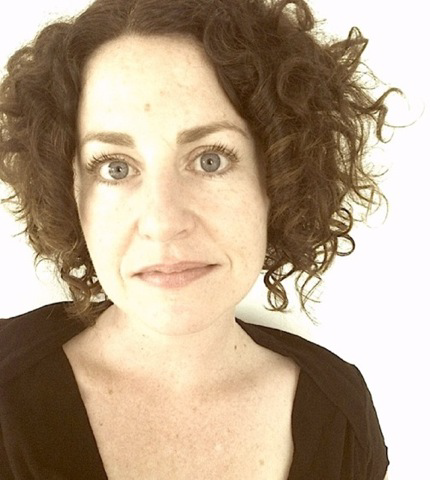
Fellow, Media, Culture, and Communication, New York University
Mara Mills is Assistant Professor of Media, Culture, and Communication at New York University. She received her Ph.D.

PhD Student, American Studies, Yale University
Ittai is a Ph.D. candidate in American Studies. His dissertation is an intellectual history of intelligence and intellectual ability in 18th- and 19th-century America with a focus on popular literary texts. His other areas of expertise include the history of race, sexuality and gender studies, disability studies, and the history of capitalism. He has been a tutor for the undergraduate non-fiction writing course “Daily Themes,” a writing instructor, and an LSAT-prep tutor and instructor. His work has been published in American Quarterly and Public Books, and he has presented at the Modern and Contemporary Studies Initiative, American Studies Association and the Modern Language Association.
Fellow, English, City University of New York
Julia Miele Rodas is assistant professor of English at the City University of New York (CUNY). She teaches writing at CUNY’s Bronx Community College and is on the faculty of the Master’s program in Disability Studies at the CUNY School of Professional Studies. Her writing has appeared in Victorian Literature & Culture, Dickens Studies Annual, the Victorian Review, the Journal of Literary & Cultural Disability Studies, Disability Studies Quarterly, the Explicator, and other venues.
Fellow, Economics, Brandeis University
Harilyn Rousso is a writer, painter, educator, social worker, psychotherapist and activist who has worked in the disability rights field, with a particular emphasis on issues of women and girls with disabilities, for more than twenty-five years. She is the founder of the Networking Project for Disabled Women and Girls of the YWCA/NYC, a unique mentoring program that has been replicated widely, and the President of Disabilities Unlimited Consulting Services, which provides education and training on disability equity issues.
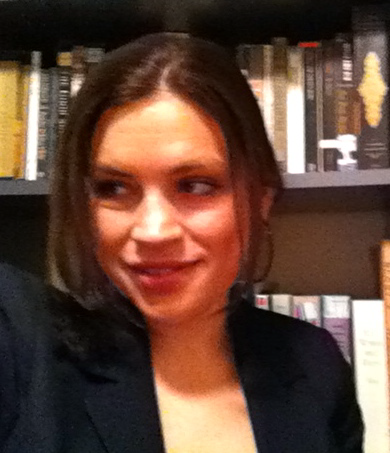
Fellow, English, City University of New York
Rebecca Sanchez is an Assistant Professor of English at Fordham University and a member of the MLA’s Committee on Disability Issues in the Profession. Her research interests include transatlantic modernism, Deaf and disability studies and poetics. She is currently working on a book project entitled Deafening Modernism, which analyzes the impact of communicative norms on twentieth century writing.

Fellow, Anthropology, City University of New York
Irina Carlota (Lotti) Silber received her PhD from NYU and is currently an Associate Professor of Anthropology at the City College of New York (CCNY) in the Department of Interdisciplinary Arts and Sciences, which is housed at the Center for Worker Education. She is also the Director of the MA Program in the Study of the Americas. She is the recipient of various dissertation fellowships (i.e.
Distinguished Professor of Music, CUNY Graduate Center
Joseph Straus is Distinguished Professor of Music at the Graduate Center of the City University of New York. He is the author of numerous books and articles on topics in twentieth-century music, including Twelve-Tone Music in America (2009), Introduction to Post-Tonal Theory (3rd ed., 2004), Stravinsky's Late Music (2001), The Music of Ruth Crawford Seeger (1995), and Remaking the Past: Musical Modernism and the Influence of the Tonal Tradition (1990).

Fellow, English, Fordham University
Dennis Tyler is Assistant Professor of English at Fordham University. He has published work on African American literature, disability studies, and popular culture. He is the recipient of the 2015-16 Woodrow Wilson Career Enhancement Fellowship. His current book project, Disability of Color, examines how disablement as experience and as discourse has shaped the racial subjecthood of African Americans in the nineteenth and twentieth centuries.
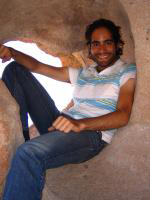
Doctoral Student, Art History, Hunter College
Emmanuel von Schack is a deaf art history graduate student at Hunter College; his master's thesis focuses on German artists who were veterans of the First World War and the works of art they created during and after the War. By interweaving disability theories with Foucauldian feminist and queer theories, he explores the complex relationship between masculinity and disability as conveyed in Weimar culture and art. He works as an educator at the Metropolitan Museum of Art and the Solomon R.
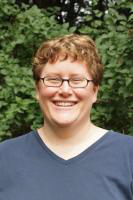
Fellow, Sociology, Sarah Lawrence College
Sarah Wilcox is Professor of Sociology, Sarah Lawrence College. She specializes in medical sociology, the sociology of science and knowledge, gender and sexuality, and the mass media. Her current research focuses on embodiment and biological knowledge, particularly how lay and expert knowledge intersect and when and how biological ideas become salient in embodied experience, personal identities, and popular culture.