

Lila Abu-Lughod
Interim Director
Lila Abu-Lughod
Joseph L. Buttenwieser Professor of Social Science
Lila Abu-Lughod teaches anthropology and gender studies at Columbia University. She is a former director of the Institute for Research on Women and Gender, the Center for the Study of Social Difference, and the Middle East Institute, all at Columbia. A leading voice in the debates about gender, Islam, and global feminist politics, her books and articles have been translated into 15 languages. Her scholarship, strongly ethnographic, has focused on the relationship between cultural forms and power; the politics of knowledge and representation of the Arab and Muslim worlds; and the dynamics of gender and the question of human and women’s rights in the Middle East. Her award-winning books include Veiled Sentiments: Honor and Poetry in a Bedouin Society; Writing Women’s Worlds: Bedouin Stories; Remaking Women: Feminism and Modernity in the Middle East; and Dramas of Nationhood: The Politics of Television in Egypt. Her most recent book, Do Muslim Women Need Saving?, was published by Harvard University Press in 2013. Her most recent publication is The Cunning of Gender Violence: Geopolitics and Feminism (2023). Lila Abu-Lughod was elected to the American Academy of Arts and Sciences in 2023.
Lila Abu-Lughod's Academic Website
Working Group Affiliations
Religion and the Global Reframing of Gender Violence, Project Director
Gender, Religion & Law in Muslim Societies, Project Director
Liberalism’s Others, Project Director
Book publications
Do Muslim Women Need Saving?
Harvard University Press, 2013.
Dramas of Nationhood: The Politics of Television in Egypt
Lewis Henry Morgan Lectures. Chicago: University of Chicago Press, 2005.(American Ethnological Society Senior Book Prize, 2007)
Other English Editions: American University in Cairo Press, 2005.
Writing Women’s Worlds: Bedouin Stories
University of California Press, 1993 (Victor Turner Prize, 1994). Fifteenth Anniversary Edition with new preface, 2008.
Veiled Sentiments: Honor and Poetry in a Bedouin Society
University of California Press, 1986 (IUAES Silver Medal; Chicago Folklore Prize, honorable mention). Second edition, updated with a new preface, 2000. 30th Anniversary Edition, with a new Afterword, September 2016.
Other English Editions: American University in Cairo Press, 1987.
Local Contexts of Islamism in Popular Media.
Amsterdam University Press, Institute for the Study of Islam in the Modern World Papers. 2006.
Edited Books
The Cunning of Gender Violence: Geopolitics and Feminism
Co-edited with Rema Hammai and Nadera Shalhoub-Kevorkian.
Duke University Press, 2023.
On the Move: Reframing Nomadic Pastoralism
Edited Exhibition Catalogue. Skira, National Museum of Qatar, and Qatar Museums. 2022.
Nakba: Palestine, 1948 and the Claims of Memory
Co-edited with Ahmad H. Sa`di.
Columbia University Press, The Cultures of History Series, 2007.
Media Worlds: Anthropology on New Terrain
Co-edited with Faye Ginsburg and Brian Larkin.
University of California Press, 2002.
Remaking Women: Feminism and Modernity in the Middle East
Edited. Princeton University Press, Series in Culture/Power/History, 1998.
Other English Editions: American University in Cairo Press, 1998.
Language and the Politics of Emotion
Co‑edited with C. Lutz.
New York: Cambridge University Press, 1990.
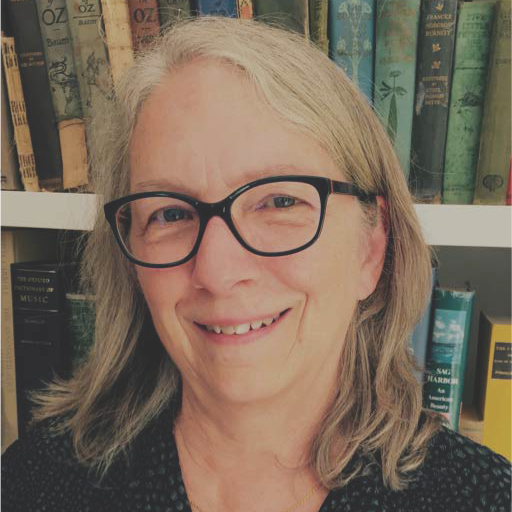
Katherine Pratt Ewing
Professor, Department of Religion, Columbia University
Katherine Pratt Ewing is Professor of Religion and Director of the Institute for Religion, Culture and Public Life at Columbia University. She has carried out ethnographic fieldwork in Pakistan, Turkey, and India, and among Muslims in Europe and the United States. Her research has focused on debates among Muslims about the proper practice of Islam in the modern world, the place of Muslims within the German national imaginary, and sexualities, gender, and the body in South Asia.
Katherine Pratt Ewing
Professor of Religion, Columbia University
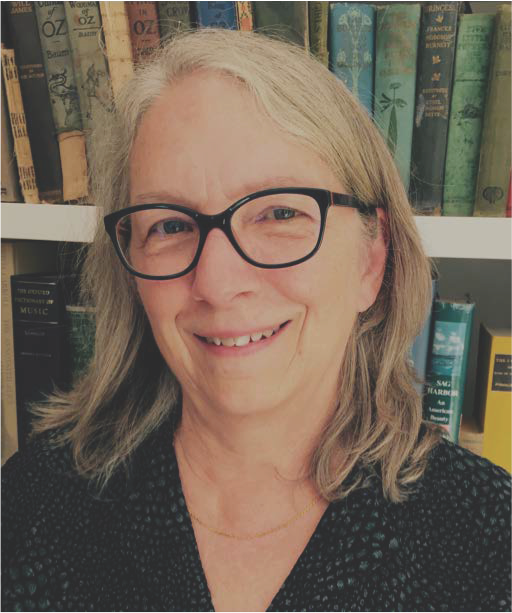
Katherine Pratt Ewing is Professor of Religion and Director of the Institute for Religion, Culture and Public Life at Columbia University. She has carried out ethnographic fieldwork in Pakistan, Turkey, and India, and among Muslims in Europe and the United States. Her research has focused on debates among Muslims about the proper practice of Islam in the modern world, the place of Muslims within the German national imaginary, and sexualities, gender, and the body in South Asia. She is currently writing a book on the politics of sex change surgery within India’s middle class with Baishakhi Taylor and is PI on an ACLS-funded project “Sufis, Salafis and the Public Square” with Alexander Stille. Recent articles and chapters include “The Ungendered Self: Sex Reassignment, The Third Gender, and Gender Fluidity in India” (forthcoming, with Baishakhi Taylor), “Murder in Chapel Hill: Muslims, the Media, and the Ambivalence of Belonging” (forthcoming), “‘Islam is Not a Culture:’ Reshaping a Muslim Public for a Secular World” (2015), “From German Bus Stop to Academy Award Nomination: The Honor Killing as Simulacrum” (2013), and “Naming our Sexualities: Secular Constraints, Muslim Freedoms” (2011). Her previous books include Arguing Sainthood: Modernity, Psychoanalysis and Islam (1997), Stolen Honor: Stigmatizing Muslim Men in Berlin (2008), and the edited volumes Shariat and Ambiguity in South Asian Islam (1988) and Being and Belonging: Muslim Communities in the US since 9/11 (2008).
Working Group Affiliations
Gender, Religion and Law in Muslim Societies, Project Director
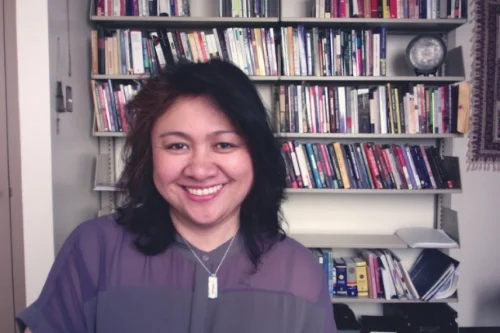
Amina Tawasil
Fellow, Anthropology and Education, Teachers College, Columbia University
Amina Tawasil's current research focus is on the intersection of women and Islamic education. With the support of the International and Transcultural Studies program at Teachers College, Columbia University, in the summer of 2008 she traveled to Tehran, Iran to conduct a two-month pilot study on the education of seminarian women in Iran, which became the main focus of her dissertation research.
Amina Tawasil
Lecturer of Anthropology and Education, Teachers College, Columbia University

Amina Tawasil's current research focus is on the intersection of women and Islamic education. With the support of the International and Transcultural Studies program at Teachers College, Columbia University, in the summer of 2008 she traveled to Tehran, Iran to conduct a two-month pilot study on the education of seminarian women in Iran, which became the main focus of her dissertation research. From September 2010 to December 2011, with the support of the Earth Institute Advanced Consortium on Cooperation, Conflict, and Complexity (AC4), and the Middle East Institute, Columbia University, she conducted ethnographic research on seminarian women (zanan-e howzeh) in Tehran. And finally, from the generous support of the American Association of University Women she has completed her dissertation entitled, "The Howzevi (seminarian) Women of Iran: Constituting and Reconstituting Paths". She has degrees in anthropology and education from Teachers College, Columbia University, and was the 2013 Andrew W. Mellon Postdoctoral Fellow at Northwestern University, Middle East North African Studies program.
Working Group Affiliation