

Lila Abu-Lughod
Interim Director
Lila Abu-Lughod
Joseph L. Buttenwieser Professor of Social Science
Lila Abu-Lughod teaches anthropology and gender studies at Columbia University. She is a former director of the Institute for Research on Women and Gender, the Center for the Study of Social Difference, and the Middle East Institute, all at Columbia. A leading voice in the debates about gender, Islam, and global feminist politics, her books and articles have been translated into 15 languages. Her scholarship, strongly ethnographic, has focused on the relationship between cultural forms and power; the politics of knowledge and representation of the Arab and Muslim worlds; and the dynamics of gender and the question of human and women’s rights in the Middle East. Her award-winning books include Veiled Sentiments: Honor and Poetry in a Bedouin Society; Writing Women’s Worlds: Bedouin Stories; Remaking Women: Feminism and Modernity in the Middle East; and Dramas of Nationhood: The Politics of Television in Egypt. Her most recent book, Do Muslim Women Need Saving?, was published by Harvard University Press in 2013. Her most recent publication is The Cunning of Gender Violence: Geopolitics and Feminism (2023). Lila Abu-Lughod was elected to the American Academy of Arts and Sciences in 2023.
Lila Abu-Lughod's Academic Website
Working Group Affiliations
Religion and the Global Reframing of Gender Violence, Project Director
Gender, Religion & Law in Muslim Societies, Project Director
Liberalism’s Others, Project Director
Book publications
Do Muslim Women Need Saving?
Harvard University Press, 2013.
Dramas of Nationhood: The Politics of Television in Egypt
Lewis Henry Morgan Lectures. Chicago: University of Chicago Press, 2005.(American Ethnological Society Senior Book Prize, 2007)
Other English Editions: American University in Cairo Press, 2005.
Writing Women’s Worlds: Bedouin Stories
University of California Press, 1993 (Victor Turner Prize, 1994). Fifteenth Anniversary Edition with new preface, 2008.
Veiled Sentiments: Honor and Poetry in a Bedouin Society
University of California Press, 1986 (IUAES Silver Medal; Chicago Folklore Prize, honorable mention). Second edition, updated with a new preface, 2000. 30th Anniversary Edition, with a new Afterword, September 2016.
Other English Editions: American University in Cairo Press, 1987.
Local Contexts of Islamism in Popular Media.
Amsterdam University Press, Institute for the Study of Islam in the Modern World Papers. 2006.
Edited Books
The Cunning of Gender Violence: Geopolitics and Feminism
Co-edited with Rema Hammai and Nadera Shalhoub-Kevorkian.
Duke University Press, 2023.
On the Move: Reframing Nomadic Pastoralism
Edited Exhibition Catalogue. Skira, National Museum of Qatar, and Qatar Museums. 2022.
Nakba: Palestine, 1948 and the Claims of Memory
Co-edited with Ahmad H. Sa`di.
Columbia University Press, The Cultures of History Series, 2007.
Media Worlds: Anthropology on New Terrain
Co-edited with Faye Ginsburg and Brian Larkin.
University of California Press, 2002.
Remaking Women: Feminism and Modernity in the Middle East
Edited. Princeton University Press, Series in Culture/Power/History, 1998.
Other English Editions: American University in Cairo Press, 1998.
Language and the Politics of Emotion
Co‑edited with C. Lutz.
New York: Cambridge University Press, 1990.
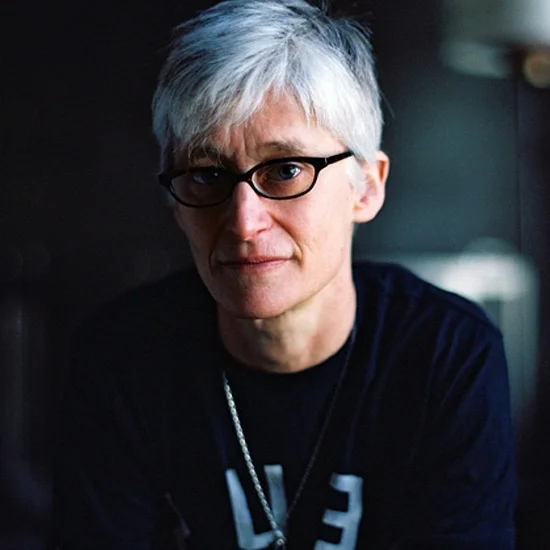
Elizabeth Povinelli
Professor, Department of Anthropology and Women’s and Gender Studies, Columbia University
Elizabeth Povinelli's writing has focused on developing a critical theory of late liberalism. This critical task is grounded in theories of the translation, transfiguration and the circulation of values, materialities, and socialities within settler liberalisms. Her first two books focused on impasses within liberal systems of law and value as they meet local Australian indigenous worlds, and the effect of these impasses on the development of legal and public culture in Australia. Her most recent book examines how a set of ethical and normative claims about the governace of lowve, sociality, and the body circulate in liberal settler colonies in such a way that life and death, rights and recognition, goods and resources are unevenly distributed there.
Elizabeth Povinelli
Professor of Anthropology and Women's and Gender Studies, Columbia University
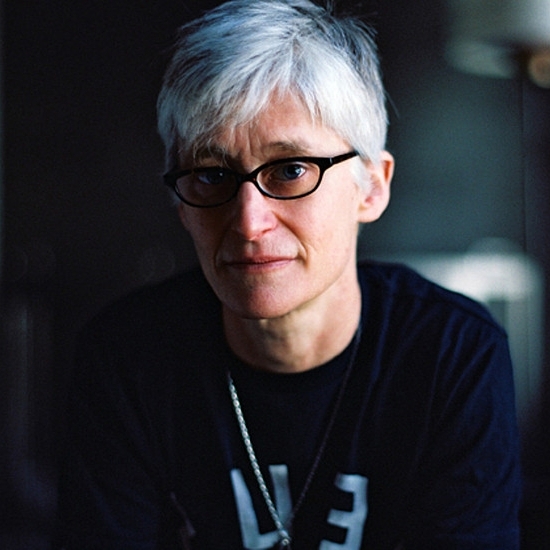
Elizabeth Povinelli's writing has focused on developing a critical theory of late liberalism. This critical task is grounded in theories of the translation, transfiguration and the circulation of values, materialities, and socialities within settler liberalisms. Her first two books focused on impasses within liberal systems of law and value as they meet local Australian indigenous worlds, and the effect of these impasses on the development of legal and public culture in Australia. Her most recent book examines how a set of ethical and normative claims about the governace of lowve, sociality, and the body circulate in liberal settler colonies in such a way that life and death, rights and recognition, goods and resources are unevenly distributed there.
Professor Povinelli diverges from most contemporary approaches to sexuality, gender and the legacy of European colonialism in so far as she brackets sexuality in the first moment and, instead, looks at how the distinction between individual freedom and social bondage subtends and animates most theories and practices of sexuality in postcolonial liberalisms.
Working Group Affiliations
Borders and Boundaries, Project Director
Liberalism’s Others, Project Director
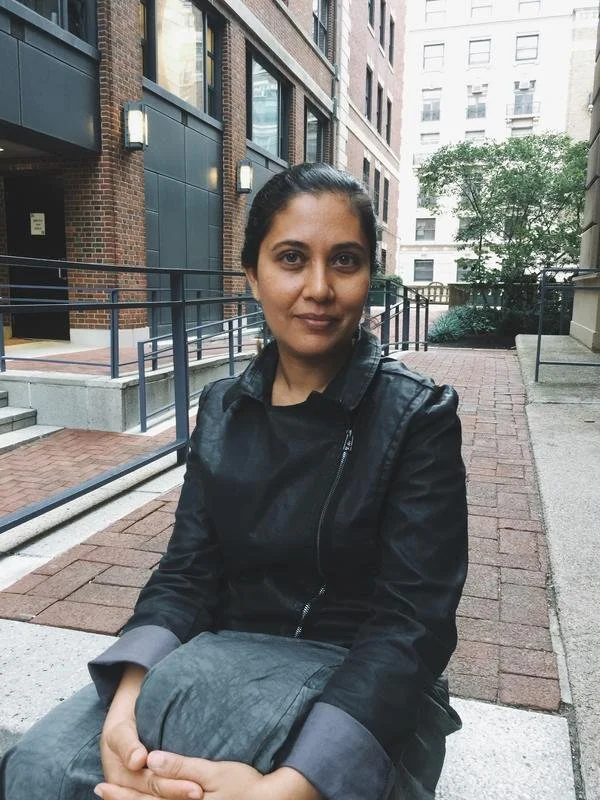
Anupama Rao
Associate Professor, Department of History, Columbia University
Anupama Rao has research and teaching interests in the history of anti-colonialism; caste and race; historical anthropology, social theory and intellectual history, and comparative urbanism. She is Senior Editor, Comparative Studies in South Asia, Africa and the Middle East. She has served as President, Society for the Advancement of South Asian History (American Historical Association), and on the South Asia Council of the Association for Asian Studies. Her work has been supported by fellowships at the Center for Advanced Study in the Behavioral Sciences (Stanford) and the National Humanities Center (North Carolina), and by grants for the American Institute for Indian Studies, and the National Endowment for the Humanities.
Anupama Rao
Associate Professor, History and Associate Director, Institute for Comparative Literature and Society
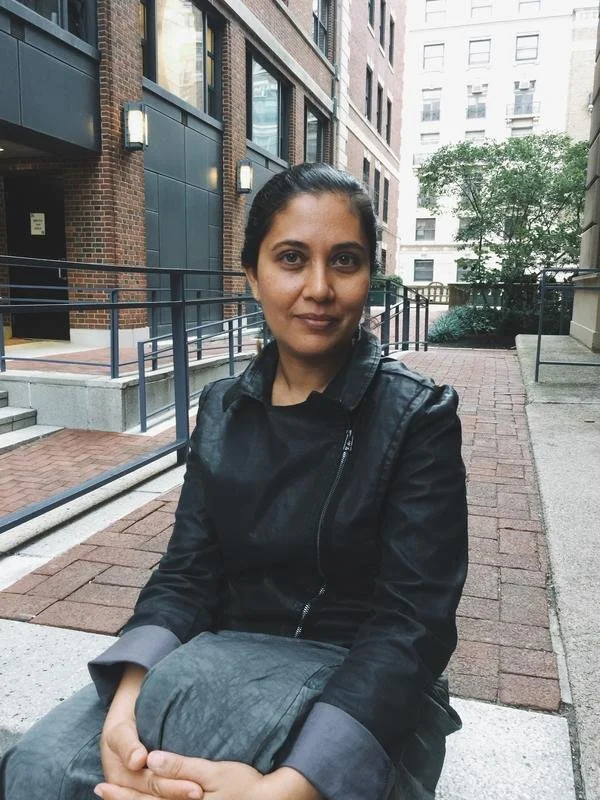
Anupama Rao, Associate Professor, History, Barnard College, is the author of The Caste Question: Dalits and the Politics of Modern India (U California Press, 2009), and numerous essays on colonialism and humanitarianism, and on non-Western histories of gender and sexuality. She has been a Fellow-in-Residence at the National Humanities Center; at the Center for Advanced Study in the Behavioral Sciences (Stanford); and at REWORK (Humboldt University, Berlin). Rao is co-convenor of “Subaltern Urbanism,” which is supported by Columbia’s Center for the Study of Social Difference, and was supported by a faculty grant from the Heyman Center for the Humanities. From 2014 to 2015, she was co-convenor of the project Asian Spatialities, supported by the Mellon Foundation and the International Institute of Asian Studies (Leiden). Rao is currently working on a book on the political thought of B. R. Ambedkar; and on a project titled Dalit Bombay, which explores the relationship between caste, political culture, and everyday life in colonial and postcolonial Bombay. Rao is currently Senior Editor, Comparative Studies in South Asia, Africa, and the Middle East, and Associate Director, Institute for Comparative Literature and Society.
Working Group Affiliations
Gender and the Global Slum, Project Director
Geographies of Injustice: Gender and the City, Project Director
Liberalism’s Others, Project Director
Reframing Gendered Violence, Project Director