

Thea Abu El-Haj
Professor, Department of Education, Barnard College
Thea Renda Abu El-Haj, Professor in Education, is an anthropologist of education. Prior to joining Barnard College, she was an associate professor at the Graduate School of Education at Rutgers University. She currently serves as the President of the Council on Anthropology and Education of the American Anthropological Association. Abu El-Haj’s research explores questions about belonging, rights, citizenship, and education raised by globalization, transnational migration, and conflict.
Thea Abu El-Haj
Professor in Education and Education Program Director/Chair, Barnard College
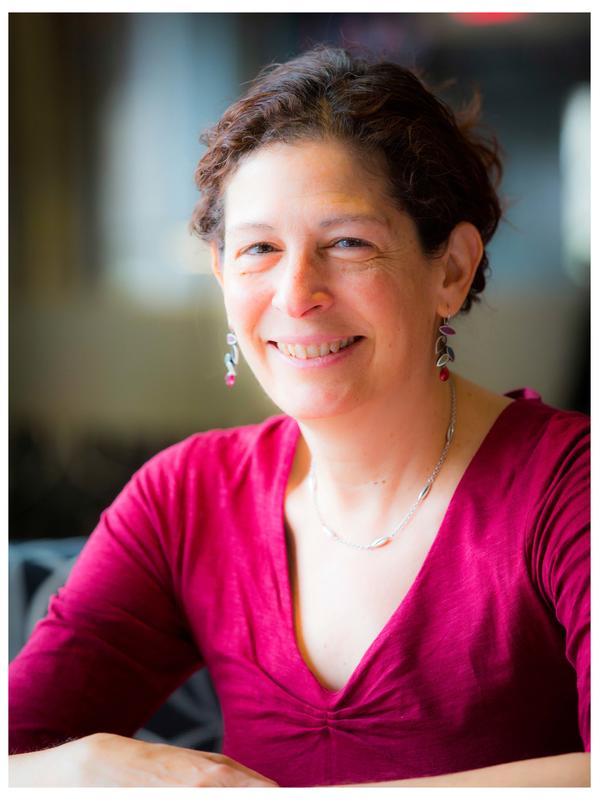
Thea Renda Abu El-Haj, Professor in Education, is an anthropologist of education. Prior to joining Barnard College, she was an associate professor at the Graduate School of Education at Rutgers University. There, she co-founded and co-directed the GSE’s Urban Teaching Fellows Program, and directed the Ph.D. program in Theory, Organization, and Policy.
She currently serves as the President of the Council on Anthropology and Education of the American Anthropological Association. Abu El-Haj’s research explores questions about belonging, rights, citizenship, and education raised by globalization, transnational migration, and conflict. She is currently working on two research projects. She is conducting a collaborative ethnographic study of public kindergartens in Beirut, Lebanon, that focuses on questions of conflict and refugee policy. With the support of a Spencer Foundation grant, she is the principal investigator of a U.S. national interview study exploring the civic identities and civic practices of youth from Muslim immigrant communities.
Her second book, an ethnographic account of young Palestinian Americans grappling with questions of belonging and citizenship in the wake of September 11, 2001, won the 2016 American Educational Studies Association Critics Choice Award (Unsettled Belonging: Educating Palestinian American Youth after 9/11, University of Chicago Press, 2015). Other publications about this research have appeared in Anthropology and Education Quarterly; Harvard Educational Review; Educational Policy; and Theory into Practice. Her first book, Elusive Justice: Wrestling with Difference and Educational Equity in Everyday Practice (Routledge, 2006), offers a critical account of the range of justice claims at play inside real schools, exploring several different, important dimensions of educational equity that are often ignored in contemporary educational policy debates.
Working Group Affiliation
Migrant Personhood and Rights: Crises of Recognition, Project Director
Naor H. Ben-Yehoyada
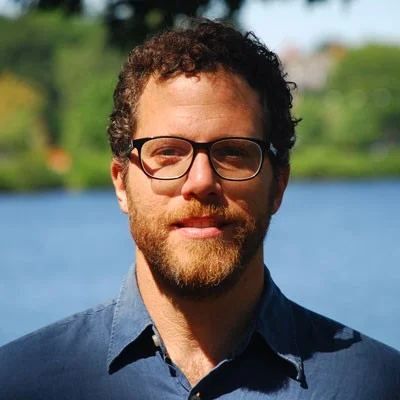
Naor Ben-Yehoyada's work examines unauthorized migration, criminal justice, the aftermath of development, and transnational political imaginaries in the central and eastern Mediterranean.
Naor H. Ben-Yehoyada
Assistant Professor, Department of Anthropology, Columbia University

Naor Ben-Yehoyada's work examines unauthorized migration, criminal justice, the aftermath of development, and transnational political imaginaries in the central and eastern Mediterranean. His monograph, The Mediterranean Incarnate: Transnational Region Formation between Sicily and Tunisia since World War II (Chicago Press, 2017), offers a historical anthropology of the recent re-emergence of the Mediterranean. He is specifically interested in the processes through which transnational regions form and dissipate. He proposes to view such spaces as ever-changing constellations, and show how we can to study them from the moving vessels that weave these constellations together and stage their social relations and dynamics in full view. He has also written shorter pieces about the different phases of the dynamics of maritime unauthorized migration and interdiction, as well as on the role that the Mediterranean’s seabed plays in Italian political retrospection.
His current project follows perpetual debate about what the Mafia is and how anti-Mafia forms of inquiry (by magistrates, journalists, political activists, police investigators) encounter this dilemma. It follows the recent trial regarding the 1988 murder of a journalist and the several preceding key criminal cases that the trial has revived, all of which, people still assume, involved the Mafia. He focuses on the doubts, suspicions, and disputes that arise at the intersection of different forms of inquiry by magistrates, journalists, police investigators, and politicians. He argues that the epistemic tensions between magistrates and other actors turn the wider field of anti-Mafia inquiry into a key moving site of the struggle over the relationship between law, society, and the state.
Kayhan Irani
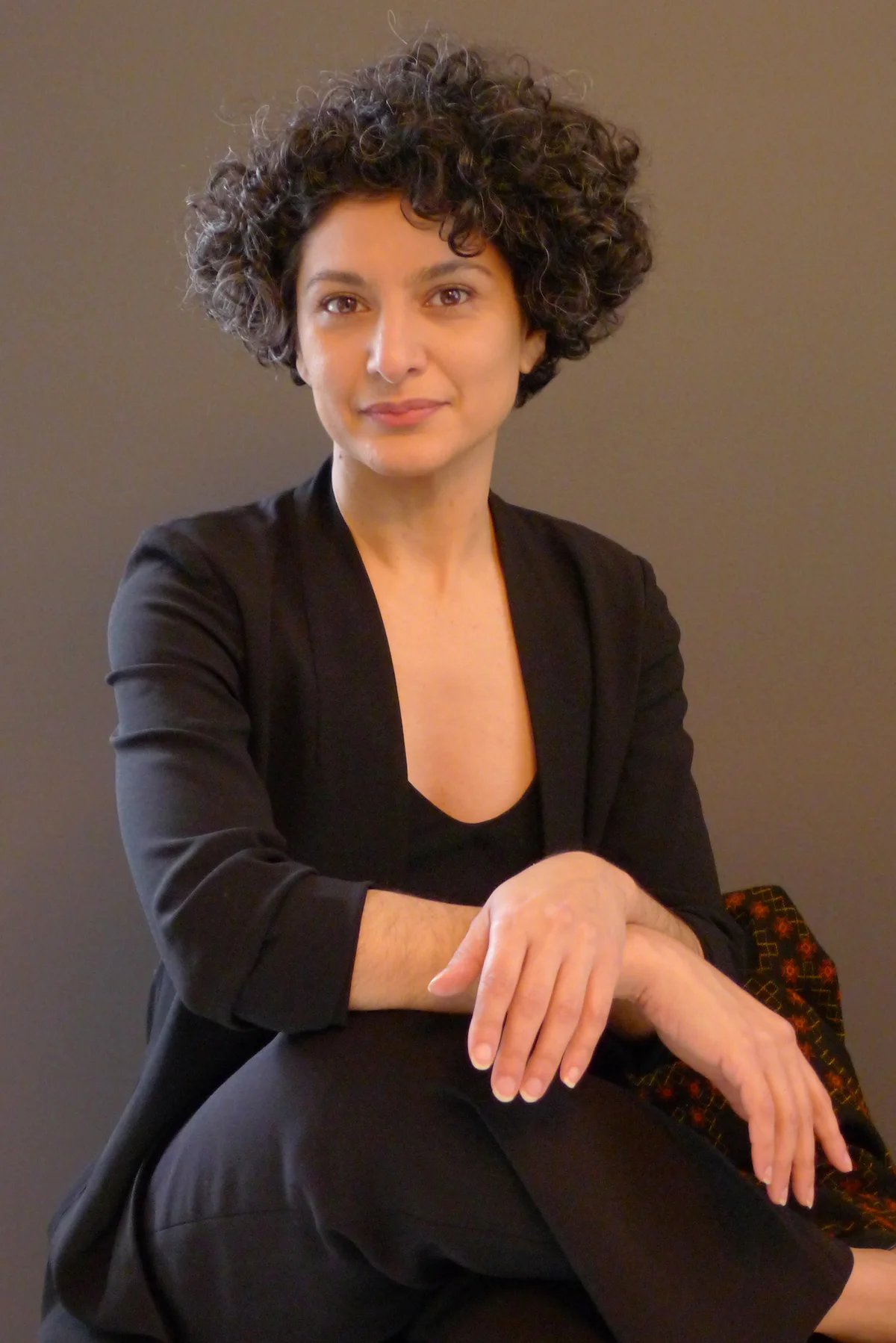
Kayhan Irani is an Emmy-award winning writer, a performer, and a Theater of the Oppressed trainer. She creates art to build community, offer spaces for healing, and to engage audiences in social justice issues.
Kayhan Irani

Kayhan Irani is an Emmy-award winning writer, a performer, and a Theater of the Oppressed trainer. She creates art to build community, offer spaces for healing, and to engage audiences in social justice issues.
Kayhan was one of ten U.S. artists named by President Obama's White House as a 2016 White House Champion of Change for her storytelling work. She is currently working on a new one-woman show, There is a Portal, which asks: Can the story of an Iranian-Indian immigrant offer a space of healing for all Americans?
Her previous one-woman show, We've Come Undone toured nationally and internationally, telling stories of Arab, South Asian and Muslim-American women in the wake of 9/11. She was a Fulbright-Nehru Senior Researcher in 2012-2013 studying Parsi embroidery for her play, Tree of Seeds. Kayhan has trained hundreds of groups in Theater of the Oppressed and participatory storytelling tools over the years, both nationally and overseas, in Afghanistan, India, and Iraq. Clients include NGOs, government agencies, and community organizations interested in using in story-based strategies for engagement and education.
Kayhan’s work has been supported by the BBC World Service Trust, The U.S. Environmental Protection Agency, Bronx Council for the Arts, the New York Foundation for the Arts, The National Parks Service, and the American Society for Muslim Advancement. Her work has been written about in such publications as The New York Times, Race Forward Magazine, the N.Y. Daily News, and The Washington Report on Middle East Affairs.
Her published work includes Telling Stories to Change the World: Global Voices on the Power of Narrative to Build Community and Make Social Justice Claims (Routledge, 2008), and Culturally Relevant Arts Education for Social Justice: A Way Out of No Way. (Routledge, 2015).

Corinne Kentor
Phd Candidate, Anthropology & Education, Teachers College, Columbia University
Corinne Kentor is a Ph.D student in Anthropology & Education at Teachers College, Columbia University. Her research focuses on the intersection of immigration and higher education policy. Her dissertation explores the educational experiences of older and younger siblings in mixed status families, with a specific focus on the institutional policies that shape their respective trajectories after high school.
Corinne Kentor
Phd Candidate, Anthropology & Education, Teachers College, Columbia University

Corinne Kentor is a Ph.D student in Anthropology & Education at Teachers College, Columbia University. Her research focuses on the intersection of immigration and higher education policy. Her dissertation explores the educational experiences of older and younger siblings in mixed status families, with a specific focus on the institutional policies that shape their respective trajectories after high school. Corinne graduated with honors from Yale University, where she earned a B.A. in English and a certificate in Education Studies. In 2018, she was named a National Science Foundation Graduate Research Fellow. That same year, she joined the research and evaluation staff at the City University of New York Office of Research, Evaluation & Program Support.
Working Group Affiliation
Migrant Personhood and Rights: Crises of Recognition, Graduate Coordinator
Ariana Mangual Figueroa
Mangual Figueroa draws from the fields of language socialization and linguistic anthropology to examine language use and learning in Latinx communities living in the United States. Her ethnographic research documents the ways in which linguistic and cultural development is shaped by citizenship status and schooling practices during everyday, routine interactions.
Ariana Mangual Figueroa
Associate Professor of Urban Education, Graduate Center, CUNY
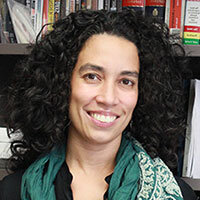
Mangual Figueroa draws from the fields of language socialization and linguistic anthropology to examine language use and learning in Latinx communities living in the United States. Her ethnographic research documents the ways in which linguistic and cultural development is shaped by citizenship status and schooling practices during everyday, routine interactions. Her work has appeared in Anthropology & Education Quarterly, Language Policy American, and the Educational Research Journal. Prior to obtaining her Ph.D., she taught English as a Second Language and Spanish in public schools in the Bronx and Brooklyn.
Nara Milanich
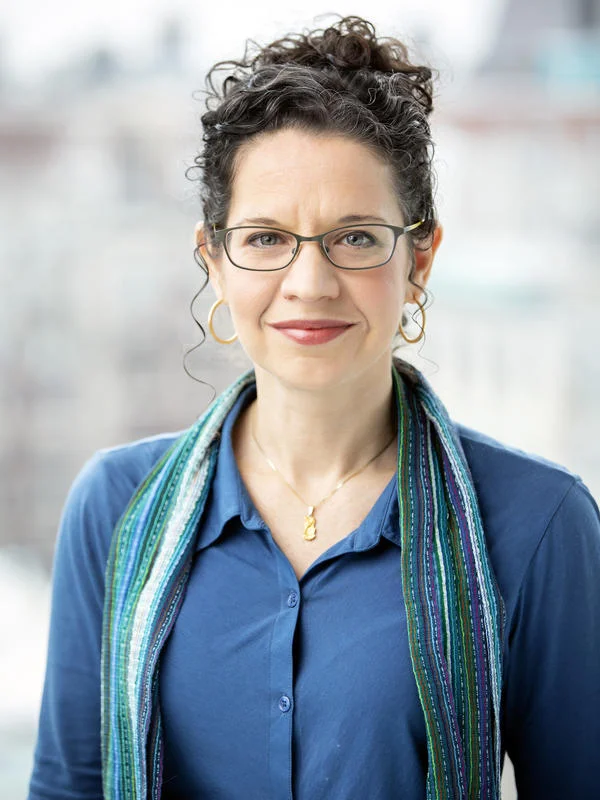
Nara Milanich, Professor of History, joined the faculty of Barnard in 2004. Her scholarly interests include modern Latin America, Chile, and the comparative histories of family, gender, childhood, reproduction, law, and social inequality.
Nara Milanich
Professor of History, Barnard College
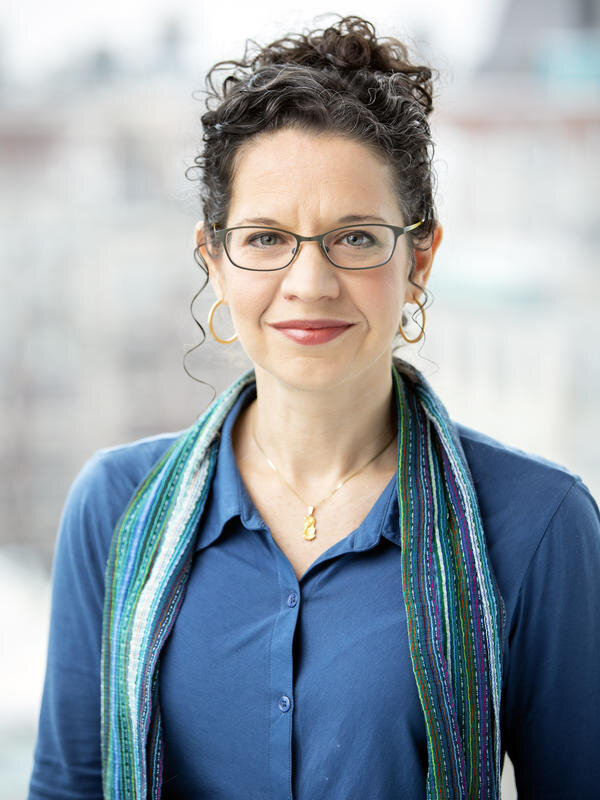
Nara Milanich, Professor of History, joined the faculty of Barnard in 2004. Her scholarly interests include modern Latin America, Chile, and the comparative histories of family, gender, childhood, reproduction, law, and social inequality.
Professor Milanich teaches courses ranging from the Modern Latin American History survey to a comparative seminar on the Global Politics of Reproduction. She works closely with PhD students in Latin American History at Columbia. Professor Milanich has also taught in and directed the Masters in Latin American Studies (MARSLAC) based in the Institute for Latin American Studies.
Her research and scholarship have been supported by the Fulbright Commission for Educational Exchange, the Social Science Research Council, the National Endowment for the Humanities, Unesco, and the American Council of Learned Societies.
Professor Milanich writes and publishes in both Spanish and English.

Lara Nettelfield
Lara J. Nettelfield is a Senior Lecturer in the Discipline of Human Rights at the Institute for the Study of Human Rights and the Department of Political Science at Columbia University. She is currently working on an oral history project, The New Humanitarians, about the refugee crisis in Europe and the Middle East. Her research interests include human rights, forced migration, transitional justice, technology and society, and social movements.
Lara Nettelfield
Senior Lecturer, Institute for the Study of Human Rights, Columbia University
Lara J. Nettelfield is a Senior Lecturer in the Discipline of Human Rights at the Institute for the Study of Human Rights and the Department of Political Science at Columbia University. She is currently working on an oral history project, The New Humanitarians, about the refugee crisis in Europe and the Middle East. Her research interests include human rights, forced migration, transitional justice, technology and society, and social movements.
In 2015, she published a co-authored manuscript, Srebrenica in the Aftermath of Genocide (Cambridge University Press). This book reveals how interactions between local, national and international interventions - from refugee return and resettlement to commemorations, war crimes trials, immigration proceedings and election reform - have led to subtle, positive effects of social repair, despite persistent attempts at denial. Srebrenica in the Aftermath of Genocide received Honorable Mention for the International Studies Association's Ethnicity, Migration and Nationalism (ENMISA) Distinguished Book Award (2015) and was shortlisted for the 2015 Rothschild Prize of the Association for the Study of Nationalities (ASN). In 2015, Senado Kreso translated it into Bosnian for the Institute for History (Sarajevo).
Nettelfield is also the author of Courting Democracy in Bosnia and Herzegovina: The Hague Tribunal's Impact in a Postwar State (Cambridge University Press, 2010), which former Hague prosecutor Richard Goldstone has called “essential reading, well-balanced, and realistic.” Courting Democracy won the 2011 Marshall Shulman prize of the Association for Slavic, East European and Eurasian Studies (ASEEES).
A political scientist by training, Nettelfield received Ph.D., M.Phil. and M.A. degrees from Columbia University and an A.B. degree from the University of California, Berkeley. She also completed a certificate at Columbia's Harriman Institute. She has worked for international organizations such as the International Commission on Missing Persons (ICMP), the Organization for Security and Cooperation in Europe (OSCE) and the NATO Parliamentary Assembly, in addition to serving as an advisor for non-governmental organizations. She has served on the editorial board of the British International Studies Association’s (BISA) flagship journal Review of International Studies (RIS), East European Politics, and the Sarajevski žurnal za društvena pitanja (Sarajevo Social Science Review). She frequently contributes to the press, including the New York Times, the Guardian, Buzzfeed, Foreign Policy, the BBC, the Edmonton Journal, OpenDemocracy, NBC, the Detroit Free Press, and the St. Louis Post-Dispatch. She is a fellow of the Higher Education Academy (HEA) (UK).

Garnett Russell
Garnet Russell’s research explores how countries rely on the education system to promote peacebuilding and transitional justice and how they use global models around human rights and citizenship. She draws on a sociological disciplinary perspective and mixed quantitative and qualitative methods to investigate questions related to education in post-conflict contexts, particularly in Sub-Saharan Africa, including Rwanda and South Africa.
Garnett Russell
Assistant Professor of International and Comparative Education, Teacher’s College, Columbia University

Garnet Russell’s research explores how countries rely on the education system to promote peacebuilding and transitional justice and how they use global models around human rights and citizenship. She draws on a sociological disciplinary perspective and mixed quantitative and qualitative methods to investigate questions related to education in post-conflict contexts, particularly in Sub-Saharan Africa, including Rwanda and South Africa. Russell has also conducted research on human rights and diversity in New York high schools and the right to education for urban refugees in Ecuador, Lebanon, Kenya and other countries in the global south.
She is a co-founder and former co-chair of the Education, Conflict, and Emergencies Special Interest Group (SIG) of the Comparative and International Education Society (CIES). Russell also serves on the editorial board of the Journal on Education in Emergencies (JEiE) and the International Journal of Human Rights Education.

J.C. Salyer
Assistant Professor of Practice in Human Rights and Anthropology, Barnard College
J.C. Salyer is an anthropologist and a lawyer whose work focuses on law and society, immigration law, and social justice. He is also the staff attorney for the Arab-American Family Support Center, a community-based organization in Brooklyn, and runs the organization’s immigration clinic. His current research focuses on migration, disruption, and displacement related to climate change in the southwestern Pacific.
J.C. Salyer
Associate Professor of Practice in Human Rights and Anthropology, Barnard College

J.C. Salyer is an anthropologist and a lawyer whose work focuses on law and society, immigration law, and social justice. He is also the staff attorney for the Arab-American Family Support Center, a community-based organization in Brooklyn, and runs the organization’s immigration clinic. His current research focuses on migration, disruption, and displacement related to climate change in the southwestern Pacific.
Working Group Affiliation
Migrant Personhood and Rights: Crises of Recognition, Project Director
Pacific Climate Circuits: Moving Beyond Science, Technology, Engineering, and Economics, Project Director