
Extractive Media: Infrastructures & Aesthetics of Depletion
Project Co-Directors: Zeynep Çelik Alexander and Debashree Mukherjee
Project Coordinator: Hannah Rachel Pivo
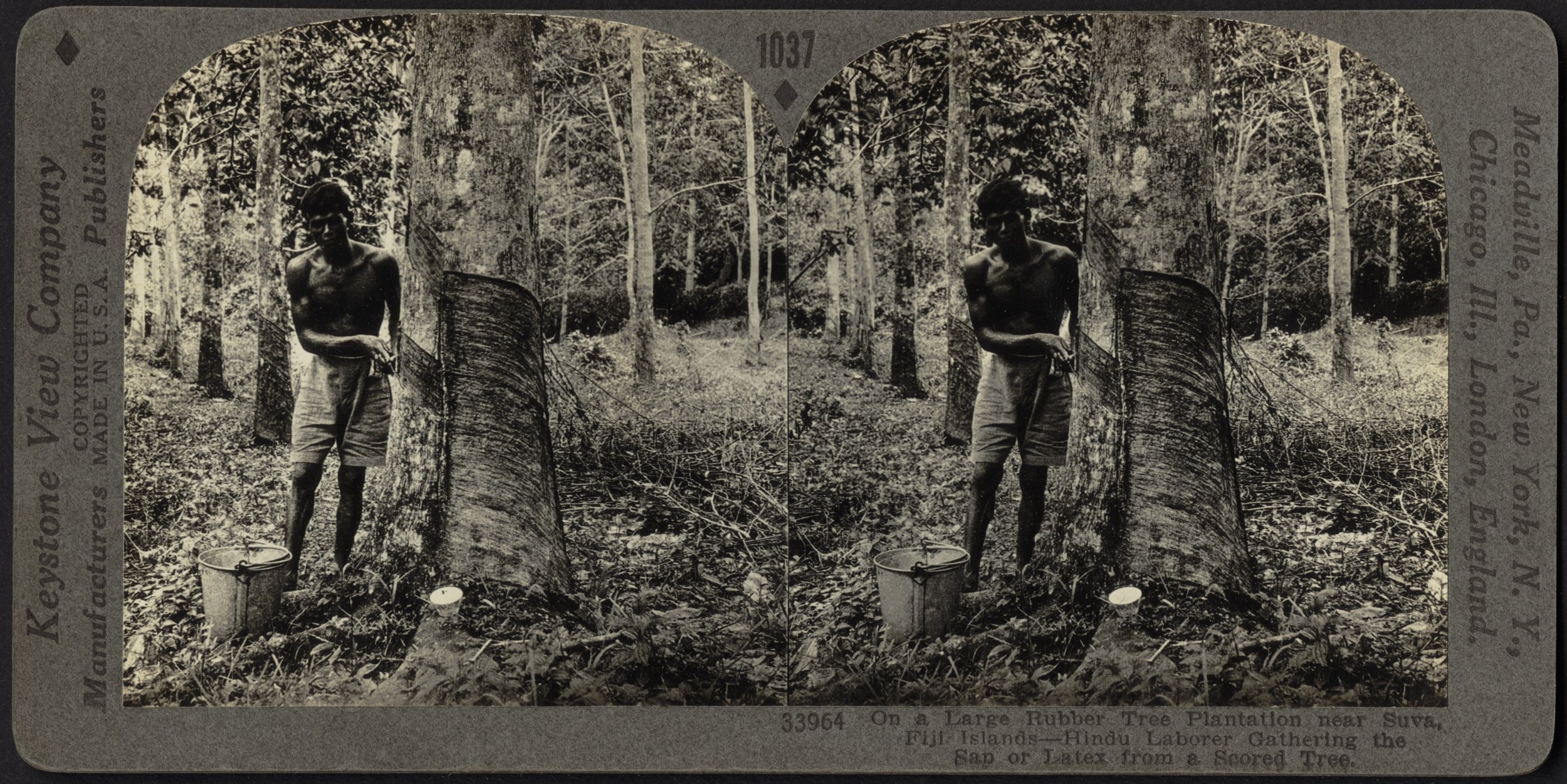
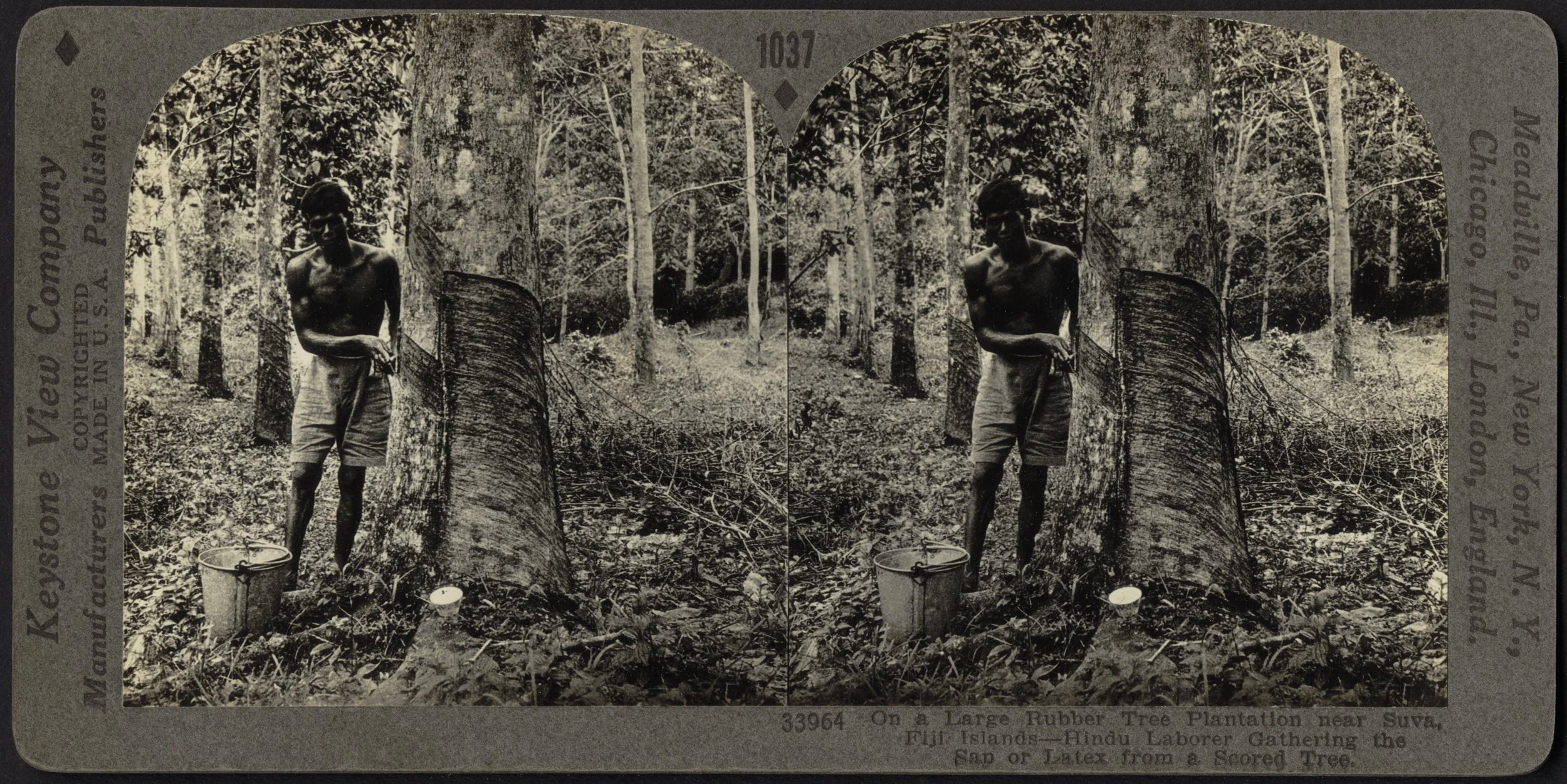
A "Hindu laborer" gathers sap from a rubber tree on a plantation in Fiji. Stereograph card published by Keystone View Company, NY, c. 1880.
Questions of resource extraction are now front and center in almost every academic discipline across the humanities and social sciences. Propelled by the urgency of planetary climate crisis, scholars are reinventing their core research questions to ask how we came to this pass, and also where do we go from here? The Extractive Media working group seeks to take this conversation beyond fossil fuels to track the ways in which energy economies span continents and oceans, differentially affect unequal bodies and lives, and bleed across disparate sites such as the coal mine and the computer screen. We begin with the question of how media forms (print, architecture, photography, cinema, or, more recently, computational media) have historically contributed to material and imaginative modes of extraction, and, further, how we might turn to these very forms to find new possibilities for equitable futures?
Readings
Publications
See below a list of recent publications by working group members:
Debashree Mukherjee (2022). Energy and Exhaustion in a Coal Melodrama: Kaala Patthar (1979), in Ecocinema: Theory & Practice II, Eds. Stephen Rust, Salma Monani, Sean Cubitt. Routledge, pp. 52-69.
Zeynep Çelik Alexander, “Nineteenth-Century Alchemy: Mineral Statistics circa 1850,” Perspecta 55 (Spring 2023), pp. 30-43.
Past Events





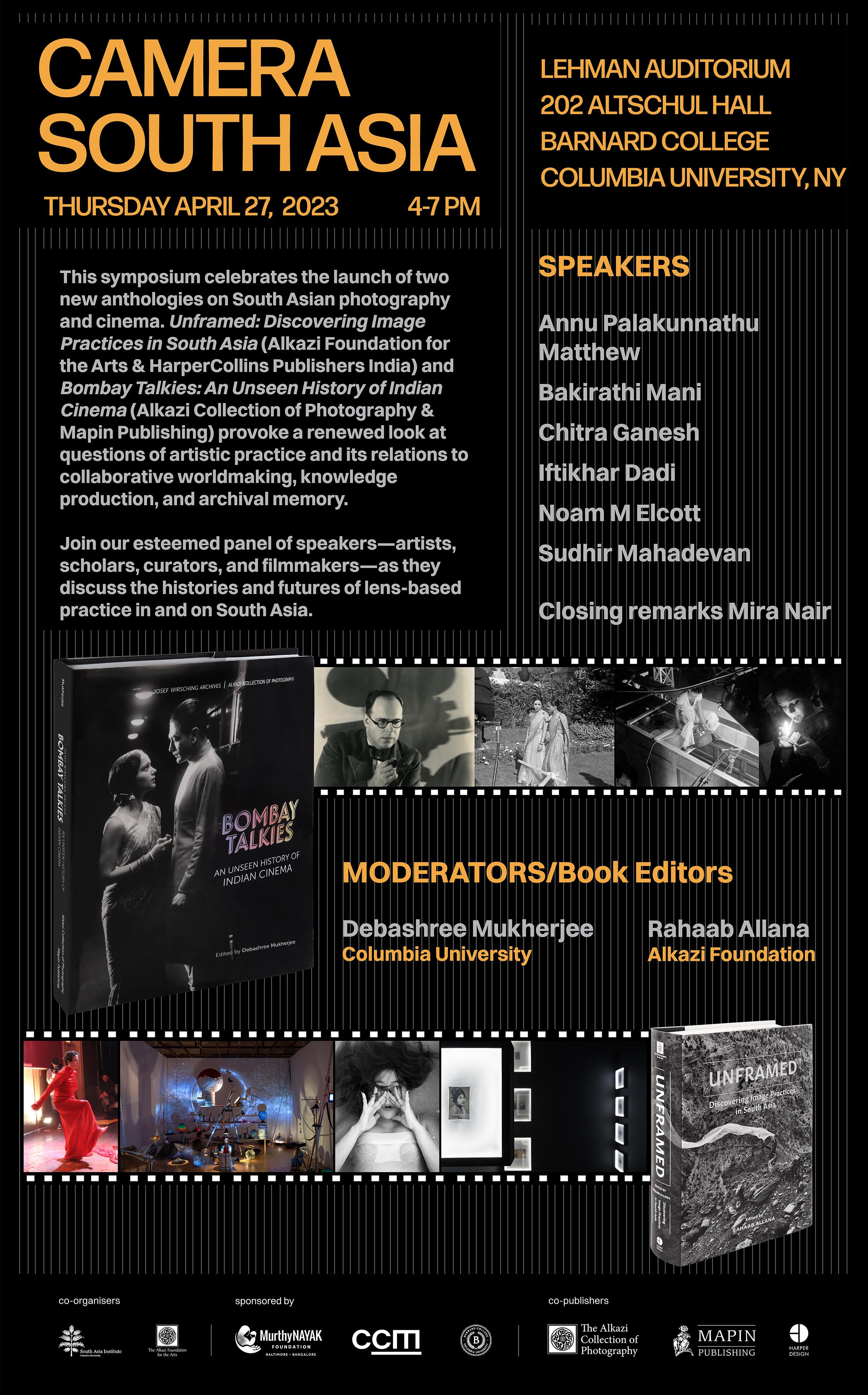
Camera South Asia celebrates the launch of two new anthologies on South Asian photography and cinema
Fellows
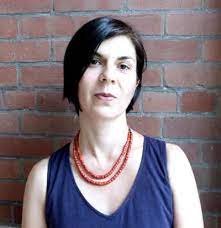
Zeynep Çelik Alexander is Associate Professor in the Department of Art History and Archaeology at Columbia University. Her work focuses on the history and theory of architecture since the eighteenth century. She is the author of Kinaesthetic Knowing: Aesthetics, Epistemology, Modern Design (Chicago and London: University of Chicago Press, 2017), the recipient of the 2019 Charles Rufus Morey Book Award.

Professor, Department of Religion, Columbia University
Matthew Engelke is an anthropologist with research interests in Christianity, secular humanism, media, materiality, semiotics. He has conducted fieldwork in Zimbabwe and in Britain. He is currently working on a book about secularity and death, based on research among humanist funeral celebrants in London. Before joining the Columbia faculty in 2018, Engelke taught in the Department of Anthropology at the London School of Economics and Political Science for 16 years. He received his BA from the University of Chicago in 1994 and his PhD from the University of Virginia in 2002.
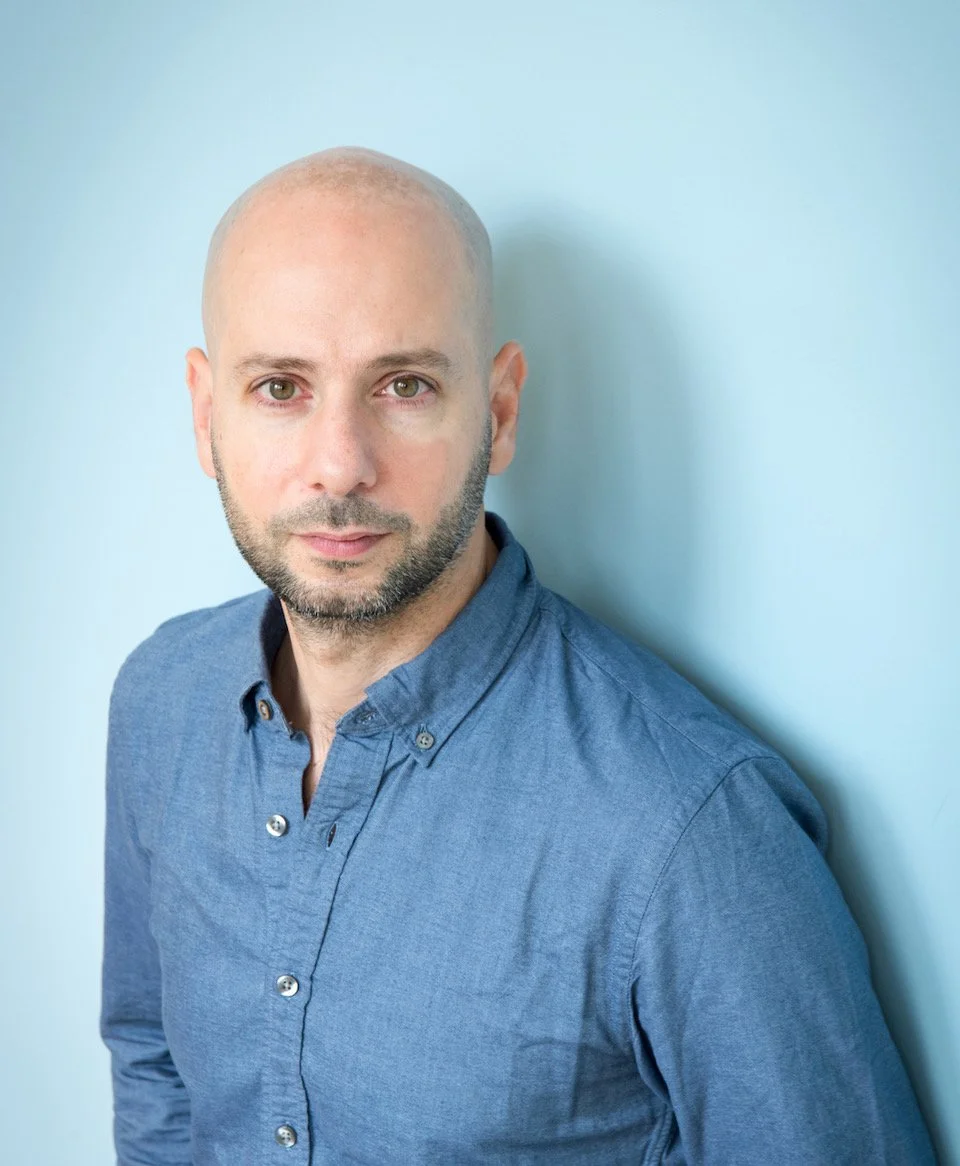
Ralph Ghoche is a nineteenth-century architecture and urbanism historian and Assistant Professor in the Department of Architecture at Barnard College, Columbia University.
Professor, Department of Anthropology, Barnard College and Columbia University
Brian Larkin is Professor of Anthropology at Barnard College and Columbia University and the author of Signal and Noise: Media Infrastructure and Urban Culture in Nigeria (Duke University Press, 2008). With Lila Abu-Lughod and Faye Ginsburg he co-edited Media Worlds: Anthropology on New Terrain (University of California Press, 2000). His research examines the introduction of media technologies in Nigeria – cinema, radio, digital media - and the religious, political, and cultural changes they bring about.
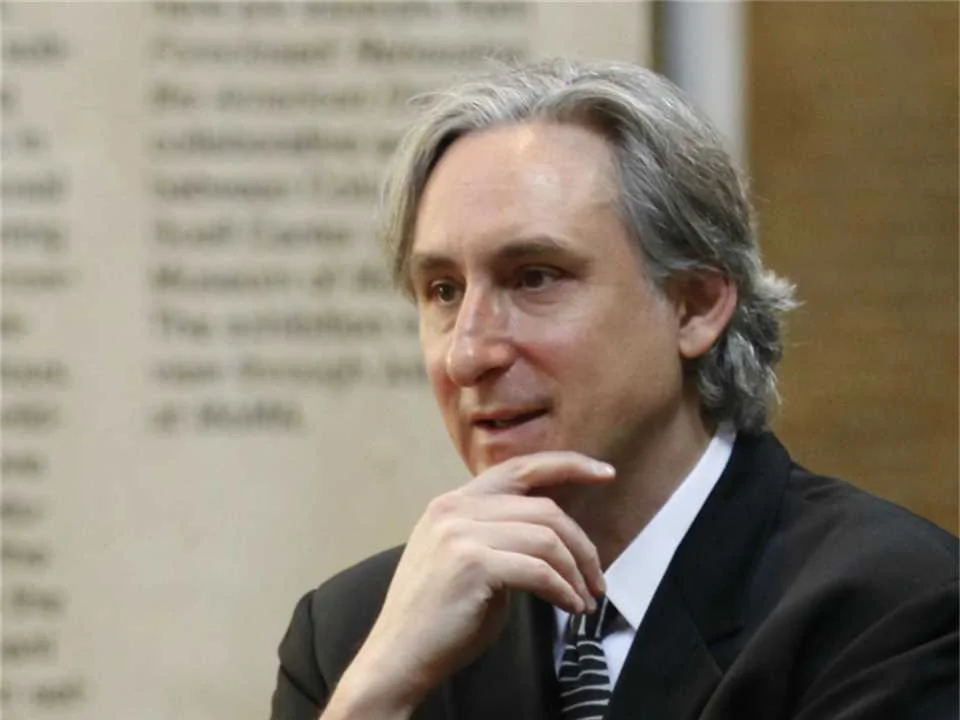
Professor, Department of Architecture, Graduate School of Architecture, Planning, and Preservation, Columbia University
Reinhold Martin is a founding co-editor of the journal Grey Room and has published widely on the history and theory of modern and contemporary architecture. He is the author of The Organizational Complex: Architecture, Media, and Corporate Space (MIT Press, 2003), and Utopia’s Ghost: Architecture and Postmodernism, Again (Minnesota, 2010), as well as the co-author, with Kadambari Baxi, of Multi-National City: Architectural Itineraries (Actar, 2007). His most recent book, The Urban Apparatus: Mediapolitics and the City was published in 2016 from the University of Minnesota Press. Currently, Martin is working on a history of the nineteenth century American university as a media complex.
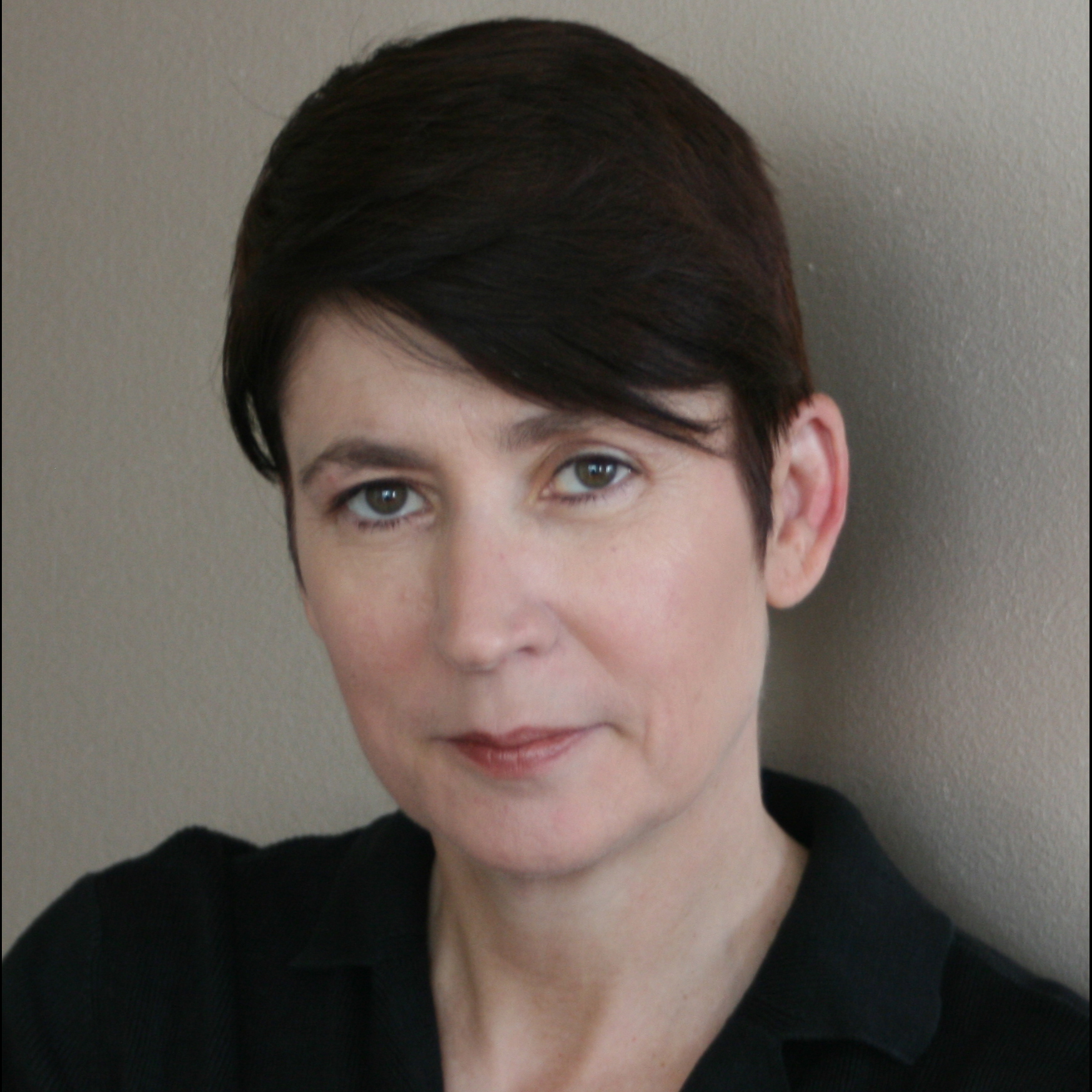
Professor, Department of Anthropology, Columbia University
Rosalind Morris focuses her fieldwork in two main areas: Thailand and South Africa. Over the past decade, she has devoted her attention to thinking about a number of inter-related issues and questions concerning: the history of modernity in Southeast Asia and the place of the mass media in its development; the relationships between value and violence; the sexualization of power and desire; the theorization of gender; and the history of anthropological thought and social theory. In her writings on all of these issues, she attends to questions of representation.
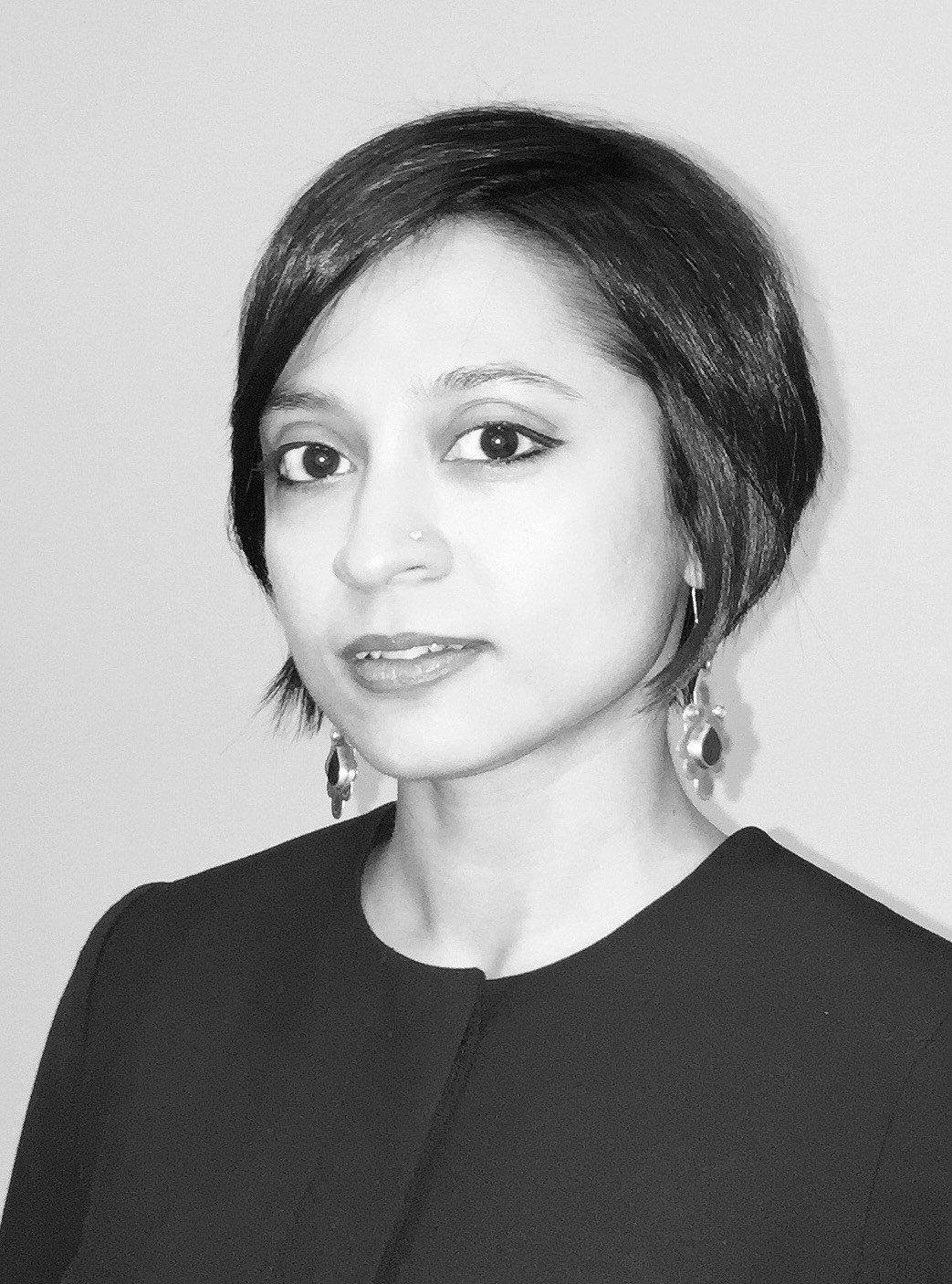
Debashree Mukherjee is Associate Professor in the Department of Middle Eastern, South Asian, and African Studies (MESAAS) at Columbia University. Her first book, Bombay Hustle: Making Movies in a Colonial City (2020), approaches film history as an ecology of material practices and practitioners, and her next book develops a media history of indentured migration and plantation capitalism in the Indian Ocean region. Debashree has published on feminist film historiography, labor, cities, and increasingly on energy and exhaustion in various film journals and anthologies.

Hannah Pivo is a Ph.D. candidate specializing in 19th- and 20th-century design and architecture, with a focus on the history of graphic design and information visualization. Her work has appeared in the journals Design Issues and Public Art Dialogue and she has contributed to exhibition catalogs on various topics in modern and contemporary art and design.
News


