
Science and Social Difference
Project Director: Rebecca Jordan-Young
This working group considered a series of linked questions about the social, cultural, and scientific nature of the sexed and raced body. The governing bodies for international sporting competitions (such as the International Olympic Committee) released controversial new policies on who can compete in women's events. These policies, which were meant to ensure that competitors are both "female" and "feminine enough" to compete with other women athletes, provided an excellent focal point for exploring how an entangled and intersectional view of sex, gender, and other social formations might be relevant to contemporary matters of science and social policy. This project's broader goal was to use the specific focus on sex-testing of elite athletes as a lab for considering larger questions related to social difference and the intersections of scientific and sociocultural perspectives on the sexed and raced body.
Fellows

Professor, Department of Anthropology, Barnard College
Nadia Abu El-Haj is professor in the Departments of Anthropology at Barnard College and Columbia University, and Co-Director of the Center for Palestine Studies. She is the author of Facts on the Ground: Archaeological Practice and Territorial Self-Fashioning in Israeli Society (2001), and The Genealogical Science: The Search for Jewish Origins and the Politics of Epistemology (2012), both published by the University of Chicago Press.
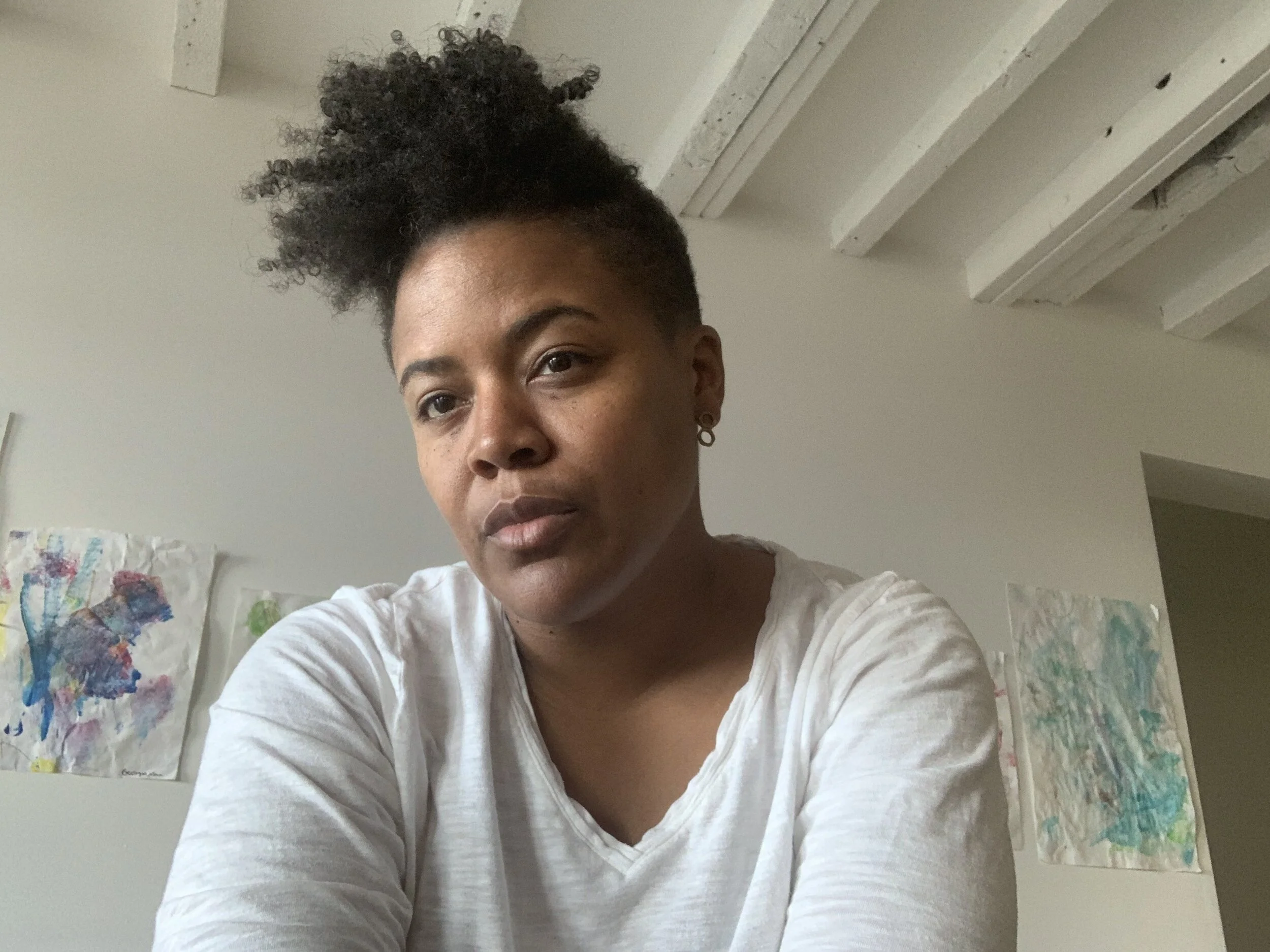
Assistant Professor, Department of Anthropology, Columbia University
Vanessa Agard-Jones is Assistant Professor of Anthropology at Columbia University, where she maintains affiliations with the Institute for Research on Women, Gender and Sexuality, the Center for Science and Society, the Earth Institute, and the Department of African American and African Diaspora Studies. At its most expansive, Agard-Jones’ work asks how coloniality is made material: in social forms, in human and nonhuman bodies, and in the landscapes in which we live.

Department of English, Columbia University
Trevor Corson is the author of two books, including the worldwide popular-science bestseller The Secret Life of Lobsters. His work has been anthologized in The Best American Science Writing and he was managing editor of the literary magazine Transition when it won three consecutive Alternative Press Awards for International Reporting. He has written for The Atlantic, The New York Times, and many other publications.
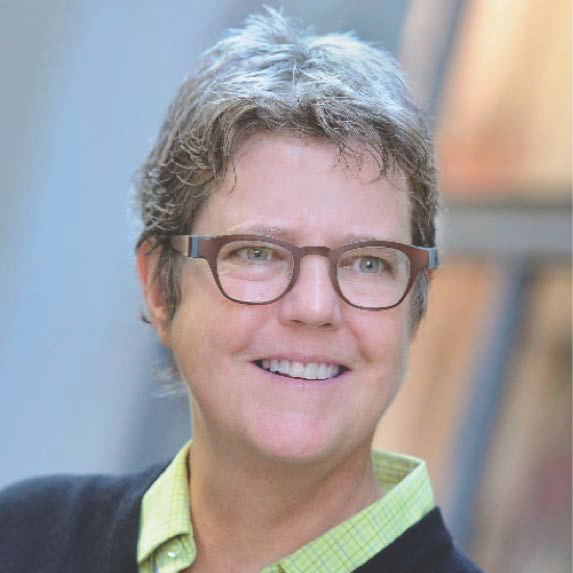
Professor, Department of Law, Columbia Law School
Katherine Franke is the Sulzbacher Professor of Law at Columbia Law School, where she also directs the Center for Gender and Sexuality Law and is the faculty director of the Public Rights/Private Conscience Project. She is a member of the Executive Committee for the Institute for Research on Women, Gender and Sexuality, a member of the Steering Committee for the Center for the Study of Social Difference, and an Affiliated Faculty member for the Center for Palestine Studies. She is among the nation's leading scholars writing on law, religion and rights, drawing from feminist, queer, and critical race theory.
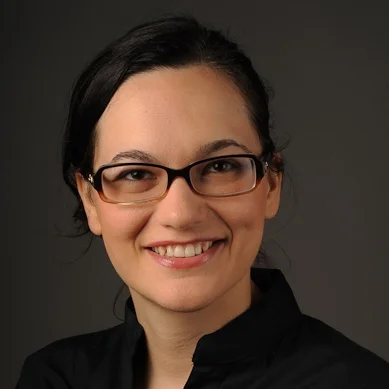
Associate Professor, Spanish & Latin American Cultures, Barnard College
Maja Horn specializes in contemporary Caribbean cultures with a focus on literature, visual and performance art, and political culture. She is the author of Masculinity after Trujillo: The Politics of Gender in Dominican Literature (University Press of Florida in 2014) and is currently completing a second monograph on queer Dominican literature, visual and performance art. She has also published on Latin American and Caribbean arts for various Dominican and U.S. art magazines and is currently serves on the editorial committee for the journal Small Axe: A Caribbean Journal of Criticism.
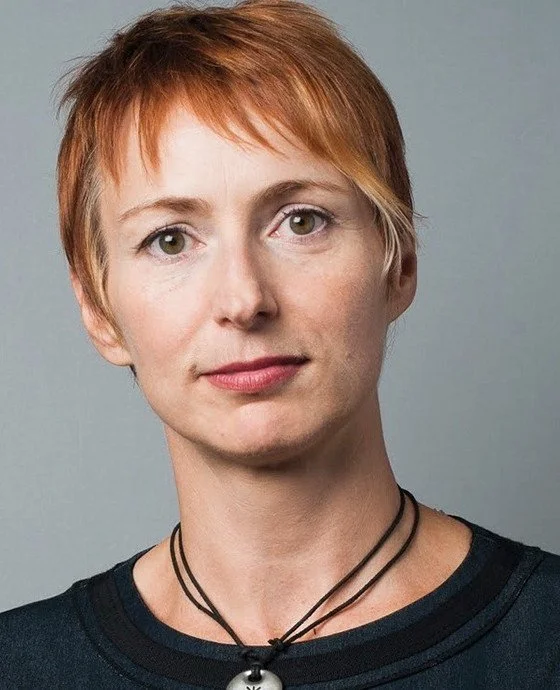
Professor, Department of Women’s, Gender, and Sexuality Studies, Barnard College
Rebecca Jordan-Young is Professor and Chair of Women’s, Gender, and Sexuality Studies at Barnard College, Columbia University. A sociomedical scientist, Jordan-Young explores reciprocal relations between biomedical sciences and social hierarchies of gender, sexuality, race, and class.

Fellow, Biomedical Ethics, Stanford University
Katrina Karkazis is an anthropologist and bioethicist at the Center for Biomedical Ethics at Stanford University and a faculty affiliate in the Program for Feminist, Gender, and Sexuality Studies, also at Stanford.
Her recent work examines "gender verification" of elite female athletes. An article analyzing the latest policies was published in the American Journal of Bioethics.
Commentaries have appeared in the New York Times, The Guardian, New Scientist, and Discover.

Associate Professor, Department of Education, Barnard College
Maria S. Rivera Maulucci, Associate Professor of Education, joined the faculty of Barnard in 2004. She is a proud member of the Class of 1988 at Barnard and serves as Co-Fund Chair. Prior to coming to Barnard, Maria served as Director of the Science Professional Development Center for Region One in the Bronx. Her expertise in science pedagogy and teacher education draws on 16 years of experience teaching at the elementary, secondary, and postsecondary levels. Her interdisciplinary scholarship focuses on how teachers learn to teach for social justice and the role of language, identity, and emotions in teacher development. Professor Rivera is the Principal Investigator for the Barnard College Robert Noyce Teacher Education Scholars Program (BNTSP) funded by the National Science Foundation.

Assistant Professor, Department of Theater, Barnard College
Shayoni Mitra is an Assistant Professor of Theater at Barnard College. Professor Mitra works at the intersection of performance and politics. Her interest in political theatre stems from her years as an actor with Delhi based street theatre group Jana Natya Manch. She is currently revising toward publication her manuscript, “Contesting Capital: A History of Political Theatre in Postcolonial Delhi,” which interrogates the ever shifting, adapting expressions of political theatre under different configurations of power. It is a historical look at both proscenium and street theatre from the decade of Independence in the 1940s to the twenty first century. The manuscript covers a range of styles including folk and revolutionary singing troupes, large open-air performances, topical agit-prop plays, intimate and improvized activist pieces and feminist performances.

PhD Student, Sociomedical Sciences, Columbia University
Ronna A. Popkin is a Ph.D. Candidate in Sociomedical Sciences (SMS) with a concentration in Sociology at Columbia University. She was a Fellow in SMS's NICHD predoctoral training program in Gender, Sexuality, and Health. Her multi-disciplinary research interests span the fields of sociology, public health, science and technology studies, and gender studies, and include adolescent and young adult sexual and reproductive health, genetic risk, and women’s health in the United States. Prior to attending Columbia, Ms. Popkin worked as a community sexuality educator for Planned Parenthood of Wisconsin and lectured courses at the University of Wisconsin-Madison on sexuality education, women’s health, and the politics of fertility control. Ms. Popkin earned her M.S. in Health Education and B.S. with Honors in Women’s Studies from the University of Wisconsin-Madison.

Fellow, Anthropology, New York University
Rayna Rapp (former Rayna R. Reiter) is a professor and associate chair of anthropology at New York University, specializing in gender and health; the politics of reproduction; science, technology, and genetics; and disability in the United States and Europe. She has contributed over 80 published works to the field of anthropology, independently, as a co-author, editor, and forward-writing, including Robbie Davis-Floyd and Carolyn Sargent's Childbirth and Authoritative Knowledge. Her 1999 book, Testing Women, Testing the Fetus: the Social Impact of Amniocentesis in America, received multiple awards upon release and has been praised for providing "invaluable insights into the first generation of women who had to decide whether or not to terminate their pregnancies on the basis of amniocentesis result".
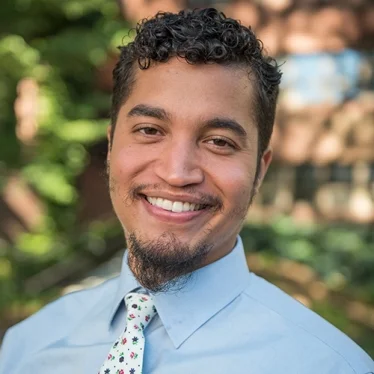
Fellow, Women’s, Gender, and Sexuality Studies, University of Cincinnati.
J.T. Roane is assistant professor of Women’s, Gender, and Sexuality Studies at the University of Cincinnati. He is also part of the University’s urban futures initiative. Roane is broadly concerned about matters of geography, sexuality, and religion in relation to Black communities. He is at work on a manuscript, Dark Agoras: Insurgent Black Social Life and the Politics of Place in Philadelphia, which historicizes multiple modes of insurgent spatial assemblage Black communities articulated in Philadelphia in the second half of the twentieth.

Fellow, Sexuality, Women's and Gender Studies, Amherst College
Sahar Sadjadi is a physician, anthropologist and assistant professor of Sexuality, Women’s and Gender studies at Amherst College. She is currently completing a book based on an ethnographic multi-sited study of the clinical practices around gender non-conforming children in the US and the revision of the psychiatric category, Gender Identity Disorder in Children.

Professor, Department of Neuroscience and Psychology , Barnard College
Rae Silver is the Helene L. and Mark N. Kaplan Professor of Natural & Physical Sciences and the head of the Silver Neurobiology Laboratory. Since 1976, Professor Silver has been a member of Barnard’s faculty and has taught courses in Quantitative Reasoning, Neuroscience and Psychology. The National Science Foundation, the National Institutes of Mental Health, and National Institute of Neurological Disorders and Stroke, Air Force Office of Scientific Research, and the Office of Naval Research, are among the organizations that have supported her research.

Mailman School of Public Health and Department of Anthropology, Columbia University
Carole S. Vance, PhD, works on integrating sexuality with human rights frameworks and rights-based health interventions. She has written widely on sexuality, science, gender, and policy; policy controversies about sexual expression and imagery; and sexuality theory and research methods. For the past ten years, she has directed a program on sexuality, gender, health and human rights, which advances policy-relevant scholarship and facilitates exchange between researchers and advocates on sexual health and rights issues.
Past Events

In early 2015 Shoshana Magnet, associate professor at the Institute of Feminist and Gender Studies at the University of Ottawa, came to speak to CSSD’s working group on Science and Social Difference about her feminist analysis of recent scientific inquiry into mixed societies of robots and insects.
Magnet, co
Please join us for "Beyond masculinity: testosterone, sexual desire, and gender/sex," lecture by Sari van Anders, University of Michigan.