
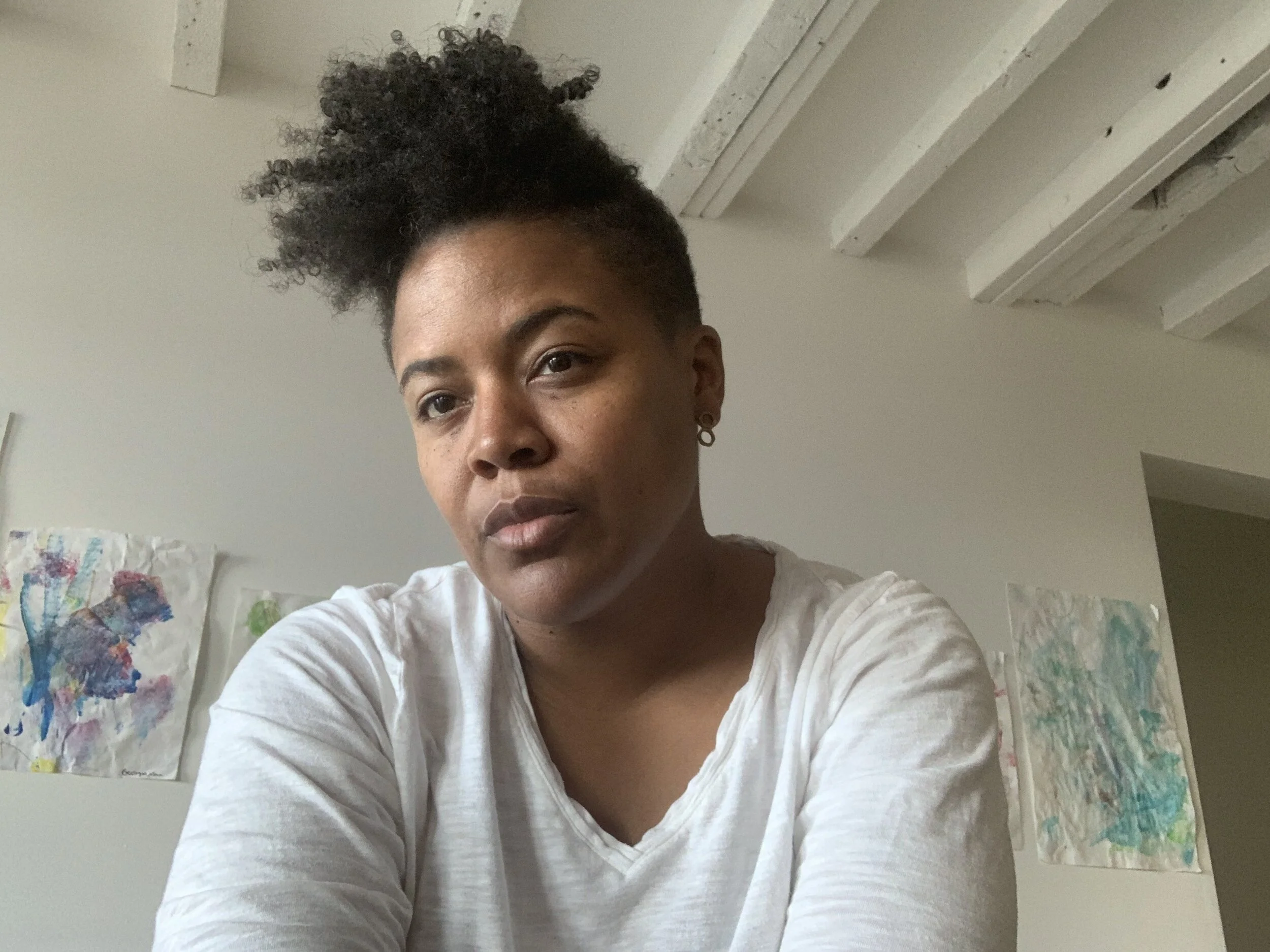
Vanessa Agard-Jones
Assistant Professor, Department of Anthropology, Columbia University
Vanessa Agard-Jones is Assistant Professor of Anthropology at Columbia University, where she maintains affiliations with the Institute for Research on Women, Gender and Sexuality, the Center for Science and Society, the Earth Institute, and the Department of African American and African Diaspora Studies. At its most expansive, Agard-Jones’ work asks how coloniality is made material: in social forms, in human and nonhuman bodies, and in the landscapes in which we live.
Vanessa Agard-Jones
Assistant Professor of Anthropology, Columbia University
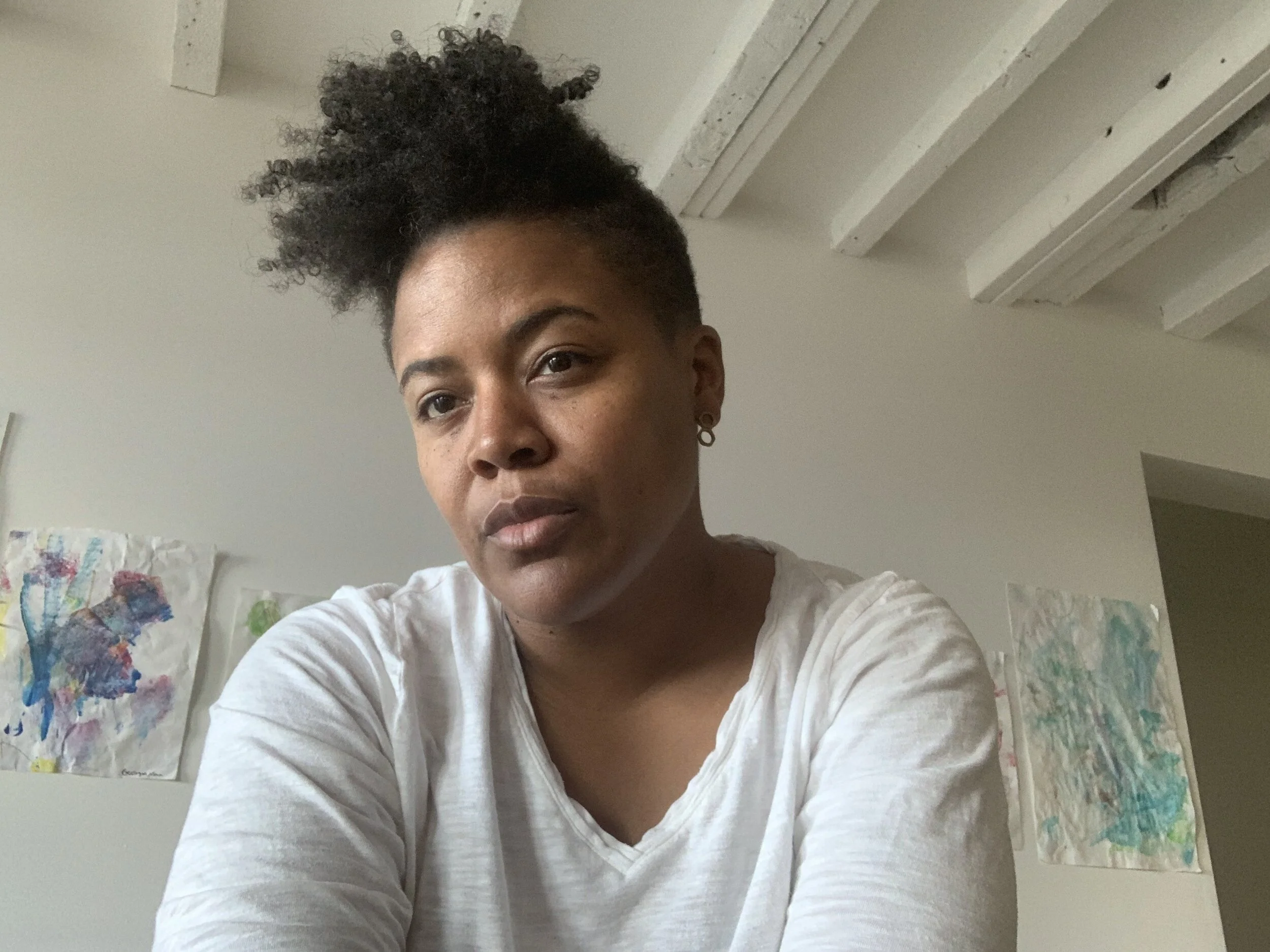
Vanessa Agard-Jones is Assistant Professor of Anthropology at Columbia University, where she maintains affiliations with the Institute for Research on Women, Gender and Sexuality, the Center for Science and Society, the Earth Institute, and the Department of African American and African Diaspora Studies. At its most expansive, Agard-Jones’ work asks how coloniality is made material: in social forms, in human and nonhuman bodies, and in the landscapes in which we live. With a focus on Black life in the Atlantic world, she conducts historical and ethnographic research on racialization, environmental degradation and the politics of gender and sexuality. In Body Burdens: Toxic Endurance and Decolonial Desire in the French Atlantic (in preparation), Agard-Jones reframes the concept of body burden to account for the accretion of toxicities in Martinique, a French territory in the Caribbean. Focused on material exposures to a pesticide called kepone/chlordécone and on immaterial exposures to racism, sexism, and homophobia, Body Burdens asks how contemporary debates about sovereignty on the island are articulated through the prism of ideas about porosity and contamination. Agard-Jones is a member of the Social Text Collective, Scholars for Social Justice and serves on the editorial boards of PoLAR: the Political and Legal Anthropology Review and Environment and Society: Advances in Research.
Working Group Affiliations
Black Atlantic Ecologies, Project Director
Anna Arabindan-Kesson
Fellow, Black Diasporic Art, Princeton University
I am an immigrant art historian, writer and curator. At Princeton University I hold the position of Assistant Professor of Black Diasporic Art with a joint appointment in the Departments of African American Studies and Art and Archaeology. I was born in Sri Lanka but later moved to Australia and New Zealand where I trained and worked as a Registered Nurse, a career that also took me to the United Kingdom and Ghana. After studying for a BA at the University of Western Australia I transitioned to a career in the humanities, completing my PhD in African American Studies and Art History at Yale University.
Anna Arabindan-Kesson
Assistant Professor of Black Diasporic Art, Princeton University

I am an immigrant art historian, writer and curator. At Princeton University I hold the position of Assistant Professor of Black Diasporic Art with a joint appointment in the Departments of African American Studies and Art and Archaeology. I was born in Sri Lanka but later moved to Australia and New Zealand where I trained and worked as a Registered Nurse, a career that also took me to the United Kingdom and Ghana. After studying for a BA at the University of Western Australia I transitioned to a career in the humanities, completing my PhD in African American Studies and Art History at Yale University. It has been an honor to receive several awards and fellowships for my work, including from Yale University, the Smithsonian American Art Museum, Winterthur Library, Museum and Gardens, the Paul Mellon Center for British Art and the American Council of Learned Societies. I have also been involved in several curatorial projects and I currently serve on three boards. I am an advisory council member for the Jamaican artist-run initiative NLS Kingston and 12 Gates Arts and serve on the Board of Trustees for the contemporary photography organization Philadelphia Photo Arts Center.
Working Group Affiliation
Jayna Brown
Professor, Humanities and Media Studies, Pratt Institute
Jayna Brown is a Professor in the Department of Humanities and Media Studies at Pratt Institute and is the co-editor of Social Text. Her areas of knowledge and interest include black expressive cultures, film, queer of color critique, anarchism, materialism, and science fiction.
Jayna Brown
Professor of Humanities and Media Studies, Pratt Institute,

Jayna Brown is Professor in the Department of Humanities and Media Studies at Pratt Institute and is the co-editor of Social Text. Her areas of knowledge and interest include black expressive cultures, film, queer of color critique, anarchism, materialism and science fiction. Her first book, Babylon Girls: Black Women Performers and the Shaping of the Modern (Duke University Press, 2008) won Best Book awards from both the American Society for Theatre Research and the Theater Library Association. She has also published on African American race film and popular performance in various journals including The Journal of Popular Music Studies, GLQ, Social Text and Women and Performance. Her new book, Black Utopias: Speculative Life and the Music of Other Worlds (Duke University Press, Spring, 2021) traces black radical utopian practice and performance, from the psychic travels of Sojourner Truth to the cosmic transmissions of Alice Coltrane and Sun Ra. A current project on terraformation, or the modification of inhabitable environments to make them livable for the human species, asks after the ethics of human habitation in this moment, for neither the scorched earth nor the burning surface of Mars can provide us with virgin soil upon which to start over.
Working Group Affiliation

Aimee Meredith Cox
Fellow, African American Studies and Anthropology, Yale University.
Aimee Meredith Cox is an Associate Professor in the departments of African American Studies and Anthropology at Yale University. She is the editor of Gender: Space (MacMillan) and co-editor of a special issue of Public: A Journal of Imagining America on art and knowledge production in the academy. Cox’s first monograph, Shapeshifters: Black Girls and the Choreography of Citizenship (Duke 2015), won a 2016 Victor Turner Book Prize in Ethnographic Writing.
Aimee Meredith Cox
Associate Professor, African American Studies and Anthropology, Yale University

Aimee Meredith Cox is an Associate Professor in the departments of African American Studies and Anthropology at Yale University. Cox’s first monograph, Shapeshifters: Black Girls and the Choreography of Citizenship (Duke 2015), won a 2016 Victor Turner Book Prize in Ethnographic Writing, and Honorable Mention from the 2016 Gloria E. Anzaldúa Book Prize, given by the National Women’s Studies Association. She is the editor of Gender: Space (MacMillan) and co-editor of a special issue of Public: A Journal of Imagining America on art and knowledge production in the academy. Cox is also a former professional dancer--she danced on scholarship with the Dance Theatre of Harlem and toured extensively with Ailey II. Her next ethnographic project, Living Past Slow Death, explores the creative protest strategies individuals and communities enact to reclaim Black life in the urban United States, focused on the riverine communities of the Mississippi. She is a member of the Social Text Collective.
Working Group Affiliation
Alyssa A.L. James
Phd Student, Anthropology, Columbia University
Alyssa A.L. James is a PhD student and SSHRC Doctoral Fellow whose research examines the consequences of recasting colonial history for Caribbean subjectivities and futures. She interrogates the discourses and practices that transform commodities into heritage - and history into commodity - as it unfolds through Martinique’s nascent coffee revival project.
Alyssa A.L. James
Phd Student, Anthropology, Columbia University
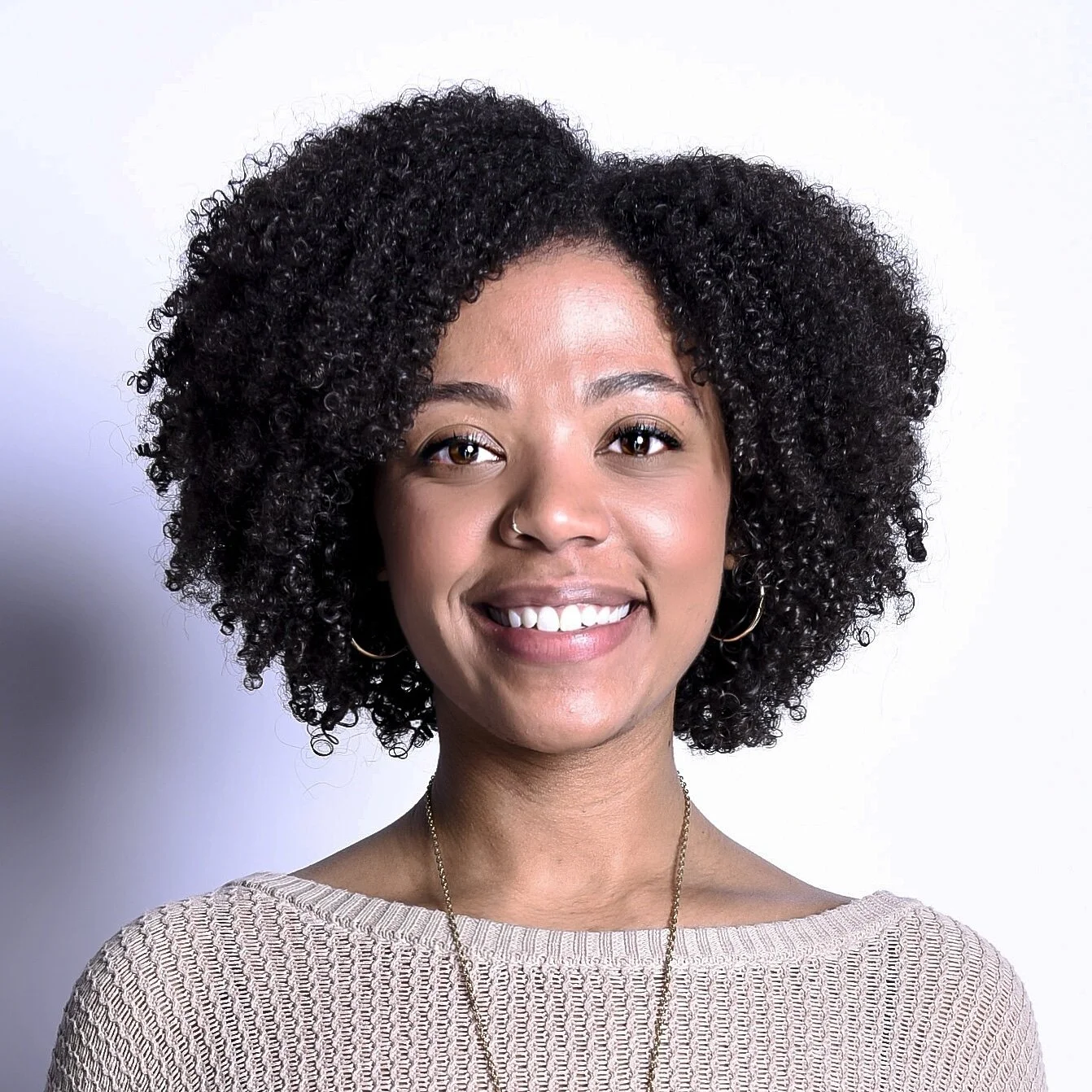
Alyssa A.L. James is a PhD student and SSHRC Doctoral Fellow whose research examines the consequences of recasting colonial history for Caribbean subjectivities and futures. She interrogates the discourses and practices that transform commodities into heritage - and history into commodity - as it unfolds through Martinique’s nascent coffee revival project. She is an editorial assistant for the Small Axe journal.
Working Group Affiliation
Black Atlantic Ecologies, Graduate Coordinator
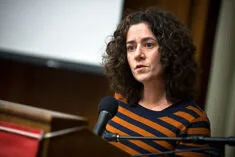
Julie Livingston
Fellow, Social and Cultural Analysis and History, New York University
Julie Livingston is a Silver Professor of Social and Cultural Analysis and History at New York University and a member of the Social Text Collective. Her work lies at the intersection of history, anthropology, and public health. Livingston is concerned with the human body as a moral condition and mode of consciousness; care as a social practice; taxonomy and the relationships that subvert or upend it; the relationship between species; African thought and political and moral imagination; and the environmental consequences of capitalism and economic growth.
Julie Livingston
Professor of Social and Cultural Analysis and History, New York University

Julie Livingston is a Silver Professor of Social and Cultural Analysis and History at New York University and a member of the Social Text Collective. Her work lies at the intersection of history, anthropology, and public health. Livingston is concerned with the human body as a moral condition and mode of consciousness; care as a social practice; taxonomy and the relationships that subvert or upend it; the relationship between species; African thought and political and moral imagination; and the environmental consequences of capitalism and economic growth. She is the author of Self-Devouring Growth: A Planetary Parable as Told from Southern Africa (Duke University Press, 2019); Improvising Medicine: An African Oncology Ward in an Emerging Cancer Epidemic (Duke University Press, 2012), and Debility and the Moral Imagination in Botswana (Indiana University Press, 2005). She has also coedited a number of books and special journal issues. The recipient of numerous awards, she has been a fellow at the Wissenschaftskolleg zu Berlin, and in 2013 she was named a MacArthur Fellow.
Working Group Affiliation

Amber Jamila Musser
Fellow, American Studies, George Washington
Amber Jamila Musser is a Professor of American Studies at George Washington University and the author of Sensational Flesh: Race, Power, and Masochism (NYU, 2014) and Sensual Excess: Queer Femininity and Brown Jouissance (NYU Press, 2018). Musser has published widely on race, critical theory, queer femininities, sexuality, and queer of color critique.
Amber Jamila Musser
Professor, American Studies, George Washington University
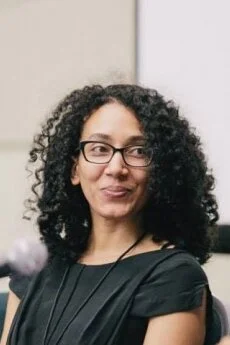
Amber Jamila Musser is a Professor of American Studies at George Washington University and the author of Sensational Flesh: Race, Power, and Masochism (NYU, 2014) and Sensual Excess: Queer Femininity and Brown Jouissance (NYU Press, 2018). Musser has published widely on race, critical theory, queer femininities, sexuality, and queer of color critique. A new project on sweat and the Black body explores its racialization, the workings of bodies exposed to ever-proliferating heat events, and narratives about bodies and their disciplining. This work moves between the eroticization of the sweat that glistens on black dancers’ bodies and the racist myth of malodorous black bodies. This swerves between the use of sweating as the product of exuberant and racialized embodiment and sweat as a sign of racial difference shows both sweat’s polyvalence and material components of desirability and disgust. Importantly, sweat brings us toward breath and the conditions of possibility.
Working Group Affiliation
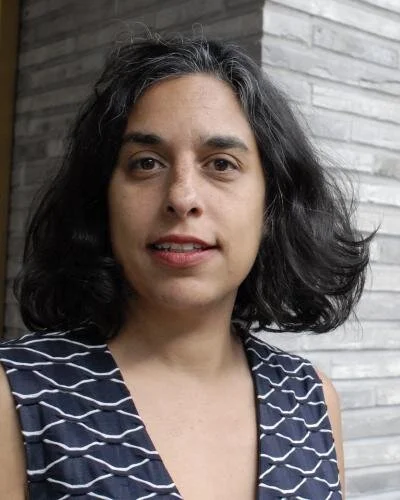
Sonya Posmentier
Fellow, English, New York University
Sonya Posmentier is an Associate Professor in the Department of English at New York University, where she teaches African American and Black Diasporic literature and culture, poetry and poetics, and environmental literature. Her first book Cultivation and Catastrophe: The Lyric Ecology of Modern Black Literature was published in 2017 by Johns Hopkins University Press, and is a recipient of the William Sanders Scarborough award from the Modern Language Association.
Sonya Posmentier
Associate Professor of English, New York University
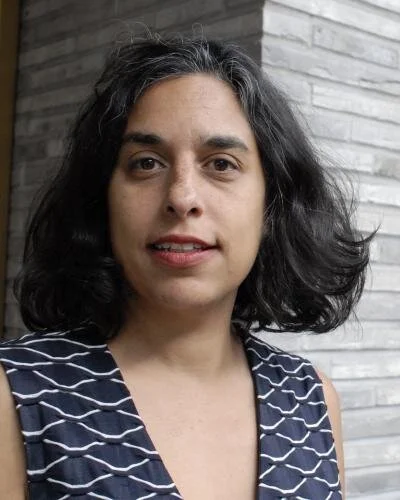
Sonya Posmentier is an Associate Professor in the Department of English at New York University, where she teaches African American and Black Diasporic literature and culture, poetry and poetics, and environmental literature. Her first book Cultivation and Catastrophe: The Lyric Ecology of Modern Black Literature was published in 2017 by Johns Hopkins University Press, and is a recipient of the William Sanders Scarborough award from the Modern Language Association. Her essays and articles have appeared in The New York Times Book Review, American Literature, American Literary History, Public Books, and elsewhere, and she has published poems in Grey, Seneca Review, and Perihelion.
Working Group Affiliation
Chazelle Rhoden
Doctoral Student, Anthropology, Columbia University
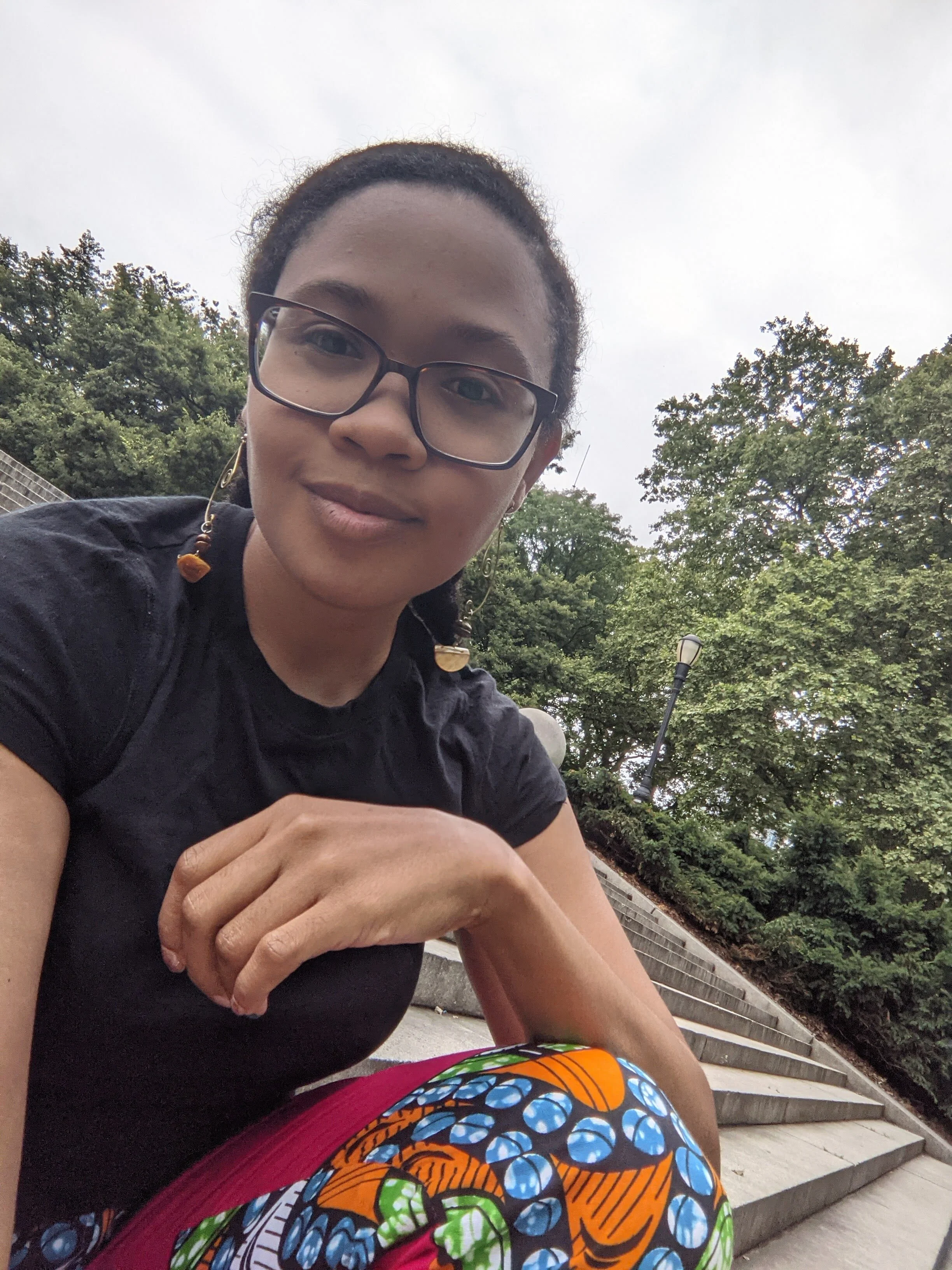
Chazelle Rhoden is a third-year doctoral student of anthropology at Columbia University. She conducts research through a transnational black feminist lens on the relationship between climate change conservation and race in Brazil.
Chazelle Rhoden
Ph.D. Student, Department of Anthropology, Columbia University

Chazelle Rhoden is a third-year doctoral student of anthropology at Columbia University. She conducts research through a transnational black feminist lens on the relationship between climate change conservation and race in Brazil. She is a recipient of Jamaica’s Governor General Award and has published in the fields of paleoclimatology and reggae studies.
Marisa Solomon
Assistant Professor, Department of Women’s, Gender and Sexuality Studies, Barnard College
Marisa Solomon is an Assistant Professor of Women’s, Gender and Sexuality Studies at Barnard College, where she is affiliated with The Earth Institute. Her work draws upon Black feminist Marxism, queer of color critique, feminist intersectional science studies, and standpoint epistemologies to explore how scales of racial and ecological injury are linked from the body, to the neighborhood, to the region, to the Black Atlantic.
Marisa Solomon
Assistant Professor of Women’s, Gender and Sexuality Studies, Barnard College
Marisa Solomon is an Assistant Professor of Women’s, Gender and Sexuality Studies at Barnard College, where she is affiliated with The Earth Institute. Her work draws upon Black feminist Marxism, queer of color critique, feminist intersectional science studies, and standpoint epistemologies to explore how scales of racial and ecological injury are linked from the body, to the neighborhood, to the region, to the Black Atlantic. Broadly, Solomon’s work tracks how embodiment in an anti-Black world contours how, when, and for whom constitutions of matter matter. Her book project, tentatively titled, Mapping Trash Talk: Black Environments and Feminist Cartographies of Black Thought ethnographically situates what it means to “know” waste in the daily refusals of those overburdened by its emplacement and signification. Exploring the Black grammars, aesthetics, and gendered politics that challenge easy definitions of waste and degradation, Mapping Trash Talk locates Black ecopolitical praxis in the fugitivity of disposability. She has published on the materiality of waste and anti-Black histories of urban planning and gentrification in the Journal of International Labor and Working-Class History.
Working Group Affiliation
Black Atlantic Ecologies, Project Director