

Yarimar Bonilla
Associate Professor of Anthropology and Caribbean Studies, Rutgers University
Yarimar Bonilla is an Assistant Professor of Anthropology and Caribbean Studies at Rutgers University.
Yarimar Bonilla
Associate Professor of Anthropology and Caribbean Studies, Rutgers University

PhD, U Chicago, 2008; Assistant Professor, SAS) Political and Historical Anthropology, Postcolonialism, Social Movements, Sovereignty, Citizenship; Caribbean, France
yarimar.bonilla@rutgers.edu
EDUCATION
2008 Ph.D. Socio-Cultural Anthropology, University of Chicago
2003 M.A. Socio-Cultural Anthropology, University of Chicago
1998 M.A. Latin American Studies, University of New Mexico
1996 B.A. University of Puerto Rico - Rio Piedras
ACADEMIC POSITIONS
2011+ Assistant Professor of Anthropology and Caribbean Studies, Rutgers University
2008-11 Assistant Professor, Department of Anthropology, University of Virginia
2006-08 Research Fellow, Carter G. Woodson Institute, University of Virginia
PRIZES
2010 Crystal Award for Best Dissertation, awarded by the Caribbean Studies Association
2009 Daniel F. Nugent Dissertation Prize for Distinguished Work in the field of Historical
Anthropology, awarded by the University of Chicago Department of Anthropology
RESEARCH STATEMENT
I teach and write about social movements, political imaginaries, colonial legacies and historical memory in the non-sovereign Caribbean and the French Outremer. I focus particularly on the non-sovereign Caribbean: societies with lingering colonial relationships and ambiguous political identities that disrupt traditional understandings of citizenship, nationality, sovereignty, and autonomy. I am particularly attentive to the political possibilities that exist outside of the traditional rubrics of state and nation building, and to the formation of political identities that disrupt the assumed relationships between a land, a people, and a state. These concerns have combined with an interest in the role of history in the Caribbean political imagination, and the ways in which Caribbean populations understand and negotiate their past – particularly their experiences with colonialism and slavery.
My first book grounds these questions in an ethnographic study of labor activism in the French Caribbean island of Guadeloupe. I argue that in the wake of what some describe as “failed” nationalist movements, a new kind of labor politics has emerged throughout the Former French colonies that combines the ideological and tactical repertoires of anti-colonial struggles with the political strength of the French labor tradition. The result is a form of “postcolonial syndicalism” that infuses traditional labor struggles with battles over collective memory, creole language politics, cultural revalorization, and nontraditional claims to self-determination. However, unlike the iconic forms of post-war anti-colonialism from which these labor movements emerged, these new political actors do not seek “national liberation” or political independence. Instead they are attempting to carve out alternative forms of political and economic autonomy within the context of French and European integration.
In addition to my work in Guadeloupe, I am also in the process of developing a larger program of comparative research in the non-sovereign Caribbean in order to re-theorize the colonial legacies and contemporary politics of the region. I contend that we need to examine non-sovereignty as a model, not just for non-independent territories, but also for the nominally sovereign territories within and beyond the Caribbean that are mired in postcolonial crises of structural adjustment, international trade regulations, NGO shadow states, post disaster recovery, and the (often inadvertent) effects of international aid. By approaching the region through the frame of the “non-sovereign” I seek to break with the linguistic divides that have plagued the field of Caribbean studies in order to bring together research on the French, English, Spanish, and Dutch speaking Caribbean and to highlight points of commonality in both the historical trajectories and contemporary political forms and processes of the region.
PUBLICATIONS
2011 The Past Is Made by Walking: Labor Activism and Historical Production in
Postcolonial Guadeloupe. Cultural Anthropology 26(3):313–339
2010 Guadeloupe Is Ours. The Prefigurative Politics of the Mass Strike in the French
Antilles. Interventions: International Journal of Postcolonial Studies 12(1):125-137
2010 Puerto Rico in Crisis: Government Workers Battle Against Neoliberal Reform (written
with Rafael Boglio) NACLA Report on the Americasforthcoming January 43(1):6-8
2009 Guadeloupe on Strike: A New Political Chapter in the French Antilles. NACLA Report on
the Americas 42(3):6-10
2009 Labor and Protest in Guadeloupe. International Encyclopedia of Revolution and
Protest. Immanuel Ness, Ed. Blackwell pp 1468-1471
Working Group Affiliations
Unpayable Debt: Capital, Violence, and the New Global Economy
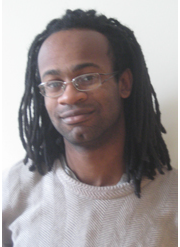
Nijah Cunningham
Doctoral candidate, Department of English and Comparative Literature
Nijah Cunningham is a doctoral candidate in the Department of English and Comparative Literature at Columbia University and the editorial assistant for Small Axe. He is currently working on a dissertation that focuses on the interplay between literature, performance, and the question of a black aesthetic that emerges out of the 1960s moment and across three African diasporic nodes in Senegal, Jamaica, and the United States.
Nijah Cunningham
Doctoral candidate, Department of English and Comparative Literature
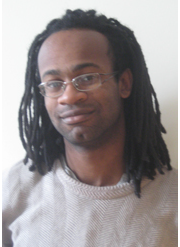
Nijah Cunningham is a doctoral candidate in the Department of English and Comparative Literature at Columbia University and the editorial assistant for Small Axe. He is currently working on a dissertation that focuses on the interplay between literature, performance, and the question of a black aesthetic that emerges out of the 1960s moment and across three African diasporic nodes in Senegal, Jamaica, and the United States.
Working Group Affiliation

Brent Edwards
Professor, Department of English and Comparative Literature, Columbia University
Brent Hayes Edwards is a Professor in the Department of English and Comparative Literature at Columbia University. He is the author of The Practice of Diaspora: Literature, Translation, and the Rise of Black Internationalism (Harvard, 2003), which was awarded the John Hope Franklin Prize of the American Studies Association, the Gilbert Chinard Prize of the Society for French Historical Studies, and was runner-up for the James Russell Lowell Prize of the Modern Language Association.
Brent Edwards
Professor of English and Comparative Literature, Columbia University

Brent Hayes Edwards is a Professor in the Department of English and Comparative Literature at Columbia University. He is the author of The Practice of Diaspora: Literature, Translation, and the Rise of Black Internationalism (Harvard, 2003), which was awarded the John Hope Franklin Prize of the American Studies Association, the Gilbert Chinard Prize of the Society for French Historical Studies, and was runner-up for the James Russell Lowell Prize of the Modern Language Association. With Robert G. O’Meally and Farah Jasmine Griffin, he co-edited the collection Uptown Conversation: The New Jazz Studies (Columbia UP 2004). Edwards has three books forthcoming in early 2017: his monograph Epistrophies: Jazz and the Literary Imagination, which will be published by Harvard University Press; the scholarly edition of Claude McKay’s recently discovered last novel, Amiable with Big Teeth, co-edited with Jean-Christophe Cloutier and to be published by Penguin Classics; and Edwards’s translation of Michel Leiris’s monumental 1934 Phantom Africa (Seagull Books), for which Edwards was awarded a 2012 PEN/Heim Translation Fund Grant. Edwards’s current projects include a monograph titled “Art of the Lecture,” for which he was awarded a 2015 Guggenheim Fellowship.
Working Group Affiliations
The Rural-Urban Interface: Gender and Poverty in Ghana and Kenya, Statistics and Stories

Yasmine Espert
Doctoral Student, Art History and Archaeology, Columbia University
Yasmine Espert is an Art History doctoral candidate at Columbia University. Her research interests include the cinematic medium, the Caribbean, and diaspora. She is the Graduate Fellow for the Digital Black Atlantic Project, a working group supported by the Center for the Study of Social Difference at Columbia University. Yasmine is also an alumna of the Fulbright U.S. Student program.
Yasmine Espert
Doctoral Candidate, Department of Art History and Archaeology

Yasmine Espert is an Art History doctoral candidate at Columbia University. Her research interests include the cinematic medium, the Caribbean, and diaspora. She is the Graduate Fellow for the Digital Black Atlantic Project, a working group supported by the Center for the Study of Social Difference at Columbia University. Yasmine is also an alumna of the Fulbright U.S. Student program.
Working Group Affiliation

Alex Gil
Digital Scholarship Coordinator for the Humanities and History Division, Columbia University Library
Alex Gil is Digital Scholarship Coordinator for the Humanities and History Division at Columbia University Library, Affiliate Faculty of the English and Comparative Literature Department, and one of the founders of the Studio@Butler, a technology atelier for faculty, students and librarians. He has published in journals across the Atlantic and the Americas, while sustaining an open and robust online research presence on the subject of digital humanities, textual scholarship, and Caribbean Studies. In 2010-2012 he was a fellow at the Scholars' Lab and NINES at the University of Virginia.
Alex Gil
Digital Scholarship Coordinator for the Humanities and History Division, Columbia University Library

Alex Gil is Digital Scholarship Coordinator for the Humanities and History Division at Columbia University Library, Affiliate Faculty of the English and Comparative Literature Department, and one of the founders of the Studio@Butler, a technology atelier for faculty, students and librarians. He has published in journals across the Atlantic and the Americas, while sustaining an open and robust online research presence on the subject of digital humanities, textual scholarship, and Caribbean Studies. In 2010-2012 he was a fellow at the Scholars' Lab and NINES at the University of Virginia. Among other roles, he now serves as vice-chair of the Global Outlook::Digital Humanities initiative, and is actively engaged in digital humanities projects at Columbia University and around the world.
Working Group Affiliation

Kaiama Glover
Associate Professor, Deparment of French and Africana Studies, Barnard College
Kaiama L. Glover is Associate Professor of French and Africana Studies at Barnard College. She is the author of Haiti Unbound: A Spiralist Challenge to the Postcolonial Canon (Liverpool UP 2010), first editor of Marie Vieux Chauvet: Paradoxes of the Postcolonial Feminine (Yale French Studies 2016), and translator of Frankétienne’s Ready to Burst (Archipelago Books 2014). Her work has appeared in The Journal of Haitian Studies, French Forum, The French Review, Research in African Literatures, The Journal of Postcolonial Writing, Public Books, Public Culture, and Small Axe, among other publications.
Kaiama Glover
Associate Professor of French and Africana Studies, Barnard College
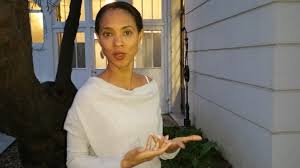
Kaiama L. Glover is Associate Professor of French and Africana Studies at Barnard College. She is the author of Haiti Unbound: A Spiralist Challenge to the Postcolonial Canon (Liverpool UP 2010), first editor of Marie Vieux Chauvet: Paradoxes of the Postcolonial Feminine (Yale French Studies 2016), and translator of Frankétienne’s Ready to Burst (Archipelago Books 2014). Her work has appeared in The Journal of Haitian Studies, French Forum, The French Review, Research in African Literatures, The Journal of Postcolonial Writing, Public Books, Public Culture, and Small Axe, among other publications. She has received awards and fellowships from the National Endowment for the Humanities, the Mellon Foundation, the PEN Foundation, and the Fulbright Foundation. Current projects include a monograph "The Audacity of the 'I' - Caribbean Womanhood and the Ethics of Self-Care," as well as forthcoming translations of Marie Chauvet’s Dance on the Volcano (Archipelago Books) and René Depestre’s Hadriana in All My Dreams (Akashic Books). She is project director of the forthcoming multimedia platform In the Same Boats: Toward an Afro-Atlantic Visual Cartography, founding Editor of sx archipelagos: a small axe journal of digital practice, and a regular contributor to the New York Times Book Review.
Working Group Affiliations
Reframing Gendered Violence, Project Director
The Digital Black Atlantic, Project Director
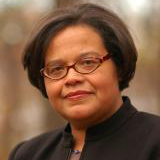
Kim Hall
Kim F. Hall joined the Barnard faculty in 2006. Previously, she held the Thomas F.X. Mullarkey Chair of Literature at Fordham University. She has also taught at the University of Pennsylvania, Swarthmore College, and Georgetown University. Professor Hall's research and scholarship have been supported by the Folger Institute, the ACLS, and the Ford Foundation. She has also received an NEH/Newberry Fellowship, and is listed in Who's Who of American Women as well as Who's Who Among African Americans. Professor Hall's first book, Things of Darkness, was named an outstanding academic book by Choice magazine. She is currently working on a book, tentatively entitled Sweet Taste of Empire, which examines women, labor, and race in the Anglo-Caribbean sugar trade during the seventeenth century.
Kim Hall
Lucyle Hook Chair, Professor of English and Africana Studies, Barnard College

Kim F. Hall joined the Barnard faculty in 2006. Previously, she held the Thomas F.X. Mullarkey Chair of Literature at Fordham University. She has also taught at the University of Pennsylvania, Swarthmore College, and Georgetown University. Professor Hall's research and scholarship have been supported by the Folger Institute, the ACLS, and the Ford Foundation. She has also received an NEH/Newberry Fellowship, and is listed in Who's Who of American Women as well as Who's Who Among African Americans. Professor Hall's first book, Things of Darkness, was named an outstanding academic book by Choice magazine. She is currently working on a book, tentatively entitled Sweet Taste of Empire, which examines women, labor, and race in the Anglo-Caribbean sugar trade during the seventeenth century.
Kim Hall is also an avid quilter whose work has been exhibited in Maryland, Massachusetts, and New York.
Working Group Affiliation
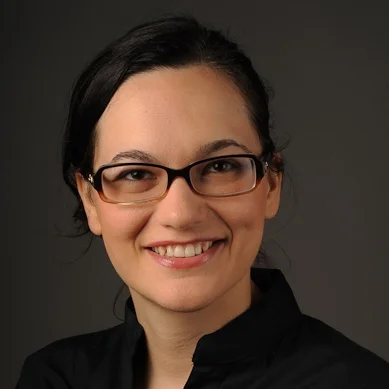
Maja Horn
Associate Professor, Spanish & Latin American Cultures, Barnard College
Maja Horn specializes in contemporary Caribbean cultures with a focus on literature, visual and performance art, and political culture. She is the author of Masculinity after Trujillo: The Politics of Gender in Dominican Literature (University Press of Florida in 2014) and is currently completing a second monograph on queer Dominican literature, visual and performance art. She has also published on Latin American and Caribbean arts for various Dominican and U.S. art magazines and is currently serves on the editorial committee for the journal Small Axe: A Caribbean Journal of Criticism.
Maja Horn
Associate Professor, Spanish & Latin American Cultures, Barnard College
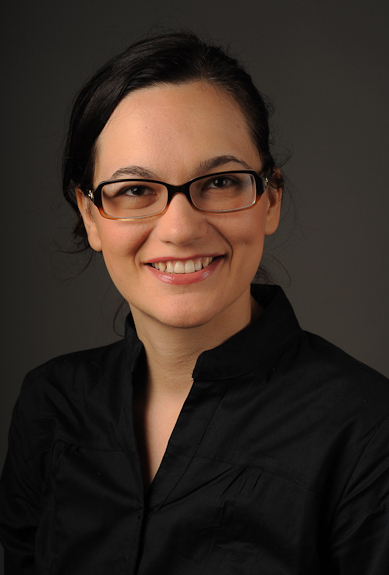
Maja Horn specializes in contemporary Caribbean cultures with a focus on literature, visual and performance art, and political culture. She is the author of Masculinity after Trujillo: The Politics of Gender in Dominican Literature (University Press of Florida in 2014) and is currently completing a second monograph on queer Dominican literature, visual and performance art. She has also published on Latin American and Caribbean arts for various Dominican and U.S. art magazines and is currently serves on the editorial committee for the journal Small Axe: A Caribbean Journal of Criticism.
Before joining the Barnard faculty in 2006, she was a research associate at FLACSO (Facultad Latinoamericana de Ciencias Sociales) in Santo Domingo, Dominican Republic, where she developed and taught a performance studies concentration. Maja Horn is affiliated with and teaches regularly for the Africana Studies Program at Barnard College. She also teaches graduate seminars for the Department of Latin American and Iberian Studies and is an affiliate of CSER (The Center for the Study of Ethnicity and Race) at Columbia University. In 2016-2017 she was a Heyman Center Faculty Fellow at Columbia University.
Working Group Affiliations

Kelly Baker Josephs
Fellow, English, City University of New York
Kelly Baker Josephs, Associate Professor of English, specializes in World Anglophone Literature with an emphasis on Caribbean Literature. She teaches courses in Anglophone Caribbean Literature, Postcolonial Literature and Theory, Literatures of the African Diaspora, and Gender Studies. Her book Disturbers of the Peace: Representations of Insanity in Anglophone Caribbean Literature (U of Virginia P, 2013), considers the ubiquity of madmen and madwomen in Caribbean literature between 1959 and 1980.
Kelly Baker Josephs
Associate Professor, English, City University of New York

Kelly Baker Josephs, Associate Professor of English, specializes in World Anglophone Literature with an emphasis on Caribbean Literature. She teaches courses in Anglophone Caribbean Literature, Postcolonial Literature and Theory, Literatures of the African Diaspora, and Gender Studies. Her book Disturbers of the Peace: Representations of Insanity in Anglophone Caribbean Literature (U of Virginia P, 2013), considers the ubiquity of madmen and madwomen in Caribbean literature between 1959 and 1980. Professor Josephs is Director of the York College Honors Program and Editor for sx salon: a small axe literary platform.
Working Group Affiliation
Natasha Lightfoot
Assistant Professor, Department of History, Columbia University
Natasha Lightfoot teaches Caribbean, Atlantic World, and African Diaspora History focusing on the subjects of slavery and emancipation, and black identities, politics, and cultures. She received her B.A. in History from Yale University and her M.A. and Ph.D. in History from New York University. She has received fellowships from the Yale Gilder-Lehrman Center for the Study of Slavery, Emancipation & Resistance, the American Antiquarian Society, and the Ford Foundation. She has published articles in the CLR James Journal and Slavery & Abolition. Her forthcoming book, Troubling Freedom: Antigua and the Aftermath of British Emancipation, 1831-1858 focuses on black working people’s struggles and everyday forms of liberation in Antigua after slavery’s end.
Natasha Lightfoot
Assistant Professor of History
Natasha Lightfoot teaches Caribbean, Atlantic World, and African Diaspora History focusing on the subjects of slavery and emancipation, and black identities, politics, and cultures. She received her B.A. in History from Yale University and her M.A. and Ph.D. in History from New York University. She has received fellowships from the Yale Gilder-Lehrman Center for the Study of Slavery, Emancipation & Resistance, the American Antiquarian Society, and the Ford Foundation. She has published articles in the CLR James Journal and Slavery & Abolition. Her forthcoming book, Troubling Freedom: Antigua and the Aftermath of British Emancipation, 1831-1858 focuses on black working people’s struggles and everyday forms of liberation in Antigua after slavery’s end.
Working Group Affiliation
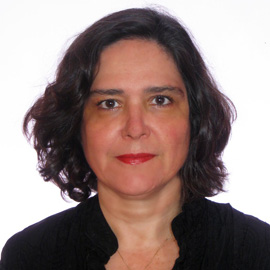
Hebe Mattos
Fellow, History, University Federal Fluminense
Hebe Mattos is Professor of History at University Federal Fluminense (UFF) in Brazil. She was visiting Professor at Columbia University (Ruth Cardoso Chair, ILAS/Institute of Latin America Studies, 2013/2014), at Ecoles des Hautes Etudes en Sciences Sociales (2004) and at the University of Michigan (1996). She is the author or co-author of numerous books on Brazilian slavery and post-emancipation society, including Memórias do Cativeiro. Família, Trabalho e Cidadania no Pós-Abolição/ Memories of Captivity.
Hebe Mattos
Professor of History, University Federal Fluminense
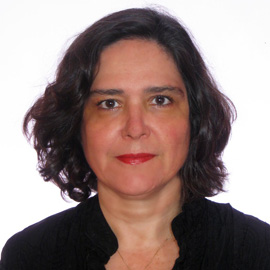
Hebe Mattos is Professor of History at University Federal Fluminense (UFF) in Brazil. She was visiting Professor at Columbia University (Ruth Cardoso Chair, ILAS/Institute of Latin America Studies, 2013/2014), at Ecoles des Hautes Etudes en Sciences Sociales (2004) and at the University of Michigan (1996). She is the author or co-author of numerous books on Brazilian slavery and post-emancipation society, including Memórias do Cativeiro. Família, Trabalho e Cidadania no Pós-Abolição/ Memories of Captivity. Family, Labor and Citizenship after abolition(2005); Das Cores do Silêncio. Significados da Liberdade no Sudeste Escravista, Brasil-sec. XIX / Colors of Silence. Meanings of Freedom in 19th Southeast Brazil/ (1995, 1998, 2013) - for which she received the Brazil National Archive Research Award (1993), and The Abolition of Slavery and the aftermath of emancipation in Brazil (with Rebecca Scott et allii, 1988). She’s one of the coordinators of The Oral History and Image Lab of UFF where she co-directed the collection of documentary films Present Pasts.
Working Group Affiliation
Jennifer L. Morgan
Fellow, Social and Cultural Analysis and History, NYU
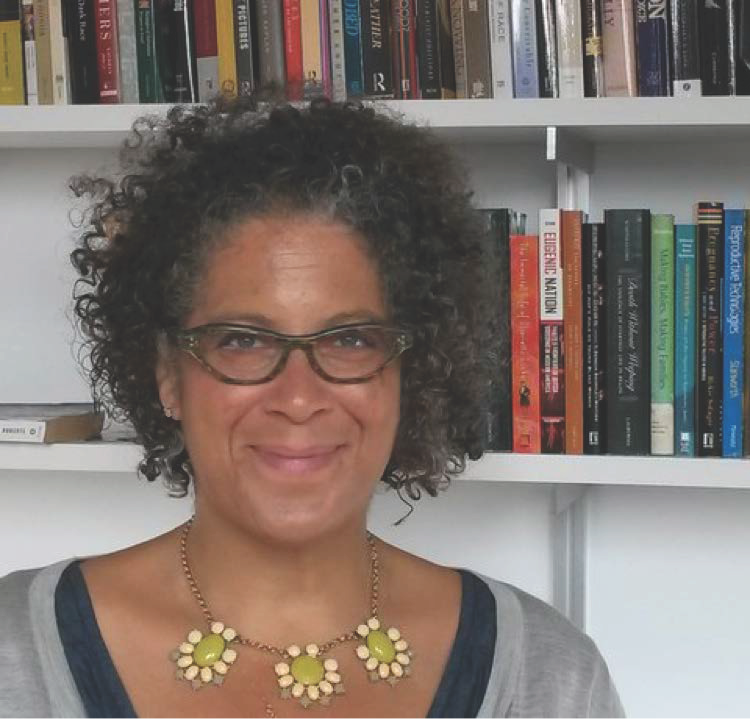
Jennifer L. Morgan is professor of history and of social and cultural analysis at New York University. Her research examines the intersections of gender and race in colonial America, and she is author of Laboring Women: Gender and Reproduction in the Making of New World Slavery (2004). She is currently at work on a project that considers colonial numeracy, racism, and the rise of the transatlantic slave trade, tentatively entitled “Accounting for the Women in Slavery.”
Jennifer L. Morgan
Professor of Social and Cultural Analysis and History, NYU
Duke University, PhD 1996
Office Address: 20 Cooper Square, 4th Floor
Email:jennifer.morgan@nyu.edu
Phone:212.998.2135
Field of Study:
United States
Areas of Research/Interest:
Early African American History, Comparative Slavery, Histories of Racial Ideology, Women and Gender
External Affiliations:
American Historical Association, Berkshire Conference of Women's Historians, McNeil Center for Early American Studies.
Selected Works:Books:
Laboring Women: Gender and Reproduction in New World Slavery (Philadelphia: University of Pennsylvania Press, 2004).
Articles:
“Gender and Family Life,” in The Slavery Reader, ed. Trevour Bernard and Gad Heuman (New York: Routledge, forthcoming, 2010).
“Experiencing Black Feminism,” in Telling Histories: Black Women Historians in the Ivory Tower, ed. Deborah Gray White, (Chapel Hill: UNC Press, 2007).
The Sexual Body: The Women’s Studies Quarterly, 35 (Spring/ Summer 2007), edited with Shelley Eversley.
“Why I Write,” in Why We Write: The Politics and Practice of Writing for Social Change, Jim Downs ed. (New York: Routledge, 2006)
“Sex, Race, and the Colonial Project,” with Kirsten Fischer, in The William and Mary Quarterly, 60 (January 2003): 197-99.
“Slavery and the Slave Trade, 1600-1760,” in A Companion to American Women’s History, Nancy Hewitt ed. (Malden, Mass and London: Blackwell, 2002).
“‘Some Could Suckle Over Their Shoulder’: Male Travelers, Female Bodies, and the Gendering of Racial Ideology, 1500-1770,” The William and Mary Quarterly, 3rd Series, LIV (January 1997): 167-92.
Working Group Affiliation

Celia E. Naylor
Associate Professor, Department of Africana Studies and History, Barnard College
Celia E. Naylor explores the multifaceted connections between African-Americans, Black Indians and Native Americans in the U.S. Her book, African Cherokees in Indian Territory: From Chattel to Citizens, was published by the University of North Carolina Press in May 2008 (John Hope Franklin Series in African American History and Culture). This work charts the experiences of enslaved and free Blacks in the Cherokee Nation from the Trail of Tears to Oklahoma’s entry into the Union in 1907. Her interests include African-American and Caribbean history; Native American history; women's history and literature in the African Diaspora; and colonialism and neocolonialism in the Americas.
Celia E. Naylor
Associate Professor, Africana Studies and History, Barnard College
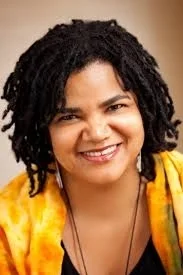
Celia E. Naylor is an Associate Professor in the Departments of Africana Studies and History at Barnard College. She has taught at various institutions, and she was the Director of the Margaret Sloss Women’s Center at Iowa State University from 1993-1997. Her interests include African-American and Caribbean history; Indigenous history; women's history and literature in the African Diaspora; and colonialism and neocolonialism in the Caribbean. Most of her published work explores the multifaceted connections between people of African descent and Indigenous descent in the U.S. She was one of the coordinators of the historic conference, “‘Eating Out of the Same Pot’: Relating Black and Native (Hi)stories,” held at Dartmouth College in April 2000. Her book, African Cherokees in Indian Territory: From Chattel to Citizens, was published by the University of North Carolina Press in May 2008 (John Hope Franklin Series in African American History and Culture). Her current book project is a microhistory of enslaved people’s experiences (with a particular focus on enslaved women’s lives) at Rose Hall Plantation in Jamaica. It will include an interdisciplinary critique of the legend of the “White Witch of Rose Hall” and a digital component to present a counternarrative to this mythology. She also works with a non-profit organization, the Institute for Strategic and Equitable Development, that centers on philanthropy-focused initiatives grounded in racial equity and promotes impactful grantmaking, investments, and economic development in communities of color.
Working Group Affiliations
Transnational Black Feminisms, Project Director
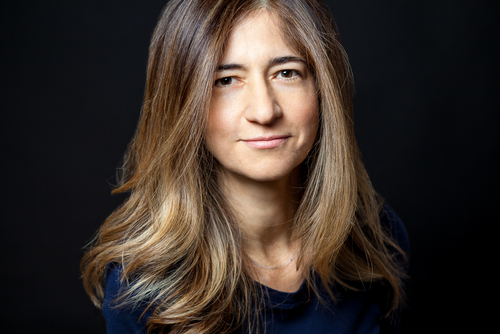
Frances Negrón-Muntaner
Professor, Department of English and Comparative Literature, Columbia University
Frances Negrón-Muntaner is a filmmaker, writer, curator, scholar and professor at Columbia University, where she is also the founding curator of the Latino Arts and Activism Archive. Among her books and publications are: Boricua Pop: Puerto Ricans and the Latinization of American Culture (CHOICE Award, 2004), The Latino Media Gap (2014), and Sovereign Acts: Contesting Colonialism in Native Nations and Latinx America (2017). Her most recent films include Small City, Big Change (2013), War for Guam (2015) and Life Outside (2016).
Frances Negrón-Muntaner
Professor of English and Comparative Literature, Former Director of the Center for the Study of Ethnicity and Race

Frances Negrón-Muntaner is a filmmaker, writer, scholar and professor at Columbia University, where she is also the founding curator of the Latino Arts and Activism Archive. Among her books and publications are: Boricua Pop: Puerto Ricans and the Latinization of American Culture (CHOICE Award, 2004), The Latino Media Gap (2014), and Sovereign Acts: Contesting Colonialism in Native Nations and Latinx America (2017). She has received various recognitions, including the United Nations' Rapid Response Media Mechanism designation as a global expert in the areas of mass media and Latin/o American studies (2008); the Lenfest Award, one of Columbia University's most prestigious recognitions for excellence in teaching and scholarship (2012), and the Latin American Studies Association’s Frank Bonilla Public Intellectual Award (2019). Negrón-Muntaner served as director of Columbia’s Center for the Study of Ethnicity and Race from 2009-2016 and co-director of Unpayable Debt, a working group that studied debt regimes in the world. Her most recent project is the award-winning Valor y Cambio (Value and Change), an art, digital storytelling and just economy project in Puerto Rico and New York (valorymcambio.org).
Social media: @imfrancesnegron, FB - Frances Negron Muntaner.
Working Group Affiliation
Unpayable Debt: Capital, Violence, and the New Global Economy, Project Director

Carina del Valle Schorske
Doctoral Candidate, English and Comparative Literature, Columbia University
Carina del Valle Schorske is a poet, translator, and PhD candidate in Comparative Literature. She is broadly interested in the history of psychoanalysis and other forms of psychic inquiry among artists and intellectuals of color in the Americas (Harlem, Mexico City, the Caribbean). She is currently at work on a project about Pamela Colman Smith, a turn-of-the-century Jamaican folklorist and the illustrator of the world's most widely used tarot deck.
Carina del Valle Schorske
Doctoral Candidate, English and Comparative Literature, Columbia University

photo credit: Mara Corsino, 2021
Carina del Valle Schorske is a writer and translator with roots in Washington Heights. Her personal essays and cultural criticism have appeared in many venues including The Believer, Bookforum, The Common, the New Yorker online, and the New York Times Magazine, where she is a Contributing Writer. She won Gulf Coast's 2016 Prize for her translations of the Puerto Rican poet Marigloria Palma, and co-edited the bilingual anthology Puerto Rico en mi corazón to raise funds for hurricane relief. Her forthcoming book, The Other Island, was recently honored with the Whiting Foundation's Creative Nonfiction Grant. As a doctoral candidate in the English & Comparative Literature department, her research focuses on women's performance in the Americas from Zora Neale Hurston through Ana Mendieta. Find out more at www.carinadelvalleschorske.com.
Working Group Affiliations
Zip Code Memory Project: Practices of Justice and Repair, Social Engagement Project
David Scott
Professor, Department of Anthropology, Columbia University
David Scott is a Fellow in the Institute for Research in African American Studies, Columbia University, New York. He is the author of a number of scholarly articles and three books, Formations of Ritual: Colonial and Anthropological Discourses on the Sinhala Yaktovil (University of Minnesota Press, 1994); Refashioning Futures: Criticism after Postcoloniality (Princeton University Press, 1999); and Conscripts of Modernity: The Tragedy of Colonial Enlightenment (Duke University Press, 2004), and co-editor with Charles Hirschkind of Powers of the Secular Modern: Talal Asad and his Interlocutors (Stanford University Press, 2006). He is also the editor of the journal Small Axe.
Professor of Anthropology, Columbia University
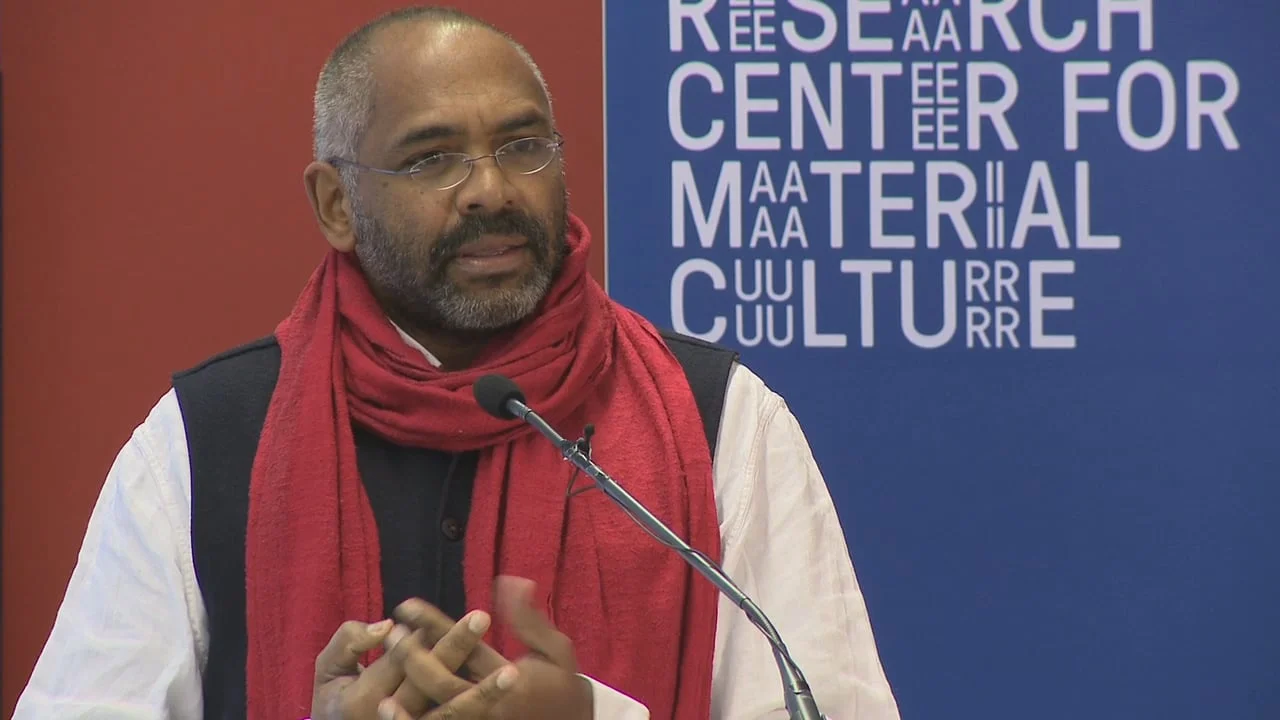
David Scott is a Fellow in the Institute for Research in African American Studies, Columbia University, New York. He is the author of a number of scholarly articles and three books, Formations of Ritual: Colonial and Anthropological Discourses on the Sinhala Yaktovil (University of Minnesota Press, 1994); Refashioning Futures: Criticism after Postcoloniality (Princeton University Press, 1999); and Conscripts of Modernity: The Tragedy of Colonial Enlightenment (Duke University Press, 2004), and co-editor with Charles Hirschkind of Powers of the Secular Modern: Talal Asad and his Interlocutors (Stanford University Press, 2006). He is also the editor of the journal Small Axe.
Working Group Affiliation
The Digital Black Atlantic, Project Director
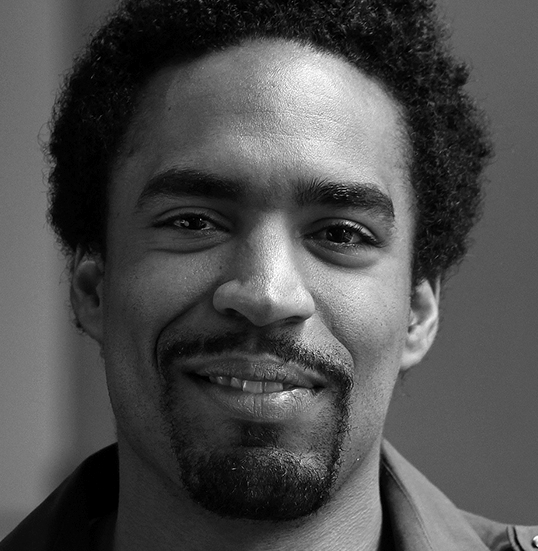
Didier M. Sylvain
Doctoral Candidate, Ethnomusicology, Columbia University
Didier Michel is a sound artist and PhD student in Ethnomusicology. His work focuses on the spiritual or phenomenological dimensions of “black” engagement with sound technology among Afrofuturist-identified music-makers and listeners in Haiti and the United States.Doctoral Candidate, Ethnomusicology, Columbia University
Didier Michel is a sound artist and PhD student in Ethnomusicology. His work focuses on the spiritual or phenomenological dimensions of “black” engagement with sound technology among Afrofuturist-identified music-makers and listeners in Haiti and the United States.
Didier M. Sylvain
Doctoral Candidate, Ethnomusicology, Columbia University
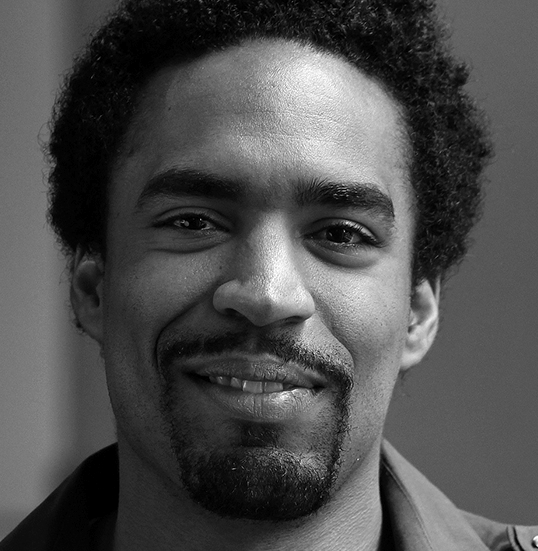
Didier Michel is a sound artist and PhD student in Ethnomusicology. His work focuses on the spiritual or phenomenological dimensions of “black” engagement with sound technology among Afrofuturist-identified music-makers and listeners in Haiti and the United States. He engages with dialogs on Afrofuturism and the speculative arts; ritual healing, self-transformation and embodiment; human-machine interaction and improvisation; histories and aesthetics of sound and media; and the relation between the virtual and the everyday.
In addition to his graduate pursuits, Didier serves as Editor-in-Chief of the peer-reviewed music journal, Current Musicology, where he is publishing a special issue on Race, Sound, and Technology (Spring 2017), featuring an interdisciplinary group of scholars writing on the mediations of racial formation in society. In Spring 2015 he collaborated with the Institute of Religion, Culture, and Public Life to organize “Tomorrow is the Question: Afrofuturism, Sound and Spirit”—a symposium of artists and scholars exploring what an “Afro-future” might sound like and mean today. Beyond Columbia, Didier’s professional career has centered on facilitation and the art of listening to elicit creative leadership in organizations and people across creative, entrepreneurial, philanthropic, and business communities.
Working Group Affiliation