
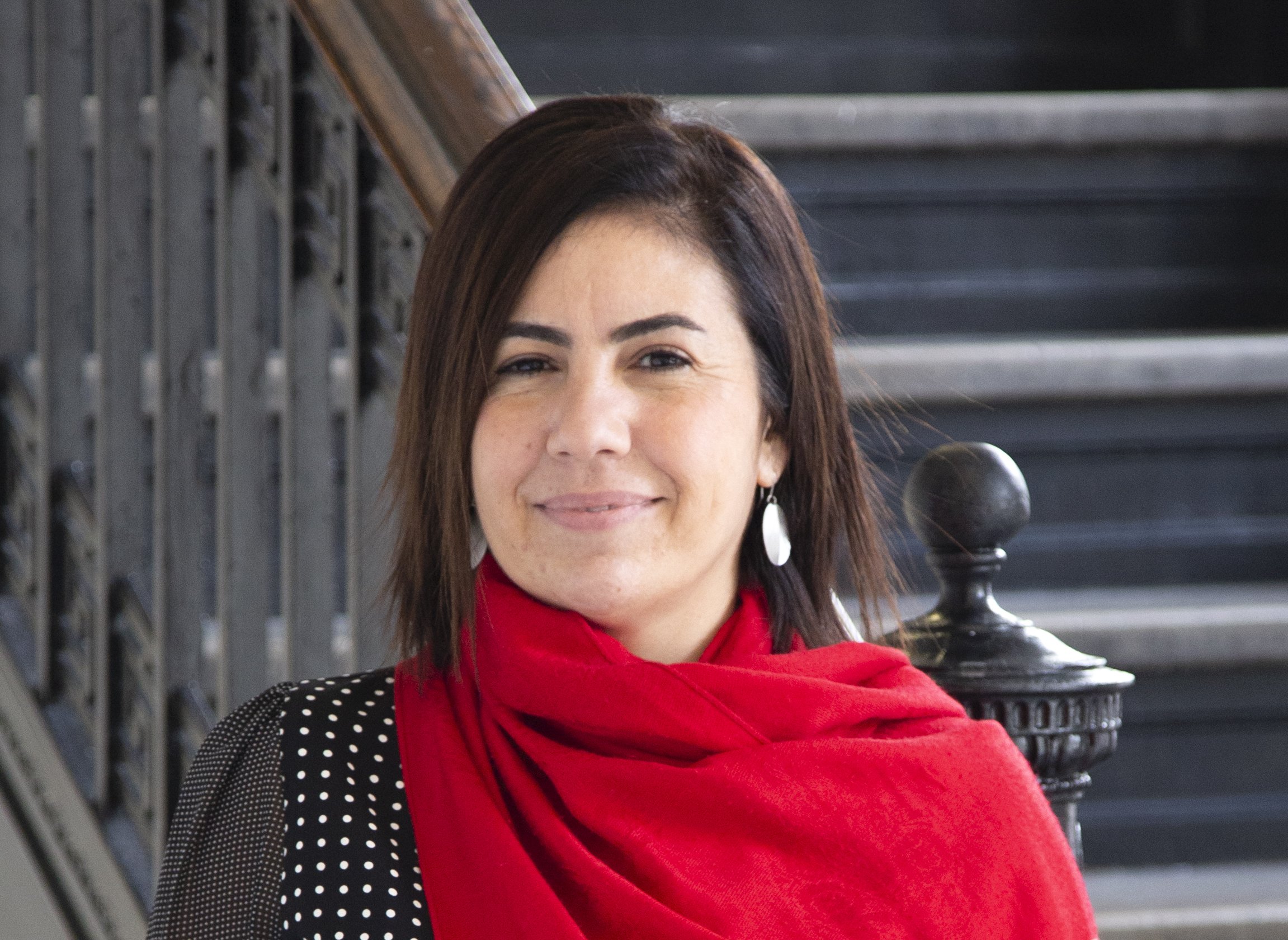
Hiba Bou Akar
Assistant Professor, Department of Urban Planning, Columbia University
Hiba Bou Akar is an Assistant Professor in the Urban Planning program at Columbia GSAPP. Her research focuses on planning in conflict and post-conflict cities, the question of urban violence, and the role of religious political organizations in the making of cities.
Hiba Bou Akar
Assistant Professor, Urban Planning, GSAPP Columbia University
Hiba Bou Akar is an Assistant Professor in the Urban Planning program at Columbia GSAPP. Her research focuses on planning in conflict and post-conflict cities, the question of urban violence, and the role of religious political organizations in the making of cities. Bou Akar’s award-winning book, For the War Yet to Come: Planning Beirut’s Frontiers (2018), examines how Beirut’s post-civil war peripheries have been transformed through multiple planning exercises into contested frontiers that are mired in new forms of conflict. Her first co-edited book, Narrating Beirut from its Borderlines (2011), incorporated ethnographic and archival research with art installations, architectural research, graphic design, and photography to explore Beirut’s segregated geographies. Currently, Bou Akar is working on a new project entitled “Sedimentary Urbanization” examining the temporalities of displacement and refugee-ness. Bou Akar is also the founder and director of the Post-Conflict Cities Lab at Columbia University. The lab focuses on the studies of post-conflict urban planning and aims to develop methodological, empirical, and theoretical approaches to planning in contested spaces.
Working Group Affiliation
Insurgent Domesticities
Refugee Cities

Lilian Chee
Fellow, Architecture, National University of Singapore.
Lilian Chee is an Associate Professor at the National University of Singapore. She is the author of Architecture and Affect: Precarious Spaces (2019) and co-editor of Asian Cinema and The Use of Space (2015). She conceptualized, researched and collaborated on the award-winning architectural essay film about single women occupants in Singapore’s public housing 03-FLATS (2014). Her work is situated at the intersections of architectural representation, gender, and affect in a contemporary interdisciplinary context.
Lilian Chee
Associate Professor, Architecture, the National University of Singapore

Lilian Chee is an Associate Professor at the National University of Singapore. She is the author of Architecture and Affect: Precarious Spaces (2019) and co-editor of Asian Cinema and The Use of Space (2015). She conceptualized, researched, and collaborated on the award-winning architectural essay film about single women occupants in Singapore’s public housing 03-FLATS (2014). Her work is situated at the intersections of architectural representation, gender and affect in a contemporary interdisciplinary context. A writer, academic, designer, curator, and award-winning educator, her research explores the emergence of architecture through everyday encounter, often in domestic spaces.
Publications:
Chee, Lilian. Architecture and Affect: Precarious Spaces. Oxon and New York: Routledge, 2023. https://doi.org/10.4324/9781315604565.
Chee, Lilian. ‘Domesticity, Gender, and Architecture’. In The Routledge Companion to Contemporary Architectural History, edited by Duanfang Lu, 185–201. Routledge, 2023. https://doi.org/10.4324/9781315674469.
Jane Simon, Sophia Maalsen, Lilian Chee & Cathy Smith (2023). Reflections on, and from, Feminist Practice: Introduction to the ‘Home’ Special Issue, Australian Feminist Studies, DOI: 10.1080/08164649.2023.2267178
Audrey Yue, Lilian Chee, Jane M. Jacobs & Natalie Pang (2023). Making do: young people and mobilities at home, Journal of Youth Studies, DOI: 10.1080/13676261.2023.2261859
Lilian Chee (2022). ‘Housing and Domesticity’, Architecture and Culture, 10:3, 554-558, DOI: 10.1080/20507828.2022.2121898
Lilian Chee, Silvia Federici and Daniela Ortiz dos Santos. “Domestic Work and the Architecture of Emancipation.” Contemporary Feminist Spatial Practice, Arch+ v.246, (February 2022), 66-75.
Chee, Lilian, Jane M. Jacobs, Audrey Yue, and Natalie Pang. ‘Foundations for Home-Based Work: A Singapore Study (A Project Funded by the Social Science Research Council)’. Singapore: Foundations for Home-based Work (NUS), 2022. https://foundationsforhomebasedwork.com.
Mun, Ian and Lilian Chee. Objects for Thriving. Documentary. Singapore: NUS and Roving Productions, 2022. https://www.youtube.com/watch?v=ZYtBmE4_Qrk.
Chee, Lilian. ‘Keeping Cats, Hoarding Things: Domestic Situations in the Public Spaces of the Singaporean Housing Block’. The Journal of Architecture 22, no. 6 (18 August 2017): 1041–65. https://doi.org/10.1080/13602365.2017.1362024.
Lei, Yuan Bin and Lilian Chee. 03-FLATS. Architectural Essay Film. Singapore: National University of Singapore and 13 Little Pictures, 2014, http://www.03-flats.com/

M Constantine
Ph.D. candidate, Anthropology, Columbia University.
M. Constantine is a Ph.D. candidate in Anthropology at Columbia University. She is a writer and editor and has produced publications and projects with a number of art and architecture organizations including Slavs and Tatars, the Whitney Museum of American Art, and Cornell University Department of Architecture. Her dissertation focuses on collectivity and the politics of knowledge in contemporary art, analyzing the interface where the political imaginaries and pragmatic concerns of critical collectives meet the institutional and discursive structures of the art world in which they circulate.
M Constantine
Ph.D. Candidate, Anthropology, Columbia University.

M Constantine is a Ph.D. candidate in Anthropology at Columbia University. She is a writer and editor and has produced publications and projects with a number of art and architecture organizations including Slavs and Tatars, the Whitney Museum of American Art, and Cornell University Department of Architecture. Her dissertation focuses on collectivity and the politics of knowledge in contemporary art, analyzing the interface where the political imaginaries and pragmatic concerns of critical collectives meet the institutional and discursive structures of the art world in which they circulate. Her research explores how aesthetic concepts and practices shape the transformation of lives, intimacies, and social power.
Working Group Affiliation
Aastha D
Aastha D.
Working Group: Insurgent Domesticities
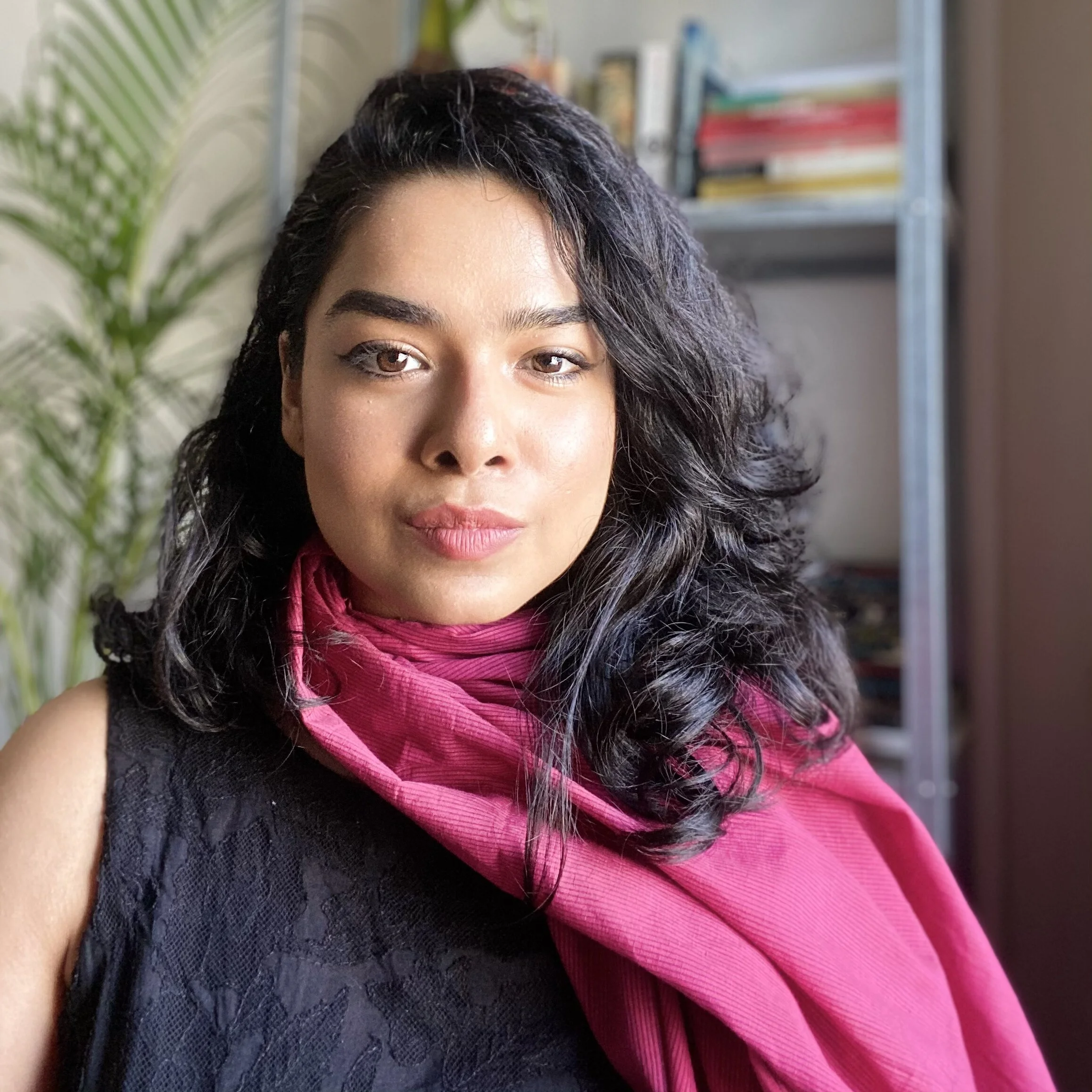
Managing Editor
Working Group: Insurgent Domesticities
Aastha D (she/they) is an independent scholar, essayist, designer and educator. She has a background in architecture, with a masters from Columbia University, New York. As the Founding Editor of Proseterity, a literary publication, they work with thinkers and writers (especially those kept in the margins) who pose new ‘what if?’s to disrupt the status quo, forging an alternative present and future.
Aastha’s writings on design and culture are informed by their anti-caste, anti-racism, feminist politics, and appear in Tribune Magazine, Metropolis New York, STIRworld, Disegno etc. In the recent past, she has held editorial positions at publications in New York and Mumbai, edited books, curated exhibitions and events.
As an educator Aastha teaches critical thinking, creative writing, research methodology with a focus on ‘disrupting the episteme’ as it is known.

S.E Eisterer
Fellow, Architectural History and Theory, University of Pennsylvania.
S. E Eisterer is an Assistant Professor of Architectural History and Theory at the University of Pennsylvania. Currently, she is working on two forthcoming book projects.
S.E Eisterer
Assistant Professor, Architectural History and Theory, University of Pennsylvania.

S.E Eisterer is an Assistant Professor of Architectural History and Theory at the University of Pennsylvania. Currently, she is working on two forthcoming book projects. Her book manuscript Housing Cooperative: Politics and Architecture in Vienna, 1904-1954 elucidates the role of cooperatives in shaping architectural debates in the first half of the twentieth century. The history and translation project Memories from Resistance: Women, War, and the Forgotten Work of Margarete Schütte-Lihotzky, 1938-1989 illuminates the Austrian architect’s participation in the Communist resistance against the Nazi regime. Her scholarly work centers on modern architecture and urban culture in Austria, Germany, and the United States, with a focus on the history of social movements, environmental history, women’s and gender studies, and queer theory.
Working Group Affiliation
Insurgent Domesticites, Co-Director
Annapurna Garimella
Fellow, Art Historian, California State University
Dr. Annapurna Garimella is a designer and an art historian. Her research focuses on late medieval Indic architecture and the history and practices of vernacular visual and built cultures in India after Independence.
Annapurna Garimella
Independent Scholar, Art Historian, Designer
Dr. Annapurna Garimella is a designer and an art historian. Her research focuses on late medieval Indic architecture and the history and practices of vernacular visual and built cultures in India after Independence. She is co-editor of The Contemporary Hindu Temple: Fragments for a History (2019) and editor of The Long Arc of South Asian Art: A Reader in Honor of Vidya Dehejia (New Delhi: Women Unlimited, 2021). Digesting the Past: The Discourse of Sacralized Architectural Renovation in Southern India (14th-17th Centuries) is her book manuscript under preparation. Garimella is the Managing Trustee of Art, Resources and Teaching Trust. She also heads Jackfruit Research and Design, an organization with a specialized portfolio of design, research and curation. Jackfruit’s recent curatorial projects include Vernacular, in the Contemporary (Devi Art Foundation, New Delhi 2010-11), Mutable: Ceramic and Clay Art in India Since 1947 (Piramal Museum of Art, 2017), and Barefoot College of Craft in Goa (Serendipity Arts Festival, 2017-18).
Working Group Affiliation
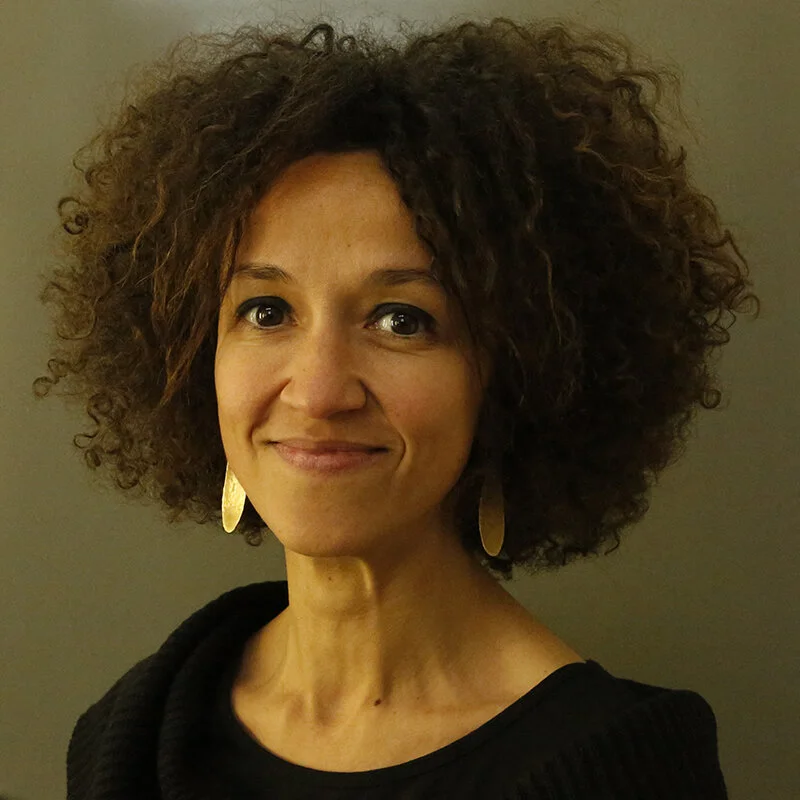
Samia Henni
Assistant Professor of History and Architecture, Cornell University
Samia Henni is an Assistant Professor at Cornell University. Her teaching and research examine the history and theory of the built environments in relation to colonialism, displacement, gender, Islam, and wars from the first European colonization to the present. She is the author of the award-winning Architecture of Counterrevolution: The French Army in Northern Algeria (2017), the editor of War Zones (2018), and the curator of Discreet Violence: Architecture and the French War in Algeria (2017-19).
Samia Henni
Assistant Professor of History and Architecture, Cornell University
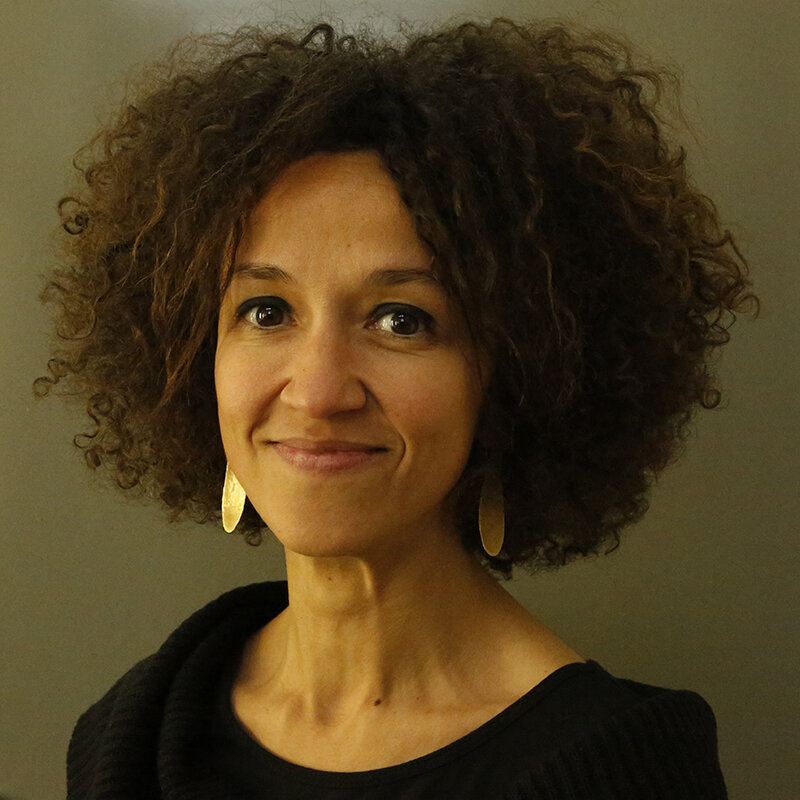
Samia Henni is an Assistant Professor at Cornell University. She is the author of the award-winning Architecture of Counterrevolution: The French Army in Northern Algeria (2017), the editor of War Zones (2018), and the curator of Discreet Violence: Architecture and the French War in Algeria (2017-19). She is working on a book provisionally titled Colonial Toxicity: The French Army in the Sahara. Her teaching and research examine the history and theory of the built environments in relation to colonialism, displacement, gender, Islam, and wars from the first European colonization to the present.
Working Group Affiliation
Gil Hochberg
Ransford Professor of Hebrew and Visual Studies, Comparative Literature, and Middle East Studies, Chair MESAAS, Columbia University
Gil Hochberg is Ransford Professor of Hebrew and Comparative Literature, and Middle East Studies at Columbia University. She is the author of In Spite of Partition: Jews, Arabs, and the Limits of Separatist Imagination (2007), on the complex relationship between the signifiers “Arab” and “Jew” in contemporary Jewish and Arab literatures, and Visual Occupations: Vision and Visibility in a Conflict Zone (2015), on the visual politics of the Israeli-Palestinian conflict.
Gil Hochberg
Ransford Professor of Hebrew and Visual Studies, Comparative Literature, and Middle East Studies, Chair MESAAS, Columbia University

Gil Hochberg is Ransford Professor of Hebrew and Comparative Literature, and Middle East Studies at Columbia University. She is the author of In Spite of Partition: Jews, Arabs, and the Limits of Separatist Imagination (2007), on the complex relationship between the signifiers “Arab” and “Jew” in contemporary Jewish and Arab literatures, and Visual Occupations: Vision and Visibility in a Conflict Zone (2015), on the visual politics of the Israeli-Palestinian conflict. Her research focuses on the intersections among psychoanalysis, postcolonial theory, nationalism, gender and sexuality, with articles on Francophone North African, Palestinian, and Hebrew literature, the modern Levant, gender and nationalism, cultural memory and immigration, memory and gender, Israeli and Palestinian cinema, Mediterraneanism, and trauma and narrative. She is currently writing a book on art, archives and the production of historical knowledge.
Working Group Affiliation
Rishav Kumar Thakur
PhD Student, Sociocultural Anthropology, Columbia University
Rishav is currently a third year PhD student in sociocultural anthropology at Columbia University. He studies articulations of, and claims around, identity and belonging in Assam, India.
Rishav Kumar Thakur
Ph.D. Student, Sociocultural Anthropology, Columbia University

Rishav is currently a third year PhD student in sociocultural anthropology at Columbia University. He studies articulations of, and claims around, identity and belonging in Assam, India. In doing so, his work aims to understand patterns of violence, dissent and queer imaginations of sociality in the region which is marked by fractures between communities identified as immigrant and autochthonous; and between "mainland" India and its Northeast frontier. Rishav has a MA in Development Studies from the Graduate Institute (Geneva) and a BA in Economics from University of Delhi.
Rishav is currently grappling with how political rhetoric and mobilisation seeps into intimate and domestic relations; and how intimate relations or new forms of the "family" work their way back to inform interactions at the scale of the political. He is interested in these flows given a long history of extraction and underdevelopment in Assam and given India's digital surge post the US/IMF/World Bank induced Liberalisation and New Economic Reforms.
Working Group Affiliation

Hollyamber Kennedy
Fellow, History and Theory of Architecture, ETH Zurich
Hollyamber Kennedy is a Postdoctoral Fellow at the Institute for the History and Theory of Architecture (gta) at the ETH in Zurich, Switzerland. Her book manuscript, The World Island, explores colonial-era land policy and its influence on the sciences of settlement at the intersection of modern architecture, demographic reform, and rural modernization.
Hollyamber Kennedy
Postdoctoral Fellow, Institute for the History and Theory of Architecture, ETH Zurich

Hollyamber Kennedy is a Postdoctoral Fellow at the Institute for the History and Theory of Architecture (gta) at the ETH in Zurich, Switzerland. Her book manuscript, The World Island, explores colonial-era land policy and its influence on the sciences of settlement at the intersection of modern architecture, demographic reform, and rural modernization. This project centers the role of anti-colonial and anti-partition resistance in the shaping of the colonial built environment. She previously held a Postdoctoral Research Fellowship at Harvard University, at the Mahindra Humanities Center, where she began work on her second long-term project, Wastelands of Empire. Her research has been supported by the Graham Foundation for Advanced Studies in the Fine Arts, the Social Science Research Council, the DAAD, SAH, and CAA, among others. Her writing has been published in Grey Room, Avery Review, Journal of Architecture (forthcoming), and by The University of Chicago Press, Whitechapel Gallery, and MIT Press. She has a chapter in a forthcoming book edited by Itohan Osayimwese on The Architectural Legacies of German Colonialism in Africa. She received her PhD in Architectural History and Theory from Columbia University, Graduate School of Architecture, Planning and Preservation.
Working Group Affiliation
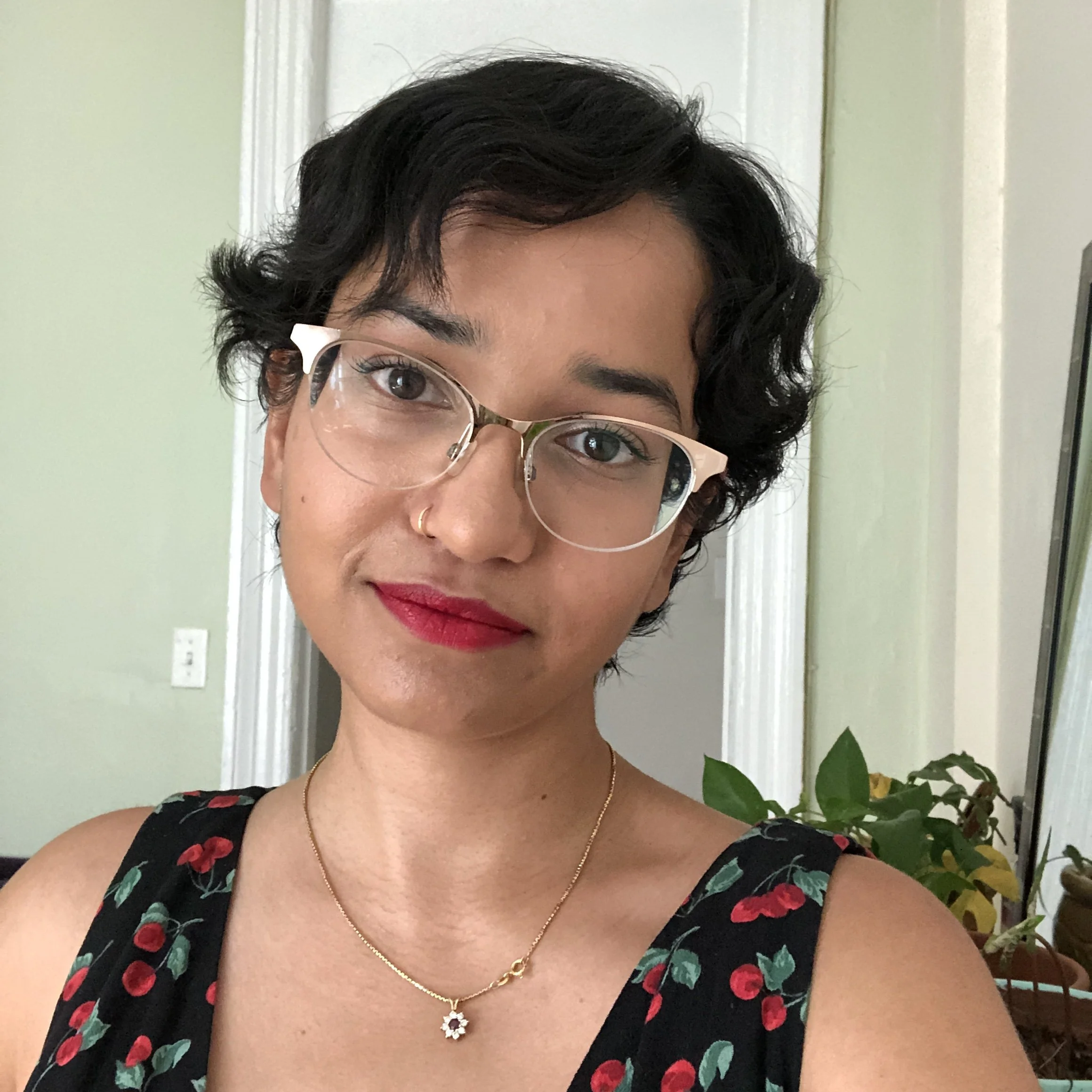
Nadrah Mohammed
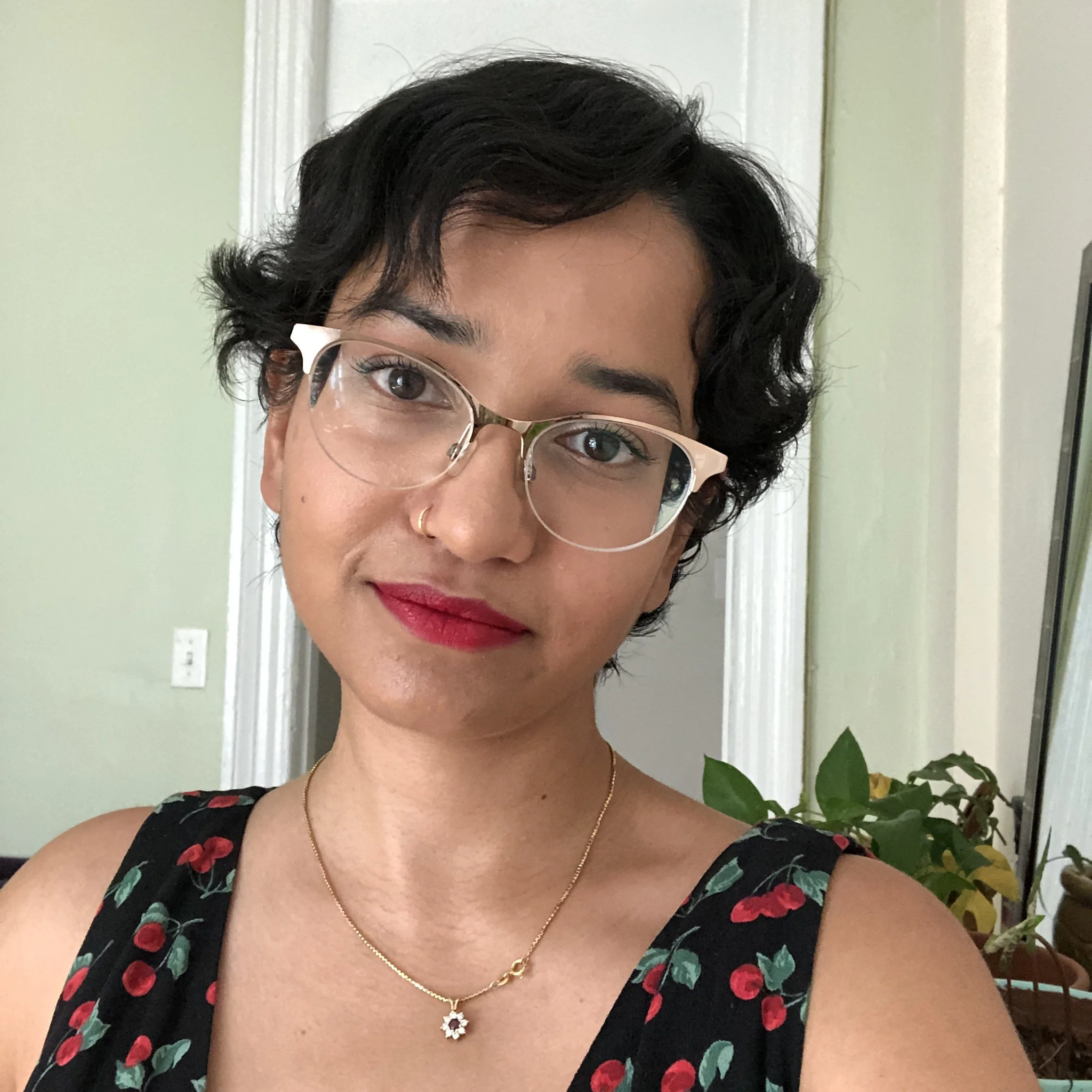
Nadrah Mohammed
As a feminist literary scholar, her research explores mid-20th century Francophone representations of friendship between women. Her dissertation considers how the dynamics of race, class and sexual orientation intersect with gendered expectations of virtue to shape narrative approaches to women’s friendship. She is the coordinator of the Insurgent Domesticities working group and the rapporteur to the Beyond France University Seminar. Her work on postcolonial gardens in women’s Francophone writing has appeared in L’esprit créateur.

Mignon Moore
Professor, Department of Sociology, Barnard College
Mignon Moore is Chair and Professor of Sociology at Barnard College, Columbia University. She is the author of Invisible Families: Gay Identities, Relationships and Motherhood among Black Women (2011), which examines the intersection of race with sexual orientation for family-building and lesbian identity among African-American women.
Mignon Moore
Professor, Sociology, Barnard College

Mignon Moore is Chair and Professor of Sociology at Barnard College, Columbia University. She is the author of Invisible Families: Gay Identities, Relationships and Motherhood among Black Women (2011), which examines the intersection of race with sexual orientation for family-building and lesbian identity among African-American women. She has research and teaching interests in the sociology of family, race, gender, sexuality, qualitative methods, aging, and adolescence. She is conducting research for a book project on the social histories of LGBT seniors in New York and Los Angeles, the negotiation of religious and community life for lesbians and gay men of faith, and the promotion of healthy aging for racial and ethnic minority elders.
Working Group Affiliation

Corinna Mullin
Fellow, International Relations, University of Tunis
Corinna Mullin is a Part-Time Faculty member at the New School and John Jay College, and was a Visiting Assistant Professor at the University of Tunis for five years. Her book manuscript, Tunisia and imperial security architectures: Race, class, empire and the (re)making of a global south security state, illuminates intersections between security, imperialism, and racial capitalism through insights from international relations and political economy, American Studies, and critical race, law, and decolonial theory.
Corinna Mullin
Part-Time Faculty Member, The New School and John Jay College. Assistant Professor, University of Tunis

Corinna Mullin is a Part-Time Faculty member at the New School and John Jay College, and was a Visiting Assistant Professor at the University of Tunis for five years. Her book manuscript, Tunisia and imperial security architectures: Race, class, empire and the (re)making of a global south security state, illuminates intersections between security, imperialism, and racial capitalism through insights from international relations and political economy, American Studies, and critical race, law, and decolonial theory. Her research examines imperialism and militarization in Africa through analysis of securitization, labor economies, value extraction, and wealth drain, as well as decolonizing struggles of the Tunisian university, raising questions of power, knowledge production, and epistemic de-linking.
Working Group Affiliation
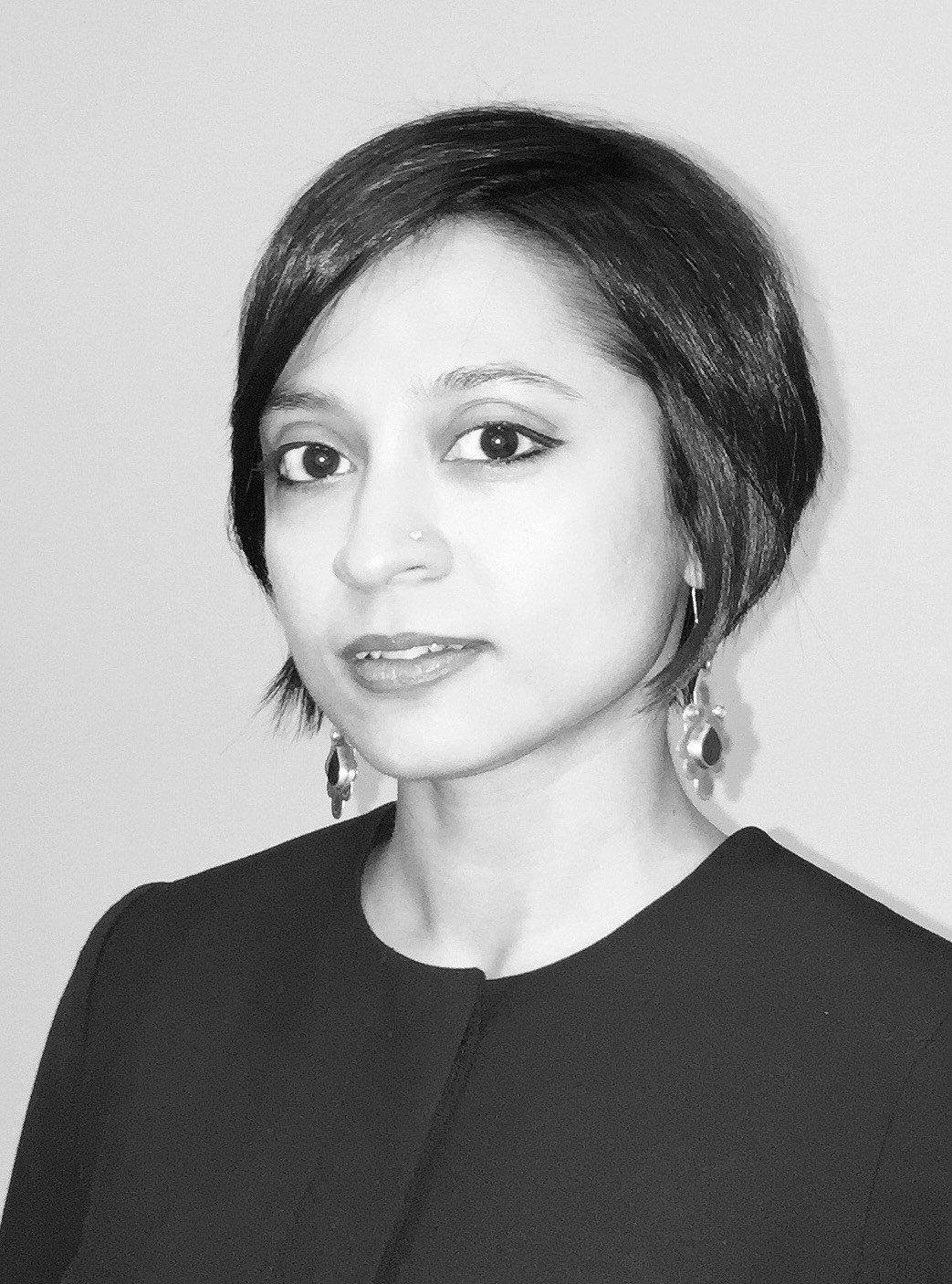
Debashree Mukherjee
Debashree Mukherjee is Associate Professor in the Department of Middle Eastern, South Asian, and African Studies (MESAAS) at Columbia University. Her first book, Bombay Hustle: Making Movies in a Colonial City (2020), approaches film history as an ecology of material practices and practitioners, and her next book develops a media history of indentured migration and plantation capitalism in the Indian Ocean region. Debashree has published on feminist film historiography, labor, cities, and increasingly on energy and exhaustion in various film journals and anthologies.
Debashree Mukherjee
Debashree Mukherjee is Associate Professor in the Department of Middle Eastern, South Asian, and African Studies (MESAAS) at Columbia University. Her first book, Bombay Hustle: Making Movies in a Colonial City (2020), approaches film history as an ecology of material practices and practitioners, and her next book develops a media history of indentured migration and plantation capitalism in the Indian Ocean region. Debashree has published on feminist film historiography, labor, cities, and increasingly on energy and exhaustion in various film journals and anthologies. Her Feminist Media Histories article “Somewhere Between Human, Nonhuman, and Woman: Shanta Apte’s Theory of Exhaustion,” received the 2021 Katherine Singer Kovacs award from the Society of Cinema and Media Studies. Debashree edits the peer-reviewed journal BioScope: South Asian Screen Studies and has just published a photo-anthology titled Bombay Talkies: An Unseen History of Indian Cinema (Mapin, 2023).
In a previous life Debashree worked in Mumbai’s film and TV industries as an assistant director, writer, and cameraperson. She remains committed to industry-academy-public interfaces through exhibitions, curation, and digital humanities open-access projects.
Lydia Waithira Muthuma
Fellow, Visual Arts, Technical University of Kenya
Lydia Waithira Muthuma is a Lecturer in Visual Arts at the Technical University of Kenya and the current chair of UNESCO’s national committee for memory of the world. Muthuma’s current research interests are the historiography of contemporary art in Eastern Africa and the conservation of public monuments as a tool for building collective identity in Nairobi. Through aesthetic critique, art history, and analysis of spatial politics and visual culture, her work examines the built environment in Kenya in order to ascertain who it belongs to and how this identity has been manifested.
Lydia Waithira Muthuma
Lecturer, Visual Arts, The Technical University of Kenya
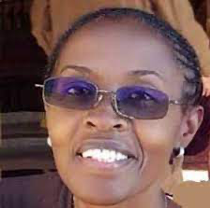
Lydia Waithira Muthuma is a Lecturer in Visual Arts at the Technical University of Kenya and the current chair of UNESCO’s national committee for memory of the world. She is the author of Changing Perspectives: Nairobi past and present, a photographic story and exhibition hosted by Bristol Archives and National Museums of Kenya in June-September 2019. Through aesthetic critique, art history, and analysis of spatial politics and visual culture, her work examines the built environment in Kenya in order to ascertain who it belongs to and how this identity has been manifested. Dr. Muthuma’s current research interests are the historiography of contemporary art in Eastern Africa and the conservation of public monuments as a tool for building collective identity in Nairobi.
Working Group Affiliation
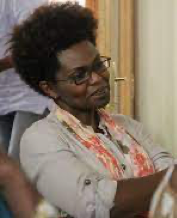
Garnette Oluoch-Olunya
Fellow, Literature, St. Paul’s University, Kenya,
Garnette Oluoch-Olunya is an adjunct Lecturer in Literature at St. Paul’s University, Kenya, a Strategic Consultant with the Godown Arts Centre in Nairobi, and holds a Ph.D. in English from the University of Glasgow, Scotland. She was Senior Lecturer and founding Director of the Center for Creative and Cultural Industries at the Technical University of Kenya, building on the GoDown’s collaborative work with Natverkstan Institute of Sweden, the British Council, and Goldsmiths, University of London, in partnerships that sought to link academic research with arts practice. She sits on the editorial board of Jahazi, a Journal of Culture, Arts & Performance, and is a Fellow of the Centre for Advanced Scholarship (Ubuntu Project), University of Pretoria, South Africa.
Garnette Oluoch-Olunya
Adjunct Lecturer, Literature, St. Paul’s University, Kenya,
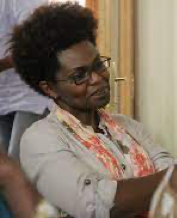
Garnette Oluoch-Olunya is an adjunct Lecturer in Literature at St. Paul’s University, Kenya, a Strategic Consultant with the Godown Arts Centre in Nairobi, and holds a PhD in English from the University of Glasgow, Scotland. She was Senior Lecturer and founding Director of the Center for Creative and Cultural Industries at the Technical University of Kenya, building on the GoDown’s collaborative work with Natverkstan Institute of Sweden, the British Council, and Goldsmiths, University of London, in partnerships that sought to link academic research with arts practice. She sits on the editorial board of Jahazi, a Journal of Culture, Arts & Performance, and is a Fellow of the Centre for Advanced Scholarship (Ubuntu Project), University of Pretoria, South Africa.
Working Group Affiliation
Insurgent Domesticities, Co-Director

Ana Gisele Ozaki
Fellow, History of Architecture and Urban Development, Cornell University
Ana Gisele Ozaki is a Ph.D. Candidate in History of Architecture and Urban Development at Cornell University, with specializations in Africana and Latin American studies. Her dissertation investigates the complex ways colonial ideologies of race have interfered with modern architectural understandings of climate in Brazil and its connections with Nigeria, Angola, and Mozambique
Ana Gisele Ozaki
Ph.D. Candidate, Architecture and Urban Development, Cornell University

Ana G. Ozaki is a Ph.D. Candidate in History of Architecture and Urban Development at Cornell University, with specializations in Africana and Latin American studies. Her dissertation investigates the complex ways colonial ideologies of race have interfered with modern architectural understandings of climate in Brazil and its connections with Nigeria, Angola, and Mozambique. Through feminist and postcolonial theory, her research investigates how domestic architecture has worked to accommodate white settlers and tame local "climates" in its environmental and socio-political conceptions while elucidating the cross-cultural and South-to-South exchanges between tropicalized sites, subjects, and practices. She has worked as a writer, researcher, architect, and public educator.
Working Group Affiliation
Insurgent Domesticities, Co-Director

Barbara Penner
Fellow, Architecture, University College, London
Barbara Penner is a Professor at the University College, London. She is author of Bathroom (2013) and Newlyweds on Tour: Honeymooning in Nineteenth-Century America (2009), and co-editor of Sexuality and Gender at Home: Experience, Politics, Transgression (2017), Forty Ways to Think about Architecture (2014), Ladies and Gents: Public Toilets and Gender (2009), and Gender Space Architecture (2000).
Barbara Penner
Professor, Architecture, University College London

Barbara Penner is a Professor at the University College, London. She is author of Bathroom (2013) and Newlyweds on Tour: Honeymooning in Nineteenth-Century America (2009), and co-editor of Sexuality and Gender at Home: Experience, Politics, Transgression (2017), Forty Ways to Think about Architecture (2014), Ladies and Gents: Public Toilets and Gender (2009), and Gender Space Architecture (2000). Her work explores commercial architecture (hotels/department stores), tourist destinations (honeymoon resorts), and domestic spaces, technologies, and infrastructure (bathrooms/kitchens). Informed by interdisciplinary feminist theory, she investigates how everyday spaces enable the formation of social and cultural identities and promote social inclusion or its opposite.
Working Group Affiliation
Insurgent Domesticities, Co-Director
Natalie Reinhart
Project Coordinator
Working Group: Insurgent Domesticities

Project Coordinator
Working Group: Insurgent Domesticities
Natalie Reinhart is a PhD candidate in the Department of Anthropology at Columbia University, New York. She is the managing editor of PREE Literary Magazine in Kingston, Jamaica, and worked as an editorial assistant for Small Axe: A Journal of Caribbean Criticism from 2016-2019. Her dissertation thesis is funded by the Lindt Dissertation Completion Fellowship.
Her dissertation focuses on the "uncontrollable" law in Jamaica, and constructs a socio-legal genealogy of the legislation to argue that such offenses were integral to Jamaica's colonial state formation immediately following Emancipation. She interrogates how such laws have become a discursive staging ground where Caribbean postcolonial modernity, national identity, and international human rights are debated— mobilized around the double-edge of an “uncontrollable” girl’s perceived social vulnerability and threat. Building on work in vagrancy, which positions the runaway as an intervention in the literature and theory of the flâneur, she thinks through girlhood as a critical category and an intellectual tradition.

Akira Drake Rodriguez
Fellow, Social Policy and Practice, University of Pennsylvania
Akira Drake Rodriguez is an Assistant Professor at the University of Pennsylvania’s Weitzman School in the Department of City & Regional Planning. Her research examines the politics of urban planning, or the ways that disenfranchised groups re-appropriate their marginalized spaces in the city to gain access to and sustain urban political power.
Akira Drake Rodriguez
Assistant Professor, Stuart Weitzman School of Design and School of Social Policy and Practice, University of Pennsylvania

Akira Drake Rodriguez is an Assistant Professor at the University of Pennsylvania’s Weitzman School in the Department of City & Regional Planning. Her research examines the politics of urban planning, or the ways that disenfranchised groups re-appropriate their marginalized spaces in the city to gain access to and sustain urban political power. Dr. Rodriguez’s forthcoming manuscript, Diverging Space for Deviants: The Politics of Atlanta’s Public Housing (University of Georgia Press 2021), explores how the politics of public housing planning and race in Atlanta created a politics of resistance within its public housing developments. This research offers the alternative benefits of public housing, outside of shelter provision, to challenge the overwhelming narrative of public housing as a dysfunctional relic of the welfare state. Dr. Rodriguez was recently awarded a Spencer Foundation grant to study how parent and educational advocates mobilize around school facility planning processes in Philadelphia.
Working Group Affiliation
Insurgent Domesticities, Co-Director