

Dina M. Siddiqi
Fellow, Anthropology, BRAC University
Dina M. Siddiqi divides her time between New York and Dhaka, where she is Professor of Anthropology, BRAC University. Her publications, grounded in the study of Bangladesh, cover a broad spectrum: the global garment industry; gender justice and non-state dispute resolution systems, and the intersections of Islam, nationalism and feminist cultural politics. She is currently working on a book entitled Elusive Solidarities: “Muslim” Women and Transnational Feminism at Work. Siddiqi is on the editorial board of Routledge’s Women in Asia Publication Series, a member of the South Asia Council of the Association of Asian Studies (AAS), and on the Gender Advisory Council of the Lahore School of Management Sciences (LUMS). She is also part of the Advisory Council of the South Asian Network of Gender Activists and Trainers (SANGAT). She has extensive research experience with Bangladeshi human rights organizations, including Ain o Salish Kendra (ASK) and Bangladesh Legal and Services Trust (BLAST).
Professor of Anthropology, BRAC University

Dina M. Siddiqi is Associate Professor in Liberal Studies at New York University. She has also been a Visiting Professor of Anthropology at BRAC University since 2013. She serves on the editorial board of Routledge’s Women in Asia Publication Series; and is Chair of the South Asia Council (SAC), the Association of Asian Studies (AAS). She is on the Advisory Committees of the Saida Waheed Gender Initiative, Lahore University of Management Sciences (LUMS); the Political Conflict, Gender and Peoples' Rights Project (Berkeley and Columbia University) and the South Asian Feminist Network (SANGAT). Siddiqi’s research and publications cover a range of issues grounded in the study of the politics of gender, sexuality and Islam in Bangladesh. She is the author of “Secularism Quests, National Others: Revisiting Bangladesh’s Constituent Assembly Debates” in Asian Affairs: Journal of the Royal Society for Asian Affairs (2015), "Scandals of Seduction and the Seductions of Scandal" in Comparative Studies of South Asia, Africa and the Middle East (2015), “Starving for Justice: Bangladeshi Garment Workers in a ‘Post-Rana Plaza’ World” in International Labor and Working Class History (2015), and “Solidarity, Sexuality and Saving Muslim Women in Neoliberal Times”in Women’s Studies Quarterly (2014).
Working Group Affiliation

Shahla Talebi
Fellow, Sociocultural Anthropology, UC Berkeley
Shahla Talebi is a scholar of religions, 2006 Newcombe Fellow, and Associate Professor at Arizona State University. A native of Iran, she lived in Tehran during the Iranian Revolution and the Iran-Iraq War.
Shahla Talebi
Associate Professor, Arizona State University
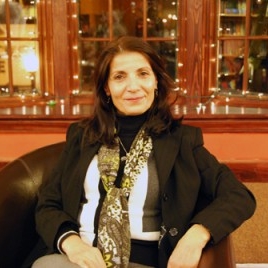
Shahla Talebi is an Associate Professor at Arizona State University. She earned her bachelor’s degree from UC Berkeley in sociocultural anthropology and her master’s and doctoral degrees also in anthropology from Columbia University. Currently, she is on the faculty of religious studies and the anthropology of religion of the School of Historical, Philosophical and Religious Studies at Arizona State University. Her book,Ghosts of Revolution: Rekindled Memories of Imprisonment in Iran (2011, Stanford University Press), won the 2011 Outstanding Academic Title Award given by Choice Magazine, and was the co-winner (Gold Medal) of the 2012 Independent Publisher Book Awards, among other awards.. Dr. Talebi’s work has also appeared in various academic journals, including Comparative Studies of South Asia, Africa, and the Middle East and Journal of Middle East Women’s Studies, and edited books. Her article on revolutions in recent Iranian history was published in the Oxford Handbook series in July 2018. She was the 2017-2018 Anthony E. Kaye fellow at National Humanities Center fellow where she worked on her book about contested memories of martyrdom in post-revolutionary Iran
Working Group Affiliation

Leti Volpp
Fellow, Law in Access to Justice, University of California, Berkeley Law
Robert D. and Leslie Kay Raven Professor of Law in Access to Justice, University of California, Berkeley Law
Leti Volpp
Robert D. and Leslie Kay Raven Professor of Law in Access to Justice, University of California, Berkeley Law

Leti Volpp is Leslie Kay Raven Professor of Law and the Faculty Director of the Center for Race and Gender at University of California Berkeley Boalt School of Law. Volpp, is scholar of both law and the humanities, writes about citizenship, migration, culture and identity. Her most recent publications include “Immigrants Outside the Law: President Obama, Discretionary Executive Power, and Regime Change” in Critical Analysis of Law(2016), “The Indigenous As Alien” in the UC Irvine Law Review (2015), “Saving Muslim Women” in Public Books (2015), “Civility and the Undocumented Alien” in Civility, Legality, and Justice in America (Austin Sarat, ed., Cambridge University Press, 2014), “The Boston Bombers” in Fordham Law Review (2014), “Imaginings of Space in Immigration Law” in Law, Culture and the Humanities (2012), the edited symposium issue “Denaturalizing Citizenship: A Symposium on Linda Bosniak’s The Citizen and the Alien and Ayelet Shachar’s The Birthright Lottery” in Issues in Legal Scholarship (2011), and “Framing Cultural Difference: Immigrant Women and Discourses of Tradition” in differences: A Journal of Feminist Cultural Studies (2011). She is the editor of Legal Borderlands: Law and the Construction of American Borders (with Mary Dudziak) (Johns Hopkins University Press, 2006). She is also the author of “The Culture of Citizenship” in Theoretical Inquiries in Law (2007), “The Citizen and the Terrorist” in UCLA Law Review (2002),“Feminism versus Multiculturalism” in the Columbia Law Review(2001), and many other articles.
Working Group Affiliation
Aditi Surie von Czechowski
Junior Research Fellow, Churchill College
Aditi Surie Von Czechowski is Junior Research Fellow at Churchill College, Cambridge. She recently received her PhD from the Department of Middle East, South Asian, and African Studies at Columbia University. Her work focuses on the intersection of humanitarianism and human rights and theories of the human.
Aditi Surie von Czechowski
Junior Research Fellow, Churchill College
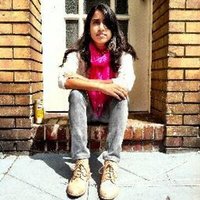
Aditi Surie Von Czechowski is Junior Research Fellow at Churchill College, Cambridge. She received her PhD from the Department of Middle East, South Asian, and African Studies at Columbia University. Her work focuses on the intersection of the anthropology of development and humanitarianism, human rights, and black feminist theory. From 2013-15, she conducted research on humanitarian aid and gender-based violence in Tanzania. Her article “Humanitarianism: Histories, Erasures, Repetitions” was published in the Journal of Comparative Studies of South Asia, Africa, and the Middle East and her article “Together in the Flesh” (2019) appeared in Cultural Anthropology’s forum “Theorizing the Contemporary Fieldsights.” She is the author of “Commoditising Architecture” in Johannesburg Workshop in Theory and Criticism (2013), among other earlier articles and she is currently working on a book entitled “Being Human”: Humanitarian Confinement, Refugee Bodies, and Human Rights.
Working Group Affiliation

Dubravka Žarkov
Fellow, Social Studies, The Hague
Dubravka Žarkov is Associate Professor of Gender, Conflict and Development at the International Institute of Social Studies, The Hague. Her fields of expertise are gender and its intersections with sexuality, ethnicity and religion; violent conflict, war and militarism, including gender based sexual violence and communalism, and visual and textual representations of war, violence, and soldiering. She also works on masculinity and sexual violence in wars against men. Among her publications are: Conflict, Peace, Security and Development: Theories and Methodologies (with Helen Hintjens, 2015); Narratives of Justice in and out of the Courtroom: Former Yugoslavia and Beyond (with Marlies Glasius, 2014); Gender, Violent Conflict, and Development (2008); The Body of War: Media, Ethnicity and Gender in the Break-up of Yugoslavia (2007); and The Postwar Moment: Militaries, Masculinities and International Peacekeeping, (with Cynthia Cockburn, 2002). One of her most recent articles is on faith and feminism.
Dubravka Žarkov
Associate Professor of Gender, Conflict and Development, International Institute of Social Studies, The Hague

Dubravka Žarkov is Associate Professor Emerita of Gender, Conflict and Development at the International Institute of Social Studies, The Hague. Her fields of expertise are gender and its intersections with sexuality, ethnicity and religion; violent conflict, war and militarism, including gender based sexual violence and communalism; and visual and textual representations of war, violence, and soldiering. She also works on masculinity and sexual violence in wars against men. Among her publications are: Conflict, Peace, Security and Development: Theories and Methodologies (with Helen Hintjens, 2015); Narratives of Justice in and out of the Courtroom: Former Yugoslavia and Beyond (with Marlies Glasius, 2014); Gender, Violent Conflict, and Development (2008); The Body of War: Media, Ethnicity and Gender in the Break-up of Yugoslavia (2007); and The Postwar Moment: Militaries, Masculinities and International Peacekeeping (with Cynthia Cockburn, 2002). One of her most recent articles is on faith and feminism.
Working Group Affiliation