
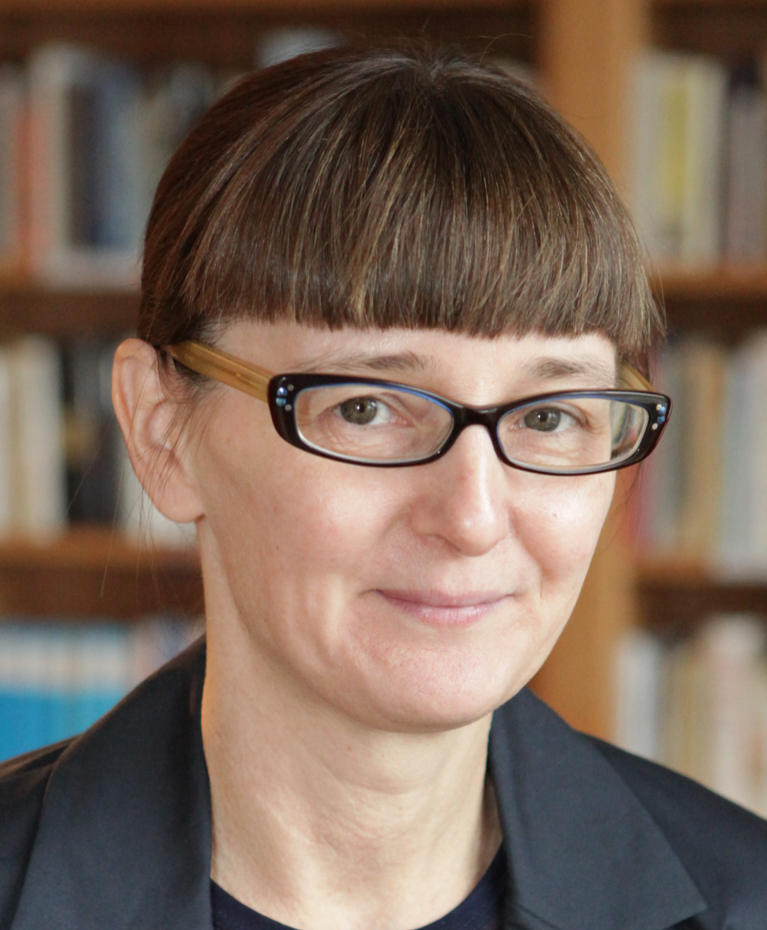
Felicity D. Scott
Professor, Department of Architecture, Planning, and Preservation, Columbia University
Felicity D. Scott is a Professor of Architecture in the Graduate School of Architecture, Planning, and Preservation at Columbia University. She is the author of Outlaw Territories: Environments of Insecurity/Architectures of Counter-Insurgency (2016), Disorientations: Bernard Rudofsky in the Empire of Signs (2016), and Architecture or Techno-Utopia (2007).
Professor, Architecture, Columbia University

Felicity D. Scott is a Professor of Architecture in the Graduate School of Architecture, Planning, and Preservation at Columbia University. She is the author of Outlaw Territories: Environments of Insecurity/Architectures of Counter-Insurgency (2016), Disorientations: Bernard Rudofsky in the Empire of Signs (2016), and Architecture or Techno-Utopia (2007). Her work as a historian and theorist focuses on articulating genealogies of political and theoretical engagement with questions of techno-scientific, environmental, and geopolitical transformation within modern and contemporary architecture, art, and media, as well as upon the discourses, institutions and social movements that have shaped and defined these disciplines, sometimes evidently, sometimes less so.
Working Group Affiliation
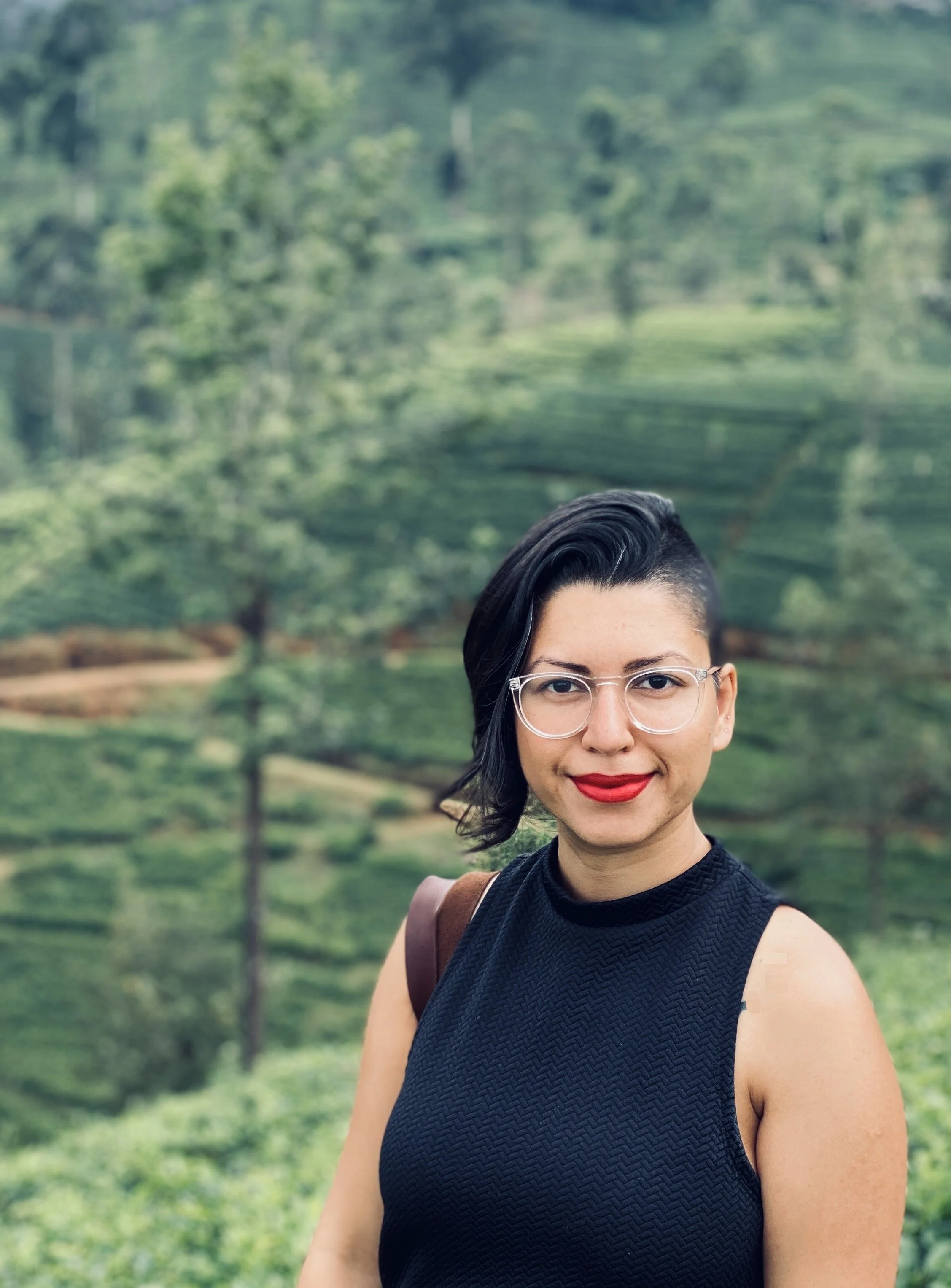
Javairia Shahid
Ph.D. student, Graduate School of Architecture, Planning and Preservation (GSAPP), Columbia University
Javairia Shahid is a Ph.D. student in Columbia University's Graduate School of Architecture, Planning and Preservation (GSAPP), with a joint affiliation at the Institute of Comparative Literature and Society (ICLS). She holds a graduate degree in architectural history and theory from GSAPP.
Ph.D. student, Graduate School of Architecture, Planning and Preservation (GSAPP), Columbia University
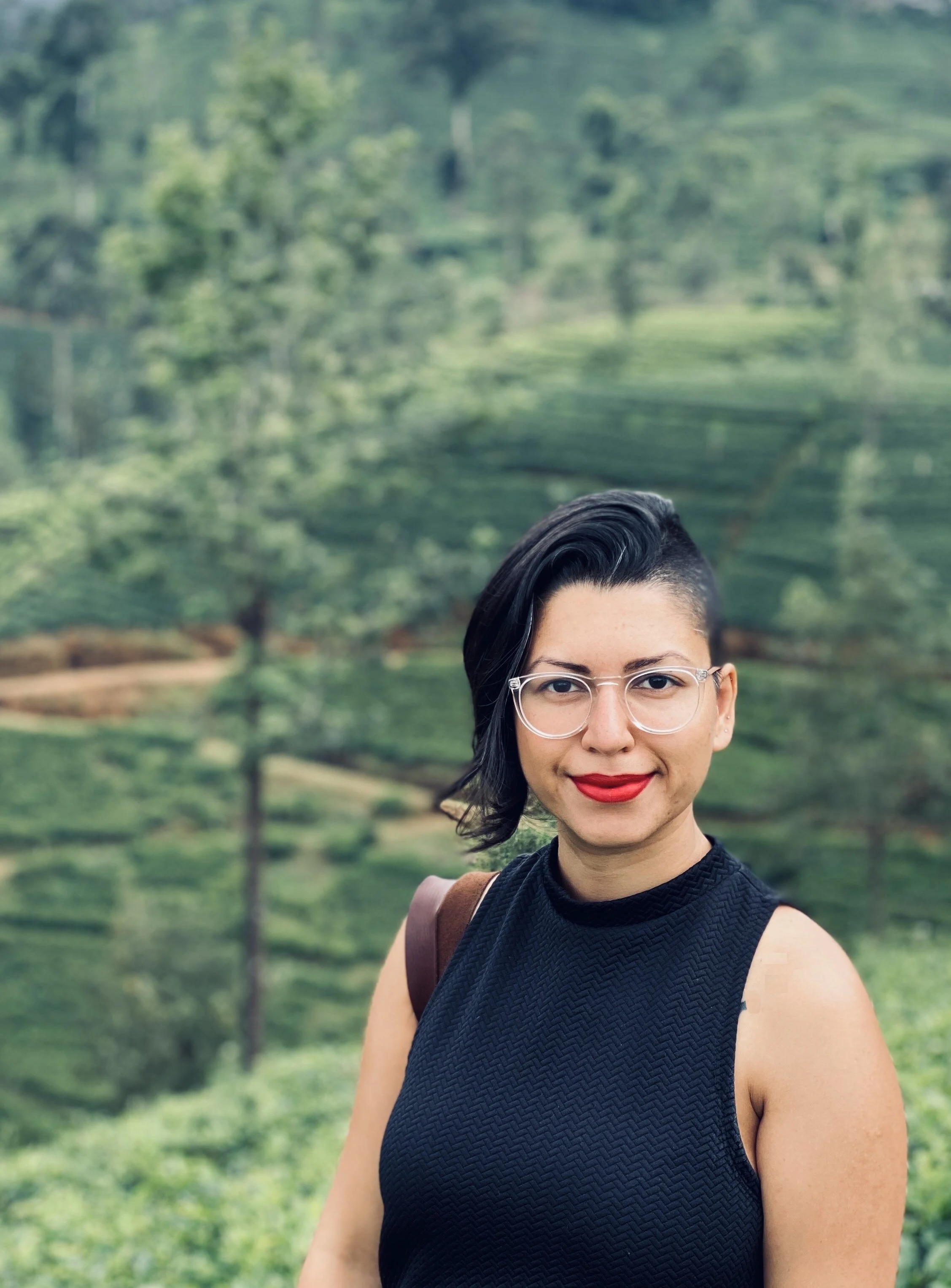
Javairia Shahid is a Ph.D. student in Columbia University's Graduate School of Architecture, Planning and Preservation (GSAPP), with a joint affiliation at the Institute of Comparative Literature and Society (ICLS). She holds a graduate degree in architectural history and theory from GSAPP. Her research focuses on the history of knowledge production and epistemic labor under colonialism in South Asia and the Indian Ocean world. This work highlights the disjunctions and entanglements between the aestheticization of landscapes, the pecuniary production of land as resource, and the formation of human and nonhuman subjectivities.
Working Group Affiliations

Anooradha Iyer Siddiqi
Assistant Professor, Department of Architecture, Columbia University
Anooradha Iyer Siddiqi is an Assistant Professor of Architecture at Barnard College, Columbia University, and co-editor of “Feminist Architectural Histories of Migration” (2020) and Spatial Violence (2016). Her book manuscript Architecture of Migration: The Dadaab Refugee Camps and Humanitarian Settlement analyzes the history, visual rhetoric, and spatial politics of the Dadaab refugee camps in Northeastern Kenya.
Assistant Professor, Architecture, Barnard College

Anooradha Iyer Siddiqi is an art and architectural historian specializing in histories of modernity, migration, and settlement. She is an Associate Professor at Barnard College, Columbia University, and her writing and teaching builds on yearslong research in Africa, Asia, and Europe for two scholarly monographs, Architecture of Migration (Duke University Press) and Ecologies of the Past. These two projects inform her research on histories of architecture, craft, settlement, and land, experiences of migration and territorial partition, and knowledge of the past through architectural practice, pedagogy, and discourse on the African continent and South Asian subcontinent. For more, please see https://www.anooradhaiyersiddiqi.net/.
Insurgent Domesticities, Co-Director
Black Archipelago, Working Group Member
Geographies of Injustice, Working Group Member
Edited Books
Architecture of Migration: The Dadaab Refugee Camps and Humanitarian Settlement (Duke University Press, Theory in Forms) available open access
Minnette De Silva: Intersections (Mack Books)

Kavita Sivaramakrishnan
Associate Professor, Department of Sociomedical Sciences, Columbia University.
Kavita Sivaramakrishnan is an Associate Professor of Sociomedical Sciences at Columbia University. She is the author of As the World Ages: Rethinking a Demographic Crisis (2018), on the global politics of aging. She is a public health historian of South Asia with a focus on the politics of health, medicine, and science in the global South. Her research has focused on the politics of ‘indigenous’ Ayurvedic medicine and its reconfiguring in a late colonial context in North India and social histories of epidemics and the role played by experts and scientific evidence.
Associate Professor, Sociomedical Sciences, Columbia University

Kavita Sivaramakrishnan is an Associate Professor of Sociomedical Sciences at Columbia University. She is the author of As the World Ages: Rethinking a Demographic Crisis (2018), on the global politics of aging. She is a public health historian of South Asia with a focus on the politics of health, medicine and science in the global South. Her research has focused on the politics of ‘indigenous’ Ayurvedic medicine and its reconfiguring in a late colonial context in North India (through claims and representations based on language and religion), and social histories of epidemics and the role played by experts and scientific evidence (including the plague and its national and regional politics). She is developing a book project on the history of consumption and disease risks.
Working Group Affiliation
Iulia Statica
Lecturer in Urban Design at the School of Architecture, University of Sheffield, UK
Iulia Statica is a Lecturer in Urban Design at the School of Architecture at the University of Sheffield, UK. Between 2019-21 she was the Marie Curie Research Fellow at The Bartlett School of Architecture, University College London.
Iulia Statica
Lecturer in Urban Design at the School of Architecture, University of Sheffield, UK

Iulia Statica is a Lecturer in Urban Design at the School of Architecture at the University of Sheffield, UK. Between 2019-21 she was the Marie Curie Research Fellow at The Bartlett School of Architecture, University College London. Her research interests focus on the relationship between gender and domesticity in the development and transformation of housing infrastructures and urban landscapes in Eastern Europe and Latin America. She employs documentary film as an integral aspect of both research and practice; her documentary — My Socialist Home — will be premiered in her forthcoming exhibition Archiving the Home: Gender and Domesticity in Postsocialist Bucharest in London. Statica completed her PhD at the Department of Architecture at the University of Rome La Sapienza in 2016, and was awarded the Fellowship in Architecture at the Romanian Academy in Rome (2012-14). Between 2018 and 2019 she was a Visiting Scholar at the Mario Einaudi Center for International Studies, Latin American Studies Program, at Cornell University. She is the author of Urban Phantasmagorias: Domesticity, Production and the Politics of Modernity in Communist Bucharest (Routledge, forthcoming 2022).
Working Group Affiliation

Naomi Stead
Professor, Art, Design and Architecture, Monash University
Naomi Stead is a Professor at Monash University. She was a co-founder of Parlour, an activist group advocating for greater gender equity in architecture, co-author of Parlour Guides to Equitable Practice, and co-curator of the exhibition Portraits of Practice: At Work in Architecture.
Naomi Stead
Professor, Art, Design and Architecture, Monash University

Naomi Stead is a Professor at Monash University. She was a co-founder of Parlour, an activist group advocating for greater gender equity in architecture, co-author of Parlour Guides to Equitable Practice, and co-curator of the exhibition Portraits of Practice: At Work in Architecture. She is co-editor of Speaking of Buildings: Oral History in Architectural Research (2019) and editor of Semi-Detached: Writing, Representation and Criticism in Architecture (2012). She has served as editor of Architectural Theory Review and Culture Unbound: Journal of Current Cultural Research. She writes in architectural humanities and cultural studies of architecture, considering its production, reproduction, mediation and reception, gender equity in architecture, and oral history as a disruptive method in its research.
Working Group Affiliation

Rhiannon Stephens
Associate Professor, Department of History, Columbia University
Rhiannon Stephens is an Associate Professor of History at Columbia University. She is the author of A History of African Motherhood: The Case of Uganda, 700-1900 (2013), which traces the social institution and ideology of motherhood across over a millennium of Ugandan political, economic and social change, and co-editor of Doing Conceptual History in Africa (2018), which critically examines what it means to write conceptual history on the continent.
Rhiannon Stephens
Associate Professor, History, Columbia University

Rhiannon Stephens is an Associate Professor of History at Columbia University. She is the author of A History of African Motherhood: The Case of Uganda, 700-1900 (2013), which traces the social institution and ideology of motherhood across over a millennium of Ugandan political, economic and social change, and co-editor of Doing Conceptual History in Africa (2018), which critically examines what it means to write conceptual history on the continent. She specializes in the history of precolonial and early colonial East Africa from the late first millennium CE through the twentieth century. She is currently working a history of poverty and wealth as economic and social concepts in eastern Uganda over the past two thousand years.
Working Group Affiliation
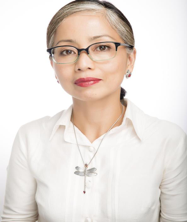
Neferti X. M. Tadiar
Professor of Women's, Gender, and Sexuality Studies
Neferti X. M. Tadiar is Professor of Women's, Gender & Sexuality Studies at Barnard College and Director of the Center for the Study of Race and Ethnicity at Columbia University. She is the author of Things Fall Away: Philippine Historical Experience and the Makings of Globalization (2009) and Fantasy-Production: Sexual Economies and Other Philippine Consequences for the New World Order (2004), and co-editor with Angela Y. Davis of Beyond the Frame: Women of Color and Visual Representation (2005).
Neferti X. M. Tadiar
Professor, Women's, Gender, and Sexuality Studies, Barnard College
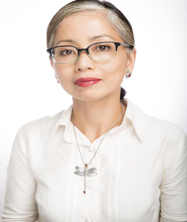
Neferti X. M. Tadiar is Professor of Women's, Gender & Sexuality Studies at Barnard College and Director of the Center for the Study of Race and Ethnicity at Columbia University. She is the author of Things Fall Away: Philippine Historical Experience and the Makings of Globalization (2009) and Fantasy-Production: Sexual Economies and Other Philippine Consequences for the New World Order (2004), and co-editor with Angela Y. Davis of Beyond the Frame: Women of Color and Visual Representation (2005). Her work examines the role of cultural practice and social imagination in the production of wealth, power, marginality, and liberatory movements in the context of global relations. She was co-director of the CSSD working group, “Gender & the Global Slum.”
Working Group Affiliations
Gender and the Global Slum, Project Director
Insurgent Domesticites, Co-Director
Pacific Climate Circuits: Moving Beyond Science, Technology, Engineering, and Economics
Edited Books
Things Fall Away: Philippine Historical Experience and the Makings of Globalization Duke University Press, 2009
Fantasy-Production: Sexual Economies and Other Philippine Consequences for the New World Order
John Hopkins University Press, 2004
Beyond the Frame: Women of Color and Visual Representation James Madison University Press, 2005

Madiha Tahir
Ph.D. candidate, Film, Columbia University,
Madiha Tahir has a Ph.D. from Columbia University, and is a writer, filmmaker, and former journalist focusing on drone warfare, surveillance, and empire. She is the director of Wounds of Waziristan, a short documentary essay film on survivors of drone attacks.
Madiha Tahir
Ph.D. Candidate, Columbia University

Madiha Tahir has a Ph.D. from Columbia University, and is a writer, filmmaker, and former journalist focusing on drone warfare, surveillance, and empire. She is the director of Wounds of Waziristan, a short documentary essay film on survivors of drone attacks. Her work has appeared in several media outlets including Al-Jazeera, Vice, Funambulist, Foreign Affairs, Caravan, Democracy Now!, Costs of War, Guernica, PRI and BBC’s “The World,” and elsewhere. Tahir is the co-founder of the bilingual, online journal Tanqeed, with Mahvish Ahmad, and the co-editor of Dispatches from Pakistan, a volume of essays in a series on timely issues spearheaded by Vijay Prashad. She is collaborating on a film project on Pakistani movements and a research grant on questions of data and political violence.
Working Group Affiliation
Miriam Ticktin
Professor, Anthropology, CUNY Graduate Center
Miriam Ticktin is Professor of Anthropology at the CUNY Graduate Center. Her research in the anthropology of medicine and science, law, and transnational and postcolonial feminist theory has focused in the broadest sense on what it means to make political claims in the name of a universal humanity: she has been interested in what these claims tell us about universalisms and difference, about who can be a political subject, on what basis people are included and excluded from communities, and how inequalities get instituted or perpetuated in this process.
Miriam Ticktin
Professor of Anthropology, CUNY Graduate Center.
Miriam Ticktin is Associate Professor of Anthropology in Anthropology at the CUNY Graduate Center. She publishes widely on topics such as immigration, humanitarianism, and racial and gendered inequalities. Most notably, she is the author of Casualties of Care: Immigration and the Politics of Humanitarianism in France, and co-editor of In the Name of Humanity: The Government of Threat and Care. She is currently finishing a book on, and against, racial innocence.
Her research in the anthropology of medicine and science, law, and transnational and postcolonial feminist theory has focused in the broadest sense on what it means to make political claims in the name of a universal humanity: she has been interested in what these claims tell us about universalisms and difference, about who can be a political subject, on what basis people are included and excluded from communities, and how inequalities get instituted or perpetuated in this process.
Working Group Affiliations

Ife Salema Vanable
Ph.D. Candidate, Architecture, Planning and Preservation, Columbia University
Ife Salema Vanable is an architect, theorist, and historian who holds professional and post-professional degrees in architecture from Cornell and Princeton Universities. Ife is founder and leader of i/van/able, a New York based architectural workshop and think tank. She is an Adjunct Assistant Professor at the Irwin S. Chanin School of Architecture of the Cooper Union and a Ph.D. candidate in architectural history and theory at Graduate School of Architecture Planning and Preservation (GSAPP).
Ife Salema Vanable
Ph.D. Candidate, Architecture, Planning and Preservation, Columbia University

Ife Salema Vanable is an architect, theorist, and historian who holds professional and post-professional degrees in architecture from Cornell and Princeton Universities. Ife is founder and leader of i/van/able, a New York based architectural workshop and think tank. She is an Adjunct Assistant Professor at the Irwin S. Chanin School of Architecture of the Cooper Union and a Ph.D. candidate in architectural history and theory at Graduate School of Architecture Planning and Preservation (GSAPP). Her scholarly work asks questions of and seeks to unearth complex and seemingly banal relationships between the design of multi-family housing, municipal government machinations for its development, conceptions of racial difference, geography, finance, program, and family composition. This work engages histories of the private development of low-moderate income housing in the form of high-rise residential towers in 1970s New York under the program known as Mitchell-Lama. In this context, Ife studies modes of black subjectivity and dwelling in tall buildings, the performance of domesticity and respectability, and the politics, aesthetics, and materiality of the making of home.
Working Group Affiliation
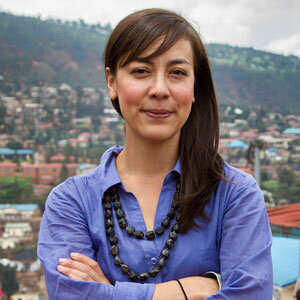
Delia Duong Ba Wendel
Assistant Professor of Urban Studies, the School of Architecture and Planning, Massachusetts Institute of Technology
Delia Duong Ba Wendel is an Assistant Professor of Urban Studies in the School of Architecture and Planning at the Massachusetts Institute of Technology, and co-editor of Spatializing Politics, an anthology of essays on power and place (2015). Her book manuscript Rwanda’s Genocide Heritage is a spatial history of genocide memory that accounts for how a past gains presence, is authorized, and persists as a form of sociopolitical regulation.
Delia Duong Ba Wendel
Assistant Professor, Urban Studies, the School of Architecture and Planning, Massachusetts Institute of Technology

Delia Duong Ba Wendel is an Assistant Professor of Urban Studies in the School of Architecture and Planning at the Massachusetts Institute of Technology, and co-editor of Spatializing Politics, an anthology of essays on power and place (2015). Her book manuscript Rwanda’s Genocide Heritage is a spatial history of genocide memory that accounts for how a past gains presence, is authorized, and persists as a form of sociopolitical regulation. Her book manuscript The Ethics of Stability explores post-genocide peacebuilding as a socio-spatial endeavor defined and challenged in the design of homes, settlements, and civic space. Her research engages how communities recover and rebuild after conflict.
Working Group Affiliation
Insurgent Domesticities, Co-Director

Melanie Yazzie
Fellow, Navajo and American Indian History , University of New Mexico
Melanie Yazzie (Diné) is an Assistant Professor at University of New Mexico. She has published widely in scholarly platforms, and engages in extensive public intellectual and activist work on Native women’s rights, LGBTQ2 rights, environmental justice, policing and incarceration, and Indigenous housing justice, urban issues, and international solidarity.
Melanie Yazzie
Assistant Professor, University of New Mexico

Melanie Yazzie (Diné) is an Assistant Professor at University of New Mexico. She has published widely in scholarly platforms, and engages in extensive public intellectual and activist work on Native women’s rights, LGBTQ2 rights, environmental justice, policing and incarceration, and Indigenous housing justice, urban issues, and international solidarity. She specializes in Navajo and American Indian history and her work examines (neo)liberalism, settler colonialism and decolonization, biopolitics and political ecology, theories of policing and the state, and Indigenous feminisms/queer studies/urban experience. She is bilagaana born for Ma’iideeshgiizhinii (Coyote Pass Clan).
Working Group Affiliation

Sarover Zaidi
Fellow, Anthropology, Jindal School of Art & Architecture, Delhi.
Sarover Zaidi works at the intersections of critical theory, anthropology, art, architecture and material culture studies. She has extensively worked on religious architecture, and urbanism in the city of Bombay and currently co-runs a site on writing the city called Chiragh Dilli (https://chiraghdilli.wordpress.com).
Sarover Zaidi
Assistant Professor, Jindal School of Art & Architecture, Delhi

Sarover Zaidi works at the intersections of critical theory, anthropology, art, architecture and material culture studies. She has extensively worked on religious architecture, and urbanism in the city of Bombay and currently co-runs a site on writing the city called Chiragh Dilli (https://chiraghdilli.wordpress.com). Previously she worked on rural development, with a focus on health, education, and women's rights across India, and currently works on religious iconography & modernist architecture in south Asia. She has received the Max Planck fellowship, the INTACH fellowship, the IFA fellowship and the Khoj fellowship for her research interests. Besides this she also curates an interdisciplinary forum on art, architecture and anthropology, 'Elementary forms' and has previously taught at the School of Planning and Architecture, Delhi. At JSAA she runs a studio course on 'Materials and making', and also teaches Modern South Asia, and Design Theories.
Working Group Affiliation