
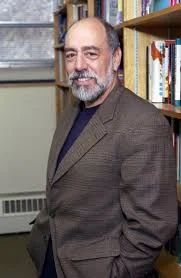
Sanford Schram
Fellow, Political Science, Hunter College, CUNY
Sanford Schram is a noted American political scientist and author. Schram is on the faculty in the Political Science Department at Hunter College, CUNY and in the Sociology Department at the CUNY Graduate Center where he teaches in the doctoral program in Political Science. He is also active as a Faculty Associate at the Roosevelt House Public Policy Institute (which is part of Hunter College).
Sanford Schram
Political Science, Hunter College, CUNY

Sanford Schram is a noted American political scientist and author. Schram is on the faculty in the Political Science Department at Hunter College, CUNY and in the Sociology Department at the CUNY Graduate Center where he teaches in the doctoral program in Political Science. He is also active as a Faculty Associate at the Roosevelt House Public Policy Institute (which is part of Hunter College).
Schram has written six books and has co-authored, co-edited or been editor of nine others. Two of his books, the solely authored Words of Welfare (Minnesota, 1995) and Disciplining the Poor (Chicago, 2011)--co-authored with Joe Soss and Richard Fording--both received the American Political Science Association’s Michael Harrington Award for books dedicated to promoting social change. Disciplining the Poor has also received multiple other awards including in 2012 the Oliver Cromwell Cox Award from the American Sociological Association for the best book for combating racism.
In 2012, Schram received the Charles McCoy Career Achievement Award from the American Political Science Association (New Political Science Section) which is given each year to "a progressive political scientist who has had a long successful career as a writer, teacher, and activist." His work has appeared in the American Political Science Review, the American Journal of Political Science, the American Sociological Review, the American Journal of Sociology, and other academic journals, as well as The Washington Post and other mass media publications.
Previously, he taught social theory and social policy in the Graduate School of Social Work and Social Research at Bryn Mawr College. Schram is currently completing a book with Richard Fording entitled Hard White: Trump and the Alt-Right.
Working Group Affiliation

Wilson Sherwin
PhD Student, Sociology, CUNY Graduate Center
Wilson Sherwin is a native New Yorker and a PhD candidate in sociology at the CUNY Graduate Center. Her work centers around Marxist theory, feminism, social movements and the sociology of labor. She is currently beginning dissertation research on solutions to unemployment that foster autonomy from waged labor, and on current proposals for Universal Basic Income.
PhD Student, Sociology, CUNY Graduate Center

Wilson Sherwin is a native New Yorker and a PhD candidate in sociology at the CUNY Graduate Center. Her work centers around Marxist theory, feminism, social movements and the sociology of labor. She is currently beginning dissertation research on solutions to unemployment that foster autonomy from waged labor, and on current proposals for Universal Basic Income.
Working Group Affiliation
Bertram Silverman
Fellow, Economics, Hofstra University
Bertram Silverman is a professor of economics emeritus and former director of the Center for the Study of Labor and Democracy at Hosftra University. He has worked as a trade union economist and has organized and directed a joint university-trade union college degree program for working adults. Silverman has written about labor problems in the United States, Latin America, and Europe. He is editor of Man and Socialism in Cuba: The Great Debate and co-editor with Murray Yanowitch of The Worker in “Post-Industrial” Capitalism; Labor and Democracy in the Tran
Emiritus Professor of Economics, Hofstra University
Bertram Silverman is a professor of economics emeritus and former director of the Center for the Study of Labor and Democracy at Hosftra University. He has worked as a trade union economist and has organized and directed a joint university-trade union college degree program for working adults. Silverman has written about labor problems in the United States, Latin America, and Europe. He is editor of Man and Socialism in Cuba: The Great Debate and co-editor with Murray Yanowitch of The Worker in “Post-Industrial” Capitalism; Labor and Democracy in the Transition to a Market System; and Double Shift: Transforming Work in Post-Socialist and Post-Industrial Societies.
Working Group Affiliation
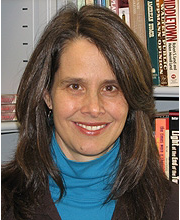
Kirsten Swinth
Associate Professor of History, Fordham University
My research interests center on the social and cultural history of the U.S. since World War II, but I have also written on the Gilded Age and Progressive Eras. My focus is the intersections among gender, cultural, and labor and economic history. I have a strong background in U.S. visual and popular culture as well, and have recently been teaching the history of American photography. My training is in American Studies and I rely on an interdisciplinary approach in my work.
Kirsten Swinth
Associate Professor of History, Fordham University

My research interests center on the social and cultural history of the U.S. since World War II, but I have also written on the Gilded Age and Progressive Eras. My focus is the intersections among gender, cultural, and labor and economic history. I have a strong background in U.S. visual and popular culture as well, and have recently been teaching the history of American photography. My training is in American Studies and I rely on an interdisciplinary approach in my work.
I am currently at work on The Rise of the Working Family: The Reshaping of Care and Competition in Postindustrial America. This book traces the rise of the working family in the second half of the twentieth century. The Rise of the Working Family thus reshapes historians’ understandings of postwar American history by providing an integrated narrative of two of the most fundamental historical changes of the last fifty years—simultaneous gender and economic revolutions.
The key to unlocking the rise of the working family is the working mother. Historians understand the unskilled male industrial worker to be the emblem of industrial capitalism; they have yet to understand how the working mother is the emblem of the postindustrial order. With the new service economy, working mothers moved front and center. They dominated popular conceptions of the labor force and occupied growing sectors of the economy, particularly the expanding “care” sector. I show the roots of—and cultural politics behind—many common catchphrases for the nation’s new social and economic reality: supermom, second shift, the balancing act, juggling, mommy wars, and mommy track.
My earlier scholarship explored gender, culture, and labor in the art world at the turn of the century. In Painting Professionals: Women Artists and the Development of Modern American Art, 1870-1930 (2001), I traced the careers of two generations of American women artists who flooded the art world starting in the 1870s. I explored the significance of culture to social reform with an edited document collection, “How Did Settlement Workers at Greenwich House Promote the Arts as Integral to a Shared Social Life?,” for Women and Social Movements in the United States, 1600-2000 (2006).
My work has been featured on CNN.com, The Christian Science Monitor, the Huffington Post, and on public radio’s “To the Point.” I lecture regularly on the women’s movement, postwar America, and the Gilded Age and Progressive Eras.
Working Group Affiliation
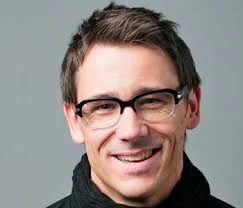
Carl Wennerlind
History, Barnard College
Professor Wennerlind specializes in seventeenth- and eighteenth-century Europe, with a focus on intellectual history and political economy. He is particularly interested in the historical development of money and credit, as well as attempts to theorize these phenomena. He is the author of Casualties of Credit: The English Financial Revolution, 1620-1720 (Harvard University Press, 2011) and is currently at work on two books -- one on the history of scarcity (tentatively titled A History of Scarcity: Humanity, Nature, and the World of Goods) and one on David Hume's political economy (tentatively titled Hume's Wordly Philosophy). In addition to his co-edited volumes David Hume’s Political Economy (with Margaret Schabas) and Mercantilism Reimagined: Political Economy in Early Modern Britain and its Empire (with Phil Stern), Wennerlind’s work has appeared in journals such as the Journal of Political Economy, Journal of Economic Perspectives, History of Political Economy, and Hume Studies.
Carl Wennerlind
History, Barnard College
Professor Wennerlind specializes in seventeenth- and eighteenth-century Europe, with a focus on intellectual history and political economy. He is particularly interested in the historical development of money and credit, as well as attempts to theorize these phenomena. He is the author of Casualties of Credit: The English Financial Revolution, 1620-1720 (Harvard University Press, 2011) and is currently at work on two books -- one on the history of scarcity (tentatively titled A History of Scarcity: Humanity, Nature, and the World of Goods) and one on David Hume's political economy (tentatively titled Hume's Wordly Philosophy). In addition to his co-edited volumes David Hume’s Political Economy (with Margaret Schabas) and Mercantilism Reimagined: Political Economy in Early Modern Britain and its Empire (with Phil Stern), Wennerlind’s work has appeared in journals such as the Journal of Political Economy, Journal of Economic Perspectives, History of Political Economy, and Hume Studies.
His research has been supported by the NEH, American Philosophical Society, ACLS, Institute for New Economic Thinking, Wenner-Gren Foundation, Magn. Bergvalls Stiftelse, Helge Ax:son Johnsons Stiftelse, Sven och Dagmar Salens Stiftelse, and Jan Wallanders och Tom Hedelius Stiftelse. During the 2016-17 academic year, he was a fellow at the Davis Center for Historical Studies, Princeton University.
He has taught such courses as "Introduction to European History: Renaissance to the French Revolution"; "Filthy Lucre: A History of Money"; "Capitalism and the Enlightenment"; "Merchants, Pirates, and Slaves in the Formation of Atlantic Capitalism: 1600-1800"; "History of Capitalism"; "Commercial Practices, Commercial Imaginations in Europe, 1300-1750" (graduate seminar); and "History of Political Economy" (graduate seminar).
Working Group Affiliation