

Gazi Nafis Ahmed
Fellow, Media and Journalism, Danish School of Media and Journalism in Denmark
Gazi Nafis Ahmed is an artist working with photography and video. Born in Dhaka, Bangladesh, he studied art and design at London Guildhall University, United Kingdom. He received his B.A. from Danish School of Media and Journalism in Denmark and his M.A. in fine arts photography from Istituto Europeo di Design Madrid in Spain, both on full scholarship. Ahmed was awarded at the international Pride Photo Award 2015 in Amsterdam for his series “Inner Face.”
Gazi Nafis Ahmed

Gazi Nafis Ahmed is an artist working with photography and video. Born in Dhaka, Bangladesh, he studied art and design at London Guildhall University, United Kingdom. He received his B.A. from Danish School of Media and Journalism in Denmark and his M.A. in fine arts photography from Istituto Europeo di Design Madrid in Spain, both on full scholarship. Ahmed was awarded at the international Pride Photo Award 2015 in Amsterdam for his series “Inner Face.” In 2013, he received the Blub Award from Format International Photography Festival in the United Kingdom. He attended a yearlong artist residency program from 2018 to 2019 that was supported by The Andrew W Mellon Foundation. In 2019, he represented the Bangladesh Pavilion at La Biennale di Venezia 58 th . His work has been exhibited in worldwide, including solo exhibitions at Bengal Gallery of Fine Arts and EMK Centre in Dhaka. In 2016 Ahmed had solo exhibition at BRAC University, which was organized by BLAST and James P. Grant School of Public health. His photos have graced the pages of Guardian, The New York Times and The New Yorker, among others. His critically acclaimed series “Inner Face” and “Innate Identities” explores gender performativity.
Working Group Affiliation

Nadje Al-Ali
Fellow, Gender Studies, SOAS University of London
Nadje Al-Ali is Professor of Gender Studies at the Centre for Gender Studies (CGS), SOAS University of London. She is currently chair of CGS and head of the Doctoral School at SOAS. Her main research interests revolve around feminist activism; transnational migration and diaspora moblization; war, conflict and peace; as well as art & cultural studies; mainly with reference to Iraq, Egypt, Turkey and the Kurdish political movement.
Nadje Al-Ali
Professor, Gender Studies, SOAS University of London
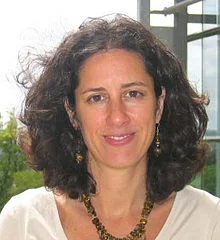
Nadje Al-Ali is Professor of Gender Studies at the Centre for Gender Studies (CGS), SOAS University of London. She is currently chair of CGS and head of the Doctoral School at SOAS. Her main research interests revolve around feminist activism; transnational migration and diaspora moblization; war, conflict and peace; as well as art & cultural studies; mainly with reference to Iraq, Egypt, Turkey and the Kurdish political movement. Her publications include What kind of Liberation? Women and the Occupation of Iraq (2009, University of California Press, co-authored with Nicola Pratt); Women and War in the Middle East: Transnational Perspectives (Zed Books, 2009, co-edited with Nicola Pratt); Iraqi Women: Untold Stories from 1948 to the Present (2007, Zed Books); New Approaches to Migration (ed., Routledge, 2002, with Khalid Koser); Secularism, Gender and the State in the Middle East (Cambridge University Press 2000) as well as numerous book chapters and journal articles. Her co-edited book with Deborah al-Najjar entitled We are Iraqis: Aesthetics & Politics in a Time of War (Syracuse University Press) won the 2014 Arab-American book prize for non-fiction. Her most recent research and publications focus on the Turkish-Kurdish conflict and the Kurdish women’s movement.
Professor Al-Ali was President of the Association of Middle East Women’s Studies (AMEWS) from 2009-2011. She is also a member of the Feminist Review Collective, and is on the editorial board of Kohl: a Journal of Body and Gender Research. She was involved in several projects with Iraqi academics and women’s rights activists which facilitated the introduction of women and gender studies and increased evidence-based research capacity in Iraq.
Working Group Affiliation
Religion and the Global Reframing of Gender Violence

Luis Rincon Alba
Ph.D. Candidate, Performance Studies, New York University
Luis Rincon Alba is a Colombian artist and scholar based in New York City since 2010. He has taught at the departments of Art and Public Policy and Performance Studies at New York University's Tisch School of the Arts.
Luis Rincon Alba
Ph.D. Candidate, Performance Studies Department, New York University

Luis Rincon Alba is a Colombian artist and scholar based in New York City since 2010. He has taught at the departments of Art and Public Policy and Performance Studies at New York University's Tisch School of the Arts. He is currently a doctoral candidate in the Performance Studies Department at New York University and a Public Humanities Fellow at Humanities NY and the Urban Democracy Lab. As an actor, performer, and oral narrator, he has collaborated with different artistic collectives in his home country and also in Brazil, Argentina, Mexico, the United States, and Italy. He is also the artistic director of the collective MUSA Presents.
Working Group Affiliations
Zip Code Memory Project: Practices of Justice and Repair, Social Engagement Project

Wafa Al-Khadra
Fellow, Language and Communication, American University of Madaba
Wafa Al-Khadra is a university professor and experienced university administrator, currently serving as Dean of Faculty of Languages and Communication at the American University of Madaba.
Wafa Al-Khadra

Wafa Al-Khadra is a university professor and experienced university administrator, currently serving as Dean of Faculty of Languages and Communication at the American University of Madaba. She has extensive experience in gender studies, strategic planning, quality assurance, and discourse analysis. Wafa a is a frequent speaker, seminar leader and consultant on gender studies and feminist theories at several national, regional and international organizations. She is devoted to feminist politics and gives unstinting support to women's/ human rights. Wafa has contributed to the academization of feminist thought, gender studies and to the analysis of school textbooks. Her research interest is in the two areas of politics of identity and gender studies.
Working Group Affiliation
Nissreen Haram
Fellow, Economics, Mount Holyoke College
Nissreen Haram holds a B.A. in economics from Mount Holyoke College in Massachusetts and an M.A. in Islamic Studies from McGill University in Montreal. She has had a diverse career as a Trade Policy Advisor, Law Firm Director, Children’s Museum Director, and Artisan Cheese maker. She has also been member of the Yale Law School Middle East Seminar, and its organizing committee for more than 15 years. She is actively interested in Islamic legal and intellectual history, and contemporary approaches to religious reform.
Nissreen Haram holds a B.A. in economics from Mount Holyoke College in Massachusetts and an M.A. in Islamic Studies from McGill University in Montreal. She has had a diverse career as a Trade Policy Advisor, Law Firm Director, Children’s Museum Director, and Artisan Cheese maker. She has also been member of the Yale Law School Middle East Seminar, and its organizing committee for more than 15 years. She is actively interested in Islamic legal and intellectual history, and contemporary approaches to religious reform.
Working Group Affiliation

Alexander Alberro
Professor, Department of Contemporary Art History, Barnard College and Columbia University
Alexander Alberro, Virginia B. Wright Professor of Modern and Contemporary Art History at Barnard College and Columbia University, is the author and editor of numerous books, including Abstraction in Reverse: The Reconfigured Spectator in Mid-Twentieth Century Latin American Art (2017); Luis Camnitzer In Conversation with Alexander Alberro (2014) and What is Contemporary Art Today? (2012).
Alexander Alberro
Virginia B. Wright Professor of Modern and Contemporary Art History at Barnard College and Columbia University

Alexander Alberro, Virginia B. Wright Professor of Modern and Contemporary Art History at Barnard College and Columbia University, is the author and editor of numerous books, including Abstraction in Reverse: The Reconfigured Spectator in Mid-Twentieth Century Latin American Art (2017), Luis Camnitzer In Conversation with Alexander Alberro (2014); What is Contemporary Art Today? (2012); John Miller: The Ruin of Exchange (2012); Institutional Critique: An Anthology of Artists Writings (2009); Art After Conceptual Art (2006); Museum Highlights (2005); Conceptual Art and the Politics of Publicity (2003); Recording Conceptual Art (2001); Two-Way Mirror Power (1999); and Conceptual Art: A Critical Anthology (1999). He has also published in a broad array of journals and exhibition catalogues, and delivered many lectures internationally. Alberro is presently completing a book-length study, "Spaces of Contemporary Art," that focuses on the relationship between current art and the geography of globalization.
Working Group Affiliation
Environmental Justice, Belief Systems, and Aesthetic Experiences in Latin America and the Caribbean

Alex Aleinikoff
Prof. Aleinikoff is University Professor and has served as Director of the Zolberg Institute since January 2017. He has written widely in the areas of immigration and refugee law and policy, transnational law, citizenship, race, and constitutional law.
Alex Aleinikoff

Prof. Aleinikoff is University Professor and has served as Director of the Zolberg Institute since January 2017. He has written widely in the areas of immigration and refugee law and policy, transnational law, citizenship, race, and constitutional law. His most recent book (co-authored with Leah Zamore) is The Arc of Protection: Reforming the International Refugee Regime. Previously, he held the position of United Nations Deputy High Commissioner for Refugees (2010-15) and was a professor at Georgetown University Law Center, where he also served as dean and Executive Vice President of Georgetown University. He received a J.D. from the Yale Law School and a B.A. from Swarthmore College and was inducted into the American Academy of Arts of Sciences in 2014.
Working Group: Refugee Cities

Zeynep Çelik Alexander
Zeynep Çelik Alexander is Associate Professor in the Department of Art History and Archaeology at Columbia University. Her work focuses on the history and theory of architecture since the eighteenth century. She is the author of Kinaesthetic Knowing: Aesthetics, Epistemology, Modern Design (Chicago and London: University of Chicago Press, 2017), the recipient of the 2019 Charles Rufus Morey Book Award.
Zeynep Çelik Alexander
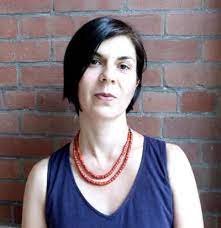
Zeynep Çelik Alexander is Associate Professor in the Department of Art History and Archaeology at Columbia University. Her work focuses on the history and theory of architecture since the eighteenth century. She is the author of Kinaesthetic Knowing: Aesthetics, Epistemology, Modern Design (Chicago and London: University of Chicago Press, 2017), the recipient of the 2019 Charles Rufus Morey Book Award. The book is a history of an alternative mode of knowing—non-propositional, non-linguistic, and based on the movements of the body—that gained saliency in the nineteenth century and informed the epistemological logic of modernism in the German-speaking world.
She co-edited, with John May (Harvard University), Design Technics: Archaeologies of Architectural Practice (Minneapolis: University of Minnesota Press, 2020) and, with Daniel Abramson (Boston University) and Michael Osman (UCLA) for Aggregate, Writing Architectural History: Evidence and Narrative in the Twenty-First Century (Pittsburgh: University of Pittsburgh Press, 2021). She has also published in numerous venues, including Journal of the Society of Architectural Historians, New German Critique, Harvard Design Magazine, Log, e-flux, Grey Room, Journal of Design History, and Centropa as well as several edited volumes. She is currently completing a book titled Imperial Data: An Architectural History (University of Chicago, 2022), an account of nineteenth-century storehouses of information in the British Empire. The book visits several buildings constructed by the Office of Works in London at the height of the expansion of British bureaucracy in the second half of the nineteenth century.
Working Group: Extractive Media

Zahra Ali
Fellow, Sociology, Rutgers
Zahra Ali is an Assistant Professor of Sociology at Rutgers, Newark. Her research explores women and gender issues in relation to Islam and the Middle East, as well as contemporary Muslim communities and Islamisms.
Zahra Ali
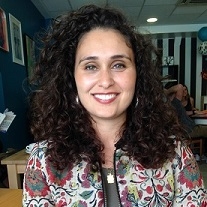
Zahra Ali is an Assistant Professor of Sociology at Rutgers, Newark. Her research explores women and gender issues in relation to Islam and the Middle East, as well as contemporary Muslim communities and Islamisms. Her recent research explores contemporary Iraqi women’s activism through an in-depth ethnography of post-2003 Iraqi women’s political groups conducted in Baghdad, Erbil and Sulaymaniyah and a study of women’s social, economic and political experiences since the formation of the Iraqi state. Her book Women and Gender in Iraq: between Nation-building and Fragmentation will be published by Cambridge University Press in Spring 2018. She also edited Féminismes Islamiques, the first collection on Muslim feminist scholarship published in France (La Fabrique editions, 2012), translated and published in German (Passagen Verlag, 2014).
Working Group Affiliation

Ayşe Gül Altınay
Fellow, Anthropology, Sabancı University
Ayşe Gül Altınay is the Director of SU Gender and Associate Professor of Anthropology teaching in the Gender Studies and Cultural Studies Programs at Sabancı University. Among the programs she coordinates at SU Gender are “Curious Steps: Gender and Memory Walks of Istanbul” and “Transformative Activism: Rethinking Gender and Politics.”
Ayşe Gül Altınay
Professor of Anthropology, Sabancı University
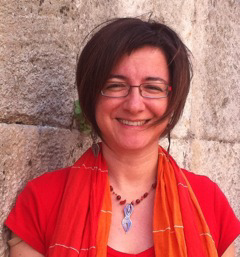
Ayşe Gül Altınay is the Director of SU Gender and Associate Professor of Anthropology teaching in the Gender Studies and Cultural Studies Programs at Sabancı University. Among the programs she coordinates at SU Gender are “Curious Steps: Gender and Memory Walks of Istanbul” and “Transformative Activism: Rethinking Gender and Politics.” She has published widely on militarism, memory, violence, gender and sexuality. Her books include Gendered Wars, Gendered Memories: Feminist Conversations on War, Genocide and Political Violence (co-edited with Andrea Petö, 2016); The Grandchildren: The Hidden Legacy of “Lost” Armenians in Turkey (with Fethiye Çetin, trans. Maureen Freely, 2014), and The Myth of the Military-Nation: Militarism, Gender and Education in Turkey (2004). Since 2013, she has been a part of the Women Mobilizing Memory Working Group of Women Creating Change and is one of the co-editors of Women Mobilizing Memory (forthcoming, Columbia University Press, 2019).
Working Group Affiliation

R. Ertuğ Altınay
Doctoral Student, Performance Studies, New York University
Rüstem Ertuğ Altınay is a doctoral candidate in the Department of Performance Studies at New York University. He received his Bachelor’s degree in Philosophy and Sociology, and his M.A. degree in Philosophy from Bogazici University. Ertuğ’s primary fields of research are the politics of gender and sexuality in Turkey, with a focus on artistic and everyday performance, visual practices, fashion, and queer historiography.
R. Ertuğ Altınay
PhD Candidate, New York University
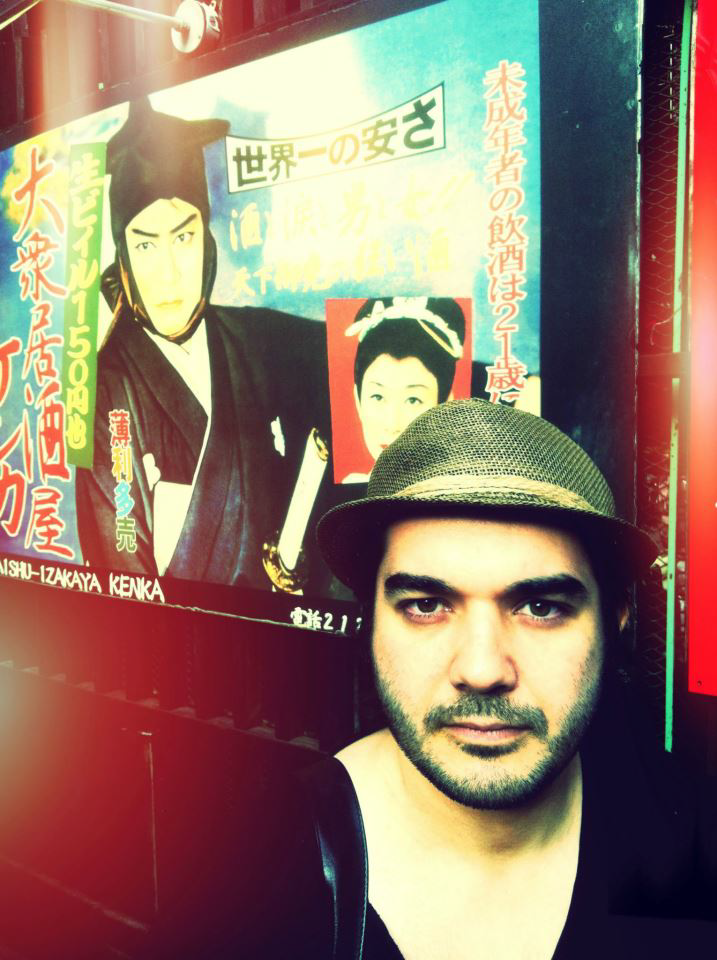
Rüstem Ertuğ Altınay is a doctoral candidate in the Department of Performance Studies at New York University. He received his Bachelor’s degree in Philosophy and Sociology, and his M.A. degree in Philosophy from Bogazici University. Ertuğ’s primary fields of research are the politics of gender and sexuality in Turkey, with a focus on artistic and everyday performance, visual practices, fashion, and queer historiography. His essays have been published or are forthcoming in peer-reviewed journals, including the Trans- and Fashion special issues of Women’s Studies Quarterly, the Journal of Women’s History, Transgender Studies Quarterly, the International Journal of Feminist Approaches to Bioethics, Radical History Review, and Feminist Media Studies as well as various edited volumes. His dissertation, entitled “Dressing for Utopia: Fashion, Performance, and the Politics of Everyday Life in Turkey (1923-2013),” explores how the body of the national subject has been defined in relation to the multiple and shifting utopian political projects throughout the Republican history of Turkey, and the role of fashion and embodied practices in regulating the politics of subjectivity and belonging.
Ertuğ’s research has been supported by the Turkish Cultural Foundation Doctoral Fellowship in Turkish Culture and Arts and the History Project Research Grant (Joint Center for History and Economics, Harvard University and University of Cambridge) as well as fellowships and grants from New York University. He has also held residential fellowships at the New Islamic Public Sphere Program of the University of Copenhagen, the Remarque Institute at New York University, Orient Institute Istanbul, Georg Eckert Institute for International Textbook Research, Arni Magnusson Institute for Icelandic Studies, and the Center for Ethics and Poverty Research at the University of Salzburg. Ertuğ is also a playwright, translator, and theater professional.
Working Group Affiliation
Suzanne Altshuler
New York, NY
New York, NY
Suzanne Altshuler is Executive Director of Development and Deputy Campaign Director at Columbia University. Prior to that, Suzanne held various positions at cultural and higher educational institutions, including the Cooper-Hewitt, National Design Museum, Manhattan School of Music, and Columbia University. Suzanne earned an MPA from Columbia University's School of International and Public Affairs and an AB with honors from Brown University.
Constanza Ambiado Cortes
Historian, Universidad de Chile
Historian, Universidad de Chile
Working Group Affiliation

Sydney Amoakah
Doctoral Student, Human Rights, Columbia University
Sydney Amoakoh is a Human Rights Studies MA candidate at Columbia University whose research takes a look at the considerations and constraints behind the drafting of human rights into humanitarian guidelines, with specific focus on the recent inclusion of a section on menstrual health management (MHM) in the 2018 edition of the Sphere Humanitarian Charter and Minimum Standards in Humanitarian Response.
Sydney Amoakah
Graduate Student, Graduate School of Arts and Sciences, Columbia University

Sydney Amoakoh is a Human Rights Studies MA candidate at Columbia University whose research takes a look at the considerations and constraints behind the drafting of human rights into humanitarian guidelines, with specific focus on the recent inclusion of a section on menstrual health management (MHM) in the 2018 edition of the Sphere Humanitarian Charter and Minimum Standards in Humanitarian Response. In her role as a menstrual health advocacy fellow, Sydney contributes to the joint efforts of Columbia’s Institute for the Study of Human Rights and the Water Supply and Sanitation Collaborative Council in elevating and expanding the inclusion of menstrual health in high-level UN forums. Sydney’s concentration on the right to health of displaced persons, particularly women and children, are informed by her past work focusing on the rights of children and survivors of GBV. She has held internships at London-based organizations, AfriKids and World Child Cancer, and a volunteer position at the Boston Area Rape Crisis Center. Sydney received her BA in International Affairs with a minor in Business Management from Northeastern University.
Working Group Affiliation
Dima Amso
Professor, Department of Psychology, Columbia University
Dima Amso is a Professor of Psychology in the Department of Psychology at Columbia University. She has a BS in psychology from Tufts University, was trained at Cornell University and received a PhD in psychology from New York University in 2005. She served on the faculty at the Weil Medical College of Cornell University before joining the faculty at Brown University in 2010 and Columbia University in 2020. Her research examines the development of attention, executive functions, and memory, with an emphasis on how environmental variables shape these trajectories.
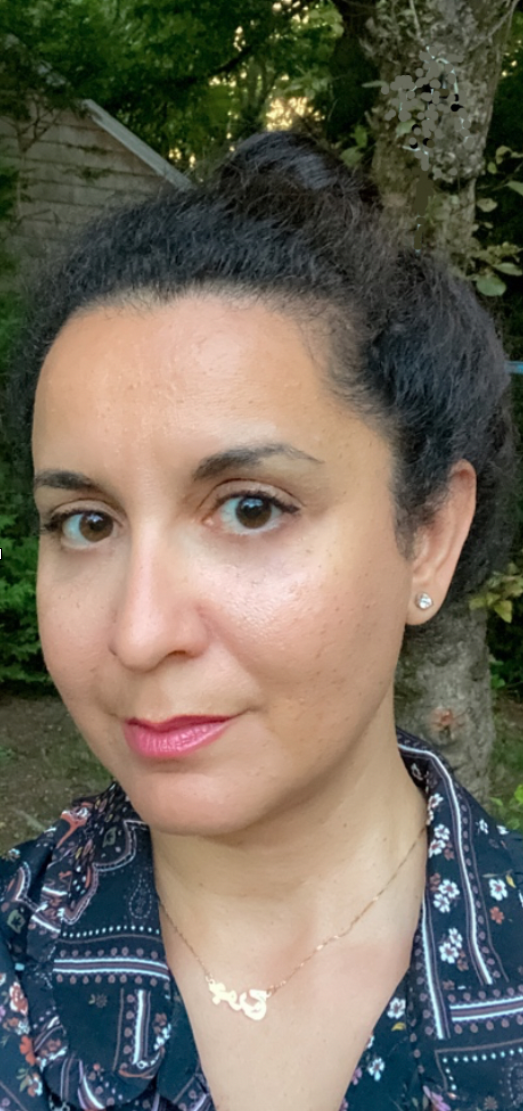
Dima Amso is a Professor of Psychology in the Department of Psychology at Columbia University. She has a BS in psychology from Tufts University, was trained at Cornell University and received a PhD in psychology from New York University in 2005. She served on the faculty at the Weil Medical College of Cornell University before joining the faculty at Brown University in 2010 and Columbia University in 2020. Her research examines the development of attention, executive functions, and memory, with an emphasis on how environmental variables shape these trajectories. She has authored over 80 papers on the topic. Dr. Amso’s research has been funded by National Institute of Mental Health, the National Science Foundation, the National Institute of General Medical Sciences, National Institute for Child Health and Human Development, the Simons Foundation, Norman Prince Neuroscience Institute, the Hassenfeld Child Health Institute, and Wellcome Trust. She is a recipient of the James S. McDonnell Scholar Award and is an elected Fellow of the American Psychological Society.



Patrick Anson
PhD Candidate, English and Comparative Literature, Columbia University
Patrick Anson is a PhD Candidate in English and Comparative Literature. He is writing a part-ethnographic, part-literary-critical dissertation about programs that propose reading groups focused on 20th and 21st century narrative literature as a means to address a range of social problems, from mass incarceration, where a reading group functions as an alternative sentence for people convicted of an offense, to military trauma, where a reading group helps to establish social connections among veterans.
Patrick Anson
PhD Student and Prison Education Workshop Rapporteur, Department of English and Comparative Literature, Columbia University
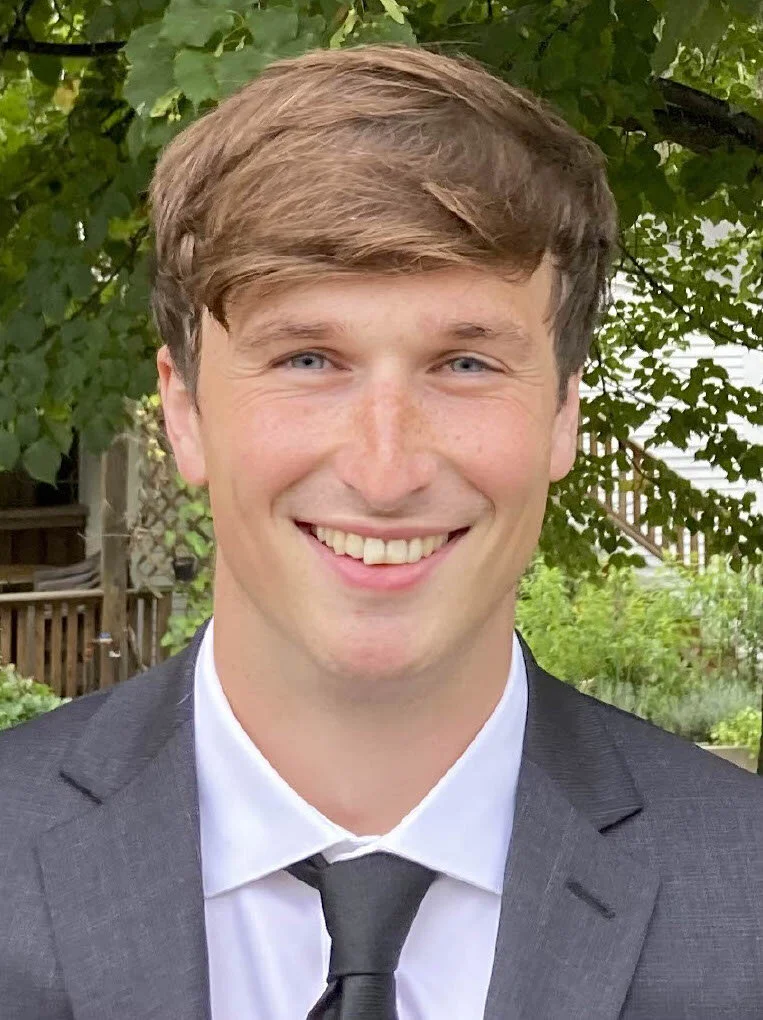
Patrick Anson is a PhD Candidate in English and Comparative Literature. He is writing a part-ethnographic, part-literary-critical dissertation about programs that propose reading groups focused on 20th and 21st century narrative literature as a means to address a range of social problems, from mass incarceration, where a reading group functions as an alternative sentence for people convicted of an offense, to military trauma, where a reading group helps to establish social connections among veterans.

Annette Anthony
London
Annette Anthony
London

Annette is a London-based private investor. She is a Founding Member of Impact X Capital Partners, a double bottom line VC fund focusing on underrepresented founders and innovators in Europe. Her civic interests span the arts, education, and politics. A patron of the arts, she is a Trustee of the Yinka Shonibare Foundation. Annette has served on school boards in England, was a member of Vassar College President’s International Advisory Council, and has lectured on women and the law at the Institut d'Etudes Politiques de Paris. Annette's engagement in policy and politics has endured beyond her career start as Counsel for the U.S. Senate Judiciary Committee. She is an active overseas supporter of candidates for elected office, and served on a U.S. presidential candidate's abroad finance committee. Annette is a graduate of Georgetown University School of Foreign Service and Columbia Law School.

Teresa Cebrián Aranda
Doctoral Student, International Affairs and Journalism, Columbia University
Teresa holds a BA in International Relations from Brown University and is currently pursuing a Master of International Affairs and an MS in Journalism at Columbia University. She previously worked at the Food and Agriculture Organization of the UN (Rome), where she was responsible for the coordination and editing of high-profile publications. Among others, she edited the joint FAO-EL PAÍS publications series “The State of our Planet”. She is interested in how documentary video, photography and journalism at large can drive social action and improve public policy across geographical boundaries.
Teresa Cebrián Aranda
Graduate Student, School of International and Public Affairs and Journalism School
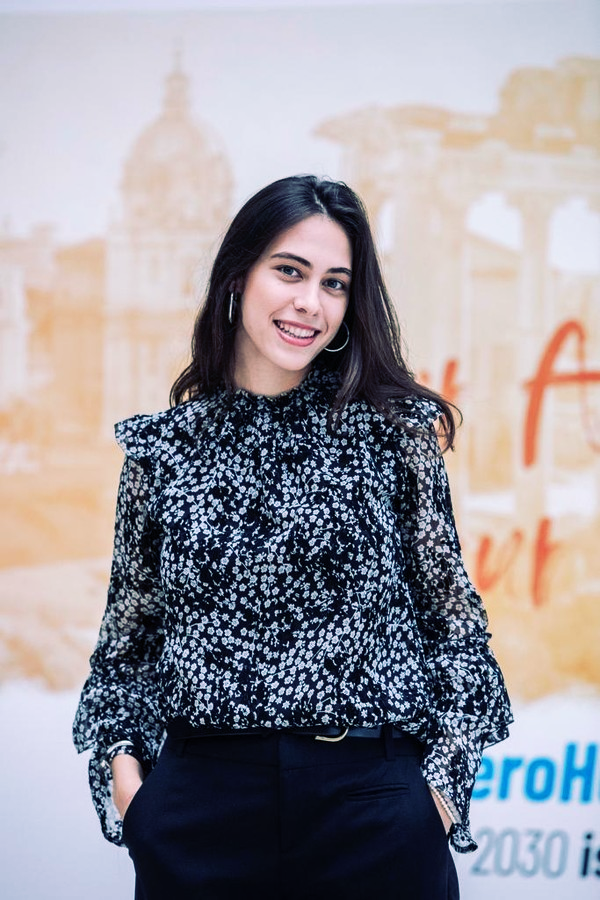
Teresa holds a BA in International Relations from Brown University and is currently pursuing a Master of International Affairs and an MS in Journalism at Columbia University. She previously worked at the Food and Agriculture Organization of the UN (Rome), where she was responsible for the coordination and editing of high-profile publications. Among others, she edited the joint FAO-EL PAÍS publications series “The State of our Planet”. She is interested in how documentary video, photography and journalism at large can drive social action and improve public policy across geographical boundaries.
Working Group Affiliation