
Introducing The Palgrave Handbook of Critical Menstruation Studies
It has been said so often it is now cliché—“menstruation is having its moment!” But what is this moment actually about? What are we talking about when we talk about menstruation?
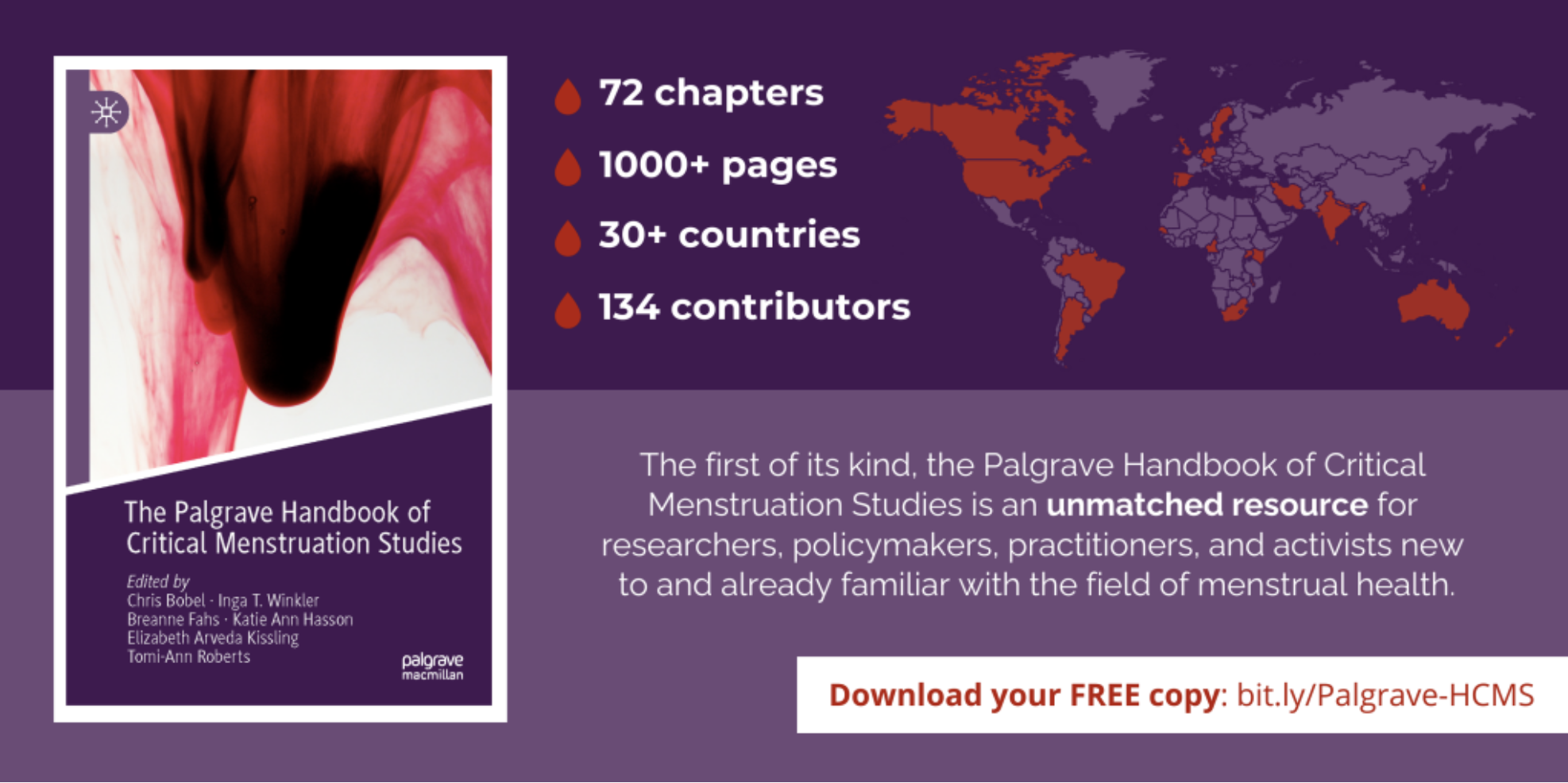
The Palgrave Handbook of Critical Menstruation Studies invites the reader to explore menstruation from nearly every possible angle, including dimensions that you might not yet have considered: the historical, political, embodied, cultural, religious, social, health, economic, artistic, literary and many more. With 72 chapters on more than 1000 pages, the Handbook--the first of its kind--establishes Critical Menstruation Studies as a rich field of research.
The editors, Chris Bobel, Inga Winkler, Breanne Fahs, Katie Ann Hasson, Elizabeth Arveda Kissling, and Tomi-Ann Roberts together bring almost a century of expertise in studying menstruation. Over the last three years, they have sought out 134 contributors in more than 30 countries to address a wide range of menstrual matters in the Handbook.
DEFINING FEATURES:
Timely & Critical Scholarship: The time for this Handbook is now, at a moment when menstrual health moves from margin to center as a subject of urgent concern and enthusiastic exploration. The Handbook fills a crucial gap. It exposes myths, fallacies, and false claims. And while it advances the knowledge of the field, it acknowledges that there is a lot we don’t know yet. It is the critical companion for anyone interested in menstruation.
Deliberate Diversity: The coherence of the Handbook lies in its deliberate diversity—in content, experiences, formats, and authors representing diverse forms of knowledge and expertise. From traditional research chapters to policy and practice notes, menstrual art, personal narratives, and "Transnational Engagements" across cultures and countries, the Handbook seeks to engage a wide range of readers.
Menstruation as a Lens for Gender Justice: The Handbook establishes Critical Menstruation Studies as a robust and multifaceted category of analysis and a potent lens that reveals, complicates and unpacks inequalities across social, cultural, embodied, and historical dimensions. Through the Handbook we aim to demonstrate the richness of Critical Menstruation Studies, a field that is finally coming into its own.
Across this diverse content, the varied questions asked and answered address menstrual health over the life course from menarche to menopause:
Do you want to understand how menstrual stigma prompts us to conceal any sign of menstruation? Are you curious how stigma limits the understanding of menstruation of young people around the world and can lead to delays in reproductive health diagnosis and care?
Do you want to learn about efforts to improve menstrual education, including for men and boys, through films, apps, and other innovative means?
Have you thought about how culture shapes the experience of menstruation and how menstruators engage with religious practices in diverse ways?
Do you want to read about the first-hand experiences of trans and non-binary persons, menstruators with disabilities, menstruators with autism, migrants and refugees, girls forced into early marriage, or Dalits?
Are you curious about menstrual advocacy efforts--past and present--, the pushback activists face, and their successes, including efforts to include menstruation in national policy, in the UN Sustainable Development Goals, and in the context of human rights?
Are you among the millions of users of menstrual tracking apps and want to learn more about the role of technology, social entrepreneurs, and menstrual advertising in shaping our understanding of menstruation?
Do you want to see how menstruation is represented on Twitter, on YouTube, on TV, in films, and in visual art?
Are you interested in the unique challenges menstruators face in diverse settings such as prisons or jails, humanitarian crises and refugee camps, informal settlements, and conditions of homelessness?
The Handbook addresses all these questions and many more. But it doesn’t seek to provide definitive answers. Whether contributors address religious rituals, menstrual leave, or menstrual sex, they defy easy answers and avoid monolithic views. The Handbook invites the reader into the conversation by considering different perspectives and engaging with apparent contradictions and tensions. It aims to stimulate dialogue and further inquiry and to leverage that knowledge to effect meaningful change.
Contributed by the Menstrual Health and Gender Justice workin group
Menstrual Health and Gender Justice Working Group Launches with Expert Panel: Menstruation is Having its Moment – How Can Scholars Engage?
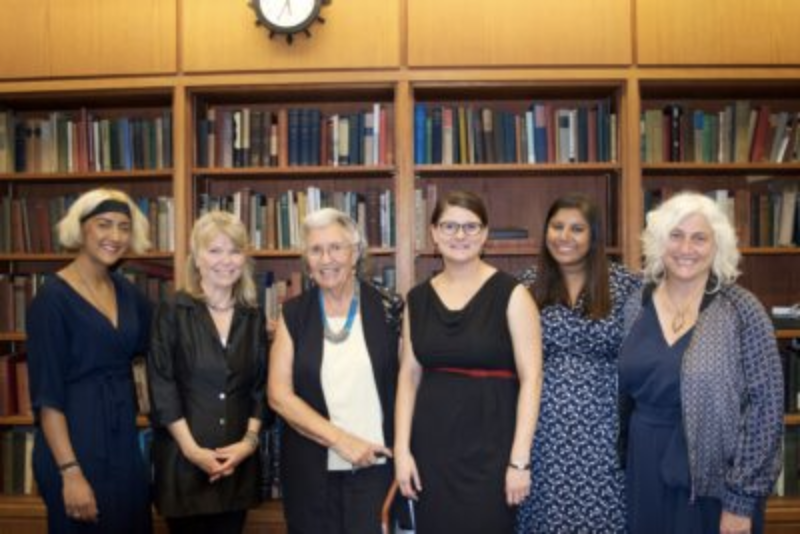
On September 20, 2018, the Center for the Study of Social Difference (CSSD) and the Institute for the Study of Human Rights sponsored the launch of a new CSSD working group: Menstrual Health and Gender Justice. The event featured an expert panel addressing some of the most pressing questions related to menstrual health.
Panelists provided insights into how the working group can address and engage with the recent surge in public interest surrounding menstruation in their research.
The panel brought together various perspectives: established scholars and new voices, birds-eye views on ongoing developments and insights from communities, socio-medical and cultural perspectives on menstruation. Inga Winkler, the director of the working group, led five panelists and experts in the field in discussing the methods, opportunities, and risks involved in generating sustainable, evidence-based outcomes and in challenging common misconceptions of menstruation. Both the panelists and attendees of the launch event offered professional and personal perspectives on the current menstrual movement, its history and significance, and the potential ways in which the working group can contribute to meaningful, inclusive change.
Nancy Reame from the Columbia School of Nursing challenged the idea that menstruation is only now having its moment and drew our attention to research and advocacy on the Toxic Shock Syndrome outbreak in the 1980s.
Norma Swenson, one of the co-founders of Our Bodies, Ourselves, provided advice on how to develop the current moment into a long-term movement for women’s health.
Vanessa Paranjothy, an Obama Foundation Scholar and co-founder of Freedom Cups stressed the importance of listening to women and following their lead when working with communities.
Trisha Maharaj, a graduate student in Human Rights Studies, shared research on attitudes towards menstruation amongst Hindu women in Trinidad. She challenged the conventional wisdom that cultural and religious practices often contribute to stigma based on her findings that women in Trinidad do not perceive them as stigmatizing.
Chris Bobel from UMass Boston cautioned us that the menstrual health space is driven by assertions and assumptions that are not yet properly explored. She witnesses a heavy focus on providing products to the detriment of addressing underlying issues of institutionalized and embodied shame about menstruation.
Among the diverse perspectives present, the panel agreed that several issues are integral for moving the discussion on menstrual health forward, including: (1) promoting menstrual literacy and body literacy; (2) supporting scholarship aimed to fill knowledge gaps; (3) addressing stigma associated with menstruation; and (4) involving and encouraging collaboration with diverse groups, sectors, and movements. Moving forward, the Menstrual Health and Gender Justice working group will engage in critically evaluating existing developments in the field of menstrual studies, contributing to the body of research and sharing knowledge.
If you would like to get updates and news from the Menstrual Health and Gender Justice Working Group, please email Michelle at mc4225@columbia.edu.
Contributed by Sydney Amoakoh, Michelle Chouinard and Inga Winkler.
Professor Inga Winkler Speaks at UN Event on Menstrual Health
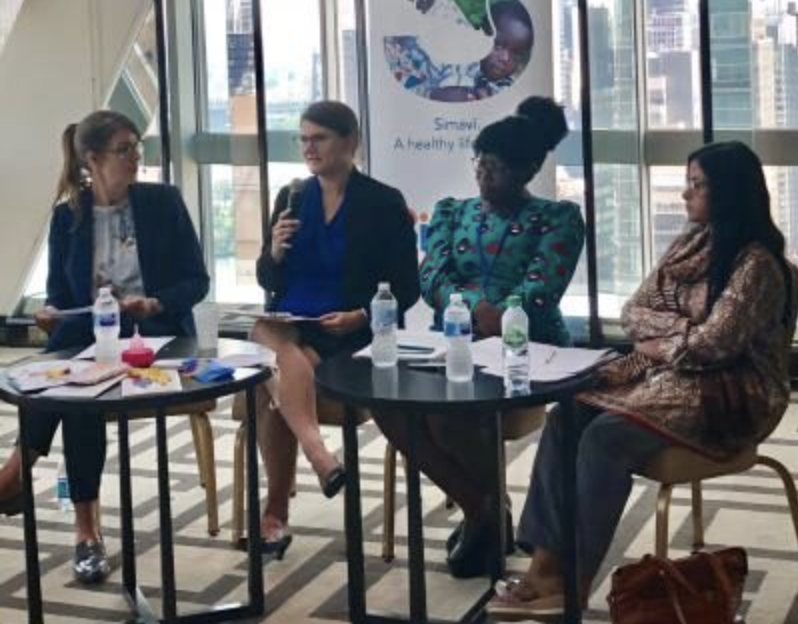
On July 11, 2018, Simavi and WSSCC hosted a panel discussion during the UN’s High-level Political Forum on Sustainable Development, about “Putting Menstrual Health on the 2030 Agenda,” which featured Institute for the Study of Human Rights professor Dr. Inga Winkler as both the keynote speaker and a panelist. Dr. Winkler is director of the Menstrual Health and Gender Justice working group at the Center for the Study of Social Difference at Columbia University.
In her keynote address, Dr. Winkler emphasized the importance of removing Menstrual Hygiene Management (MHM) strictly from the Water, Sanitation, and Hygiene (WASH) sector in order to unpack and address issues around menstruation at all levels. She stressed the need to look at the numerous ways that people are affected by menstruation and how menstruation is directly linked to many of the Sustainable Development Goals (SDGs) on the 2030 agenda, such as Good Health and Well-Being, Quality Education, Gender Equality, Clean Water and Sanitation, Decent Work and Economic Growth, and Responsible Consumption and Production.
Dr. Winkler stressed the importance of including women and girls in the discussion, especially those who are traditionally marginalized or excluded. The range of experiences individuals have with menstruation should be addressed in order to leave no one behind. For example, indigenous women, women with disabilities, refugee and migrant women and girls, homeless individuals, incarcerated women, and the LGBTQI community all face overlapping forms of discrimination and are often left out of the MHM conversation.
Dr. Winkler also noted the large role that religion and culture play in regards to menstrual practices, but that it should remain up to the menstruating individual whether or not to partake in them. In this way these individuals maintain their agency, which is the driving force behind the SDGs.
Written by Human Rights graduate students Trisha Maharaj and Tori Miller.