
Statement of Support for Ayse Gül Altinay from the Columbia University Center for the Study of Social Difference and Women Creating Change
Our colleague Ayse Gül Altinay, Professor of Anthropology and Director of the Gender and Women’s Studies Center at Sabanci University in Istanbul, Turkey, was sentenced to 25 months in prison earlier this week. She is one of over 2200 Academics for Peace who three years ago signed a statement “We will not be a party to this crime” appealing for an end to violent state-sponsored persecution of Kurdish citizens of Turkey. The investigation in Istanbul has covered only the first 1200 signatories so far, but it might be extended to the second 1000 as well. In this, her fourth, judicial hearing, Altinay was charged with “willingly and knowingly supporting a terrorist organization as a non-member.” The court's charge and thus the sentencing have no merit.
Ayse Gül Altinay has been a Faculty Fellow of Columbia’s Center for the Study of Social Difference since 2013. She is a co-organizer of the Working Group on “Women Mobilizing Memory” and a co-editor of the forthcoming Women Mobilizing Memory volume (Columbia University Press, 2019). Last September, she was also an invited speaker at the Center’s tenth anniversary conference “What We Can Do When There’s Nothing To be Done.” Her collaborative project “Curious Steps”— a gender-memory walk through Istanbul – spurred other such memory walks in additional sites including Harlem. Ayse Gül Altinay’s contributions to the Center’s work have been immeasurable: her feminist commitment to nonviolent protest and to transformative activism; her sharp insights into the workings of power and militarism and her determination to fight them; her fierce hopefulness combined with personal kindness, warmth and radiance have been an inspiration to all of us fortunate to be working with her.
In the spirit of collaboration and solidarity that Ayse Gül Altinay represents, it is important to point out that she is not alone in this struggle. Hers is one of a large number of cases receiving 25-month sentences that cannot be commuted. These cases, hers included, are in the process of being appealed. Some shorter sentences have been commuted, and many other colleagues are awaiting court dates over the next months. This is the time to speak out forcefully on all of their behalf and on behalf of freedom of expression and academic freedom.
On May 21st, 2019, Ayse Gül Altinay made the following statement to the court:
Every individual, every family living in this geography has suffered from past wars, migrations and experiences of violence. In terms of the cycle of violence that trauma studies alerts us to, we live in a challenging, vulnerable geography.
Yet, what we make of these past experiences of pain is up to us...
Are we going to turn our pain into more violence, hate, pain and injustice, or into steps that multiply life, beauty, love, peace and justice?
This is the main question that shapes my work and my life.
I firmly believe that we all have new steps we can take towards healing the traumas that have been transmitted from one generation to the other, and to break out of the cycles of violence that we are living through.
We, at CSSD and Columbia Global Freedom of Expression stand in solidarity and admiration for Ayse Gül Altinay and all of our academic colleagues who are being persecuted for their courage to speak out against violent aggression. The injustice of these sentences cannot be tolerated.
Marianne Hirsch Elected to American Academy of Arts and Sciences
Marianne Hirsch, co-director of CSSD's Women Mobilizing Memory project and Professor of English and Comparative Literature and of Women's, Gender, and Sexuality Studies at Columbia University, was elected a 2016 member of the American Academy of Arts and Sciences.
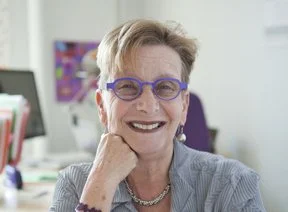
The American Academy serves the nation as a champion of scholarship, civil dialogue, and useful knowledge. As one of the country's oldest learned societies and independent policy research centers, the Academy convenes leaders from the academic, business, and government sectors to respond to the challenges facing the nation and the world.
Jean Howard Awarded Honorary Doctorate from Brown University
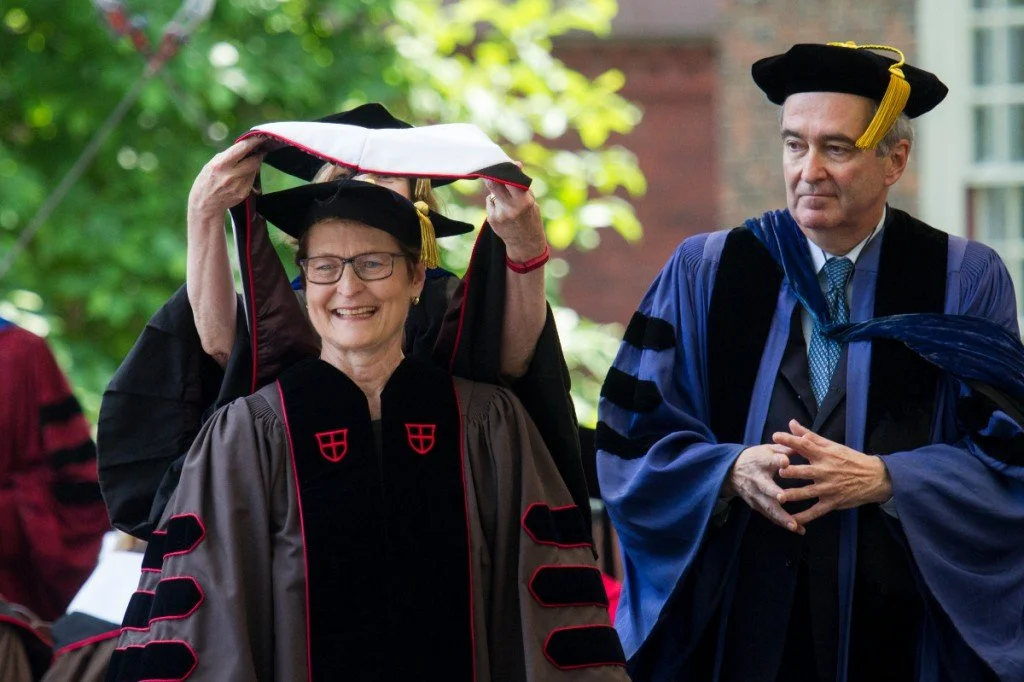
Photo courtesy of Nick Dentamaro/Brown University.
Jean Howard, George Delacorte Professor in the Humanities at Columbia University, co-director of CSSD's Women Mobilizing Memory working group, and former director of CSSD, was awarded an honorary doctorate by Brown University.
A teacher, scholar, and Shakespeare expert, Howard received her B.A. from Brown and served as a member of Brown's Board of Trustees from 1974 to 1981, leading the Committee on the Status of Women, and was chair of the Advisory Council on Diversity. She currently chairs the Associate Council of the Pembroke Center for Teaching and Research on Women, also at Brown.
CSSD Fellow Susan Meiselas Receives Honorary Doctorate from Columbia
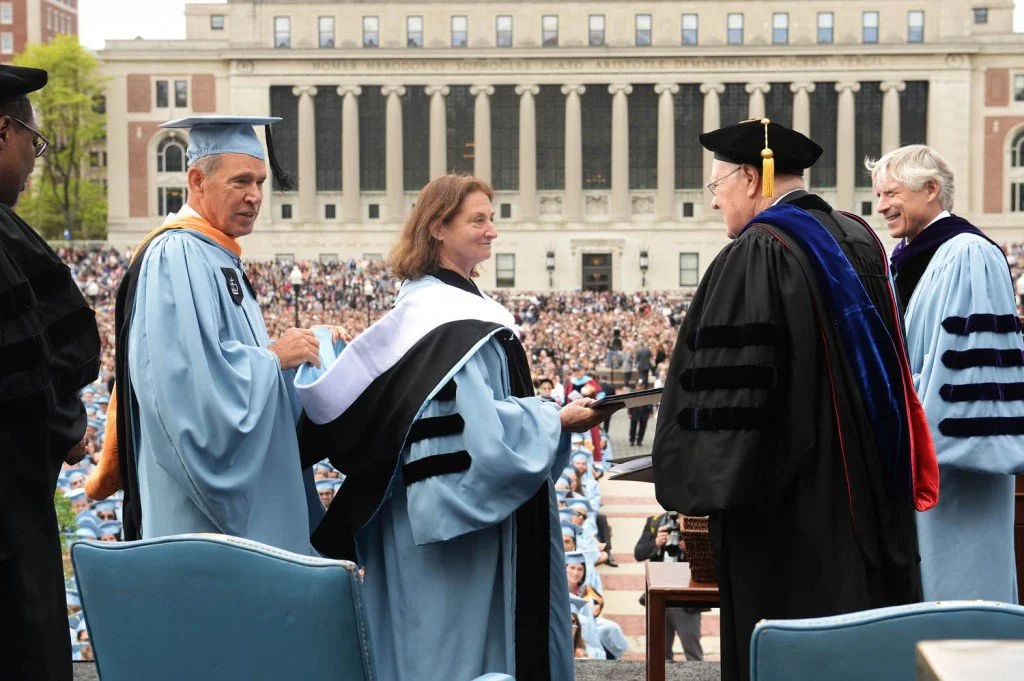
Documentary photographer Susan Meiselas and member of CSSD working group Women Mobilizing Memory recently received an honorary Doctorate of Humane Letters from Columbia University.
At Columbia's dinner honoring the degree recipients, Meiselas said that the collaborative work of the group not only furthered interaction between the New York campus and the Columbia Global Centers in Istanbul and Santiago but also acted as a form of intervention.
Meiselas' important documentary work on human rights abuses in Chile and among Kurdish populations in Turkey inspired exhibits that Women Mobilizing Memory produced in Istanbul and New York, according to project co-director Marianne Hirsch.
Meiselas' attention to documenting individual stories as well as systemic injustice provides a powerful model for the group's use of the arts as a feminist means of mobilizing memories of violence in the interest of social justice, said Hirsch.
Working Group Members Edit Women's Studies Journal on Gender and Genocide
The European Journal of Women's Studies (EJWS) recently published a special issue on gender and genocide that was co-edited by Ayşe Gül Altınay, Professor of Sociology and Gender Studies, Sabanci University, and a member of CSSD's Women Mobilizing Memory working group. The issue was also edited by Andrea Petö, Professor of Gender Studies, Central European University, and included an interview with Marianne Hirsch, Women Mobilizing Memory project director, Director of the Institute for Research on Women, Gender, and Sexuality, and Professor of English and Comparative Literature at Columbia University.
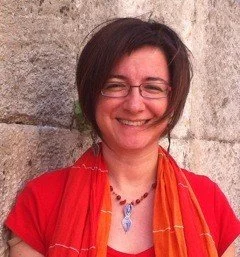
Pictured: Ayşe Gül Altınay
The issue asks what role gender plays in the international legal and political frameworks created to prevent and punish genocidal acts and grapples with the nuances of memory, silence, gender, and genocide. Hirsch discusses feminist strategies to combat nationalism and militarism with scholarly analysis, art, and activism, among other issues.
Access the free introduction to the EJWS here.
Alisa Solomon Examines the Historic Theater of "Hamilton" in The Nation
Alisa Solomon, Women Mobilizing Memory member and associate professor of journalism at Columbia University, wrote in The Nation that "Hamilton" is not only a game changer because it brings rap to Broadway, but also because it integrates the contemporary musical style so seamlessly with the styles and structures of traditional musical theater.
While acknowledging rap as the latest popular music deserving to contribute to Broadway, the show also pays tribute to the older form by examining the themes of self definition and Americanness, both longstanding elements of American musical theater, according to Solomon.

The strong, multiracial casting of "Hamilton" also establishes that America’s history—and its future—belong to men and women of color as profoundly as to anyone else, she writes.
Read the full article here.
HEMI Publishes "Art, Migration, and Human Rights" Dossier
Notes on the August 2015 course on “Art, Migration, and Human Rights,” offered by the Hemispheric Institute of Performance and Politics, which partners with CSSD's Women Mobilizing Memory working group.
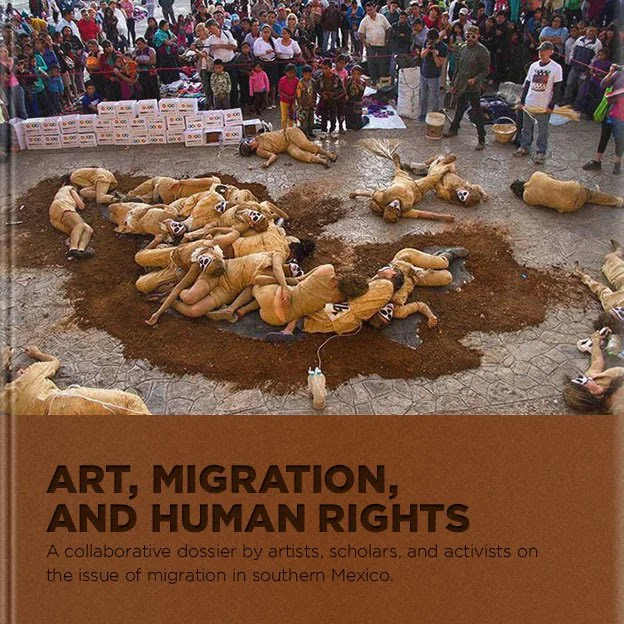
In August 2015, a group of 38 students, professors, researchers, photographers, filmmakers, artists, and activists from 13 different countries boarded a bus in San Cristóbal de las Casas for a weeklong trip across the southern Mexican state of Chiapas and the cities around it to study the urgent issue of migration. The trip was part of a three-week course on “Art, Migration, and Human Rights,” offered by the Hemispheric Institute of Performance and Politics, which partners with CSSD's Women Mobilizing Memory working group. Linked here is a dossier that is a collaborative project assembled in a week by the participants of that course—an exercise in collaborative pedagogy, the production of situated knowledge, and online authoring.
Women Mobilizing Memory Member on Democracy Now
Zeynep Gambetti, a member of the CSSD working group Women Mobilizing Memory and participant in the Collaboration and Co-Resistance conference and workshop, appeared on Democracy Now on September 11 to discuss the current series of attacks on Kurdish citizens and HDP party offices in Turkey.
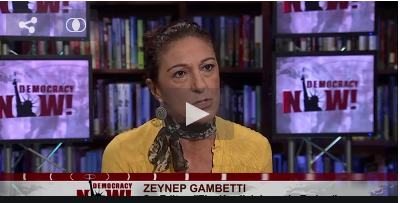
Gambetti's segment begins at 25:00.
Gambetti, Associate Professor, Political Science & International Relations, Boğaziçi University, said that the Erdoğan government has "hijacked legitimate elections" with these reprisals against HDP expansion in the Turkish parliament and the political violence is pushing Turkey toward civil war. Women Mobilizing Memory staged a protest against the anti-Kurd violence at Columbia University the day before Gambetti's appearance.
Watch the discussion here.
WOMEN MOBILIZING MEMORY IV: A Week of Workshops, Exhibits, and Protest
For its fourth international meeting on "Collaboration and Co-Resistance," Women Mobilizing Memory gathered in New York in September. The group, consisting of scholars, artists and activists from Chile, Turkey and the United States, participated in a series of meetings and events that explored how the legacies of violent political histories might offer fodder for a more progressive and hopeful future. Previous meetings took place in Santiago, Montreal, and Istanbul.
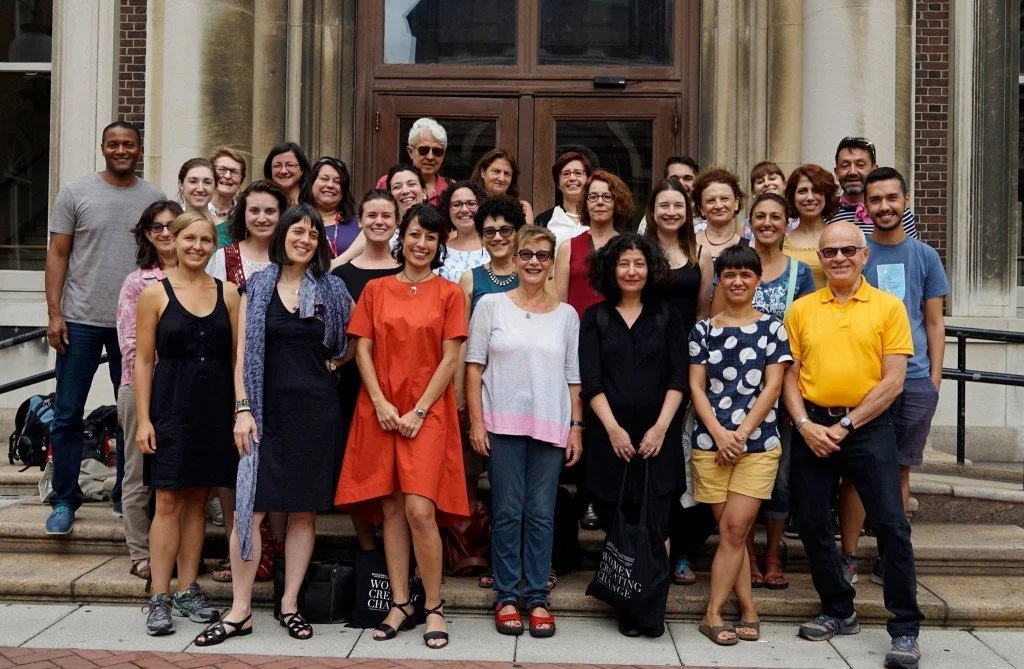
At this multidimensional meeting, the forty participants not only commemorated the anniversary of the 1973 Chilean coup and the victims of the Pinochet dictatorship, they also issued a solidarity statement and protested Turkish violence against Kurdish minorities. One member provided commentary on the crisis for the nonprofit news program Democracy Now. Click to see photos and video.
The week began with a memory walk through Harlem, visiting both known and forgotten sites of art and protest that revealed the vibrant artistic and intellectual legacies of African American and some Anglo American institutions and individuals in the famous neighborhood.
A group art exhibit at the Leroy Neiman Gallery at Columbia opened the same afternoon and was followed by an artists’ roundtable. “Collaborative Archives: Connective Histories” included the work of artists based in New York, Istanbul, Berlin, and Santiago. The artworks demonstrated how intimate objects and stories both animate larger painful histories and resist their violent force. For the group, the artworks remained points of reference throughout the week, offering images through which to imagine and reimagine histories of slavery, war, genocide, and political repression. Click to see photos and video.
A second part of the exhibition, a curation of collectively produced posters, “CHILE: 40 Years of Struggle and Resistance,” opened at the Hemispheric Institute on Performance and Politics at New York University at the end of the week. The group also visited the September 11 Memorial Museum, analyzing and critiquing its official hegemonic strategies of memory. Click to see photos.
A public conference, “Women Mobilizing Memory: Collaboration and Co-resistance,” brought working group members together with scholars and activists from Columbia and New York in a series of comparative roundtables on women's strategies of political protest; on memory sites in Santiago, Istanbul and New York; and on the intimate archives of political violence. The discussions were enlivened by the interdisciplinary approach of the commentators and the focus on action, rather than mere commemoration. Click to see photos from all three panels and a Wishing Tree commemorative event, as well as video from the "Performances of Protest," "Mobilizing Memory Sites," and "Intimate Archives/Political Violence" roundtable discussions.
The bulk of the meeting was devoted to the scholarly work that group members had exchanged and read in advance. The constructive feedback members received on their individual papers and projects generated revisions and a future series of group publications on “Mobilizing Memory: Practicing Politics,” “Intimate Entanglements: Rethinking Kinship and Sexuality,” and “Little Disturbances: Arts and Politics.”
Total immersion in repeated, face-to-face meetings throughout the week enabled the group members to evolve and to grow in their understanding of the material. Across the meetings, they had the chance to consider both the challenges and the benefits of transnational interdisciplinary work, and to practice their commitments to feminist solidarity and progressive social change.
Contributed by Marianne Hirsch, Co-Director, Women Mobilizing Memory
PUBLISHED: Mobilizing Memory Curators Interviewed by "n.paradoxa"

Feminist art journal n.paradoxa recently published an interview with Ayşe Gül Altınay and Işın Önol, curators of the successful exhibition "Mobilizing Memory: Women Witnessing." The exhibition grew out of the CSSD working group Women Mobilizing Memory and has been produced at Depo in Istanbul and Kunsthalle Exnergasse in Vienna. The article is available for purchase here.
Katy Deepwell corresponded with both curators and discussed the dearth of both the gendered aspects of mass violence and the gendering of memory struggles in public debates. Altinay explained how the exhibit sought to address the role of witnessing as a practice of resistance. The curators wanted to give evidence of women using memories to organize, analyze, and cope. Altinay also notes that the artworks in the show particularly resist monumentality in favor of intimacy, pointing to an alternative mode of documenting violent pasts.
The exhibit reaches beyond the dichotomies of "women as victims vs. women as fighters" and "personal vs. public/political" and among other things uses the subtheme of "family," drawing connections between family photos and stories and national narratives of belonging and violence.
Altinay said the exhibit can be used to contextualize current conflicts with the Islamic State, Syria, and Iraq on the borders of Turkey. Pieces in the show can provide creative tools for struggling with wars and their memories in a gendered manner, claimed Altinay.
Önol commented on the different ways that the artworks show women using cameras to witness and record events related to war. They might record or revisit past events and thereby furnish alternative, subjective histories. The works might serve to collect existing information or they might provide proofs of suppressed facts.
Read the full article here.
ROUNDTABLE: Women Mobilizing Memory "Keywords"
Vulnerability. Reaction. Privilege. Heritage. Utopia. What associations do these “keywords” evoke? What concepts do they represent? How are these ideas used by scholars, or put into practice by activists? What kinds of work can we do with a keyword, what conversations can keywords unlock?
These were some of the questions asked at a recent roundtable discussion by Women Mobilizing Memory, a CSSD working group exploring issues of memory, witnessing, testimony, and trauma from a cross-cultural feminist perspective. For this project, students in graduate programs at Sabancı University (Istanbul), Columbia University, and New York University teamed up in pairs, selected their keywords, and finally presented the fruits of their collaboration in the form of a roundtable at the Columbia campus in New York.
Reflecting on the circumstances in which their discussion took place, Alyssa Greene (Columbia) and Armanc Yıldız (Sabancı University) considered the keyword privilege, acknowledging the immense institutional privilege that enabled the roundtable, and by extension their own critical examination of the word “privilege” itself. Their presentation urged a consideration of how privilege can easily be forgotten by those who benefit from it. The duo did not necessarily condemn privilege, but noted that it was an “unevenly distributed” resource, creating all kinds of differences between those it touches and those it does not. These differences can silence certain conversations, but they can also produce other kinds—like Greene and Yıldız’s reflections on how privilege made their conversation possible.
In a similar vein, the keyword reaction sparked thoughts on the role of the environment where groups like Women Mobilizing Memory do their work. Dilara Çalışkan (Sabancı) and Andrea Crow (Columbia) suggested that a “critical attention to historic and economic forces” is necessary. For example, how does the physical location of this roundtable at Columbia University, or the fact of it being conducted in English, shape the kind of work being done? “Reaction” can be an emotional response that tells us something about how we relate to the ideas, people, and circumstances that surround us. In a feminist perspective, reactions can be a revealing part of academic work.
The issue of translation, both literal and figurative, came up in the work of Nicole Gervasio (Columbia) and Bürge Abiral (Sabancı) on vulnerability. There is no precise translation of “vulnerability” in Turkish. The Turkish equivalent would mean something like “weakness” or “exposure to the possibility of being harmed.” Their co-written paper pointed out that vulnerability has become “not just a keyword, but a keystone” in the #blacklivesmatter movement: the practice of “die-ins” works as a deliberate public display of vulnerability. Vulnerability can be leveraged as a form of strength and protest, yet vulnerability can also be misappropriated by perpetrators of violence to justify their actions.
A common feature of the five keywords is that they have widely varying meanings that depend on context. Such was the case with utopia, analyzed by R. Ertug Altinay (NYU) and Pınar Ensari (Sabancı). The pair cautioned against an association of utopia with liberal ideals and progressive politics. Utopia has a dark side, too: utopia produces difference and exclusion—what is a utopian vision for the group envisioning it can easily become dystopian for other groups. With heritage as well, chosen by Henry Castillo (NYU) and Leticia Robles-Moreno (NYU), perspective matters immensely. The pair emphasized a distinction between official and unofficial forms of heritage. One is sanctioned by state and government while the other is constructed within the local environment of a specific community. Castillo provocatively asserted that heritage, in this latter sense, is the memory of individuals and communities—not an object or material possession. Yet it is embodied, too: Robles-Moreno continued the discussion by suggesting that the female body can transmit heritage biologically and symbolically through generation.
Contributed by Grace Delmolino, PhD Candidate in Italian/ICLS and 2014-15 IRWGS Graduate Fellow
ART EXHIBIT: "Die Presse" Reviews "Mobilizing Memory" in Vienna
Vienna's "Die Presse" reviewed the "Mobilizing Memory" exhibit that was created by the CSSD working group Women Mobilizing Memory and launched in Istanbul in 2014.
“‘Mobilizing Memory:’ Armenian Women Who Don’t Forget”
Anne-Catherine Simon (March 31, 2015, Die Presse)
“Mobilizing Memory” shows how women use memory to practice resistance to oppression: a politically charged show in Vienna.
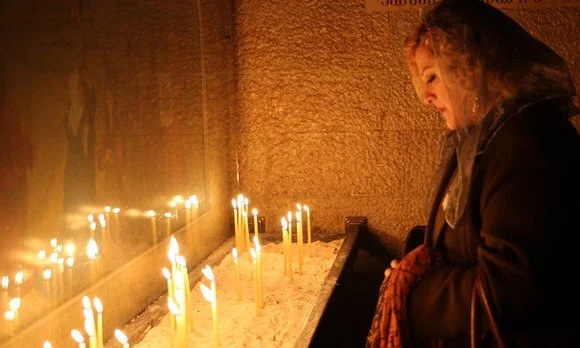
They’re called Saturday Mothers. Every Saturday for twenty years, women have been standing on the street, in Galatasaray or in another Turkish square. They hold up pictures of their sons. Or their husbands. They are officially counted as missing; in reality, they were murdered for political reasons.
“The mothers’ tenacity in witnessing to this is the strongest form of resistance,” says Işın Önol. The artist comes from Istanbul and has lived in Vienna for five years. Here she has organized a powerful exhibition about forms of female, and sometimes publically celebrated, memory. “Mobilizing Memory” will be on display through Friday and could hardly leave the viewer cold. The piece by Argentinian-born Silvina Der-Meguerditchian was developed specifically for the Vienna show and especially is noteworthy, just weeks before the memorial day marking the deportation of Armenian intellectuals from Istanbul 100 years ago, the beginning of the murder of hundreds of thousands of Armenians. Armenian descendants of survivors living in Vienna knitted together their old family photos—literally, with wool—into a kind of Anatolian carpet. On the white screen that comprises the back side of the piece is a video showing the women in the midst of this collaborative memory work. The photos show families together before the camera, who were never together again after the genocide. The family of the artist also shared this fate; Silvina Der-Meguerditchian is the granddaughter of displaced Armenians.
Memory Work in Vienna
The knitwork shows one of the unique aspects of this exhibition – it not only depicts memory, but also generated memory in its workshops. How does it affect a people with no national memory culture, like the Kurds? On akakurdistan.com, Susan Meiselas has tried for years to fill in these gaps. For “Mobilizing Memory,” she also held a workshop with women from Iran, Iraq, Syria, and Turkey. “In Vienna we continued collecting,” says Önol. Denise Sözen in turn interviewed residents of the Armenian neighborhood in Los Angeles.
The exhibit was already on display in a similar form in Istanbul, the idea of which came from a feminist research project by American and Turkish academics. “I like using the image of the unbroken camera,” says curator Işın Önol. “When political violence takes place in public spaces in Turkey, the story usually is, ‘unfortunately, the security camera was broken when it happened.’ For me, the witnesses are unbroken cameras.”
“Mobilizing Memory.” On display until Friday, April 3, in the Kunsthalle Exnergasse, Währingerstraße 59, Vienna 1090.
Translation: Alyssa Greene
WOMEN MOBILIZING MEMORY: Effective Activism for Human Rights
CSSD’s Women Mobilizing Memory working group met in late February to discuss, in a comparative perspective, the links between memory and activism and between memory practices and movements promoting human rights.
Examining current protest movements in the wake of the Arab Spring and Occupy Wall Street, members engaged in sustained debate about whether, and in what circumstances, such protests are useful in mobilizing people for sustained activist efforts at social transformation.
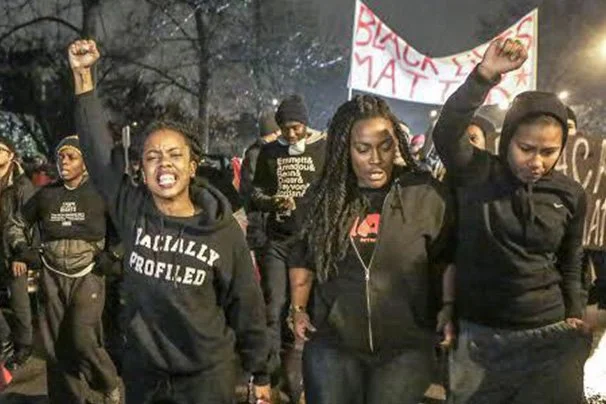
Among the aesthetic tools that might mobilize memory for progressive social change are the digital arts and photography, performance, and media, each of which can have strong ties to human rights law and academic examinations of inequality and the systematic erasure of memory.
The group suggested that while street protest was perhaps the most visible venue of mobilization, it was often overly romanticized and could not be sustained indefinitely. Still, the action of individuals coming together to claim a civil space has proved to be a useful tool for fomenting social and political transformation, as we saw in the frequent civil rights and peace protests of the 1960’s and the massive anti-war demonstrations at the beginning of this century.
One student activist spoke of the current difficulties of using public space on the Columbia campus for unionizing, where the rules of institutional decorum did not permit such activity, deeming it “confrontational.” Breaking the rules, however, is indeed what gets social movements noticed.
The group agreed that holding a public space indefinitely was not necessary to make a protest effective, so long as the innovative ideas being discussed continued to circulate after the physical protest ends. A street protest might ultimately be ephemeral, but as the 2011 Occupy Wall Street movement demonstrated, one action could lead to a series of related actions. As with Occupy, the communication of a sustained message (“99%”) can spark social connections to recycle the message and use it for new forms of protest.
Istanbul’s Saturday Mothers of Galatasaray Square are an example of sustained, networked protest with earlier roots. These activists have appeared since 1995 bearing photos of their children who were most likely murdered by government security forces. Their work was in turn inspired by the Mothers of the Plaza de Mayo in Buenos Aires, women who since 1977 have mourned the disappearance of 30,000 individuals under Argentina’s dictatorship. Similar occurrences also take place in Mexico and Rwanda.
Similarly, many in the group claimed that the power of social media lies in the circulation of key phrases that act as an engine, generating an expanding desire for and a manifestation of change in the real world. Protesting the police murders of Michael Brown in Ferguson, Missouri and Eric Garner in Staten Island, New York this past year, activists throughout the country made phrases like #Ferguson, #icantbreathe, and #BlackLivesMatter go viral, leading to clashes with the police, freeway shutdowns, and other interventions. Risking arrest or violence was key in getting these events noticed.
While one member said that activism seems to have flatlined since 2011, since it lacked uniform goals and organization, another claimed, that on the contrary, many more students are now interested in course work around social change. It is important to remember that only a few years have passed since the events of the Arab Spring and Occupy, and that systemic social change requires much more time.
Contributed by Terry Roethlein, Communications Manager, Center for the Study of Social Difference
Image: Brittany Ferrell, Ashley Yates, and Alexis Templeton, Co-Founders of Millennial Activists United, an organization focused on outreach, policy campaign, civic engagement and direct action, in Ferguson, Missouri.
Banu Karaca in The New York Times
Banu Karaca, a member of CSSD working group Women Mobilizing Memory, was quoted in a recent New York Times article about creeping censorship amid the current flourishing of the arts in Turkey.
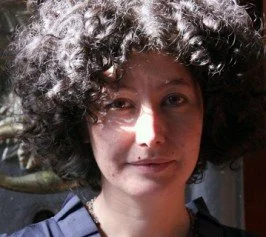
Karaca is a founder of Siyah Bant, an organization that monitors arts censorship in Turkey.
Read the New York Times article here.
Nancy Kricorian Published in Guernica Magazine Daily
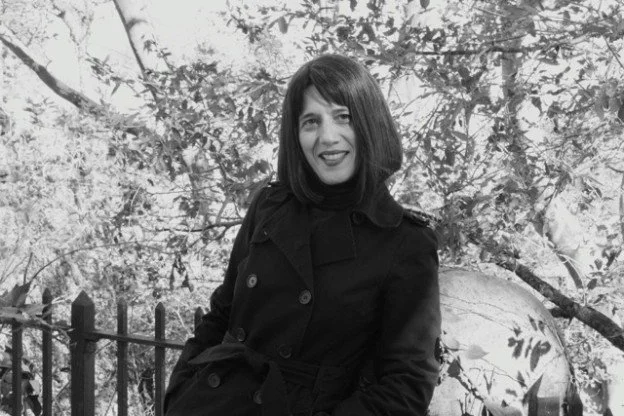
Nancy Kricorian's essay "Pilgrimage as/or Resistance," which was originally presented earlier this year at the Women Mobilizing Memory workshop at Depo in Istanbul, Turkey, has been published by Guernica.
Columbia Global Centers Showcases Women Mobilizing Memory
"Led by Professors Marianne Hirsh, Jean Howard, Diana Taylor and Ayşe Gül Altınay, the Mobilizing Memory for Action workshop engaged scholars, artists and activists from Chile, the United States and Turkey in public events, an art exhibition, a gender-memory walking tour and theater performances. "
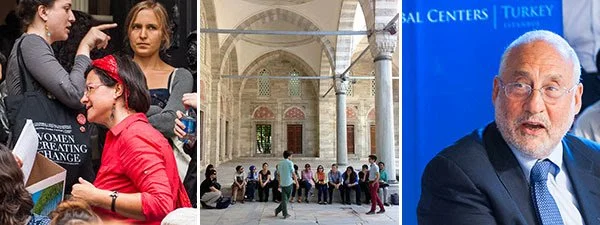
Read more about the September 2014 Women Mobilizing Memory Istanbul workshop in this month's Columbia Global Centers E-Newsletter.
DAY FIVE REPORT: "Women Mobilizing Memory" Workshop in Istanbul, Turkey
During the penultimate day of the week-long Women Mobilizing Memory workshop, a number of new research questions and concerns emerged, including the following: As women (and sometimes men) mobilizing memory, how do we deploy feminist scholarship, and what does feminism mean to each of us across our diverse cultural, linguistic, and educational contexts?
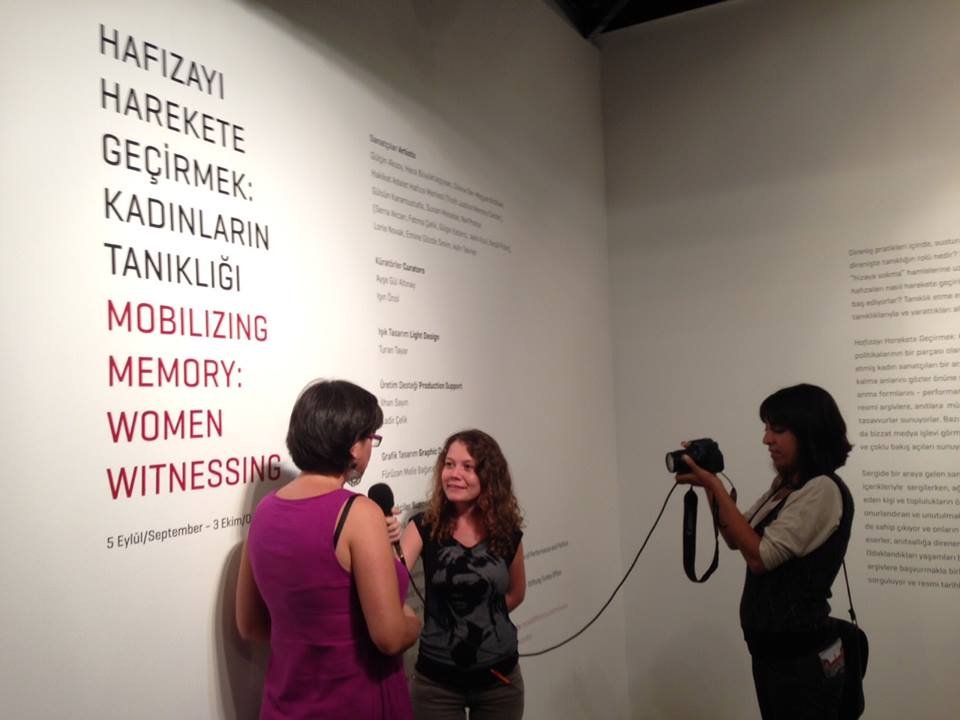
The working group panels for the day explored this question from a number of different angles. In a talk titled, “Coups d’État: Dialogues at the Intersection of Memory and Life Story in Chile and Turkey,” Marcial Godoy and Zeynep Gambetti staged their feminist methodology in the form of a collaborative dialogue. Their conversation reflected on the ways in which their separate trajectories as activist-scholars growing up in eras of gross political oppression have converged in a transnational, professional friendship built on solidarity.
The need for concrete collaboration between scholars as an explicitly feminist methodology has come up in discussions time and again. Andrea Crow and Alyssa Greene took a different approach to contending with the issue of collaboration in their own conversation on “Working Definitions: Activist Scholarship in a Transnational University.” Their dialogue asked us not only to strive to define our critical terms in order to improve our communication as feminist colleagues, but also to remain aware of our role in the university system at large, especially as university structures become more global and corporatized.
In many ways, the following panel on “Reversing Silences/Telling Forgotten Stories” made manifest many concrete, feminist issues in Turkey that had been in the background of many of the group's explorations of Turkish politics earlier in the conference. Bürge Abiral gave a talk about sexual violence in women’s narratives of incarceration during Turkey’s military junta from 1980-1983. She provided important context for the difference regarding the "speakability" of sexual violence in Turkey, where rape was, until recently, defined as a crime against public morality and order, not against women’s bodily autonomy and human rights.
Dilara Çalışkan continued thinking about sexual violence specifically in transwomen’s communities and queer kinship structures in Istanbul, asking a provocative question based on Professor Hirsch’s scholarship: “Can we speak of queer postmemory?” She analyzed the ways in which trans mothers and daughters not only queer intergenerational transmission in their families of choice, but also hand down unfathomable memories of torture and forced displacement.
In the final talk of the day, Soledad Falabella shared her activist work on archiving and making accessible poetry from Mapuche women, an indigenous group that faces tremendous hostility on a daily basis in Chile. Falabella described the positionality of Mapuche women as “unbearable beings” for the state, always in conflict with the extent to which “the whole societal imaginary is trying to erase you,” and yet, in simply surviving, you become a concrete “standard of testimony” for the political problem more broadly.
Before separating into smaller breakout groups for the last time, the group participated in an impromptu discussion about positionalities as feminist scholars pursuing questions of social difference. Diana Taylor started the discussion by asking, “If we’re talking about gender, does our work automatically focus on women? Or are we using a feminist analysis to look at whatever we’re looking at?” A number of cross-cultural insights on feminism rose to the surface, including recognition of the potential that feminism has to provide an ethical lens for thinking about oppression, vulnerability, and a critique of power that does not lose sight of local contexts.
The final event of the day returned to the Black Box Theatre, where Maria Jose Contreras put on a one-woman piece of experimental performance art titled Prosthesis. Contreras' performance embodied a tension that had been remarked upon throughout the day: the ethical imperative that the personal remain political in our work as feminists. Her performance juxtaposed televised images of incendiary political moments from her childhood in Chile with x-rays of her debilitated father’s internal organs and a working breast-pump, making a visually stunning commentary on the ways in which her milk as a new mother also carries with it residues of Chile’s past.
Day five report contributed by: Nicole Gervasio
Nicole Gervasio is a Ph.D. student in the Department of English and Comparative Literature at Columbia University.
DAY FOUR REPORT: "Women Mobilizing Memory" Workshop in Istanbul, Turkey
The fourth day of Women Mobilizing Memory featured a roundtable discussion moderated by Ayşe Gül Altınay on documentary films about state violence and Kurdish memory. The directors of the films Bûka Baranê (2013, dir Dilek Gökçin) and Dersim’s Lost Girls (2010, dir. Nezahat Gündoğan) also joined the discussion. Bûka Baranê focuses on the experiences of people who were students at an elementary school in Hakkari to explore the different forms of state violence and the Kurdish guerilla movement in the 1990s. In light of their memories of violence during the period of emergency rule, the film reflects on how children longed for peace.
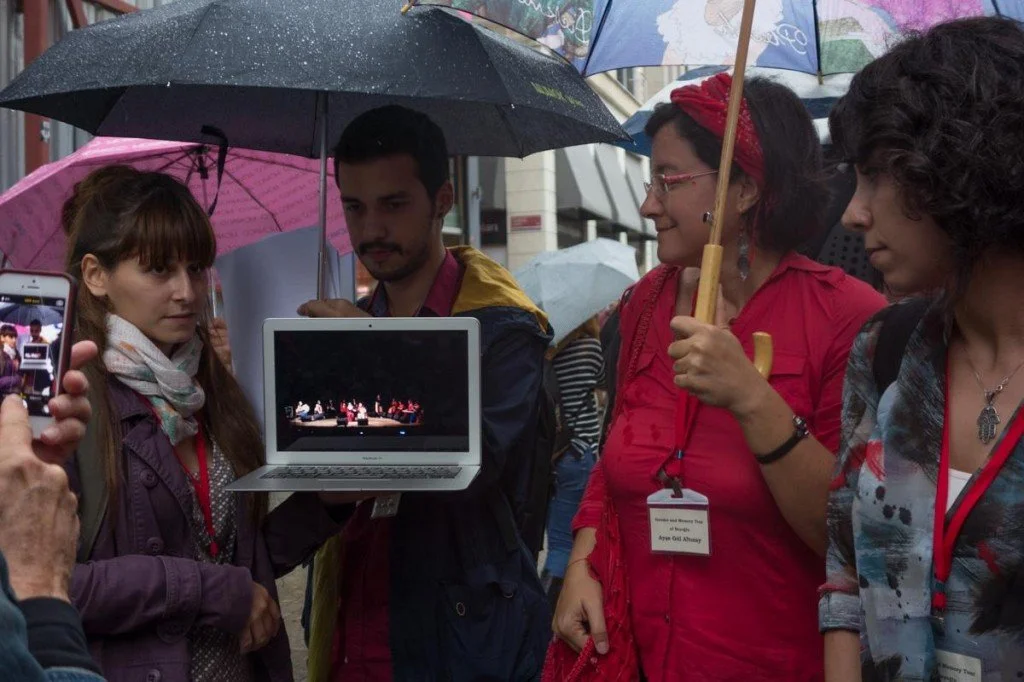
Based on interviews with elderly women who experienced the Dersim genocide, Dersim’s Lost Girls explores how children and women have been affected by ethnic violence and assimilationist policies that targeted the Kurdish population in Dersim in the late 1930s. The discussion was followed by the roundtable Gendered Memories of War and Genocide in Turkey, moderated by Meltem Ahıska. Zeynep Türkyılmaz presented her research on the genocide in Dersim, its gendered aspects, and the tensions between memory and the archive as they relate to people's memories of the genocide. Ayşe Gül Altınay explored Nebahat Akkoç's organization KAMER to discuss post-nationalist feminist memory work within the broader context of Turkish politics. Hülya Adak’s presentation explored a variety of examples in late Ottoman and Turkish history to discuss how the position of “the mourning mother” has been utilized by authors and activists for different and at times conflicting political projects, especially with regard to the Armenian-Turkish relations and the memory of the genocide. Pınar Ensari discussed her research on young Kurdish women, their memories of state violence in the Southeast of Turkey in the 1990s, and their engagement with activism and politics in Turkey, with a specific focus on the Gezi Resistance and its aftermath.
After the roundtable, we joined the Gender-Memory Walking Tour co-organized by the Sabancı University Gender and Women's Studies Forum and the Karakutu/Black Box group. That evening, we attended Disco Number 5, a solo performance by Mirza Metin in Kurdish and directed by Berfin Zenderlioğlu. The performance focused on torture at the Diyarbakır prison during the military regime in the aftermath of the coup d’état of 1980. Reflecting the transdisciplinary nature of the program, the events throughout the day demonstrated the different forms of memory work.
Day four report contributed by: Rustem Ertug Altinay
Rustem Ertug Altinay is a doctoral candidate in the Department of Performance Studies at New York University and a Turkish Cultural Foundation fellow.
DAY THREE REPORT: "Women Mobilizing Memory" Workshop in Istanbul, Turkey
The third day of Women Mobilizing Memory was dedicated to three public roundtables with simultaneous translations at Depo: "Creating Alternative Archives," "Art, Performance and Memory." and "Gender, Memory, Activism."
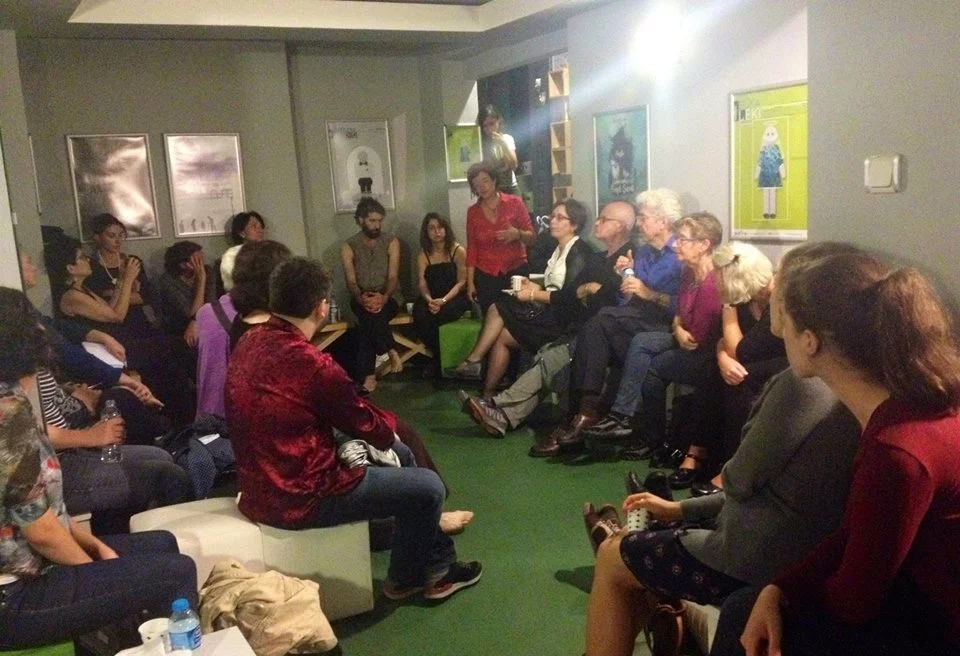
In the first roundtable on “Creating Alternative Archives,” Leyla Neyzi introduced her recent project on Kurdish and Turkish youth living in Turkey and Germany with visual examples from the project's website. Neyzi especially focused on intergenerational memory, post-memory, and Kurdish and Turkish youth's different conceptions of time and history. Özlem Kaya began her talk by introducing the Truth Justice Memory Center, which is an independent human rights organization that is based in İstanbul. Kaya explained how the Center contributes to uncovering grave human rights violations at times of conflict and in strengthening the collective memory about those violations. Currently, the Center is trying to create an alternative archive through video testimonies about enforced disappearances in Turkey. Susan Meiselas discussed her web-based project akaKurdistan, which she founded in 1998. She explored the possibilities of creating visual histories and building memories with people who have no national archive. She focused on how multiple perspectives and hidden archives came together in the production of this collective archive of Kurdish memory. Silvina der Meguerditchian noted how her artistic works deal with issues related to the burden of national identity, memory, the role of minorities in the society and the potential of a space “in between.” The roundtable was followed by a screening of Silvina’s new film “Nereye/Where to,” which follows the traces of İstanbul’s lost minority communities in Fener and Balat, revealing the complexities of recovering memory.
In the second roundtable, titled “Art, Performance and Memory,” Andreas Huyssen discussed the recent changes in museum culture, pointing to a "metamorphosis of the museum." Huyssen explored how the museum has been transformed from a site of memory as an “exhibitionary complex” to a mass medium as an “experiential complex.” Alissa Solomon drew attention to the current wave of museum building across the world as one of the emerging global tropes of memorialization. She asked various challenging questions and explored the answers through one type of global trope: the shoe. By looking at piles of shoes, seen in memorials and protests among other places, Solomon asked whether we can represent the scale of mass atrocities without blurring over individual differences. Carol Becker talked about Kara Walker’s new site-specific sculptural installation at the now defunct Domino Sugar Factory. Becker argued that the sculpture echoes the memory of slavery by focusing on how Black women were exploited in the history of the sugar industry that dominated the Caribbean and the American South for a century. Becker explored how reactions to this sculpture are indicative of the growing insensitivity of the United States to the subject of race and racism. Diana Taylor noted Regina Galindo’s piece Earth, which depicts the trial of ex-dictator Rios Montt. Taylor discussed the political efficacy of testimony in Galindo’s performance art on genocide. In her talk, Maria José Contreras focused on forgetfulness and its relation to memory in the performative dimension. Contreras asked whether we can think of forgetfulness for embodied memories. Furthermore, she traced the capacity of prosthesis in performance art to recuperate memories and evade forgetfulness.
The third and the final roundtable, “Gender, Memory, Activism” started with Marita Sturken who explored how architectures of memory, architectures of torture and architectures of conflict are shadowed by a culture of comfort and sentiment. Sturken asked whether we can think of modern architecture as an infrastructure for framing space and memory. In her talk, Marianne Hirsch discussed the works of several artists who activate small, fragmentary archives and allow them to travel and migrate, creating networks of connectivity that challenge the monumentalization of memory and resist national paradigms that erase difference. Nükhet Sirman noted the Women's Initiative for Peace, which is a group of approximately 500 women, all dedicated to forging a peace between the Kurdistan Worker’s Party (PKK) and the Turkish State. Sirman explained how they, as a group, appointed themselves to bear witness to the atrocities that were committed against Kurds in the 1990s, especially the gendered crimes. Meltem Ahıska drew attention to how Saturday Mothers of Turkey made the enforced disappearances visible by a counter-movement. Ahiska argued that this counter-movement has played a significant role not only in creating a new space for politics, but also by enacting political memory. Saturday Mothers has infused spaces with memory since 1995 through their silent sit-ins. Nancy Kricorian concluded the panel by remembering Armenian history on a pilgrimage through her grandfather’s hometown in Turkey.
Day three report contributed by: Pinar Ensari
Pinar Ensari is an alumna of Sabanci University's Department of Cultural Studies.
DAY TWO REPORT: "Women Mobilizing Memory" Workshop in Istanbul, Turkey
Media, Memory, Political Efficacy
On Day Two of theWomen Mobilizing Memory workshop, Jean Howard introduced the following keywords for discussion: gender; embodiment; accompaniment (or “walking with”); politics; repair; mobilizing; hope; optimism; and play, or the recovery of joy. Ayşe Gül Altınay added feminism as a keyword and Milena Grass also expanded on Jean’s notion of accompaniment by stressing the idea of connection rather than comparison. Andrea Crow focused on the concept of connection as an important component of our work, pointing to our collective presence as evidence of the value of direct encounter.
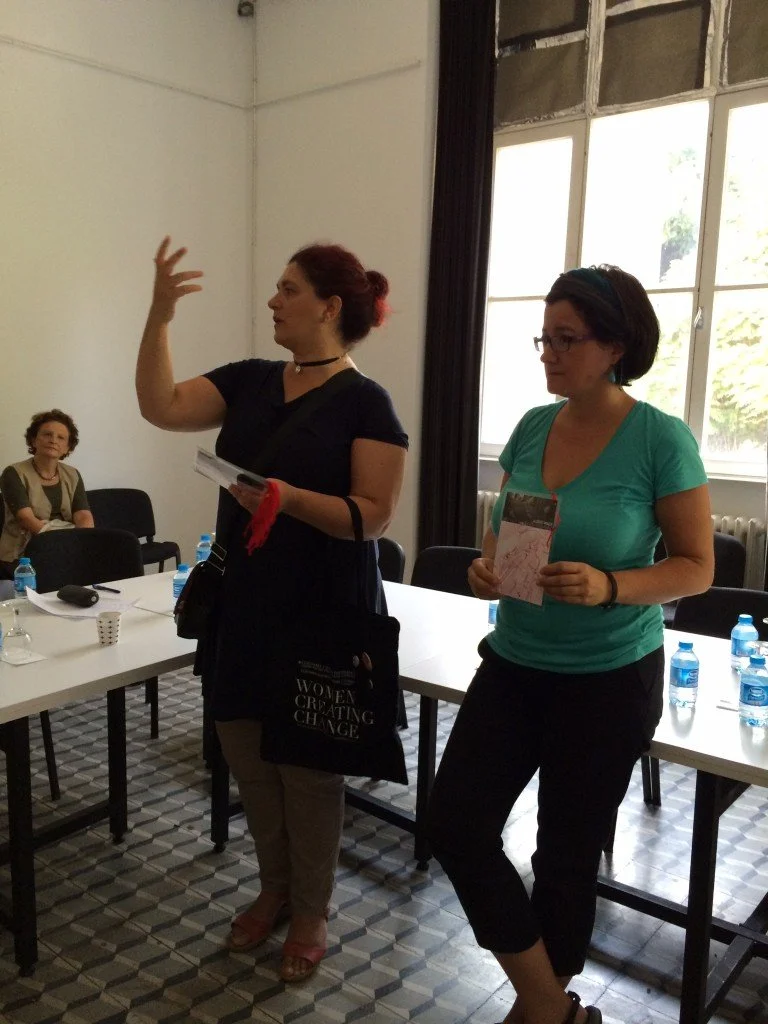
Twin panels were also convened on Media, Memory, and Political Efficacy. The panels explored a variety of themes, including: the personal archive; trauma and scholarship; the performative; and expanding notions of absence and representation. Taking as his point of departure photographs of his family and community, Leo Spitzer raised the possibility of a critical nostalgia among refugees. Milena Grass’ paper on Macarena Aguiló’s documentary work analyzed the legacy of Chilean leftist exiles and their descendants. Sibel Irzık’s paper picked up on the difficulties of sharing in trauma in the Turkish context of post-coup coup d’état novels, and the metafictional strategies that writers use to show language as a site of struggle against authority. In her work on the emergent aesthetics of disappearance, Nicole Gervasio proposed an expanded use of the term “forced disappearance” to include experiences such as political detention.
The second panel’s papers included a wider range of texts and explored a variety of affective possibilities. Embodiment as a critical term ran through the work all three panelists. Jean Howard discussed temporality and "slow violence" in the context of Carol Churchill’s theater, bringing together themes about the personal and the environmental as well as labor and bodily vulnerability. Henry Castillo’s work on the lumbalú, a customary dance of death in Colombia, was also discussed in the context of the gendered performance of lamentation, mourning, and sexuality. Rüstem Ertuğ Altınay added to the discussion by theorizing the intersections of the nationalist/political with the sexual.
Day 2 Report contributed by: Alyssa Greene
Alyssa Greene is a graduate student in the Department of Germanic Languages at Columbia University.