
DISCUSSION: Refugees and Gender Violence: Media and the Arts on Thursday, March 30
CSSD presents "Refugees and Gender Violence: Media and the Arts," Thursday, March 30th, 2017, from 4:10 - 6 p.m. in Butler Library 523. Presenters include Bikem Ekberzade, Photojournalist, Turkey, on "The Refugee Project: Anatomizing Gendered Violence," Susan Meiselas, Photographer, Magnum Photos, on "A Room of Their Own," and Sarah Stillman, Columbia School of Journalism, The New Yorker, on the "Global Migration Project."
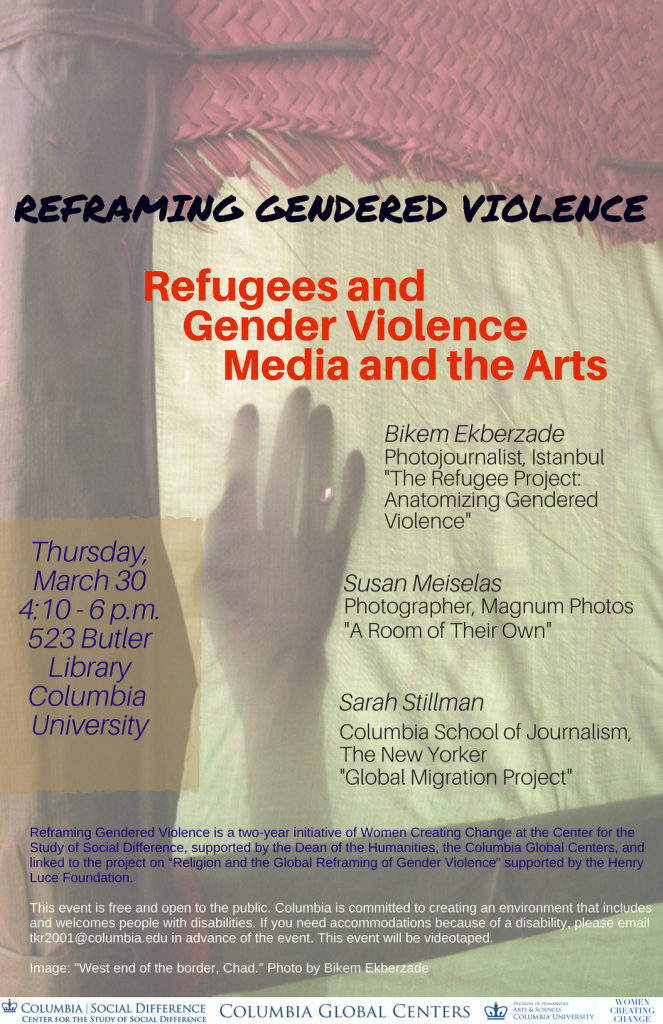
Reframing Gendered Violence is a two-year initiative of Women Creating Change at the Center for the Study of Social Difference, supported by the Dean of the Humanities, the Columbia Global Centers, and linked to the project on “Religion and the Global Reframing of Gender Violence” supported by the Henry Luce Foundation.
This event is free and open to the public. Columbia is committed to creating an environment that includes and welcomes people with disabilities. If you need accommodations because of a disability, please email tkr2001@columbia.edu in advance of the event.
This event will be videotaped.
Image: West end of the border, Chad. Photo by Bikem Ekberzade
Jacqueline Chin Presents on "Precision Medicine: Privacy & Family Relations"
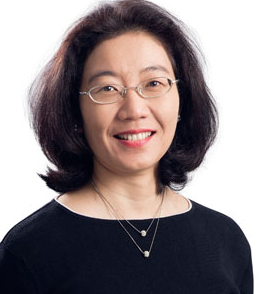
Dr. Jacqueline Chin, Associate Professor at the Centre for Biomedical Ethics, Yong Loo Lin School of Medicine, Singapore spoke in February on the subject of "Precision Medicine: Privacy & Family Relations" for CSSD's project on Precision Medicine: Ethics, Politics, and Culture. Dr. Chin's presentation underscored the leading pillars of privacy and family relations in connection with precision medicine. She espoused several focal points through which a humanistic conceptualization of the relevant issues might be achieved, including: the metaphor of precision medicine itself, the problem of genetic privacy, pragmatism and frameworks of choice, and enabling responsible choices in the context of precision genomics.
The Metaphor of Precision Medicine
"Precision Medicine" (PM) implies a certain model of medical care that is personalized and tailored to the individual. But “precision” itself is a cultural construction. The term connotes accuracy, and favors results that should be shared, generalized, and standardized, as opposed to ones that can be true about an individual case. In acknowledging this tension, Dr. Chin argued that PM amounts not to individually tailored healthcare, but rather to genetically based healthcare. Is precision necessarily a social or physiological “good”?
By all accounts, central to PM is conceptualizing “genetic information.” As the literature makes evident, there is little consensus about what genetic information even is. Indeed, countless debates concerning when and on what basis genetic information is significant and to whom—and when such information should be kept private—continue to proliferate. The group found that these realities bring to light an important tension that should be qualified in our humanistic conceptualization of such emerging medical approaches, which is distilling whether PM is specific to an individual versus to a cohort of individuals that share a particular common trait or disease. On a more granular level within this framework, one might distinguish between the clinical versus research uses of the genome. That is, in the clinical context, the purpose is to deliver diagnostic and treatment information to a treating healthcare provider, and in the research context, a researcher is conducting a genetic analysis to explore a specific hypothesis that is independent of diagnosis or treatment for any one individual. We acknowledged that in these settings, from a privacy/disclosure perspective, the individual human subjects are not necessarily informed of the results of genetic analyses, and it was argued that healthcare professionals and ethicists ought to calibrate such communication practices with deference to ethical guidelines and patients’ rights. Thus, when we conceive of the PM metaphor, such distinctions and considerations are of import.
Precision Medicine & Genetic Privacy
Dr. Chin articulated that the term “genetic privacy” can be problematic when taken at face value (e.g., as if there were something exceptional about genetic information that necessitates special ethical attention or legal protections). Instead, she suggested starting with the observation that a general problem of privacy occurs when technological feats (such as data capture and storage, processing, and retrieval) are accomplished. In reflecting upon this conundrum, an important inquiry surfaced: Given the proliferation of public and private sector genetic databases and genomic research, and in light of function creep (e.g., the benefits of using technology in new ways), how might we reconcile attempts to somehow “draw the line” in crafting regulations/policies that protect identifiable information yet also leave room for advances in genomics? In grappling with this challenge, identifying the stakeholders is key.
Pragmatism and Frameworks of Choice
Chin discussed with the group precision medicine in connection with social and familial obligations. The dialogue centered on (i) reflections of pragmatism and (ii) what medical anthropologist Margaret Sleeboom-Faulkner terms “frameworks of choice.”
Drawing on philosopher Herman Saatkamp’s work, discussants considered the argument that pragmatism prioritizes the good over truth, and the idea that pragmatism is a vehicle for assessing what he terms the “new genetics.” What is perhaps most important here is embracing the complexity of the connection between genes, environment, and culture, and accordingly the urgency to redirect research efforts to developing “responsible” individuals. But many issues remain with regard to this line of thought, and a plethora of questions were raised in our seminar. For example, how might we define a responsible parent, and to what extent is that definition fluid? To what degree is being responsible context-specific, and is it a product of free will exclusively, or a combination of other forces within us, our environment, and our culture? Finally, how possible is it to achieve a pragmatic directive for parents to use genetic information in child rearing? While these issues cannot be solved in a brief discussion, one of the prevailing arguments asserted that given the complex biological and societal nature of human beings, single genetic traits are likely less responsible for determining complex human actions, whereas the perspective that draws upon both genes and environment is more convincing.
The other work we reviewed in this context is that of Sleeboom-Faulkner’s frameworks of choice writings. What was most thematic in our discussion was that while reproductive governance is a function of social individuals and of the state’s regulatory impositions, the reality remains that individual choice and free will wildly varies depending on the context (for instance, in response to community and cultural norms, which may produce coercive or poorer outcomes). Additionally in this vein, one’s choice has the potential to be constrained or restricted by social and economic limitations, such as conflicting religious values or financial barriers that prevent or disable access to a given genetic test or treatment. As Sleeboom-Faulkner argues, the relative bioethical permissiveness of state and local governments influences the degree to which populations participate in, and benefit from, genetic testing.
Precision Genomics and Enabling Responsible Choices
Another issue that Dr. Chin emphasized related to precision genomics and enabling responsible choices. The topics she highlighted included the importance of the force of the law in protecting individuals from being coerced into undergoing genetic or whole genome testing, and the notion of sharing such test results “responsibly.” In considering the latter, for instance, what might be an appropriate way to arrive at decisions to inform next-of-kin in consideration of family members’ interests? In a perhaps-controversial conviction, Dr. Chin posited that individuals who undergo genetic or whole genome testing should be required to consent to sharing relevant results with close family members who desire to access the information. She argued that families should be notified so that they can choose whether or not to apply for access to a family member’s findings and undergo testing themselves. This set of claims produced a wave of skepticism among some working group members, who questioned what the scope of the “family” would entail (e.g., “close” family? Only those with whom one can establish trust? All blood relatives? Would it also include people with whom they are thought to have a reasonable degree of trust in?), and to what extent moral, relational, or other civic duties might bolster or compromise such an obligation to disclose. Another response underscored the notion of risk stratification: as it stands now, PM is more so an issue of risk, as opposed to identifying a particular variant that may be indicative of someone’s potential to inherit or develop a particular condition. So perhaps the extent of the obligation to disclose hinges on the notion of actionability—the degree of information that is actually useful to patients or not. To calibrate, Dr. Chin did acknowledge that the right of individuals not to know and to make their own judgments about the risks to privacy of undergoing genetic testing should be protected. Still, a strong argument in favor of disclosure remains, which is that PM succeeds only if people do share information—in essence, sharing information is part of the “deal” of PM, and without it, PM may not materialize as expected.
Contributed by Matt Dias
Alice Kessler-Harris' "Women Have Always Worked" MOOC Launched
The first part of the "Women Have Always Worked" MOOC (massive open online course), led by Alice Kessler-Harris, R. Gordon Hoxie Professor of American History Emerita at Columbia University and former project director of CSSD's Social Justice After the Welfare State, was recently launched on the edX platform.

The Women Have Always Worked course is the first full-length MOOC on the history of women in America and is free and open to the public. A joint venture between Columbia University and the Center for Women’s History at the New-York Historical Society, the course introduces students to historians’ work to uncover the place of women and gender in America’s past.
Read the full story here.
DISCUSSION: Keyword: Justice — Interdisciplinary Conversation on Thursday, March 23!
On Thursday, March 23, 2017 from 4:30 – 6:30 p.m., CSSD and the Women's, Gender, and Sexuality Studies Council will co-host a Keywords: Interdisciplinary Roundtable Conversation on the keyword “Justice” in Butler Library 203, Columbia University.
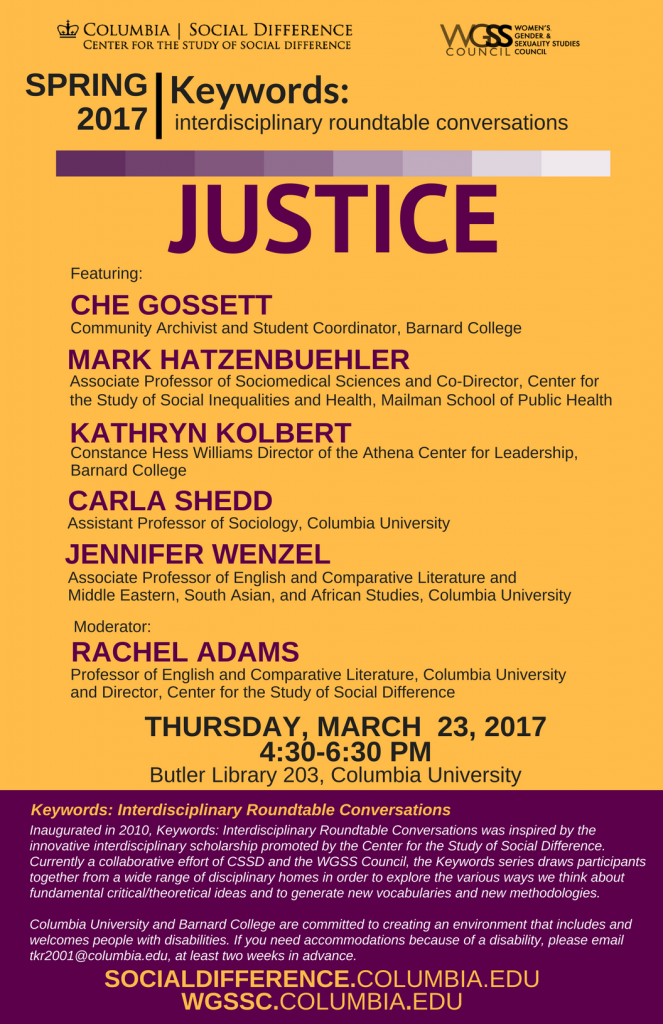
Keywords programs draw participants together from a wide range of disciplinary homes in order to explore the various ways we think about fundamental critical/theoretical ideas and to generate new vocabularies and new methodologies.
This year's program features:
Che Gossett
Community Archivist and Student Coordinator, Barnard College
Mark Hatzenbuehler
Associate Professor of Sociomedical Sciences and CoDirector, Center for the Study of Social Inequalities and Health, Mailman School of Public Health
Kathryn Kolbert
Constance Hess Williams Director of the Athena Center for Leadership, Barnard College
Carla Shedd
Assistant Professor of Sociology, Columbia University
Jennifer Wenzel
Associate Professor of English and Comparative Literature and
Middle Eastern, South Asian, and African Studies, Columbia University
Rachel Adams (moderator)
Professor of English and Comparative Literature, Columbia University and Director, Center for the Study of Social Difference
CSSD Call for Proposals for Fall 2017 Projects Extended to March 20

CSSD’S deadline for proposal submissions for 2017 projects has been extended to Monday, March 20th. Proposals may be submitted for consideration by any Columbia or Barnard faculty member(s) whose project aligns with the mission of CSSD.
Proposals must be for a new project to begin in 2017. Proposals may be submitted for consideration by any Columbia or Barnard faculty member(s) whose project aligns with the mission of CSSD, although preference will be given to faculty affiliated with one or more of CSSD’s member centers and institutes. Submission deadline is March 20, 2017. Read the full CFP here.
Jackie Leach Scully Speaks on Precision Medicine, Ethics, Politics, and Culture on March 9
On March 9th, the CSSD project Precision Medicine: Ethics, Politics and Culture will host Jackie Leach Scully for a lecture at Columbia. Leach Scully is Professor of Social Ethics and Bioethics, and Executive Director, Policy, Ethics and Life Sciences Research Centre, Newcastle University, UK.

Professor Leach Scully asks how the enormous recent advances in genomic knowledge and capabilities might affect the public's understanding of embodiment that is disabled. How might precision medicine influence thinking about and attitudes towards disability, and disabled people, in the future?
Read more about the event here.

Anupama Rao publishes in New York Times on Indian Supreme Court Ruling
Anupama Rao, Associate Professor of History, Barnard College, and director of the recently completed CSSD project on Gender and the Global Slum, published an opinion piece in the New York Times on an Indian Supreme Court
Anupama Rao publishes in New York Times on Indian Supreme Court Ruling
Anupama Rao, Associate Professor of History, Barnard College, and director of the recently completed CSSD project on Gender and the Global Slum, published an opinion piece in the New York Times on an Indian Supreme Court ruling that bans political appeals to identity.
"In India today, we are seeing the overturning of an order predicated on the protection of social minorities in favor of majority rights," wrote Rao. "Given current politics, will Hindu majoritarian claims be allowed, while minorities are banned from making claims to discriminated identity, or social suffering?" she wrote.
Read the full piece here.

China and Africa at a Crossroads: Revisiting the Legacy of Bandung Humanisms
The CSSD working group Bandung Humanisms hosted the conference “China and Africa at a Crossroads: Revisiting the Legacy of Bandung Humanisms.” Read the full blog entry on the conference here and see photos from the day.
China and Africa at a Crossroads: Revisiting the Legacy of Bandung Humanisms
The CSSD working group Bandung Humanisms hosted the conference “China and Africa at a Crossroads: Revisiting the Legacy of Bandung Humanisms.” Read the full blog entry on the conference here and see photos from the day here
David Scott receives Distinguished Editor Prize for "Small Axe: A Caribbean Journal of Criticism"
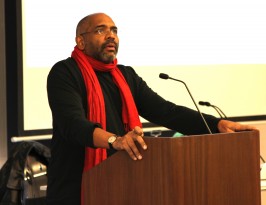
David Scott, Professor of Anthropology at the Institute for Research in African American Studies, Columbia University, and former co-director of CSSD’s Digital Black Atlantic Project, received the Distinguished Editor prize from the Council of Editors of Learned Journals for his work on Small Axe: A Caribbean Journal of Criticism.
David Scott receives Distinguished Editor Prize for "Small Axe: A Caribbean Journal of Criticism"
David Scott, Professor of Anthropology at the Institute for Research in African American Studies, Columbia University, and former co-director of CSSD’s Digital Black Atlantic Project, received the Distinguished Editor prize from the Council of Editors of Learned Journals for his work on Small Axe: A Caribbean Journal of Criticism.
“Small Axe edited and published under Scott’s vision has become one of most relevant intellectual and creative publications for our current political, social and cultural climate. Small Axe continues to reflect the ‘problem space’ of the contemporary global moment,” said Roshini Kempadoo, lecturer at University of Westminster.
Read more about David Scott’s prize here.
Jacqueline L. Chin Discusses "Precision Medicine, Privacy, and Family Relations" on February 9
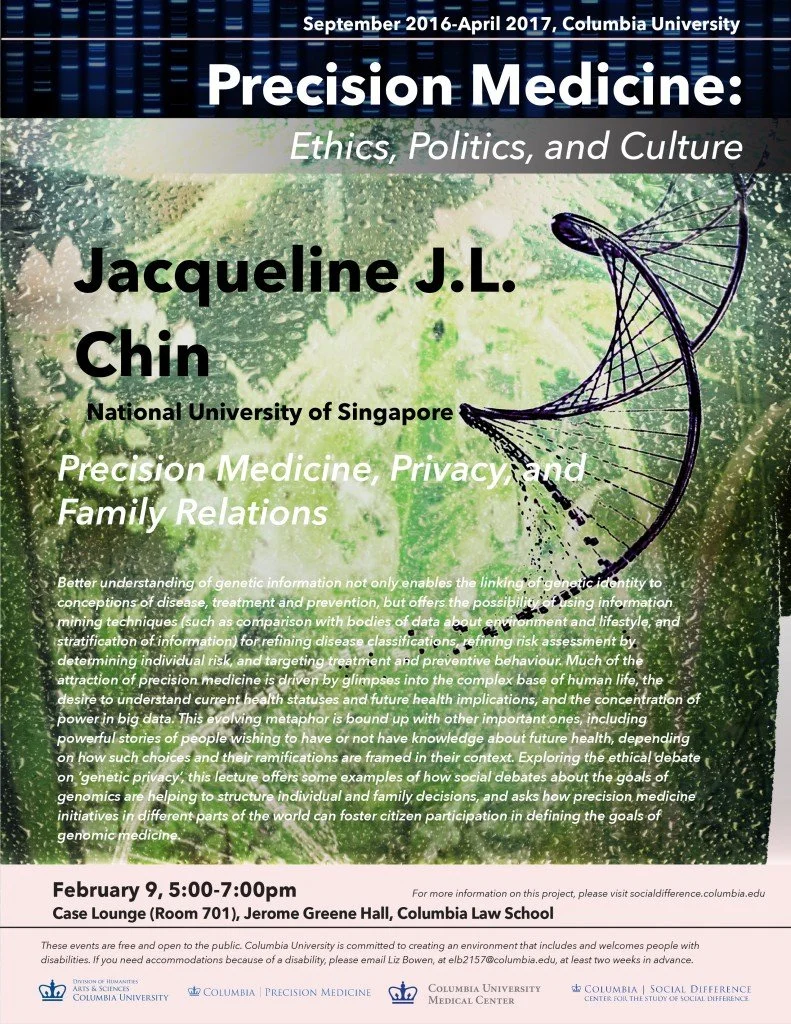
On February 9, the CSSD working group Precision Medicine: Ethics, Politics, and Culture will host a discussion by Jacqueline L. Chin, Associate Professor, Centre for Biomedical Ethics, Yong Loo Lin School of Medicine, National University of Singapore, on the topic of "Precision Medicine, Privacy, and Family Relations."
Chin posits that a better understanding of genetic information not only enables the linking of genetic identity to conceptions of disease, treatment and prevention, but offers the possibility of using information mining techniques (such as comparison with bodies of data about environment and lifestyle, and stratification of information) for refining disease classifications, refining risk assessment by determining individual risk, and targeting treatment and preventive behavior. Much of the attraction of precision medicine, in Chin's view, is driven by glimpses into the complex base of human life, the desire to understand current health statuses and future health implications, and the concentration of power in big data. This evolving metaphor is bound up with other important ones, including powerful stories of people wishing to have or not have knowledge about future health, depending on how such choices and their ramifications are framed in their context. Exploring the ethical debate on ‘genetic privacy’, this lecture offered some examples of how social debates about the goals of genomics are helping to structure individual and family decisions. Chin asks how precision medicine initiatives in different parts of the world can foster citizen participation in defining the goals of genomic medicine.
David Scott Wins Distinguished Editor Prize from the Council of Learned Journals
David Scott, Professor of Anthropology at the Institute for Research in African American Studies, Columbia University, and former co-director of CSSD's Digital Black Atlantic Project, received the Distinguished Editor prize from the Council of Editors of Learned Journals for his work on Small Axe: A Caribbean Journal of Criticism.
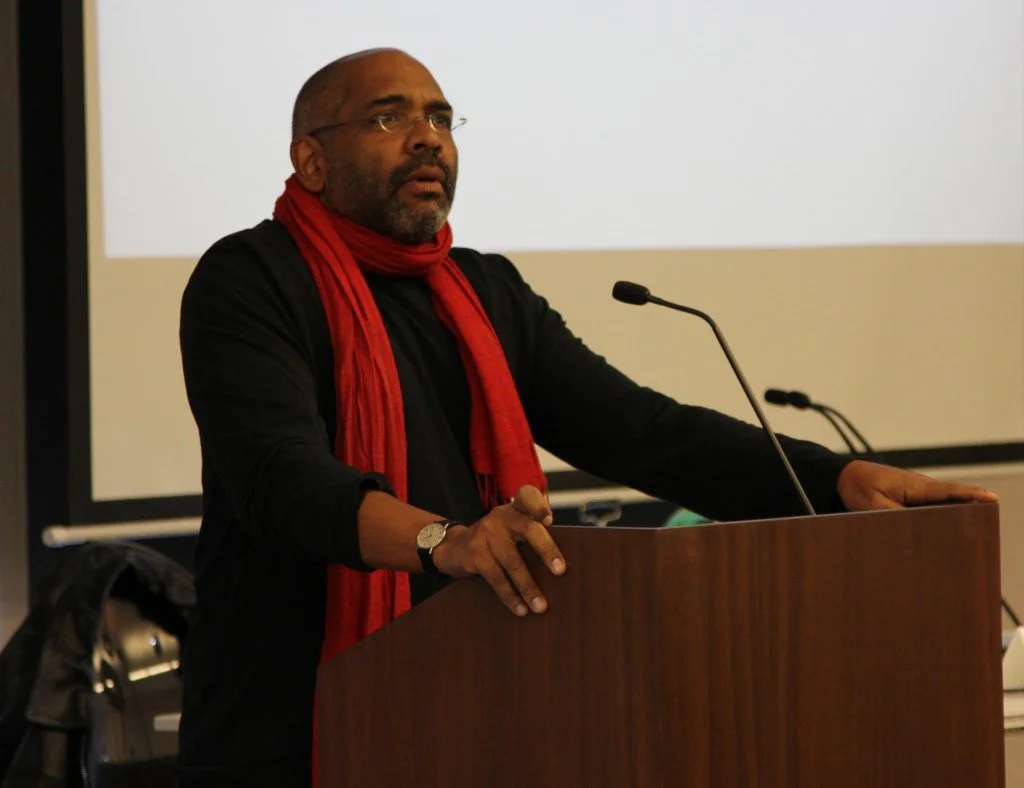
“Small Axe edited and published under Scott’s vision has become one of most relevant intellectual and creative publications for our current political, social and cultural climate. Small Axe continues to reflect the ‘problem space’ of the contemporary global moment," said Roshini Kempadoo, lecturer at University of Westminster.
Read more about David Scott's prize here.
Anupama Rao Publishes New York Times Opinion Piece on Indian Supreme Court Ruling
Anupama Rao, Associate Professor of History, Barnard College, and director of the recently completed CSSD project on Gender and the Global Slum, published an opinion piece in the New York Times on an Indian Supreme Court ruling that bans political appeals to identity.

"In India today, we are seeing the overturning of an order predicated on the protection of social minorities in favor of majority rights," wrote Rao. "Given current politics, will Hindu majoritarian claims be allowed, while minorities are banned from making claims to discriminated identity, or social suffering?" she wrote.
Read the full piece here.
Refugees and Gender Violence: Vulnerability and Resistance

On Thursday, February 9, CSSD presents a panel discussion on “Refugees and Gender Violence: Vulnerability and Resistance” from 4:10 to 6 p.m. in 523 Butler Library. This is the third panel discussion in a two-year series called Reframing Gendered Violence.Reframing Gendered Violence is part of the Women Creating Change initiative supported by the Dean of the Humanities and the Columbia Global Centers. The project is also linked to the project on Religion and the Global Reframing of Gender Violence, which is supported by the Henry Luce Foundation.
Wendy Vogt, Professor of Anthropology, Indiana University-Purdue University Indianapolis, will present on “Rape Trees, State Security and the Politics of Sexual Violence along Migrant Routes in Mexico” and Chloe Howe Haralambous, Graduate Student, English & Comparative Literature, Columbia University will discuss her work with Syrian refugees on Lesbos and on “Suppliants and Deviants: Gendering the Refugee/Migrant Debate on the EU Border.” Isin Onol, Curator in Vienna and Istanbul, talks about an exhibition she curated with refugee artists called “When Home Won’t Let You Stay: A Collective Deliberation on Taking Refuge” and Diana Taylor, Director, Hemispheric Institute of Performance and Politics, NYU, will speak on her work with migrants in Mexico and Central America in, “Migrants and a New Mothers’ Movement.”
Reframing Gendered Violence is an international collaboration between scholars, artists and activists that aims to recast the way violence against women (VAW) and gender-based violence (GBV) are currently discussed in a wide range of fields, both academic and policy-oriented, including human rights, public health, journalism, law, feminist studies, literature, sociology, religious studies, anthropology, and history.
The fourth and final event in the series, “Refugees and Gender Violence: Media and the Arts,” takes place Thursday, March 30th from 4:10 to 6 p.m. in 523 Butler Library.
See the Facebook event page for this event here.
Lila Abu-Lughod Reviews Katherine Zoepf's "Excellent Daughters: The Secret Lives of Young Women Who Are Transforming the Arab World"

Lila Abu-Lughod, Joseph L. Buttenwieser Professor of Social Science, Columbia University and director of CSSD's working group on Religion and the Global Framing of Gender Violence, reviewed Katherine Zoepf's Excellent Daughters: The Secret Lives of Young Women Who Are Transforming the Arab World in the latest issue of the Women's Review of Books.
In the review titled "'Muslimwomen,' Journalists and Scholars," Abu-Lughod credits Zoepf with concrete observations in her journalistic stories, saying "She shows not a trace of the self-promotion, polemic, or prejudice that colors so much popular writing on this subject," but finds other problems with the writing.
Zoepf makes no reference to the devastating effect that U.S. policies have had on people living in the Arab world, Abu-Lughod contends, but instead focuses on sensationalizing, cliched subjects like virginity examinations, medieval history, and the hijab.
Abu-Lughod goes on to say that "Zoepf’s apparent loyalty to the standard operating procedures of her profession (of journalism) prevents her from considering the extraordinary feminist scholarship that exists now on the very topics she covers."
Read the full review here.
Ruha Benjamin on “Can the Subaltern Genome Code? Reimagining Innovation and Equity in the Era of Precision Medicine”
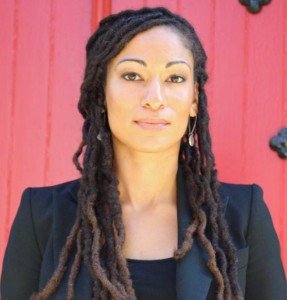
In November, Ruha Benjamin, Assistant Professor in the Department of African American Studies at Princeton University, visited CSSD’s Project on Precision Medicine: Ethics, Politics, and Culture to argue for a re-imagining of innovation and equity in the era of precision medicine. Her presentation, “Can the Subaltern Genome Code?” presented a number of competing struggles over the future of precision medicine, positioning the field in a contemporary landscape of racialized inequality and disparities in access to genetic information.
The stakes of precision medicine, Benjamin explained, involve thinking through the underlying reasons for scientific intervention in human genetics. She emphasized that it is crucial for stakeholders involved in the creation and imagination of precision medicine’s possibilities to also reimagine inequality as a concept with biological underpinnings.
Benjamin critiqued the life sciences’ claims to be able to arbitrate the reality of race—particularly genomic researchers' attempts to establish a biological basis for racial difference—and emphasized that questions remain about the racialized aspects of who has the power to translate and interpret genetic information. (Hence the question: Can the subaltern genome code?)
Benjamin also challenged the policies of some states, like the U.K. and Kuwait, that have adopted border-control and information-gathering policies based on the notion that social differences such as ethnicity and nationality can be verified with genetic groupings. This false diagnosis of identity brands national populations as biologically distinct, and thus naturalizes boundaries, instead of celebrating genetic sovereignty, Benjamin said.
Benjamin highlighted the importance of imagination as a tool to think through ethical challenges that arise with advances in genomic science. She cautioned the thinkers and creators of precision medicine to be vigilant about the potential for the creation of hierarchies based on genetic differences. Those who invest in biotechnology don’t limit themselves to the “realistic” when it comes to imagining the possibilities of precision medicine, she reminded the group, inviting those who are concerned about genomic science’s ethical stakes not to limit their imaginations for alternative possibilities, either.
In a working group session the followed, members continued to examine the question of inequities by applying questions of bio-constitutionalism to the realities of the Precision Medicine Initiative (PMI).
Responding to group members’ questions about informed consent and informed refusal, Benjamin introduced the idea of a consent framework known as “DNA on loan”—a means of navigating genomic rights among marginalized groups. Within this framework, Canadian researchers collecting genetic information from First Nations tribes cannot simply obtain one-time consent, but must return to the community and ask them to re-consent as research progresses.
Building on these concepts, the question of the “right not to know” was brought forward as an issue of informed consent. With increased knowledge of genetic predictors of illness coming forth as a result of initiatives such as PMI, group members argued, questions of consent apply not only to participation in studies, but also to the potential for knowledge of a genetic risk for an illness. With a growing effort to identify relationships between genes and manifestation of illness, what are the limits to informing the participant of potential statistically, but not clinically, significant genetic findings?
Benjamin pointed out that consent starts with incorporating the reality of the participant as a part of the process—that it is not simply a single moment of consent, but a process of building a relationship. By shifting the onus of responsibility to provide pertinent information from the participant to the clinician/researcher, Benjamin suggested, researchers can begin to enable the subaltern to genome code.
To achieve such an empowering person-to-person connection requires a restructuring of the foundation upon which clinicians are trained: not in cultural competency, but rather in cultural humility. Benjamin advocated for physicians to broaden their perspectives beyond what they need from the participant, and instead attend to what narratives and experiences the participant brings to the clinical encounter.
Contributed by Amar Mandavia & Fatemeh Adlparvar
Paige West and J.C. Salyer Discuss Dispossession and Capital Accumulation in the Context of Papua New Guinea
Paige West, Claire Tow Professor of Anthropology (Columbia), and J.C. Salyer, Staff Attorney for the Arab-American Family Support Center and Term Assistant Professor of Practice in Sociology (Barnard), were interviewed for a blog by the Center for Energy and Environmental Research in the Human Sciences at Rice University. West and Salyer, co-directors of CSSD's Pacific Climate Circuits working group, discussed how the controversy around Australia's forced internment of migrants and refugees in detention centers in PNG belies a deeply inequitable, neo-colonial relationship between the two sovereign nations. They also discussed how the different causes of migration (war, economy, climate change) are often blurred and how the detention centers in PNG should be viewed as an experimental venture that reveals how states like Australia intend to handle the increasing future flows of refugees.
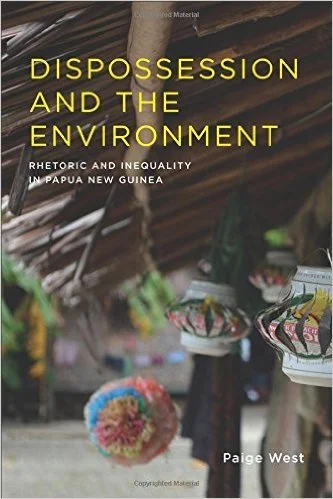
West also discussed her latest book, Dispossession and the Environment: Rhetoric and Inequality in Papua New Guinea, which explores how rhetoric of Papua New Guinea's (PNG) alleged “savagery” operates as a mode of dispossession in domains like tourism, conservation and resource extraction.
West explained how Western corporations and governments repeatedly invoke rhetoric that casts PNG as a primitive place so specialists from industries centered on tourism, environmental conservation, and petrochemical development can dominate the discourse, "hollowing out" the country's sovereign agency and replacing it with their own interests. West referred to this dispossession as the "ideological work that capital requires for constant regeneration."
Listen to the full interview here.
Laura Ciolkowski Discusses Rape Culture and "Locker Room Talk" on WFUV Podcast "Issues Tank"
Laura Ciolkowski, Associate Director of the Center for the Study of Social Difference and Adjunct Associate Professor of English and Comparative Literature at Columbia University, was interviewed on the WFUV podcast "Issues Tank" on the subject of rape culture and "locker room talk."
Following the outcry over then-presidential hopeful Donald Trump's reference to past sexually predatory and misogynist comments as "locker room talk," the podcast episode featured interviews with male and female athletes on what conversations really happen in locker rooms and discussion with Ciolkowski about "gendered language" in general.
Ciolkowski said the current conversation about "locker room talk" needs to focus less on inherent gender differences between men and women in relation to language -- she repudiates the popular model of "men are from Mars, women are from Venus" -- and more about social power dynamics.
"When we talk about gendered language we should be talking about status and power" rather than some sort of "hard-wired" male and female difference, said Ciolkowski. Gendered language always expresses differences in status rather than simply biology or Nature, she said.

Such differences in status often work in the service of rape culture, which Ciolkowski defines as the trivializing and normalizing of sexual violence (“boys will be boys,” “locker room talk”) and the objectification and devaluation of women. Ciolkowski believes that the increased frequency of discussions about “locker room talk” in the news cycle and the popular media means "We are forced to see and think about in a much more nuanced way what work this language is doing" and are being given even more opportunities to "push back against it."
Hear the full podcast here.
DISCUSSION: Framing Religion and Gender Violence—Beyond the Muslim Question
“Why and when is religion invoked in global responses to gendered violence? What roles are attributed to religion? What categories of the religious become seen as credible in anti-violence work?""Who pays the price and who benefits from the ways that religion is used to frame global understandings of gender violence?” asked Lila Abu-Lughod, Joseph L. Buttenwieser Professor of Social Science, Columbia University and CSSD project director, as she opened a November panel on “Religion and the Global Framing of Gender Violence: Beyond the Muslim Question.”
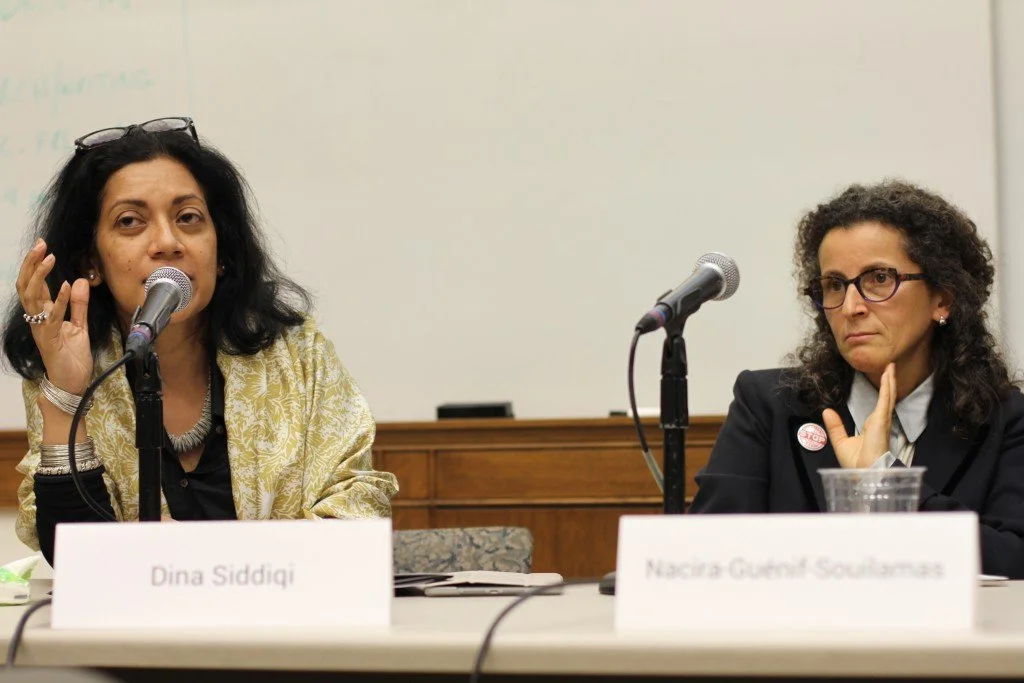
The second in a series of events for the CSSD’s Reframing Gendered Violence project, the panel extended the discussions of an earlier talk in October, thanks to support from the Dean of the Humanities, the Columbia Global Centers, and the Henry Luce Foundation.
Introducing the two speakers, Abu-Lughod complimented their shared ability to bridge the divide between scholarship and activism.
Dina Siddiqi, Professor of Anthropology, BRAC University, presenting on “Child Marriage and the Feminist Imagination,” attested to the struggle feminists in the developing world face as they grapple with forces competing with any commitments to local contexts and concerns.
“How do progressive feminists in a place like Bangladesh—deeply transnational yet geopolitically marginal—negotiate the complexities of neoliberal donor and corporate agendas, developmentalist state imperatives, geopolitical securitization frames, and calls to global feminist unity?” said Siddiqi. “What kind of agency is possible when feminism itself has been governmentalized?” she challenged her listeners.
Nacira Guénif-Souilamas, Professor of Education Sciences, University of Paris 8 Vincennes-Saint-Denis, approached the question of religion and gender violence through the problem of foundational inequality in French and European polities.
“The skin color fiction, the sexual deviance of Arab youths, or the gendering of the ‘other’ religion, are objectifications of normative rules that limit the social possibilities of equal rights,” said Guénif-Souilamas. In such instances, social life is defined as a realm of equality because it is always already racially indexed,” she asserted as she presented on “Restrained Equality: A Sexualized and Gendered Color line.”
The event concluded with a lively Q & A that featured questions on topics ranging from the future of neoliberalism to laïcite and the banning of the veil in French schools to the framing of critical feminism.
Photos from this event are available here.
Video from the November 3rd event is available here and video from the October 13th event here.
Contributed by Liza McIntosh
Aditya Bharadwaj Discusses Cultivated Cures: Ethnographic Encounters with Contentious Stem Cell Regenerations in India
In October, the CSSD working group Precision Medicine: Ethics, Politics and Culture hosted Aditya Bharadwaj, Professor of Anthropology and Sociology of Development at the Graduate Institute, Geneva, who presented his work on “Cultivated Cures: Ethnographic Encounters with Contentious Stem Cell Regenerations in India.”

Bharadwaj’s research generated a provocative discussion on the diaspora of stem-cell research and its ecological detriments in India, leading the discussants to explore caveats of cure, disease and illness from the perspective of communities that reside in the fringes of Indian society.
Bharadwaj questioned his own position as a scholar-researcher who investigates and gives voice to the rural and largely invisible people of India. He also questioned the dogmas of Western models of scientific research and the ethical dilemmas that govern their approaches to the study of human suffering as experienced by marginalized groups.
Bharadwaj opened his talk by posing alternative conceptualizations of illness and health. Health, generally considered to be a normative or neutral state, was redefined as a dormant state without evident disease or illness. Health and disease co-exist within the body and a paradigm shift is required to understand the state of good health as not a mere absence of disease, but rather a dormancy of disease, according to Bharadwaj. In a nutshell, “health exists in the moments when disease sleeps and is cast aside when disease awakens.”
Bharadwaj emphasized that the prevalence of problems like underdevelopment, malnutrition, and disease in many developing countries, including India, are a direct result of pressures created by a corporatist intelligentsia and market-driven socio-ecological changes that degrade living environments. The global hegemony of Queen Victoria’s Britain was central to this process, neglecting the social justice concerns and ecological sanity of indigenous people, he claimed.
The group discussed the need to redefine and decontextualize “justice” while researching the indigenous diaspora. The guidelines of scientific and behavioral research into fringe cultures, including clinical trials, are defined by teaching professionals from elite institutions in developed countries, leading to incorrectly assumed prophylaxes and etiologies of illness, the group agreed.
The group discussed the possibility of creating a middle ground within an eco-politics strategy that might be more inclusive of indigenous cultures and benefit affected communities more directly. Due to India’s lack of evidence-based baseline and needs-assessment indicators, investment projections for stem cell research remain ambiguous.
The group also discussed how health care and social markets function differently from business markets. Bharadwaj explained that efforts to develop and incorporate indigenous methods of “cultivated cures” and treatment should be prioritized and valued, in order to balance the impact of more modern models of care that are standardized in the developed world.
In response, many in the group questioned the science behind this model. Coming from the tradition of Western science, some defended the need for peer-reviewed articles and government oversight. Without this structure, some cautioned, clinics in developing communities may be able to dabble in pseudoscience and peddle “cures” to desperate patients without power or choice.
Contributed by Srishti Sardana & Christopher Cadham
Laura Ciolkowski's Rape Culture Syllabus in Public Books
Laura Ciolkowski, Associate Director of the Center for the Study of Social Difference and Adjunct Associate Professor of English and Comparative Literature at Columbia University, published her Rape Culture Syllabus in the October 15th issue of Public Books.
Rape culture, the trivializing of sexual violence and the tendency to blame victims while exonerating or excusing assailants, also refers to the racial disparities in arrests and sentencing of accused rapists, according to the piece. Published in the wake of the public furor that arose in connection to the sexually predatory and misogynist comments of then-presidential hopeful Donald Trump, the Rape Culture Syllabus has been circulating widely on social media and republished on a range of sites, including Melissa Harris-Perry's Anna Julia Cooper Center and Feminist Wire.

Photograph: Florida supporters of Donald Trump, 2016. By mollyesque / Instagram
"The syllabus was indeed one of our most viewed and shared articles of the past few months. It circulated widely on Facebook and Twitter, and generated lots of appreciative comments," said Liz Maynes-Aminzade, Digital Director at Public Books.
The thirteen-week syllabus covers subjects as far-reaching as the history of gender-based violence in the United States and the politics of rape, to toxic masculinity and racial and state violence. "What would the conversation around sexual assault, police bias, and the legal system look like if investigators, police officers, and judges read deeply into the literature on sexuality, racial justice, violence, and power?" wrote Ciolkowski.
Read the full rape culture syllabus here.