
Precision Medicine: Ethics, Politics and Culture
Project Directors: Rachel Adams, Gil Eyal, Maya Sabatello
Graduate Assistant: Daniel Wojtkiewicz
Precision medicine—an emerging approach for disease treatment and prevention that takes into account individual variability in genes, environment, and lifestyle for each person—raises a myriad of cultural, political, and historical questions that the humanities and social sciences are uniquely positions to address. The PMEPC lecture series represents a broad-based exploration of questions that precision medicine raises in law, ethics, the social sciences, economics, and the humanities.
The Precision Medicine: Ethics, Politics, and Culture Project is co-directed by Rachel Adams, PhD, Professor of English; and Maya Sabatello, LLB, PhD, Assistant Professor of Clinical Bioethics. The PMEPC is co-sponsored by Columbia Precision Medicine & Society and the CSSD.
PMEPC events are free and open to the public. For more information on this project, please visit socialdifference.columbia.edu or email Daniel Wojtkiewicz at dnw2116@columbia.edu
News
The director of the Future of Disability Studies working group spoke about how she has updated her class for the pandemic.
The Director of the Precision Medicine Working Group will be discussing the science fiction film “Gattaca, on March 8th from 2:00 pm to 3:30 pm.
Sonia Mendoza-Grey reviews Dr. Shirley Sun’s discussion on the racialization of precision medicine.
Rachel Adams, co-director of the Precision Medicine working group, has reviewed three memoirs on illness and recovery.
Professor Bloss of UC San Diego gave a talk on how bioethics must adapt to the rise of Precision Medicine.
On January 22, CSSD/PM&S project Precision Medicine: Ethics, Politics, and Culture welcomed Dr. Susan Markens (CUNY-Lehman College) for its first talk of the semester, titled The Genomic Revolution, Genetics Counselors, and Doing Ethics.
On November 20, 2017, Kadija Ferryman discussed her Fairness in Precision Medicine project with the Precision Medicine: Ethics, Politics, and Culture CSSD working group
Rachel Adams, a Faculty Director of the CSSD Precision Medicine project, is taking her interdisciplinary research interests to the next level, and she is recording her progress online.

Graduate Fellows
PhD Student, Sociology, Columbia University
Larry Au is a Ph.D. candidate in sociology at Columbia University. He is broadly interested in science and technology studies, economic sociology, and political sociology. His dissertation examines the rise of precision medicine in China and the United States, focusing on the diffusion of the concept and its associated technologies, as well as the ways in which debates around ethical, legal, and social issues are constructed locally and globally. He is also interested in the recent controversies over human gene editing and the modernization of traditional medicines.
PhD Student, Epidemiology, Mailman School of Public Health, Columbia University
Diana Garofalo is a doctoral student in Epidemiology, in the school of public health. Her background in biochemistry and genetics led her to be interested in using epidemiologic methods to understand underlying biological mechanisms in human disease, especially in rare diseases. She also briefly worked at a clinical genetic testing company that screened potential parents for recessive mutations linked to severe diseases. This experience deepened her interest in exploring the technical, ethical, and scientific challenges of using genomics in medicine, with specific concern about the potential worsening of disparities in health care.
Graduate Student, Systems Biology, Columbia University
Sunny Jones is a graduate student in the Systems Biology department working with Dr. Andrea Califano. Her research involves developing algorithms for analyzing cancer genomics data with the goal of better understanding their biology as well matching patients to highly specific treatments as based on their genetics. She has previous research experience in nutrient metabolism and is currently working in conjunction with a startup to build a platform for providing optimal meals and dietary suggestions to cancer patients and survivors. In her free time she enjoys rock climbing, biking and exploring New York City.
Doctoral Student, Narrative Medicine, Columbia University
Hippocrates said, “Wherever the art of medicine is loved – there is also a love of humanity.” This quote explains her own reflections and values in life. She loves humanity, and she chose to devote her life to science and medicine because she wants to make a difference in patients’ lives, alleviate patients’ suffering, and positively influence the healthcare system of the United States and worldwide. Presently, she is a graduate student in the Program of Narrative Medicine at Columbia University.
PhD Student, Sociomedical Sciences, Mailman School of Public Health, Columbia University
Sonia Mendoza-Grey is a PhD student in the Department of Sociomedical Sciences at Mailman School of Public Health. Mendoza-Grey employs her human biology, sociology, and qualitative research training to her dissertation research that examines precision medicine implications for the Latinx population. Specifically, her work investigates how recruitment and analysis of the Latinx population shapes and informs understandings of Latinidad, and how researchers’ work with Latinx populations illuminates the assembled connections among genetics, ethnicity, and race through contemporary bioscience.
PhD Student, Sociology, Columbia University
Amy Weissenbach is a first-year PhD student in sociology at Columbia University. She is interested in the sociology of knowledge and expertise, cultural sociology, and law and society. She aims to understand dynamics among individuals and institutions shaping notions of social responsibility in tech, and in biotech in particular. She holds an MPhil in History and Philosophy of Science, Technology and Medicine from Cambridge University and a B.A. from Stanford University.
Associate Fellows
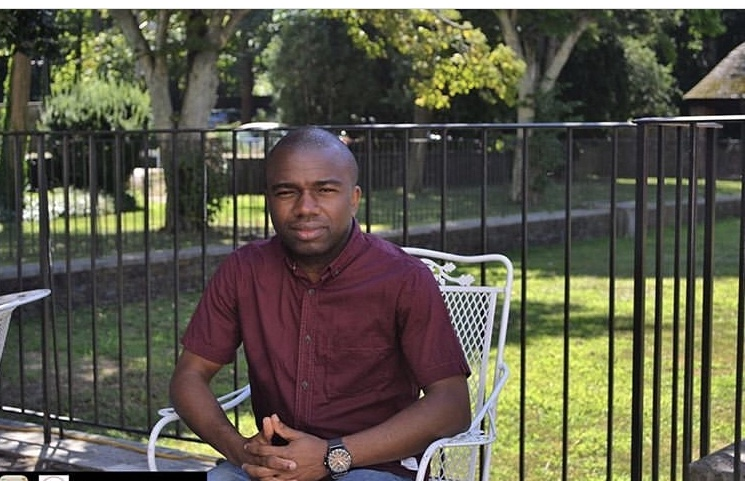
Doctoral Student, Narrative Medicine, Columbia University
Olamide Adejumo is a student of narrative medicine at Columbia University. He is a graduate of medicine and surgery from Obafemi Awolowo College of Health Sciences in Nigeria passionate about narrative care practices in medicine. His interests includes clinical care and research in Narrative Medicine, Personalized Medicine, Medical Humanities and Genetic Technologies in Disability Care.

Doctoral Student, Narrative Medicine, Columbia University
Matthew Argame is currently a graduate student in the Narrative Medicine program at Columbia University. Upon graduation, Matthew will continue on to medical school as an aspiring psychiatrist, advocating for the needs of vulnerable communities. Matthew hopes that his engagement with the Precision Medicine: Ethics, Politics, Culture program will produce interdisciplinary dialogue on improving patient care by addressing societal injustices and by bringing attention the unique needs of queer and disabled communities.

Doctoral Student, Health Promotion, Research and Practice, Columbia University
Olivia Balderes is an MPH Candidate at Mailman in the department of Sociomedical Sciences with a focus on Health Promotion, Research and Practice. She is interested in applying her Intervention Design and Evaluation background to improve community involvement within Precision Medicine programs/studies, maximize efficiency and efficacy of return of genetic results in clinical settings, and explore the determinants of genetic and general health literacy.
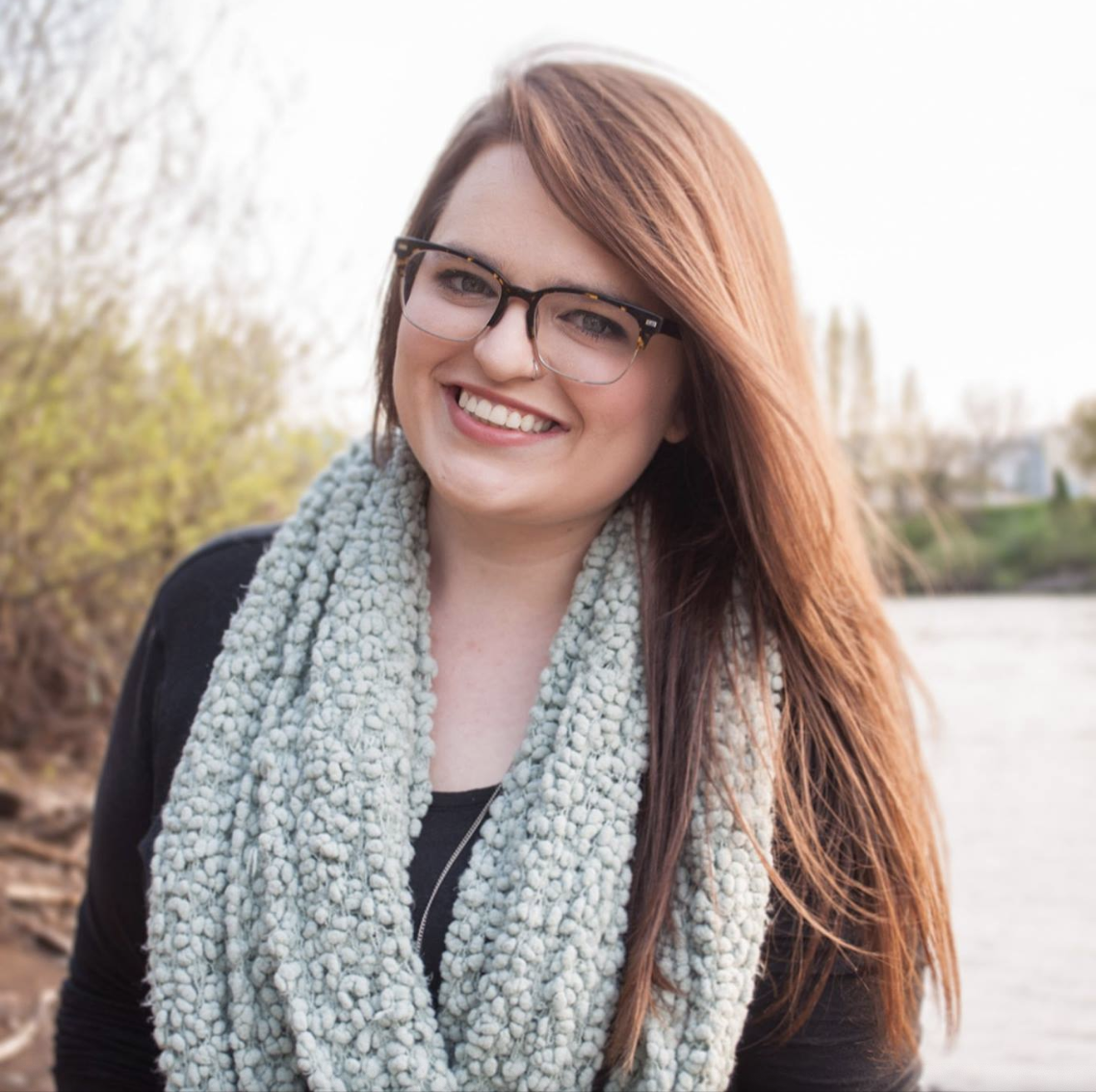
Doctoral Student, Global Health, Columbia University
Kayleigh Barrett is a current MPH candidate in the Department of Sociomedical Sciences, working toward a certificate in Global Health. In the last three years, she worked as a Research Scientist at the University of Washington in the Division of Allergy and Infectious Disease and was involved in a structural genomics pipeline for an early structure-based drug design projects targeting a number of pathogens. Her current interests include research ethics, infectious disease, reproductive health and medical anthropology.
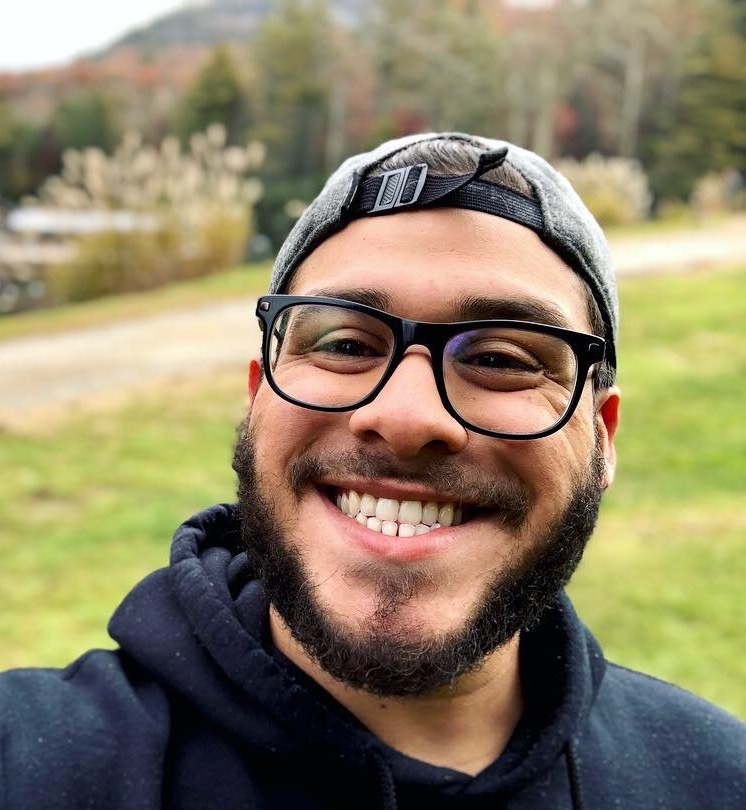
PhD Student, Integrated Program in Cellular, Molecular, and Biomedical Studies, Columbia University
Christopher Cardona is a first year doctoral student in the integrated program in Cellular, Molecular, and Biomedical Studies. He is excited to learn about the multiple aspects of precision medicine and how we can begin incorporating these in scientific research. He is currently working on muscle invasive bladder cancer in mouse models and will be working on Alzheimer's next semester. Both labs use comprehensive and computational tools to identify important regulators of these processes.
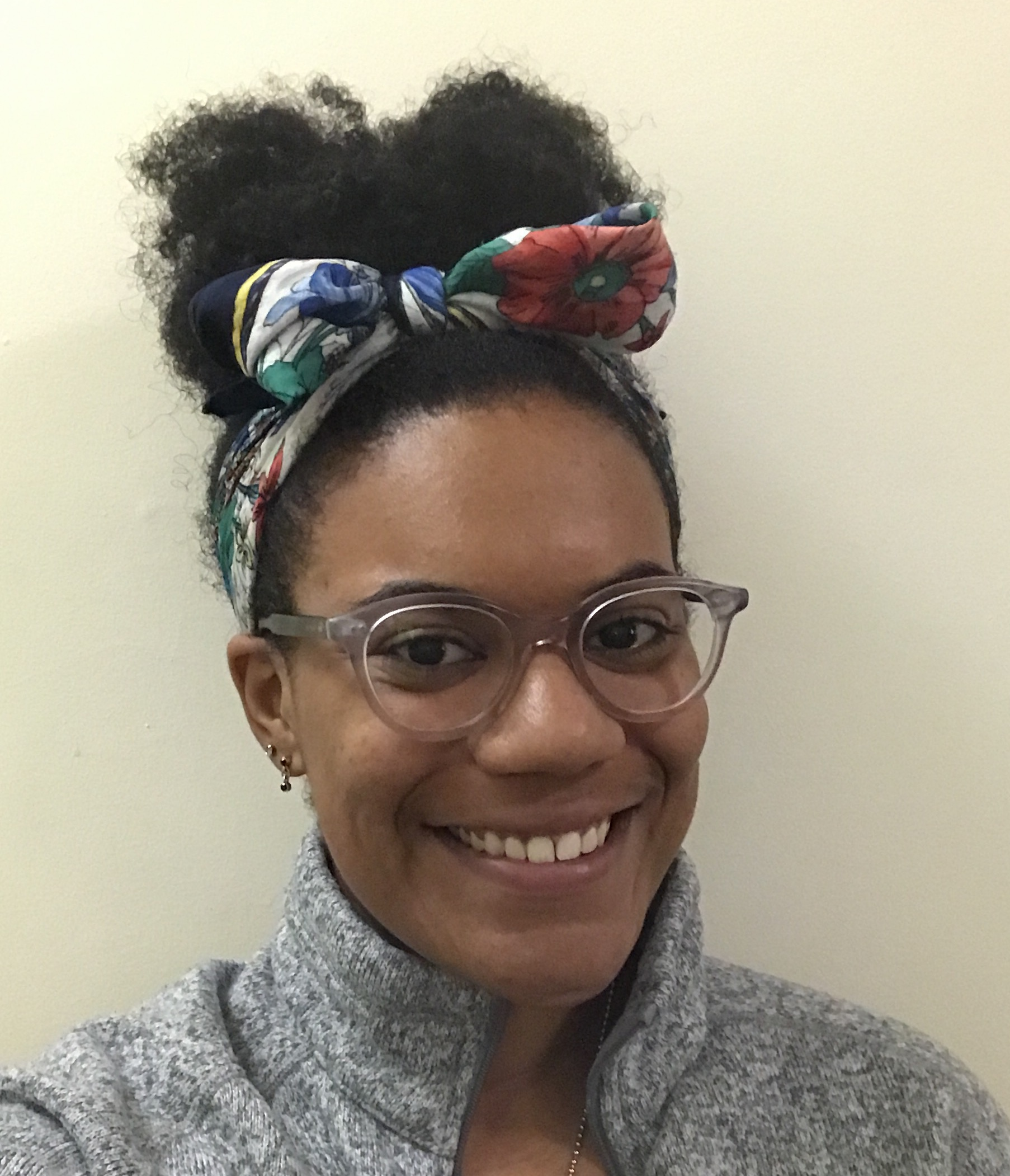
Graduate Student, Narrative Medicine, Columbia University
Sarah Harvin hails from the state of Michigan, where she completed her bachelor's degree in psychology at Hope College. Sarah moved to NYC in the summer of 2018 to pursue a Master of Science in Narrative Medicine. She was attracted to the Narrative Medicine program because she recognized a unique opportunity to combine her interest in having difficult conversations surrounding racial inequalities in health care with her pursuit of a career in medicine.

Graduate Student, Narrative Medicine, Columbia University
Enajite Igho is an Nigerian American from across the river in New Jersey. She graduated from the University of Virginia with a Cognitive Science degree with a Neuroscience concentration and a Bioethics minor. She is currently pursuing a Masters in Narrative Medicine here at Columbia, and capturing storytelling as a form of healing as well as how this “teller and listener” relationship can impact the clinical encounter. She is passionate about creating space for marginalized voices to share their stories.

Graduate Student, Creative Nonfiction & Narrative Medicine, Columbia University
Yoshiko Iwai is a second-year master’s student working towards her MFA in Creative Nonfiction and MS in Narrative Medicine. She is from Kobe, Japan, and graduated from the University of Michigan with a BFA in Dance and BS in honors Neuroscience where she conducted research on Parkinson’s Disease. Currently, she is writing her MFA thesis — an essay collection exploring the vernacular around pain and mortality, drawing on memoir, research, and phenomenology. Yoshiko is also a Chair’s Fellow for the Graduate Writing Program and teaches creative writing at a correctional center in New York. In the future, she hopes to integrate narrative medicine and creative writing into medical education.
Graduate Student, Narrative Medicine, Columbia University
Guneet Kaur is originally from the Bay Area, CA and graduated from Scripps College earlier this year with a degree in Biology and Feminist, Gender, and Sexuality Studies with a concentration in race. She is currently pursuing her Masters in Narrative Medicine here at Columbia University, looking at the intersections of bioethics, social justice, and clinical practice, with an emphasis on the use of patient narrative as a means of healing. She is passionate about the intersections of social justice and medicine in caring for underserved communities- particularly conversations around chronic condition management, mental health, and reproductive health.
Doctoral Student, Narrative Medicine, Columbia University
Julia Knox is a researcher at the Columbia Mailman School of Public Health, and an M.S. Candidate in Narrative Medicine in the Columbia Department of Medical Humanities and Ethics. She is interested in the methods by which data takes narrative form in our society. The focus of her research includes exposure to environmental mixtures, maternal/paternal-child health, and transgenerational epigenetics.
Doctoral Student, Sociomedical Sciences, Mailman School of Public Health, Columbia University
Kathleen Kraus is a second year Master of Public Health student at Columbia Mailman School of Public Health in the Department of Sociomedical Sciences. Her academic focus includes chronic disease prevention and health policy. Prior to attending Mailman, Kathleen worked as an Associate at Voz Advisors (formerly MK&A), a patient advocacy relations consultancy to the pharmaceutical industry.
Doctoral Student, Narrative Medicine, Columbia University
Delilah Leibowitz is currently a graduate student studying Narrative Medicine at Columbia University. She graduated magna cum laude from the University of Southern California in 2019. She holds a B.A. in Health and the Human Sciences, with an emphasis in Internal Health. Delilah participated in several research labs throughout her undergraduate studies, ranging from studying fluoresced vasculature pathways of Zebrafish embryos to her work in understanding the relationship between blood proteins and cognitive function.
PhD Student, Biological Sciences, Columbia University
Aaron Limoges is a PhD student in the Department of Biological Sciences. His doctoral research is performed at the New York State Psychiatric Institute, where he studies cell- and circuit-level mechanisms through which stress affects cognition and mood. As a neuroscientist, Aaron wants to find new ways to merge biological and behavioral data.

Doctoral Student, Narrative Medicine, Columbia University
Penelope Lusk is a graduate student in the Narrative Medicine program at Columbia University. She holds a BA in English Literature from Bowdoin College. Born and raised in Brooklyn, New York, she currently she works as a Project Associate for the Program for Medical Education Innovations and Research at New York University. In the future, she hopes to continue working at the crossroads of medical education and the health humanities.
Doctoral Student, Genetic Counseling, Columbia University
Bree Martin is from Los Angeles, CA, and received a bachelor’s degree in psychobiology with a minor in philosophy from UCLA. She is currently pursuing a master’s degree at Columbia University in Genetic Counseling. Bree has past research experience in genetic factors in schizophrenia, and was an active member of UCLA’s Bioethics Society. She hopes to be an advocate for equitable healthcare, specifically within genetic medicine.
Graduate Student, Narrative Medicine, Columbia University
Sarah McLaughlin is a first-year graduate student in the Narrative Medicine Program at Columbia University. She is interested in prioritizing stories of marginalization in the clinical encounter, employing storytelling to better care for individuals in underserved communities, and understanding patients’ stories in the context of identity, community and society.
PhD Student, Columbia University School of Nursing
Shazia Mitha, MSN, AG-ACNP-BC, RN is a Robert Wood Johnson Future of Nursing Scholar, who is currently a second year PhD student in Nursing. She is an exceptional student, leader, clinician and scholar interested in engaging in ethical, cultural and political conversations about precision medicine to improve the next generation of health care delivery in the world. She believes that as technology and science advance towards precision in health, clinicians must engage in these conversations to ensure the ethical, cultural, and social domains of precision medicine.
Doctoral Student, Narrative Medicine, Columbia University
Katie Neimeyer is a graduate student in the Narrative Medicine program at Columbia University, where she also works as a research coordinator in the Taub Institute and Sergievsky Center on several neurogenetic studies. As an intern in the Summer Internship for Indigenous Peoples in Genomics Canada (SING Canada) 2019 program at the University of Alberta, she participated in a dialogue about Indigenous bioethics and approaches to genomic sciences. She plans on pursuing a career in genetic counseling after she completes her M.S. in Narrative Medicine.

Doctoral Student, Public Health, Columbia University
Kenia has a clinical background and is an MHA '22 graduate of the Mailman School of Public Health, Columbia University.
Doctoral Student, Precision Medicine, State University of Bangladesh
Sikder Nahidul Islam Rabbi completed his Bachelor and Master’s in clinical pharmacy and pharmacogenetics from State University of Bangladesh. In the arena of research, he has worked with clinical pharmacokinetics, drug protein binding study, pharmacogenetics, SNP genotyping, HLA research and cancer genetics, better understanding about drug activation and pharmacodynamics variation based on patient’s genetics. His research interest includes, epigenetics, proto-oncogene mutation, cancer genetics and neuroscience.

Graduate Student, Narrative Medicine, Columbia University
Leah Rosen was raised in Denver, CO and graduated from Duke University in Durham, NC. At Duke, she created her own interdisciplinary major titled "Illness and Identity" and completed that in conjunction with the standard pre-med curriculum. She would describe the "Illness and Identity" curriculum as a medical humanities approach to patient-centered care--pulling from disciplines including psychology, neuroscience, philosophy, religious studies, and biology. She is excited to pursue a degree in Narrative Medicine at Columbia and then hopefully continue onto medical school.
Graduate Student, Narrative Medicine, Columbia University
Oluwatomisin Sontan is a first-year student in the Narrative Medicine Program at Columbia University. She graduated with a bachelor's degree from Yale in Literature & Comparative Cultures and concentrated her studies in bioethics and medical humanities. She hopes to use storytelling to bridge the gap between legal, medical, and philosophical understandings to promote health justice, health equity, and ethics in the biomedical space.
Graduate Student, Narrative Medicine, Columbia University
Harini Sridhar is a graduate student of Narrative Medicine at Columbia University. She previously earned her Bachelor's in Biology, focused in Genomics, at Duke University. Harini is classically trained in Bharathanatyam, an age-old dance of India. Through movement, she has shared stories on stage exploring themes of community, environmental health, gender identity, and disability. The parallels she has drawn between the art of dance and the art of medicine has enlightened and reinforced her academic interests in the intersection of dance, mental health, and women's health.

Doctoral Student, Genomic Medicine, Columbia University
Solomon Torres currently works at the Columbia University’s Institute for Genomic Medicine as the Operations Manager for the All of Us Research Program. In the present-day where big-data and genomics are shaping the future of medical care and public health, he is interested in gaining the skills in epidemiological research methods and biostatistical analysis to contribute to the advancement of biomedical and public health research. Through the PMEPC project, he hopes to gain additional insight as to the research that will make use of the precision medicine approach to address health disparities, inequalities, and emerging diseases nationally and globally with an emphasis in Latin America.

Doctoral Student, Neuroscience, Biobehavioral Sciences, Columbia University
Glenn Wolther is a Master of Science candidate in Neuroscience within the Biobehavioral Sciences Department. His diverse research interests include the interrelated genetic, transcriptional, and proteomic changes involved with short- and long-term synaptic potentiation; ways of better integrating research in neurobiology at the molecular, cellular and systems level with cognitive and affective neuroscience and neuropsychology; and the relationship of neuroscience to the law.
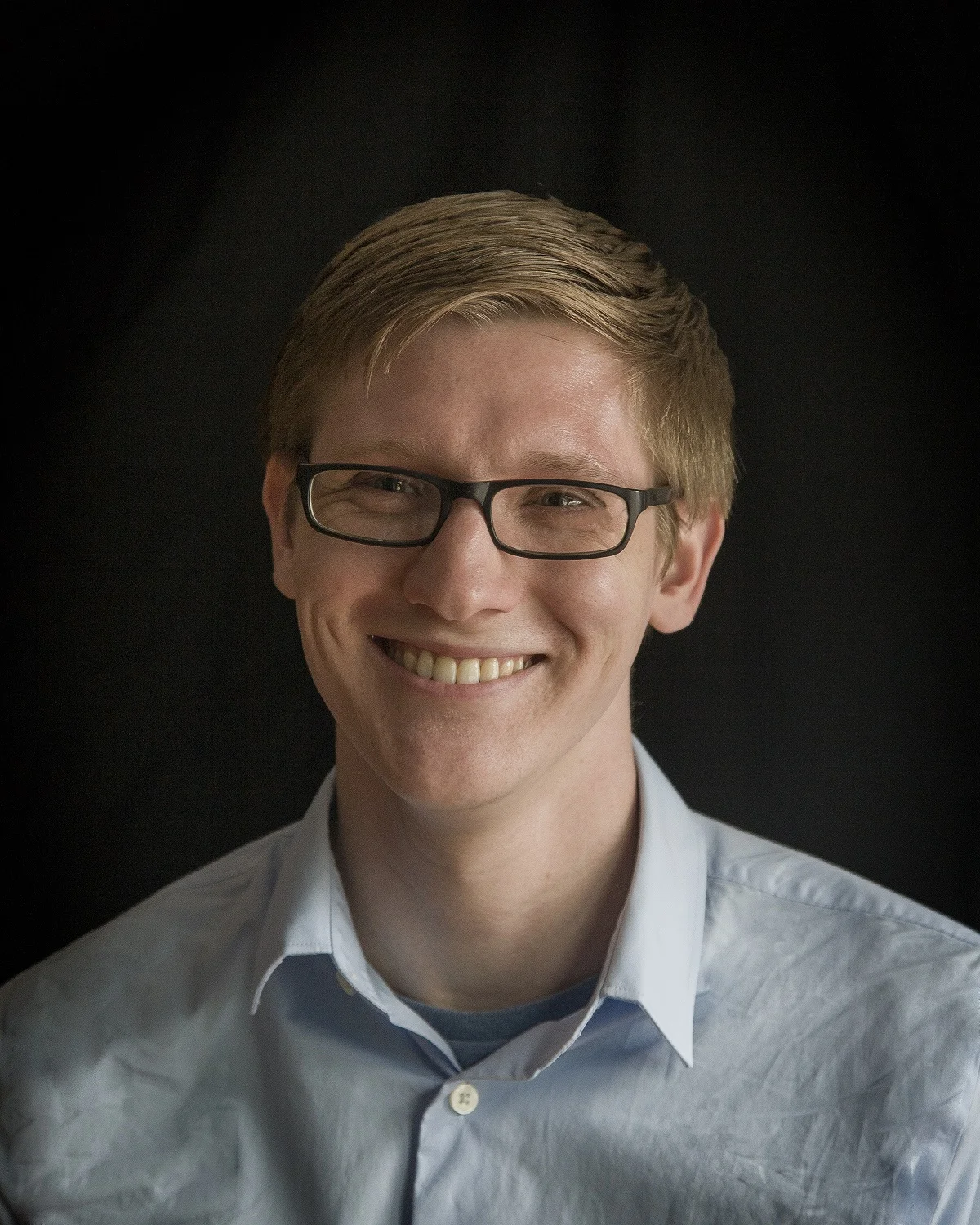
Doctoral Student, Bioethics, Columbia University
Jon Zaikowski is the co-founder of CapCell Biologics, a NASA-spinout biotechnology startup developing implants to treat rare diseases. He is a graduate student in Bioethics at Columbia University, having previously graduated cum laude from Wake Forest University with a BA in History and Philosophy.
Past Events


The Precision Medicine: Ethics, Politics, and Culture Project welcomes Dr. Barbara Prainsack (University of Vienna) to give a talk on “The Value(s) of Precision Medicine: Societal, Political, and Ethical Aspects.”

The Precision Medicine: Ethics, Politics, and Culture Project welcomes Dr. Dan Navon (University of California, San Diego) to give a talk on “Mobilizing Mutations: Remaking Illness in Genomic Medicine.”

The Precision Medicine: Ethics, Politics, and Culture Project welcomes Dr. Shirley Sun (Nanyang Technological University) to give a talk on “Should You Be Worried about Racialization of Precision Medicine? Insights from Asia and North America.”
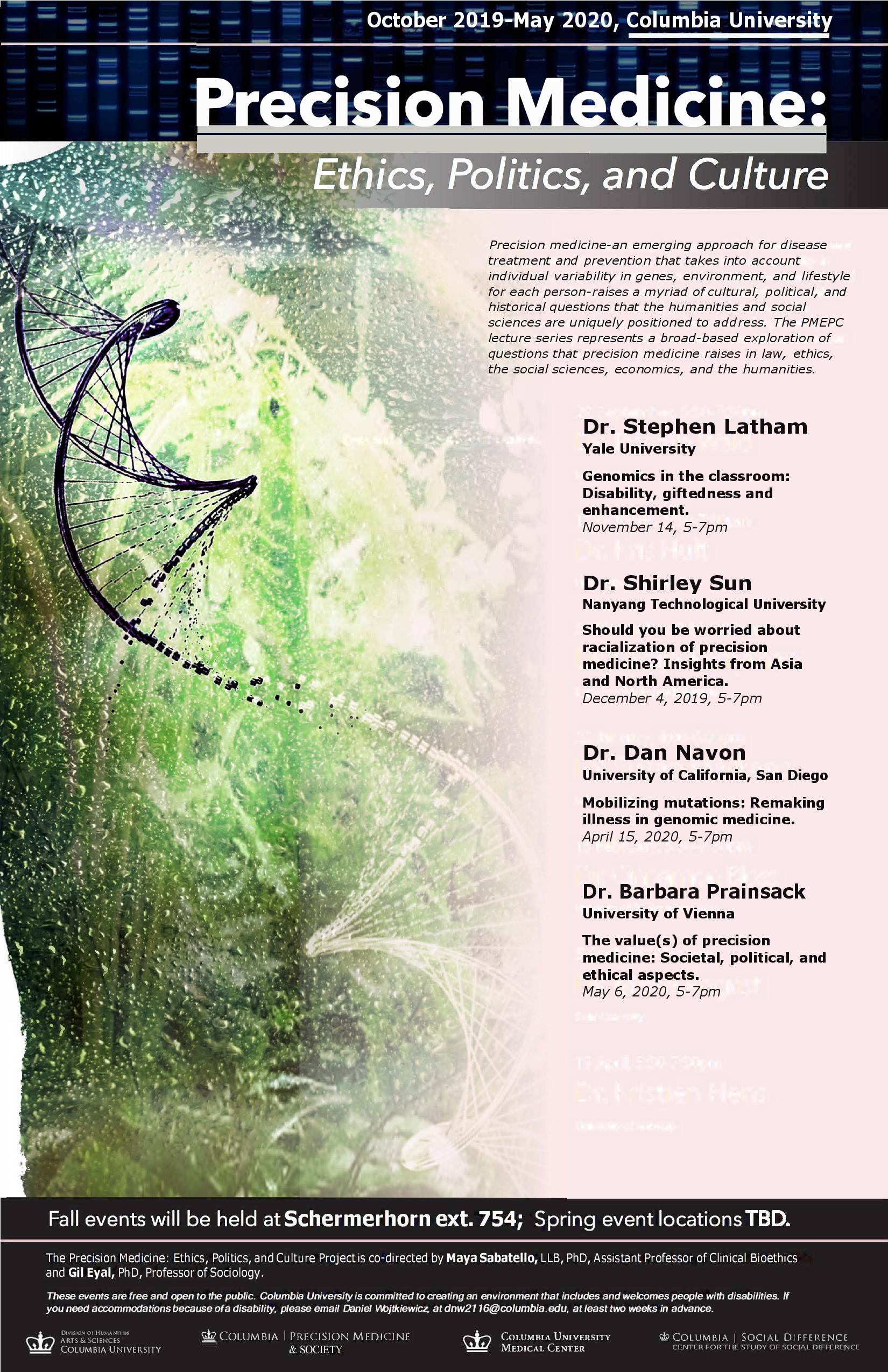
The Precision Medicine: Ethics, Politics, and Culture Project welcomes Dr. Stephen Latham (Yale University) to give a talk on “Genomics in the Classroom: Disability, Giftedness and Enhancement.”


CSSD working group Precision Medicine: Ethics, Politics and Culture presents "Ask but Don’t Tell: The Stubborn Alienation of Research Participants in the Twenty-first Century," a talk by Dr. Misha Angrist (Duke University).

CSSD working group Precision Medicine: Ethics, Politics and Culture presents Consumers, Citizens, and Crowds in the Age of Precision Medicine: a talk by Cinnamon Bloss, Ph.D (University of California, San Diego).

CSSD working group Precision Medicine: Ethics, Politics and Culture presents The Genomic Revolution, Genetic Counselors, and "Doing Ethics": a talk by Dr. Susan Markens (CUNY-Lehman College).

CSSD working group Precision Medicine: Ethics, Politics and Culture presents Fairness in Precision Medicine: a talk by Kadija Ferryman from the Data & Society Research Institute.

CSSD working group Precision Medicine: Ethics, Politics and Culture presents The Economics of Precision Medicine: Medicine and Disparities in Health: a talk by Kristopher Hult (University of Chicago).

CSSD working group Precision Medicine: Ethics, Politics and Culture presents Cells, Genes, and Stories: HeLa and the Patenting of Life: a talk by Priscilla Ward (Duke University).

Senior Research Scholar, Center for Biomedical Ethics, Stanford University
"Will Precision Medicine Be for 'All of Us'? The 'Good Citizen' in an Age of Disparity"
Precision medicine research relies on the massive collection of biospecimens, electronic health records, and other sources of behavioral and environmental data.

Jackie Leach Scully, Professor of Social Ethics and Bioethics, and Executive Director, Policy, Ethics and Life Sciences Research Centre, Newcastle University, UK will ask how are the enormous recent advances in genomic knowledge and capabilities changing the meaning of the relationship between material embodiment and our sense of self? What does that mean for our understanding of embodiment that is disabled?

Jacqueline J L Chin, Associate Professor, Centre for Biomedical Ethics, Yong Loo Lin School of Medicine, National University of Singapore presents a discussion on February 9, 2017 about "Precision Medicine, Privacy, and Family Relations."
The talk, sponsored by CSSD's project on Precision Medicine: Ethics, P
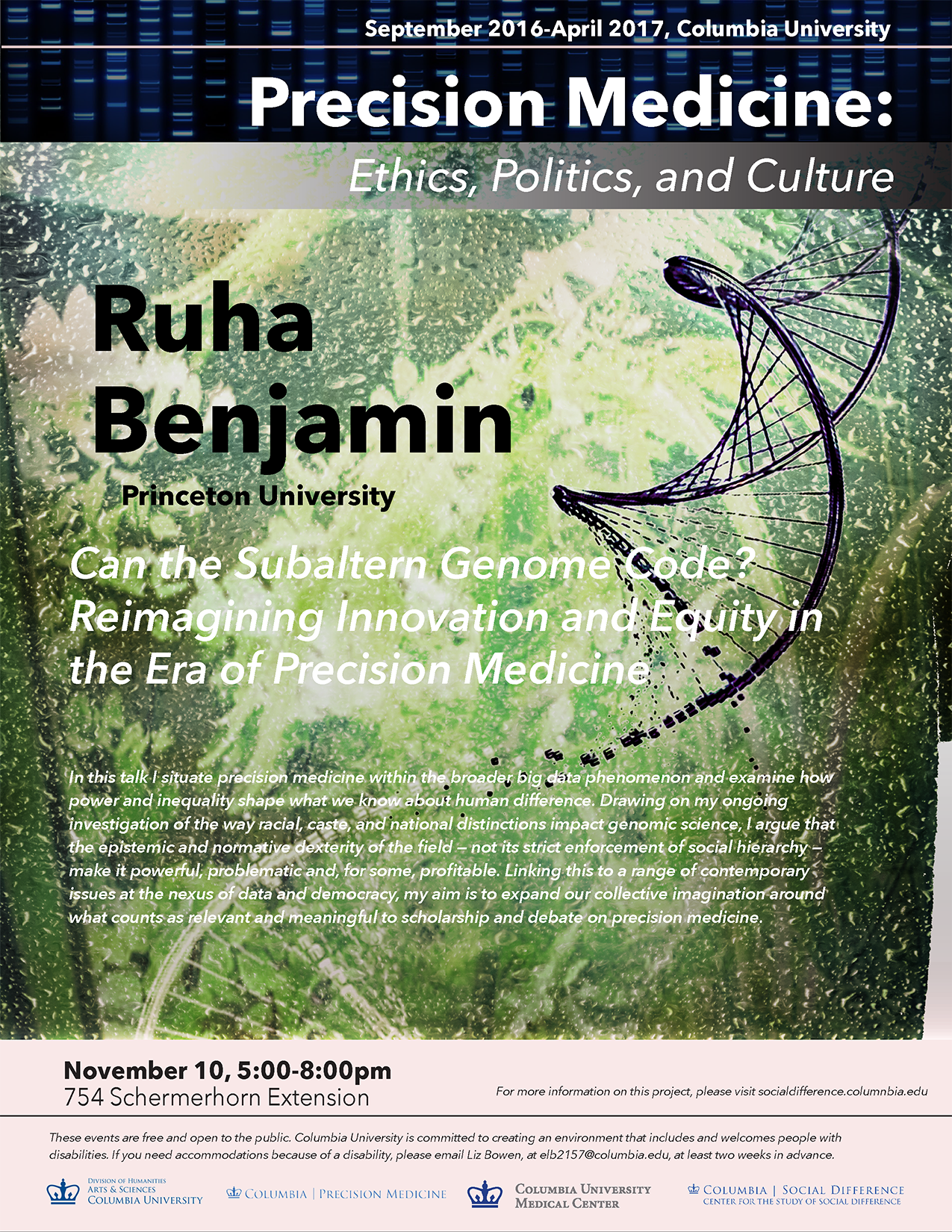
Ruha Benjamin, Assistant Professor of Sociology and African American Studies, Princeton University presents a discussion on November 10th called "Can the Subaltern Genome Code?

CSSD's Precision Medicine working group presents Aditya Bharadwaj, Research Professor, The Graduate Institute, Geneva, on "Cultivated Cures: Ethnographic Encounters with Contentious Stem Cell Regenerations in India" on October 13th, 2016 from 5-7 p.m. at 754 Schermerhorn Extension.
The lecture seeks to conceptualize how we might understand a scene of chronic and progressively pathological affliction as a site for witnessing the anatomy of a cultured and cultivated cure from within the emergent field of regenerative medicine.
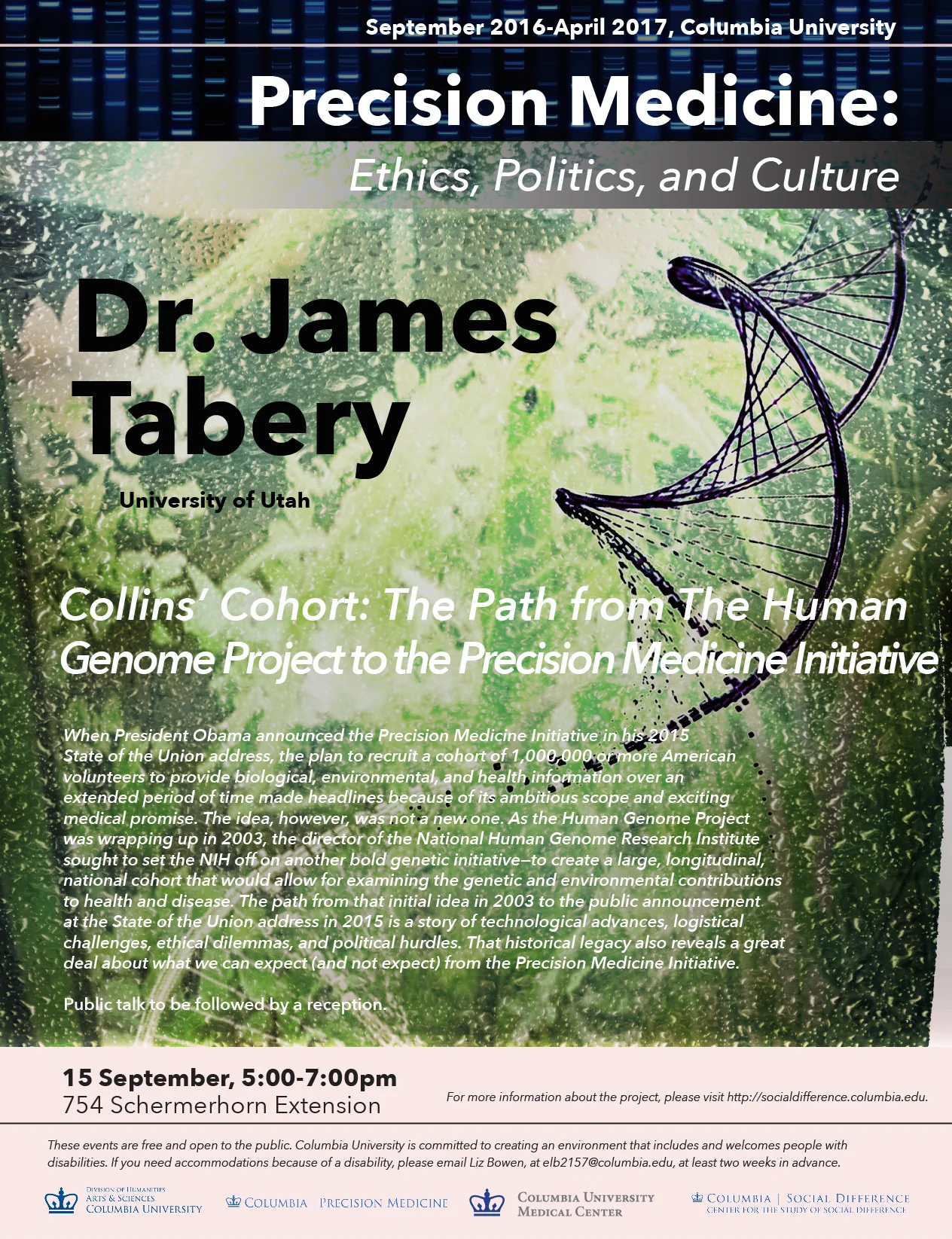
CSSD’s Precision Medicine working group presents James Tabery, Adjunct Associate Professor, Pediatriacs, Internal Medicine, and Philosophy, University of Utah, on "Collins' Cohort: The Path from The Human Genome Project to the Precision Medicine Initiative" on September 15th, 2016 from 5-7 p.m.