
Support WOMEN CREATING CHANGE: Columbia Giving Day is October 18, 2017
Women Creating Change sits within the Center for the Study of Social Difference (CSSD). Women Creating Change engages distinguished feminist scholars from diverse fields throughout Columbia University who focus on contemporary global problems affecting women and on the roles women play in addressing those problems.
Learn more about supporting Women Creating Change this October 18, 2017 on the Giving Day website: https://givingday.columbia.edu/pages/women-creating-change
CLICK HERE TO MAKE A GIFT TODAY!
Frances Negrón-Muntaner, Director of CSSD "Unpayable Debt" Project, speaks out on the racism and injustice underlying the crisis in Puerto Rico and the failure of the administration's response
Professor Frances Negrón-Muntaner, faculty director of CSSD project Unpayable Debt, published several articles on the humanitarian crises facing Puerto Rico in the wake of Hurricane Maria.
Professor Frances Negrón-Muntaner, faculty director of CSSD project Unpayable Debt, and former director of CSSD affiliate Center for the Study of Ethnicity and Race, published several articles on the humanitarian crises facing Puerto Rico in the wake of Hurricane Maria, arguing that these crises are compounded by colonialist policies.
"Puerto Ricans can do without a reluctant visit by a president that they can't vote for and gratuitously attacks them. Instead, what the island needs is immediate life-saving resources, a comprehensive reconstruction package, equity in all federal programs, debt relief, and, at last, the abolition of the entire colonial apparatus." - Frances Negrón-Muntaner
Read Negrón-Muntaner's article "Puerto Rico was Undergoing a Humanitarian Crisis Long Before Hurricane Maria" in the Pacific Standard here.
Read her article "The Crisis in Puerto Rico is a Racial Issue - Here's Why" in The Root here.
Read her article "The Last Emperor," published by Univision, here.

Former CSSD Director Rachel Adams working toward Masters in Genetic Counseling
Rachel Adams, a Faculty Director of the CSSD Precision Medicine project, is taking her interdisciplinary research interests to the next level, and she is recording her progress online.
Former CSSD Director Rachel Adams working toward Masters in Genetic Counseling

Former Director of the Center for the Study of Social Difference (CSSD) Rachel Adams, who is currently a Faculty Director of the CSSD Precision Medicine project (co-directed by Maya Sabatello, LLB, PhD, Columbia University College of Physicians and Surgeons), is taking her interdisciplinary research interests to the next level:
"I'm starting an experiment of unknown duration and outcome. I'm a mid-career American literature professor who has decided to learn science. More specifically, I'm taking the prerequisites for a Masters' program in genetic counseling, which I hope to complete at some undetermined time in the future." - Rachel Adams, Director of CSSD's Precision Medicine project
Adams will be documenting her experience working toward a new Masters degree in genetic counseling - you can follow her progress on Medium here.
A Human Origin Story in the Age of Biotech, Race, and Science: A Talk with Priscilla Wald

Priscilla Wald, Professor of English and Women’s Studies at Duke University, presented her talk “Cells, Genes and Stories: HeLa and the Patenting of Life” as part of the CSSD project Precision Medicine: Ethics, Politics and Culture, followed by a discussion with the Precision Medicine working group in September.
A Particular Narrative of Human Origins
The discussion challenged the working group to consider the following: What does it mean to be human in the age of biotechnology? What defines being human? Is there a delineation, by which we are human on one side and non-human on the other?
Dr. Wald pushes these fundamentally humanistic questions to the forefront, and asks us to question why they matter. Why is our human-ness important to distinguish? In a thought-provoking account of the ethically-charged events surrounding the history of genetic engineering, she suggests a compelling human need to create a narrative about our origins – a narrative about the origin of humanity.
Among anthropologic creation myths and religious creation stories, scientific evolution is itself a particular narrative and attempt to understand ourselves and our place in this world. Modern genetics enables us to reach our arm further into our origin and kinship stories than before. To be part of some broader meaning is a potent need, and the methods we use to understand who we are as a species need careful consideration.
Social Fears and Biotechnology
These human questions are echoed in our concerns about new genetic technologies – we carry our social fears and taboos like a sack, passing it from new biotechnology to biotechnology. The exact set of questions which probe technology’s implications for our “humanity,” “being human,” and “sacred life” follow us. What is once unthinkably horrific at its advent – organ transplantation, IVF reproduction, and now genetic tinkering and artificial wombs – becomes medicalized and mundane with implementation. Without particularly negative technological repercussions, we forget and move the sack of concerns forward onto the next potential biotech invention.
Questions of patenting and intellectual ownership of living molecules have risen to prominence in the legal sphere during the last few decades, alongside the rise of biotechnology’s presence in science and our lives. Diamond v Chakrabarty (the U.S. Supreme Court ruling that the living nature of a genetically-modified organism is no bar to patentable subject matter) and Moore v Regents (a U.S. Supreme Court ruling that denied a property ownership right to one’s cells) both herald the shape of legal questions to come in this new age of biotech commercialization.
Race, Genetics, and Racism
If there is one pressing certainty that arose from the discourse, it is that we cannot venture further into this future of new genetic capabilities without understanding the deeply social implications of its effects. Race is a social category, not a biological one – yet genetics plays centrally into many racist narratives. Racism as much as race affects health outcomes. Humans are 99.9% identical, but it is the 0.1% that is most often explored, plumbed for its depths, and commercialized. 23&Me and similar genetic analysis organizations capitalize on this interest, rising to meet demand for an ethnographic narrative of our origins, but falling far short of providing real accuracy or insight for what individuals seek to discover about themselves.
The truth that may be most difficult to remember in the coming years of the Genetic Age is that we are not a sole product of our genetics. We are an amalgamation of our genetics, environment, society, and the complex interactions and reactions of those dimensions in epigenetics. Dr. Wald convincingly pushes us to return to questions about which particular narrative is being advanced about human origins, ‘us versus them’ kinship groups, and the motivations that underlie the narrative and why.
Science, Media, and the Markets
Social and institutional power structures determine who decides what is done with the data, and what stories are told about the data. Modern genetics is a form of biopolitics and power. When technology is controlled by capitalism, and when it is for commercial use or entertainment, who will pay for the technology becomes a defining question.
Above all, this discussion surfaced a highly persuasive case for cross-collaborations of the humanities and science, most especially in the communication of genetics research to the public – a conclusion that affirms this working group’s essential purpose and need. Linguistics, English, Philosophy, and their sister-humanities disciplines provide the insight and expertise on the medium by which all information is mediated and communicated: language. It is a medium that can be both uplifting and beautified, or subverted and yoked for alternate purposes. In communicating science to the media and public, we share the burden of responsibility for ensuring an accurate education.
Contributed by Jade Tan
PUBLISHED: "A Room of Their Own" by Susan Meiselas.
A Room of Their Own by Susan Meiselas, a member of the Reframing Gendered Violence working group, has been published by Multistory and is available at the Magnum Photos Store.

The book of photos chronicles the experience of residents in a women’s refuge in Black Country, a multi-ethnic, post-industrial region in the West Midlands, UK. After Meiselas was invited to photograph the residents she developed a collaborative project with the women who were willing to share their stories.
CSSD Director Marianne Hirsch writes about her experience as a "stateless" child
Marianne Hirsch, Director of the Center for the Study of Social Difference (CSSD), wrote about her experience as a "stateless" child for the Los Angeles Review of Books.
Marianne Hirsch, Director of the Center for the Study of Social Difference (CSSD), wrote about her experience as a "stateless" child and the importance of protecting the rights of those who have received legal status through DACA and those who qualify to apply.
"At 11, I left communist Romania with my parents. Upon our emigration, our citizenship was revoked; the state I.D. card replaced by a little booklet with our pictures, a travel permit. On the paper, our nationality was marked as 'stateless.'" - Marianne Hirsch
Read Hirsch's article in the Los Angeles Review of Books here.
Lila Abu-Lughod joins amicus brief against the Executive Order on the "Muslim Ban"
CSSD project director Lila Abu-Lughod joined several scholars in an amicus brief filed with the Supreme Court in the case by Muslim Advocates against the Executive Order on the "Muslim Ban."
Lila Abu-Lughod, a director of the CSSD projects Reframing Gendered Violence and Religion and the Global Framing of Gender Violence, joined several scholars in an amicus brief filed with the Supreme Court in the case by Muslim Advocates against the Executive Order on the "Muslim Ban."
Her research in Do Muslim Women Need Saving? supported the argument that invoking "honor killings" in the Executive Order indicates animus toward one religious group.
Gayatri Chakravorty Spivak, CSSD Project Director, interviewed about Rohingya refugee disaster
Director of the CSSD project The Rural-Urban Interface, Gayatri Chakravorty Spivak was interviewed about the Rohengy refugee disaster for TBS eFM's "This Morning" English radio program in Seoul, Korea.
Gayatri Chakravorty Spivak, CSSD Project Director, interviewed about Rohengy refugee disaster
Gayatri Chakravorty Spivak, director of the CSSD Rural-Urban Interface project, was interviewed about the Rohingya refugee disaster for TBS eFM's "This Morning" English radio program in Seoul, Korea.
Spivak's interview is available for online listening here.
Frances Negrón-Muntaner Profiled on Univision
Frances Negrón-Muntaner, director of CSSD's working group on Unpayable Debt and award-winning filmmaker, writer, curator, scholar and professor of English and Comparative Literature at Columbia University, was profiled on Univision.
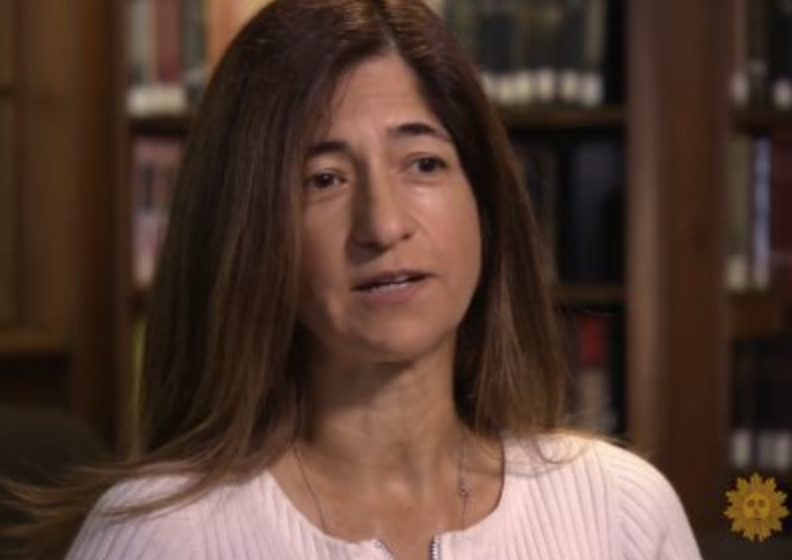
Professor Negrón-Muntaner's books and publications include: Boricua Pop: Puerto Ricans and the Latinization of American Culture (CHOICE Award, 2004), The Latino Media Gap (2014), and Sovereign Acts (forthcoming). Her most recent films include "Small City, Big Change" (2013), "War for Guam" (2015) and "Life Outside" (2016).
Watch the Univision profile here.
Reframing Gendered Violence Project Featured in EuropeNow Journal
CSSD's project on Reframing Gendered Violence was featured in the July issue of EuropeNow, which was dedicated to "The Gender of Power."
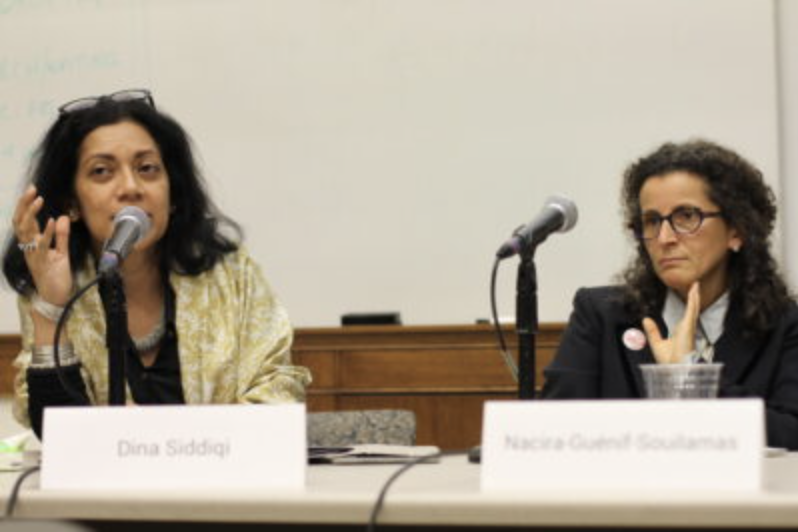
EuropeNow, an art and research journal published by Columbia's Council for European Studies, showcased the project's four public events and workshops this past academic year, which focused on the issues surrounding the discussion of violence against women and gender-based violence.
Read the full article here.
Alice Kessler-Harris Launched Second Half of MOOC
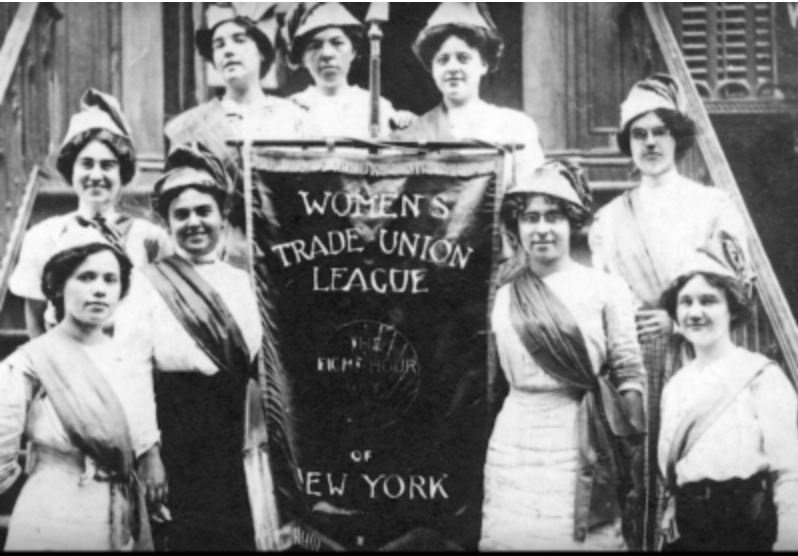
The second part of a MOOC created by Alice Kessler-Harris, past director of CSSD's working group on Social Justice After the Welfare State and Professor of American History Emerita at Columbia University, was recently launched by Columbia and the Center for Women’s History at the New-York Historical Society. "Women Have Always Worked: The U.S. Experience 1700 – 1920" started this past fall and is available free to the public. View the MOOC here.
Susan Meiselas' "A Room of Their Own" featured in The Guardian
Susan Meiselas, photographer and member of CSSD's Women Mobilizing Memory and Reframing Gendered Violence working groups, was recently featured in an article in The Guardian about A Room of Their Own, her new book of photos documenting residents of women's refuges in Black Country, England.
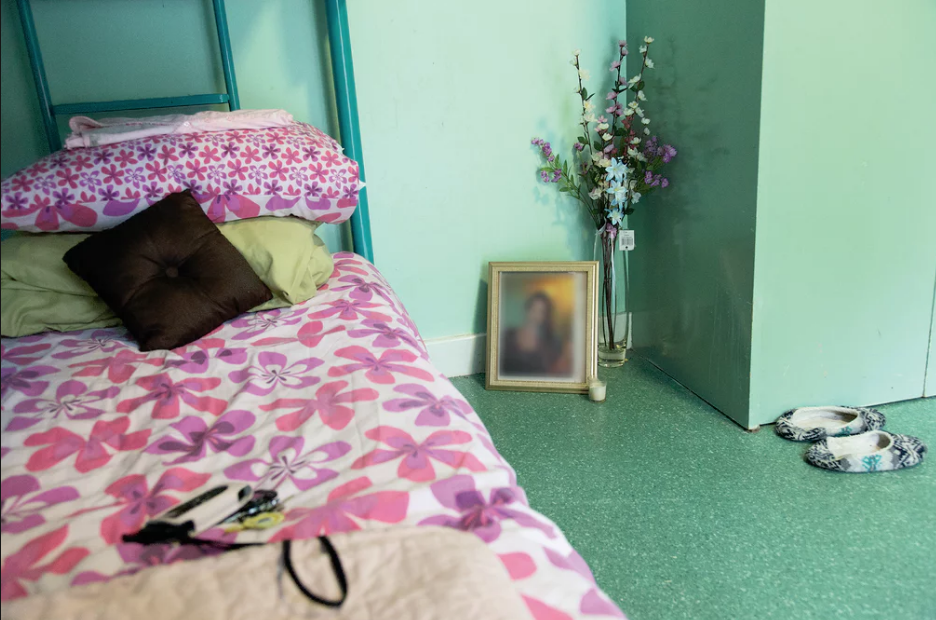
Meiselas says that she hopes her haunting, quiet pictures have a cumulative emotional power and she says they make a political point, which is that the work of a refuge is never done: “The deep, sad reality is that the need isn’t ever going away."
Read the article and see images from A Room of Their Own here.
Narratives of Debt Conference Surveys Puerto Rican Debt and Beyond
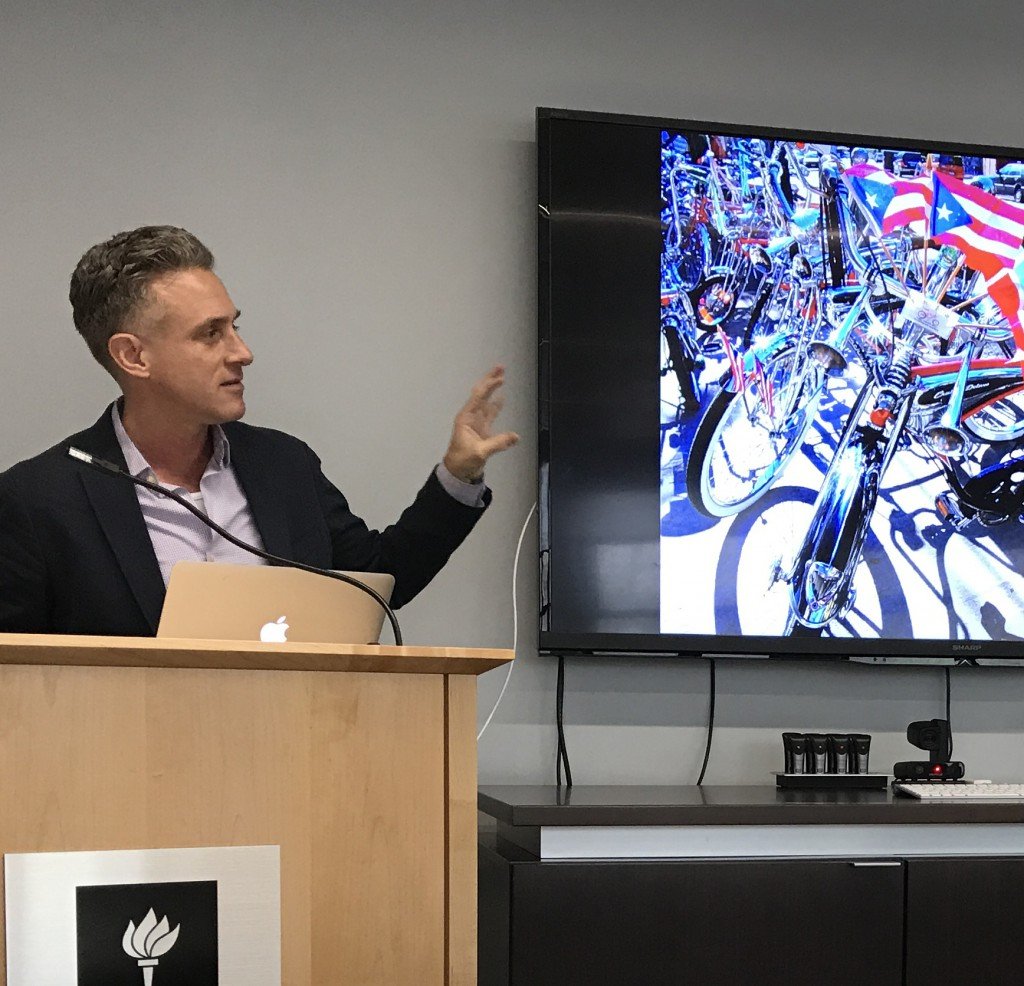
On April 21st 2017, CSSD's Unpayable Debt working group and the Oikos working group at New York University’s Institute for Public Knowledge hosted the “Narratives of Debt” conference. Organized by project co-directors Sarah Muir and Frances Negrón-Muntaner, the day-long event focused on the case of Puerto Rico’s debt crisis and explored debt’s relation to intimacy, kinship, sovereignty, and history in other contexts.
The morning session featured scholar and artist panelists that focused on Puerto Rico’s debt crisis from multiple perspectives and media. In her presentation on “Puerto Rico’s American Dream,” Associate Professor of Latino and Caribbean Studies and Anthropology at Rutgers University Yarimar Bonilla discussed how the statehood movement has transformed in light of Puerto Rico’s debt and economic crises. Bonilla drew on her ethnographic work to detail the complexities of statehood claims in terms of race, citizenship, and sovereignty., arguing that the notion of statehood as the “pragmatic” status option relates to a broader relinquishment of the idea of postcolonial sovereignty.
Journalist and documentary photographer Huascar Robles presented a captivating series of photographs that are part of his project “Los Silencios de Santurce.” The photographs document the local and palpable effects of the debt crisis and a controversial “urban revitalization” project (Law 212) that began in Santurce in 2002. The photographs reflect a rapidly changing urban environment and residents’ daily lives amid increasingly unequal urban spaces.
Sarah Molinari, a doctoral student in Anthropology at the CUNY Graduate Center, discussed three circulating narratives of debt and Puerto Rico’s debt crisis: the scapegoating narrative of Puerto Rico’s fiscal irresponsibility; the narrative of debt incredulity; and the narrative of debt protest. Molinari argued that Puerto Rico’s debt is a key site of struggle and open to multiple interpretations with consequences for how debt politics unfold.
Drawing from the recent BRIC exhibit “Ride or Die,” independent artist Miguel Luciano presented photographs of the exhibit’s vintage Schwinn bicycles, which are meant to invoke questions about the colonial relationship between Puerto Rico and the U.S. at the centennial mark of U.S. citizenship for Puerto Ricans. Luciano displayed different bikes, including the notable “Se Acabaron las Promesas” bike with the black Puerto Rican flag in the backdrop. This bike reflects a key question: how might PROMESA have provided a rupture with a long-held imagined stability of the ELA (Estado Libre Asociado)?
The rich discussion following the morning session centered around the variety of resistance projects in Puerto Rico and the ambiguous new vocabularies that activists are conjuring, including among proponents of Puerto Rico’s citizen debt audit and art activism. Building on the intensive focus on the Puerto Rican debt crisis in the morning session, the afternoon panel titled “Debt and Intimacy” brought together an interdisciplinary group of scholars exploring narrations of debt across a range of time periods and cases.
In his presentation titled “Commercial Affiliations” Associate Professor of Social and Cultural Analysis at NYU Michael Ralph made an intervention into current debates over race and the carceral state through a historical reflection on debt as an instrument for incarceration. In his talk, Ralph presented a fascinating history of how banking crisis in the erstwhile debtors’ haven of antebellum Kentucky (debtors from neighboring Virginia whose whereabouts were unknown were presumed “gone to Kentucky,” the audience learned) shifted investor attention from manufacturing to incarceration. As Ralph detailed, this banking crisis, coupled with legislative and court reforms, made incarceration of Kentucky’s white population a template for the 13th amendment in the postbellum era.
In his presentation titled “Debtors’ Sanctuaries and the Sovereign Exception,” Associate Professor of Anthropology at the New School Gustav Peebles likewise animated current debates over deregulated tax havens and offshore finance by illuminating their historical roots in debtors’ sanctuaries. Cultivated by English sovereigns as a “popular exception” to their power, London was dotted with such sanctuaries between 1600 and 1850. As Peebles detailed, however, it was the increasing democratization of access to these exceptional spaces that eventually scared the capitalist class into moving them into what are now postcolonial territories such as the British Virgin Islands and Gibraltar. Far from “aberrant,” Peebles suggested that, then and now, these spaces of sovereign exception have structured the entire system of modern capitalism, but from the margins.
Liv Yarrow, Professor of Classics at CUNY’s Brooklyn College, in her presentation titled “Private Debt and Public Foreign Policy, 51-50 BCE” took the audience back to the times of the Roman Empire to detail how two different kingdoms, one in Cyprus, and the other in what is now the Cappadocia region of Turkey, sought to negotiate their debts to private Romans. The affair was documented in the letters of the Roman Cicero, who was sent out from the capital to become a provincial governor. Initially intent on curbing the debt extraction practices in the area under his purview, Yarrow detailed how Cicero’s own entanglement in the web of debt relations that was the Roman Empire ultimately allowed him to reproduce its predatory logic. The story thus offered lessons on the perils of constituting society on the model of debt.
In her presentation titled “Dreamworlds of Debt” Assistant Professor of English at CUNY’s Baruch College Amina El-Annan explored literary representations of debt in Confessions of a Shopaholic. Building on a quip, attributed to Ernst Bloch, that “the bourgeoisie dreams only of money,” El-Annan sought to (1) interrogate the relation between dreams and debt, and (2) probe the ways in which debt is imagined (i.e. in fiction). Exploring the paradox that the main character writes a column on responsible saving while falling into debt via her own uncontrolled consumption, El-Annan highlighted how the slippage between reality and fantasy occasioned by debt offers fertile ground for literary representations of contemporary society as imagined from a particular (bourgeois) vantage point.
The panel was followed by a lively Q&A session that covered topics including the possibilities and limits of regulating offshore finance and interdisciplinary approaches to developing languages and methodologies for effectively theorizing and researching debt. These conversations will continue next academic year in events coordinated by the Unpayable Debt working group.
--Contributed by Charles Dolph and Sarah Molinari
Rural-Urban Interface Working Group Uses Humanities to Analyze Interviews with Migrants in Accra and Nairobi
On April 21st, the Center for the Study of Social Difference sponsored a presentation and discussion of work in progress by the CSSD working group The Rural-Urban Interface: Gender and Poverty in Ghana and Kenya, Statistics and Stories.
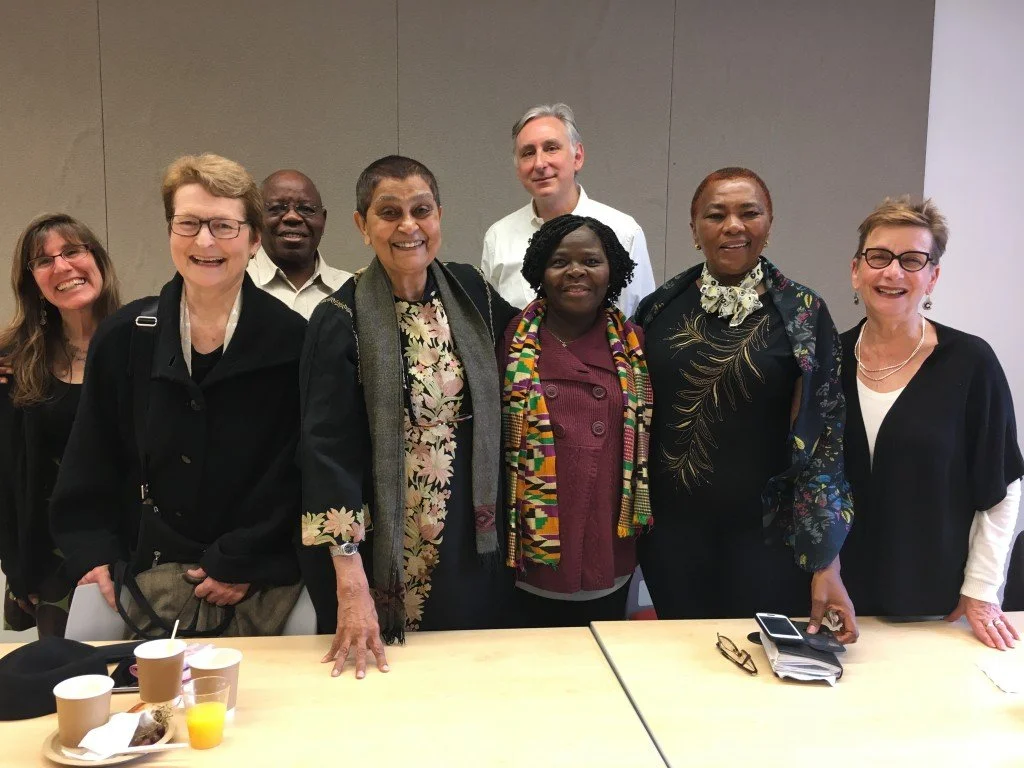
This public event featured a conversation among Gayatri Chakravorty Spivak, University Professor in the Humanities at Columbia University; Reinhold Martin, Professor of Architecture at Columbia University; and Ben Baer, Associate Professor of Comparative Literature at Princeton University, followed by a presentation of work by Helen Yitah and Aloysius Denkabe, Professors of English at the University of Ghana-Lagon; and Wanjiru Gichuhi, Professor of Population Studies at the University of Nairobi. Juan Obarrio, Associate Professor of Anthropology at Johns Hopkins University, served as discussant.
The Rural-Urban Interface: Gender and Poverty in Ghana and Kenya, Statistics and Stories project is an Africa-led research endeavor that brings together the humanities and the social sciences. Professors Yitah, Denkabe, and Gichuhi have for the past two years been conducting interviews with rural-to-urban migrants in Accra and Nairobi. They showed a selection of video clips from these interviews that featured migrant women narrating experiences of their rural background and current urban situation. In their analysis, Professors Yitah, Denkabe, and Gichuhi noted that these interviews are not only about the rural-urban interface but are also constitutive of that space. The entire effort is an enhancement of current interviewing techniques by harnessing the humanities for “development.” The project relates to previous work by all of the African participants.
Professor Spivak opened the occasion by emphasizing that they have been working together, in Africa, in New York, and by Skype to fine-tune the interviewer-interviewee relationship. The idea is to allow interviewees to offer their narratives in response to the interviewers’ new technique of listening rather than presenting prepared questions. She introduced the methodological question of “harnessing the humanities for development.” Rather than produce existentially impoverished statistics to feed into the development stakeholders, the project attempts to draw out narratives from the interlocutors by attending closely to rich moments in their discourse. Professor Spivak emphasized that this process requires an “unlearning” of disciplinary patterns in order to produce the response as genuinely coming from the other’s side instead of determined by the questions.
Professor Martin offered a reading of the term “interface.” Much has been written about what used to be called the city-country relation, and it is by now common knowledge that these spaces cannot be held apart. The interface is not something that can be securely held in place or time—geography or history. It is an event that happens over and over again with repeatable differences for individuals and collectives. In viewing the interviews as events of the interface, Professor Martin addressed the question of the interviews’ staging, whether in a conference room with signifiers of institutional seriousness, or at a less formal home visit with neighbors nearby. He posed the question of what role these stagings play in determining the content of the conversation. Professor Obarrio suggested that the “politics of the interview”—constituted by the signifiers of the setting, the hierarchy between interviewer and interviewee, and the language(s) used—must be attended to alongside the “poetics of the interview”—the format in which the narrative emerges or is imposed.
Professor Baer pointed to a strong counter tradition in existence since the nineteenth century that combined statistics and narrative to promote social justice. He suggested that the many signs of class differences visible in the mises en scène of the interviews constituted an important part of the overall text. Professor Baer also examined the institutional and epistemological differences between the Accra and Nairobi interviews so as to underline the way in which the project is itself a part of the rural/urban interface rather than in an analytic exteriority to it. He suggested that the question-form is an important aspect of the work (having a phatic rather than interrogative function), with potential to open onto unexpected response rather than predicted or anticipated answer.
Professor Denkabe reflected that the self-critique that emerged from the discussions of the first batch of interviews produced a methodological conundrum. He and Professor Yitah had originally conducted interviews with a semi-structured format but eventually concluded that they were really speaking to themselves and transforming the narratives they were hearing into answers to a pre-determined set of questions, rather than listening to the respondents. This led to the question of, What is research? What can the humanities contribute methodologically? In response, Professor Spivak explored existing work on interviewing techniques and shared her findings with the entire group. The second year of interviews was approached with new strategies: not to draw out answers to pre-thought questions; rather, to draw the narrative out with leading questions; to watch out for moments of intensity highlighted by facial expression, tonal shifts, and posture. The gaps and contradictions that emerge give an opportunity for imaginative entry into what it means to be an African entrant into the next megalopolis.
An audience member asked what happens after the end of the interview to the power structure between interviewer and interviewee. Professor Gichuhi responded that after the interview, interviewees are given the opportunity to ask any question, and the implicit question is usually the interviewee wondering what they will get from this process in terms of what it means to them. Professor Yitah added that there is often follow-up after the interviews, with interviewees given the opportunity to add anything they left out. Professor Spivak added that the question perhaps referred to a continuing relationship. The discussion ended with an emphasis on the ongoing nature of this project, and the hope to continue the conversation at another Columbia event the following year.
Photos from the discussion are located here.
CSSD's Unpayable Debt Working Group Releases Digital Syllabus Explaining Puerto Rican Debt Crisis
On May Day, 2017, CSSD's Unpayable Debt working group launched its PRSyllabus, a resource to study Puerto Rico's $70 billion debt crisis in the context of over one hundred years of colonial governance by the United States.
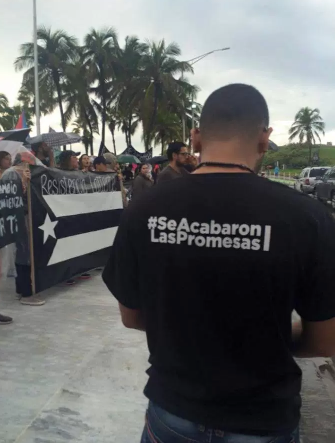
"The syllabus comes at a critical time," says working group co-director Frances Negrón-Muntaner, Professor of English and Comparative Literature, Center for the Study of Ethnicity and Race, Columbia University. Her point was confirmed when the syllabus attracted nearly 7,000 views on its first day.
"Today unions have declared a national strike. Students at the University of Puerto Rico are also on strike to protest extreme budget cuts and support demands for an independent audit while an unelected board with ties to the lending industry supports extreme austerity measures that have been unsuccessful elsewhere in the world. To guide more effective policy, we need to reorient our thinking and become better informed about the roots and consequences of the crisis. Our work suggests that participatory and transparent governance, economic revitalization, and full investment in fundamental human needs like education and health are better ways forward.”
Created by working group members and collaborators Yarimar Bonilla, Marisol Lebrón, and Sarah Molinari, the syllabus provides a list of resources for teaching and learning. The syllabus’s goal is to contribute to the ongoing public dialogue and rising social activism regarding the debt crisis by providing historical and sociological tools with which to assess the crisis’s context and repercussions.
"With this syllabus we tried to highlight how the contemporary debt crisis emerged from a history of extractive colonial practices that continue to produce intense insecurity in the lives of millions across Puerto Rico and its diaspora,” adds Lebrón. “We also sought to emphasize the inspiring and creative ways that Puerto Ricans are coming together to fight against austerity, since these efforts are often invisible in mainstream news coverage of the debt crisis."
PRSyllabus is the first in a series of three syllabi that the working group will release over the next year in relation to the damaging effects of debt on various locations around the world, including Detroit, Greece, and the Caribbean. The Puerto Rico syllabus can be accessed here.
PUBLISHED: Rebecca Jordan-Young Publishes on Current Debates Around Sex and Neuroscience in The Guardian
Rebecca Jordan-Young, Associate Professor of Women’s, Gender and Sexuality Studies at Barnard College and past director of CSSD's working group on Science and Social Difference, recently published an article in The Guardian called "We’ve been labelled ‘anti-sex difference’ for demanding greater scientific rigour."

The article points out that "At a time when both science and feminism are under attack, there are welcome signs that neuroscience is showing new openness to critiques of research into sex differences." Despite this robust debate within the scientific community and its accompanying challenge to existing assumptions, "misplaced fears of the effects of feminism on science potentially threaten this," she writes.
Read the article here.
CSSD Announces Media Fellows for Religion and Global Framing of Gender Violence Project
CSSD recently announced the winners of its competition for media fellows joining its project on “Religion and the Global Framing of Gender Violence.” Supported by a grant from the Henry Luce Foundation, the project brings together an international community of scholars, practitioners, journalists, and activists to study the role of religion in naming, framing, and governing gendered violence, with a focus on the Middle East and South Asia.
The Reporting Grants on Religion and Gender Violence provide each of the four journalists listed below with resources to research and produce innovative media stories to reframe understandings of religion and gender violence.
Yasmin el Rifae is a writer, researcher and cultural producer living in New York and Cairo. El Rifae is a Middle East and North Africa research associate at the Committee to Protect Journalists. As a media fellow, she will report on the civilian groups that intervened during mob sexual attacks against women in Tahrir Square, Egypt in 2013. By focusing on a diverse set of self-organized civilian groups who acted as emergency responders, she will explore how these events have influenced the mainstream discussion of sexual violence and feminism in Egypt and abroad.
Samira Shackle is a freelance British journalist, writing mainly on politics, terrorism, and gender. Shackle writes for The New Statesman, The Guardian, The Times, Vice, and many others. She will focus on gender-based violence experienced by Syrian refugee women based in Lebanon and Jordan, using detailed interviews to examine the intersection of religion, culture and structural economic factors in the abuse these women face. Shackle will report on several issues including child marriage among refugees, sexual exploitation of refugee women by employers and landlords, media representation of sexual violence, and intimate partner violence in refugee camps.
Nafeesa Syeed is an award-winning multimedia journalist with a decade of full-time experience on four continents in spot news and enterprise reporting, editing and producing. She works as a national security reporter for Bloomberg News, based in Washington, D.C. As a media fellow, Syeed will focus on violence against Yemeni women in the midst of U.S. and Saudi-led war campaigns. Through interviews with Jordan- and Djibouti-based Yemeni refugees involved in UN-brokered peace talks, she will ask women to frame their experiences of violence and war while looking at how they engage in political processes.
PUBLISHED: Marianne Hirsch Publishes Op-ed on truthout.org about Growing Up in an Autocracy
Marianne Hirsch, Professor of English and Comparative Literature and Professor of Women's, Gender, and Sexuality Studies and co-director of CSSD's Reframing Gendered Violence working group, recently published an op-ed on the truthout website titled "Three Lessons About Autocracy I Learned as a Child in Communist Romania."

In the piece Hirsch relates how growing up in communist Romania in the 1950's she acquired a healthy skepticism and a distrust of authority, along with the necessary ability to joke and laugh. Most importantly, the human propensity for passivity and normalization in the face of an autocratic environment was tempting, but must be avoided at all costs, she writes.
Read the piece here.
FORTHCOMING: Tina Campt's "Listening to Images" Investigates Archive of Photos of Black Diaspora
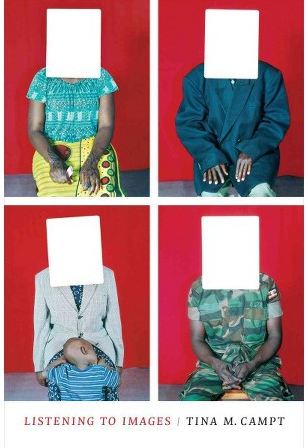
Tina Campt's Listening to Images, soon to be published by Duke University Press, was originally conceived in the CSSD project she co-directed called Engendering the Archives.
Throughout the book, Campt tunes in to the affective frequencies inherent in various photographs of the black diaspora. Images range from late nineteenth-century ethnographic photographs of rural African women and photographs taken in an early twentieth-century Cape Town prison to postwar passport photographs in Birmingham, England and 1960s mug shots of the Freedom Riders.
Read more about the book here.
PANEL DISCUSSION: Gender Roles, Violence and the Refugee Experience in Mexico, the United States, and the European Union
In February, CSSD’s Reframing Gendered Violence working group presented a panel discussion on “Refugees and Gender Violence: Vulnerability and Resistance” that addressed the current conditions of forced migration in various parts of the world and the formations around gender roles and gendered violence it has created.

Wendy Vogt, Professor of Anthropology at Indiana University-Purdue University Indianapolis, discussed “Rape Trees, State Security and the Politics of Sexual Violence along Migrant Routes in Mexico.”
Vogt said that along the U.S./Mexico border, Central American immigrants have become simplistically associated with sexual violence and thus used as scapegoats for the consolidation of U.S. political power. Vogt claimed that actually half of all sexual assaults happening at the border are perpetrated by migration employees and not migrants.
Vogt said that a series of assumptions and biases against migrants are employed to justify draconian governmental policies. At the local level, migrant men are customarily viewed as sexual predators and criminals while migrant women are considered suspect as sex workers. Migrant shelters then become marked as alleged rape sites, receiving complaints and threats from local populations, all of which then legitimizes militarized police tactics against migrants. Similarly, conservative news outlets on the national level have reported on “rape trees” along the border that are hung with the undergarments of the alleged victims of rapes perpetrated by Mexican criminals and “coyotes.” These unsubstantiated stories proliferate and are used to confirm the suppositions of sexual violence perpetrated by encroaching migrants.
“Such discourses allow the re-inscription of the US nation as chaste, while erasing the complicity of the US government in long term policies that have caused migration,” said Vogt.
Diana Taylor, University Professor of Performance Studies and Spanish and Founding Director, Hemispheric Institute of Performance and Politics, NYU, discussed the Madres of Central American Migrants movement.
Starting in the 1970s, these traveling “caravans” of mothers and families of the thousands of Central American migrants who have disappeared as they travel through Mexico on their way to the United States aim to connect families of the missing migrants and raise awareness about their fates. The Madres also speak to the United States’ increased attempts at controlling the tide of migrants coming from Mexico.
Stopping at local jails, brothels, and detention centers, caravans embark on fact-finding missions and have become a crucial part of the human rights strategy in Central and South America, said Taylor.
One key way in which the Madres functions is to create a meme—an image, a movement, a story—that transmits the grief and trauma involved in a direct fashion that is both simple and replicable. Successful memes like the Madres materialize everywhere U.S. state policy is used to “disappear” unwanted individuals. The militarized border, changing labor laws, and the war on terror were all cited as examples.
Taylor said the Madre movements have produced signs of hope, as in Argentina, where many of the people responsible for political killings there have been exposed and imprisoned.
Chloe Howe Haralambous, graduate student in English & Comparative Literature, Columbia University, spoke about “Suppliants and Deviants: Gendering the Refugee/Migrant Debate on the EU Border.”
Haralambous said that recognition of refugee status is the only guarantee of entry into Europe and that those individuals labeled economic migrants are not given that privilege. For example, in the current refugee crisis, unwanted Iraqi and Afghan immigrants have been treated as economic migrants in an attempt to artificially reduce the number of people Europe must protect, she said.
While women are considered “less dangerous” and are usually guaranteed entry over young men, “There is no distinction between helpless refugees and unworthy migrants,” Haralambous protested.
This sorting by gender leads to unfortunate results, such as half of the victims of sexual assault in refugee camps turning out to be young men and women sometimes disowning their husbands so they can improve their odds of gaining entrance. Thus, the refugee is characterized as grateful and helpless while the economic migrant is imagined as sneaky and undeserving, said Haralambous.
“In the mainstream, you are either a compliant and suffering refugee or a rapacious economic refugee,” she said.
Isin Önol, Curator in Vienna and Istanbul, spoke about her exhibit, “When Home Won’t Let You Stay: A Collective Deliberation on Taking Refuge.”
The show attempts to elucidate the journeys of the displaced between their lost homes and the new ones they will have to build, said Onol, but it also seeks to bring people of disparate experiences together.
“It interrogates what it means to be human today, in contrast to the ideals of humaneness and human rights,” Onol said of the exhibit.
While human beings can excel at organizing for evil, they can also organize for good, she said, referring to the structural violence that newcomers can experience and the experience of those who might remain passive in the face of that violence.
In the Q&A period that followed, the panelists were asked what journalists could do to ameliorate the situation. Haralambous said journalists would do well to address the structural causes behind the refugee crisis, since media contributes to the normalization of these events.
Vogt underlined the fact that traditional gender narratives were also being used to distort the narrative and that this actually enabled compassion fatigue. Instead, “We should point to people’s resilience—we should encourage alliance, not empathy. We should be motivated by the possibility of solidarity,” she said.
Photos from the discussion are posted here and a video of the discussion can be viewed here.
Contributed by Terry Roethlein and Liza McIntosh