Nadia Latif
Nadia Latif
Nadia Latif is a Visiting Assistant Professor of Anthropology at Mount Holyoke College. Her scholarship focuses on forced migration and human rights. She has published in the fields of urban anthropology, refugee studies, gender and conflict, law and development, and the history of anthropology. Her current research examines the emergence of local political economies in long-term refugee camps and the ways in which these are shaped by war and the provision of humanitarian aid, as well as by labor migration and migrant remittances. She conducts long-term fieldwork in Burj al-Barajneh camp in Lebanon. She is a coordinator for the ELHN Working Group on Labour Migration History.


Benjamin Mier-Cruz
Benjamin Mier-Cruz

Benjamin Mier-Cruz is an assistant professor of Scandinavian Studies and Gender and Women’s Studies at the University of Wisconsin-Madison. Their research examines Nordic writers and filmmakers of color and intersectional representations of gender, sexuality, and race. Their research also explores transgender cinema and the figure of the vampire in literature and film. Their current book project studies constructions of subjecthood and self-representation by filmmakers of color in Swedish documentary cinema and visual culture.
Clara Mattei
Fellow, Economics, The New School for Social Research
Clara Mattei is Assistant Professor of Economics at The New School for Social Research. She holds a PhD jointly from the Sant'Anna School of Advanced Studies (SSSUP) in Pisa, Italy, and Université de Strasbourg, Ecole Doctorale Augustine Cournot in Strasbourg, France, an MA in Philosophy from Pavia, and a BA in Philosophy from Cambridge University. Her research explores a comparative view of post-World War I monetary and fiscal policies and she brings broad interdisciplinary engagements to her work in the history of economic thought and methodology.
Clara Mattei
Economics, The New School for Social Research
Clara Mattei is Assistant Professor of Economics at The New School for Social Research. She holds a PhD jointly from the Sant'Anna School of Advanced Studies (SSSUP) in Pisa, Italy, and Université de Strasbourg, Ecole Doctorale Augustine Cournot in Strasbourg, France, an MA in Philosophy from Pavia, and a BA in Philosophy from Cambridge University. Her research explores a comparative view of post-World War I monetary and fiscal policies and she brings broad interdisciplinary engagements to her work in the history of economic thought and methodology.
Working Group Affiliation
Katherine Magyarody
Fellow, English, PhD University of Toronto
Katherine Magyarody is an author of young adult fiction and an academic researcher. She is the recipient of a 2017 Robert J. Dau PEN Award for Emerging Writers and her debut novel, The Changeling of Fenlen Forest, was longlisted for the 2020 Sunburst Award for Excellence in Canadian Literature of the Fantastic. Her academic research centers on the representation of peer groups as a method of imperial cultural consolidation nineteenth-century children’s literature.
Katherine Magyarody
Author and Independent Scholar PhD University of Toronto
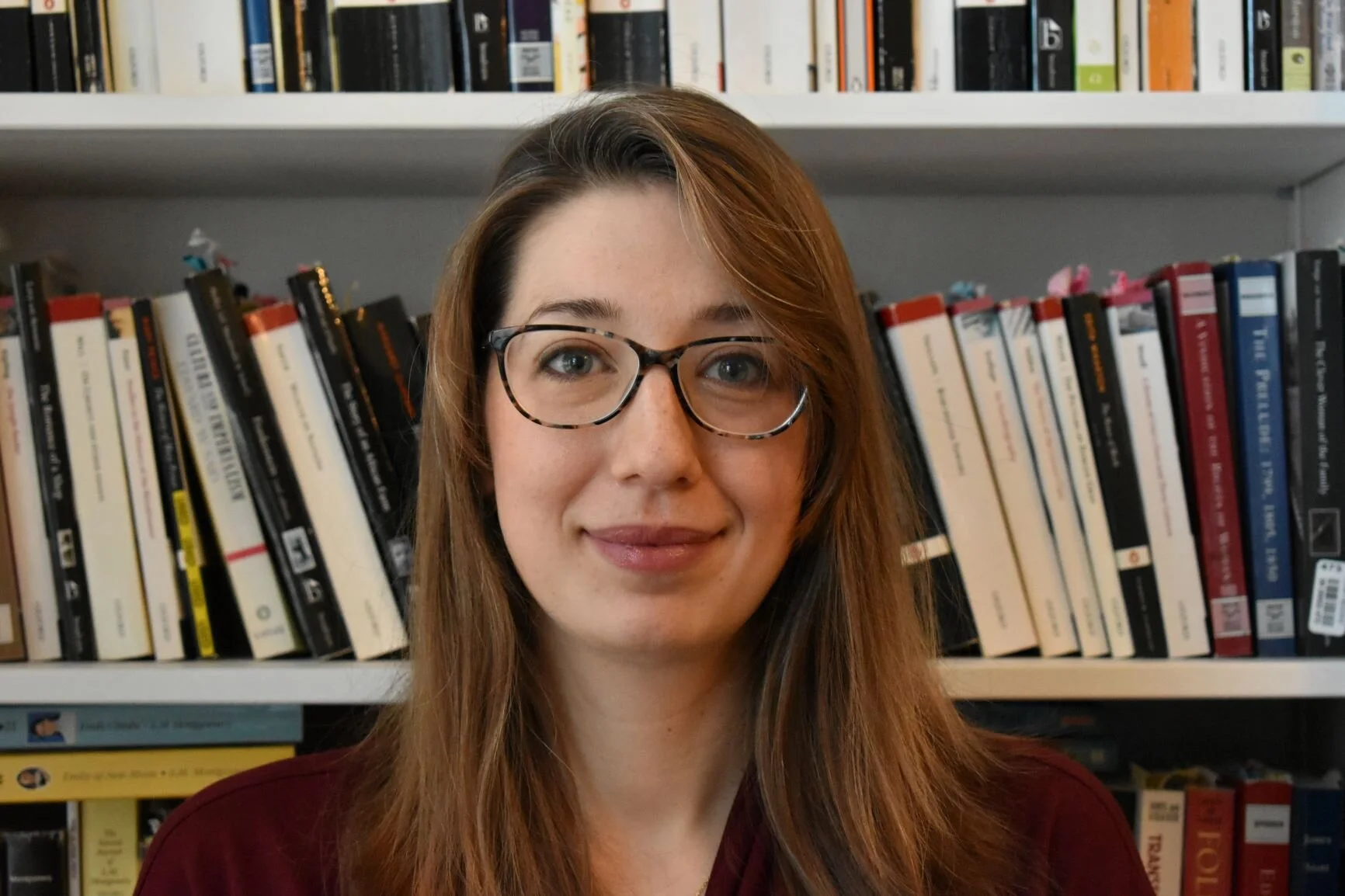
Katherine Magyarody is an author of young adult fiction and an academic researcher. She is the recipient of a 2017 Robert J. Dau PEN Award for Emerging Writers and her debut novel, The Changeling of Fenlen Forest, was longlisted for the 2020 Sunburst Award for Excellence in Canadian Literature of the Fantastic. Her academic research centers on the representation of peer groups as a method of imperial cultural consolidation nineteenth-century children’s literature. She has published articles in Nineteenth-Century Literature, Nineteenth-Century Gender Studies, Hungarian Studies Review, the Children’s Literature Association Quarterly, Marvels and Tales: Journal of Fairy Tale Studies, and The Palgrave Encyclopedia of Victorian Women’s Writing. Her reviews of contemporary children’s fiction and nonfiction appear in School Library Journal.
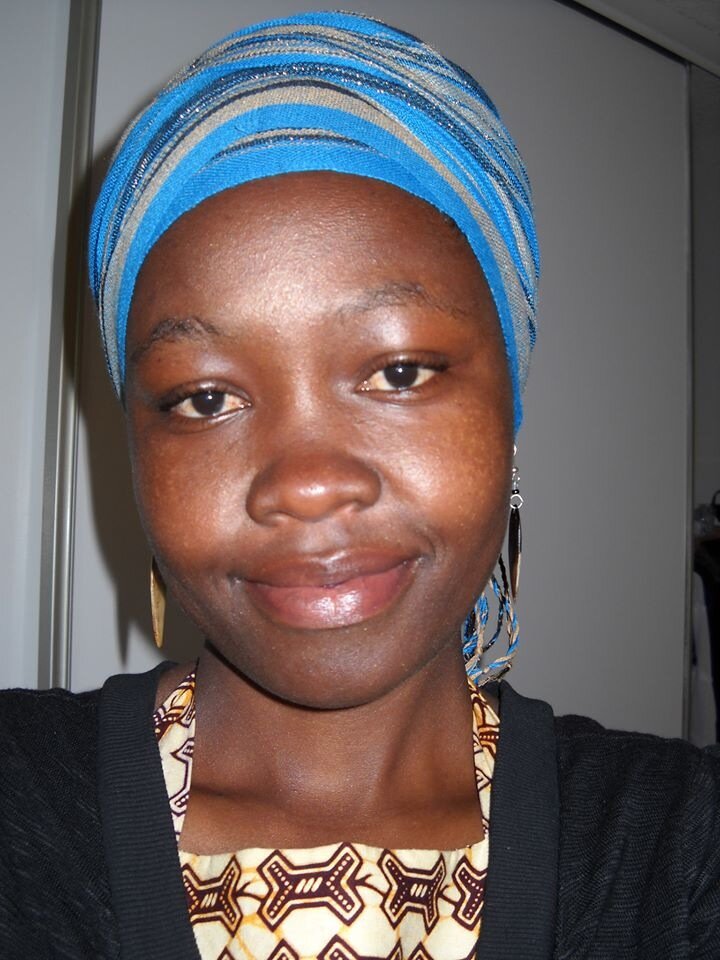
Selina Makana
Fellow, African History, University of Memphis
Selina Makana is an Assistant Professor of African history at the University of Memphis. Her research and teaching focus on African women’s social history, gender and militarism, transnational feminisms, and African diaspora studies. Her current monograph uses oral interviews with former women combatants and archival records to probe the relationship between gender and militarism in contemporary Angola.
Selina Makana
Assistant Professor of African History, University of Memphis

Selina Makana is an Assistant Professor of African history at the University of Memphis. Her research and teaching focus on African women’s social history, gender and militarism, transnational feminisms, and African diaspora studies. Her current monograph uses oral interviews with former women combatants and archival records to probe the relationship between gender and militarism in contemporary Angola. This research explores how nationalist projects and armed insurgent organizations utilize gender—in particular ideas of masculinities and femininities —to consolidate power and perpetuate violence. In 2017-2020, she was a Postdoctoral Research Scholar at the Institute for Research on Women, Gender, and Sexuality and a lecturer in the Department of Middle Eastern, South Asian, and African Studies at Columbia University. She holds a Ph.D. in African Diaspora Studies and a Graduate Certificate in Gender and Women’s Studies from the University of California-Berkeley. Makana has been a Fulbright Fellow at Stanford University. Her recent publications have appeared in Meridians: Feminism, Race, and Transnationalism, Gender & History, and The Oxford Encyclopedia of African Women’s History. Selina Makana is a member of the African Feminist Initiative and serves on the editorial advisory board of Feminist Africa.
Working Group Affiliation
Hebe Mattos
Fellow, History, University Federal Fluminense
Hebe Mattos is Professor of History at University Federal Fluminense (UFF) in Brazil. She was visiting Professor at Columbia University (Ruth Cardoso Chair, ILAS/Institute of Latin America Studies, 2013/2014), at Ecoles des Hautes Etudes en Sciences Sociales (2004) and at the University of Michigan (1996). She is the author or co-author of numerous books on Brazilian slavery and post-emancipation society, including Memórias do Cativeiro. Família, Trabalho e Cidadania no Pós-Abolição/ Memories of Captivity.
Hebe Mattos
Professor of History, University Federal Fluminense
Hebe Mattos is Professor of History at University Federal Fluminense (UFF) in Brazil. She was visiting Professor at Columbia University (Ruth Cardoso Chair, ILAS/Institute of Latin America Studies, 2013/2014), at Ecoles des Hautes Etudes en Sciences Sociales (2004) and at the University of Michigan (1996). She is the author or co-author of numerous books on Brazilian slavery and post-emancipation society, including Memórias do Cativeiro. Família, Trabalho e Cidadania no Pós-Abolição/ Memories of Captivity. Family, Labor and Citizenship after abolition(2005); Das Cores do Silêncio. Significados da Liberdade no Sudeste Escravista, Brasil-sec. XIX / Colors of Silence. Meanings of Freedom in 19th Southeast Brazil/ (1995, 1998, 2013) - for which she received the Brazil National Archive Research Award (1993), and The Abolition of Slavery and the aftermath of emancipation in Brazil (with Rebecca Scott et allii, 1988). She’s one of the coordinators of The Oral History and Image Lab of UFF where she co-directed the collection of documentary films Present Pasts.
Working Group Affiliation

Laura Mauldin
Fellow, Sociology, University of Connecticut
Laura Mauldin's research draws from the fields of medical sociology, science and technology studies (STS), and disability studies. She uses ethnographic methods to show how individual experiences are situated within institutional structures and a larger sociocultural context. All of her research is concerned with how science, technology, and medicine shape contemporary life and is based on the contention that disability – like race, class, or gender - is a political and social category. Her aim is to give voice to the experiences of individuals and families who utilize healthcare services and/or medical technologies in order to show the ambivalent qualities of technoscientific change, the politics of disability and illness, and to suggest what healthcare policies or issues need to be further researched or improved.
Laura Mauldin
Sociology, University of Connecticut

Laura Mauldin's research draws from the fields of medical sociology, science and technology studies (STS), and disability studies. She uses ethnographic methods to show how individual experiences are situated within institutional structures and a larger sociocultural context. All of her research is concerned with how science, technology, and medicine shape contemporary life and is based on the contention that disability – like race, class, or gender - is a political and social category. Her aim is to give voice to the experiences of individuals and families who utilize healthcare services and/or medical technologies in order to show the ambivalent qualities of technoscientific change, the politics of disability and illness, and to suggest what healthcare policies or issues need to be further researched or improved.
Professor Mauldin attended the University of Texas at Austin (UT), where she majored in linguistics and focused on ASL for her thesis. She has also worked at the Texas School for the Blind in the deaf/blind department where she was trained in Orientation and Mobility and how to work with deaf/blind individuals. After graduating, she briefly entered the Interpreter Training Program at Austin Community College. But during the first semester there, she was accepted as a graduate student in ASL and Deaf Studies at Gallaudet University, which is the only liberal arts university for the deaf in the world and everything is conducted in ASL. As a Master's student, she also spent time in Bristol, UK as a visiting scholar in Deaf studies at the University of Bristol (sadly, the Deaf Studies Centre is now closed, but you can read about it here) and a summer completing the certificate in Sexuality, Culture and Society at the University of Amsterdam.
Mauldin entered the PhD program in Sociology at the Graduate Center - City University of New York (CUNY), where Barbara Katz Rothman chaired her dissertation committee. After finishing, she was invited to be a visiting professor for one year in the Science, Technology and Society department at Rochester Institute of Technology (RIT). She also taught an introduction to sociology course at the National Technical Institute for the Deaf, which is housed within RIT. The following year, she returned to New York City and began her tenure track position at the University of Connecticut where she is jointly appointed in Women's, Gender, & Sexuality Studies and Human Development/Family Studies, with an affiliation in the Department of Sociology.
Mauldin is currently developing new research projects related to spousal/partner caregiving, disability, and medical technologies. She still has interests in deaf-related topics. She is on the Board of Corporators for the American School for the Deaf and maintains her interpreting certification with the Registry of Interpreters for the Deaf. She is co-chair of the Disabilities Division of the Society for the Study of Social Problems and active in the Disability and Society Section of the American Sociological Association. She is also affiliated with (or just a fan of!) a variety of other groups, initiatives and professional associations, such as the NYU Council for the Study of Disability, the Future of Disability Studies project at Columbia, the Well Spouse Association, the Center for LGBTQ Studies at CUNY, the Society for Social Studies of Science, Society for Disability Studies, American Society for Bioethics and Humanities, National Women's Studies Association, and Sociologists for Women in Society.
Working Group Affiliation

Julie E. Maybee
Fellow, Philosophy, Lehman College, City University of New York
Julie E. Maybee is an Associate Professor of Philosophy at Lehman College, City University of New York (CUNY). She is the Coordinator of the new Disability Studies Minor at Lehman, and is affiliated with the Masters in Disability Studies Program in the School of Professional Studies at CUNY along with the Department of African and African American Studies at Lehman.
Julie E. Maybee
Associate Professor of Philosophy, Lehman College, City University of New York
Julie E. Maybee is an Associate Professor of Philosophy at Lehman College, City University of New York (CUNY). She is the Coordinator of the new Disability Studies Minor at Lehman, and is affiliated with the Masters in Disability Studies Program in the School of Professional Studies at CUNY along with the Department of African and African American Studies at Lehman. Her interest in Africana philosophy and 19th Century Continental philosophy—especially Hegel (Picturing Hegel: An Illustrated Guide to Hegel’s Encyclopaedia Logic, Lexington Books, 2009) and the post-Hegelians—led to a broader exploration of the lived experiences of social identities—race, class, disability, ethnicity, gender—as well as the disadvantage and discrimination that accompany those identities in our society. Her most recent piece, “The Political is Personal: Mothering at the Intersection of Acquired Disability, Gender and Race” (in Disability and Mothering: Liminal Spaces of Embodied Knowledge, Cynthia Lewiecki-Wilson and Jen Cellio eds., Syracuse University Press, 2011), explores some complexities of identity created by the social consequences of becoming the mother of a newly disabled, black daughter.


Frank Mecklenburg
Fellow, Modern German History, Technische Universität Berlin
Dr. Frank Mecklenburg is Director of Research and Chief Archivist at Leo Baeck Institute, a research library and archive that documents the history and culture of German-speaking Jewry, primarily in the 19th and 20th centuries, but also including documents dating back to the middle ages. LBI was founded in 1955 as a repository for the books, papers, photos and documents that were salvaged from Central Europe after World War II and donated to the Institute.
Frank Mecklenburg
Director of Research and Chief Archivist, Leo Baeck Institute
Dr. Frank Mecklenburg is Director of Research and Chief Archivist at Leo Baeck Institute, a research library and archive that documents the history and culture of German-speaking Jewry, primarily in the 19th and 20th centuries, but also including documents dating back to the middle ages. LBI was founded in 1955 as a repository for the books, papers, photos and documents that were salvaged from Central Europe after World War II and donated to the Institute.
As Chief Archivist, Dr. Mecklenburg is responsible for overseeing the acquisition of new collections for the Institute’s extensive archival holdings. In this capacity, he works closely with community organizations to identify potential donors and liaises directly with donors and their families to arrange the gift of their personal papers and artifacts. As Director of Research, he oversees the award of grants to scholars through the Institutes’ various fellowship programs.
Dr. Mecklenburg is also responsible for ensuring the preservation of the Institute’s archival holdings and expanding access to them. Dr. Mecklenburg played an instrumental role in the conception, development, and implementation of the Institute’s digitization project, called DigiBaeck, which put the majority of LBI archival holdings online by 2012.
He joined Leo Baeck Institute in 1984 as an archivist and took on his current role in 1996. He supervises the Berlin Branch of the LBI Archives at the Jewish Museum in Berlin, and he represents LBI New York in the LBI International Executive Committee, which coordinates the efforts of the international Leo Baeck Institutes.
Born and educated in Berlin, Germany, Dr. Mecklenburg lives in Manhattan with his wife Atina Grossmann, a professor of History at NYU. They have two adult children.
Education
Ph.D. in Modern German History – Technische Universität Berlin
Languages
German, native speaker
English, fluent written and spoken
Associations
German Studies Association
Jewish Studies Association

Susan Meiselas
Fellow, Visual Education, Harvard University
Susan Meiselas received her B.A. from Sarah Lawrence College and her M.A. in visual education from Harvard University. She joined Magnum Photos in 1976. She is the author of three books: Carnival Strippers, Nicaragua, and Pandora's Box and editor of five collections: Learn to See, El Salvador: The Work of 30 Photographers, Chile from Within., Kurdistan: In the Shadow of History and Encounters with the Dani. She has co-directed two films: "Living at Risk" and "Pictures from a Revolution" with Richard P.
Susan Meiselas
Photographer
Susan Meiselas received her B.A. from Sarah Lawrence College and her M.A. in visual education from Harvard University. She joined Magnum Photos in 1976. She is the author of three books: Carnival Strippers, Nicaragua, and Pandora's Box and editor of five collections: Learn to See, El Salvador: The Work of 30 Photographers, Chile from Within., Kurdistan: In the Shadow of History and Encounters with the Dani. She has co-directed two films: "Living at Risk" and "Pictures from a Revolution" with Richard P. Rogers and Alfred Guzzetti. In 1998 she developed akaKURDISTAN, an innovative online website for collective memory and cultural exchange. Her retrospective book and recent exhibition In History was produced with the International Center for Photography, New York.
Meiselas' coverage of human rights violations and the insurrections in Central America was widely published throughout the world. One-woman shows include: Whitney Museum for American Art; FOAM, Amsterdam; Hasselblad Center, Sweden; Art Institute of Chicago; and the Museum Folkwang, Germany. In 1992 she was made a MacArthur Fellow. Her work is included in American and international collections. Meiselas is presently serving as the President of the Magnum Foundation.
Working Group Affiliations
Zip Code Memory Project: Practices of Justice and Repair, Social Engagement Project, Project Director
Sally Engle Merry
Fellow, Anthropology, New York University
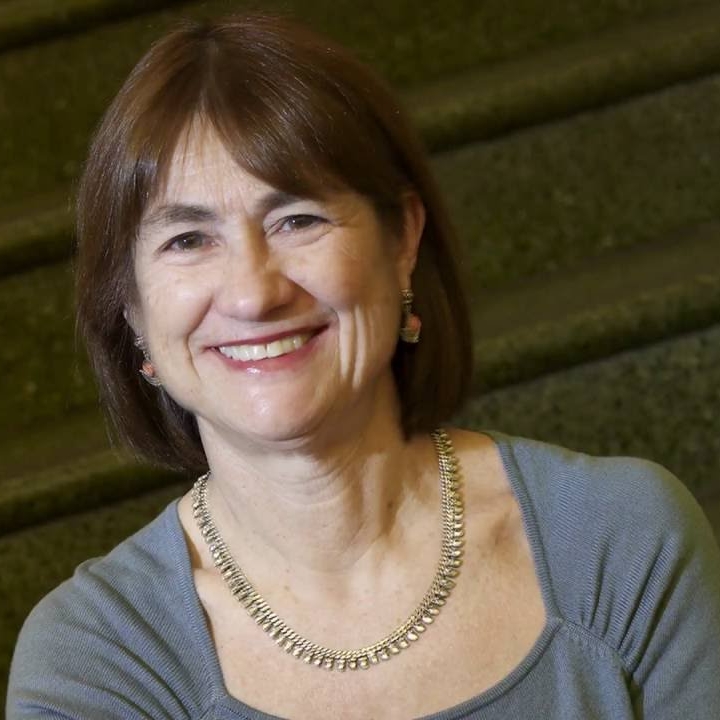
Sally Engle Merry's recent books include Colonizing Hawai‘i (Princeton, 2000), Human Rights and Gender Violence (Chicago, 2006), Gender Violence: A Cultural Perspective (Blackwell, 2009) and The Practice of Human Rights, (co-edited with Mark Goodale; Cambridge, 2007). Her most recent book, The Seductions of Quantification: Measuring Human Rights, Gender Violence, and Sex Trafficking (Chicago: University of Chicago Press, 2016) examines indicators as a technology of knowledge used for human rights monitoring and global governance. She received the Hurst Prize for Colonizing Hawai‘i in 2002, the Kalven Prize for scholarly contributions to sociolegal scholarship in 2007, and theJ.I. Staley Prize for Human Rights and Gender Violence in 2010.
Sally Engle Merry
Silver Professor of Anthropology, New York University

Sally Engle Merry is Silver Professor of Anthropology at New York University. She is also a Faculty Director of the Center for Human Rights and Global Justice at the New York University School of Law, and past president of the American Ethnological Society. Her recent books include Colonizing Hawai‘i (Princeton, 2000), Human Rights and Gender Violence (Chicago, 2006), Gender Violence: A Cultural Perspective (Blackwell, 2009) and The Practice of Human Rights, (co-edited with Mark Goodale; Cambridge, 2007). Her most recent book, The Seductions of Quantification: Measuring Human Rights, Gender Violence, and Sex Trafficking (Chicago: University of Chicago Press, 2016) examines indicators as a technology of knowledge used for human rights monitoring and global governance. She has co-edited two books on quantification, The Quiet Power of Indicators, with Kevin Davis and Benedict Kingsbury (Cambridge University Press, 2015) and A World of Indicators, with Richard Rottenburg, Song-Joon Park, and Johanna Mugler (Cambridge University Press 2015), 2015. She is the author or editor of fifteen books and special journal issues. She received the Hurst Prize for Colonizing Hawai‘i in 2002, the Kalven Prize for scholarly contributions to sociolegal scholarship in 2007, and theJ.I. Staley Prize for Human Rights and Gender Violence in 2010. In 2013 she received an honorary degree from McGill School of Law and was the focus of an Author Colloquium at the Center for Interdisciplinary Research (ZIF) at the University of Bielefeld, Germany. She is an Honorary Professor at Australian National University.
Working Group Affiliations
Ruth Milkman
Fellow, Sociology, CUNY Graduate Center
Ruth Milkman is a sociologist of labor and labor movements who has written on a variety of topics involving work and organized labor in the United States, past and present. Her early research focused on the impact on U.S. women workers of economic crisis and war in the 1930s and 1940s. She went on to study the restructuring of the U.S. automobile industry and its impact on workers and their union in the 1980s and 1990s; in that period she also analyzed the labor practices of Japanese-owned factories in California. More recently she has written extensively about low-wage immigrant workers, analyzing their employment conditions as well as the dynamics of immigrant labor organizing. She co-authored a 2013 study of California’s paid family leave program, focusing on its impact on employers and workers.
Ruth Milkman
Sociology, CUNY Graduate Center
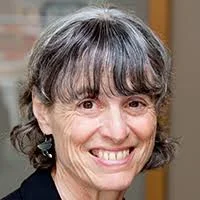
Ruth Milkman is a sociologist of labor and labor movements who has written on a variety of topics involving work and organized labor in the United States, past and present. Her early research focused on the impact on U.S. women workers of economic crisis and war in the 1930s and 1940s. She went on to study the restructuring of the U.S. automobile industry and its impact on workers and their union in the 1980s and 1990s; in that period she also analyzed the labor practices of Japanese-owned factories in California. More recently she has written extensively about low-wage immigrant workers, analyzing their employment conditions as well as the dynamics of immigrant labor organizing. She co-authored a 2013 study of California’s paid family leave program, focusing on its impact on employers and workers.
She was elected as the 2016 President of the American Sociological Association, where her presidential address focused on Millennial-generation social movements. She has also conducted extensive policy-oriented research on such topics as wage theft, unionization trends, paid sick leave, and the aging workforce. After 21 years as a sociology professor at UCLA, where she directed the Institute for Research on Labor and Employment from 2001 to 2008, she returned to New York City in 2010. She is currently Distinguished Professor of Sociology at the CUNY Graduate Center and at the Joseph S. Murphy Institute for Worker Education and Labor Studies, where she teaches Labor Studies and also serves as Research Director.
Working Group Affiliation

Nancy K. Miller
Fellow, English, French and Comparative Literature, Graduate Center, CUNY
Nancy K. Miller is currently working on a project about the experience of girls and young women in the American 1950s, about private life and middlebrow culture; also a project on the nature of extreme experience and its recording in testimony and other documents. Continuing interests include questions of autobiography and memoir, feminist theory, women's writing, trauma and testimony.
Nancy K. Miller
Professor of English, French and Comparative Literature, Graduate Center, CUNY
Nancy K. Miller is currently working on a project about the experience of girls and young women in the American 1950s, about private life and middlebrow culture; also a project on the nature of extreme experience and its recording in testimony and other documents. Continuing interests include questions of autobiography and memoir, feminist theory, women's writing, trauma and testimony. Her publications include: Getting Personal: Feminist Occasions and Other Autobiographical Acts (New York and London: Routledge, 1991); French Dressing: Women, Men and Ancien Régime Fiction (New York and London: Routledge, 1995); and Bequest and Betrayal: Memoirs of a Parent's Death (New York: Oxford University Press, 1996, paperback edition, Bloomington: Indiana University Press, 2000).


Mara Mills
Fellow, Media, Culture, and Communication, New York University
Mara Mills is Assistant Professor of Media, Culture, and Communication at New York University. She received her Ph.D.
Mara Mills
Assistant Professor of Media, Culture, and Communication, New York University
Mara Mills is Assistant Professor of Media, Culture, and Communication at New York University. She received her Ph.D. in History of Science from Harvard. She is completing a book (On the Phone: Deafness and Communication Engineering) on the significance of phonetics and deaf education to the emergence of “communication engineering” in early twentieth-century telephony; this concept and set of practices later gave rise to information theory, digital coding, and cybernetics. Articles from this project can be found in Social Text, differences, and The Oxford Handbook of Sound Studies. Her second book project, Print Disability and New Reading Formats, examines the reformatting of print over the course of the past century by blind and other print disabled readers, with a focus on Talking Books and electronic reading machines. Mills is the co-editor of a recent issue of Grey Room on the “audiovisual” and the recipient of the 2010 Irving K. Zola Award for Emerging Scholars in Disability Studies.


Susannah B. Mintz
Fellow, English, Skidmore College
Susannah B. Mintz is associate professor of English at Skidmore College in Saratoga Springs, NY. She is the author of Threshold Poetics: Milton and Intersubjectivity (2003) and Unruly Bodies: Life Writing by Women with Disabilities (2007), and co-editor with Lisa Johnson of On the Literary Nonfiction of Nancy Mairs: A Critical Anthology (2011). Her current project is entitled Hurt and Pain: A Literary History.
Susannah B. Mintz
Associate Professor of English, Skidmore College
Susannah B. Mintz is associate professor of English at Skidmore College in Saratoga Springs, NY. She is the author of Threshold Poetics: Milton and Intersubjectivity (2003) and Unruly Bodies: Life Writing by Women with Disabilities (2007), and co-editor with Lisa Johnson of On the Literary Nonfiction of Nancy Mairs: A Critical Anthology (2011). Her current project is entitled Hurt and Pain: A Literary History. She has published and presented numerous papers on the intersections of disability representation and life writing, and has served on the executive committee of the MLA Division on Disability Studies for the past five years.

Ziba Mir-Hosseini
Fellow, Anthropology, SOAS, University of London (the School of Oriental and African Studies)
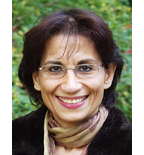
Ziba Mir-Hosseini is a legal anthropologist, specializing in Islamic law, gender and development. She has a BA in Sociology from Tehran University (1974) and a PhD in Social Anthropology from University of Cambridge (1980).
Ziba Mir-Hosseini
SOAS, University of London (the School of Oriental and African Studies)
Ziba Mir-Hosseini is a legal anthropologist, specializing in Islamic law, gender and development. She has a BA in Sociology from Tehran University (1974) and a PhD in Social Anthropology from University of Cambridge (1980). A Professorial Research Associate at the Centre for Middle Eastern and Islamic Law, University of London, she has held numerous research fellowships and visiting professorships, including Fellow of the Wissenschaftskolleg zu Berlin (2004-5), and Hauser Global Law Visiting Professor at New York University (2002-8). She is a founding member of the Musawah Global Movement for Equality and Justice in the Muslim Family.
Her publications include Marriage on Trial: A Study of Islamic Family Law in Iran and Morocco (I. B. Tauris, 1993, 2002), Islam and Gender: The Religious Debate in Contemporary Iran (Princeton University Press, 1999), Islam and Democracy in Iran: Eshkevari and the Quest for Reform (with Richard Tapper; I. B. Tauris, 2006), Control and Sexuality: the Revival of Zina Laws in Muslim Contexts (with Vanja Hamzic; Women Living Under Muslim Laws, 2010), and Gender and Equality in Muslim Family Law: Justice and Ethics in the Islamic Legal Tradition, edited with Lena Larsen, Christian Moe and Kari Vogt (London: I. B. Tauris forthcoming April 2013). She has also directed (with Kim Longinotto) two award-winning feature-length documentary films on contemporary issues in Iran: Divorce Iranian Style (1998) and Runaway (2001).

Nicholas Mirzoeff
Fellow, Art and Art Education, New York University
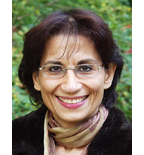
Nicholas Mirzoeff is a visual culture theorist and professor in the Department of Media, Culture and Communication at New York University. He is best known for his work developing the field of visual culture and for his many books and his widely used textbook on the subject.
Nicholas Mirzoeff
Professor of Art and Art Education, NYU
My research is in the general field of visual culture. In the past few years, I have concentrated in four areas
a decolonial genealogy of "visuality," a key term of art for the field, which owes its existence to the practice of Naopleonic-era generals in visualizing a battlefield that they could not see. Visuality imagined the social as war and was opposed to all emancipations and liberations. Visual culture is, therefore, against visuality. My book The Right to Look: A Counterhistory of Visuality is forthcoming with Duke University Press in 2011.
I work on texts for general academic use in the field, such as An Introduction to Visual Culture (2nd ed. 2009) and The Visual Culture Reader (3rd ed. forthcoming 2012).
I work extensively with contemporary artists, most recently with Carl Pope and Jeremy Deller.
I am a contributing editor for the online project Media Commons and a co PI with the Melllon-funded Alliance for Networking Visual Culture, which is developing "Scalar," a multi-media born-digital authoring software,
I am currently working on a project on the visual culture of climate change in conjunction with the not-for-profit Islands First
Selected Presentations
Enfin, on se regarde: for the right to look
Keynote for Visual Studies Colloque, Paris, Jan. 6, 2011.
Links
Degrees Held
BA Honours Oxford University 1980
Modern HistoryPhD University of Warwick 1990
Art History and History
Awards
2011 : Shpilman Grant in Photography and Philosophy
2010 : NEH Summer Fellow "Broadening the Digital Humanities" University of California Humanities Research Institute/University of Southern California IML
2009 : Co P.I. for Mellon grant "Networking Visual Culture"
2006 : Steinhardt Challenge Grant
2005 : Visiting Canterbury Fellow, University of Canterbury, New Zealand
2002 : Visiting Fellow, Sterling and Francine Clark Art Institute, Williamstown MA
2002 : Leverhulme Visiting Professor, University of Nottingham, UK
2001 : Visiting Fellow, Humanities Research Center, Australian National University, Canberra, Australia
2001 : William Andrews Clark Memorial Library, UCLA, Visting Fellow
1996 : Postdoctoral Fellow, Humanities Institute, Stony Brook University
1994 : Huntington Library, Pasadena, CA, Visiting Fellow
1993 : Yale Center for British Art, Visiting Fellow
1992 : J. Paul Getty Center, Postdoctoral Fellow in the History of Art and the Humanities
1991 : NEH Postdoctoral Fellow, UCLA Center for 17th and 18th Century Studies
Selected Publications
The Right to Look: A Counter-History of Visuality (forthcoming, Duke University Press)
An Introduction to Visual Culture (London and New York: Routledge, 1999) translations into Italian, Spanish, Korean and Chinese Second fully revised edition, 2009
Seinfeld: A Critical Study of the Series (British Film Institute, 2007)
Watching Babylon: the War in Iraq and Global Visual Culture (Routledge, 2005) translated into Italian as Guardare la Guerra (Rome: Meltemi, 2005)
(as editor) Diaspora and Visual Culture: Representing Africans and Jews (London and New York: Routledge, 2001)
(as editor) The Visual Culture Reader (London and New York: Routledge, 1998) Second fully revised edition, 2002.
Bodyscape: Art, Modernity and the Ideal Figure (London and New York: 1995) translated into Korean
Silent Poetry: deafness, sign and visual culture in modern France (Princeton and London: Princeton University Press, 1995)
Courses
MCC-UE 1410 - Global Visual Cultures
MCC-UE 1352 - Empire, Revolution and Media
MCC-GE 2405 - Communism and the Cold War: Legacies for Visual and Cultural Studies
MCC-GE 2420 - Visual Culture Methods
MCC-GE 2404 - Modernity and Climate Change
Editorial Boards
2007-- Journal of Photography and Culture Editorial Board Member
2001-Present: The Journal of Visual Culture, Editorial Board Member
2002-Present: Situation Analysis, Editorial Board Member
2004-2007: British Film Institute Television Classics Editorial Board Member
Research Interests
Visual Culture
Cultural Studies
Climate Chnage
Contemporary Art and New Media
Disability Studies

Jennifer Mittelstadt
Fellow, History, Rutgers University
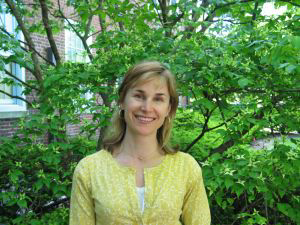
I am a political historian of the United States writing about women and gender, race, and the state.
Jennifer Mittelstadt
Associate Professor

I am a political historian of the United States writing about women and gender, race, and the state. I specialize in the twentieth century, especially post-World War II, and my interests in politics are quite broad. They include social policy and social politics; liberalism; second-wave feminism; and most recently, the military and militarization. I have published articles and opinion pieces in the Journal of Policy History, International Labor and Working Class History, the Journal of Women’s History, Social Politics, the New York Times, and the Los Angeles Times, among others. I am currently writing a book on the United States Army, social welfare, and politics in the late twentieth century.
Working Group Affiliation
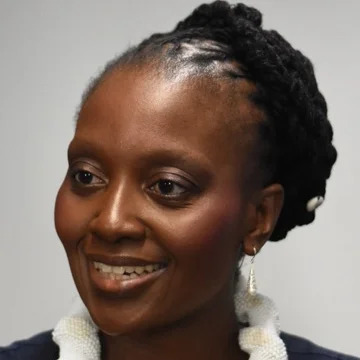
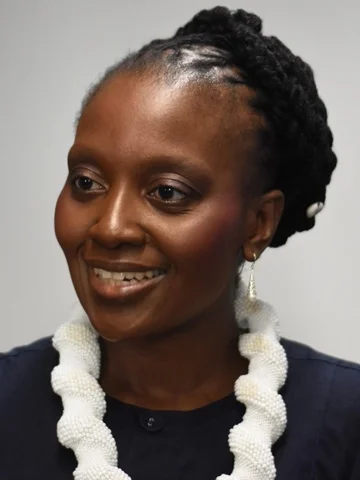
Hlonipha Mokoena
Fellow, Anthropology, Wits Institute for Social and Economic Research, University of the Witwatersrand, Johannesburg
Hlonipha Mokoena's main area of interest is South African intellectual history. One of the defining characteristics of South Africa is that it is a society that ostensibly lacks a collective history or shared philosophical and political traditions. The main objective of Professor Mokoena's teaching is to introduce students to the contested histories of South African political ideas and traditions. Some of the themes and topics examined in her courses include: othering discourses and the emergence of a Cape discourse; slavery, free labour and the history of paternalism; frontier violence and resistance to conquest; and the emergence of African and Afrikaner nationalisms. Professor Mokoena's current research is on Magema M. Fuze, author of the Abantu Abamnyama Lapa Bavela Ngakona (1922) / The Black People and Whence They Came (1979).
Hlonipha Mokoena
Assistant Professor of Anthropology, Wits Institute for Social and Economic Research, University of the Witwatersrand, Johannesburg
Hlonipha Mokoena's main area of interest is South African intellectual history. One of the defining characteristics of South Africa is that it is a society that ostensibly lacks a collective history or shared philosophical and political traditions. The main objective of Professor Mokoena's teaching is to introduce students to the contested histories of South African political ideas and traditions. Some of the themes and topics examined in her courses include: othering discourses and the emergence of a Cape discourse; slavery, free labour and the history of paternalism; frontier violence and resistance to conquest; and the emergence of African and Afrikaner nationalisms.
Professor Mokoena's current research is on Magema M. Fuze, author of the Abantu Abamnyama Lapa Bavela Ngakona (1922) / The Black People and Whence They Came (1979). As an author and an aspirant historian, Magema Fuze represents a set of questions about the emergence and arrested development of a black intelligentsia and literati in nineteenth- and early twentieth-century South Africa. His life and writings reveal both his singular attempt to create, under adverse cultural, political and social conditions, a literary career and a body of knowledge while also participating in the constitution of a discourse community or a public sphere of Zulu-speaking intellectuals.
Anjali Monteiro
Fellow, Media and Cultural Studies, Tata Institute of Social Sciences
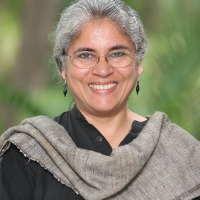
Dr. Anjali Monteiro is Professor and Dean, School of Media and Cultural Studies, Tata Institute of Social Sciences, Mumbai. She has a Masters degree in Economics and a Ph.D. in Sociology. She is involved in documentary production, media teaching and research. Jointly with K.P. Jayasankar, she has made over 35 documentary films. Their work has been screened extensively at film festivals all over the world and they have won twenty-two national and international awards.
Anjali Monteiro
Professor and Dean, School of Media and Cultural Studies, Tata Institute of Social Sciences
Dr. Anjali Monteiro is Professor and Dean, School of Media and Cultural Studies, Tata Institute of Social Sciences, Mumbai. She has a Masters degree in Economics and a Ph.D. in Sociology. She is involved in documentary production, media teaching and research. Jointly with K.P. Jayasankar, she has made over 35 documentary films. Their work has been screened extensively at film festivals all over the world and they have won twenty-two national and international awards.
Awards: From the Diary of a Genetic Counsellor, Best Programme Award, Open/General category, Fifth UGC Country-wide Classroom Video Festival, 1992, Hyderabad
The Plot Thickens…, First Prize and the award for Individual Technical Excellence in Editing, Sixth UGC Country-wide Classroom Video Festival, 1993, Calcutta
Identity- The Construction of Selfhood, Prix Futura Berlin 1995, Asia Prize Prix Futura Berlin 1995- International Radio and Television Festival; Second Prize, Education and Literacy category, International Video Festival on Science, Society and Development , September, 1995, Thiruvanathapuram
Odhni- A Collective Exploration of Our Selves, Our Bodies, Second Prize, Health and Population category, International Video Festival on Science, Society and Development, September, 1995, Thiruvanathapuram.
Kahankar: Ahankar, Jury's Special Mention at the Mumbai International Film Festival (MIFF), 1996
YCP 1997, Certificate of Merit, Mumbai International Film Festival (MIFF) 1998 and the Jury’s Award for Best Innovation, Astra Festival of Anthropological Documentary Film, Sibiu, Romania, 1998
Saacha, Second Prize, New Delhi Video Forum, 2001
SheWrite, Best documentary Prize, IV Three Continents International Documentary Festival, Venezuela 2005 and Indian Documentary Producers Association Awards 2005: The First Technical Award for Sound Design
Our Family, Special Jury Award, Signs Film Festival, Thiruvananthapuram, 2007, Certificate of Merit, Mumbai International Film Festival 2008, Indian Documentary Producers Association (IDPA) Gold for Best Sound Design, Gold for Best Script, Silver for Editing and Certificate of Merit for the best documentary.
Do Din Ka Mela, Indian Documentary Producers Association (IDPA) Gold for Best Script, Silver for Editing and Certificate of Merit for the best documentary.
Fellowships: Dr. Monteiro was a Howard Thomas Memorial Fellow in Media Studies, attached to University of Western Sydney in 2000 and a Fulbright International Lecturer at the University of California, Berkeley, 2007.
Teaching: She teaches in the MA (Media and Cultural Studies Programme at TISS. She is visiting faculty at several media and design institutions in India.
Publications: Areas of research interest include Television: Texts and Audience Reception, Media Education, Critical Perspectives on Development Communication, Documentary Film, Censorship, Media and Cultural Studies