
Insurgent Domesticities | Neferti X. M. Tadiar to Deliver Chadwick Lecture
Insurgent Domesticities Co-Director Neferti X.M. Tadiar to deliver the Chadwick Lecture in the Department of English, University at Hawai’i at Mānoa on October 20, 2022.
See more here
Professor Marisa Solomon Explores the Correlation Between Proximity to Waste and Fugitive Gender Articulations in Recent Research Publication
On October 1, 2022, Marisa Solomon, co-director of the Black Atlantic Ecologies working group and assistant professor of women's, gender, and sexuality studies, shared her recent scholarly work in GLQ (A Journal of Lesbian and Gay Studies).
On October 1, 2022, Marisa Solomon, co-director of the Black Atlantic Ecologies working group and assistant professor of women's, gender, and sexuality studies, shared her recent scholarly work in GLQ (A Journal of Lesbian and Gay Studies). Entitled "Ecologies Elsewhere: Flyness, Fill, and Black Women's Fugitive Matter(s)," the article delves beyond conventional environmental perspectives, focusing on spaces where existence is intricately tied to waste in various forms.
Emerging from a broader investigation into the anti-Black geographies of "long-distance" waste management, Solomon argues that waste infrastructure upholds the value of white properties while simultaneously creating marginalized spaces of Black dispossession. Through her analysis, she contends that acts such as stealing, salvaging, narrating, and laboring with waste serve as critiques of how property organizes the world. These practices, she posits, are ecological strategies developed outside conventional frameworks.
Lilian Chee releases trailer for upcoming film Objects for Thriving, in collaboration with Ian Mun
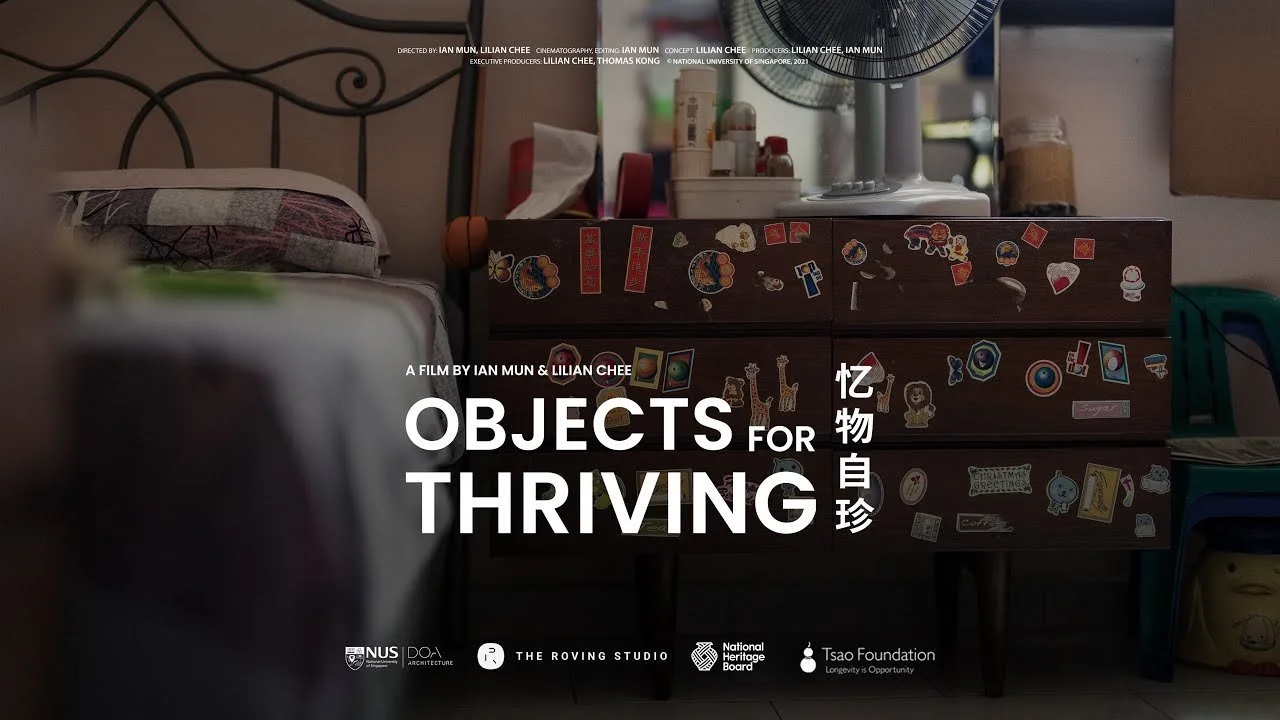
Objects for Thriving (2022) fleshes out the complexity of lived worlds in ordinary domestic objects. It focuses on the capacity of such objects to behave as affective mediators and repositories of experiences and events. A Butterfly sewing machine, a granite pestle and mortar set, and household talismans and altars, are equally ordinary and extraordinary. The setting for each object—within a domestic space–changes the nature of how these are perceived. They are involved in identity formations, ritual continuity, meaning making. As instruments embodying histories (personal, social, cultural), they are ordinary forms of heritage which continue to evolve and to matter in the everyday. They are instruments for living, or what we term ‘objects for thriving.’
The short documentary is an observational and essayistic document where research findings take on an unusual and organic form of discovery and semi-enactment, made in tandem with the participants who revisit the objects which they deem important. The meaning(s) in video-documentation are ‘emic’; they are not predetermined but emanate from the encounters between filmed subjects and the filmmaker. These ideas of memory and heritage are thus co-created by the relationships between the filmed subject, the filmmakers and the difference audiences. It empowers participant identification and builds audience empathy. The objects enmesh protocols, systems and technologies of survival, belief and ideologies. The title—Objects for Thriving—alludes to the roles these objects play in giving independence, identity and expression to the elders who are their custodians
Media: https://www.lilianchee.com/film-objectsforthriving
Annapurna Garimella appears on podcast The Seen and the Unseen for an episode entitled “Objects Speak”
The world is what it is -- but no one knows what that is, and we all see different worlds. Designer and art historian Annapurna Garimella joins Amit Varma in episode 257 of The Seen and the Unseen to describe her passage of seeing, remembering, reflecting.
Organizers: The Seen and Unseen
Media: https://www.youtube.com/watch?v=dSjLonaPwHU&ab_channel=TheSeenandtheUnseen
Akira Drake Rodriguez discusses new book Diverging Space for Deviants: The Politics of Atlanta’s Public Housing at Cornell AAP
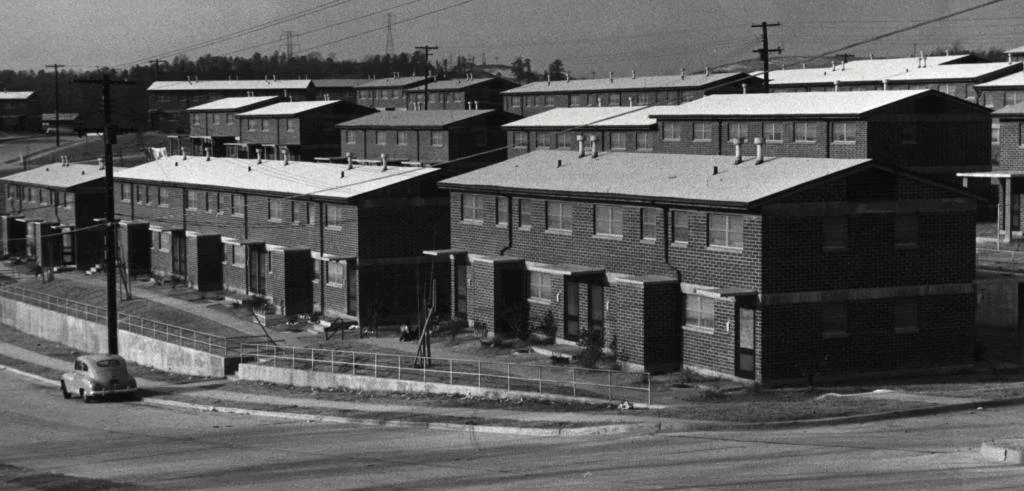
In 1936, the City of Atlanta was the first U.S. city to open federally-financed and locally-administered public housing developments to low-income families in need of safe and sanitary housing (Techwood Homes). For the city's Black residents, and later, other marginalized groups, these developments provided political opportunity to assemble, mobilize, and make claims on the State in ways that were otherwise inaccessible. Over time, tenant associations served as conduits for working-class political interests centered in spatial justice – the very politics of planning that were used to segregate and marginalize developments and residents served as an organizing logic around spatial justice issues. However, in 2013, demolition began on one of the city's last public housing developments for low-income families, nearly two decades after Techwood Homes was demolished for the 1996 Olympics. This talk examines the historical role of public housing in working-class politics and how the loss of tenant associations in the city has deepened contemporary inequities.
Organized by: Cornell AAP (Architecture Art Planning)
Media: https://aap.cornell.edu/news-events/akira-drake-rodriguez-diverging-space-deviants-politics-atlantas-public-housing
Jennifer Hirsch’s Research Cited in USA Today Article
The article, “Why it’s still so hard not to drink,” discusses alcohol, power dynamics, and privilege.
Former co-director for the CSSD Working Group Reframing Gendered Violence, Jennifer Hirsch, and sociologist Shamus Khan's research was cited in a USA Today article on alcohol consumption. The piece highlighted Professors Hirsch and Khan's findings on how college campus drinking culture is shaped by power dynamics and privilege.
The USA Today article can be found here.
To learn more about Jennifer Hirsch, you can visit her page on the CSSD website here.
For more on her work with the CSSD Working Group, Reframing Gendered Violence, read here.
Mae Ngai Launches “Mapping Historical New York: A Digital Atlas”
CSSD Executive Committee member celebrated the launch of her and her colleague’s interactive digital atlas of NYC.
CSSD Executive Committee Member Mae Ngai and collaborator Rebecca Kobrin inaugurated their project on October 27, 2021. The "Mapping Historical New York" project offers interactive visualizations of census data at the household level on maps of New York City from 1850 to 1910. The project received funding from the Gardiner Foundation. Mae collaborated with historian Rebecca Kobrin
A recording of the launch can be found here.
More information about Mae Ngai and her work can be found on her CSSD page, here.
Zip Code Memory Project Gathering for Covid
CSSD Social Engagement Project organizes an event for community mourning and healing that will take place on December 5th, 2021.

Join the participants of the CSSD Social Engagement Project, The Zip Code Memory Project, on December 5 on the steps of the Cathedral of St John the Divine for our first public gathering to acknowledge, mourn, and pay tribute to the losses of COVID 19.
Combining the physical and the digital, this community gathering will include candles, music, postcards and a healing community ritual. This event will center postcards participants may have sent, brought, or made at the event that responds to the questions:
What have we lost and learned from Covid?
How can we heal and grow together?
More information about this event can be found on the official Zip Code Memory project page here.
For more information on the work of The Zip Code Memory Project, you can visit the CSSD page here.
Ife Salema Vanable gives Under Construction Lecture entitled “Nothing Even Matters” at the University of Maryland School of Architecture, Planning, and Preservation
Nothing Even Matters tells a tale at the critical intersection of historical analysis and theoretical speculation as a way to interrogate how modes of architectural production are operative parts of the same project that has historically, and continues to mutate, to produce varying ideas about racial difference. These alignments are not merely material, they constitute a discursive system, an aesthetic and sociotechnical mode of operation that orders the world in particular ways. Simultaneously anonymous and outstanding, this talk engages Mitchell-Lama housing—a strategically crafty and impactful experiment in a long line of housing schemes hatched in New York, enacted in 1955, targeting middle-income black families. Recognized as an alternative program, complicating post-war histories of housing, Nothing Even Matters shares Ife Salema Vanable’s ongoing study of Mitchell-Lama housing, charting its hybridity, the simultaneous ambiguity and specificity with which the terms of its production have been managed (“middle-income,” “family,” “household), the ways that its objects (high-rise residential towers) aesthetically deviate from and challenge expectations for how black bodies are to be physically and materially housed, and the varied sanctioned, unauthorized, ingenious, pleasurable, sensuous, and particularly quotidian forms of occupancy black bodies have waged behind and beyond their facades.
Media: https://arch.umd.edu/events/under-construction-lecture-ife-salema-vanable
The Zip Code Memory Project seeks local participants for collaborative art-based project
The Zip Code Memory Project is seeking to bring together collaborative groups representing the diversity of our Washington Heights, East Harlem, Central/West Harlem, and South Bronx communities.
The Zip Code Memory Project seeks participants!
Do you live and/or work in Washington Heights, East Harlem, Central/West Harlem, or the South Bronx?
Want to participate in a creative project to explore the impact of the Covid-19 pandemic on you and your community?
Let’s mourn our losses, envision new futures, and re-imagine our neighborhoods through paths of hope.
Join us as we:
Walk through our streets together to remember our loved ones as we tell stories about them.
Use and take photos to create stories, memorial stamps, postcards, and scrapbooks to share with others.
Engage in acting exercises to help us build trust and community.
This collaborative art-based project is envisioned to help us heal from the devastation of the Covid-19 pandemic, and its unequal effects on our communities. Through workshops and public events we will acknowledge the trauma, grief, and loss of the pandemic while celebrating and, we hope, energizing the spaces we live in.
We are seeking to bring together collaborative groups representing the diversity of our community with regard to age, race/ethnicity, citizenship status, physical ability, educational level, language, and types of
work.
The Zip Code Memory Project is sponsored by Columbia University and the Henry Luce Foundation in collaboration with a number of local community, education, and arts organizations.* There is no cost to participants. All will receive a signed certificate from the Zip Code Memory Project and its affiliated institutions upon completion.
Open to Community Members who:
Live and/or work in Washington Heights; East Harlem, Central/West Harlem, or the South Bronx:
Are at least 18yrs old or older to participate
Are willing and able to participate in four weekends of afternoon workshops over a 9-month period Oct-June, 2021-2022
Interested in participating?
Email us: zipcodememoryproject@gmail.com
MORE INFORMATION HERE.
Naomi Stead in conversation with artist Sarah Rodigari, “Walking, Talking, and Accountability”
Walking, Talking and Accountability’ Sarah Rodigari, artist, in conversation with Dr Naomi Stead, architecture critic and Professor of Architecture, Department of Architecture, Monash University Sydney-based artist Sarah Rodigari and architecture critic, Professor Naomi Stead (Monash Department of Architecture) engage in a speculative conversation about performative walking, the art of conversation and queering as a process and a practice. An artist who creates site-specific performances and text-based installations, Sarah’s performance installation 'On Time', 2021, was included in 'The National 2021' at Carriageworks in Sydney. Sarah also speaks about a recent residency with Monash Business School.
Organizers: Monash University of Art, Design, and Architecture
Media: https://www.youtube.com/watch?v=XwUvUbVVlUI&ab_channel=MonashUniversityArt%2CDesign%26Architecture
Announcing the Zip Code Memory Project, supported by the Center for the Study of Social Difference and The Henry Luce Foundation
The Zip Code Memory Project: Practices of Justice and Repair (ZCMP), co-directed by Marianne Hirsch (Columbia University) and Diana Taylor (New York University), seeks to find reparative ways to memorialize the devastating losses resulting from the Coronavirus pandemic, while also acknowledging its radically differential effects on different Upper New York City neighborhoods. It is housed at the Center for the Study of Social Difference (CSSD) at Columbia University and is supported by a CSSD Social Engagement grant funded by the Columbia University President’s Office. CSSD is pleased to announce that the Zip Code Memory Project is the recipient of a grant from the Henry Luce Foundation for a two-year term beginning July 1, 2021.
Announcing the Zip Code Memory Project, supported by the Center for the Study of Social Difference and The Henry Luce Foundation
The Zip Code Memory Project: Practices of Justice and Repair (ZCMP), co-directed by Marianne Hirsch (Columbia University) and Diana Taylor (New York University), seeks to find reparative ways to memorialize the devastating losses resulting from the Coronavirus pandemic, while also acknowledging its radically differential effects on different Upper New York City neighborhoods. In partnership with community, arts and academic organizations, and working across the zip codes of Morningside Heights, Harlem, Washington Heights and the South Bronx, this project will gather a group of scholars, artists and activists to develop a series of hands-on artistic practices that can transform and enliven those spaces. Building on the networks of care that local communities have created, this project aims to mobilize memory and repair a sense of trust that will help us all build a sense of shared responsibility and belonging.
The Zip Code Memory Project is housed at the Center for the Study of Social Difference (CSSD) at Columbia University and supported by a CSSD Social Engagement grant funded by the Columbia University President’s Office. CSSD is pleased to announce that the Zip Code Memory Project is the recipient of a grant from the Henry Luce Foundation for a two-year term beginning July 1, 2021. These funds will serve as crucial support for the work of the ZCMP, including group meetings and discussions, reparative memory workshops, public roundtables featuring the work of reparative memorial artists, the building of an interactive website, and a final exhibition and memorial event.
Professors Hirsch and Taylor are organizing the ZCMP along with project co-conveners Susan Meiselas (Magnum Foundation), Lorie Novak (NYU), and Laura Wexler (Yale). George Emilio Sánchez (College of Staten Island) will direct the project’s participatory workshops and Maria Jose Contreras Lorenzini, Noni Carter, Jordan Cruz, Kamal Badhey, and Carina Del Valle Schorske will be among the project’s workshop leaders. Lee Xie is project manager.
The ZCMP will collaborate with local academic, arts, and community organizations including, among others, The Schomburg Center for Research in Black Culture; The Museum of the City of New York; El Museo del Barrio; The Bronx Documentary Center; City College of New York Black Studies Program and Rifkind Center for the Humanities and the Arts; Centro Civico Cultural Dominicano; The Cathedral of St. John the Divine; and Magnum Foundation.
Public Humanities and Arts Graduate Fellows working with the project include Luis Rincon Alba (NYU), Linda Aristondo (Columbia), Gabriel Carle (NYU), Bárbara Pérez Curiel (NYU), Mia Cecily Florin-Sefton (Columbia), Fadila Habchi (Yale), Kristin Hankins (Yale), Nancy Ko (Columbia), Leah Kogen-Elimeliah (CCNY), Aya Labanieh (Columbia), Guilherme Meyer (NYU/SSHRC,Canada) , Amanda Parmer (NYU), Laura Salvatore (CCNY).
With thanks for additional funding from Columbia School of the Arts; The Society of Fellows and the Heyman Center for the Humanities; Institute for Religion and Public Life; Yale University Public Humanities; City College of New York Rifkind Center for the Humanities and the Arts; Public Humanities Initiative of GSAS, NYU; Institute of Performing Arts, Tisch School of the Arts, NYU
More information about the Zip Code Memory Project can be found on the CSSD website here and on the official Zip Code Memory project HERE.
Applications now open: ZIP Code Public Humanities Fellowships
All proposals must be submitted by May 24, 2021. Applicants will be informed of decisions by June 1, 2021.
Public Humanities Fellowships for the ZIP Code Memory Project
Sponsored by the Society of Fellows and Heyman Center for the Humanities
and the Institute for Religion, Culture, and Public Life
All proposals must be submitted by May 24, 2021.
The Institute for Religion, Culture and Public Life (IRCPL) and the Society of Fellows and Heyman Center for the Humanities (SoF/Heyman) invite applications from advanced graduate students throughout the university in support of the ZIP Code Memory Project: Practices of Justice and Repair at The Center for the Study of Social Difference (CSSD). Led by Marianne Hirsch (Columbia) and Diana Taylor (NYU), The ZIP Code Memory Project seeks to find reparative ways to memorialize the devastating losses resulting from the COVID pandemic while also acknowledging its radically differential effects on different Upper New York City neighborhoods. In partnership with community, arts, religious, and academic organizations, and working across the ZIP Codes of Morningside Heights, Harlem, Washington Heights and the South Bronx, the ZCMP will gather with a group of scholars, artists, and activists to develop a series of humanities and arts practices that aim to build a sense of shared responsibility and belonging. ZCMP will comprise group meetings and discussions, reparative memory workshops, larger public roundtables and memorial events, the building of an interactive website, and a final exhibition.
Public Humanities Fellows will each work closely with one of the community, arts, or religious organizations participating in the project, as well as with a small group of participants selected by that organization.
Fellows receive a stipend of $4000. The fellowship is for 2021-2022, with the possibility of renewal.
Duties include:
Assisting with event and workshop organization
Liaising with workshop leaders and community groups about needs and goals
Assisting in writing workshop description with the community group in mind, outlining aims and requirements.
Attending all ZCMP community group activities and writing up summaries of each meeting
Working with project organizers, workshop leaders, and other PH Fellos to analyze the methods and the reparative/theoretical implications of the project
Attending ZCMP team meetings and coordinating with other PH fellows
Assisting in organizing materials for inclusion in the website
Qualifications:
Commitment to publicly engaged scholarship
Knowledge of Spanish and/or other neighborhood languages preferred
Familiarity with the participant communities preferred
Contact:
Please contact Marianne Hirsch (mh2349@columbia.edu) with any questions about the project.
Application:
A statement of interest (750 words), including qualifications for the position
1-2 page CV, including languages spoken and names and contact information of three references
Submission Guidelines:
Applications must be submitted as a single PDF document, containing Statement of Interest and CV. Label the file thus: Last Name, First Name—ZCMP Public Humanities Fellowship Send the application file as an attachment in an email to: heymanfellowships_applications@columbia.edu
All proposals must be submitted by May 24, 2021. Applicants will be informed of decisions by June 1, 2021.
ABOUT IRCPL: The Institute for Religion, Culture and Public Life supports academic research, teaching, and scholarship on the study of religion, culture, and social difference at Columbia University. In addition, it convenes academic conferences, public forums, and collaborative programming to support and extend academic and scholarly understanding of these topics, and to disseminate and distribute such new understandings to broader publics and communities.
ABOUT THE SOF/HEYMAN: Founded in 1975 to support postdoctoral research in the humanities, the Society of Fellows in the Humanities is today the Society of Fellows and Heyman Center for the Humanities--dedicated not only to fostering innovative scholarship, but also to applying the critical, reflective, and interpretive practices of the humanities to address real-world challenges. Through workshops, conferences, lectures, seminars, performances, and public humanities collaborations, the SOF/Heyman offers opportunities for faculty, postdoctoral scholars, students, artists, practitioners, and community members to participate in cross-disciplinary inquiry intent on illuminating the past, engaging the present, and imagining new ways to produce knowledge that promotes the public good.
ABOUT CSSD: The Center for the Study of Social Difference is an interdisciplinary research center supporting collaborative projects that address gender, race, sexuality, and other forms of inequality to foster ethical and progressive social change.
A Message from the Staff of CSSD: Solidarity with Palestine
Our core mission at CSSD is to create the conditions for understanding and being able to challenge inequality and oppression in all its forms. We understand all forms of oppression are interconnected and so our commitment to solidarity with Palestinians is rooted in our commitment to imagining racial, gender, economic, and environmental justice globally.
A Message from the Staff of CSSD: Solidarity with Palestine
We, the undersigned at the Center for the Study of Social Difference, stand in solidarity with the people of Palestine. We support their right to resist Israel's ethnic cleansing and to seek justice and their rights in the face of racist exclusion, dispossession of lands and homes, blockades and military violence by the Israeli state and its citizens.
One of our Palestinian colleagues and a long-time CSSD fellow has shared with us this important appeal from the Jerusalemite Women’s Coalition and we wanted to share it with you. A current pledge by scholars to support working and teaching about the Palestinian situation and rights has also been signed by many of those involved in CSSD’s projects.
Our core mission at CSSD is to create the conditions for understanding and being able to challenge inequality and oppression in all its forms. We understand all forms of oppression are interconnected and so our commitment to solidarity with Palestinians is rooted in our commitment to imagining racial, gender, economic, and environmental justice globally.
Paige West
Director
Catherine LaSota
Executive Director
Ayah Eldosougi
Program Coordinator
Fahmida Hussain
Business Officer
Katherine Franke in Vox
Columbia Law Professor Franke commented on new US legislation to combat anti-Asian hate crimes.
In an article on the intent and anticipated implications of the US House of Representatives bill to improve data tracking of anti-Asian hate crimes, Professor Franke told Vox: “Enhancing criminal prosecutions of and requiring greater reporting on hate crimes are interventions that take place after bias incidents have taken place. Education, public messaging — particularly from elected officials — and other community-based programs aimed at reconciliation and repair are more likely to reduce the incidence of hate crimes.” Read the full article here.
Professor Franke, Sulzbacher Professor of Law at Columbia Law School, directs the Center for Gender and Sexuality Law and is the faculty director of the Public Rights/Private Conscience Project. She is a member of the current CSSD working groups Queer Aqui and former working groups Reframing Gendered Violence and Science and Social Difference.
Kavita Sivaramakrishnan on Radio Open Source
Professor Sivaramakrishnan shared her expertise on the COVID-19 crisis in India.
Kavita Savaramakrishnan shared her historical and sociomedical expertise on the COVID-19 public health crisis in India on the Radio Open Source podcast. Listen to the full episode here.
Sivaramakrishnan is Associate Professor of Sociomedical Sciences at Columbia University’s Mailman School of Public Health, and a member of CSSD’s Insurgent Domesticities working group.
Menstrual Health and Gender Justice working group fellows publish new article
This piece is the launch of new menstrual health definition and urges action on menstrual health for all.
Fellows of the Menstrual Health and Gender Justice working group have published the recent article “Menstrual Health: A definition for policy, practice and research.” This paper was developed by a global team of experts who have defined menstrual health to advance policy, practice, and research and is the launch of a new menstrual health definition that urges action on menstrual health for all.
Billions of people around the world experience a menstrual cycle. Meeting their menstrual needs is essential for achieving health and gender equality. A growing body of activists and actors are rising to the challenge and have brought visibility to this long-marginalized topic. However, large-scale investment and coordination across sectors is needed to ensure menstrual health for all. To provide a common language and unite efforts to support the breadth of menstrual needs, a collaboration of experts have now defined menstrual health.
Published in the journal Sexual and Reproductive Health Matters, menstrual health is defined as “a state of complete physical, mental, and social well-being and not merely the absence of disease or infirmity, in relation to the menstrual cycle.” This definition is grounded in the World Health Organization (WHO) definition of health and is supplemented by a description of the requirements for achieving menstrual health over the life-course. As outlined in the definition, achieving menstrual health requires access to information about the menstrual cycle and self-care, materials, water and sanitation facilities and services to care for the body during menstruation, access to timely diagnosis, care and treatment for menstrual discomforts and disorders, a positive and respectful environment free from stigma, and the freedom to participate in all spheres of life throughout the menstrual cycle. The definition also emphasizes that whilst the majority of those who experience a menstrual cycle are women and girls, menstrual health is essential for all those who experience a menstrual cycle, regardless of their gender identity and the context in which they live.
Dr. Inga Winkler, one of the authors of the paper and a faculty member in human rights at Columbia University, explained, ” Menstrual health is at a critical junction. While gaining more traction, current efforts risk being siloed and disjointed. A shared understanding of menstrual health will help us address menstrual needs holistically to support the realization of a range of human rights.”
The expert collaboration was brought together by the Global Menstrual Collective and consulted a further 51 stakeholders to refine the definition.
Read the full article here.
Learn more about the Menstrual Health and Gender Justice working group here and on their blog Periods at Columbia.