The Future of Disability Studies
The Future of Disability Studies (2013-16) engaged ethical and political questions about the beginning and end of life, prenatal testing, abortion, euthanasia, eugenics, technologies for the medical correction and “cure” of the non-normative body, disease, wartime injuries, post-traumatic stress, and healthcare, as well as the dynamics of social inclusion and/or exclusion.
Project Director: Rachel Adams
The study of disability engages some of the most pressing debates of our time, questions about the beginning and end of life, prenatal testing, abortion, euthanasia, eugenics, accommodation in schools, public transportation and the workplace, technologies for the medical correction and “cure” of the non-normative body, disease, wartime injuries, post-traumatic stress, and healthcare. These questions could not be more relevant, given that people with disabilities are the largest minority group in the United States, and that everyone who lives long enough will eventually become disabled. But beyond the numbers, the study of disability matters because it forces us to interrogate charged ethical and political questions about the meaning of aesthetics and cultural representation, bodily identity, and dynamics of social inclusion and/or exclusion.
The Future of Disability Studies approached disability as an embodied condition, a mutable historical phenomenon, and a social, political, and cultural identity; it explored some of the key debates within Disability Studies and identified new directions for the future of the field. Among other questions, this project's working group asked: How might we complicate the opposition between medical and social models of disability? What are the grounds for productive dialogue and intersection between Disability studies and Medical Humanities? How can we reconcile a commitment to the autonomy and self-representation of people with disabilities with the commitment to include people with the severest forms of intellectual and physical disability? How can Disability Studies further understand its relationship to other phenomena of embodied identity, such as race, ethnicity, and gender? How should Disability studies approach scientific developments in genetics, new reproductive technologies, augmentative communication devices, prosthetics etc.? How can the study of disability cast light on political debates over about healthcare, war, and education policy? And how is our consideration of these dynamics complicated and enhanced by putting them in historical and/or transnational perspective?
News

Past Events
Publications
Fellows
Science and Social Difference
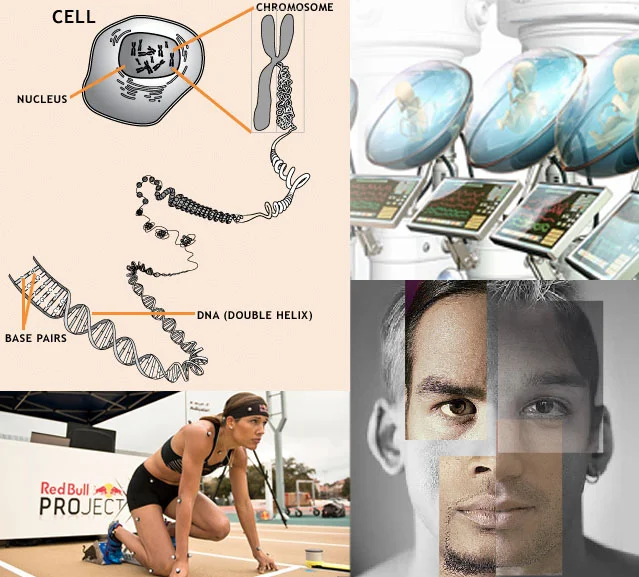
Science and Social Difference (2013-14) considered a series of linked questions about the social, cultural, and scientific nature of the sexed and raced body. The project used the specific focus on sex-testing of elite athletes as a lab for considering larger questions related to social difference and the intersections of scientific and sociocultural perspectives on the sexed and raced body. Sex-testing provides an excellent focal point for exploring how an entangled and intersectional view of sex, gender, and other social formations might be relevant to contemporary matters of science and social policy.
Project Director: Rebecca Jordan-Young
This working group considered a series of linked questions about the social, cultural, and scientific nature of the sexed and raced body. The governing bodies for international sporting competitions (such as the International Olympic Committee) released controversial new policies on who can compete in women's events. These policies, which were meant to ensure that competitors are both "female" and "feminine enough" to compete with other women athletes, provided an excellent focal point for exploring how an entangled and intersectional view of sex, gender, and other social formations might be relevant to contemporary matters of science and social policy. This project's broader goal was to use the specific focus on sex-testing of elite athletes as a lab for considering larger questions related to social difference and the intersections of scientific and sociocultural perspectives on the sexed and raced body.
Fellows
Past Events
Borders and Boundaries
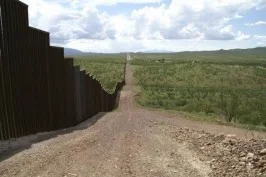
The Borders & Boundaries project re-examined current ways of thinking about global migration and sought to develop new ways of conceptualizing the sociological, historical, economic, political, aesthetic and gender-specific dimensions of human mobility and social difference. The project raised comparative questions concerning the ways in which international migrations - and border crossings of other kinds - relate to the formation and transformation of intra-societal boundaries such as race, class, gender and sexuality.
Project Directors: Claudio Lomnitz, Elizabeth Povinelli
The Borders & Boundaries project was a unique interdisciplinary working group of scholars interested in re-examining current ways of thinking about global migration and developing new ways of conceptualizing the sociological, historical, economic, political, aesthetic and gender-specific dimensions of human mobility and social difference. Borders & Boundaries had as its premise a double paradox of contemporary life: the hardening of ethnic and racial boundaries at a time when goods and information flow across national borders quite freely, and the increasingly acute focus on racial differences at a time when race as a "scientific" or descriptive social category has become conspicuously unstable. The Borders and Boundaries project raised comparative questions concerning the ways in which international migrations - and border crossings of other kinds - relate to the formation and transformation of intra-societal boundaries such as race, class, gender and sexuality. Borders & Boundaries insisted that gender/race/sexuality/class must be at the foundation of any global thought initiative and that global concerns must be at the foundation of the study of gender/race/sexuality/class.
The Borders and Boundaries Working Group focuses on the relationship between international borders and social boundaries within national societies. The working group has as its premise a double paradox of contemporary life: the hardening of ethnic and racial boundaries at a time when goods and information flow across national borders quite freely, and the racialization of social relations at a time when racial theories have an awkward relation to scientific prestige, and racial categories have become conspicuously unstable. The Borders and Boundaries Working Group seeks to explore sociological, historical, political and aesthetic dimensions of the relationship between national borders and social boundaries in a comparative context.
In order to do so, we seek to shape an international research network that is committed to comparison. The working group has initiated with an institutional platform based at CSER and CCASD at Columbia, and at the Institut de Recherche Interdisciplinaire sur les Enjeux Sociaux (IRIS) at the Ecole de Hautes Etudes en Sciences Sociales in Paris. Additional institutional sites are currently being explored in Australia, Turkey, Mexico, and Germany. The Borders and Boundaries working group’s first concern was an interrogation of the connection between racial formation and immigration in the United States and France. It is currently developing that theme, and incorporating a new field of inquiry on boundary formation and indigeneity in national societies that were founded as settler colonies. In order to achieve conceptual clarity on the subject of immigration, settlement, and race, the Borders and Boundaries working group is interested in extending attention to boundary formation in areas of the world where migration is principally internal, such as China and India. The work of the Borders and Boundaries group began in 2007, when CSER hosted a panel discussion of racism in contemporary France, and its connection to the contemporary history of race in the United States. Didier Fassin, one of the project’s initiators, has proposed a special issue of the French history journal Annales as the project’s first collective publication. CCASD and CSER will be holding a first fully-fledged conference of the Borders and Boundaries working group at Columbia in the Fall of 2008. After that meeting, we plan to work in a sustained fashion for three years, inviting speakers, faculty fellows, and visiting fellows working in a variety of sites in order to produce a robust comparative discussion.

Past Events
Publications

Liberalism's Others
Combining humanistic methods to understand the meanings people attribute to their lives, including the concepts and categories that animate them, and ethnographic and analytical methods developed in the social sciences to track the relationships between individuals and institutions of governance, economic forces, and global dynamics, "Liberalism and its Others" (2008-2011) brought together dynamic groups of historians, anthropologists, scholars of literature, law, politics, and health to explore alternative models of life and to develop new ways of thinking about the politics of the present.
Project Directors: Lila Abu-Lughod, Elizabeth Povinelli, Anupama Rao
Liberalism's Others (2008-2011) used the knowledges and practices of those marginalized in liberal or liberalizing polities in order to understand liberalism not as it imagines itself but as it is practiced. Combining humanistic methods to understand the meanings people attribute to their lives, including the concepts and categories that animate them, and ethnographic and analytical methods developed in the social sciences to track the relationships between individuals and institutions of governance, economic forces, and global dynamics, "Liberalism and its Others" brought together dynamic groups of historians, anthropologists, scholars of literature, law, politics, and health to explore alternative models of life and to develop new ways of thinking about the politics of the present. This group of scholars drew on the deep intellectual resources of Columbia University, but also collaborated closely with colleagues in Turkey, India, the UK and elsewhere, who have interests in exploring new social and political formations in the aftermath of decolonization and in the wake of neoliberal regimes.
This project sought to better understand how and why, across various transformations in form and ideology, liberal markets, political formations, and law continue to focus—and depend—on the illiberal and the different “other.” The group examined the ways that liberalism has historically opposed the normative subject to the “politically inadequate” subject stigmatized by religion, culture, race, gender, or sexual difference, exploring questions such as, "How do such “others” continue to be salient in local and global forms of liberal reform?" Through case studies of particular regions and specific biosocial domains, we asked how liberal and neoliberal economic, state, and legal transformations produce and rely on social difference.
In a range of critical literatures--from those that examine the dark side of humanitarianism in colonial settings and human rights regimes in the present to those that uncover the legitimating functions of democratic reform or track the disjunctions created by global transformations such as the rise of Chinese economic power or the shifting of global economic flows to southern circuits--the pivotal role of social difference in the discourses and practices of power is clear. The emergence of neoliberalism in the 1970s, for instance, relied on the stigmatization of the “black welfare mother” in the U.S. and of the immigrant in Britain (where the working class was also vilified). Since then, in the US, Europe, and Australia, the immigrant, homosexual, and class radical have helped prop up conservative movements even as these neoliberal movements position themselves as the bulwark against the Islamic, colonial, and terrorist “other.” The challenge to secular states by some Christian and Muslim groups has simultaneously destabilized secularism as the self-evident mode of governmentality and provoked a complicated set of discourses and practices around liberal tolerance.
This project sought to understand how liberal and neoliberal economic, state, and legal transformations both produce and rely on social difference even as the content of that difference shifts. Through comparative engagement with case studies of particular regions and specific biosocial domains this group explored the sometimes incommensurate relationship between the representations of liberalism and facts on the ground.