

Dilara Çalışkan
Fellow, Cultural Studies, Sabancı University
Dilara Çalışkan is currently working at Sabancı University’s Gender and Women’s Studies Forum. In 2014, she graduated from Sabancı University’s Cultural Studies Master Program with a thesis titled “Queer Mothers and Daughters: The Role of Queer Kinship in the Everyday Lives of Trans Sex Worker Women in Istanbul.” Since 2010, she has been involved with Istanbul’s LGBTI Solidarity Association, which particularly focuses on human rights violations based on sexual orientation and gender identity, opposes the criminalization of sex work, and supports its recognition as work.
Dilara Çalışkan
Cultural Studies, Sabancı University

Dilara Çalışkan is currently working at Sabancı University’s Gender and Women’s Studies Forum. In 2014, she graduated from Sabancı University’s Cultural Studies Master Program with a thesis titled “Queer Mothers and Daughters: The Role of Queer Kinship in the Everyday Lives of Trans Sex Worker Women in Istanbul.” Since 2010, she has been involved with Istanbul’s LGBTI Solidarity Association, which particularly focuses on human rights violations based on sexual orientation and gender identity, opposes the criminalization of sex work, and supports its recognition as work.
Working Group Affiliation

Hazel Carby
Fellow, African American Studies and American Studies, Yale University
Hazel Carby is the Charles C. and Dorothea S. Dilley Professor of African American Studies, Professor of American Studies, and Director of the Initiative on Race Gender and Globalization at Yale University. Her books include Reconstructing Womanhood (OUP, 1987), Race Men (Harvard, 1998), and Cultures in Babylon (Verso, 1999).
Hazel Carby
Professor of African American Studies and American Studies, Yale University

Hazel Carby is the Charles C. and Dorothea S. Dilley Professor of African American Studies, Professor of American Studies, and Director of the Initiative on Race Gender and Globalization at Yale University. Her books include Reconstructing Womanhood (OUP, 1987), Race Men (Harvard, 1998), and Cultures in Babylon (Verso, 1999). Recent publications include: “A Strange and Bitter Crop: The Spectacle of Torture,” Open Democracy; the Foreword to making race matter: bodies, space & identity, eds. Claire Alexander and Caroline Knowles; and two essays, “The New Auction Block: Blackness and the Marketplace,” in Companion to African American Literature, ed. Lewis Gordon and “Postcolonial Translations” for Ethnic and Racial Studies. She recently completed the manuscript “Imperial Intimacies,” an auto-history of the intimate imperial entanglements of the islands of Britain and Jamaica from the anti-Napoleonic war to the anti-fascist war.
Working Group Affiliation

Todd Carmody
Fellow, History and Literature, Harvard University
Todd Carmody is a Lecturer on History & Literature at Harvard University, where he teaches broadly in nineteenth- and twentieth-century American and African American literature and in disability studies. He previously held an ACLS New FacultyFellowship in UC Berkeley’s Department of English and a Sheila Biddle Ford Foundation Fellowship from Harvard’s W.E.B.
Todd Carmody
Lecturer on History and Literature, Harvard University
Todd Carmody is a Lecturer on History & Literature at Harvard University, where he teaches broadly in nineteenth- and twentieth-century American and African American literature and in disability studies. He previously held an ACLS New FacultyFellowship in UC Berkeley’s Department of English and a Sheila Biddle Ford Foundation Fellowship from Harvard’s W.E.B. Du Bois Institute for African and African American Research. Carmody is at work on a book entitled “Racial Handicap”: The Disability History of Uplift, which explores how postbellum discourses of black progress were shaped both by disability culture and by the legal, economic, and political developments that produced disability as a coherent social category. Recent essays and reviews have appeared or are forthcoming in J19: The Journal of Nineteenth-Century Americanists, Callaloo, Cultural Critique, Criticism, The Journal of Modern Literature, and Modern Philology.
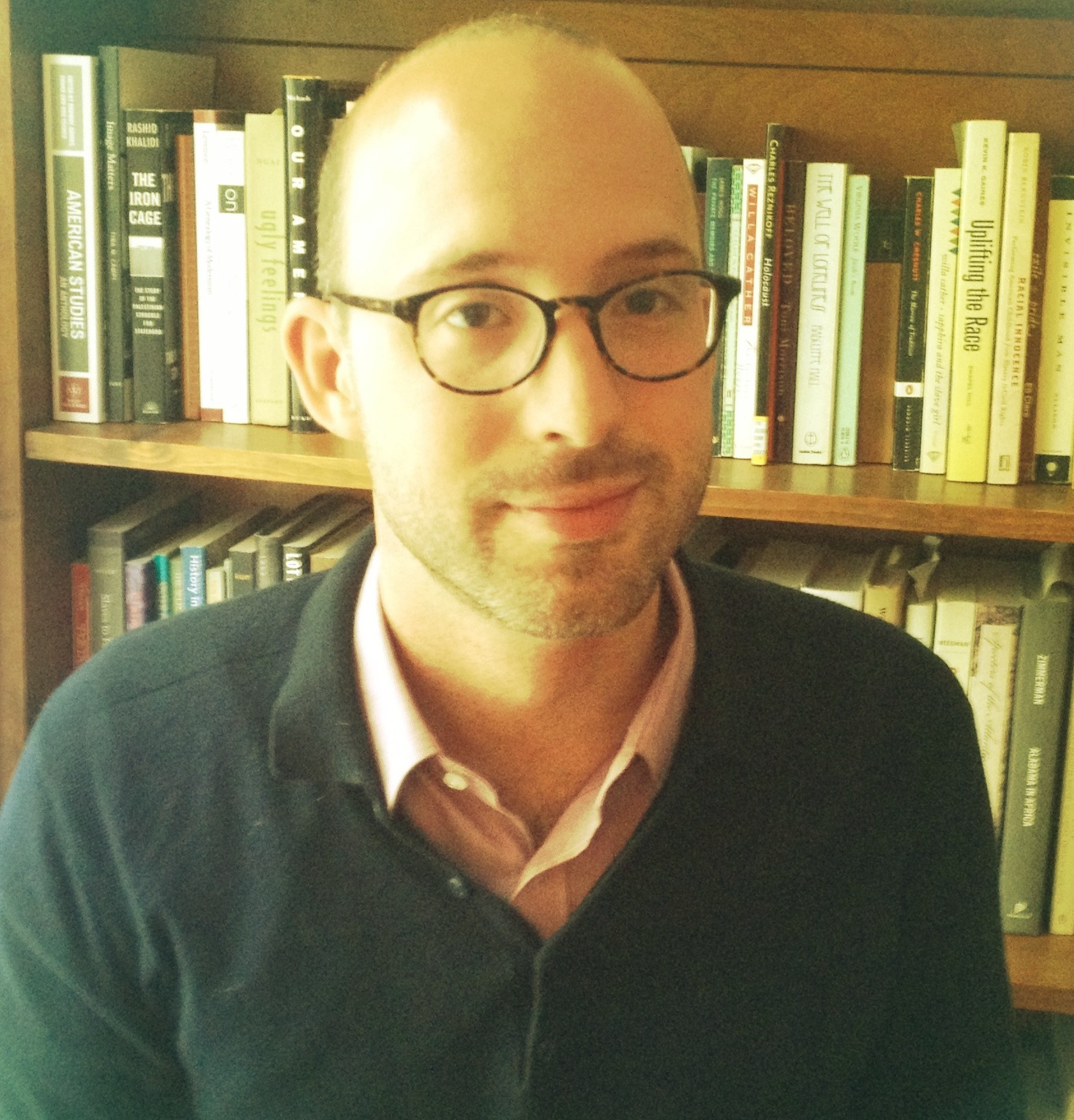

Leonard Cassuto
Fellow, English, Fordham University
Leonard Cassuto, a professor of English at Fordham University, has been teaching and writing about disability since Rosemarie Garland-Thomson lighted his path into the field more than fifteen years ago. His most recent piece is “Disability Studies 2.0,” which appeared in American Literary History in 2010.
Leonard Cassuto
Professor of English, Fordham University
Leonard Cassuto, a professor of English at Fordham University, has been teaching and writing about disability since Rosemarie Garland-Thomson lighted his path into the field more than fifteen years ago. His most recent piece is “Disability Studies 2.0,” which appeared in American Literary History in 2010.

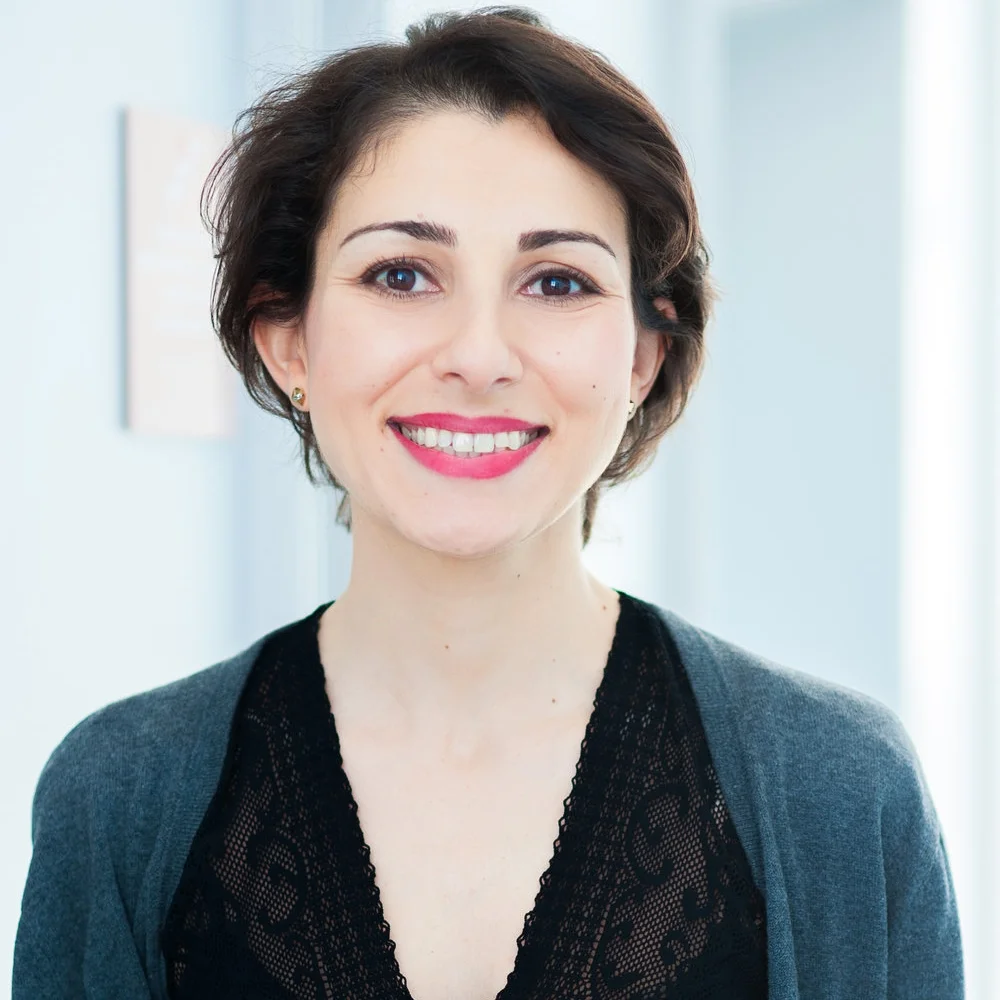
Rana Zincir Celal
Fellow, Economics, London School of Economics
As Senior Program Manager at Columbia Global Centers | Istanbul, Rana Zincir Celal worked with Columbia University faculty to design and implement collaborative programs in Turkey.In Cyprus, she was involved in establishing the Home for Cooperation, producing art exhibitions on contested histories, developing educational materials on enforced disappearance with The Elders and the International Center for Transitional Justice, and advocating for a gender perspective in the peace process.
Rana Zincir Celal
Senior Program Manager
As Senior Program Manager at Columbia Global Centers | Istanbul, Rana Zincir Celal is the Deputy Director of the Atlantic Fellows programme at the London School of Economics. Previously, worked with Columbia University faculty to design and implement collaborative programs in Turkey. In Cyprus, she was involved in establishing the Home for Cooperation, producing art exhibitions on contested histories, developing educational materials on enforced disappearance with The Elders and the International Center for Transitional Justice, and advocating for a gender perspective in the peace process. Between 2005 and 2009, she served as Vice-President of Programs for Chrest Foundation, leading its grantmaking in Turkey. She also launched programs on social justice philanthropy and cultural cooperation with the Third Sector Foundation of Turkey, Anadolu Kültür and the Christensen Fund. Before relocating to Turkey in 2002, Rana was based with the Ford Foundation's Economic Development Program in New York as a Program Associate. Rana is currently a trustee of Greenpeace International, board member of Greenpeace Mediterranean, advisor to the European Cultural Foundation 'Connected Action for the Commons Program,' member of the Greek Turkish Forum and Anadolu Kültür’s Executive Committee. She has also served on the European Cultural Foundation's Princess Margriet Award Jury and the Hrant Dink Foundation International Human Rights Award Committee. She holds degrees from Columbia University (BA, Political Science) and the London School of Economics (MSc, Development Studies).


Ruchi Chaturvedi
Fellow, Anthropology, Hunter College
Ruchi Chaturvedi received her Ph.D. in Anthropology from Columbia University in 2007. Ruchi’s research focuses on questions of political violence, popular politics and its contentious relationship with the ideology and institutions of liberal democracy. The lifeworlds of local level political workers of the Marxist Left and Hindu Right in Kerala, South India, their acts and experiences of violence, and the criminal courts where these workers have been tried have been Ruchi’s key ethnographic resources so far.
Ruchi Chaturvedi
Assistant Professor of Anthropology, Hunter College
Ruchi Chaturvedi received her Ph.D. in Anthropology from Columbia University in 2007. Ruchi’s research focuses on questions of political violence, popular politics and its contentious relationship with the ideology and institutions of liberal democracy. The lifeworlds of local level political workers of the Marxist Left and Hindu Right in Kerala, South India, their acts and experiences of violence, and the criminal courts where these workers have been tried have been Ruchi’s key ethnographic resources so far. Duke University Press has contracted to publish her book Democratic Dark Side: The Work of Politics, Violence, and Law in South India.
Ruchi’s second project concentrates on so-called lumpens active in popular and party politics in various towns of North India. At Hunter College, she teaches courses on Power and Politics, Anthropology of War, Legal Anthropology and Violence and Ethnic Conflict in South Asia.


Lilian Chee
Fellow, Architecture, National University of Singapore.
Lilian Chee is an Associate Professor at the National University of Singapore. She is the author of Architecture and Affect: Precarious Spaces (2019) and co-editor of Asian Cinema and The Use of Space (2015). She conceptualized, researched and collaborated on the award-winning architectural essay film about single women occupants in Singapore’s public housing 03-FLATS (2014). Her work is situated at the intersections of architectural representation, gender, and affect in a contemporary interdisciplinary context.
Lilian Chee
Associate Professor, Architecture, the National University of Singapore

Lilian Chee is an Associate Professor at the National University of Singapore. She is the author of Architecture and Affect: Precarious Spaces (2019) and co-editor of Asian Cinema and The Use of Space (2015). She conceptualized, researched, and collaborated on the award-winning architectural essay film about single women occupants in Singapore’s public housing 03-FLATS (2014). Her work is situated at the intersections of architectural representation, gender and affect in a contemporary interdisciplinary context. A writer, academic, designer, curator, and award-winning educator, her research explores the emergence of architecture through everyday encounter, often in domestic spaces.
Publications:
Chee, Lilian. Architecture and Affect: Precarious Spaces. Oxon and New York: Routledge, 2023. https://doi.org/10.4324/9781315604565.
Chee, Lilian. ‘Domesticity, Gender, and Architecture’. In The Routledge Companion to Contemporary Architectural History, edited by Duanfang Lu, 185–201. Routledge, 2023. https://doi.org/10.4324/9781315674469.
Jane Simon, Sophia Maalsen, Lilian Chee & Cathy Smith (2023). Reflections on, and from, Feminist Practice: Introduction to the ‘Home’ Special Issue, Australian Feminist Studies, DOI: 10.1080/08164649.2023.2267178
Audrey Yue, Lilian Chee, Jane M. Jacobs & Natalie Pang (2023). Making do: young people and mobilities at home, Journal of Youth Studies, DOI: 10.1080/13676261.2023.2261859
Lilian Chee (2022). ‘Housing and Domesticity’, Architecture and Culture, 10:3, 554-558, DOI: 10.1080/20507828.2022.2121898
Lilian Chee, Silvia Federici and Daniela Ortiz dos Santos. “Domestic Work and the Architecture of Emancipation.” Contemporary Feminist Spatial Practice, Arch+ v.246, (February 2022), 66-75.
Chee, Lilian, Jane M. Jacobs, Audrey Yue, and Natalie Pang. ‘Foundations for Home-Based Work: A Singapore Study (A Project Funded by the Social Science Research Council)’. Singapore: Foundations for Home-based Work (NUS), 2022. https://foundationsforhomebasedwork.com.
Mun, Ian and Lilian Chee. Objects for Thriving. Documentary. Singapore: NUS and Roving Productions, 2022. https://www.youtube.com/watch?v=ZYtBmE4_Qrk.
Chee, Lilian. ‘Keeping Cats, Hoarding Things: Domestic Situations in the Public Spaces of the Singaporean Housing Block’. The Journal of Architecture 22, no. 6 (18 August 2017): 1041–65. https://doi.org/10.1080/13602365.2017.1362024.
Lei, Yuan Bin and Lilian Chee. 03-FLATS. Architectural Essay Film. Singapore: National University of Singapore and 13 Little Pictures, 2014, http://www.03-flats.com/

Anne Cheng
Fellow, English, Princeton
Anne Anlin Cheng is Professor of English and the Associate Chair in the Department of English and a core faculty in the Center for African American Studies at Princeton University. She specializes in race studies and psychoanalytic theory and works in twentieth-century American literature, with special focus on Asian American and African American literatures. She is the author of The Melancholy of Race: Assimilation, Psychoanalysis, and Hidden Grief (Oxford University Press), which explores the notion of racial grief at the intersection of culture, history, and law.
Anne Cheng
Professor of English and the Associate Chair in the Department of English, Princeton
Anne Anlin Cheng is Professor of English and the Associate Chair in the Department of English and a core faculty in the Center for African American Studies at Princeton University. She specializes in race studies and psychoanalytic theory and works in twentieth-century American literature, with special focus on Asian American and African American literatures. She is the author of The Melancholy of Race: Assimilation, Psychoanalysis, and Hidden Grief (Oxford University Press), which explores the notion of racial grief at the intersection of culture, history, and law. She is currently completing a manuscript on Josephine Baker and the intimate relationship between the theatricalization of racialized skin in the early twentieth century and the Modernist ideal of the denuded surface.


Sarah Chinn
Fellow, English, Hunter College
Sarah Chinn teaches nineteenth century literature at Hunter College, CUNY. Her work primarily explores questions of race, embodiment, sexuality, and gender in U.S. literature and culture, particularly in the 19th century. She is the author of Technology and the Logic of American Racism: A Cultural History of the Body as Evidence (Continuum, 2000) and The Invention of Modern Adolescence: Children of Immigrants in Turn-of-the-Century America (Rutgers University Press, 2008).
Sarah Chinn
Associate Professor of English, Hunter College, CUNY

Sarah Chinn teaches nineteenth century literature at Hunter College, CUNY. Her work primarily explores questions of race, embodiment, sexuality, and gender in U.S. literature and culture, particularly in the 19th century. She is the author of Technology and the Logic of American Racism: A Cultural History of the Body as Evidence (Continuum, 2000) and The Invention of Modern Adolescence: Children of Immigrants in Turn-of-the-Century America (Rutgers University Press, 2008). She is currently working on two book-length projects: Spectacular Men: Race, Gender, and Nation on the Early American Stage, and Feeling Our Way: The Ethics of Lesbian Writing.
Working Group Affiliation
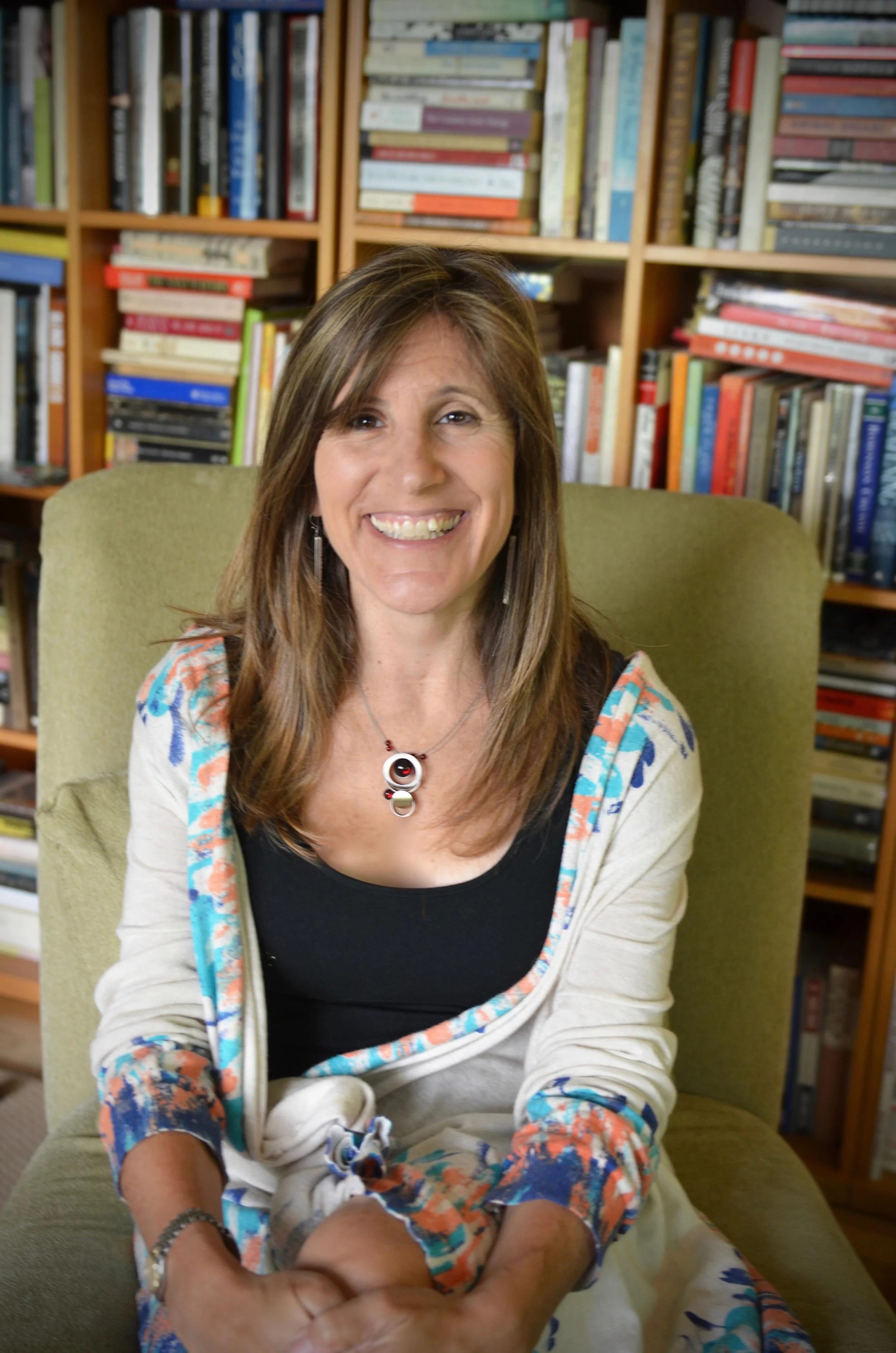
Laura Ciolkowski
Fellow, Women, Gender, Sexuality Studies, University of Massachusetts Amherst
Laura Ciolkowski’s teaching and research interests include gender & sexuality studies, feminist pedagogies, social justice movements, literary and cultural theory, the literature and theory of mass incarceration, and sexual and gender-based violence.
Laura Ciolkowski
Senior Lecturer, Women, Gender, Sexuality Studies, University of Massachusetts Amherst

Laura Ciolkowski’s teaching and research interests include gender & sexuality studies, feminist pedagogies, social justice movements, literary and cultural theory, the literature and theory of mass incarceration, and sexual and gender-based violence. Her work has been published in a range of journals, including: Twentieth Century Literature; Studies in the Novel; Genders;Novel: A Forum on Fiction; Public Books; and Victorian Literature and Culture. Her "Rape Culture Syllabus," published inPublic Books, was widely shared and circulated by scholars and activists across the country. In addition to her scholarly research, Laura is a writer and book critic whose articles and reviews have appeared in the New York Times, the New Yorker Magazine, the Washington Post, the Chicago Tribune, the Boston Globe, the LA Times, the Philadelphia Inquirer, theInternational Herald Tribune, and the San Francisco Chronicle.
Laura has taught a wide range of WGSS courses over the last 15+ years as a faculty member at Columbia University, where she was also Associate Director of the Institute for Research on Women, Gender, and Sexuality. Laura is especially interested in and passionate about prison education and, as a faculty member at the Center for Justice at Columbia, she taught humanities and WGSS courses at Taconic Correctional Facility, a medium security women’s prison in Bedford, NY, in a program for incarcerated students pursuing a college degree.
Laura received her PhD and MA in Literature from Brown University and graduated from Columbia University, Phi Beta Kappa and magna cum laude, with a BA in English and Comparative Literature.
Working Group Affiliation
Beth Coleman
Fellow, Writing and New Media, MIT
Beth Coleman is Assistant Professor of Writing and New Media in the Program in Writing and Humanistic Studies and Comparative Media Studies. She is faculty director of the C3 game culture and mobile media initiative. Her fields of research interest include new media, contemporary aesthetics, electronic music, critical theory and literature, and race theory. Under the name M. Singe, she co-founded the SoundLab Cultural Alchemy project, established in 1995.
Beth Coleman
Assistant Professor of Writing and New Media, MIT
Beth Coleman is Assistant Professor of Writing and New Media in the Program in Writing and Humanistic Studies and Comparative Media Studies. She is faculty director of the C3 game culture and mobile media initiative. Her fields of research interest include new media, contemporary aesthetics, electronic music, critical theory and literature, and race theory. Under the name M. Singe, she co-founded the SoundLab Cultural Alchemy project, established in 1995.
Her scholarly and literary writings have been published by the British pavilion for the Venice Bienale, 2003; Broadway/Random House; Gagosian Gallery; Sammlung Goetz Collection; and New York University Press, as well as in journals including Artforum, Artbyte, and Nka: Journal for African Art. Coleman is a 2003-4 Rockefeller New Media Fellow and a 2004 Ford Foundation fellow. Her artwork has been exhibited internationally at P.S.1 Museum of Contemporary Art, Mirror's Edge exhibition, ARC/Musee d'Art moderne de la Ville de Paris, Massachusetts Institute of Technology List Gallery, among other venues. She has been working internationally as a sound artist since 1997, with her music appearing on various electronic music labels including SoundLab Records.
Coleman received the BA from Yale University in 1991, and the Ph.D. in comparative literature from NYU in 2004. Before arriving at MIT, she was a 2004 artist-in-residence at the Waag Society for Old and New Media, Amsterdam where she completed the art and architectural installation, Music Box. She is currently working on a mongraph entitled Difference Engines: Race as Technology.


David J. Connor
Fellow, Education, Hunter College, CUNY
David J. Connor is an Associate Professor in the School of Education of Hunter College, CUNY. He is the author of three books and numerous articles on disability and education. David's areas of interest include teacher education, learning disabilities, inclusive education, and social justice issues. For the last decade he has contributed to the development of the growing field of Disability Studies in Education.
David J. Connor
Associate Professor, School of Education, Hunter College, CUNY
David J. Connor is an Associate Professor in the School of Education of Hunter College, CUNY. He is the author of three books and numerous articles on disability and education. David's areas of interest include teacher education, learning disabilities, inclusive education, and social justice issues. For the last decade he has contributed to the development of the growing field of Disability Studies in Education.


Qudsiya Contractor
Fellow, Inclusive Policies, Tata Institute of Social Sciences Centre
Qudsiya Contractor is an Assistant Professor at the Tata Institute of Social Sciences Centre for Study of Social Exclusion and Inclusive Policies, School of Research Methodology.
Qudsiya Contractor
Assistant Professor, Tata Institute of Social Sciences

Qudsiya Contractor is an Assistant Professor at the Tata Institute of Social Sciences Centre for Study of Social Exclusion and Inclusive Policies, School of Research Methodology. Qudsiya completed her PhD in 2014 as a Max Planck Institute Doctoral Fellow at the School of Development Studies, TISS. Her research interests include: Social identities; anthropology ofcities and development; communal politics; health, illness and society. She has previously worked in the development sector on issues of displacement, human rights and urbanization. She was a visiting fellow at MPI Göttingen in 2015. Her recent work has been on the politics of the “meat-ban” in Hindu-Muslim relations.
Working Group Affiliation

Hector Cordero-Guzmán
Fellow, Department of Sociology, Baruch College
Hector Cordero-Guzmán
Professor, Department of Sociology, Baruch College

Dr. Héctor R. Cordero-Guzmán received his M.A. and Ph.D. degrees in Sociology from The University of Chicago is a Professor at the Austin W. Marxe School of Public and International Affairs at Baruch College of the City University of New York. He is also a Professor in the Ph.D. Programs in Sociology and in Urban Education at the City University of New York (CUNY) Graduate School and University Center. Prior to joining the Marxe School at CUNY, Dr. Cordero-Guzman was a Program Officer in the Economic Development and the Quality Employment Units of the Asset Building and Community Development Program at The Ford Foundation.
Between 2002 and 2007, Dr. Cordero-Guzman was a Professor and the Chair of the Black and Hispanic Studies Department at Baruch College of the City University of New York where he was responsible for managing and overseeing the work in Black and Hispanic Studies. Before joining the faculty at Baruch College of the City University of New York, Dr. Cordero-Guzman spent six years as an Assistant Professor at the Robert J. Milano Graduate School of Management and Urban Policy at the New School for Social Research where he taught a range of graduate courses in statistics, research methods, and social welfare policy. He also worked as the Research Director for Political Economy at the Center for Puerto Rican Studies at Hunter College of the City University of New York, the largest Latino focused research center in the eastern United States and was an adjunct instructor in Latin American Studies at Rutgers University in New Jersey.
Dr. Cordero-Guzman has published his academic research on issues related to education, employment, poverty, race and inequality, non-profit organizations, international migration, transnational processes, economic development, and social welfare policy in American Behavioral Scientist, The Journal of Small Business Management, The Annals of the American Academy of Political and Social Science, Racial and Ethnic Studies, International Migration, Journal of Ethnic and Migration Studies, Social Forces, Diaspora, The Review of Black Political Economy, Migration World and in a number of other volumes. Dr. Cordero-Guzman is also the editor of Migration, Transnationalization and Race in a Changing New York (with Dr. Ramon Grosfoguel and Dr. Robert Smith) and was involved in drafting a report for The White House Initiative on Educational Excellence for Hispanic Americans on community based services and programs that focus on Latino youth entitled What Works for Latino Youth.
Dr. Cordero-Guzman has served on the Board of Directors of a number of non-profit organizations including ACCION-New York, the largest micro-lending organization in the United States; the Community Service Society of New York (CSS), the oldest and largest anti-poverty group in New York City; the Upper Manhattan Empowerment Zone (UMEZ), a federally chartered multi-million dollar economic development initiative; St. Ann's Corner of Harm Reduction, one of the largest and oldest needle exchange programs in New York City; El Barrio Popular Education Program, an adult education program; and is on the advisory board of New York City's Young Men Initiative (YMI). Currently, Dr. Cordero-Guzman serves on the Board of Director of the Association for Research of Non Profit Organizations and Voluntary Action (ARNOVA), a professional association; The Economic Policy Institute in Washington, DC; The Afro-Latin Jazz Alliance; and El Museo Del Barrio, the largest Puerto Rican\Latino Museum in the United States.
Working Group Affiliation
Unpayable Debt: Capital, Violence, and the New Global Economy
Alexandra Cornelius-Diallo
Fellow, History, Florida International University
Dr. Cornelius's research examines the development of “racial science” during the nineteenth century. Her book manuscript titled /'More Approximate to the Animal:' African American Men and Women’s Resistance to the Rise of Scientific Racism in Mid-Nineteenth Century America/ provides a gendered analysis of the ways in which African Americans - enslaved and free, lettered and illiterate - addressed scientific theories of racial differences.
Instructor, Department of History, Florida International University
Dr. Cornelius's research examines the development of “racial science” during the nineteenth century. Her book manuscript titled /'More Approximate to the Animal:' African American Men and Women’s Resistance to the Rise of Scientific Racism in Mid-Nineteenth Century America/ provides a gendered analysis of the ways in which African Americans - enslaved and free, lettered and illiterate - addressed scientific theories of racial differences. Cornelius argues that a gendered analysis of the development of scientific racial discourse illuminates the ways in which the scientific constructions of human differences served racist, sexist, and imperialist political agendas.
Previous studies of racial science during the nineteenth century have ignored the centrality of scientific efforts to construct the black female body as a laboring body, one bereft of “motherly” instincts. Upon publication of the manuscript, Cornelius's next research project will focus on scientific constructions of black motherhood as they informed social policy makers between the mid nineteenth to late twentieth centuries.
Although it is clear that science historically has been misused, Cornelius encourages students to move beyond a simple vilification of science. Instead, they are challenged to consider the ways practitioners may use medicinal and scientific knowledge as a tool of resistance.

G. Thomas Couser
Fellow, Disability Studies, Hofstra University
G. Thomas Couser retired in 2011 from Hofstra University, where he was a professor of English and founding director of the Disability Studies Program.
G. Thomas Couser
Professor Emeritus of English and Founding Director, Disability Studies Program, Hofstra University

G. Thomas Couser retired in 2011 from Hofstra University, where he was a professor of English and founding director of the Disability Studies Program. He is the author of American Autobiography: The Prophetic Mode (Massachusetts, 1979), Altered Egos: Authority in American Autobiography (Oxford, 1989), Recovering Bodies: Illness, Disability, and Life Writing (Wisconsin, 1997), Vulnerable Subjects: Ethics and Life Writing (Cornell, 2004), and Signifying Bodies: Disability in Contemporary Life Writing (Michigan, 2009), as well as about fifty articles or book chapters. His latest book, Memoir: An Introduction, will be published by Oxford University Press in November 2011. He is currently writing a book about contemporary American “patriography” (memoirs of fathers by sons and daughters) and a memoir of his own father.
Working Group Affiliation

Aimee Meredith Cox
Fellow, African American Studies and Anthropology, Yale University.
Aimee Meredith Cox is an Associate Professor in the departments of African American Studies and Anthropology at Yale University. She is the editor of Gender: Space (MacMillan) and co-editor of a special issue of Public: A Journal of Imagining America on art and knowledge production in the academy. Cox’s first monograph, Shapeshifters: Black Girls and the Choreography of Citizenship (Duke 2015), won a 2016 Victor Turner Book Prize in Ethnographic Writing.
Aimee Meredith Cox
Associate Professor, African American Studies and Anthropology, Yale University

Aimee Meredith Cox is an Associate Professor in the departments of African American Studies and Anthropology at Yale University. Cox’s first monograph, Shapeshifters: Black Girls and the Choreography of Citizenship (Duke 2015), won a 2016 Victor Turner Book Prize in Ethnographic Writing, and Honorable Mention from the 2016 Gloria E. Anzaldúa Book Prize, given by the National Women’s Studies Association. She is the editor of Gender: Space (MacMillan) and co-editor of a special issue of Public: A Journal of Imagining America on art and knowledge production in the academy. Cox is also a former professional dancer--she danced on scholarship with the Dance Theatre of Harlem and toured extensively with Ailey II. Her next ethnographic project, Living Past Slow Death, explores the creative protest strategies individuals and communities enact to reclaim Black life in the urban United States, focused on the riverine communities of the Mississippi. She is a member of the Social Text Collective.
Working Group Affiliation

Christina Crosby
Fellow, Feminist, Gender, and Sexuality Studies, Wesleyan University
Christina Crosby has worked at Wesleyan University since 1982, where she is Professor of English and Feminist, Gender, and Sexuality Studies. Her subfields are Victorian studies and Feminist Studies. She has published The Ends of History: Victorians and the 'Woman Question' and essays and reviews in Victorian Studies, PMLA, College English, and elsewhere.
Christina Crosby
Professor of English and Feminist, Gender, and Sexuality Studies, Wesleyan University
Christina Crosby has worked at Wesleyan University since 1982, where she is Professor of English and Feminist, Gender, and Sexuality Studies. Her subfields are Victorian studies and Feminist Studies. She has published The Ends of History: Victorians and the 'Woman Question' and essays and reviews in Victorian Studies, PMLA, College English, and elsewhere. Her current book project is autobiographical: "An Account of Myself," an exploration of living with a spinal cord injury, drawing on feminist theories of embodiment, queer phenomenology, and critical disability studies.

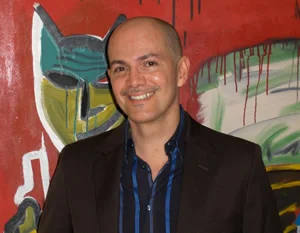
Arnaldo Cruz-Malavé
Fellow, Modern Languages and Literatures, Fordham University
Arnaldo Cruz-Malavé
Professor, Department of Modern Languages and Literatures, Fordham University


Jordan Corine Cruz
Fellow, Photography, School of Visual Arts
Jordan Corine Cruz (b. 1993) is a Puerto Rican interdisciplinary artist working in sculpture, installation, photography, video, and sound. Using traditional materials, imagery, and layered sound as cultural signifiers, Cruz creates interactive spaces and objects that focus on the intersections between self-identification, labor, gender, and displacement.
Jordan Corine Cruz
Interdisciplinary Artist, Bronx, New York
Jordan Corine Cruz (b. 1993) is a Puerto Rican interdisciplinary artist working in sculpture, installation, photography, video, and sound. Using traditional materials, imagery, and layered sound as cultural signifiers, Cruz creates interactive spaces and objects that focus on the intersections between self-identification, labor, gender, and displacement. Her work considers how communities of color utilize nostalgia to create strategies for survival. Cruz’s practice centers on cultural archives ranging from family lore, Puerto Rican traditional practices, and block culture.
Cruz received a BFA in Photography and an MFA in Photography, Video, and Related Media from the School of Visual Arts. Her work has been shown in Haul Gallery, SoMad Studio, La Mama Galleria, and SVA Chelsea Gallery. Cruz was granted the BRIO award by the Bronx Council on the Arts in 2020. Additionally, she has organized and hosted a panel talk focusing on Latinx Women Photographers in collaboration with El Museo del Barrio in New York City. Cruz lives and works in The Bronx, New York.
Working Group Affiliations
Zip Code Memory Project: Practices of Justice and Repair, Social Engagement Project
