
Nancy Kricorian Published in Guernica Magazine Daily
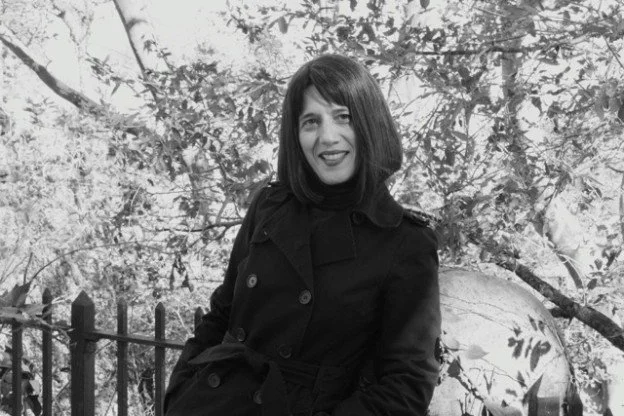
Nancy Kricorian's essay "Pilgrimage as/or Resistance," which was originally presented earlier this year at the Women Mobilizing Memory workshop at Depo in Istanbul, Turkey, has been published by Guernica.
Columbia Global Centers Showcases Women Mobilizing Memory
"Led by Professors Marianne Hirsh, Jean Howard, Diana Taylor and Ayşe Gül Altınay, the Mobilizing Memory for Action workshop engaged scholars, artists and activists from Chile, the United States and Turkey in public events, an art exhibition, a gender-memory walking tour and theater performances. "
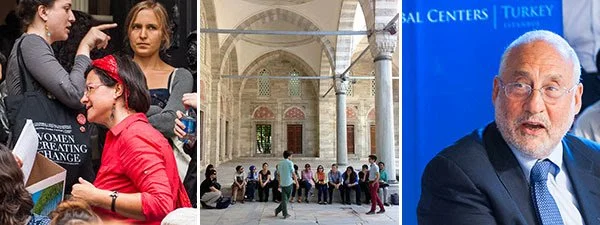
Read more about the September 2014 Women Mobilizing Memory Istanbul workshop in this month's Columbia Global Centers E-Newsletter.
PUBLIC ROUNDTABLE: Women and Politics: A Turning Point?
Tuesday, September 23, 2014
Roone Arledge Cinema, Columbia
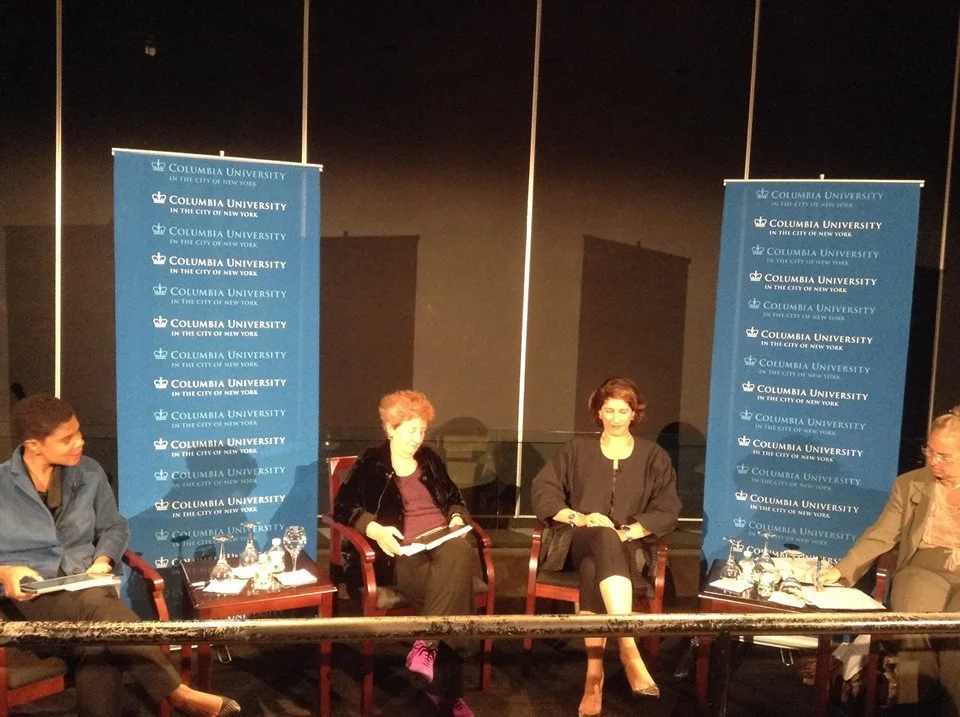
In 2012, women comprised an impressive majority of the electorate. Currently, women hold a majority of twenty seats in the Senate. More women than ever before are raising young children while serving at the Capitol. Moreover, it is likely not only that the U.S. will see a woman presidential candidate in 2016, but also that Republicans will again nominate a woman for their vice presidential seat. “Women and Politics: A Turning Point?,” the 2014 public program co-hosted by Women Creating Change, a global initiative of the Center for the Study of Social Difference, and the Columbia Alumni Association (CAA), explored these and other issues in a roundtable discussion, featuring: Manhattan Borough President Gale A. Brewer ‘97GS, NPR reporter Mara Liasson, and poet and Nation columnist Katha Pollitt ‘75SOA. Professor of Sociology and Gender Studies and Dean of Social Sciences Alondra Nelson moderated.
The speakers were in agreement that the 2012 election cycle could augur an exciting turning point for women in politics. According to Liasson, “This year, Republicans realized that they are behind the curve.” She noted the marked increase in Republicans who have been “coming out for over-the-counter birth control,” even though no drug company has ever appealed to the FDA for it. But, for Liasson the point is not whether Republicans’ current stance on birth control is realistic. Rather, in her view, “It is progress when Republicans are for over-the-counter birth control, because it means they’re moving farther to the center,” regardless of what their political motives may be.
Pollitt preferred to view Republicans’ new stance on birth control as part of a broader, less optimistic historical shift. She pointed out that making birth control available over-the-counter would actually delimit women’s access to reproductive rights—cutting benefits through Obamacare, such as free copays, and discouraging women from seeking a physician’s advice about the best medication.
Nelson broadened the conversation by noting that 2014 was a watershed year for women holding presidential seats in countries such as Chile and Liberia. She asked, what sort of promise do these leaders hold out for women’s political progress all over the world?
Both Brewer and Pollitt echoed the sentiment that simply having women leaders in positions of power is not enough. Brewer addressed the problem of the political pipeline and women’s access to power. On a pragmatic level, entering the pipeline—whether via work on a community board, a municipal district, holding office in a PTA or participating in other ways in the women’s movement—is the surest way for a woman to enter politics.
Pollitt interjected with a question that helped to focus the conversation: “Are we talking about women, or are we talking about feminists?” According to Pollitt, a neoconservative politician like Michele Bachmann (R-Minn.) is a prime example of a woman leader who is not always working on behalf of women’s rights. Although Pollitt recognized the practical advantage of the pipeline that Brewer described, she pointed out that a lot of women leaders—such as Margaret Thatcher in the U.K., or perhaps even Hillary Clinton here in the U.S.— emerge from pipelines built on political dynasties rather than civic engagement.
As the conversation turned towards the possibility of Clinton running for the Democratic presidential seat in 2016, Pollitt remarked that Clinton might “dis-identify herself from women as a ‘special category,’ instead trying to position herself as ‘the President of everyone.’” Liasson suggested that the white, married women who voted for Mitt Romney in 2012—and whose vote Romney won against Obama by seven points—could very likely vote for Hillary. “I think that a lot of married women who voted for Mitt Romney will look in the mirror and see her looking back,” said Liasson. “I believe that the first woman President of the United States has to be old,” Liasson added. “There can’t be any question amongst voters about whether she’s qualified or has the necessary experience.”
Brewer agreed, adding that Clinton is also “unique.” According to Brewer, Clinton represents a woman leader who, even in her position as Secretary of State, tried to find nonviolent ways to “promote peace through art” around the world, using our own city’s collections at the Metropolitan Museum of Art.
A very passionate audience brought a number of new issues to the table during a rousing Q&A. Perhaps the most provocative questions concerned the particular obstacles facing women of color with political aspirations and the problems that partisanship raises, which one audience member implied could be seen in the all-Democratic composition of the panel itself. To the women-of-color question, Brewer ardently advocated for campaign finance reform at all levels, pointing out how hobbling socioeconomic disadvantage is for women of color in electoral politics.
“The good news is that the rising American electorate are young and minority,” Liasson. If we are indeed on the brink of a turning point in electoral politics, as these speakers’ hopeful words predict, then it seems we can count on witnessing more diversity and younger voices in the near future—even if an end to fractious partisanship is not yet in view.
Nicole Gervasio is a Ph.D. student in the Department of English and Comparative Literature at Columbia University.
DAY FIVE REPORT: "Women Mobilizing Memory" Workshop in Istanbul, Turkey
During the penultimate day of the week-long Women Mobilizing Memory workshop, a number of new research questions and concerns emerged, including the following: As women (and sometimes men) mobilizing memory, how do we deploy feminist scholarship, and what does feminism mean to each of us across our diverse cultural, linguistic, and educational contexts?
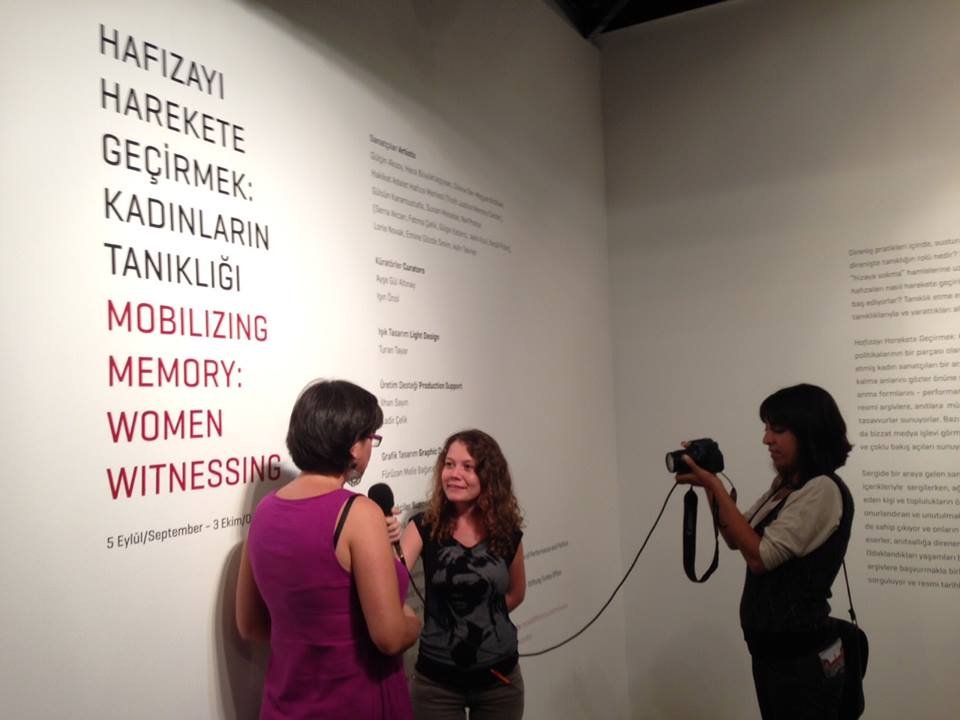
The working group panels for the day explored this question from a number of different angles. In a talk titled, “Coups d’État: Dialogues at the Intersection of Memory and Life Story in Chile and Turkey,” Marcial Godoy and Zeynep Gambetti staged their feminist methodology in the form of a collaborative dialogue. Their conversation reflected on the ways in which their separate trajectories as activist-scholars growing up in eras of gross political oppression have converged in a transnational, professional friendship built on solidarity.
The need for concrete collaboration between scholars as an explicitly feminist methodology has come up in discussions time and again. Andrea Crow and Alyssa Greene took a different approach to contending with the issue of collaboration in their own conversation on “Working Definitions: Activist Scholarship in a Transnational University.” Their dialogue asked us not only to strive to define our critical terms in order to improve our communication as feminist colleagues, but also to remain aware of our role in the university system at large, especially as university structures become more global and corporatized.
In many ways, the following panel on “Reversing Silences/Telling Forgotten Stories” made manifest many concrete, feminist issues in Turkey that had been in the background of many of the group's explorations of Turkish politics earlier in the conference. Bürge Abiral gave a talk about sexual violence in women’s narratives of incarceration during Turkey’s military junta from 1980-1983. She provided important context for the difference regarding the "speakability" of sexual violence in Turkey, where rape was, until recently, defined as a crime against public morality and order, not against women’s bodily autonomy and human rights.
Dilara Çalışkan continued thinking about sexual violence specifically in transwomen’s communities and queer kinship structures in Istanbul, asking a provocative question based on Professor Hirsch’s scholarship: “Can we speak of queer postmemory?” She analyzed the ways in which trans mothers and daughters not only queer intergenerational transmission in their families of choice, but also hand down unfathomable memories of torture and forced displacement.
In the final talk of the day, Soledad Falabella shared her activist work on archiving and making accessible poetry from Mapuche women, an indigenous group that faces tremendous hostility on a daily basis in Chile. Falabella described the positionality of Mapuche women as “unbearable beings” for the state, always in conflict with the extent to which “the whole societal imaginary is trying to erase you,” and yet, in simply surviving, you become a concrete “standard of testimony” for the political problem more broadly.
Before separating into smaller breakout groups for the last time, the group participated in an impromptu discussion about positionalities as feminist scholars pursuing questions of social difference. Diana Taylor started the discussion by asking, “If we’re talking about gender, does our work automatically focus on women? Or are we using a feminist analysis to look at whatever we’re looking at?” A number of cross-cultural insights on feminism rose to the surface, including recognition of the potential that feminism has to provide an ethical lens for thinking about oppression, vulnerability, and a critique of power that does not lose sight of local contexts.
The final event of the day returned to the Black Box Theatre, where Maria Jose Contreras put on a one-woman piece of experimental performance art titled Prosthesis. Contreras' performance embodied a tension that had been remarked upon throughout the day: the ethical imperative that the personal remain political in our work as feminists. Her performance juxtaposed televised images of incendiary political moments from her childhood in Chile with x-rays of her debilitated father’s internal organs and a working breast-pump, making a visually stunning commentary on the ways in which her milk as a new mother also carries with it residues of Chile’s past.
Day five report contributed by: Nicole Gervasio
Nicole Gervasio is a Ph.D. student in the Department of English and Comparative Literature at Columbia University.
DAY FOUR REPORT: "Women Mobilizing Memory" Workshop in Istanbul, Turkey
The fourth day of Women Mobilizing Memory featured a roundtable discussion moderated by Ayşe Gül Altınay on documentary films about state violence and Kurdish memory. The directors of the films Bûka Baranê (2013, dir Dilek Gökçin) and Dersim’s Lost Girls (2010, dir. Nezahat Gündoğan) also joined the discussion. Bûka Baranê focuses on the experiences of people who were students at an elementary school in Hakkari to explore the different forms of state violence and the Kurdish guerilla movement in the 1990s. In light of their memories of violence during the period of emergency rule, the film reflects on how children longed for peace.
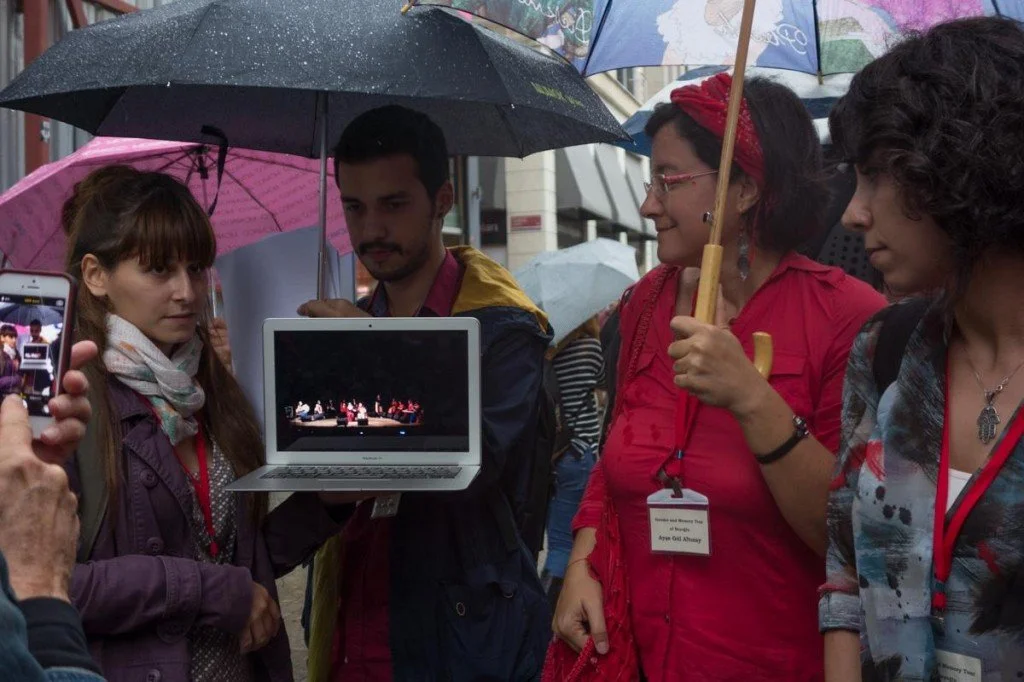
Based on interviews with elderly women who experienced the Dersim genocide, Dersim’s Lost Girls explores how children and women have been affected by ethnic violence and assimilationist policies that targeted the Kurdish population in Dersim in the late 1930s. The discussion was followed by the roundtable Gendered Memories of War and Genocide in Turkey, moderated by Meltem Ahıska. Zeynep Türkyılmaz presented her research on the genocide in Dersim, its gendered aspects, and the tensions between memory and the archive as they relate to people's memories of the genocide. Ayşe Gül Altınay explored Nebahat Akkoç's organization KAMER to discuss post-nationalist feminist memory work within the broader context of Turkish politics. Hülya Adak’s presentation explored a variety of examples in late Ottoman and Turkish history to discuss how the position of “the mourning mother” has been utilized by authors and activists for different and at times conflicting political projects, especially with regard to the Armenian-Turkish relations and the memory of the genocide. Pınar Ensari discussed her research on young Kurdish women, their memories of state violence in the Southeast of Turkey in the 1990s, and their engagement with activism and politics in Turkey, with a specific focus on the Gezi Resistance and its aftermath.
After the roundtable, we joined the Gender-Memory Walking Tour co-organized by the Sabancı University Gender and Women's Studies Forum and the Karakutu/Black Box group. That evening, we attended Disco Number 5, a solo performance by Mirza Metin in Kurdish and directed by Berfin Zenderlioğlu. The performance focused on torture at the Diyarbakır prison during the military regime in the aftermath of the coup d’état of 1980. Reflecting the transdisciplinary nature of the program, the events throughout the day demonstrated the different forms of memory work.
Day four report contributed by: Rustem Ertug Altinay
Rustem Ertug Altinay is a doctoral candidate in the Department of Performance Studies at New York University and a Turkish Cultural Foundation fellow.
DAY THREE REPORT: "Women Mobilizing Memory" Workshop in Istanbul, Turkey
The third day of Women Mobilizing Memory was dedicated to three public roundtables with simultaneous translations at Depo: "Creating Alternative Archives," "Art, Performance and Memory." and "Gender, Memory, Activism."
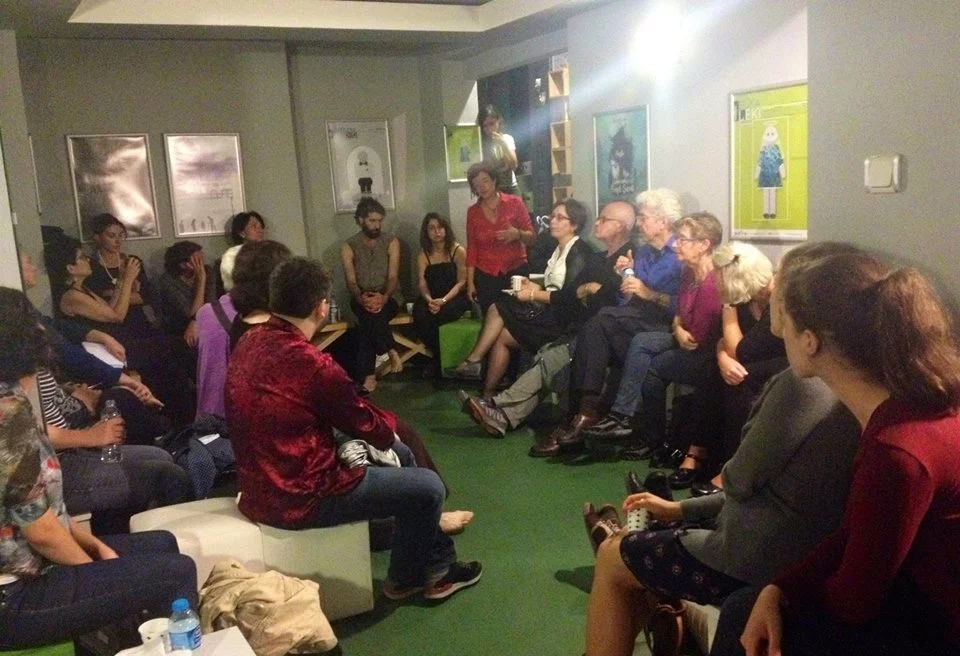
In the first roundtable on “Creating Alternative Archives,” Leyla Neyzi introduced her recent project on Kurdish and Turkish youth living in Turkey and Germany with visual examples from the project's website. Neyzi especially focused on intergenerational memory, post-memory, and Kurdish and Turkish youth's different conceptions of time and history. Özlem Kaya began her talk by introducing the Truth Justice Memory Center, which is an independent human rights organization that is based in İstanbul. Kaya explained how the Center contributes to uncovering grave human rights violations at times of conflict and in strengthening the collective memory about those violations. Currently, the Center is trying to create an alternative archive through video testimonies about enforced disappearances in Turkey. Susan Meiselas discussed her web-based project akaKurdistan, which she founded in 1998. She explored the possibilities of creating visual histories and building memories with people who have no national archive. She focused on how multiple perspectives and hidden archives came together in the production of this collective archive of Kurdish memory. Silvina der Meguerditchian noted how her artistic works deal with issues related to the burden of national identity, memory, the role of minorities in the society and the potential of a space “in between.” The roundtable was followed by a screening of Silvina’s new film “Nereye/Where to,” which follows the traces of İstanbul’s lost minority communities in Fener and Balat, revealing the complexities of recovering memory.
In the second roundtable, titled “Art, Performance and Memory,” Andreas Huyssen discussed the recent changes in museum culture, pointing to a "metamorphosis of the museum." Huyssen explored how the museum has been transformed from a site of memory as an “exhibitionary complex” to a mass medium as an “experiential complex.” Alissa Solomon drew attention to the current wave of museum building across the world as one of the emerging global tropes of memorialization. She asked various challenging questions and explored the answers through one type of global trope: the shoe. By looking at piles of shoes, seen in memorials and protests among other places, Solomon asked whether we can represent the scale of mass atrocities without blurring over individual differences. Carol Becker talked about Kara Walker’s new site-specific sculptural installation at the now defunct Domino Sugar Factory. Becker argued that the sculpture echoes the memory of slavery by focusing on how Black women were exploited in the history of the sugar industry that dominated the Caribbean and the American South for a century. Becker explored how reactions to this sculpture are indicative of the growing insensitivity of the United States to the subject of race and racism. Diana Taylor noted Regina Galindo’s piece Earth, which depicts the trial of ex-dictator Rios Montt. Taylor discussed the political efficacy of testimony in Galindo’s performance art on genocide. In her talk, Maria José Contreras focused on forgetfulness and its relation to memory in the performative dimension. Contreras asked whether we can think of forgetfulness for embodied memories. Furthermore, she traced the capacity of prosthesis in performance art to recuperate memories and evade forgetfulness.
The third and the final roundtable, “Gender, Memory, Activism” started with Marita Sturken who explored how architectures of memory, architectures of torture and architectures of conflict are shadowed by a culture of comfort and sentiment. Sturken asked whether we can think of modern architecture as an infrastructure for framing space and memory. In her talk, Marianne Hirsch discussed the works of several artists who activate small, fragmentary archives and allow them to travel and migrate, creating networks of connectivity that challenge the monumentalization of memory and resist national paradigms that erase difference. Nükhet Sirman noted the Women's Initiative for Peace, which is a group of approximately 500 women, all dedicated to forging a peace between the Kurdistan Worker’s Party (PKK) and the Turkish State. Sirman explained how they, as a group, appointed themselves to bear witness to the atrocities that were committed against Kurds in the 1990s, especially the gendered crimes. Meltem Ahıska drew attention to how Saturday Mothers of Turkey made the enforced disappearances visible by a counter-movement. Ahiska argued that this counter-movement has played a significant role not only in creating a new space for politics, but also by enacting political memory. Saturday Mothers has infused spaces with memory since 1995 through their silent sit-ins. Nancy Kricorian concluded the panel by remembering Armenian history on a pilgrimage through her grandfather’s hometown in Turkey.
Day three report contributed by: Pinar Ensari
Pinar Ensari is an alumna of Sabanci University's Department of Cultural Studies.
DAY TWO REPORT: "Women Mobilizing Memory" Workshop in Istanbul, Turkey
Media, Memory, Political Efficacy
On Day Two of theWomen Mobilizing Memory workshop, Jean Howard introduced the following keywords for discussion: gender; embodiment; accompaniment (or “walking with”); politics; repair; mobilizing; hope; optimism; and play, or the recovery of joy. Ayşe Gül Altınay added feminism as a keyword and Milena Grass also expanded on Jean’s notion of accompaniment by stressing the idea of connection rather than comparison. Andrea Crow focused on the concept of connection as an important component of our work, pointing to our collective presence as evidence of the value of direct encounter.
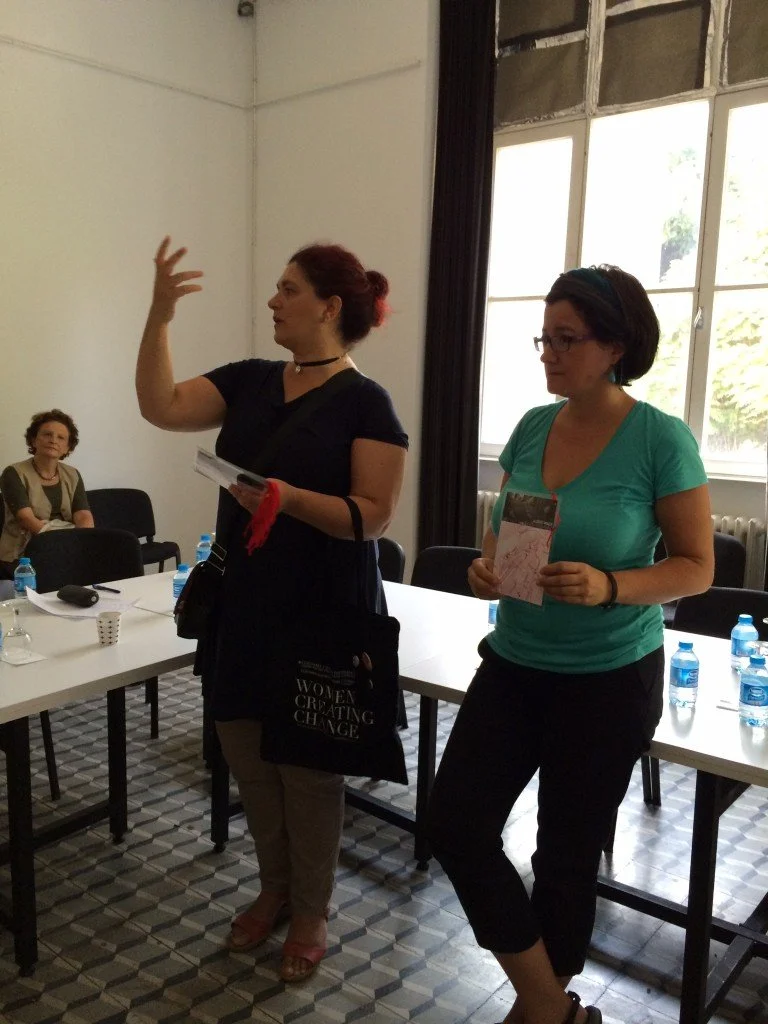
Twin panels were also convened on Media, Memory, and Political Efficacy. The panels explored a variety of themes, including: the personal archive; trauma and scholarship; the performative; and expanding notions of absence and representation. Taking as his point of departure photographs of his family and community, Leo Spitzer raised the possibility of a critical nostalgia among refugees. Milena Grass’ paper on Macarena Aguiló’s documentary work analyzed the legacy of Chilean leftist exiles and their descendants. Sibel Irzık’s paper picked up on the difficulties of sharing in trauma in the Turkish context of post-coup coup d’état novels, and the metafictional strategies that writers use to show language as a site of struggle against authority. In her work on the emergent aesthetics of disappearance, Nicole Gervasio proposed an expanded use of the term “forced disappearance” to include experiences such as political detention.
The second panel’s papers included a wider range of texts and explored a variety of affective possibilities. Embodiment as a critical term ran through the work all three panelists. Jean Howard discussed temporality and "slow violence" in the context of Carol Churchill’s theater, bringing together themes about the personal and the environmental as well as labor and bodily vulnerability. Henry Castillo’s work on the lumbalú, a customary dance of death in Colombia, was also discussed in the context of the gendered performance of lamentation, mourning, and sexuality. Rüstem Ertuğ Altınay added to the discussion by theorizing the intersections of the nationalist/political with the sexual.
Day 2 Report contributed by: Alyssa Greene
Alyssa Greene is a graduate student in the Department of Germanic Languages at Columbia University.
DAY ONE REPORT: "Women Mobilizing Memory" Workshop in Istanbul, Turkey
Jean Howard, Ayşe Gül Altınay, Milena Grass, and Andrea Crow participated in the opening panel of Women Mobilizing Memory, a working group that explores women's acts of witness and the gendered forms and consequences of political repression and persecution.
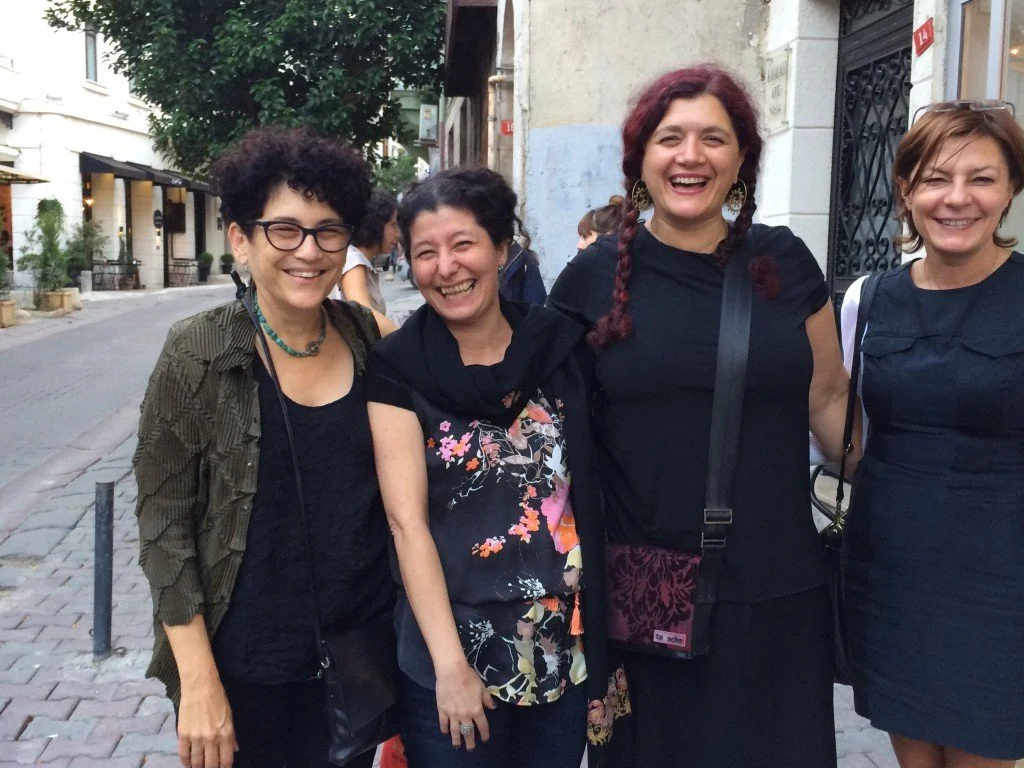
Women Mobilizing Memory is one of four working groups that, together, make up the "Women Creating Change" initiative of CSSD. The first-day conversation of the working group revolved around a range of themes, including: the academic/practitioner divide; the political efficacy of academic, artistic, and activist productions; the relationship between memory, history, and archives; the ethical repercussions of witnessing; as well as the intricate link between the personal and the political.
The working group visited the Depo Gallery to attend Ayşe Gül Altınay's and Işın Önol's “Mobilizing Memory: Women Witnessing” exhibit. After the curators were introduced, Banu Karaca discussed the politics of memory as reflected in Turkey's contemporary art and Işın Önol related the exhibit to the country's recent history. Artists who took part in the exhibit included: Silvina Der-Meguerditchian, Susan Meiselas, Nar Photos (Serra Akcan, Fatma Çelik, Gülşin Ketenci, Aylin Kızıl, Serpil Polat), Truth Justice Memory Center (represented by Özlem Kaya), Aylin Tekiner, Emine Gözde Sevim, Lorie Novak, and Gülçin Aksoy.
Day 1 Report contributed by: Bürge Abiral and Dilara Çalışkan
Bürge Abiral is a Masters student in Cultural Studies at Sabancı University. Dilara Çalışkan received her M.A. in Cultural Studies at Sabanci University in 2014.
PUBLIC ROUNDTABLES: “Coming to Terms” with Gendered Memories of Genocide, War, and Political Repression," Istanbul, Turkey
Public Roundtables with Turkish simultaneous translations
September 17, 2014, 1:00-7:00pm
DEPO Gallery, ISTANBUL, TURKEY
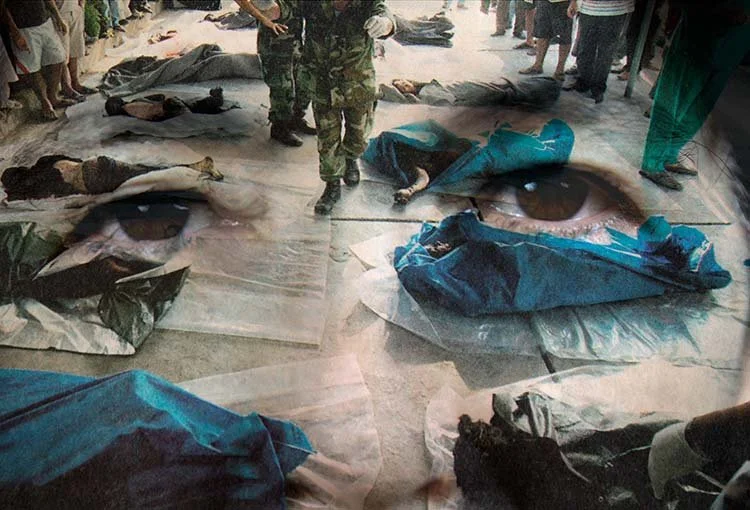
Roundtable topics and speakers:
Creating Alternative Archives, with Leyla Neyzi, Özlem Kaya, Susan Meiselas, Silvina der Meguerditchian, and Şemsa Özar
Art, Performance and Memory, with Andreas Huyssen, Alisa Solomon, Carol Becker, Diana Taylor, Maria José Contreras, and Ayşe Öncü
Gender, Memory, Activism, with Marita Sturken, Marianne Hirsch, Nükhet Sirman, Meltem Ahıska, Nancy Kricorian, and Yeşim Arat
Schedule
1:00pm-2:30pm - Creating Alternative Archives
Moderator: Şemsa Özar (Boğaziçi University and Diyarbakır Institute for Social and Political Research)
Leyla Neyzi (Faculty of Arts and Social Sciences, Sabancı University) - “Young people Speak Out: The Contribution of Oral History to Facing the Past, Reconciliation and Democratization in Turkey” Project www.gencleranlatiyor.org
Özlem Kaya (Truth Justice Memory Center, Turkey) Creating an Alternative Archive through Video Testimonies
Susan Meiselas (Photographer, Magnum Photos, USA ) – Kurdistan
Silvina Der Meguerditchian (Artist, Argentina/Germany) – Nereye? / Where to?
3:00pm-4:30pm - Art, Performance and Memory
Moderator: Ayşe Öncü (Sociology, Sabancı University, Turkey)
Andreas Huyssen (German and Comparative Literature, Columbia University, USA) - The Metamorphosis of the Museum: From Exhibitionary to Experiential Complex
Alisa Solomon (School of Journalism, Columbia University, USA) - Shoe Fetish
Carol Becker (School of the Arts, Columbia University, USA) - The Memory of Sugar
Diana Taylor (Performance Studies, Hemispheric Institute of Performance and Politics, NYU, USA) - Is Performing Testimony, Testimony?
Maria José Contreras (School of Theatre, Catholic University, Chile) – The (Im)possible Performance of Forgetfulness
5:00pm-6:30pm - Gender, Memory, Activism
Moderator: Yeşim Arat (Political Science and International Relations, Boğaziçi University, Turkey)
Marita Sturken (Media, Culture, and Communication, NYU, USA) - Architectures of Memory, Architectures of Torture, Architectures of Conflict
Marianne Hirsch (Gender Studies and Comparative Literature, Columbia University, USA) – Mobile Memories
Nükhet Sirman (Sociology, Boğaziçi University, Turkey) – How to Gender Memories of Violence?
Meltem Ahıska (Sociology, Boğaziçi University, Turkey) - Counter-movement, space, and politics: How the Saturday Mothers of Turkey make the enforced disappearances visible
Nancy Kricorian (Author and Activist USA) - Place Names and Objects: Pilgrimage as/or Resistance
About
This series of roundtables occurs in the context of a five-day workshop on “Mobilizing Memory for Action” that brings together an international group of scholars, artists, and activists to analyze the activist work memory practices can enable. The workshop is part of Columbia University’s “Women Creating Change” initiative led by the Center for the Study of Social Difference and organized in collaboration with the Columbia Global Centers. “Mobilizing Memory for Action” began in December 2013 with a workshop at the Columbia Global Centers in Chile and continues in September 2014 with activities in Istanbul hosted by Columbia Global Centers | Turkey, Sabancı University Gender and Women’s Studies Forum and DEPO Istanbul. Support has also been provided by the Blinken European Institute, Sabancı University, Hemispheric Institute of Performance and Politics, the Truth Justice Memory Center and Friedrich-Ebert-Stiftung Turkey Office. The Istanbul program consists of a workshop with 35 leading scholars, artists and activists from Turkey, the United States, Chile and other contexts; an art exhibition and catalogue; documentary screenings; theater performances and post-performance discussions; and a series of public roundtables.
For more information about the exhibit, please click here.
WORKSHOP: Shifting Notions of Social Citizenship: The “Two Wests”
What is the welfare state? What happens when it disintegrates? What is the future of the family in light of its historical transformation?
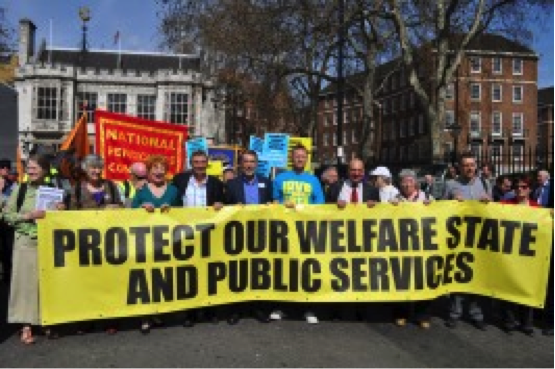
Scholars and graduate students from research universities in the United States, France, the United Kingdom, Italy, the Netherlands, Denmark, Sweden, and Norway convened to answer these questions during the Shifting Notions of Social Citizenship: The “Two Wests” workshop, held June 11-13, 2014 at the Columbia Global Center | Paris.
What constitutes a welfare state?
Maurizio Vaudagna chaired the opening session with welcoming addresses delivered by Brunhilde Biebuyck (Columbia Global Centers|Paris), Marc Lazar (Institut d’Études Politiques), and Raffaella Baritono (University of Bologna-CISPEA). Alice Kessler-Harris presented introductory remarks that asked participants to answer the elementary question, “What constitutes a welfare state?” Kessler-Harris showed how setting conceptual limits around the welfare state are made difficult by the variety of its present-day obligations.
Papers in the first session took up the definitional challenge by thinking about the concepts that undergird the intellectual production of the welfare state in the European Union and in comparative context between the United States and Sweden. Vincent Michelot (SciencesPo Lyon) chaired presentations by Maurizio Ferrera (University of Milan), Ann Shola Orloff (Northwestern University), and a research group that conducted a longue durée analysis of the welfare state in France and the United Kingdom, rooting the welfare state’s earliest beginnings in the 17th century and well before industrial capitalism supplanted mercantilism. Ferrera outlined the intellectual and political roots of the European Union idea, suggesting that a “neo-Weberian” typology offered solutions to the intractable differences between ideas about national sovereignty and the EU’s political and economic superstructure. Orloff examined “gendered policy formation” and rebutted arguments that the state simply reinforced paternalism as too simplistic. Orloff’s analysis challenged participants to think about how historically changing definitions of gender changed social policy and vice-versa.
What happens when safety nets go?
Day two opened with the question, “What happens when safety nets go?” Donna Kesselman (University Paris Est Créteil) chaired presentations by Christian Lammert (Free University of Berlin), Beatrix Hoffman (Northern Illinois University), and Sébastien Chauvin (University of Amsterdam). Lammert argued that in the process of re-commodification, the visibility of the welfare state’s provision in people’s lives diminishes, which undermines public support for these programs. The results are pernicious for democracy because as people are forced back into the labor market and forced to accept a shrinking safety net, their level of political participation also declines. Hoffman dug into the problem of healthcare in the welfare state by comparing citizen participation for health reform in Spain and the United States. Hoffman showed how Spain’s generous healthcare provision has failed to embrace the healthcare needs of a growing number of immigrations and how the United States has become increasingly less responsive to the demands of civil rights organizations, especially after hospital closures zipped through urban neighborhoods during the 1970s and 1980s. Chauvin answered the question from the perspective of precarious labor and the growing exploitation of contingent—not temporary—workers. Through participant-observation in two contingent work dispatch centers in Chicago, Chauvin asserted that the idea of “temp work” is a fiction because precarious workers often develop long-term relationships with a small number of employers.
The Future of the Family
The next session envisioned the future of the family. Mario Del Pero (Institut d’Études Politiques) chaired presentations by Chiara Saraceno (University of Turin), Robert O. Self (Brown University), and Laura Lee Downs (European University Institute, Florence). Saraceno argued that the EU forces a plural acknowledgement of different family forms and that family and family policy are not one and the same. Civil regulation regarding the family contains variety, but remain attuned to traditional conceptions of the family. Self argued that the push for the reconstruction of the welfare state after the 1960s came mostly from the center left, rather than reactionary forces. The extent of social solidarity from the New Deal had been exaggerated, while the myth of the breadwinner was a social idea before it ever became an economic reality. Downs pondered the future of social protection in France by looking at the history of its colonies de vacances, holiday camps that were established for working-class children throughout the country. The extent of centralization in France meant that the diversity of political and ideological groups that participated in the state was far-reaching. At the same time, Downs shows how fiscal pressures during the 1970s and 1980s, demonstrating just how reliant all groups were on a state committed to financing social activities and opportunities to build national solidarity and to develop equality among young adults.
Possibilities of Resistance and Solutions
The last session, held on the last day of the workshop, thought about possibilities of resistance and solutions to the present-day impasses and challenges to the welfare state. Olivier Giraud (CNAM) chaired presentations by Gro Hagerman (University of Oslo), Birte Siim (Aarlborg University), Marissa Chappell (Oregon State University), and Neil Gilbert (University of California-Berkeley). Hagerman questioned whether the Norwegian and Swedish welfare states could “have it all,” arguing that the fiscal basis of both welfare states is premised on their status as resource-rich states. Siim asserted that democracy and citizenship needed articulation outside of the nation-state framework and that the rise of right-wing populism was more than just racism and constituted a serious critique about the distributional objectives of the state. Chappell’s archival research found that the Civil Rights Movement galvanized movements for greater economic citizenship among poor people; however, gender bias and racism prevented the formation of alliances. Gilbert traced how the U.S. welfare state transformed from a system of entitlement to one increasingly checked by means testing and conditionality.
The workshop concluded with Vaudagna and Kessler-Harris synthesizing the wide-ranging contributions of the speakers and the dialogic exchange that occurred between sessions. All participants left with a greater sense of the enormity of the welfare state as an object of study and the importance of comparative analysis between countries and even supranational structures of governance. The work of thinking about the welfare state in historical, social and political perspective continues.
The Columbia University Blinken European Institute and the Interuniversity Center for European-American History and Politics convened the international workshop with the support of the Center for the Study of Social Difference, Columbia University’s Department of History, and the University of Eastern Piedmont’s Department of Human Studies.
George Aumoithe
PhD student in History at Columbia University | Graduate Fellow, Social Justice After the Welfare State Project at Columbia’s Center for the Study of Social Difference
Rachel Adams, Director of the Future of Disability Studies Working Group, Won the 2014 Educators Award
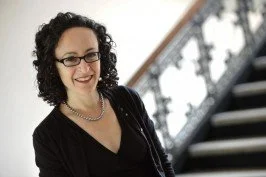
The 2014 Educators Award committee from Delta Gamma Kappa, the society of women educators, selected Raising Henry: A Memoir of Motherhood, Disability & Discovery by Rachel Adams, director of the Future of Disability Studies working group. Dr. Adams attended the international convention on Wednesday, July 30 and participated in a workshop with the committee.
CSSD Announces Two New Working Groups
CSSD has inaugurated two new working groups for fall 2013.
Social Justice After the Welfare State will be directed by Alice Kessler-Harris, R. Gordon Hoxie Professor of American History. The group will explore the implications of the declining welfare state for American politics, gender and race relations, and the future of American democracy.
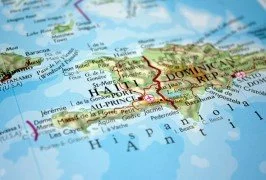
The Digital Black Atlantic Project (DBAP) will also launch in fall 2013. Co-directed by Kaiama Glover, Associate Professor of French at Barnard College, and David Scott, Professor of Anthropology at Columbia, DBAP is a multi-institutional and interdisciplinary working group that has come together to invent a scholarly resource and digital platform for multimedia explorations and documentations of literary texts, visual documents, sites, moments, rituals and ceremonies, monuments and memorials, performances, and material objects emerging out of and concerning the Black Atlantic World.
PUBLIC LECTURE: Beyond Masculinity: Testosterone, Sexual Desire, and Gender/Sex
Everyone knows that sexual desire and testosterone are linked because men have higher testosterone, and testosterone is tightly linked to masculinity and sexual desire - right? But what do empirical data actually say? Professor van Anders discussed findings that support decoupling testosterone from masculinity and provide insights into the nuanced ways testosterone and sexual desire are - and are not - linked in humans.
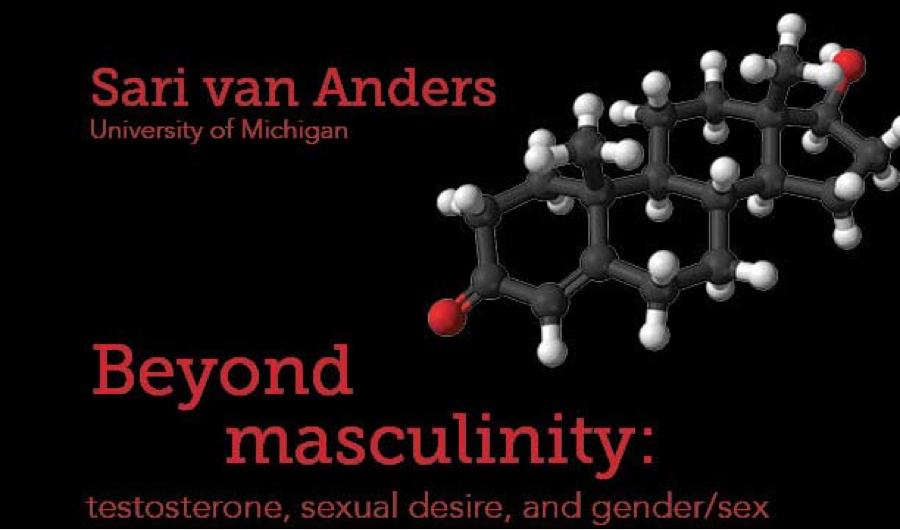
From her multi-method research program that includes experiments, correlational studies, and qualitative focus groups, she argues that social neuroendocrinology, rooted in feminist science, provides a way to ask hormonal questions that have evolution and social construction in their answers, sidesteps nature-culture debates, and separates biology from biological determinism.
This event was presented by The Science and Social Difference Working group of the Columbia University Center for the Study of Social Difference and co-sponsored by the Departments of Women’s, Gender, and Sexuality Studies and Psychology at Barnard College and the Institute for Research on Women, Gender, and Sexuality.
KEYWORDS: Interdisciplinary Roundtable Conversations
Colleagues from the Humanities, the Social Sciences and the Socio-medical Sciences discuss “Vulnerability” as a keyword in the study of social difference.
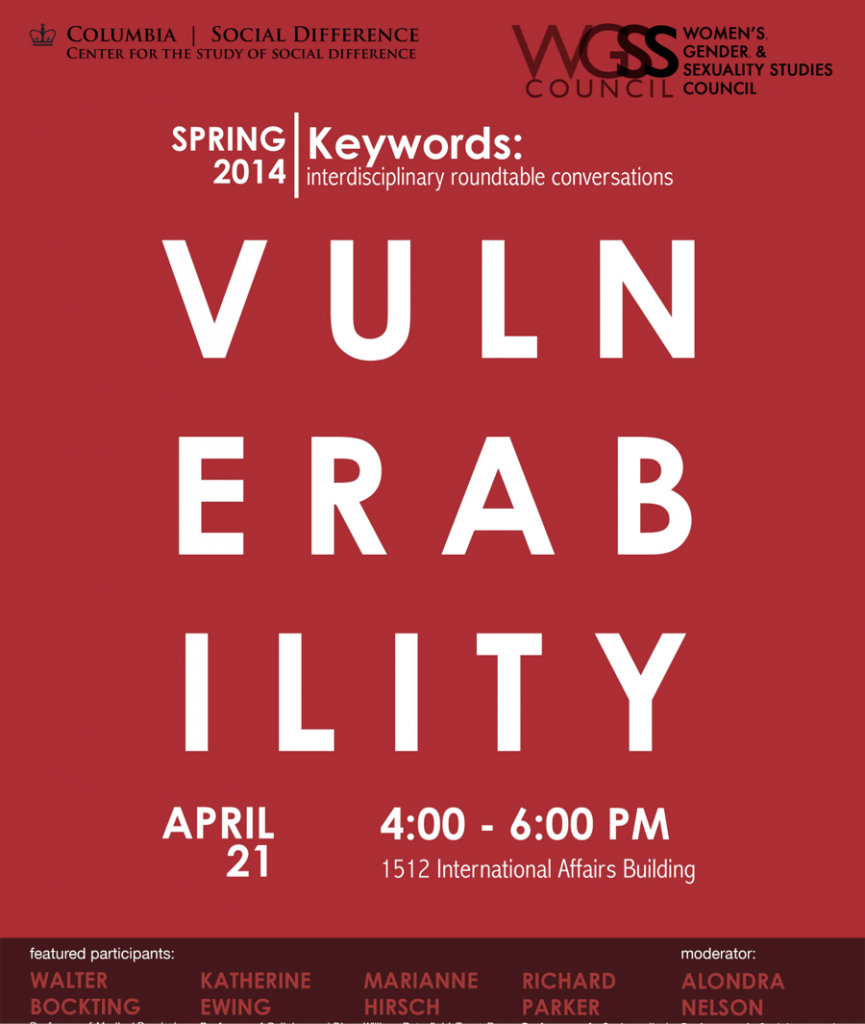
Featured participants were:
Walter Bockting
Professor of Medical Psychology (in Psychiatry and Nursing) and Co-Director, LGBT Health Initiative, Division of Gender, Sexuality, and Health, Department of Psychiatry
Columbia University
Katherine Ewing
Professor of Religion and Director of the Center for the Study of Religion and Sexuality
Columbia University
Marianne Hirsch
William Peterfield Trent Professor of English and Comparative Literature and Women's and Gender Studies and Director, Center for the Study of Social Difference
Columbia University
Richard Parker
Professor of Sociomedical Sciences and Anthropology, and Director, Center for the Study of Culture, Politics, and Health
Columbia University
Moderator:
Alondra Nelson
Professor of Sociology and Women's and Gender Studies, Director, Institute for Research on Women, Gender, and Sexuality, and Co-Chair, Women's Gender, and Sexuality Studies Council
Columbia University
Keywords: Interdisciplinary Roundtable Conversations is a series inspired by theinnovative interdisciplinary scholarship promoted by the Center for the Study of Social Difference. The series draws participants together from a wide range of disciplinary homes in order to explore the various ways we think about fundamental critical/theoretical ideas and to generate new vocabularies and new methodologies. The WGSS Council is a network of leaders from centers, institutes, and initiatives at Columbia University dedicated to women's, gender, and sexuality studies.