Engendering the Archive
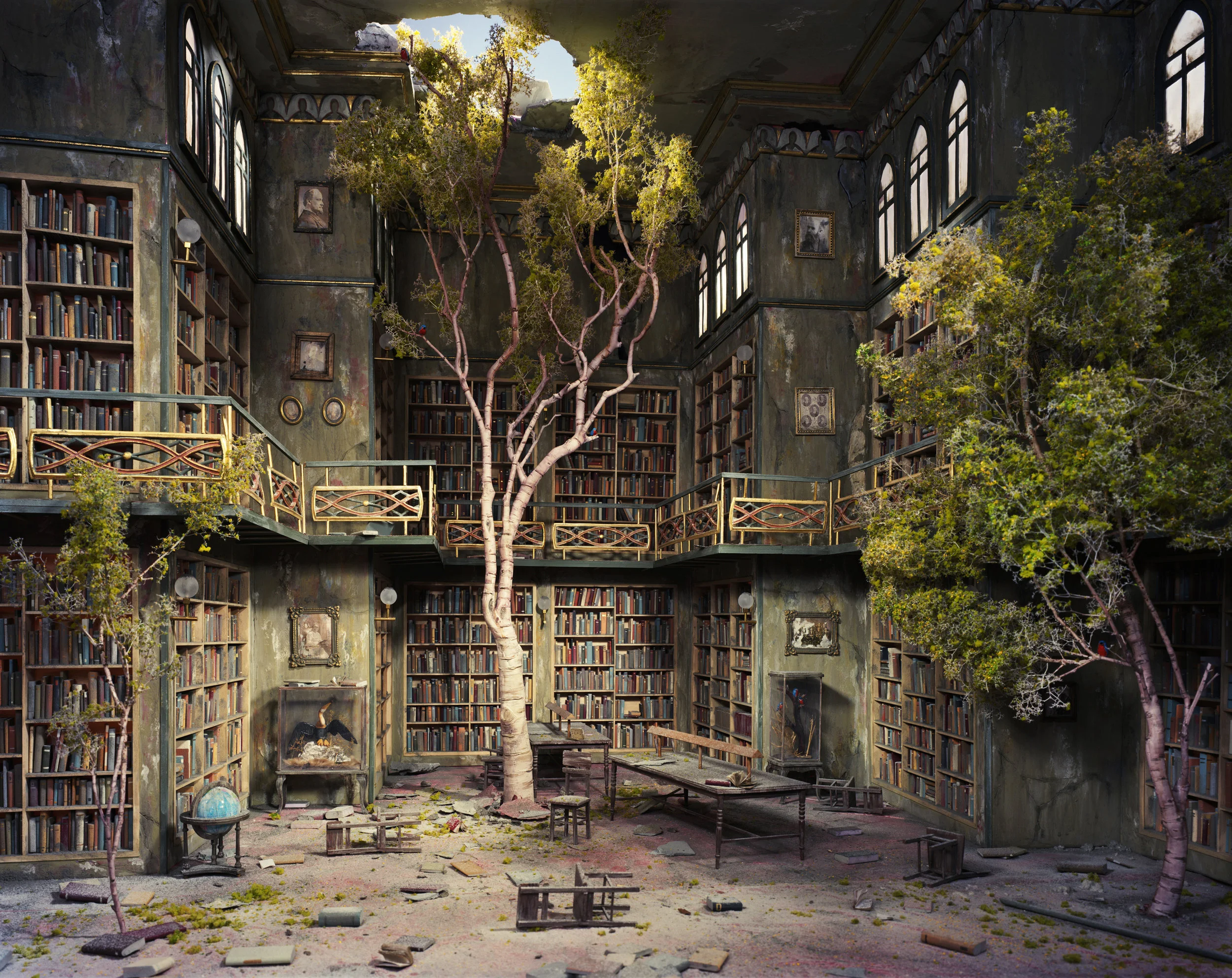
Power determines what is conserved and what is lost, which stories have been committed to collective memory and which ones have been erased. Engendering the Archive (2008-15) brought this fundamental feminist insight to bear on the examination of archival practices in the arts, literature, history, social science and everyday life.
Project Directors: Tina Campt, Saidiya Hartman, Marianne Hirsch, Jean Howard, Laura Wexler
Power determines what is conserved and what is lost, which stories have been committed to collective memory and which ones have been erased. Engendering the Archive brought this fundamental feminist insight to bear on the examination of archival practices in the arts, literature, history, social science and in the practice of everyday life. An interdisciplinary research project that consisted of working artists, documentarians, archivists, scholars, social analysts, and museum curators, Engendering the Archive explored the making of archives, specifically, the knowledge they afford and the question of what exceeds their grasp. This project stood out from other work on the archive because of its rigorous focus on the role of power in producing the archive and in positioning social groups unevenly in relation to the production of knowledge and the authority to speak.
Engendering the Archive was an interdisciplinary research project focusing on gender, sexuality, race, and archival practices. The working group looked at categories of social difference as inescapable aspects of differential power relations that determine what societies remember and what they forget. Focusing on key questions such as--What is an archive? Who or what authorizes its construction? How do archives contribute to the production of social and cultural difference? How does the development of new media radically change the way knowledge is classified, stored, and retrieved?—the project sought answers by taking advantage of theories and methods developed by contemporary artists, activists, and scholars of race, gender, and sexuality.
Engendering the Archive investigated some of these fundamental questions from a global perspective, taking into account of the role of racism and colonialism in the production of archives and of categories that make legible or erase particular events and experiences. Gender, along with race, sexuality, and class, are inescapable aspects of differential power relations that determine what societies remember and what they forget.
Participants included approximately 30 scholars, activists and cultural practitioners drawn from Columbia, from other colleges and universities in the greater New York area, and from abroad, as well as several Columbia graduate students.
News

Past Events
Publications
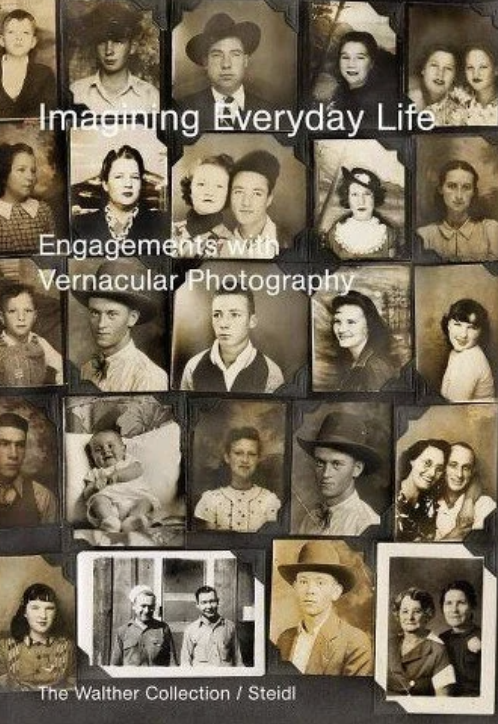
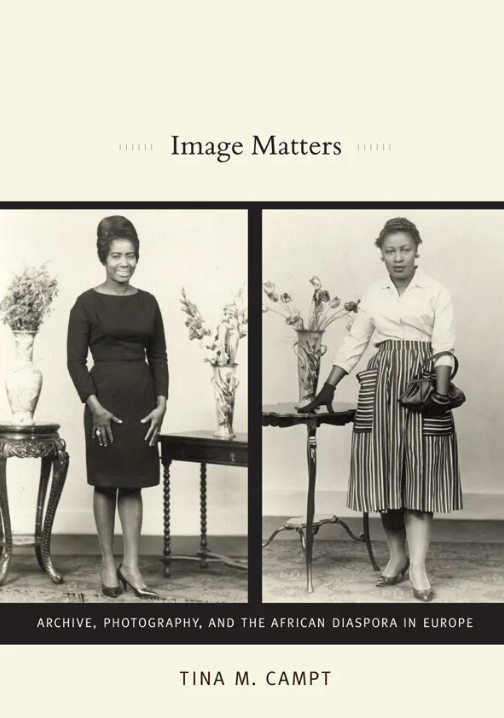
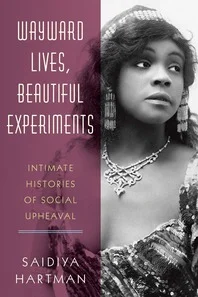
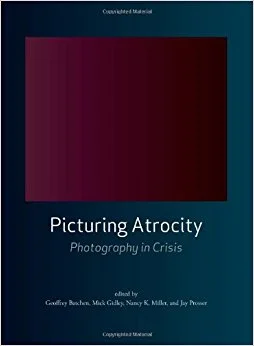



Liberalism's Others
Combining humanistic methods to understand the meanings people attribute to their lives, including the concepts and categories that animate them, and ethnographic and analytical methods developed in the social sciences to track the relationships between individuals and institutions of governance, economic forces, and global dynamics, "Liberalism and its Others" (2008-2011) brought together dynamic groups of historians, anthropologists, scholars of literature, law, politics, and health to explore alternative models of life and to develop new ways of thinking about the politics of the present.
Project Directors: Lila Abu-Lughod, Elizabeth Povinelli, Anupama Rao
Liberalism's Others (2008-2011) used the knowledges and practices of those marginalized in liberal or liberalizing polities in order to understand liberalism not as it imagines itself but as it is practiced. Combining humanistic methods to understand the meanings people attribute to their lives, including the concepts and categories that animate them, and ethnographic and analytical methods developed in the social sciences to track the relationships between individuals and institutions of governance, economic forces, and global dynamics, "Liberalism and its Others" brought together dynamic groups of historians, anthropologists, scholars of literature, law, politics, and health to explore alternative models of life and to develop new ways of thinking about the politics of the present. This group of scholars drew on the deep intellectual resources of Columbia University, but also collaborated closely with colleagues in Turkey, India, the UK and elsewhere, who have interests in exploring new social and political formations in the aftermath of decolonization and in the wake of neoliberal regimes.
This project sought to better understand how and why, across various transformations in form and ideology, liberal markets, political formations, and law continue to focus—and depend—on the illiberal and the different “other.” The group examined the ways that liberalism has historically opposed the normative subject to the “politically inadequate” subject stigmatized by religion, culture, race, gender, or sexual difference, exploring questions such as, "How do such “others” continue to be salient in local and global forms of liberal reform?" Through case studies of particular regions and specific biosocial domains, we asked how liberal and neoliberal economic, state, and legal transformations produce and rely on social difference.
In a range of critical literatures--from those that examine the dark side of humanitarianism in colonial settings and human rights regimes in the present to those that uncover the legitimating functions of democratic reform or track the disjunctions created by global transformations such as the rise of Chinese economic power or the shifting of global economic flows to southern circuits--the pivotal role of social difference in the discourses and practices of power is clear. The emergence of neoliberalism in the 1970s, for instance, relied on the stigmatization of the “black welfare mother” in the U.S. and of the immigrant in Britain (where the working class was also vilified). Since then, in the US, Europe, and Australia, the immigrant, homosexual, and class radical have helped prop up conservative movements even as these neoliberal movements position themselves as the bulwark against the Islamic, colonial, and terrorist “other.” The challenge to secular states by some Christian and Muslim groups has simultaneously destabilized secularism as the self-evident mode of governmentality and provoked a complicated set of discourses and practices around liberal tolerance.
This project sought to understand how liberal and neoliberal economic, state, and legal transformations both produce and rely on social difference even as the content of that difference shifts. Through comparative engagement with case studies of particular regions and specific biosocial domains this group explored the sometimes incommensurate relationship between the representations of liberalism and facts on the ground.

Past Events



Toward an Intellectual History of Black Women
This research project was dedicated to recovering the history of black women as active intellectual subjects and to moving the study of black thought, culture, and leadership beyond the "Great Men" paradigm that characterizes most accounts of black intellectual activity, thus challenging the traditionally male dominated accounts of intellectual work.
Project Directors: Mia Bay, Farah J. Griffin, Martha S. Jones, Barbara D. Savage
Toward an Intellectual History of Black Women was a research project dedicated to recovering the history of black women as active intellectual subjects and to moving the study of black thought, culture, and leadership beyond the "Great Men" paradigm that characterizes most accounts of black intellectual activity. This project sought to define and promote black women's intellectual history as a legitimate field of academic inquiry, and in so doing to generate compelling scholarship that challenges the traditionally male dominated accounts of intellectual work. A collaborative effort designed to support the development of the next generation of scholars in this field, Toward an Intellectual History of Black Women examined the perception and construction of black intellectual leadership as male and African-American women's contributions to black thought, political mobilization, creative work and gender theory. This project also sought to create and sustain a community of scholars, nurture and mentor junior professors and graduate students, and help develop the leadership skills of young women.
In an effort to move the study of black thought, culture, and leadership beyond the “Great Men” paradigm that characterizes most accounts of black intellectual activity, we have initiated this three year research project. The goal of this project is to address the lack of attention given to the work of black women intellectuals historically and in the contemporary moment. In doing so we hope to challenge the perception and construction of black intellectual leadership as male and to explore African-American women’s contributions to black thought, political mobilization, creative work, gender theory and identity politics. In the course of the three-year project, we aim to generate a body of innovative scholarship on black women intellectuals that maps the distinctive ways in which black women have engaged and challenged the ideas of both white American intellectual traditions and the racial and political ideas of black male thinkers. Designed to support the development of the next generation of scholars in this field, our project brings together scholars at different stages in their careers. With this end in mind, we hosted a preliminary brainstorming meeting in the spring of 2006. Twenty-two scholars attended this first meeting. Participants assessed the state of the field today, shared descriptions of their individual research projects and set goals for the outcome of the project. We plan to convene more times over a period of three years to address this tremendous void in the field of African American Studies, African Diaspora Studies, African Studies, American Studies and American History. In the first year of the project we will hold a day long symposium for participants of the April meeting to share their works in progress. The following summer we plan to host a week long workshop that will focus on finalizing drafts for a volume on Black Women’s Intellectual History. In the third year of the project we plan to host an international public conference. Participants, members of the working group as well as those who have responded to a call for papers, will present their work to the larger public. Following the conference we plan to gather some of the essays for publication. We will also include sample syllabi and reading lists in the appendices. During the course of this working group we hope to encourage and generate scholarship on black women as intellectuals. Working as a collective, we hope to piece together a history of black women’s thought and culture, that examines the distinctive concerns and historical forces that have shaped black women’s ideas and intellectual activities. To this end, we are interested in subjects such as the genealogy of black feminism, the patterns of women’s leadership and theological commitments in the black church, the politics of black women’s literature, and the history of black women’s racial thought. In addition to assembling the collection of essays that will appear in our volume, we want to provide intellectual support for individual projects, to help the development and creation of courses and syllabi and most importantly, encourage the work of younger scholars in this area. Our project aims to define and promote black women’s intellectual history as a field, and in so doing to generate compelling scholarship that challenges the traditionally male dominated accounts of intellectual work. We also believe that in taking on this important and much neglected subject we will help to create and sustain a community of scholars, nurture and mentor junior professors and graduate students and help to develop the leadership skills of young women.
Past Events
News

Rethinking Vulnerability and Resistance: Feminism and Social Change
This project brought together a wide range of feminist scholars who work on the problem of women, vulnerability, and social change with an eye to understanding both the risks of establishing women as a vulnerable population, the tactical deployment of the status of vulnerability, and the promise of developing new modes of collective agency that do not deny vulnerability as a resource.
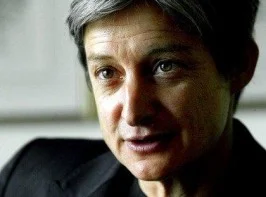
Director: Judith Butler
This project brought together a wide range of feminist scholars who work on the problem of women, vulnerability, and social change with an eye to understanding both the risks of establishing women as a vulnerable population (especially when, according to nationalist norms, some women are regarded as vulnerable, and minority women are not), the tactical deployment of the status of vulnerability, and the promise of developing new modes of collective agency that do not deny vulnerability as a resource. It considered both the power differential and modes of agency among women that mobilize vulnerability within tactics of resistance. In other words, this group sought to understand global practices of social change that emerge from conditions of social and economic vulnerability, and that demonstrate the relation between vulnerability and political agency. Topics included a gendered analysis of war, literacy and education, and economic precarity and inequality, with the hope of identifying sites of social vulnerability and modes of social change. A goal of the project was to bring together artists, critics, and philosophers who offer theoretical perspectives on the sources of social change, focusing on modes of alliance that are characterized by interdependency and public action. The group also asked about the gendering of perceived or marked vulnerabilities and how they function to expand or justify those structures of power that seek to achieve ethnic, economic or cultural-religious dominance in specific social contexts.
News