Emily Bloom
Mellon Public Humanities Fellow, Sarah Lawrence College
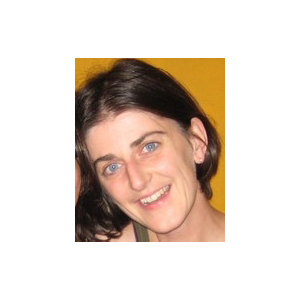
Emily Bloom is a Mellon Public Humanities Fellow at Sarah Lawrence College. She is the author of The Wireless Past: Anglo-Irish Writers and the BBC, 1931-1968 (Oxford University Press, 2016), which was awarded the First Book Prize by the Modernist Studies Association.
Emily Bloom
Mellon Public Humanities Fellow, Sarah Lawrence College
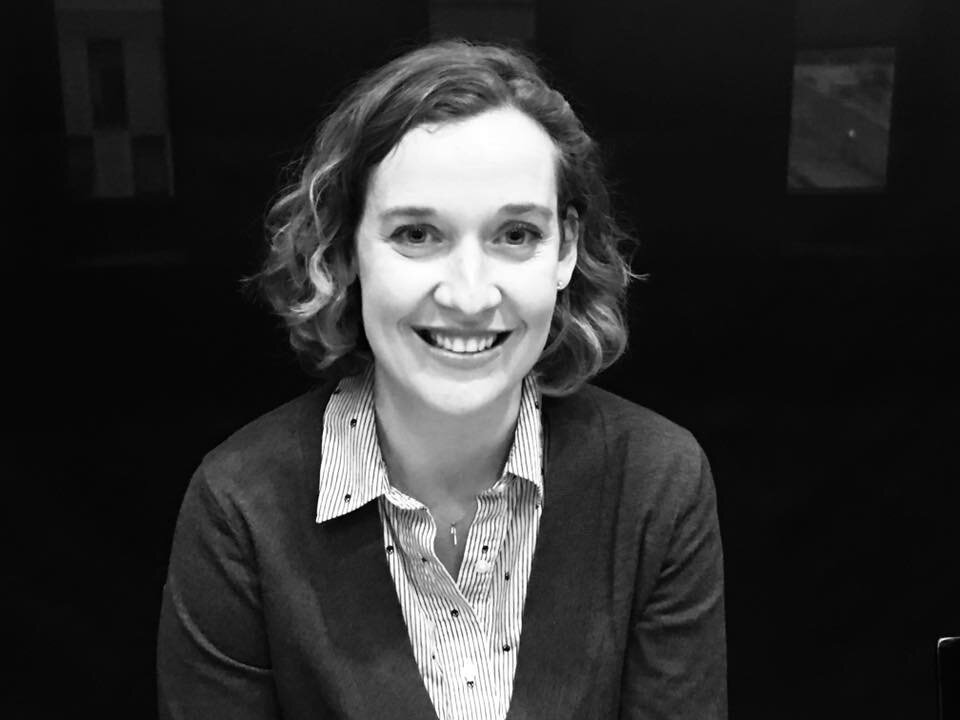
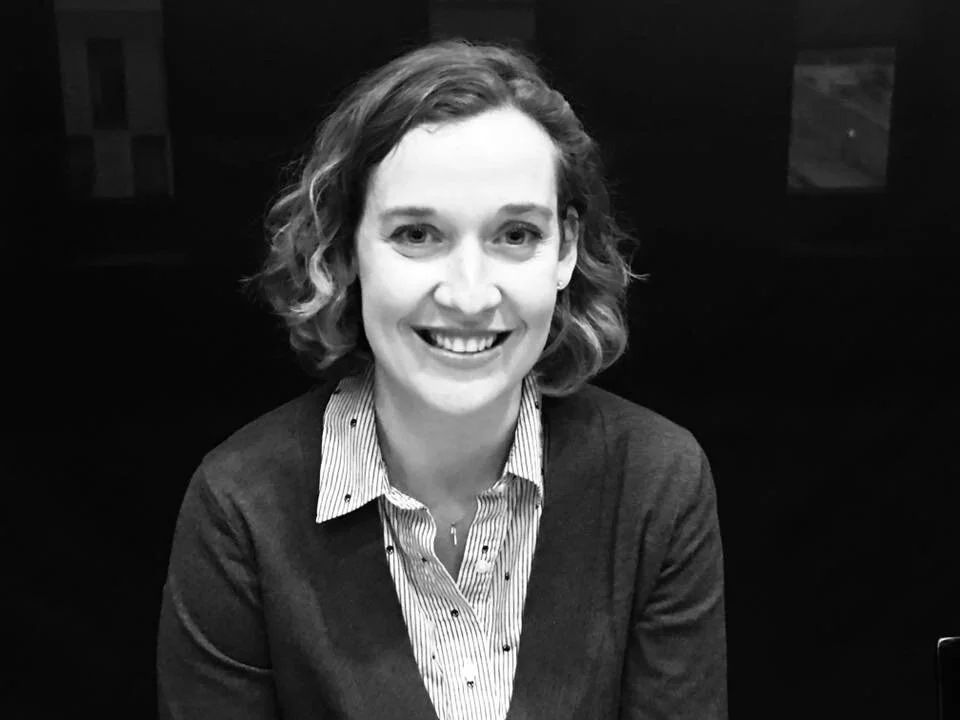
Emily Bloom is a Mellon Public Humanities Fellow at Sarah Lawrence College. She is the author of The Wireless Past: Anglo-Irish Writers and the BBC, 1931-1968 (Oxford University Press, 2016), which was awarded the First Book Prize by the Modernist Studies Association. Her current work explores the interrelations between disability, media, technology, gender, and literature. She has contributed chapters to The Edinburgh Companion to Modernism and Technology, Irish Literature in Transition (Cambridge UP), and The Critic as Amateur (Bloomsbury) and has published articles in The Irish Times, International Yeats Studies, Éire-Ireland, and Texas Studies in Literature and Language. Her review essay, “Mother of a Pandemic,” on motherhood, pandemics, and the gothic appeared in Public Books in January 2021. Dr. Bloom is currently at work on a work of narrative non-fiction about motherhood and technology.
Working Group Affiliation

Yarimar Bonilla
Associate Professor of Anthropology and Caribbean Studies, Rutgers University
Yarimar Bonilla is an Assistant Professor of Anthropology and Caribbean Studies at Rutgers University.
Yarimar Bonilla
Associate Professor of Anthropology and Caribbean Studies, Rutgers University

PhD, U Chicago, 2008; Assistant Professor, SAS) Political and Historical Anthropology, Postcolonialism, Social Movements, Sovereignty, Citizenship; Caribbean, France
yarimar.bonilla@rutgers.edu
EDUCATION
2008 Ph.D. Socio-Cultural Anthropology, University of Chicago
2003 M.A. Socio-Cultural Anthropology, University of Chicago
1998 M.A. Latin American Studies, University of New Mexico
1996 B.A. University of Puerto Rico - Rio Piedras
ACADEMIC POSITIONS
2011+ Assistant Professor of Anthropology and Caribbean Studies, Rutgers University
2008-11 Assistant Professor, Department of Anthropology, University of Virginia
2006-08 Research Fellow, Carter G. Woodson Institute, University of Virginia
PRIZES
2010 Crystal Award for Best Dissertation, awarded by the Caribbean Studies Association
2009 Daniel F. Nugent Dissertation Prize for Distinguished Work in the field of Historical
Anthropology, awarded by the University of Chicago Department of Anthropology
RESEARCH STATEMENT
I teach and write about social movements, political imaginaries, colonial legacies and historical memory in the non-sovereign Caribbean and the French Outremer. I focus particularly on the non-sovereign Caribbean: societies with lingering colonial relationships and ambiguous political identities that disrupt traditional understandings of citizenship, nationality, sovereignty, and autonomy. I am particularly attentive to the political possibilities that exist outside of the traditional rubrics of state and nation building, and to the formation of political identities that disrupt the assumed relationships between a land, a people, and a state. These concerns have combined with an interest in the role of history in the Caribbean political imagination, and the ways in which Caribbean populations understand and negotiate their past – particularly their experiences with colonialism and slavery.
My first book grounds these questions in an ethnographic study of labor activism in the French Caribbean island of Guadeloupe. I argue that in the wake of what some describe as “failed” nationalist movements, a new kind of labor politics has emerged throughout the Former French colonies that combines the ideological and tactical repertoires of anti-colonial struggles with the political strength of the French labor tradition. The result is a form of “postcolonial syndicalism” that infuses traditional labor struggles with battles over collective memory, creole language politics, cultural revalorization, and nontraditional claims to self-determination. However, unlike the iconic forms of post-war anti-colonialism from which these labor movements emerged, these new political actors do not seek “national liberation” or political independence. Instead they are attempting to carve out alternative forms of political and economic autonomy within the context of French and European integration.
In addition to my work in Guadeloupe, I am also in the process of developing a larger program of comparative research in the non-sovereign Caribbean in order to re-theorize the colonial legacies and contemporary politics of the region. I contend that we need to examine non-sovereignty as a model, not just for non-independent territories, but also for the nominally sovereign territories within and beyond the Caribbean that are mired in postcolonial crises of structural adjustment, international trade regulations, NGO shadow states, post disaster recovery, and the (often inadvertent) effects of international aid. By approaching the region through the frame of the “non-sovereign” I seek to break with the linguistic divides that have plagued the field of Caribbean studies in order to bring together research on the French, English, Spanish, and Dutch speaking Caribbean and to highlight points of commonality in both the historical trajectories and contemporary political forms and processes of the region.
PUBLICATIONS
2011 The Past Is Made by Walking: Labor Activism and Historical Production in
Postcolonial Guadeloupe. Cultural Anthropology 26(3):313–339
2010 Guadeloupe Is Ours. The Prefigurative Politics of the Mass Strike in the French
Antilles. Interventions: International Journal of Postcolonial Studies 12(1):125-137
2010 Puerto Rico in Crisis: Government Workers Battle Against Neoliberal Reform (written
with Rafael Boglio) NACLA Report on the Americasforthcoming January 43(1):6-8
2009 Guadeloupe on Strike: A New Political Chapter in the French Antilles. NACLA Report on
the Americas 42(3):6-10
2009 Labor and Protest in Guadeloupe. International Encyclopedia of Revolution and
Protest. Immanuel Ness, Ed. Blackwell pp 1468-1471
Working Group Affiliations
Unpayable Debt: Capital, Violence, and the New Global Economy
Jayna Brown
Professor, Humanities and Media Studies, Pratt Institute
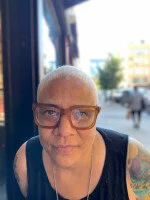
Jayna Brown is a Professor in the Department of Humanities and Media Studies at Pratt Institute and is the co-editor of Social Text. Her areas of knowledge and interest include black expressive cultures, film, queer of color critique, anarchism, materialism, and science fiction.
Jayna Brown
Professor of Humanities and Media Studies, Pratt Institute,

Jayna Brown is Professor in the Department of Humanities and Media Studies at Pratt Institute and is the co-editor of Social Text. Her areas of knowledge and interest include black expressive cultures, film, queer of color critique, anarchism, materialism and science fiction. Her first book, Babylon Girls: Black Women Performers and the Shaping of the Modern (Duke University Press, 2008) won Best Book awards from both the American Society for Theatre Research and the Theater Library Association. She has also published on African American race film and popular performance in various journals including The Journal of Popular Music Studies, GLQ, Social Text and Women and Performance. Her new book, Black Utopias: Speculative Life and the Music of Other Worlds (Duke University Press, Spring, 2021) traces black radical utopian practice and performance, from the psychic travels of Sojourner Truth to the cosmic transmissions of Alice Coltrane and Sun Ra. A current project on terraformation, or the modification of inhabitable environments to make them livable for the human species, asks after the ethics of human habitation in this moment, for neither the scorched earth nor the burning surface of Mars can provide us with virgin soil upon which to start over.
Working Group Affiliation
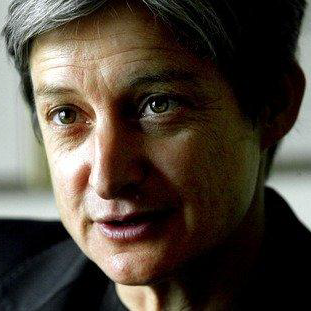
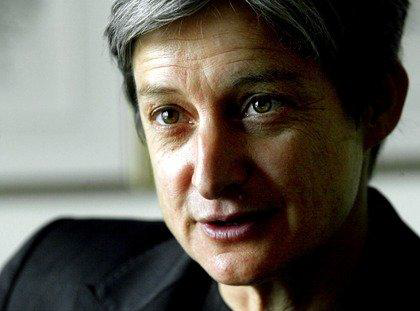
Judith Butler
Judith Butler is Maxine Elliot Professor of Comparative Literature, Departments of Rhetoric and Comparative Literature, at the University of California, Berkeley. She is the author of Gender Trouble: Feminism and the Subversion of Identity and Bodies That Matter: On the Discursive Limits of "Sex" (Routledge, 1993), among many others.
Judith Butler
Judith Butler is Maxine Elliot Professor of Comparative Literature, Departments of Rhetoric and Comparative Literature, at the University of California, Berkeley. She received her Ph.D. in Philosophy from Yale University in 1984 on the French Reception of Hegel. Judith Butler is the author of Subjects of Desire: Hegelian Reflections in Twentieth-Century France (Columbia University Press, 1987), Gender Trouble: Feminism and the Subversion of Identity (Routledge, 1990), Bodies That Matter: On the Discursive Limits of "Sex" (Routledge, 1993), The Psychic Life of Power: Theories of Subjection (Stanford University Press, 1997), Excitable Speech (Routledge, 1997), Antigone's Claim: Kinship Between Life and Death (Columbia University Press, 2000), Precarious Life: Powers of Violence and Mourning (2004); Undoing Gender (2004), Who Sings the Nation-State?: Language, Politics, Belonging (with Gayatri Spivak in 2008), Frames of War: When Is Life Grievable? (2009), and Is Critique Secular? (co-written with Talal Asad, Wendy Brown, and Saba Mahmood, 2009). Her most recent book is Parting Ways: Jewishness and the Critique of Zionism (2012). She is also active in gender and sexual politics and human rights, anti-war politics, and Jewish Voice for Peace. She is presently the recipient of the Andrew Mellon Award for Distinguished Academic Achievement in the Humanities and is the 2012 receipient of the Adorno Prize in Germany.
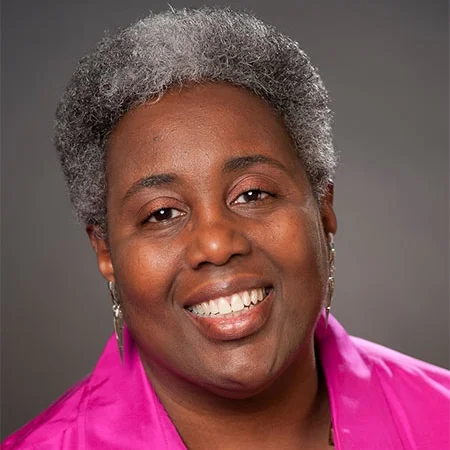
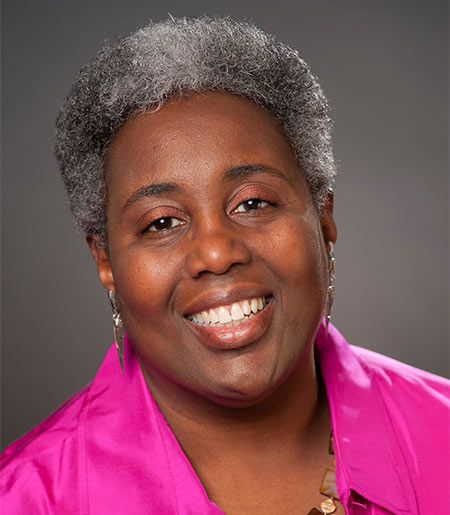
Judith Byfield
Judith Byfield is an Associate Professor of History at Cornell University. Her first book, The Bluest Hands: A Social and Economic History of Women Indigo Dyers in Western Nigeria, examined the transformation of indigo dyeing and textile production in Abeokuta, a town famous for its indigo dyed cloth, adire.
Judith Byfield
Judith Byfield is an Associate Professor of History at Cornell University. Her research interests began with a very strong interest in African art and literature and gradually added the colonial state, nationalism, women's history, and the African Diaspora, specifically the Anglophone Caribbean. Most of her research and writing thus far has focused on women's social and economic history in colonial Nigeria. Her first book, The Bluest Hands: A Social and Economic History of Women Indigo Dyers in Western Nigeria, brought many of her interests together in an examination of the transformation of indigo dyeing and textile production in Abeokuta, a town famous for its indigo dyed cloth, adire. It illuminated the ways in which the colonial state transformed women's economic life as well as the ways women navigated the new economic landscape and pressed the colonial state to protect their livelihoods.
Her current research, The Great Upheaval: Women, Taxes and Nationalist Politics in Nigeria, 1945-1951 (2017, forthcoming), explores a women's tax revolt in Abeokuta after WW II, and follows the projection of this political episode unto the national stage as the organization that led the tax revolt grew into a national women's organization that tried to shape the nationalist movement.
Her courses reflect the full range of my interests. They include lecture courses on Caribbean history, Africa After 1800, Popular Culture in Africa as well as seminars on a range of topics, including Nationalism and Decolonization; Marriage and Divorce; and Cloth, Dress and Identity.
Urmila Bhirdikar
Professor, Delhi University
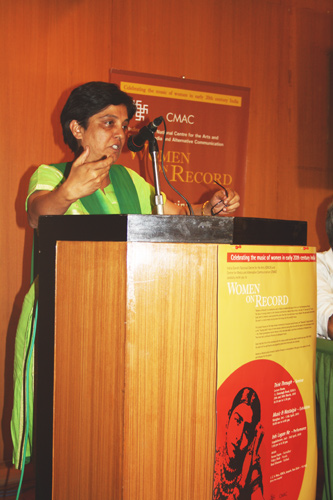
Urmila Bhirdikar has MA in English and Sociology, M Phil in English and has recently submitted her Ph D thesis entitled “ A Sociological Study of the Practice of Female Impersonation in Marathi Theatre in the 19th and Early 20th Century”, from the Department of Sociology, University of Delhi. She has taught English literature in H V Desai College Pune and in Mahindra United World College of India, Pune. She has trained in North Indian Classical vocal music and was invited to teach a course in Music and Modernity at JNU in 2006 and 2010.
Urmila Bhirdikar
Professor, Delhi University
Urmila Bhirdikar has MA in English and Sociology, M Phil in English and has recently submitted her Ph D thesis entitled “ A Sociological Study of the Practice of Female Impersonation in Marathi Theatre in the 19th and Early 20th Century”, from the Department of Sociology, University of Delhi. She has taught English literature in H V Desai College Pune and in Mahindra United World College of India, Pune. She has trained in North Indian Classical vocal music and was invited to teach a course in Music and Modernity at JNU in 2006 and 2010. Her research interests are in the fields of translation studies and practice, gender and sexuality, performance studies and narrative and literary theory.

Lisa Bjorkman
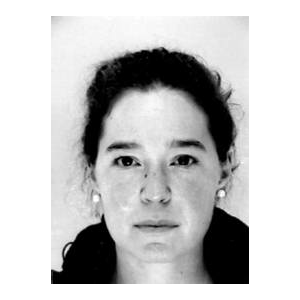
Lisa Björkman received her PhD in political science from the New School for Social Research in New York City in 2011. Her research explores the politics of water access in the Indian city of Mumbai, with a particular focus on the infrastructural effects of the city’s rapidly-changing built environment, and on emergent forms of political subjectivity and political possibility. She is presently based in Mumbai, where she is studying the role of political spectacle and ethno-religious discourse in municipal election campaigning.
Lisa Bjorkman
Lisa Björkman received her PhD in political science from the New School for Social Research in New York City in 2011. Her research explores the politics of water access in the Indian city of Mumbai, with a particular focus on the infrastructural effects of the city’s rapidly-changing built environment, and on emergent forms of political subjectivity and political possibility. She is presently based in Mumbai, where she is studying the role of political spectacle and ethno-religious discourse in municipal election campaigning.
Sarah Bracke
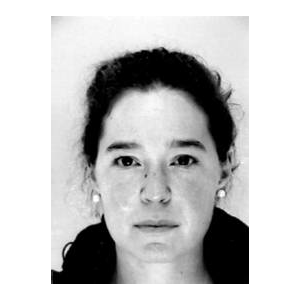
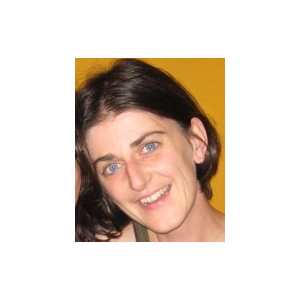
Sarah Bracke is Assistant Professor of Sociology of Religion and Culture at the Faculty of Social Sciences at the KULeuven. She studied sociology at the Catholic University of Leuven and holds a PhD in Women’s Studies from Utrecht University (2004, Women Resisting Secularisation in an Age of Globalisation. Four Case-studies in a European Context), was a Marie Curie fellow at the University of California Santa Cruz and Utrecht University (2006-2008), and is currently a fellow at the Centre for Humanities at Utrecht University.
Sarah Bracke
Sarah Bracke is Assistant Professor of Sociology of Religion and Culture at the Faculty of Social Sciences at the KULeuven. She studied sociology at the Catholic University of Leuven and holds a PhD in Women’s Studies from Utrecht University (2004, Women Resisting Secularisation in an Age of Globalisation. Four Case-studies in a European Context), was a Marie Curie fellow at the University of California Santa Cruz and Utrecht University (2006-2008), and is currently a fellow at the Centre for Humanities at Utrecht University. Her work is situated at the intersection of feminist theory, critical theory and post-colonial theory; it explores questions of modernity, religion and secular – in particular transformations of the secular – in relation to notions of subjectivity, agency and gender.