
Rebecca Traister featured in New York Times Sunday Review
Panelist from the fifth anniversary celebration of Women Creating Change at the Center for the Study of Social Difference publishes feature in advance of release of her book Good and Mad: The Revolutionary Power of Women’s Anger.
“Fury Is a Political Weapon,” an Opinion piece by Rebecca Traister, is featured on the front page of the September 30, 2018 print New York Times Sunday Review. The full article can be read here.
Rebecca Traister, whose new book Good and Mad: The Revolutionary Power of Women’s Anger will be published by Simon & Schuster on October 2, 2018, was panelist at the 5th anniversary celebration of Women Creating Change at the Center for the Study of Social Difference last Thursday evening.
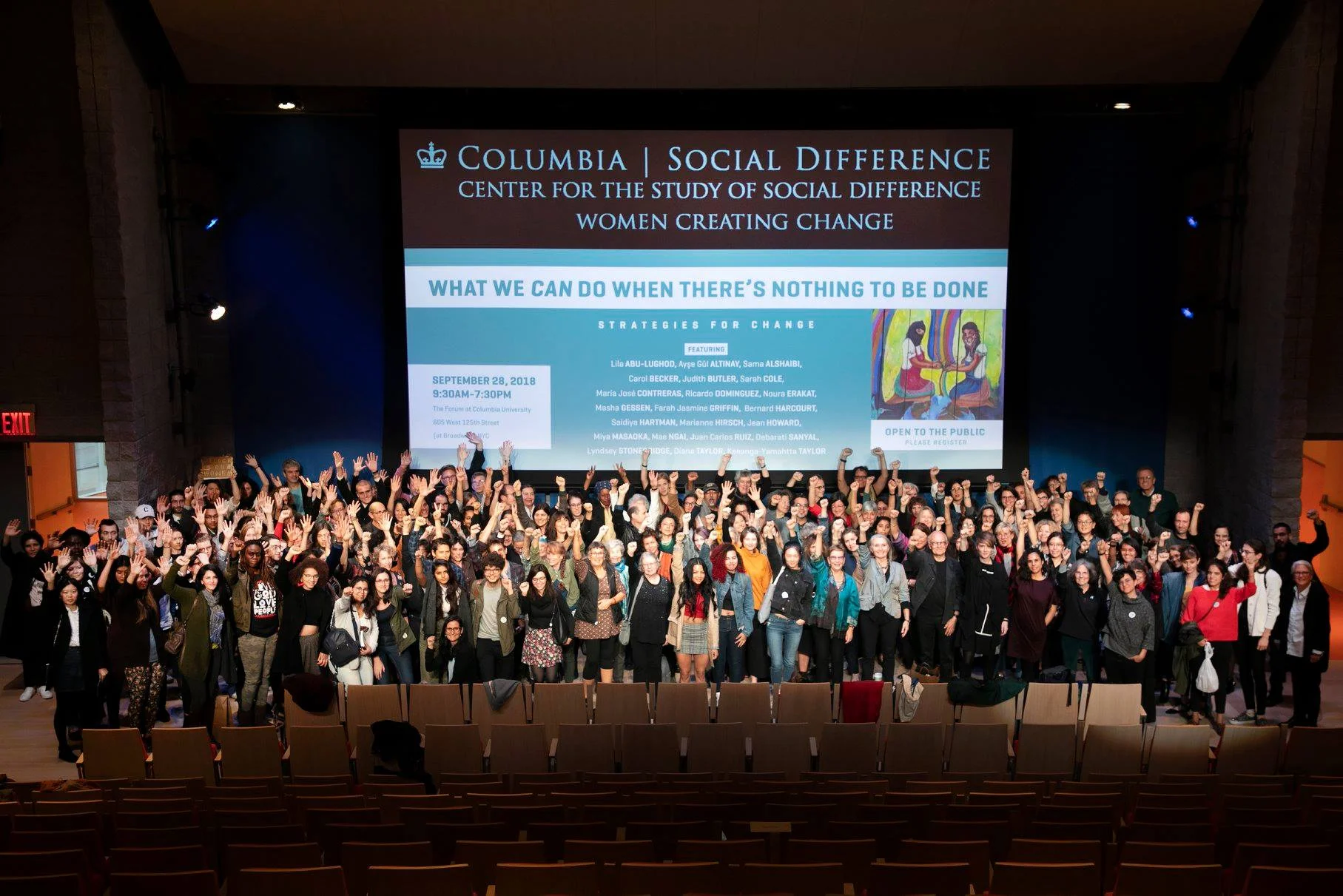
Statement released by participants and attendees of the CSSD anniversary symposium
At the close of What We CAN Do When There’s Nothing To Be Done on September 28, 2018, conference members released a statement and group photo.
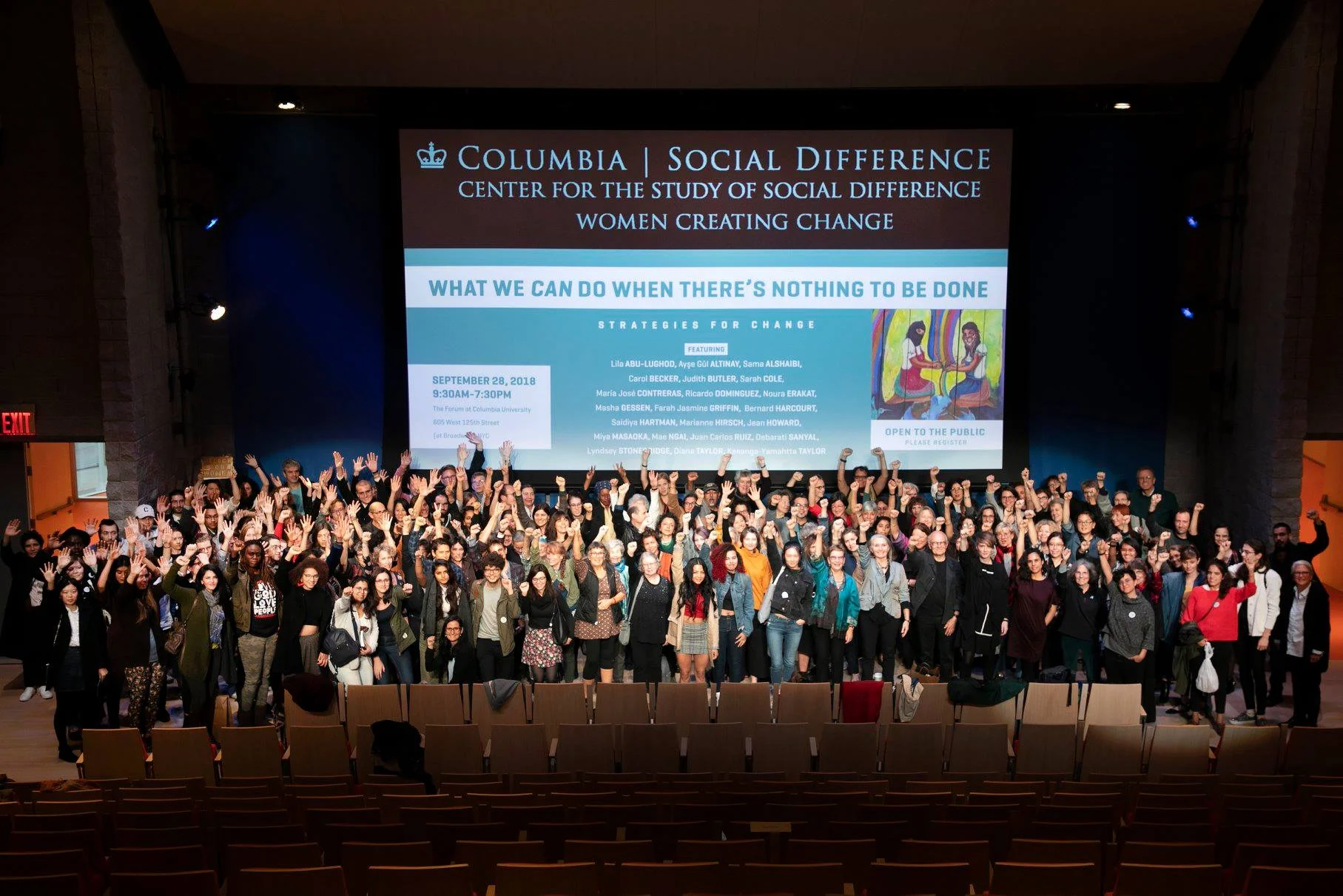
September 28, 2018 at What We CAN Do When There’s Nothing To Be Done: Strategies For Change
#WhatWeCanDo
A Conference Statement
September 28, 2018
We – several hundred students, teachers, writers, artists, activists, scholars, community members, privileged and disempowered alike— gathered together today to think, reflect, and act on the theme of “What We Can Do When There’s Nothing To Be Done,” for the tenth-year anniversary symposium of the Center for the Study of Social Difference at Columbia University.
We spent the day together critically thinking about what we can do to advance social justice through various forms of intellectual work, artistic creation, political action and modes of protest.
All the while, we have felt outraged at the political developments in this country, just outside these walls.
We protest the disrespect and disregard for women displayed by Republican men on the Senate Judiciary Committee and by the current administration more generally.
We strongly oppose the possible confirmation of Judge Brett Kavanaugh to the Supreme Court.
We are horrified by the structures that promote a man accused of violently assaulting women and who supports policies that violate the rights of so many people. Judge Kavanaugh’s confirmation hearings raised many red flags about his suitability for the court, ranging from his incomplete financial disclosures to the extreme partisanship unbefitting a judge and the egregious lack of judicial temperament he displayed.
We are heartened that the confirmation vote has been delayed and we demand that the FBI investigation be unhurried, unbiased, and thorough.
We pledge to act to oppose his confirmation.
We are committed to justice for all.
#WhatWeCanDo
Five principles emerged from our conference discussions, and we pledge to carry these with us beyond the privileged bounds of the space we occupied on Friday. This is both a call to action and a reminder that action can be taken:
1. We CAN do something, even when there seems to be nothing to be done.
2. If capable, we can and should utilize our privilege and the spaces we occupy to facilitate resistance, even in the face of presumed hopelessness or pessimism (the two are not to be conflated).
3. We acknowledge the power of small gestures to lead to acts – to lead to movements.
4. We will “resist temptation to return things to normal.”
5. “To change the world we must also be changed.”
Premilla Nadasen elected next President of the NWSA
CSSD co-director of Social Justice After the Welfare State and Faculty Fellow of Geographies of Injustice, Premilla Nadasen, was elected next President of the National Women's Studies Association (NWSA).
Premilla Nadasen, Faculty Fellow with Geographies of Injustice and a co-director of Social Justice After the Welfare State, was elected next President of the National Women's Studies Association (NWSA).
As President of the NWSA Governing Council, Dr. Nadasen will take office in November 2018 and serve for two years. The NWSA Governing Council serves as the Board of Directors for the organization and meets twice annually: in June and November.
Established in 1977, the National Women's Studies Association has as one of its primary objectives promoting and supporting the production and dissemination of knowledge about women and gender through teaching, learning, research and service in academic and other settings.
Jennifer Hirsch Featured in Teen Vogue
Reframing Gendered Violence co-director Jennifer Hirsch featured in an article in Teen Vogue discussing study on sexual education and its impact on how some college students practice consent.
A study by Reframing Gendered Violence co-director Jennifer Hirsch exploring the difference between how many straight, cisgender students are taught to give and get consent through a college-mandated "Yes Means Yes" training course is featured in an article on Teen Vogue.
The study titled “Social Dimensions of Sexual Consent Among Cisgender Heterosexual College Students: Insights From Ethnographic Research” reveals a social gray area — one in which young people are having consensual sex, but don't necessarily practice it in the way they were taught.
Click here to read the article.
Click here to read the study by Hirsch and her co-authors.
LIVESTREAM: MENSTRUATION IS HAVING ITS MOMENT – HOW CAN SCHOLARS ENGAGE?
New CSSD Working Group, Menstrual Health & Gender Justice holds launch panel September 20, 2018 .
The first event from the new CSSD Working Group on Menstrual Health and Gender Justice brought together experts on menstrual health – established and emerging scholars as well as practitioners. While research on menstruation is not new, the current momentum creates new opportunities.
The event was facilitated by CSSD Menstrual Health & Gender Justice Working Group Director, Inga Winkler. Speakers included Nancy Reame of Columbia University Medical Center; Chris Bobel, Associate Professor of Women's, Gender, and Sexuality Studies at the University of Massachusetts Boston; Norma Swenson, Founder of Our Bodies, Ourselves; Trisha Maharaj, Graduate Student in Human Rights Studies at Columbia University; Sylvia Wong of the United Nations Population Fund.
To watch the livestream video of the event, click here.
For more information about the event, click here.
Menstrual Health and Gender Justice Working Group Launches with Expert Panel
The Center for the Study of Social Difference and the Institute for the Study of Human Rights sponsored the launch of a new CSSD working group: Menstrual Health and Gender Justice.
On September 20, 2018, the Center for the Study Social Difference and the Institute for the Study of Human Rights sponsored the launch of a new CSSD working group: Menstrual Health and Gender Justice.
Inga Winkler, the director of the new working group, led five panelists and experts in the field in discussing the methods, opportunities, and risks involved in generating sustainable, evidence-based outcomes and in challenging common misconceptions of menstruation.
Panelists provided insights into how the working group can address and engage with the recent surge in public interest surrounding menstruation in their research.
Click here to read more.
Menstrual Health and Gender Justice Working Group Launches with Expert Panel: Menstruation is Having its Moment – How Can Scholars Engage?
On September 20, 2018, the Center for the Study of Social Difference (CSSD) and the Institute for the Study of Human Rights sponsored the launch of a new CSSD working group: Menstrual Health and Gender Justice. The event featured an expert panel addressing some of the most pressing questions related to menstrual health.
Panelists provided insights into how the working group can address and engage with the recent surge in public interest surrounding menstruation in their research.
The panel brought together various perspectives: established scholars and new voices, birds-eye views on ongoing developments and insights from communities, socio-medical and cultural perspectives on menstruation. Inga Winkler, the director of the working group, led five panelists and experts in the field in discussing the methods, opportunities, and risks involved in generating sustainable, evidence-based outcomes and in challenging common misconceptions of menstruation. Both the panelists and attendees of the launch event offered professional and personal perspectives on the current menstrual movement, its history and significance, and the potential ways in which the working group can contribute to meaningful, inclusive change.
Nancy Reame from the Columbia School of Nursing challenged the idea that menstruation is only now having its moment and drew our attention to research and advocacy on the Toxic Shock Syndrome outbreak in the 1980s.
Norma Swenson, one of the co-founders of Our Bodies, Ourselves, provided advice on how to develop the current moment into a long-term movement for women’s health.
Vanessa Paranjothy, an Obama Foundation Scholar and co-founder of Freedom Cups stressed the importance of listening to women and following their lead when working with communities.
Trisha Maharaj, a graduate student in Human Rights Studies, shared research on attitudes towards menstruation amongst Hindu women in Trinidad. She challenged the conventional wisdom that cultural and religious practices often contribute to stigma based on her findings that women in Trinidad do not perceive them as stigmatizing.
Chris Bobel from UMass Boston cautioned us that the menstrual health space is driven by assertions and assumptions that are not yet properly explored. She witnesses a heavy focus on providing products to the detriment of addressing underlying issues of institutionalized and embodied shame about menstruation.
Among the diverse perspectives present, the panel agreed that several issues are integral for moving the discussion on menstrual health forward, including: (1) promoting menstrual literacy and body literacy; (2) supporting scholarship aimed to fill knowledge gaps; (3) addressing stigma associated with menstruation; and (4) involving and encouraging collaboration with diverse groups, sectors, and movements. Moving forward, the Menstrual Health and Gender Justice working group will engage in critically evaluating existing developments in the field of menstrual studies, contributing to the body of research and sharing knowledge.
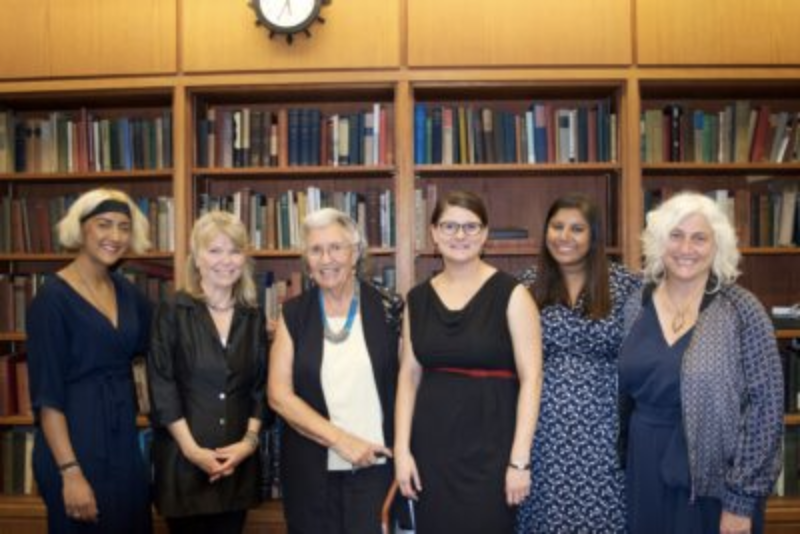
If you would like to get updates and news from the Menstrual Health and Gender Justice Working Group, please email Michelle at mc4225@columbia.edu.
Contributed by Sydney Amoakoh, Michelle Chouinard and Inga Winkler.
Rachel Adams Reviews Three New Memoirs
Rachel Adams, co-director of the Precision Medicine working group, has reviewed three memoirs on illness and recovery.
Rachel Adams, co-director of the Precision Medicine working group and Professor of English and Comparative Literature at Columbia, has reviewed three new memoirs on illness and recovery in an article entitled, “Who is Sick and Who is Well.” It appeared in the publication Public Books and was commissioned by Nicholas Dames.
The full article can be read here.
Andreas Huyssen Interviewed in Politika
Andreas Huyssen, faculty fellow of the working group Women Mobilizing Memory, spoke with Politika about memory studies.
Andreas Huyssen, faculty fellow of the working group Women Mobilizing Memory and Villard Professor Emeritus of German and Comparative Literature at Columbia University, was interviewed in Politika for an article entitled “State of the art in memory studies.” In the interview Huyssen discusses the present debate on memory and how the field of memory studies has evolved. The impact that digital technologies and social media has had on the field is addressed as well.
The full interview can be read here.
Gayatri Spivak Featured in the New York Times
Gayatri Spivak, co-director of the working group The Rural-Urban Interface, published an article entitled “Who Is Afraid of Shahidul Alam?” in which she speaks about the photojournalist’s imprisonment.
Gayatri Spivak, co-director of the working group The Rural-Urban Interface: Gender and Poverty in Ghana and Kenya, Statistics and Stories, and University Professor at Columbia, was featured in the New York Times with an article entitled, “Who Is Afraid of Shahidul Alam?” In the article she talks about the imprisonment of the Bangladeshi photojournalist and the country’s drift towards autocracy.
In addition, she recently delivered the Jean-Paul Sartre Memorial Lecture, “How Can we use Marx Today?” at the Asian Development Research Institute in Patna, India.
Farah Jasmine Griffin Speaks about Aretha Franklin’s Legacy
Farah Jasmine Griffin, co-director of the working group Toward an Intellectual History of Black Women, spoke with DemocracyNow! and The Nation about Aretha Franklin’s legacy.
Farah Jasmine Griffin, co-director or working group Toward an Intellectual History of Black Women and William B. Ransford Professor of English & Comparative Literature, spoke with DemocracyNow! And The Nation about Aretha Franklin’s role in the history of music and her involvement in fighting for Angela Davis’s freedom in 1970.
A’Lelia Bundles Featured in book Journeys: An American Story
Women Creating Change Leadership Council member A’Lelia Bundles writes about immigration and American greatness in Journeys: An American Story.
A’lelia Bundles, member of the Women Creating Change Leadership Council and vice chair of the Columbia Board of Trustees, is one 72 individuals to be featured in the book, Journeys: An American Story. The book is a collection of essays about immigration and American greatness. It tells the stories of the people who came to this country and made it what it is today.
A full summary of the book can be found here.
Andreas Huyssen Interviewed on Memory Studies in Politika
Andreas Hyussen, faculty fellow with the Women Mobilizing Memory Group and Villard Professor of German and Comparative Literature at Columbia University, was interviewed by Patrick Esser for Politika.
Andreas Hyussen, faculty fellow with the Women Mobilizing Memory Group and Villard Professor of German and Comparative Literature at Columbia University, was interviewed by Patrick Esser for Politika. In the interview he talks broadly about memory studies, touching on how the past and the present become entangled in his work.
In addition he discusses how incorporating the arts and humanities into memory culture can make for an interconnected world. The work done on postmemory by fellow working group member Marianne Hirsch is also a topic of conversation.
The full interview can be read here.
Lila Abu-Lughod Reviews New Books on Palestinian Diaspora
Lila Abu-Lughod, co-director of CSSD working group Religion and the Global Framing of Gender Violence, shares her thoughts on two new books in the publication Public Books.
Lila Abu-Lughod, Joseph L. Buttenwieser Professor of Social Science and co-director of CSSD working group Religion and the Global Framing of Gender Violence, has shared a piece in the publication Public Books. In her contribution she reviews two books about being part of the Palestinian Diaspora. The piece is entitled, “Moods of Betrayal in the Story of Palestine,” and reviews the work of two Palestinian authors, Reja-e Busailah and Hala Alyan.
The full review of both books can be read here.
Professor Inga Winkler Speaks at UN Event on Menstrual Health
Menstrual Health and Gender Justice working group director Inga Winkler speaks on individual experiences with menstruation around the globe.
Inga Winkler, director of the CSSD working group Menstrual Health and Gender Justice, spoke at a UN panel discussion hosted by Simavi and WSSCC on July 11th. In her talk Dr. Winkler addressed the many ways people are affected by menstruation as well as how menstruation impacts sustainable development goals.
During the panel she stressed the importance of including women and girls of diverse backgrounds in the conversation in order to truly understand how culture and religion affect menstrual practices. A full recap of the talk can be read here.
Professor Inga Winkler Speaks at UN Event on Menstrual Health
On July 11, 2018, Simavi and WSSCC hosted a panel discussion during the UN’s High-level Political Forum on Sustainable Development, about “Putting Menstrual Health on the 2030 Agenda,” which featured Institute for the Study of Human Rights professor Dr. Inga Winkler as both the keynote speaker and a panelist. Dr. Winkler is director of the Menstrual Health and Gender Justice working group at the Center for the Study of Social Difference at Columbia University.
In her keynote address, Dr. Winkler emphasized the importance of removing Menstrual Hygiene Management (MHM) strictly from the Water, Sanitation, and Hygiene (WASH) sector in order to unpack and address issues around menstruation at all levels. She stressed the need to look at the numerous ways that people are affected by menstruation and how menstruation is directly linked to many of the Sustainable Development Goals (SDGs) on the 2030 agenda, such as Good Health and Well-Being, Quality Education, Gender Equality, Clean Water and Sanitation, Decent Work and Economic Growth, and Responsible Consumption and Production.
Dr. Winkler stressed the importance of including women and girls in the discussion, especially those who are traditionally marginalized or excluded. The range of experiences individuals have with menstruation should be addressed in order to leave no one behind. For example, indigenous women, women with disabilities, refugee and migrant women and girls, homeless individuals, incarcerated women, and the LGBTQI community all face overlapping forms of discrimination and are often left out of the MHM conversation.
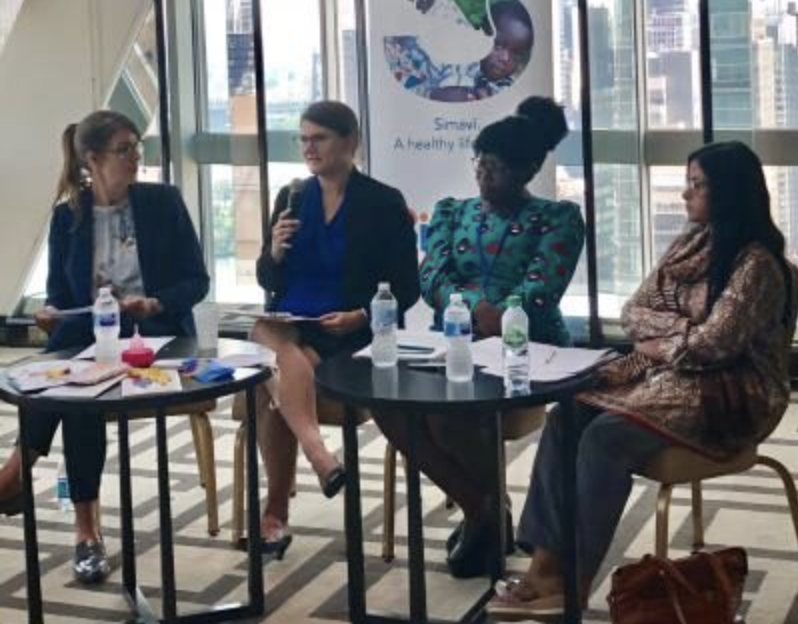
Dr. Winkler also noted the large role that religion and culture play in regards to menstrual practices, but that it should remain up to the menstruating individual whether or not to partake in them. In this way these individuals maintain their agency, which is the driving force behind the SDGs.
Written by Human Rights graduate students Trisha Maharaj and Tori Miller.
Inga Winkler to speak at UN High-level Political Forum on Sustainable Development
Director of CSSD working group Menstrual Health and Gender Justice to discuss opportunities to advocate for menstrual health with panelists from Kenya and Bangladesh.
Dr. Inga Winkler, Director of newly-launched CSSD working group Menstrual Health and Gender Justice, will speak on a panel titled "Putting Menstrual Health on the 2030 Agenda" at a side event of the 2018 United Nations' High-level Political Forum on Sustainable Development.
This panel discussion, with Irene Gai (Programme Coordinator, Kenya Water for Health) and Mahbuba Kumkum (Programme Manager Ritu at Simavi, Bangladesh) will take place on July 11, 2018 at 10am at the Millennium Hilton New York One UN Plaza, 1 United Nations Plaza, New York, NY 10017, and will be moderated by Hilda Alberda (Director PMEL, Menstrual Health Expert at Simavi, The Netherlands).
A live stream of the event will be available here.

Frances Negron-Muntaner Speaks with El Diario
Frances Negron-Muntaner, co-director of the working group Unpayable Debt, spoke with El Diario about their donation of photographic archives to Columbia.
Frances Negron-Muntaner, co-director of the working group Unpayable Debt and Professor of English and Comparative Literature at Columbia University, spoke with El Diario about the photographic archive that they recently donated to Columbia Libraries. The full interview can be read here.
She was also featured on The Takeaway, where she spoke with film critic Rafer Guzman about the film Sicario: Day of the Soldado. The full episode can be listened to here.
CSSD Director Marianne Hirsch Speaks in Chile
Marianne Hirsch, co-director of CSSD group Women Mobilizing Memory, spoke on memory studies at several events.
CSSD Director and William Peterfield Trent Professor of English and Comparative Literature Marianne Hirsch visited Chile in early June to speak at several events, including a colloquium on Postmemory and a seminar entitled “The Future of the Past,” organized by Universidad Católica.
During the seminar, Hirsch, together with Leo Spitzer, Professor Emeritus of History at Dartmouth, presented a lecture entitled “School Pictures in Troubled Times,” in which they examined several aspects of school photos taken during periods of persecution and resistance in history.
In addition, at the colloquium “Postmemory: Conversations on Human Rights and Migrations,” Hirsch discussed the role of feminism in memory studies as well as the ways in which memories of violent histories can be utilized for a better future.
A complete report from Columbia Global Center | Santiago can be read here.
Kevin Fellezs speaks about Ethnomusicology with Columbia College Today
Kevin Fellezs, member of the CSSD working group Pacific Climate Circuits, spoke about teaching and his love of music with Columbia College Today.
Kevin Fellezs, member of the CSSD working group Pacific Climate Circuits and Associate Professor of music at Columbia University, was featured in the Summer 2018 issue of Columbia College Today. In the interview he talks about how he grew to love music and his experiences both as a student and a teacher.
The full interview can be read here.