
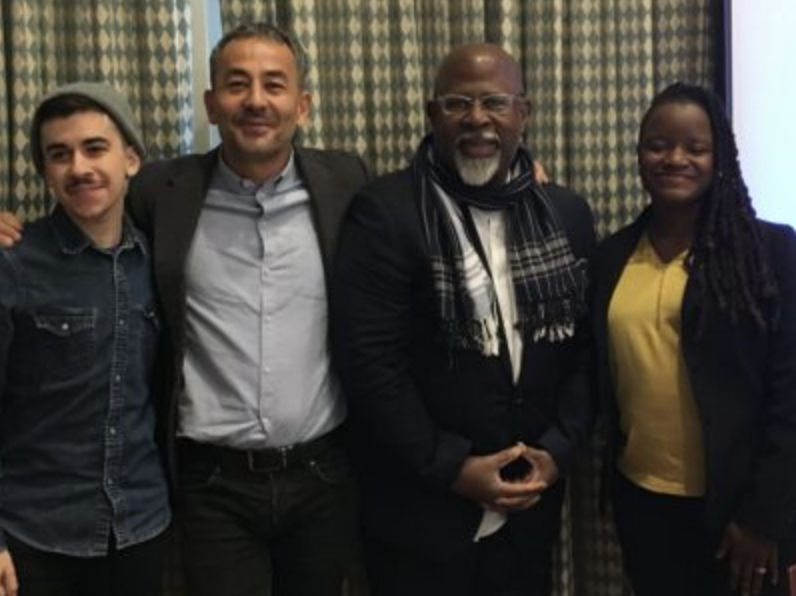
Reframing Transgender Violence: Notes from a Two-Day Workshop
On January 24-25, 2019, the Center for the Study of Social Difference presented its final scheduled public workshop in the first iteration of its Reframing Gendered Violence working group. Reframing Transgender Violence was organized by Nash Professor of Law Kendall Thomas and featured scholars, activists, attorneys, and graduate students working across issues of transgender violence and justice.
Audience members filled the Jerome Greene Annex at Columbia Law School to hear these speakers give 20 minute presentations and to interact with them in lengthy Q&A discussions, in what was designed as an informal workshop setting to give space to explore the variety of topics being covered. A full video of the proceedings will be made available to the public, and it is the hope of Professor Thomas that these conversations can continue with possible publication of the speakers’ comments, as well.
Beyond Accepted Tendencies of Normative Genders
Jennifer Boylan, the Anna Quindlen Writer in Residence at Barnard College, opened our workshops on January 24th by moderating a discussion between Asli Zengin (Louise Lamphere Visiting Assistant Professor in Anthropology and the Pembroke Center at Brown) and Catherine Clune-Taylor (Postdoc in the Program in Gender and Sexuality Studies at Princeton) regarding how we approach the idea of violence against transgender people. Zengin challenged us to see violence as another way of looking at social relations rather than as a binary of perpetrator and victim. Clune-Taylor agreed “about violence as a kind of social relation,” but stated that she also sees “something in terms of how individual bodies are mined for data production” as a form of violence. Zengin emphasized that Turkey, like North America, is quite heterogeneous, and that in both places visibility comes at the cost of more violence. Clune-Taylor avoids intersecting discussions of gender and race because “often there is a distinction made between how intersex communities/conditions are approached in North America (i.e., white populations) and how they are approached in racialized “other” communities,” with the latter often viewed as backward, less advanced.
Both Zengin and Clune-Taylor worked to give us a sense that many in this field are working much more capaciously than simply considering accepted tendencies of normative genders. Our speakers discussed the concept of gender for a person as a trajectory that changes over time and emphasized the problem of intersex children having a gender assigned to them at birth.
Limits of the Law and Extra-legal Structures for Survival
We began day two of our workshops on Jan 25th with two of Professor Thomas’s former “Law and Sexuality” seminar students from 2009-10, Sergio Suiama (Federal Prosecutor in Rio de Janeiro) and Chinyere Ezie (Lawyer at the Center for Constitutional Rights), in conversation with Chase Strangio (Staff Attorney with the ACLU’s LGBT & HIV Project). These speakers led a conversation on the uses and limits of the legal framework for addressing issues of transgender violence, and issues of advocacy and activism for transgender people.
Suiama led the discussion with a presentation on transgender violence in Brazil, which has the highest incidences of violence against transgender people, including 868 murders between 2008 and 2016. He warned of increased danger for the transgender community after recent elections, despite 53 transgender candidates running for office in 2018. Suiama shared an especially powerful and disturbing video clip in which Damares Regina Alves, an evangelical pastor and Minister of Human Rights, Family and Women under new President Jair Bolsonaro, calls for “no ideological indoctrination in the classroom” and declares girls princesses and boys princes.
Ezie and Strangio had a conversation that brought the problems of existing systems to the fore, with Ezie blaming a “social structure that accepts colonialism as a basis of civilization.” Strangio asked us what it means to look at societal and government structures that have been designed to maintain inequality in the US and elsewhere, citing the example of the US as having a criminal justice system that deals with interpersonal violence by perpetuating state violence (e.g., the state’s ability to incarcerate bodies for the purpose of “protecting” other bodies). Ezie emphasized that people are too often forced to tell stories that are not their own but rather the easy story to tell, again looking to the treatment of intersex children as an example. How would it be, Ezie challenged us, if we were forced to identify our race on our birth certificate in the same way we are forced to choose a gender?
Professor Thomas pointed out that all three speakers were expressing a critique of trans legalism, yet, he said, “you are all, in some way, state agents, relying on state work to minimize trans injustice.” Strangio agreed, with the addition, “if you’re teaching at a law school, you’re an agent of the state” just as “we are also agents of the state if we’ve gone to law school.” For this reason, Strangio emphasized the importance of his work with international activists, looking at the survival structures that people set up, and how the state is encroaching on them. Strangio left us with the question, “How can we make it apparent and disrupt the ways the state is preventing our survival, our extra-legal structures for survival?”
The Limits of Current Critical Methods
Professor Thomas moderated our second discussion of the day, with Christina Hanhardt (Associate Professor of American Studies, University of Maryland-College Park) and C. Riley Snorton (Professor of English and Gender and Sexuality, University of Chicago).
Hanhardt led off with a history of transgender violence, while Snorton asked us to put a “temporal emphasis on history’s own terms” and to understand the ongoing struggle in the present by imaging a future where Black Lives Matter and Trans Lives Matter matter to everyone.
Just as the first discussion of the day looked at the limits of using the legal system to address trans violence, this discussion addressed the limits of current critical trans methods. Hanhardt reminded us that there is often a place of putting things/people in categories of good vs bad and challenged us to look at how our sets of knowledge are made in our academic disciplines and categories. Snorton asked us to look more closely at politics of solidarity and stated, “when we only look at trans violence as murder,” we ignore other areas of vulnerability for trans people that have to do with relations to other ways of living, including slow death through the “impossibility of trans lives.”
The Critical Nature of Continuing this Work
Our final discussion of the two-day workshop was led by a presentation on incarceration of transgender people by Joss Taylor Greene, a doctoral candidate in the Department of Sociology at Columbia University. Greene posited that there is a panic about disruption of sexuality identity categories in places like prisons and women’s colleges, tying in many themes covered by previous speakers, including the usefulness and the challenges of opacity with dealing with systems of structural violence.
Greene’s interlocutor Jack Halberstam (Professor of English and Gender and Sexuality Studies, Columbia University) concluded our two days by addressing the question whether we should we separate “queer” and “trans” studies. He suggested that we not, as, after all, these “populations are simultaneously produced by regimes.”
Workshop organizer Professor Thomas emphasized the fittingness of ending our discussions with a dissertation project, as a testament to the “critical nature of continuing this work” on the reframing of transgender violence.
Contributed by Catherine LaSota, Associate Director of the Center for the Study of Social Difference
Menstrual Health and Gender Justice faculty fellow interviewed by public health podcast
Chris Bobel discusses public health field and the increasing attention on menstruation in the latest episode of Case Confirmed
Menstrual Health and Gender Justice working group faculty fellow Chris Bobel talks about the public health field and the increasing attention on menstruation in the latest episode of Case Confirmed, a monthly public health podcast series.
In the episode, “Public Health Has Its Period,” Bobel explores the connections between menstrual taboo, public health campaigns, capitalism, and embodiment.
Click here to listen to the episode.
Chris Bobel is Associate Professor of Women’s, Gender & Sexuality Studies at the University of Massachusetts Boston where she teaches courses on Gender & the Body, Feminist Theory, Feminist Research Methods, Women in US Social Movements and Feminist Activism.
Case Confirmed is a monthly public health podcast series that features interviews with top public health experts from around the world.
The Nation features piece from Keeanga-Yamahtta Taylor
A speaker from the Center for the Study of Social Difference’s anniversary symposium writes about the 2019 Women’s March.
Keeanga-Yamahtta Taylor, Princeton professor in the department of African American studies and speaker at CSSD’s ten year anniversary symposium, discussed mass movements in relation to the third anniversary of the Women’s March in a recent article for The Nation. The article discusses the recent divisions in the organization of the Women’s March and their underlying tensions.
The Nation article is linked here.
A full length video of Keeanga-Yamahtta Taylor’s participation in the CSSD anniversary symposium can be found here along with all other panels from the symposium on our YouTube channel.
Rebecca Traister pens “Don’t Give Up on the Women’s March” in The Cut
A panelist at the Women Creating Change five year anniversary, Traister discusses the most recent Women’s March in a new article.
Good and Mad author and panelist at the Women Creating Change five year anniversary celebration and roundtable event, Rebecca Traister addressed the continuity of the Women’s March in a recent article for The Cut.
The full article can be found here.
For a review of the Women Creating Change anniversary click here.
Introducing Inga Winkler, Director of Menstrual Health Working Group
Inga Winkler, Lecturer at the Institute for the Study of Human Rights and Director of Undergraduate Studies for the Human Rights Program at Columbia University, was featured on the recently launched blog periodsatcolumbia.com.
Inga Winkler, Lecturer at the Institute for the Study of Human Rights and Director of Undergraduate Studies for the Human Rights Program at Columbia University, was interviewed for the blog periodsatcolumbia.com, which was recently launched to highlight the achievements of Menstrual Health and Gender Justice, one of the newest Center for the Study of Social Difference working groups
In the interview, Dr. Winkler discusses how the Menstrual Health and Gender Justice working group is bringing an interdisciplinary perspective to the study of menstrual health, as well as the long term goals of the working group. She said part of their work involves broadening the discussion to include societal norms and stereotypes surrounding menstruation. You can read the full blog post here.
Menstrual Health and Gender Justice working group launches new blog, Periodsatcolumbia.com
The Center for the Study of Social Difference (CSSD) working group Menstrual Health and Gender Justice launches a new blog.
CSSD working group Menstrual Health and Gender Justice launches a new blog.
The site will feature news, events, research, publications, and reflections by working group members and others in the field of menstrual health and gender justice.
The Menstrual Health and Gender Justice working group seeks to further the nascent field of menstrual studies. The working group puts particular emphasis on critically evaluating the current state of research, advocacy and programming, with interest in examining whose voices are being represented in the field, which actors shape the dominant narrative, whose voices are marginalized, what the gaps are, and how interdisciplinary collaboration might help remedy some of these gaps.
Click here to access the blog.
Pedagogies of Dignity Working Group Hosts Workshop at Lenfest
On September 30th the CSSD working group Pedagogies of Dignity held a workshop bringing together formerly incarcerated students, educators, and activists to discuss prison education.
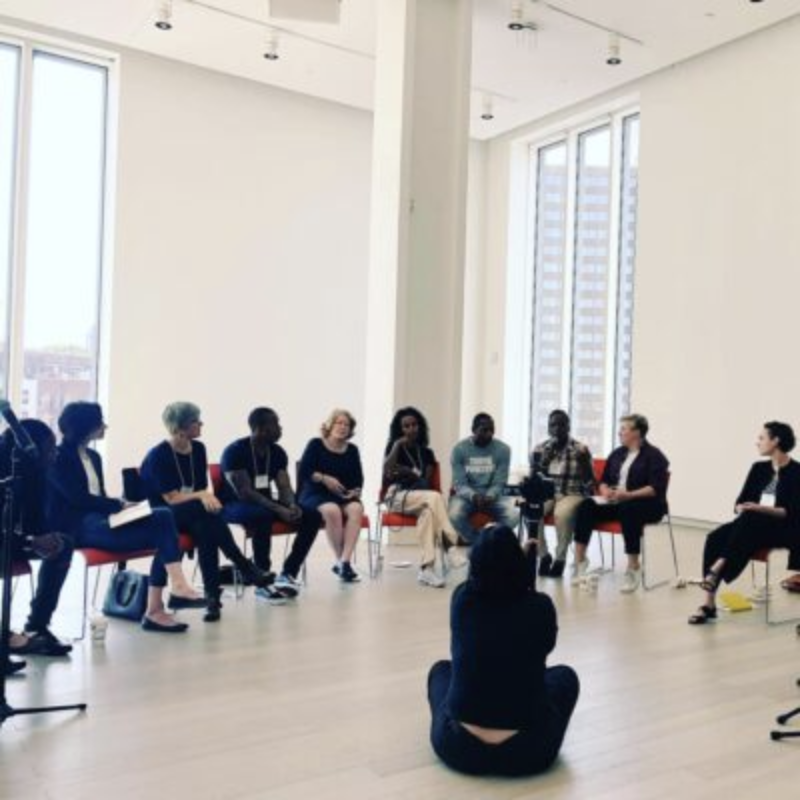
On September 30, 2018 the CSSD working group Pedagogies of Dignity supported a workshop at Columbia’s Lenfest Center for the Arts, the second such workshop of the Center for New Narratives in Philosophy. The workshop brought together formerly incarcerated students, academics, prison educators, and activists to discuss the benefits of prison education as well as challenges associated with it. The event was hosted by Christia Mercer, Gustave M. Berner Professor of philosophy at Columbia University and Project Director of the working group.
The Pedagogies of Dignity working group has been working with educational staff at the Brooklyn Metropolitan Detention Center (MDC) to organize a series of mini-courses available to men of the MDC. These courses have been attended by over 140 men since February. A full recap of the September 30th workshop can be read here on the CSSD blog.
The Pedagogy of Dignity: Prison Education, Part 2 Event Recap
On Sunday September 30th 2018, the Center for New Narratives in Philosophy at Columbia University hosted its second Pedagogy of Dignity workshop at Columbia’s Lenfest Center for the Arts, in connection with the Pedagogies of Dignity working group at the Center for the Study of Social Difference. The workshop brought together 40 formerly incarcerated students, academics, prison educators, activists, undergraduates, and postgraduates, to discuss the benefits and challenges of prison education, present our pedagogical ideas, and prepare participants to teach in Brooklyn Metropolitan Detention Center (MDC).
Working with the educational staff at MDC, we have organized a series of mini-courses that are available to the men of MDC, regardless of educational background. Since February, over 140 incarcerated men have attended our courses. Each class is a combination of serious ideas, Theatre of the Oppressed exercises, and skill development. The mini-course program has been an enormous success. Our classes are over-enrolled and the MDC staff is eager for more courses.
Professor Christia Mercer hosted the event, Morgaine Gooding-Silverwood led Theatre of the Oppressed exercises and mock classes, and the award-winning documentary film maker, Jac Gares, filmed as part of her upcoming documentary on our Pedagogy of Dignity work, with videographer Isaac Scott. (The video is available here.)
Participants
In attendance were special guests including:
● Jennifer Lackey, the Director of the Northwestern Prison Education Program and the Wayne and Elizabeth Jones Professor of Philosophy at Northwestern University, who regularly teaches college-level courses at Stateville Correctional Center and in Division 10 of the Cook County Department of Corrections;
● Formerly incarcerated students Syretta Wright, Miranda McConniughey, Isaac Scott, Aisha Elliot, and Jarrell Daniels;
● Staff members from Metropolitan Detention Center: Michelle Gantt (Education Supervisor at the Metropolitan Detention, federal prison), Jason Murray, and Ciara Pemberton;
● Brooklyn Public Defender and Columbia Philosophy alumna Susannah Karlsson;
● Columbia Philosophy Graduate Students;
● Columbia and Barnard Undergraduate Students;
● Columbia Faculty from Philosophy, Political Science, Law, Religion, History, English and Comparative Literature; and
● Faculty from other universities, including David Velleman from NYU.
Background
The issue that our Pedagogy of Dignity approach seeks to address is that many people – even well-intending volunteer teachers – assume that teaching in prison is like normal teaching, but with challenges. We reject this assumption. At the Pedagogy of Dignity workshop, we debated, analyzed, and tweaked our pedagogical approach that members of our group first developed at Taconic Correctional Facility and honed at Brooklyn Metropolitan Detention Center fall 2017.
The first idea underpinning our Pedagogy of Dignity is that the harsh realities of incarceration render less suitable the traditional classroom pedagogy according to which instructors transmit their knowledge to (mostly) passive learners. It has been our experience that incarcerated people -- the vast majority of whom have been gravely underserved in schools -- are best served when classroom work is broken up with improvisational exercises that employ Theatre of the Oppressed methods. Nearly 80% of incarcerated women suffered 1 physical abuse as children and 33% have survived rape. Roughly 75% of incarcerated people are functionally illiterate. Such students deserve an enlivened classroom experience that breaks down hierarchies and creates an environment that enables self-expression and its accompanying self- affirmation. 2
The second idea grounding our Pedagogy of Dignity is that incarcerated students do not need saving. Although prison culture forces inhabitants to endure oppressive rules and suffer injustices, imprisoned students are eager to take full advantage of the opportunities offered them and extremely resilient in supporting one another in doing so. Too many volunteer instructors have, what activists in our group call, “a savior complex.” In the words of one of our collaborators, Isaac Scott (formerly incarcerated artist, activist): “volunteers often see themselves as responsible to save their incarcerated students” in a way that “can cause more harm than good.” Instead of seeing incarcerated students as people who need saving, Scott insists that students be allowed “to empower themselves so as to restore their own self-image.” The main goal of our pedagogy is to create an environment in which students’ experiences and perspectives are respected and highlighted so that students can enrich their own sense of agency, discover that their experiences count as knowledge, and empower themselves. Theater of the Oppressed techniques were originally designed exactly to increase participants’ agency and accompanying sense of self-worth and dignity.
1 Developed by Augusto Boal, Theatre of the Oppressed includes “improvisation and other techniques to break down hierarchies and promote social and political change.” Boal’s goal was “to explore, show, analyze and transform the reality in which the participants are living.” 2 The lawyer of one of our students sent a letter in which he wrote: “I think [name of student] won’t mind me telling you that your course has significantly added meaning and purpose to his life in federal prison.”
Our Teaching in MDC
A subset of our group developed the Pedagogy of Dignity over four years of teaching in Taconic Correctional Facility and then had the opportunity to experiment with it in the Brooklyn Metropolitan Detention Center (MDC), which is a federal maximum security jail. Our course has been considered a huge success both by the students and by the educational staff at MDC. During a ceremony at the end of one semester, organized by Dr. Michelle Gantt (MDC, Director of Education), one student said: “I thought my brain had stopped working and would never work again. The reading, discussing, and [improvisational] work we’ve done, it’s proven to me that my brain still works. I’m ready to use it more.”
Dr. Gantt was so pleased by the course, some of which she observed, and by the student response, that she approached us to create a special program in MDC. Working in close collaboration with MDC staff, we have instituted a series of 4-week courses that have been made available to anyone in MDC, whether or not they have a high school degree. In an extraordinary gesture of trust, MDC has allowed us to train volunteers and escort them into this maximum-security prison without the normal rigorous screening. Each class has been a combination of serious ideas and texts, Theatre of the Oppressed exercises, and skill-development.
The Pedagogy of Dignity Workshop
At the workshop, Professor Christia Mercer and justice educator, activist, and theater artist Morgaine Gooding-Silverwood introduced the day, giving an overview of the MDC program, the Pedagogy of Dignity, and Theatre of the Oppressed exercises. Gooding-Silverwood said, “The purpose is to teach university professors to be more human and relaxed and nuanced in their approach to education in prison.” The approach is a means of raising professors’ awareness about the fact that there is no structure for rehabilitation for incarcerated students, that students in the classroom have a lot to teach professors, the importance of professors allowing themselves to be intellectually vulnerable in the prison classroom and open to learning from the students.
Theatre of the Oppressed is a form of community theatre created by Augusto Boal in Brazil based on the idea that anyone can be an actor, but also provides the foundation for important philosophical and social discussions. Theatre of the Oppressed is important because it encourages us to fail and to make mistakes. For example, one of the exercises “Name Gumbo” is where people switch names as they introduce themselves, and carry on their new name when they introduce themselves to the next person. It teaches us that we don’t listen very well.
Formerly incarcerated students Isaac Scott, Aisha Elliot, Syretta Wright, Miranda McConniughey, and Jarrell Daniels, and Brooklyn Public Defender Susannah Karlsson discussed the challenges, benefits, and goals of incarceration and education. Formerly incarcerated student Jarrell Daniels explains, “For us, education is the only way for us to come out of the mud, or as we say, the trenches... Unfortunately when we were raised in our communities we didn’t look at education as a tool that would lift us up out of the trenches.”
Morgaine Gooding-Silverwood and Aisha Elliott lead a discussion with experienced MDC educators about the challenges and goals for educators. The main goals include helping students to find intellectual joy and excitement in a difficult place, promoting self-respect and dignity, and discovering power in education. Other goals include developing skills in discussing, reading, essay writing, and note taking.
The challenges include how to create a classroom without hierarchy, and to encourage students to share in the education process. Students’ knowledge and their knowledge of self has been devalued in the space in which they have been forced to exist. That’s why in every class, there is a teacher plus an intern. Christia Mercer explains, “The professor is the brain, or as I like to say, the ‘brainy heart’, and the intern is the heart, or the ‘hearty brains’ so to speak.” The intern, or assistant, is responsible for helping with group work, as well as to be an emotional bridge between the instructor and the students. For example, as Morgaine Gooding-Silverwood notes, assistants ask questions when students might be too nervous to ask, and break down the barriers and walls to create trust in the classroom.
Other challenges include how to get professors to feel comfortable, confident, and to use their voices to engage with students and themselves on a human level. Gooding-Silverwood says, “It is very easy when you’re in an ivory tower to be all about your books and your writing and not about face to face interaction with people. In prison that is the entirety of what our classes are. We can’t bring in huge textbooks for people to look at. You can’t come and lecture for an hour because it’s not going to get through to people. You have to be able to have an interactive classroom discussion and dialogue.”
The day was interspersed with Theatre of the Oppressed exercises, including Image of a Word (where participants use their body to express a word) and a Slow Motion Race (where the last person to reach the finish line wins). We ended the day with mock classes and brainstormed about attaining our goals. After the workshop, the speakers and key participants went to Dinosaur BBQ for a debrief and working group dinner.
The event was sponsored by Center for the Study of Social Difference and the Lenfest Center for the Arts at Columbia donated space for the event.
Next Steps
We are continuing our MDC program, teaching 4-week courses with 20 students in each course. In Spring 2019, we will host another working group meeting to review our progress and goals.
Professor Lydia Liu Writes Review in Artform
Co-director of working group Bandung Humanisms, Lydia Liu, discusses contemporary Chinese artist Xu Bing’s exhibition “Thought and Method”
Wun Tsun Tam Professor in the Humanities, and co-director of the CSSD Bandung Humanisms working group, Lydia Liu describes artist Xu Bing’s Beijing retrospective multimedia exhibition as both “transformative” and “executed with disciplined craftsmanship”. She goes on to write that, “The tension between sensory stimulation and intellectual rigor is one of the works' strongest animating forces, leading to a sequence of revelations about the place of 'truth' in moments of suspended sensory certainties."
Professor Liu’s review can be found here.
More on “Xu Bing: Thought and Method” can be read here.
Student Reflects on Max Haiven’s New Book and the Updated Caribbean Syllabus
Columbia College student Arianna Scott reflects on a recent event held by CSSD working group Unpayable Debt.
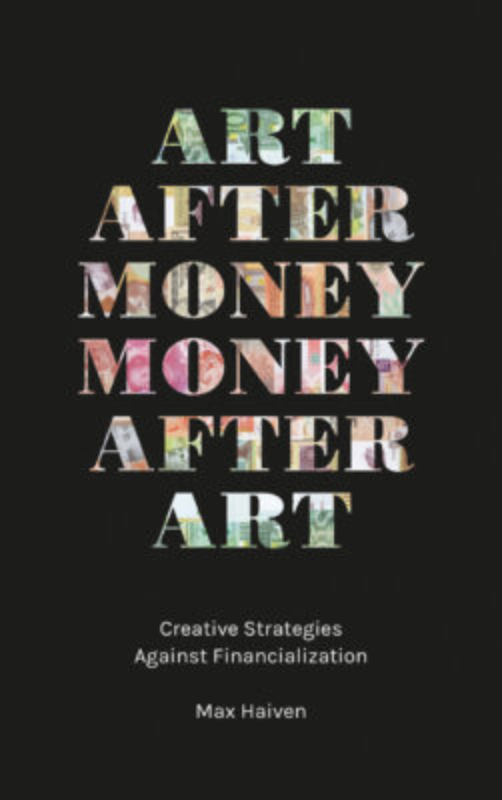
On October 10th the CSSD working group, Unpayable Debt, held an event to launch Max Haiven’s new book, Art After Money, Money After Art, as well as the second edition of the Caribbean Debt Syllabus.
Following the event, Columbia College student Arianna Faria Scott wrote a reflection in which she shares the impression made on her by Haiven’s ideas. In addition, she shares her perspective on debt in the Caribbean drawing on her experience in Guyana growing up in a family descended from indentured laborers. Her full reflection can be read here on the CSSD blog.
Unpayable Debt: A Student’s Reflections on the Launch of Max Haiven’s Art After Money, Money After Art and Caribbean Debt Syllabus, Second Edition
On October 10, 2018, the Center for the Study of Social Difference working group Unpayable Debt held an event to launch scholar Max Haiven’s book, Art After Money, Money After Art, and the second edition of Caribbean Debt Syllabus, the only digital resource available to study the significant impact of debt in Caribbean’s past and present.
I found many elements of Max Haiven’s discussion about the increasingly blurred line between artists and activists fascinating. I heard him make parallels to surrealism, expressing that our potential is beyond the scope of our imaginations and that we can use various conceptual tools to reflect on this sublime potential. Financialization, hedge funds and big investment banks dominating a capitalistic economy hinder us from discovering the full breadth of our imagination, and Haiven calls upon artists/activists to combat this.
Haiven explains money as a force that has so much power over our lives--but it can be a medium of oppression and exploitation or a medium of creativity. It can be used as a medium to disrupt capitalism, telling stories and carrying certain values that transcend an exploitative, oppressive system, he contends.
I am left wondering, however, how much this conception of currency really translates into the Caribbean landscape. I used to live in Jamaica, where my dad is from, and my mom is from Guyana--thinking about these two countries I grew up between, I really don’t know how much people would care about the appearance of currency as a form of protest against capitalism. I’m thinking of someone in a long line to get two beef patties in Kingston, perhaps the most accessible and cheapest meal there--would they pay attention to the aesthetic of the currency? This would be a great experiment, though.
In terms of the additions to the Caribbean Debt Syllabus, I was especially moved by the presenters on indenture and law. The topic of indenture is particularly interesting to me since my mother’s ancestors were East Indian indentured laborers in Guyana. I grew up hearing my family members refer to themselves as “coolie.” Although the presenter’s area of focus was mainly in Suriname, her depiction of different ethnic groups in that society as separate yet respected in theory resonated with me. Yes, everyone is separate--my family’s home there in Berbice is literally flanked by East Indian homes on one side of the street, across from only black homes on the other. The indentured society is certainly separate--but how can each group even have the opportunity to respect the other with such little interaction between them? Respecting another group cannot take the form of complete isolation from them. I plan on writing my final paper for Jose Moya’s class, World Migration, on indentured labor in Guyana, so I actually wrote down some of the presenter’s sources that will definitely be useful for that.
I plan on going to law school after I graduate, so I found the law addition to the syllabus very compelling. The presenter posed the question of how the law is affecting us in ways we don’t recognize. This is precisely the question I am trying to ask myself, since I do not have a typical pre-law major here at Columbia (Latin American and Caribbean Studies). I want to see how the law affects the communities I am from--for my International Law seminar, I am writing about the Caribbean Court of Justice (which, unfortunately like most people, I did not even know existed). The creation of this Court was one step toward the region’s agency in the legacy of law and empire, of imperial debt relationships. However, only four Caribbean countries thus far have ended the appellate jurisdiction of the Privy Council in Great Britain and handed it over to the Caribbean Court of Justice. The other CARICOM member states still use a British court as their appellate court of last resort. The law creates--or at least permits--debt, which ensnares the Caribbean. A movie called Life and Debt that I watched in a course last semester called The Modern Caribbean ends with a quote that has stuck with me since: “most natives are too poor to escape their lives; but they are too poor to live their own properly.”
Contributed by Arianna Faria Scott, Columbia College major in Political Science
Inga Winkler Speaks about Menstrual Health with Devex
Inga Winkler, director of the working group Menstrual Health and Gender Justice, speaks about improving menstrual health management and research.
Inga Winkler, lecturer in political science at Columbia University and project director of the Center for the Study of Social Difference working group Menstrual Health and Gender Justice, spoke with Devex about menstrual health management and research. She stated that often the development sector focuses on quick fixes without addressing broader social issues related to menstruation.
Winkler and other individuals interviewed for the article call for a broader recognition of menstrual health challenges and more detailed research. The full article can be read here.
Professor Ed Morales Writes a Follow-up on Hurricane Maria in the New York Times
About a year after Hurricane Maria devastated Puerto Rico, Unpayable Debt working group faculty fellow Ed Morales revisits the humanitarian crisis still affecting the people of the island.
About a year after Hurricane Maria devastated Puerto Rico, the Center for the Study of Social Difference’s Unpayable Debt working group faculty fellow, Ed Morales, revisits the humanitarian crisis still affecting the people of the island.
The article highlights the difficulties Puerto Ricans continue to face as well as their resilience in rebuilding in the wake of the hurricane. It also addresses the persistent healthcare crisis and debt affecting the island.
To read the full NYT article click here.
For Morales’ piece on Hurricane Maria last year, click here.
Center for the Study of Social Difference Featured In The Record
The Center for the Study of Social Difference (CSSD) is highlighted in the university's monthly newspaper The Record on its tenth anniversary.
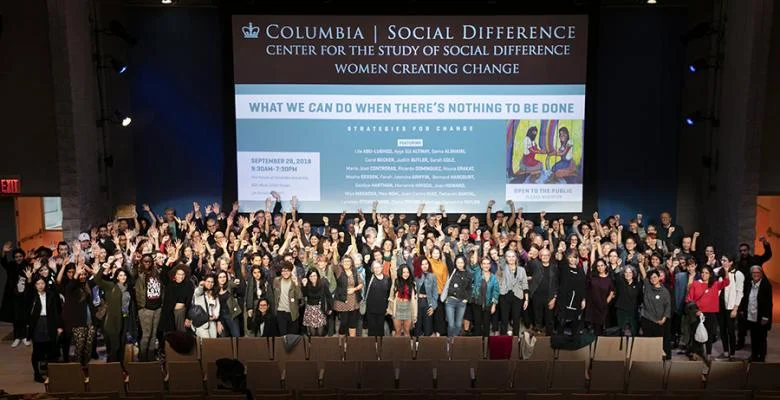
A recent article by Columbia University newspaper The Record highlights the Center for the Study of Social Difference (CSSD) and its decade long commitment to supporting research on the effects of gender, race and other areas of inequality in a global context. The article describes the center as a "home for faculty from across the University to collaborate on interdisciplinary projects that come up with creative, progressive solutions to those problems."
The article, which is published in the tenth anniversary year of CSSD and the fifth anniversary of CSSD initiative Women Creating Change, features comments from current CSSD Director Marianne Hirsch, who discusses the importance of asking questions in a global comparative frame and collaborating closely with Columbia’s Global Centers.
The newspaper also highlights the Center's 10th Anniversary symposium, "What We CAN Do When There’s Nothing to Be Done: Strategies for Change," featuring discussions about protests and social movements, migrants and refugees, and the role of the arts in political activism.
Read the full article here.
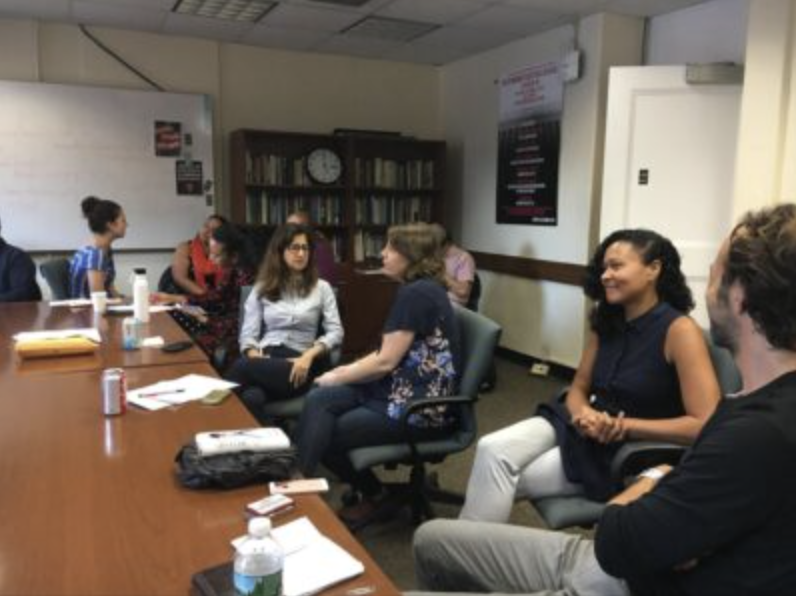
CSSD Working Group Unpayable Debt launch of Caribbean Syllabus: Second Edition and Max Haiven’s "Art After Money, Money After Art"
On October 10, 2018, the working group, Unpayable Debt: Capital, Violence and the New Global Economy, led by professors Frances Negrón-Muntaner and Sarah Muir, hosted a launch event for the Second Edition of the #NoMoreDebt: Caribbean Syllabus. The group also launched the book Art After Money, Money After Art: Creative Strategies Against Financialization by Max Haiven, Canada Research Chair in Culture, Media, and Social Justice at Lakehead University.
The Unpayable Debt working group at the Center for the Study for Social Difference (CSSD) explores the role of debt in capitalist societies, and how indebtedness is mutually informed by histories of colonization. In May of 2018, the CSSD working group published the first ever resource to study debt and the Caribbean with the release of Caribbean Syllabus: Life and Debt in the Caribbean. The syllabus has been used internationally among scholars, artists, activists, and others, to stimulate conversation about the complex colonial and capitalist contexts that generate debt. The second edition contains three new sections that raise critical questions about indenture, law, and education. The syllabus has also been translated into French, Spanish, and Dutch, as a means of furthering expanding the conversation. The launch event provided a venue for artists, academics, and activists, to think through cycles of indebtedness and the question of “who owes what to whom”.
It was thus fitting that the event began with Max Haiven’s workshop “Rebel Currencies.” He spoke about artists and activists coalescing to challenge the current moment of financialization, in which everything has market value and our imaginative scope is oriented toward the production of more money. Professor Haiven discussed the commodification of art, but also, the potential for art to decrypt money. He explored several projects in which artists used money as a form of activism. One instance of this is Zachary Gough’s project, Bourdieux: A Social Currency. Gough brought his own crafted currency to academic and art conferences, which he distributed to all the participants. Whenever an act of social exchange occurs, participants are encouraged to exchange the currency. It’s a funny – and admittedly uncomfortable – process that reveals the economy of social capital, and the generation of power in exchanging things of value.
Next, we heard from the most recent contributors to the Caribbean Syllabus about their contributions. Tao Goffe, Assistant Professor and Faculty Fellow of Social and Cultural Analysis at NYU, contributed a unit entitled, “Intimate Bonds and Bonded Labor: Indenture and Debt Peonage in the Caribbean.” This section explores Chinese indenture in the Caribbean, specifically thinking through intimacy, the afterlife, and media. Monica Jimenez, Assistant Professor in the African and African Diaspora Studies Department at the University of Texas at Austin, provided unit eight of the syllabus, “The Role of Law in the Production of Debt.” This unit brings forth questions of the legacy of law and empire, and specifically, how the United States created an imperial debt relationship. Lastly, Jason Wozniak, Lecturer in Philosophy at San Jose State University, focused on education and debt. He argues that debt projects students into a non-democratic future that channels education into a “return investment paradigm.” In this addition to the syllabus, “Caribbean Education Debt”, he explores how debt impacts formal and informal experiences of education in the Caribbean.
With these new additions, the Caribbean Syllabus: Second Edition now encompasses 18 units through which educators, activists, students, and artists can think through the colonial and capitalist lineages of debt in the Caribbean. It was wonderful seeing students and scholars alike exchanging ideas on the politics of debt.
Contributed by Laura Marissa Charney

First Women Creating Change Leadership Council Meeting of the 2018 - 2019 Academic Year
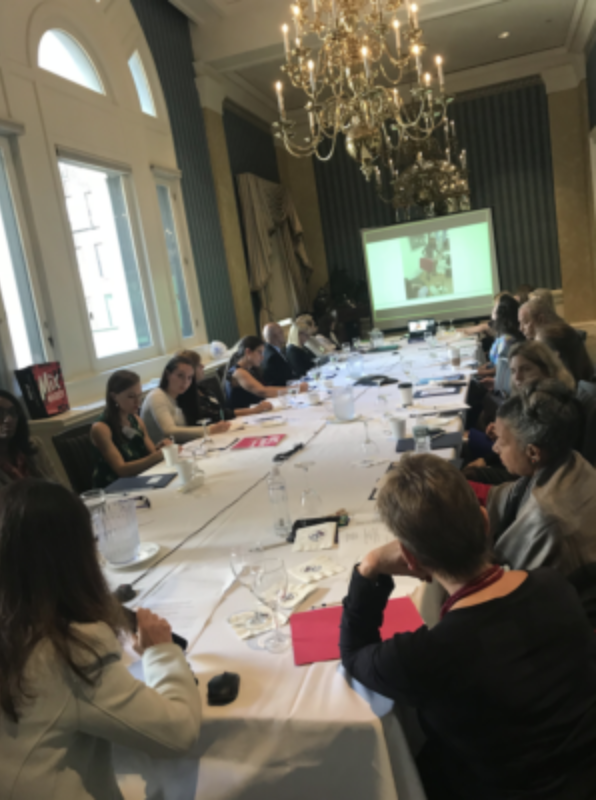
In advance of the Center for the Study of Social Difference’s (CSSD) Women Creating Change(WCC) five year anniversary roundtable on Thursday September 27th, the Women Creating Change Leadership Council (WCCLC) convened to review progress and discuss next steps. The WCCLC provides a critical link between the University’s faculty-led projects and global business, academic, and civil society. It is comprised of individuals who are preeminent in the fields of business, law, government, nonprofit, social activism, and academia.
Present at the September 27th meeting were WCCLC Chair Ann Kaplan and fellow council members Annette Anthony, A’Lelia Bundles, Georgina Cullman, Melissa Fisher, Lois Perelson-Gross, Safwan Masri, Cynthia Moses-Manocherian, Alyson Neel, Philippa Portnoy, Samia Salfiti,Isobel Coleman, Jacki Zehner, and Davia Temin. Council Members Deborah Jackson and Selena Soo took part via telephone. CSSD Executive committee members who took part in the meeting included Director Marianne Hirsch, co-founder Jean Howard, Director of Development and External Relations Meera Ananth as well as Project Directors Victoria Rosner, Jennifer Dohrn, Wilmot James, and FrancesNegrón-Muntaner. Additional participants included Carolyn Ferguson, Robin Wiessman and Aly Zehner.
Professor Hirsch highlighted the significance of CSSD as a unique space of intellectual collaboration among the many schools within Columbia University that traditionally do not often work together.
The group reviewed the efforts of WCC working groups On the Frontlines: Nursing Leadership in Pandemics and Unpayable Debt: Capital, Violence and the New Global Economy. Members from On the Frontlines discussed their work with nurses as it relates to the Global Health Security Agenda and how female leaders are upscaling detection, prevention and response to health catastrophes. Professor Negrón-Muntaner, co-director of Unpayable Debt focused on, on-the ground activism, how women are affected by debt and how they are making changes in their communities.
Also addressed at the meeting were stories of impact. For example the Unpayable Debt working group has facilitated the creation of the Caribbean Syllabus, which provides a list of resources for teaching and learning about the current economic crisis in the Caribbean. This syllabus has seen thousands of downloads from across the world and has recently had its second edition #NoMoreDebt: Caribbean Syllabus released. Feminist educator and member of the working group Women Mobilizing Memory, Nicole Gervasio shared stories and insights from her participation that have influenced her methods of teaching and community building in the classroom.
Attendees concluded the meeting with a consensus on the importance and power of women’s narratives.
Currently the working groups sponsored by CSSD under the Women Creating Change idea-stream include Menstrual Health and Gender Justice, Geographies of Injustice: Gender and the City, On the Frontlines: Nursing Leadership in Pandemics, Religion and the Global Framing of Gender Violence (RGFGV), and Reframing Gendered Violence (RGV). Active working groups related to Imagining Justice, the second of CSSD’s overarching research themes, are Pedagogies of Dignity, Racial Capitalism, Queer Theory: Here, Now and Everywhere, Precision Medicine: Ethics, Politics and Culture and Unpayable Debt: Capital, Violence and the New Global Economy.
Contributed by Ayah Eldosougi
Professor Jack Halberstam featured in Places Journal
Jack Halberstam, director of CSSD working group Queer Theory: Here, Now, and Everywhere, writes on the interplay between art, architecture and the trans* body, in Places.
Professor Jack Halberstam, director of Center for the Study of Social Difference (CSSD) working group Queer Theory: Here, Now, and Everywhere, publishes “Unbuilding Gender: Trans* Anarchitectures In and Beyond the Work of Gordon Matta-Clark” in Places Journal.
Professor Halberstam explores the interplay between art, architecture and the trans* body and discusses the impact of Matta-Clark’s art and its legacy to young trans* artists.
Click here to read the full article.
Women Creating Change (WCC) Celebrates Fifth Anniversary
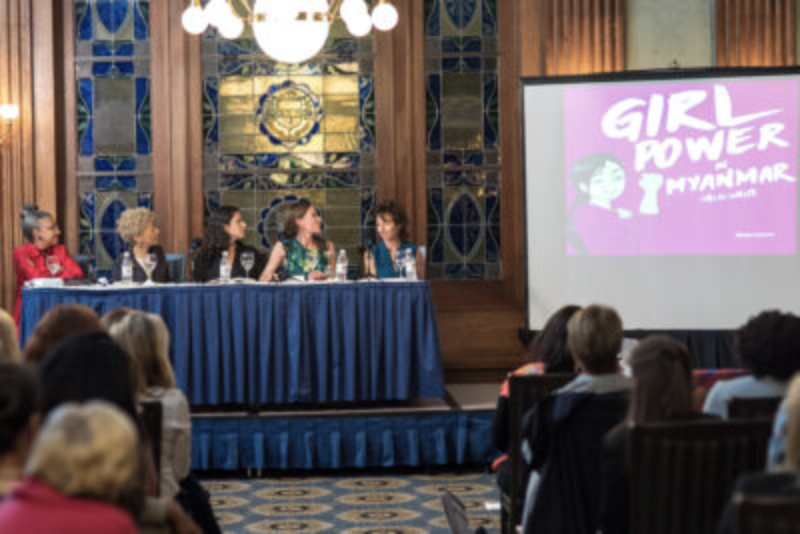
This September marked not only the ten year anniversary of the Center for the Study of Social Difference (CSSD) but, the five year anniversary of CSSD’s project Women Creating Change (WCC), one of two streams of research and galvanization that engages distinguished feminist scholars from diverse fields throughout Columbia University who focus on contemporary global problems affecting women and on the roles women play in addressing these problems.
The roundtable event, Telling Women’s Stories: Creating Change, convened in celebration of WCC’s anniversary, took place on Thursday September 27th at the Columbia Club (Penn Club) in midtown Manhattan. It was moderated by WCC Leadership Council member and Columbia University trustee, A’Lelia Bundles and featured journalists and writers, Nina Berman, Margo Jefferson, Aly Neel and Rebecca Traister.
The night began with introductory remarks by Columbia President Lee C. Bollinger, a steadfast supporter of CSSD and WCC and CSSD’s Director Marianne Hirsch. Ann Kaplan, Chair of the Women Creating Change Leadership Council (WCCLC), was honored for her ardent support of CSSD and WCC.
Echoed throughout the night were the stories of women, with the acknowledgment of the power of what speaker Aly Neel referred to as, hyperlocal stories, personal oral histories of women, (particularly subaltern women) and the work these narratives do to disrupt the norm. Neel also emphasized the necessity of activating the youth toward action with accessible stories, which served as the catalyst for her recent endeavor, Girl Power, a children's book about pioneering women throughout Myanmar history.
Building off of the idea of hyperlocal stories, Nina Berman, documentary photographer and journalist, emphasized the importance of collaborative storytelling when telling stories around sexual violence and trauma. Traister, the author of the recently released book Good and Mad: The Revolutionary Power of Women’s Anger addressed both the costs and necessity of first person testimonies by women and the anger many women are feeling. Pulitzer Prize winning author and journalist Margo Jefferson’s delved into the power dynamics at play for women in telling their stories.
In the wake of Dr. Christine Blasey Ford’s testimony of sexual assault allegations against now Supreme Court justice Brett Kavanaugh, the roundtable served as a sort of catharsis for many in the room as both Hirsch and Bundles remarked in their comments. The conversation also converged around themes of female anger, solidarity and evoked the #MeToo movement and Anita Hill.
Currently the working groups sponsored by CSSD under the Women Creating Change idea-stream include Menstrual Health and Gender Justice, Geographies of Injustice: Gender and the City, On the Frontlines: Nursing Leadership in Pandemics, Religion and the Global Framing of Gender Violence (RGFGV), and Reframing Gendered Violence (RGV).
See photos from the event here.
Contributed by Ayah Eldosougi
CEO and CSSD Leadership Council Member, Davia Temin, highlighted by Bloomberg
Davia Temin, through her company, Temin and Company supports the #MeToo Movement through the creation of a database of documented perpetrators.
Davia Temin, a member of CSSD’s Women Creating Change Leadership Council and founder and CEO of Temin and Company, a boutique management consultancy, was recently featured in Bloomberg for her ongoing efforts to support the #MeToo movement. Temin and her all-female staff are responsible for what they refer to as “the index”, a database of individuals previously documented as perpetrators of sexual misconduct, violence and abuse.
To read the Bloomberg article click here.
To learn more about the Women Creating Change Leadership Council click here.
Dean Carol Becker's "The Gesture" on the CSSD blog
Read the full introduction to a panel that featured artists Ricardo Dominguez, Sama Alshaibi, Miya Masaoka, and Saidiya Hartman at CSSD’s What We CAN Do When There’s Nothing To Be Done conference.
Carol Becker, Dean of the School of the Arts at Columbia, gave the prelude to the roundtable discussion “Arts of Intervention” at the September 28, 2018 anniversary conference of the Center for the Study of Social Difference (CSSD), “What We Can Do When There’s Nothing To Be Done: Strategies for Change.”
The panel introduced by Dean Becker included the artists Ricardo Dominguez, Sama Alshaibi, Miya Masaoka, and Saidiya Hartman.
Click here to read the full text of her speech.