
Lila Abu-Lughod Delivers Edward Said Memorial Lecture at the American University in Cairo
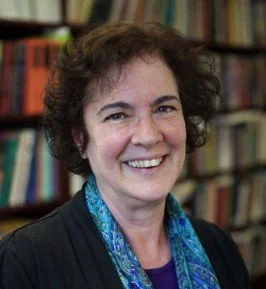
Lila Abu-Lughod, Professor of Social Science at Columbia University and Project Director of CSSD’s working group on Gender, Religion and Law in Muslim Societies, delivered the Edward Said Memorial Lecture at American University in December. In a followup interview with the Egyptian newspaper Al-Ahram Weekly, Abu-Lughod discussed the critical reception of her book, Do Muslim Women Need Saving? as well as gender politics and the "Malala Effect," the Arab Spring, and BDS.
Read the full interview here.
CSSD Member Amina Tawasil Publishes on the Emancipatory Effects of Marriage and Motherhood on Shi'i Women in Iran
Amina Tawasil, Visiting Lecturer at the International Studies Institute, University of New Mexico and member of the CSSD working group on Gender, Religion and Law in Muslim Societies, recently published research in the Journal of Women of the Middle East and Islamic World entitled "Towards the Ideal Revolutionary Shi'i Woman: The Howzevi (Seminarian), the Requisites of Marriage and Islamic Education in Iran."
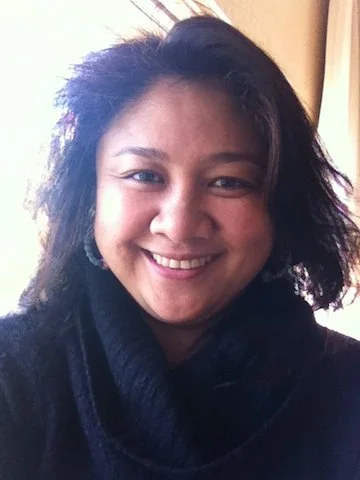
Tawasil’s ethnographic fieldwork in Iran reveals how some religious conservative howzevi (seminarian) women understand marriage and motherhood as constitutive of idealized womanhood. Tawasil argues that the howzevi’s observances of certain constraints impose both regulatory and emancipatory effects as they facilitate educational, social and political mobility.
Read the full article here.
Lila Abu-Lughod's "Do Muslim Women Need Saving" Reviewed in "Ethnicities" Journal

The journal Ethnicities recently ran a review symposium of Do Muslim Women Need Saving?—the book by Lila Abu-Lughod, Professor of Social Science at Columbia University and Project Director of CSSD’s working group on Gender, Religion and Law in Muslim Societies.
Deniz Kandiyoti, SOAS, University of London, found the book a “refreshingly accessible, jargon free text” and said “(I)t presents a comprehensive indictment of global Western actors’ commonly held normative assumptions about the role of Islam in oppressing women in Muslim majority countries.” Kandiyoti found that Abu-Lughod successfully uses interviews with women from Egyptian villages whose complex realities are influenced by a multitude of factors beyond religion. According to Kandiyoti, the book “does a thorough and masterful job of taking on centres of power and privilege that propagate simplistic and disabling representations of Muslim women’s lives.”
Maleiha Malik, Kings College, University of London, wrote that “Abu-Lughod’s analysis is important because she relates her analysis to the wider institutional framework of international feminism, human rights and NGOs that produce institutions for ‘saving Muslim women’.” In doing so, the book also “moves academic and public debates beyond de-construction towards a normative constructive analysis of the category ‘Muslim women,’” according to Malik.
Schirin Amir-Moazami, Free University, Berlin called Abu-Lughod’s book a timely critique of Western attempts at “saving Muslim women” as it “dismantles, on various levels, the discursive production and structures of these (current) rescue narratives in a thought provoking and accessible way.” She also called it an “extremely inspiring exercise in starting to ask different kinds of questions than those at hand.”
The Caribbean Digital II: Histories, Cartographies, Narratives
The Digital Black Atlantic Project's Caribbean Digital II conference convenes on December 4, 2015, with an afternoon of multiform panel presentations that will engage critically with the digital as praxis. Panelists will reflect on the challenges and opportunities presented by the media technologies that ever more intensely reconfigure the social, historical, and geo-political contours of the Caribbean and its diasporas.

Presenters will consider the affordances and limitations of the digital with respect to their particular methodologies – notably, representing the past, historicizing space, and telling stories. Discussions will pick up themes addressed in the 2014 inaugural event as well as anticipate the launch of sx:archipelagos, a peer-reviewed Small Axe Project publishing platform dedicated to scholarship of and emerging from the Caribbean – set to go live in 2016.
Farah Griffin Joins White House Research Initiative to Advance Equity for Women and Girls of Color
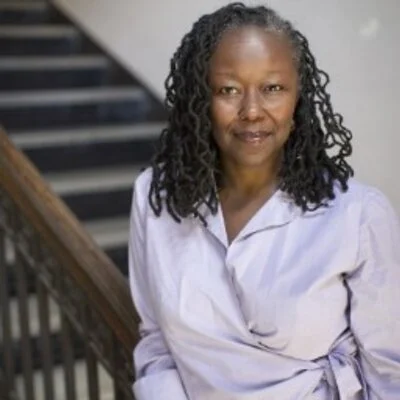
Farah Jasmine Griffin, CSSD project co-director of Toward an Intellectual History of Black Women and William B. Ransford Professor of English and Comparative Literature and African American Studies at Columbia, will lead (with Alondra Nelson, Professor of Sociology and Gender Studies and Dean of Social Sciences) Columbia University's participation in a White House research initiative to advance equity for women and girls of color. The White House-sponsored Collaborative to Advance Equity Through Research is a national effort to engage colleges, universities and other mission-driven organizations in meaningful action to support research and improve public policy regarding women and girls of color.
Read the article here.
Working Group Members Edit Women's Studies Journal on Gender and Genocide
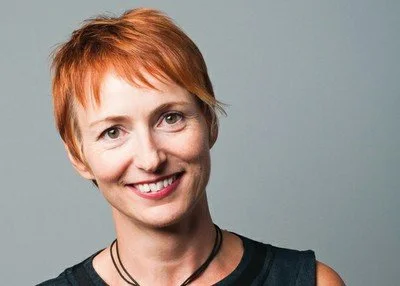
The European Journal of Women's Studies (EJWS) recently published a special issue on gender and genocide that was co-edited by Ayşe Gül Altınay, Professor of Sociology and Gender Studies, Sabanci University, and a member of CSSD's Women Mobilizing Memory working group. The issue was also edited by Andrea Petö, Professor of Gender Studies, Central European University, and included an interview with Marianne Hirsch, Women Mobilizing Memory project director, Director of the Institute for Research on Women, Gender, and Sexuality, and Professor of English and Comparative Literature at Columbia University.
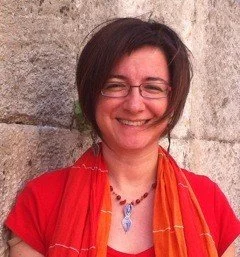
Pictured: Ayşe Gül Altınay
The issue asks what role gender plays in the international legal and political frameworks created to prevent and punish genocidal acts and grapples with the nuances of memory, silence, gender, and genocide. Hirsch discusses feminist strategies to combat nationalism and militarism with scholarly analysis, art, and activism, among other issues.
Access the free introduction to the EJWS here.
Working Group Member Publishes on Lack of Support for Disabled in Indonesian Education
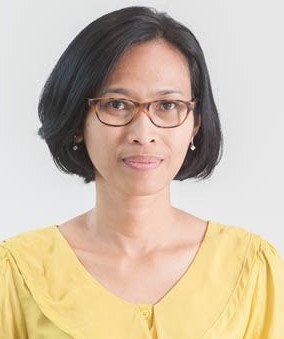
Dina Afrianty, member of the Gender, Religion, and Law in Muslim Societies working group, published an article on the limited degrees of support services for people with disabilities in Indonesian higher education institutions.
"People with disability: locked out of learning?"—Afrianty's blog post for the University of Melbourne site Indonesia at Melbourne—claims that increasing enrollment in higher education is still limited by a lack of infrastructure and supportive government policies and academic services.
While some universities have made accommodations and government has voiced verbal support, the existing segregated special school system allows many institutions to turn away disabled students, who rely heavily on family support if they do gain entrance to mainstream schools, writes Afrianty.
Afrianty suggests using Islamic texts that emphasize social justice to change discriminatory attitudes, along with better staff training and increased funding. Read the full article here.
Alisa Solomon Examines the Historic Theater of "Hamilton" in The Nation
Alisa Solomon, Women Mobilizing Memory member and associate professor of journalism at Columbia University, wrote in The Nation that "Hamilton" is not only a game changer because it brings rap to Broadway, but also because it integrates the contemporary musical style so seamlessly with the styles and structures of traditional musical theater.
While acknowledging rap as the latest popular music deserving to contribute to Broadway, the show also pays tribute to the older form by examining the themes of self definition and Americanness, both longstanding elements of American musical theater, according to Solomon.

The strong, multiracial casting of "Hamilton" also establishes that America’s history—and its future—belong to men and women of color as profoundly as to anyone else, she writes.
Read the full article here.
HEMI Publishes "Art, Migration, and Human Rights" Dossier
Notes on the August 2015 course on “Art, Migration, and Human Rights,” offered by the Hemispheric Institute of Performance and Politics, which partners with CSSD's Women Mobilizing Memory working group.
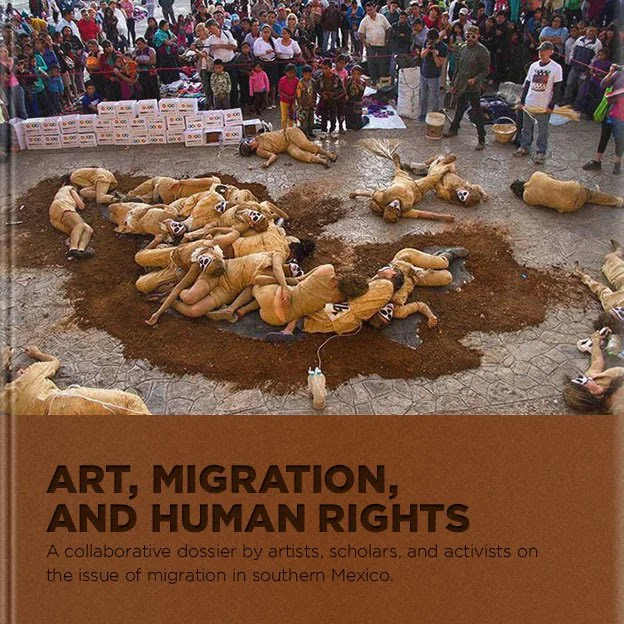
In August 2015, a group of 38 students, professors, researchers, photographers, filmmakers, artists, and activists from 13 different countries boarded a bus in San Cristóbal de las Casas for a weeklong trip across the southern Mexican state of Chiapas and the cities around it to study the urgent issue of migration. The trip was part of a three-week course on “Art, Migration, and Human Rights,” offered by the Hemispheric Institute of Performance and Politics, which partners with CSSD's Women Mobilizing Memory working group. Linked here is a dossier that is a collaborative project assembled in a week by the participants of that course—an exercise in collaborative pedagogy, the production of situated knowledge, and online authoring.
Women Mobilizing Memory Member on Democracy Now
Zeynep Gambetti, a member of the CSSD working group Women Mobilizing Memory and participant in the Collaboration and Co-Resistance conference and workshop, appeared on Democracy Now on September 11 to discuss the current series of attacks on Kurdish citizens and HDP party offices in Turkey.
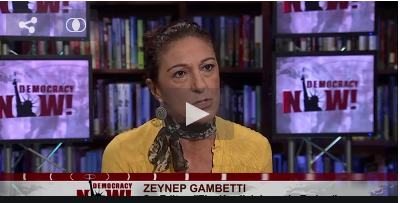
Gambetti's segment begins at 25:00.
Gambetti, Associate Professor, Political Science & International Relations, Boğaziçi University, said that the Erdoğan government has "hijacked legitimate elections" with these reprisals against HDP expansion in the Turkish parliament and the political violence is pushing Turkey toward civil war. Women Mobilizing Memory staged a protest against the anti-Kurd violence at Columbia University the day before Gambetti's appearance.
Watch the discussion here.
Digital Black Atlantic Project Attracts Grants and Honors
The CSSD working group Digital Black Atlantic Project (DBAP) is starting the academic year with an array of honors and awards.
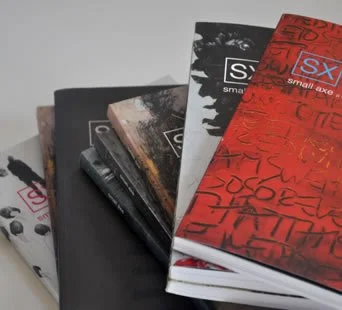
The National Endowment for the Humanities granted DBAP a $29,000 digital start-up grant for the development of the beta version of its peer-reviewed digital publishing platform sx:archipelagos.
Project co-director Kaiama L. Glover was elected a Schomburg Fellow-in-Residence for the development of In the Same Boats: Toward an Afro-Atlantic Intellectual History, an interactive digital bio-bibliographical map/timeline project that traces and visually represents the circulation of seminal Afro-Atlantic intellectuals and cultural actors – and their ideas – across the 20th century.
Project Co-director David Scott and working group participant Hebe Mattos were awarded a grant from Columbia University’s Global Centers initiative for the further development of their transnational project, Slavery and Repair, an online pedagogical model and scholarly resource for the representation of alternative histories of transatlantic slavery.
Working group participant Kim Hall was awarded a TOW Innovative Pedagogy Award as well as the inaugural faculty partner of the year award for her launch of the Digital Shange Project and development of the digital-based course “The Worlds of Shange.”
Lila Abu-Lughod's "Do Muslim Women Need Saving?" Reviewed in Public Books
Lila Abu-Lughod's Do Muslim Women Need Saving? received a favorable review from Leti Volpp in Public Books.

Volpp remarked that Abu-Lughod's book is "a great service to those of us who have long wanted for a resource we can recommend to explain why Muslim women do not need saving" and that it "works hard not to alienate the skeptical reader."
The book provides a multi-faceted examination of the Western obsession with constraint and choice that is borne out of the misplaced imposition of the Enlightenment ideals of freedom and autonomy on Muslim women, according to Volpp.
"The presumption of those who would save Muslim women from their unfreedom is that identification with Islam can only be a negative experience and that they are being saved to a more ideal alternative," writes Volpp. That Western alternative is usually identified with "human rights, liberal democracy, and modern beauty regimes" even though not all women seek this identical life, according to Volpp's reading of Abu-Lughod.
Abu-Lughod asserts that the subjugated Muslim woman motif can be politically useful to Western states. She also feels that defining women's rights as human rights assumes the presence of a liberal democracy and in fact acts as a "strategic diversion" for troubled social movements in the global North. Both of these applications leave out the geopolitical and historical realities that forcefully shape Muslim women's lives, writes Volpp.
Read the full review here.
Working Group Helps Produce "An Historic Victory for Women's Equality in Sport"
The International Association of Athletics Federations (IAAF) was recently forced to suspend a sporting policy that CSSD project director Rebecca Jordan-Young and her working group, Science and Social Difference, had been contesting for the past three years.
The International Court of Arbitration for Sport ruled that the onus is on the IAAF to show that naturally high testosterone levels give enough of a performance advantage to warrant the policy; the court did not find the evidence produced by IAAF at the hearing this past spring to be convincing. The IAAF has been given two years to come up with the data to support the policy, or it will be permanently voided.
“Although athletics events are divided into discrete male and female categories, sex in humans is not simply binary,” the court announced in an article in the New York Times.
This ruling does not technically affect the Olympics or other sporting federations (just track and field, governed by IAAF), but it is likely that sports organizations will suspend the policy to avoid additional challenges while they try to gather more data, according to Beck-Young.
The court ruling relied heavily on evidence that Science and Social Difference amassed from sources at Columbia and Barnard and published in Discover, New York Times, BMJ (formerly British Medical Journal), and the American Journal of Bioethics.
Katrina Karkazis, a member of the working group and a bioethicist at Stanford University, told BuzzFeed “It’s a policy that affected all women so [its] suspension is an historic victory for women’s equality in sport.”
CSSD Releases 2014-15 Annual Report
The Center for the Study of Social Difference recently released its annual report for 2014-15. The report announced the successful conclusion of The Future of Disabilities Studies project and the extension of Gender, Religion, and Law in Muslim Societies. Three new projects—Pacific Climate Circuits: Moving Beyond Science, Technology, Engineering, and Economics; The Legacy of Bandung Humanisms; and The Rural-Urban Interface: Gender and Poverty in Ghana and Kenya, Statistics and Stories—were established.
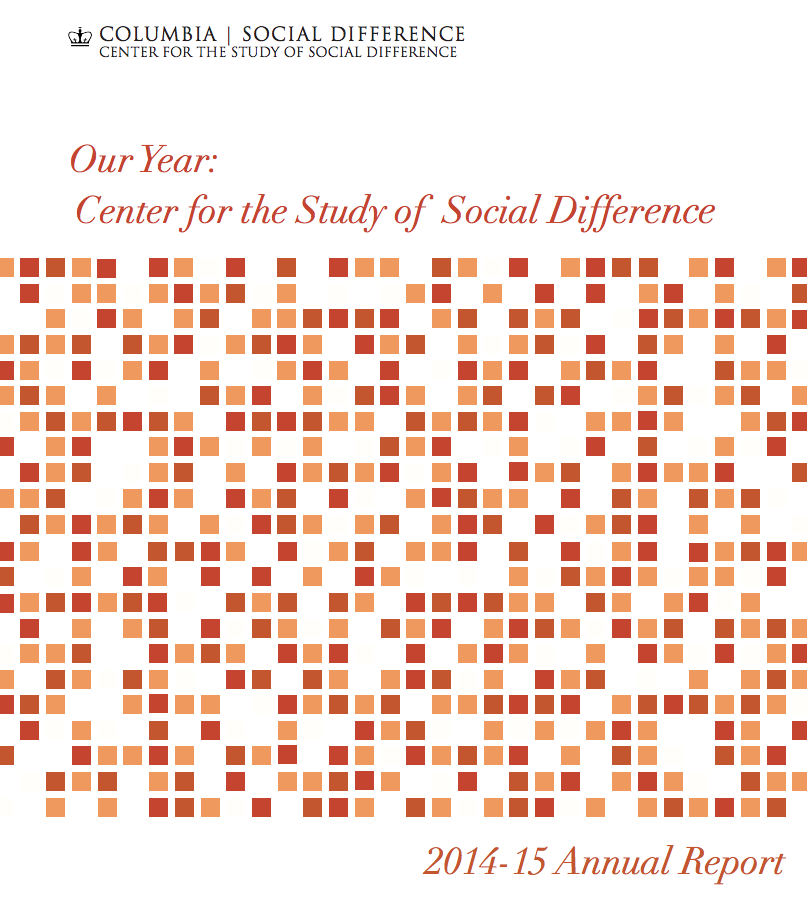
The report announces that alumni contributed over $200,000 in donations last year and the Digital Black Atlantic Project was awarded a National Endowment for the Humanities Digital Start-Up Grant for the creation of a digital publishing platform. The Center for the Study of Social Difference Fund, an inaugural quasi-endowment, was established to build ongoing support for CSSD and its projects.
View the annual report here.
WOMEN MOBILIZING MEMORY IV: A Week of Workshops, Exhibits, and Protest
For its fourth international meeting on "Collaboration and Co-Resistance," Women Mobilizing Memory gathered in New York in September. The group, consisting of scholars, artists and activists from Chile, Turkey and the United States, participated in a series of meetings and events that explored how the legacies of violent political histories might offer fodder for a more progressive and hopeful future. Previous meetings took place in Santiago, Montreal, and Istanbul.
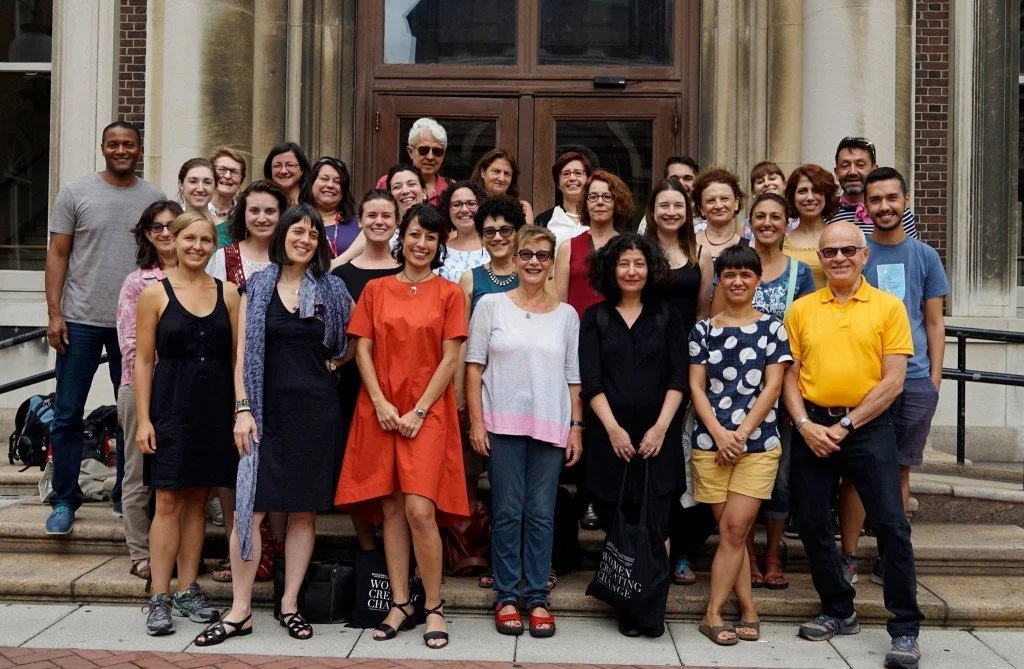
At this multidimensional meeting, the forty participants not only commemorated the anniversary of the 1973 Chilean coup and the victims of the Pinochet dictatorship, they also issued a solidarity statement and protested Turkish violence against Kurdish minorities. One member provided commentary on the crisis for the nonprofit news program Democracy Now. Click to see photos and video.
The week began with a memory walk through Harlem, visiting both known and forgotten sites of art and protest that revealed the vibrant artistic and intellectual legacies of African American and some Anglo American institutions and individuals in the famous neighborhood.
A group art exhibit at the Leroy Neiman Gallery at Columbia opened the same afternoon and was followed by an artists’ roundtable. “Collaborative Archives: Connective Histories” included the work of artists based in New York, Istanbul, Berlin, and Santiago. The artworks demonstrated how intimate objects and stories both animate larger painful histories and resist their violent force. For the group, the artworks remained points of reference throughout the week, offering images through which to imagine and reimagine histories of slavery, war, genocide, and political repression. Click to see photos and video.
A second part of the exhibition, a curation of collectively produced posters, “CHILE: 40 Years of Struggle and Resistance,” opened at the Hemispheric Institute on Performance and Politics at New York University at the end of the week. The group also visited the September 11 Memorial Museum, analyzing and critiquing its official hegemonic strategies of memory. Click to see photos.
A public conference, “Women Mobilizing Memory: Collaboration and Co-resistance,” brought working group members together with scholars and activists from Columbia and New York in a series of comparative roundtables on women's strategies of political protest; on memory sites in Santiago, Istanbul and New York; and on the intimate archives of political violence. The discussions were enlivened by the interdisciplinary approach of the commentators and the focus on action, rather than mere commemoration. Click to see photos from all three panels and a Wishing Tree commemorative event, as well as video from the "Performances of Protest," "Mobilizing Memory Sites," and "Intimate Archives/Political Violence" roundtable discussions.
The bulk of the meeting was devoted to the scholarly work that group members had exchanged and read in advance. The constructive feedback members received on their individual papers and projects generated revisions and a future series of group publications on “Mobilizing Memory: Practicing Politics,” “Intimate Entanglements: Rethinking Kinship and Sexuality,” and “Little Disturbances: Arts and Politics.”
Total immersion in repeated, face-to-face meetings throughout the week enabled the group members to evolve and to grow in their understanding of the material. Across the meetings, they had the chance to consider both the challenges and the benefits of transnational interdisciplinary work, and to practice their commitments to feminist solidarity and progressive social change.
Contributed by Marianne Hirsch, Co-Director, Women Mobilizing Memory
JUST PUBLISHED: Rachel Adams' Keywords for Disability Studies
Future of Disability Studies project director Rachel Adams has co-edited Keywords for Disability Studies with Benjamin Reiss (Emory University) and David H. Serlin (UCSD).
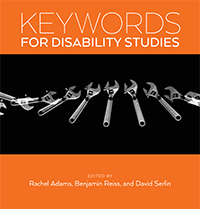
Published this summer by NYU Press, the collection of 60 essays "aims to broaden and define the conceptual framework of disability studies for readers and practitioners in the field and beyond. The volume engages some of the most pressing debates of our time, such as prenatal testing, euthanasia, accessibility in public transportation and the workplace, post-traumatic stress, and questions about the beginning and end of life."
An invaluable resource for students and scholars alike, Keywords for Disability Studies brings the debates that have often remained internal to disability studies into a wider field of critical discourse, providing opportunities for fresh theoretical considerations of the field’s core presuppositions through a variety of disciplinary perspectives.
Order copies of Keywords for Disability Studies here. Learn more about the CSSD Future of Disability Studies working group here.
Gayatri Spivak Awarded Honorary Doctorate from Yale
Gayatri Chakravorty Spivak, Director of the CSSD working group Rural-Urban Interface: Gender and Poverty in Ghana and Kenya, received an Honorary Doctorate in the Humanities from Yale University.

Spivak is a University Professor at Columbia and a founding member of the Institute for Comparative Literature and Society. The Rural-Urban Interface project researches the narratives of populations who migrate from the countrysides of Ghana and Kenya to those countries’ urban centers and focuses on the feminization of poverty.
JUST PUBLISHED: Rachel Adams on Access to Aid for the Disabled

Rachel Adams, director of the CSSD working group The Future of Disabilities Studies has published an article in Reuters on the problem of disabled individuals' unfettered access to assistance. Technological innovations are needed and appreciated, writes Adams, but bureaucracy and administrative inefficiency still stand in the way.
Read "What Google can learn from the wheelchair" here.
PUBLISHED: Debating a Testosterone "Sex Gap" in Science Magazine
Rebecca Jordan-Young, director of the CSSD working group on Science and Social Difference and Tow Associate Professor and Chair of Women's, Gender & Sexuality Studies at Barnard College, has published an important article in Science magazine on the controversy and science surrounding levels of testosterone in female athletes. Jordan-Young maintains that calls to exclude women with high testosterone are not rooted in science but ultimately in social and ethical claims concerning how we understand and frame human diversity.

Read the article here.
CSSD Project's Digital Publishing Platform Wins NEH Grant
The National Endowment for the Humanities (NEH) has awarded a Digital Humanities Start-Up Grant for 2015-2016 for the initial development of sx:archipelagos, a peer-reviewed digital publishing platform that emerged from CSSD's working group, the Digital Black Atlantic Project (DBAP).
Dedicated to research concerning the Caribbean, sx.archipelagos is produced by members of DBAP, which is directed by Kaiama Glover, and the Small Axe Project, a platform for intellectual criticism in the Caribbean. Focused on attenuating some of the disparities of access to scholarship about the Atlantic world for scholars and cultural actors in the Caribbean and Latin America, the platform has taken as its mandate an exploration of the economic feasibility of both 100% open-access and a streamlined production workflow for scholarly publication. Four members of DBAP, David Scott, Alex Gil, Kelly Baker Josephs, Kaiama Glover, along with several others will generate content for the initial launch of the project.