
Unpayable Debt: A Student’s Reflections on the Launch of Max Haiven’s Art After Money, Money After Art and Caribbean Debt Syllabus, Second Edition
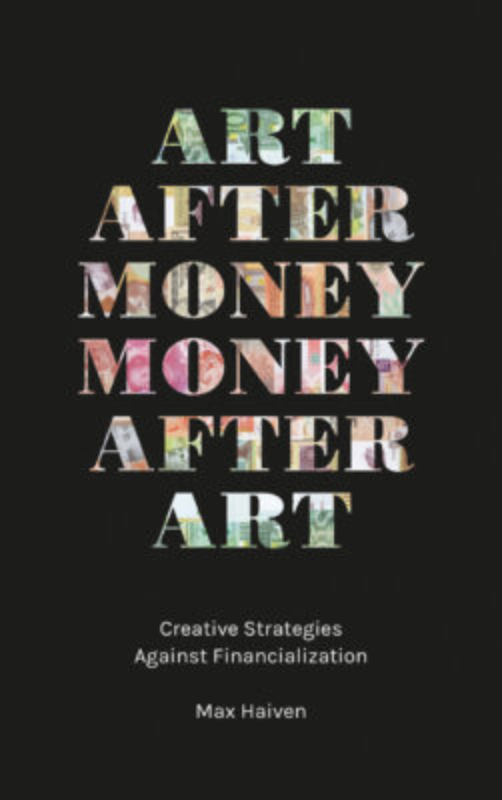
On October 10, 2018, the Center for the Study of Social Difference working group Unpayable Debt held an event to launch scholar Max Haiven’s book, Art After Money, Money After Art, and the second edition of Caribbean Debt Syllabus, the only digital resource available to study the significant impact of debt in Caribbean’s past and present.
I found many elements of Max Haiven’s discussion about the increasingly blurred line between artists and activists fascinating. I heard him make parallels to surrealism, expressing that our potential is beyond the scope of our imaginations and that we can use various conceptual tools to reflect on this sublime potential. Financialization, hedge funds and big investment banks dominating a capitalistic economy hinder us from discovering the full breadth of our imagination, and Haiven calls upon artists/activists to combat this.
Haiven explains money as a force that has so much power over our lives--but it can be a medium of oppression and exploitation or a medium of creativity. It can be used as a medium to disrupt capitalism, telling stories and carrying certain values that transcend an exploitative, oppressive system, he contends.
I am left wondering, however, how much this conception of currency really translates into the Caribbean landscape. I used to live in Jamaica, where my dad is from, and my mom is from Guyana--thinking about these two countries I grew up between, I really don’t know how much people would care about the appearance of currency as a form of protest against capitalism. I’m thinking of someone in a long line to get two beef patties in Kingston, perhaps the most accessible and cheapest meal there--would they pay attention to the aesthetic of the currency? This would be a great experiment, though.
In terms of the additions to the Caribbean Debt Syllabus, I was especially moved by the presenters on indenture and law. The topic of indenture is particularly interesting to me since my mother’s ancestors were East Indian indentured laborers in Guyana. I grew up hearing my family members refer to themselves as “coolie.” Although the presenter’s area of focus was mainly in Suriname, her depiction of different ethnic groups in that society as separate yet respected in theory resonated with me. Yes, everyone is separate--my family’s home there in Berbice is literally flanked by East Indian homes on one side of the street, across from only black homes on the other. The indentured society is certainly separate--but how can each group even have the opportunity to respect the other with such little interaction between them? Respecting another group cannot take the form of complete isolation from them. I plan on writing my final paper for Jose Moya’s class, World Migration, on indentured labor in Guyana, so I actually wrote down some of the presenter’s sources that will definitely be useful for that.
I plan on going to law school after I graduate, so I found the law addition to the syllabus very compelling. The presenter posed the question of how the law is affecting us in ways we don’t recognize. This is precisely the question I am trying to ask myself, since I do not have a typical pre-law major here at Columbia (Latin American and Caribbean Studies). I want to see how the law affects the communities I am from--for my International Law seminar, I am writing about the Caribbean Court of Justice (which, unfortunately like most people, I did not even know existed). The creation of this Court was one step toward the region’s agency in the legacy of law and empire, of imperial debt relationships. However, only four Caribbean countries thus far have ended the appellate jurisdiction of the Privy Council in Great Britain and handed it over to the Caribbean Court of Justice. The other CARICOM member states still use a British court as their appellate court of last resort. The law creates--or at least permits--debt, which ensnares the Caribbean. A movie called Life and Debt that I watched in a course last semester called The Modern Caribbean ends with a quote that has stuck with me since: “most natives are too poor to escape their lives; but they are too poor to live their own properly.”
Contributed by Arianna Faria Scott, Columbia College major in Political Science
Inga Winkler Speaks about Menstrual Health with Devex
Inga Winkler, director of the working group Menstrual Health and Gender Justice, speaks about improving menstrual health management and research.
Inga Winkler, lecturer in political science at Columbia University and project director of the Center for the Study of Social Difference working group Menstrual Health and Gender Justice, spoke with Devex about menstrual health management and research. She stated that often the development sector focuses on quick fixes without addressing broader social issues related to menstruation.
Winkler and other individuals interviewed for the article call for a broader recognition of menstrual health challenges and more detailed research. The full article can be read here.
Professor Ed Morales Writes a Follow-up on Hurricane Maria in the New York Times
About a year after Hurricane Maria devastated Puerto Rico, Unpayable Debt working group faculty fellow Ed Morales revisits the humanitarian crisis still affecting the people of the island.
About a year after Hurricane Maria devastated Puerto Rico, the Center for the Study of Social Difference’s Unpayable Debt working group faculty fellow, Ed Morales, revisits the humanitarian crisis still affecting the people of the island.
The article highlights the difficulties Puerto Ricans continue to face as well as their resilience in rebuilding in the wake of the hurricane. It also addresses the persistent healthcare crisis and debt affecting the island.
To read the full NYT article click here.
For Morales’ piece on Hurricane Maria last year, click here.
Center for the Study of Social Difference Featured In The Record
The Center for the Study of Social Difference (CSSD) is highlighted in the university's monthly newspaper The Record on its tenth anniversary.
A recent article by Columbia University newspaper The Record highlights the Center for the Study of Social Difference (CSSD) and its decade long commitment to supporting research on the effects of gender, race and other areas of inequality in a global context. The article describes the center as a "home for faculty from across the University to collaborate on interdisciplinary projects that come up with creative, progressive solutions to those problems."
The article, which is published in the tenth anniversary year of CSSD and the fifth anniversary of CSSD initiative Women Creating Change, features comments from current CSSD Director Marianne Hirsch, who discusses the importance of asking questions in a global comparative frame and collaborating closely with Columbia’s Global Centers.
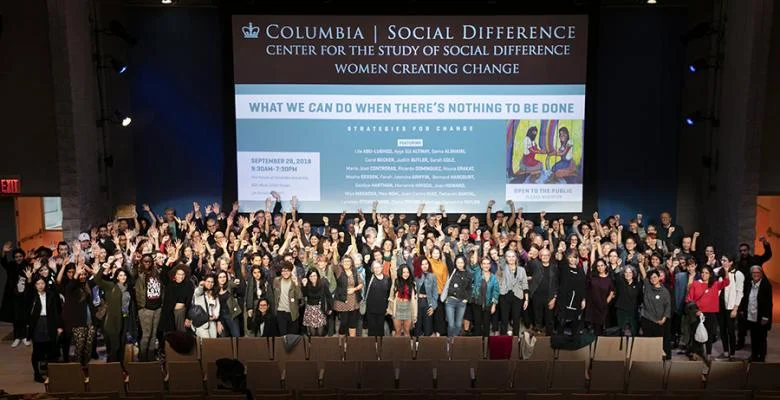
The newspaper also highlights the Center's 10th Anniversary symposium, "What We CAN Do When There’s Nothing to Be Done: Strategies for Change," featuring discussions about protests and social movements, migrants and refugees, and the role of the arts in political activism.
Read the full article here.
CSSD Working Group Unpayable Debt launch of Caribbean Syllabus: Second Edition and Max Haiven’s "Art After Money, Money After Art"
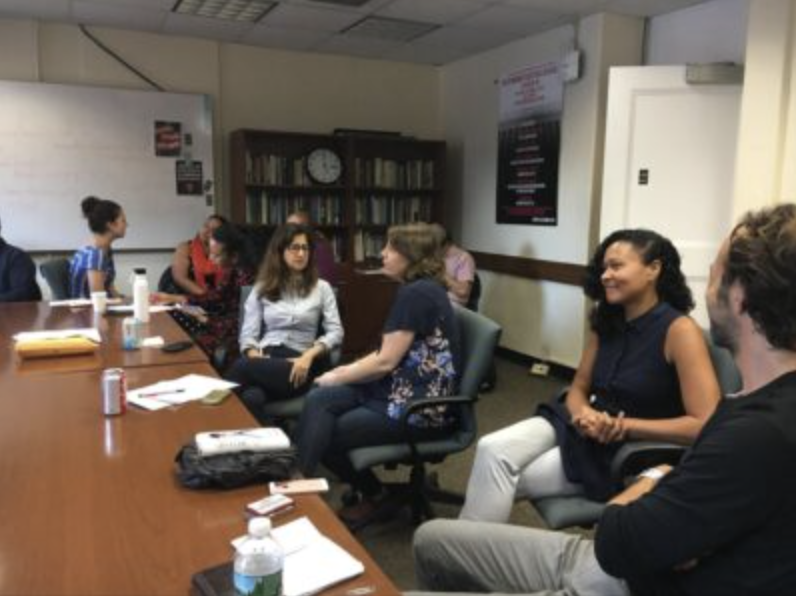
On October 10, 2018, the working group, Unpayable Debt: Capital, Violence and the New Global Economy, led by professors Frances Negrón-Muntaner and Sarah Muir, hosted a launch event for the Second Edition of the #NoMoreDebt: Caribbean Syllabus. The group also launched the book Art After Money, Money After Art: Creative Strategies Against Financialization by Max Haiven, Canada Research Chair in Culture, Media, and Social Justice at Lakehead University.
The Unpayable Debt working group at the Center for the Study for Social Difference (CSSD) explores the role of debt in capitalist societies, and how indebtedness is mutually informed by histories of colonization. In May of 2018, the CSSD working group published the first ever resource to study debt and the Caribbean with the release of Caribbean Syllabus: Life and Debt in the Caribbean. The syllabus has been used internationally among scholars, artists, activists, and others, to stimulate conversation about the complex colonial and capitalist contexts that generate debt. The second edition contains three new sections that raise critical questions about indenture, law, and education. The syllabus has also been translated into French, Spanish, and Dutch, as a means of furthering expanding the conversation. The launch event provided a venue for artists, academics, and activists, to think through cycles of indebtedness and the question of “who owes what to whom”.
It was thus fitting that the event began with Max Haiven’s workshop “Rebel Currencies.” He spoke about artists and activists coalescing to challenge the current moment of financialization, in which everything has market value and our imaginative scope is oriented toward the production of more money. Professor Haiven discussed the commodification of art, but also, the potential for art to decrypt money. He explored several projects in which artists used money as a form of activism. One instance of this is Zachary Gough’s project, Bourdieux: A Social Currency. Gough brought his own crafted currency to academic and art conferences, which he distributed to all the participants. Whenever an act of social exchange occurs, participants are encouraged to exchange the currency. It’s a funny – and admittedly uncomfortable – process that reveals the economy of social capital, and the generation of power in exchanging things of value.
Next, we heard from the most recent contributors to the Caribbean Syllabus about their contributions. Tao Goffe, Assistant Professor and Faculty Fellow of Social and Cultural Analysis at NYU, contributed a unit entitled, “Intimate Bonds and Bonded Labor: Indenture and Debt Peonage in the Caribbean.” This section explores Chinese indenture in the Caribbean, specifically thinking through intimacy, the afterlife, and media. Monica Jimenez, Assistant Professor in the African and African Diaspora Studies Department at the University of Texas at Austin, provided unit eight of the syllabus, “The Role of Law in the Production of Debt.” This unit brings forth questions of the legacy of law and empire, and specifically, how the United States created an imperial debt relationship. Lastly, Jason Wozniak, Lecturer in Philosophy at San Jose State University, focused on education and debt. He argues that debt projects students into a non-democratic future that channels education into a “return investment paradigm.” In this addition to the syllabus, “Caribbean Education Debt”, he explores how debt impacts formal and informal experiences of education in the Caribbean.
With these new additions, the Caribbean Syllabus: Second Edition now encompasses 18 units through which educators, activists, students, and artists can think through the colonial and capitalist lineages of debt in the Caribbean. It was wonderful seeing students and scholars alike exchanging ideas on the politics of debt.
Contributed by Laura Marissa Charney

First Women Creating Change Leadership Council Meeting of the 2018 - 2019 Academic Year
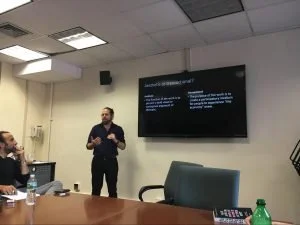
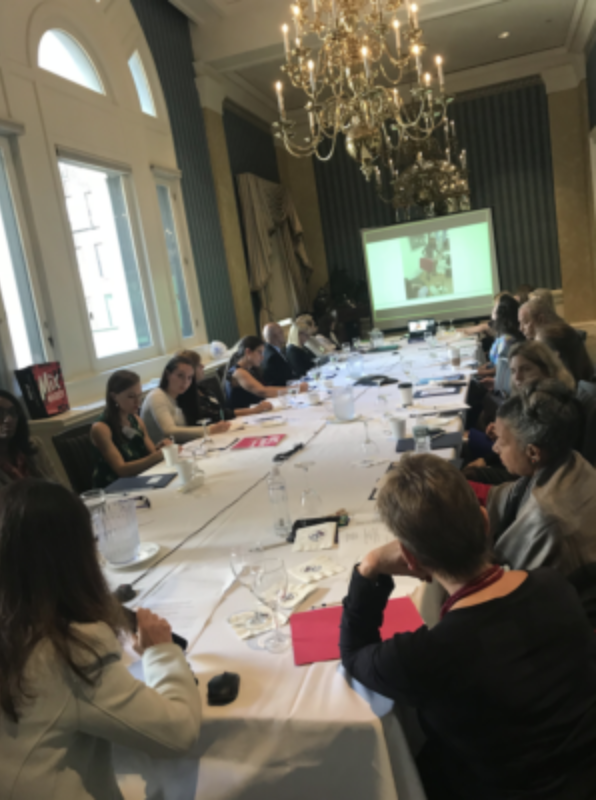
In advance of the Center for the Study of Social Difference’s (CSSD) Women Creating Change(WCC) five year anniversary roundtable on Thursday September 27th, the Women Creating Change Leadership Council (WCCLC) convened to review progress and discuss next steps. The WCCLC provides a critical link between the University’s faculty-led projects and global business, academic, and civil society. It is comprised of individuals who are preeminent in the fields of business, law, government, nonprofit, social activism, and academia.
Present at the September 27th meeting were WCCLC Chair Ann Kaplan and fellow council members Annette Anthony, A’Lelia Bundles, Georgina Cullman, Melissa Fisher, Lois Perelson-Gross, Safwan Masri, Cynthia Moses-Manocherian, Alyson Neel, Philippa Portnoy, Samia Salfiti,Isobel Coleman, Jacki Zehner, and Davia Temin. Council Members Deborah Jackson and Selena Soo took part via telephone. CSSD Executive committee members who took part in the meeting included Director Marianne Hirsch, co-founder Jean Howard, Director of Development and External Relations Meera Ananth as well as Project Directors Victoria Rosner, Jennifer Dohrn, Wilmot James, and FrancesNegrón-Muntaner. Additional participants included Carolyn Ferguson, Robin Wiessman and Aly Zehner.
Professor Hirsch highlighted the significance of CSSD as a unique space of intellectual collaboration among the many schools within Columbia University that traditionally do not often work together.
The group reviewed the efforts of WCC working groups On the Frontlines: Nursing Leadership in Pandemics and Unpayable Debt: Capital, Violence and the New Global Economy. Members from On the Frontlines discussed their work with nurses as it relates to the Global Health Security Agenda and how female leaders are upscaling detection, prevention and response to health catastrophes. Professor Negrón-Muntaner, co-director of Unpayable Debt focused on, on-the ground activism, how women are affected by debt and how they are making changes in their communities.
Also addressed at the meeting were stories of impact. For example the Unpayable Debt working group has facilitated the creation of the Caribbean Syllabus, which provides a list of resources for teaching and learning about the current economic crisis in the Caribbean. This syllabus has seen thousands of downloads from across the world and has recently had its second edition #NoMoreDebt: Caribbean Syllabus released. Feminist educator and member of the working group Women Mobilizing Memory, Nicole Gervasio shared stories and insights from her participation that have influenced her methods of teaching and community building in the classroom.
Attendees concluded the meeting with a consensus on the importance and power of women’s narratives.
Currently the working groups sponsored by CSSD under the Women Creating Change idea-stream include Menstrual Health and Gender Justice, Geographies of Injustice: Gender and the City, On the Frontlines: Nursing Leadership in Pandemics, Religion and the Global Framing of Gender Violence (RGFGV), and Reframing Gendered Violence (RGV). Active working groups related to Imagining Justice, the second of CSSD’s overarching research themes, are Pedagogies of Dignity, Racial Capitalism, Queer Theory: Here, Now and Everywhere, Precision Medicine: Ethics, Politics and Culture and Unpayable Debt: Capital, Violence and the New Global Economy.
Contributed by Ayah Eldosougi
Professor Jack Halberstam featured in Places Journal
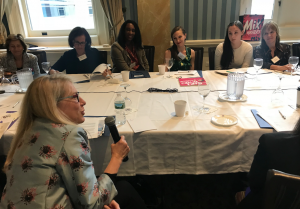
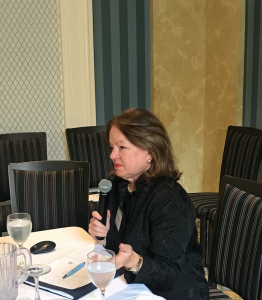
Jack Halberstam, director of CSSD working group Queer Theory: Here, Now, and Everywhere, writes on the interplay between art, architecture and the trans* body, in Places.
Professor Jack Halberstam, director of Center for the Study of Social Difference (CSSD) working group Queer Theory: Here, Now, and Everywhere, publishes “Unbuilding Gender: Trans* Anarchitectures In and Beyond the Work of Gordon Matta-Clark” in Places Journal.
Professor Halberstam explores the interplay between art, architecture and the trans* body and discusses the impact of Matta-Clark’s art and its legacy to young trans* artists.
Click here to read the full article.
Women Creating Change (WCC) Celebrates Fifth Anniversary
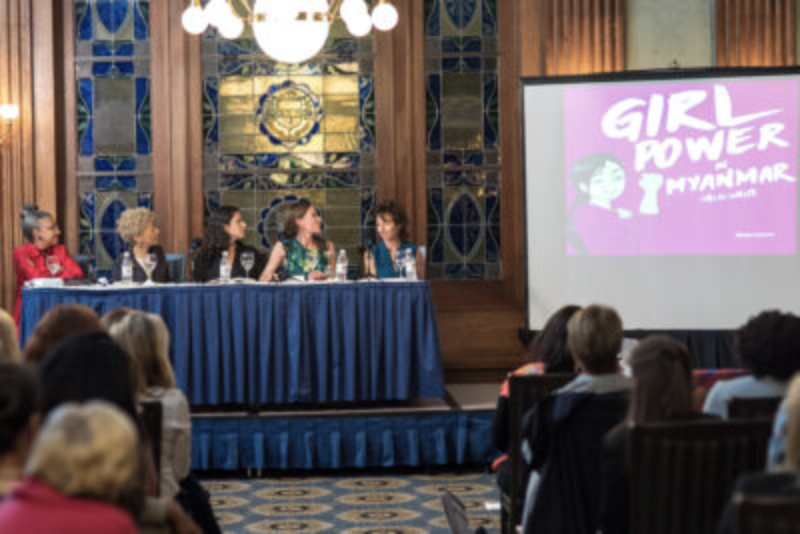
This September marked not only the ten year anniversary of the Center for the Study of Social Difference (CSSD) but, the five year anniversary of CSSD’s project Women Creating Change (WCC), one of two streams of research and galvanization that engages distinguished feminist scholars from diverse fields throughout Columbia University who focus on contemporary global problems affecting women and on the roles women play in addressing these problems.
The roundtable event, Telling Women’s Stories: Creating Change, convened in celebration of WCC’s anniversary, took place on Thursday September 27th at the Columbia Club (Penn Club) in midtown Manhattan. It was moderated by WCC Leadership Council member and Columbia University trustee, A’Lelia Bundles and featured journalists and writers, Nina Berman, Margo Jefferson, Aly Neel and Rebecca Traister.
The night began with introductory remarks by Columbia President Lee C. Bollinger, a steadfast supporter of CSSD and WCC and CSSD’s Director Marianne Hirsch. Ann Kaplan, Chair of the Women Creating Change Leadership Council (WCCLC), was honored for her ardent support of CSSD and WCC.
Echoed throughout the night were the stories of women, with the acknowledgment of the power of what speaker Aly Neel referred to as, hyperlocal stories, personal oral histories of women, (particularly subaltern women) and the work these narratives do to disrupt the norm. Neel also emphasized the necessity of activating the youth toward action with accessible stories, which served as the catalyst for her recent endeavor, Girl Power, a children's book about pioneering women throughout Myanmar history.
Building off of the idea of hyperlocal stories, Nina Berman, documentary photographer and journalist, emphasized the importance of collaborative storytelling when telling stories around sexual violence and trauma. Traister, the author of the recently released book Good and Mad: The Revolutionary Power of Women’s Anger addressed both the costs and necessity of first person testimonies by women and the anger many women are feeling. Pulitzer Prize winning author and journalist Margo Jefferson’s delved into the power dynamics at play for women in telling their stories.
In the wake of Dr. Christine Blasey Ford’s testimony of sexual assault allegations against now Supreme Court justice Brett Kavanaugh, the roundtable served as a sort of catharsis for many in the room as both Hirsch and Bundles remarked in their comments. The conversation also converged around themes of female anger, solidarity and evoked the #MeToo movement and Anita Hill.
Currently the working groups sponsored by CSSD under the Women Creating Change idea-stream include Menstrual Health and Gender Justice, Geographies of Injustice: Gender and the City, On the Frontlines: Nursing Leadership in Pandemics, Religion and the Global Framing of Gender Violence (RGFGV), and Reframing Gendered Violence (RGV).
See photos from the event here.
Contributed by Ayah Eldosougi
CEO and CSSD Leadership Council Member, Davia Temin, highlighted by Bloomberg
Davia Temin, through her company, Temin and Company supports the #MeToo Movement through the creation of a database of documented perpetrators.
Davia Temin, a member of CSSD’s Women Creating Change Leadership Council and founder and CEO of Temin and Company, a boutique management consultancy, was recently featured in Bloomberg for her ongoing efforts to support the #MeToo movement. Temin and her all-female staff are responsible for what they refer to as “the index”, a database of individuals previously documented as perpetrators of sexual misconduct, violence and abuse.
To read the Bloomberg article click here.
To learn more about the Women Creating Change Leadership Council click here.
Dean Carol Becker's "The Gesture" on the CSSD blog
Read the full introduction to a panel that featured artists Ricardo Dominguez, Sama Alshaibi, Miya Masaoka, and Saidiya Hartman at CSSD’s What We CAN Do When There’s Nothing To Be Done conference.
Carol Becker, Dean of the School of the Arts at Columbia, gave the prelude to the roundtable discussion “Arts of Intervention” at the September 28, 2018 anniversary conference of the Center for the Study of Social Difference (CSSD), “What We Can Do When There’s Nothing To Be Done: Strategies for Change.”
The panel introduced by Dean Becker included the artists Ricardo Dominguez, Sama Alshaibi, Miya Masaoka, and Saidiya Hartman.
Click here to read the full text of her speech.
Women Creating Change Celebrates 5th Anniversary
The Women Creating Change program at the Center for the Study of Social Difference celebrated five momentous years on Thursday, September 27th at the Penn Club, NYC.
The Women Creating Change program at the Center for the Study of Social Difference celebrated five momentous years on Thursday, September 27th at the Penn Club, NYC. Speakers included President Lee C. Bollinger, A’Lelia Bundles, Rebecca Traister, Nina Berman, Aly Neel, Margo Jefferson. The focus of the event was on Telling Women’s Stories and Creating Change. The group discussed current events as well as stories of abuse and resistance.
Click here to read more.
Click here to view photos from the event.
Of Waves, Tides and (Feminist) Tsunamis: a Student Response to What We CAN Do When There’s Nothing To Be Done
The following was written in response to the tenth anniversary symposium of the Center for the Study of Social Difference (CSSD), held at The Forum at Columbia on September 28, 2018, by Mayte López, Graduate Teaching Fellow in the PhD Program in Latin American, Iberian, and Latino Cultures (LAILaC) at The Graduate Center, CUNY:
As I sit down to write this essay, Brett Kavanaugh has been confirmed as a Supreme Court Justice. The government of the United States, a country that welcomed me over six years ago and that I call my home, has granted Kavanaugh a lifetime appointment that allows him to rule and legislate over women’s bodies. Our bodies. A man who has been accused of sexual assault by multiple women, a man who has shown absolutely no respect for a woman’s body or will, a man-child whose only excuse for sexually assaulting a woman seems to be his incommensurate love of beer, now has the power to decide the future of legal abortion in this country and, possibly—most likely—overturn Roe vs. Wade. Lately, I’ve read multiple statements comparing Dr. Christine Blasey Ford’s testimony during the Ford-Kavanaugh hearing to that of Anita Hill. “I believe survivors. I believe Christine Blasey Ford. And I still believe Anita Hill” can be read all over my protective social media bubble, the carefully —albeit unintendedly—crafted echo chamber I’ve built for myself over years of likes, loves, and unfollows. What scares me the most about that last sentence is the fact that when it comes to Dr. Blasey Ford, it’s not a matter of belief or credibility. People—senators—believed her. Her testimony was not considered untrue. It was considered, and this is what makes my spine shiver, unimportant. What the Senate is telling this woman, and all women for that matter, is that their government doesn’t care. Politics trumps human decency, and Donald Trump trumps all of us. “A girl has no name, a woman has no government.”
In light of these events, the phrase “What we can do when there’s nothing to be done,” proposed by the Center for the Study of Social Difference at Columbia (CSSD) during their 10th Year Anniversary Conference, becomes even more meaningful. Can we do something? Is there really nothing to be done? I compose myself and recall Judith Butler’s intervention during the conference. Butler spoke about what it means to act in the midst of pessimism, and to keep that pessimism from becoming hopelessness. Radical transformation, she affirmed, starts incrementally and there is something to be said for momentum, for the continuing struggle of activism over time and with others.
So, what can we do? First, let me address—as was done during the opening remarks and throughout the conference—the problematic nature of that we. What does it mean, these days, to think about a collectivity? However problematic, and since I am especially concerned with women’s bodies today, and external decisions surrounding said bodies, I choose to embrace that we not only in that I am a woman, but in that I am that other marginalized and subjugated to the wishes (and “drinking games”) of white, rich, Ivy-league-educated men. I am also many other others, as Judith Butler’s invocation of #NiUnaMenos, the hashtag of the movement against gendered violence that has run through Latin America like a flame, reminds me. The movement was born in 2015 to protest feminicidio—the systematic killing of women— in Argentina, but the slogan actually has its origin in a poem by Mexican poet and activist Susana Chávez. The poem, written in 1995 in protest of Ciudad Juárez’s own appalling number of feminicidios, included the verse “Ni una muerta más” (Not one more [woman] dead). Chávez was a victim of feminicidio herself in 2011, and activists proposed the use of the slogan alluding to her poem to help fuel the movement.
As Butler stressed during her intervention in the conference, what’s most remarkable in these scenarios is that certain issues start to link with one another. Women, she said, are demanding the right to have abortions. Not the right to “choose,” as the time for euphemisms is now long gone. In Latin America, the debate around legal abortion is definitely making waves because of its narrative. The discussion now, stress the activists, is not whether women should abort, but whether abortion should be made safe and legal for all, as opposed to life-endangering and clandestine for the poor: women have always gotten abortions, but only some women can pay for the high costs of a covert and illegal surgery. It’s not only a women’s issue but a class issue. In Argentina, women—and men—understood this, and in August 2018 they protested and marched, took to the streets, and stood outside the Senate for hours, waiting for a vote to legalize abortion that was ultimately rejected. The protesters wore green handkerchiefs and clothing, which granted the movement the nickname “la marea verde” [The Green Tide]. After the vote was cast, la marea still stood outside the Senate, jumping up and down, repeating slogans, and dancing, only momentarily defeated: “It’s ok, we’ll win next year,” they said, while chanting “Se va a caer, se va a caer, el patriarcado se va a caer” [It’s going down, it’s going down, patriarchy is going down]. Indeed, unabashed by the results in Argentina, a few weeks later, on September 2018, another Green Tide took to the streets in Mexico —where I come from— to make very similar claims: Mexico’s own marea verde, wearing similar handkerchiefs, demands legal abortion nationwide —as it is legal in Mexico City—and for feminicidios to stop. The momentum Butler spoke of, with its multiple interlinked issues, is—it has to be—transnational and collective.
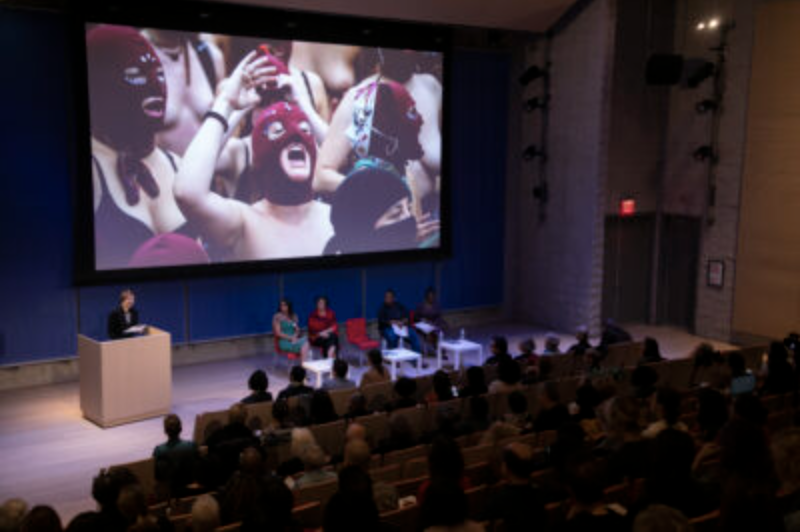
During the first panel of the CSSD Conference, Chilean performance artist and theater professor María José Contreras spoke of a “feminist tsunami,” and of the importance of the body as a preferred device to mobilize political critique. The bare chests of young women clad in personalized balaclavas, and the confirmation that these women had indeed achieved changes in the Chilean legislature, made the following speaker (as well as myself, and I would bet, many in the audience) feel like “just a woman in the world”. There was something profoundly powerful in those balaclavas, and in the women wearing them, their fists and hands raised, out in the streets making a case for their reproductive rights and against gendered violence. Their victory, their smiles, challenging our previous ideas of what was—what is— possible, seemed to imply that there is a lot we can do (when there’s nothing to be done). The fierce balaclavas, and the reference to a feminist “tsunami,” got me to thinking: how do we go from waves, to tides, to tsunamis? Movement, Butler affirmed, emerges in the course of struggle.
The Kavanaugh-Ford hearing, which had taken place on the day prior to the CSSD conference, was lingering in the air and was brought up by multiple speakers, including Butler herself, who made a brief but tension-relieving and laughter-provoking impersonation of Kavanaugh, much welcomed by the audience. A conference statement was written on the spot strongly opposing Kavanaugh’s confirmation and was projected on the huge screen of the auditorium and, at the close of the conference, we stood in front of it for a picture that recorded our strong opposition to the confirmation as students, teachers, writers, artists, and others. Standing there, with my hand up high, clenched in a fist, I felt a tinge of movement, perhaps—dare I say it—a tiny wave. Now, much like the Green Tide standing outside the Argentinian Senate, we have lost. Again. So, to quote Butler once more, what does it means to act in the midst of pessimism? And how do we keep that pessimism from becoming hopelessness? I do not have the answers but perhaps we should take a cue from the women jumping up and down in Buenos Aires after the Senate had cast a vote against their reproductive rights. Crisis, journalist Masha Gessen pointed out during the conference, is a time of opportunity. Perhaps the answer lies, as Butler suggested, in transnational collective movement emerging in the course of continued struggle. For waves and tides to become tsunamis, we must not stop moving. “Se va a caer, se va a caer, el patriarcado se va a caer”.
Contributed by Mayte López.
Introduction to “Arts of Intervention” panel featuring Ricardo Dominguez, Sama Alshaibi, Miya Masaoka, and Saidiya Hartman
The following is the prelude by Carol Becker (Dean of the School of the Arts at Columbia) to the roundtable discussion “Arts of Intervention” at the anniversary conference of the Center for the Study of Social Difference (CSSD), “What We Can Do When There’s Nothing To Be Done: Strategies for Change,” which was held on September 28, 2018 at The Forum at Columbia University, New York, New York:
The Gesture
Artists live in the world as citizen guides and witnesses, carefully charting human and social complexity. Because they pay close attention to evolving subtleties of the species and the natural environment, they have a deep commitment to reflecting and affecting the contemporary understanding of our condition. Their work often predicts what is to come, not because artists are unusually prescient but because they live intensely in the present—observing, responding, and contemplating. As a result, their work often gestures to the urgency of issues manifesting in the moment, threatening the species and the planet now and in the future. What does it mean to look closely, to listen seriously, to notice what others might not, and then to question unrelentingly what you are seeing and hearing?
As intensely as artists monitor the present reality, they also cultivate their imaginations. Therefore, they see the possibilities of potential systems of thought that do not as yet exist––the ways in which the world could be different and better for all living creatures. Thus artists tend to align with those in the progressive arena who imagine a world moving toward a greater good, one without inequity and oppression.
And because artists are deeply committed to personal freedom of expression as a basic right, they also tend to be irreverent and, at times, defiant against that which feels overly institutionalized and restrictive. Because of their commitment to the imagination, artists start with the premise that all that stands in the way of human freedom and well-being can be and should be rethought, rebuilt, and rearranged. Or, as poet Terrance Hayes writes in his poem “For Brothers of the Dragon,” “Why was the imagination invented, if not to remake?”
And as specific as art might be to a particular moment, culture, and conflict, when it goes deep enough into the uniqueness of a situation, it inevitably touches something bigger than itself that incorporates difference and moves us simultaneously to an understanding of our shared humanity. This understanding is very significant, because when we refuse to acknowledge our collective humanness, we then are able to objectify others. The more capable of objectification we are, the less likely we are to exercise compassion or understanding or to engage in humane action for all.
If successful, art is experiential, eliciting a sensorial or emotional response. Even when abstract, issue oriented, or functional, its unique form allows the work to reason with our sensibilities, to make us understand the world through our bodies as well as through our minds.
Within this framework of lived experience are the stories we tell each other about our lives. Getting to common ground—without ignoring, depleting, and denying the inevitable differences of history, culture, and ideology—is the consequence of negotiating form, something that artists understand very well. Artists are able to use technique, technology, and skill to contain this complexity of human experience, whether within the structure of a play, a novel, a poem, or a memoir; within the visual conceits of painting, sculpture, performance, installation, or intervention; within the myriad forms of musical composition, sound art, theater, dance, or the range of filmic structures; or within the new possible forms afforded by evolving digital innovation. All allow us to contain the shared depth, breadth, complexity of emotion, desire, lived lives, successes, and failures of the species. Rarely does someone create artwork to hide it in a drawer. Art for the most part is made to exist in the public sphere––to be read, heard, seen, sung, experienced, and shared with as large an audience as possible. As such, it is always a public statement made to communicate, to stir up, to elicit emotion, to provoke clear thinking, and, at times, to solve a specific problem.
Artists and designers increasingly define their process by what has been called social practice: the desire and ability to intervene in the public sphere. These practitioners have been in the vanguard of helping to make visible such issues as race, class, gender, migration, social justice, public concerns with Big Data, the reemergence of fascism, and Climate Change.
Working across forms, these four artists, writers, thinkers, and practitioners—Ricardo Dominguez, Sama Alshaibi, Miya Masaoka, and Saidiya Hartman—manifest aspects of such intentions. In their own ways, they each tackle complex social issues, utilizing advanced technologies as well as the most originary forms of narrative to situate the human voice in particular landscapes.
Thinking through art is a utopian process. Once art is in the public sphere, its ideas slowly become recognizable and acceptable, as they wait for the time when thought can manifest in action. In this sense, art, which is the result of great passion and urgency, also integrates patience and duration.
Contributed by Carol Becker
Professor Mae Ngai featured in The Washington Post
Mae Ngai co-authored a piece in The Washington Post on how a proposed policy by the Trump administration might affect impoverished immigration populations.
Historian Mae Ngai joined with other three historians to co-author a piece for The Washington Post on how Trump administration policies may punish immigrants for making use of social services such as food stamps, Medicaid, CHIP, and energy assistance programs.
If approved, the new policy would effectively deter legal immigrants from using public benefits for which they are eligible, lest they later be denied a green card or be removed.
Professor Mae Ngai moderated the “Crossing Borders: Refugees, Migrants, Stateless Lives” panel at the CSSD anniversary symposium.
Click here to read the article.
Professor Frances Negrón-Muntaner speaks with NPR
Frances Negrón-Muntaner co-director of the working group Unpayable Debt and Professor of English and Comparative Literature at Columbia University, spoke with NPR One year after Hurricane Maria made landfall in Puerto Rico.
Frances Negrón-Muntaner co-director of the working group Unpayable Debt and Professor of English and Comparative Literature at Columbia University, spoke with NPR One year after Hurricane Maria made landfall in Puerto Rico.
As rebuilding efforts continue, they discuss how identity has changed on the island and explore questions of status, economic resilience and activism at the ground level.
Click here to listen to the interview.
A Student Response to What We CAN Do When There’s Nothing To Be Done
Mayte López, PhD student in Latin American, Iberian, and Latino Cultures at The Graduate Center, CUNY, writes a response to the tenth anniversary symposium of the Center for the Study of Social Difference (CSSD).
Mayte López, Graduate Teaching Fellow in the PhD Program in Latin American, Iberian, and Latino Cultures (LAILaC) at The Graduate Center, CUNY, writes a response to the CSSD tenth anniversary symposium “What We Can Do When There’s Nothing To Be Done,” for the Center for the Study of Social Difference (CSSD) online blog.
Lopez reflects on recent events and how the phrase “What we can do when there’s nothing to be done,” proposed by the Center for the Study of Social Difference (CSSD) during our 10th Year Anniversary Conference becomes even more meaningful in the current political climate.
Click here to read the full post.
Professor Frances Negrón-Muntaner publishes an article called "Our Fellow Americans" in Dissent Magazine
Co-director of CSSD working group Unpayable Debt questions terminology use in the aftermath of Hurricane Maria.
Co-director of CSSD working group Unpayable Debt questions terminology use in the aftermath of Hurricane Maria.
Professor Frances Negrón-Muntaner, co-director of CSSD working group Unpayable Debt publishes an article, titled “Our Fellow Americans,” examining why calling Puerto Ricans “Americans” will not save them from the current challenges they face. Her article discusses the rhetorical explosion of the use of the phrase “our fellow Americans” to refer to Puerto Ricans in the aftermath of Hurricane Maria and raises the question of why the sudden adoption of this phrase.
Click here to read the article.
CSSD Recognizes the 61st Birthday of Imprisoned Activist Osman Kavala
Participants and attendees gathered at the conclusion of CSSD’s anniversary symposium to send wishes to Anadolu Kültür Executive Board Chair and activist Osman Kavala.
Attendees of the anniversary symposium of the Center for the Study of Social Difference (What We CAN Do When There’s Nothing To Be Done) were among artists, activists, journalists and family members in Istanbul and London wishing imprisoned Turkish activist Osman Kavala a happy birthday on September 28, 2018. Kavala, the Executive Board Chair of Anadolu Kültür, referred to as the Soros of Turkey, has been incarcerated in Turkey since the first of November last year after being arrested in October of 2017 at İstanbul Atatürk Airport. His arrest has garnered international indignation, with many calling for his immediate release.
CSSD symposium audience members, panelists, and organizers alike stood below a picture and birthday message of Kavala that read, “Osman Kavala has taught us what we can do when there’s nothing to be done.” This was in addition to participant support of a statement entitled #WhatWeCanDo released at the close of the conference listing the resolutions of the symposium to advance social justice.
Read more about birthday greetings sent to Osman Kavala here.
Professor Bernard Harcourt Co-Signs Letter to the US Senate
Professor Bernard Harcourt joins over 2,400 law professors around the country opposing Kavanaugh’s confirmation.
Professor Bernard Harcourt was one of 2,400 law professors to have signed on to a letter to the US Senate saying that Supreme Court nominee Brett M. Kavanaugh displayed a lack of judicial restraint at his Senate hearing.
Harcourt was quoted in a number of venues, including the Wall Street Journal and the Washington Post, commenting on the letter, stating that Brett Kavanaugh "did not display the impartiality and judicial temperament requisite to sit on the highest court of our land."
Professor Bernard Harcourt moderated the “Facing the Present, Imagining the Future” panel at the Center for the Study of Social Difference anniversary symposium.
Rebecca Traister featured in New York Times Sunday Review
Panelist from the fifth anniversary celebration of Women Creating Change at the Center for the Study of Social Difference publishes feature in advance of release of her book Good and Mad: The Revolutionary Power of Women’s Anger.
“Fury Is a Political Weapon,” an Opinion piece by Rebecca Traister, is featured on the front page of the September 30, 2018 print New York Times Sunday Review. The full article can be read here.
Rebecca Traister, whose new book Good and Mad: The Revolutionary Power of Women’s Anger will be published by Simon & Schuster on October 2, 2018, was panelist at the 5th anniversary celebration of Women Creating Change at the Center for the Study of Social Difference last Thursday evening.