
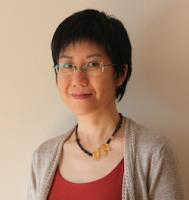
Sophia Wong
Fellow, Philosophy, Long Island University, Brooklyn Campus
Sophia Isako Wong is an Associate Professor of Philosophy at the Brooklyn Campus of Long Island University in New York, NY, USA. She has published on duties of justice to persons with intellectual disabilities, comparisons between sexism and discrimination against people with intellectual disabilities, and how the availability of PGD (preimplantation genetic diagnosis) affects the reproductive autonomy of prospective parents. Her current research analyzes the work of children and adolescents who provide care to their siblings, parents and other family members.
Sophia Wong
Associate Professor of Philosophy, Long Island University, Brooklyn Campus
Sophia Isako Wong is an Associate Professor of Philosophy at the Brooklyn Campus of Long Island University in New York, NY, USA. She has published on duties of justice to persons with intellectual disabilities, comparisons between sexism and discrimination against people with intellectual disabilities, and how the availability of PGD (preimplantation genetic diagnosis) affects the reproductive autonomy of prospective parents. Her current research analyzes the work of children and adolescents who provide care to their siblings, parents and other family members. She also enjoys writing short stories and making stained glass mosaics.

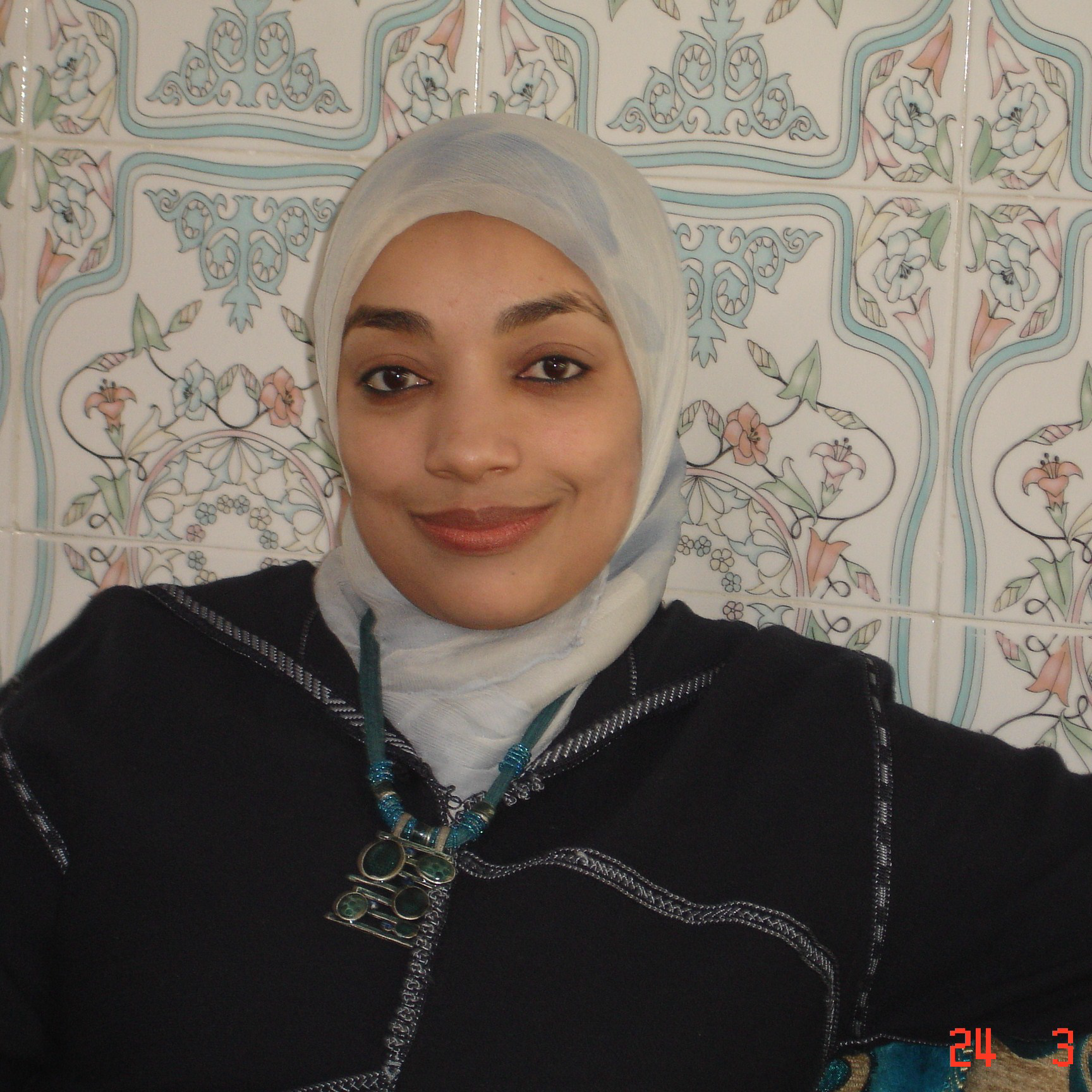
Merieme Yafout
Fellow, Political Science, Hassan II University in Casablanca, Morocco
Merieme Yafout is a professor and researcher in social sciences. She is the author of several articles on “Islamic feminism in Morocco”, “female ijtihad”, “the status of women in Moroccan political parties”, “Islamist movements in Morocco,” “elections in Morocco,” and “field research in Morocco.”
Merieme Yafout
Merieme Yafout is a professor and researcher in social sciences. She is the author of several articles on “Islamic feminism in Morocco”, “female ijtihad”, “the status of women in Moroccan political parties”, “Islamist movements in Morocco,” “elections in Morocco,” and “field research in Morocco.” She received her PhD in political science from the Faculty of Legal, Economic, and Social Sciences at Hassan II University in Casablanca, Morocco. Her thesis is on “The status of women within the Islamist movements in Morocco: between feminine exegesis and political participation.”

Hairong Yan
Fellow, Applied Social Sciences, Hong Kong Polytechnic University
Yan Hairong is an anthropologist in the Department of Applied Social Sciences, Hong Kong Polytechnic University. Her research interests are labour migration, rural-urban relations, and rural cooperatives in China, as well as Hong Konger/Mainlander relations and China/Africa links.
Hairong Yan
Anthropologist, Department of Applied Social Sciences, Hong Kong Polytechnic University
Yan Hairong is an anthropologist in the Department of Applied Social Sciences, Hong Kong Polytechnic University. Her research interests are labour migration, rural-urban relations, and rural cooperatives in China, as well as Hong Konger/Mainlander relations and China/Africa links. She is the author of New Masters/New Servants: Migration, Development and Women Workers in China (Duke University Press, 2008).

Hentyle Yapp
Fellow, Art & Public Policy, New York University
Hentyle Yapp is an assistant professor at New York University in the Department of Art & Public Policy. He is affiliated faculty with the Department of Performance Studies, Disability Council, and Asian/Pacific/American Institute. His research engages China, performance, disability, and queer theory.
Hentyle Yapp
Assistant Professor, Department of Art & Public Policy, New York University

Hentyle Yapp is an assistant professor at New York University in the Department of Art & Public Policy. He is affiliated faculty with the Department of Performance Studies, Disability Council, and Asian/Pacific/American Institute. His research engages China, performance, disability, and queer theory. His articles have appeared or are forthcoming in GLQ, American Quarterly, Journal of Visual Culture, and Verge: Studies in Global Asias. He is also a member of the Social Text collective. He received his BA from Brown University, JD from UCLA School of Law with specializations in Critical Race Theory and Public Interest Law, and a PhD from UC Berkeley in Performance Studies with a designated emphasis in Women, Gender, and Sexuality Studies.
Working Group Affiliation

Melanie Yazzie
Fellow, Navajo and American Indian History , University of New Mexico
Melanie Yazzie (Diné) is an Assistant Professor at University of New Mexico. She has published widely in scholarly platforms, and engages in extensive public intellectual and activist work on Native women’s rights, LGBTQ2 rights, environmental justice, policing and incarceration, and Indigenous housing justice, urban issues, and international solidarity.
Melanie Yazzie
Assistant Professor, University of New Mexico

Melanie Yazzie (Diné) is an Assistant Professor at University of New Mexico. She has published widely in scholarly platforms, and engages in extensive public intellectual and activist work on Native women’s rights, LGBTQ2 rights, environmental justice, policing and incarceration, and Indigenous housing justice, urban issues, and international solidarity. She specializes in Navajo and American Indian history and her work examines (neo)liberalism, settler colonialism and decolonization, biopolitics and political ecology, theories of policing and the state, and Indigenous feminisms/queer studies/urban experience. She is bilagaana born for Ma’iideeshgiizhinii (Coyote Pass Clan).
Working Group Affiliation

Helen Yitah
Fellow, English, University of Ghana
Helen Yitah is Associate Professor and Head of the Department of English, University of Ghana. She is also founding Director of the University of Ghana-Carnegie Writing Centre, established through her initiative. She holds a BA and MPhil from the University of Ghana and a PhD from the University of South Carolina, Columbia. She has taught various courses on literature and writing at both universities.
Helen Yitah
Associate Professor & Head, Department of English, University of Ghana

Helen Yitah is Associate Professor and Head of the Department of English, University of Ghana. She is also founding Director of the University of Ghana-Carnegie Writing Centre, established through her initiative. She holds a BA and MPhil from the University of Ghana and a PhD from the University of South Carolina, Columbia. She has taught various courses on literature and writing at both universities. A literary scholar and cultural critic, she has published on gender identity in literature, particularly oral and written African literature, American literature and children’s literature in Ghana; and women’s cultural production in colonial and contemporary Africa. Her current work includes two edited books, Philosophical Foundations of the Humanities through Postcolonial Perspectives (Brill/Rodopi, 2016) and After the Ceremonies, a collection of poems by Ama Ata Aidoo (African Poetry Book Fund). She has supported literary and cultural activity in various ways, including serving on judging panels for the Millennium Excellence Awards (literature category) and the “Love on the Road” short fiction contest; as facilitator for the African Poetry Library project; editor of the MBAASEM/Daily Graphic Writers Page; and presenter for “Read a Book a Week,” a book review program on Radio Universe, University of Ghana.
Working Group Affiliation
The Rural-Urban Interface: Gender and Poverty in Ghana and Kenya, Statistics and Stories
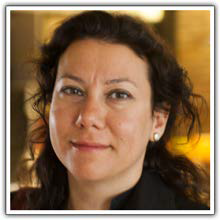
Gökçe Yurdakul
Fellow, Diversity and Social Conflict, Humboldt University, Berlin
Gökçe Yurdakul is Georg Simmel Professor of Diversity and Social Conflict at the Humboldt University, Berlin Graduate School of Social Sciences.
She studied Sociology at the Bogazici University and Gender & Women’s Studies at the Middle East Technical University in Turkey. She has her PhD. from the University of Toronto, Department of Sociology where she received the Connaught Fellowship.
Gökçe Yurdakul
Georg Simmel Professor of Diversity and Social Conflict, Humboldt University, Berlin
Gökçe Yurdakul is Georg Simmel Professor of Diversity and Social Conflict at the Humboldt University, Berlin Graduate School of Social Sciences.
She studied Sociology at the Bogazici University and Gender & Women’s Studies at the Middle East Technical University in Turkey. She has her PhD. from the University of Toronto, Department of Sociology where she received the Connaught Fellowship.
Previously, she has taught courses on race, ethnicity, gender and immigration at the Trinity College Dublin and Brock University, St. Catharines, Canada. She was affiliated with the Free University, Berlin Program for Advanced German and European Studies as a post-doctoral fellow. She has published books and articles on immigrant integration, citizenship Islam in Europe and issues of Muslim women in Western Europe and North America. She has written articles for scholarly journals, such as Annual Review of Sociology, Ethnic and Racial Studies, Journal of Ethnic and Migration Studies and German Politics and Society. She has been working on policy reports for the Canadian Council of Muslim Women and the United Nations Research Institute for Social Development.
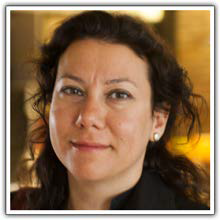

Sarover Zaidi
Fellow, Anthropology, Jindal School of Art & Architecture, Delhi.
Sarover Zaidi works at the intersections of critical theory, anthropology, art, architecture and material culture studies. She has extensively worked on religious architecture, and urbanism in the city of Bombay and currently co-runs a site on writing the city called Chiragh Dilli (https://chiraghdilli.wordpress.com).
Sarover Zaidi
Assistant Professor, Jindal School of Art & Architecture, Delhi

Sarover Zaidi works at the intersections of critical theory, anthropology, art, architecture and material culture studies. She has extensively worked on religious architecture, and urbanism in the city of Bombay and currently co-runs a site on writing the city called Chiragh Dilli (https://chiraghdilli.wordpress.com). Previously she worked on rural development, with a focus on health, education, and women's rights across India, and currently works on religious iconography & modernist architecture in south Asia. She has received the Max Planck fellowship, the INTACH fellowship, the IFA fellowship and the Khoj fellowship for her research interests. Besides this she also curates an interdisciplinary forum on art, architecture and anthropology, 'Elementary forms' and has previously taught at the School of Planning and Architecture, Delhi. At JSAA she runs a studio course on 'Materials and making', and also teaches Modern South Asia, and Design Theories.
Working Group Affiliation

Rafia Zakaria
Fellow, Writer, Columbia University
Rafia Zakaria is an author, editor and attorney. She has been a weekly columnist for DAWN, Pakistan’s largest and oldest English language daily since 2009. Her column is syndicated in newspapers all over the world through the Inter Press Service and is regularly republished in the Deccan Chronicle, The Wire India, Kathmandu Post, Sri Lanka Guardian, Korea Herald, New Straits Times and The Internazionale among others. She writes the “Alienated” column for The Baffler and has previously been a regular columnist for Al Jazeera America. She also writes regularly for Guardian Books and is a CNN Opinion contributor. Her recent New York Times Op-Ed “The Myth of Women’s Empowerment” was shared over 30K times on Facebook.
Rafia Zakaria
Author, Editor and Attorney

Rafia Zakaria is an author, editor and attorney. She has been a weekly columnist for DAWN, Pakistan’s largest and oldest English language daily since 2009. Her column is syndicated in newspapers all over the world through the Inter Press Service and is regularly republished in the Deccan Chronicle, The Wire India, Kathmandu Post, Sri Lanka Guardian, Korea Herald, New Straits Times and The Internazionale among others. She writes the “Alienated” column for The Baffler and has previously been a regular columnist for Al Jazeera America. She also writes regularly for Guardian Books and is a CNN Opinion contributor. Her recent New York Times Op-Ed “The Myth of Women’s Empowerment” was shared over 30K times on Facebook.
From 2009-2015 Rafia served on Board of Directors of Amnesty International USA and was the first Pakistani-American woman to do so. In Fall 2016 she was part of the “How Should Journalism Cover Terrorism” Project at the Tow Center for Digital Journalism at Columbia University. In Fall 2017 she along with political scientists Kate Cronin-Furman and Nimmi Gowrinathan published the “Emissaries of Empowerment” report for the Colin Powell Center for Civic and Public Leadership. The report (which calls out racism in women’s empowerment initiatives in international development) was featured in The New York Times, The Washington Post and The Guardian.
Rafia is the author of two books The Upstairs Wife: An Intimate History of Pakistan which was selected one of the “Best Non-fiction Books of 2015” by Newsweek Magazine and Veil (2017). She is currently under contract for a third book A Different Life with Beacon Press.
Working Group Affiliation
Religion and the Global Reframing of Gender Violence, Media Fellow

Dubravka Žarkov
Fellow, Social Studies, The Hague
Dubravka Žarkov is Associate Professor of Gender, Conflict and Development at the International Institute of Social Studies, The Hague. Her fields of expertise are gender and its intersections with sexuality, ethnicity and religion; violent conflict, war and militarism, including gender based sexual violence and communalism, and visual and textual representations of war, violence, and soldiering. She also works on masculinity and sexual violence in wars against men. Among her publications are: Conflict, Peace, Security and Development: Theories and Methodologies (with Helen Hintjens, 2015); Narratives of Justice in and out of the Courtroom: Former Yugoslavia and Beyond (with Marlies Glasius, 2014); Gender, Violent Conflict, and Development (2008); The Body of War: Media, Ethnicity and Gender in the Break-up of Yugoslavia (2007); and The Postwar Moment: Militaries, Masculinities and International Peacekeeping, (with Cynthia Cockburn, 2002). One of her most recent articles is on faith and feminism.
Dubravka Žarkov
Associate Professor of Gender, Conflict and Development, International Institute of Social Studies, The Hague

Dubravka Žarkov is Associate Professor Emerita of Gender, Conflict and Development at the International Institute of Social Studies, The Hague. Her fields of expertise are gender and its intersections with sexuality, ethnicity and religion; violent conflict, war and militarism, including gender based sexual violence and communalism; and visual and textual representations of war, violence, and soldiering. She also works on masculinity and sexual violence in wars against men. Among her publications are: Conflict, Peace, Security and Development: Theories and Methodologies (with Helen Hintjens, 2015); Narratives of Justice in and out of the Courtroom: Former Yugoslavia and Beyond (with Marlies Glasius, 2014); Gender, Violent Conflict, and Development (2008); The Body of War: Media, Ethnicity and Gender in the Break-up of Yugoslavia (2007); and The Postwar Moment: Militaries, Masculinities and International Peacekeeping (with Cynthia Cockburn, 2002). One of her most recent articles is on faith and feminism.
Working Group Affiliation

Hannah Zeavin
Fellow, Science and Technology, UC Berkeley
Hannah Zeavin is a Lecturer of Science and Technology in the Department of History at UC Berkeley, and is on the Executive Committee's of the Berkeley Center for New Media and the UC Berkeley Center for Science, Technology, Medicine, and Society. Her research focuses on the coordinated histories of information, media, technology, medicine and the mind. Zeavin's first book, The Distance Cure: A History of Teletherapy is out from the MIT Press and she is at work on her second book, Mother's Little Helpers: Technology in the American Family (under contract MIT Press), which investigates the ways in which technologized parenting interacts with moral, medical, and psychiatric concepts of parental fitness, presence, and absence across the 20th century and into our present.
Hannah Zeavin

Hannah Zeavin is a Lecturer of Science and Technology in the Department of History at UC Berkeley, and is on the Executive Committee's of the Berkeley Center for New Media and the UC Berkeley Center for Science, Technology, Medicine, and Society. Her research focuses on the coordinated histories of information, media, technology, medicine and the mind. Zeavin's first book, The Distance Cure: A History of Teletherapy is out from the MIT Press and she is at work on her second book, Mother's Little Helpers: Technology in the American Family (under contract MIT Press), which investigates the ways in which technologized parenting interacts with moral, medical, and psychiatric concepts of parental fitness, presence, and absence across the 20th century and into our present. Other work has appeared or is forthcoming from differences: A Journal of Feminist Cultural Studies, The Guardian, The Washington Post, The Los Angeles Review of Books, Slate, and beyond. For more information see: Zeavin.org.
Working Group Affiliation