
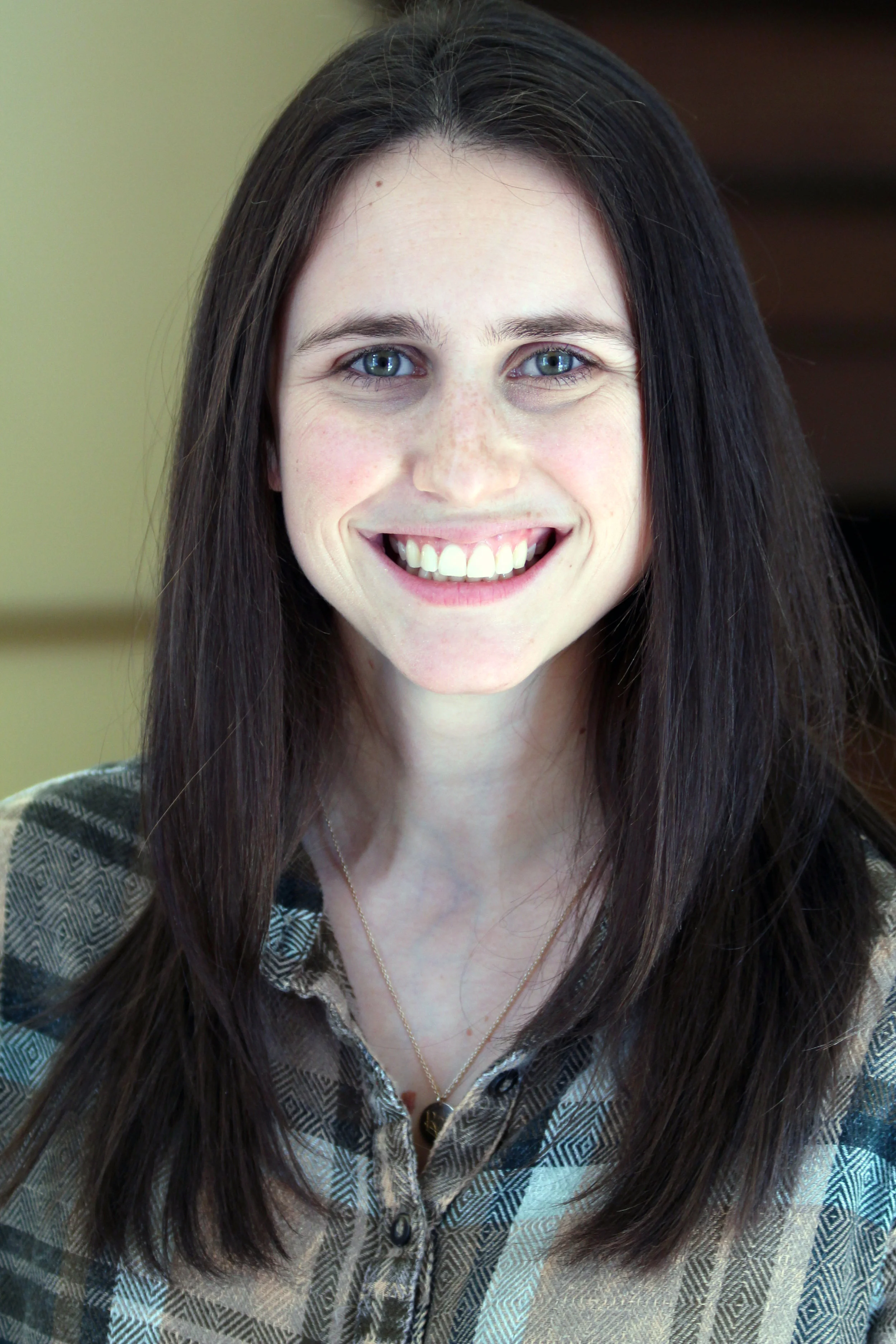
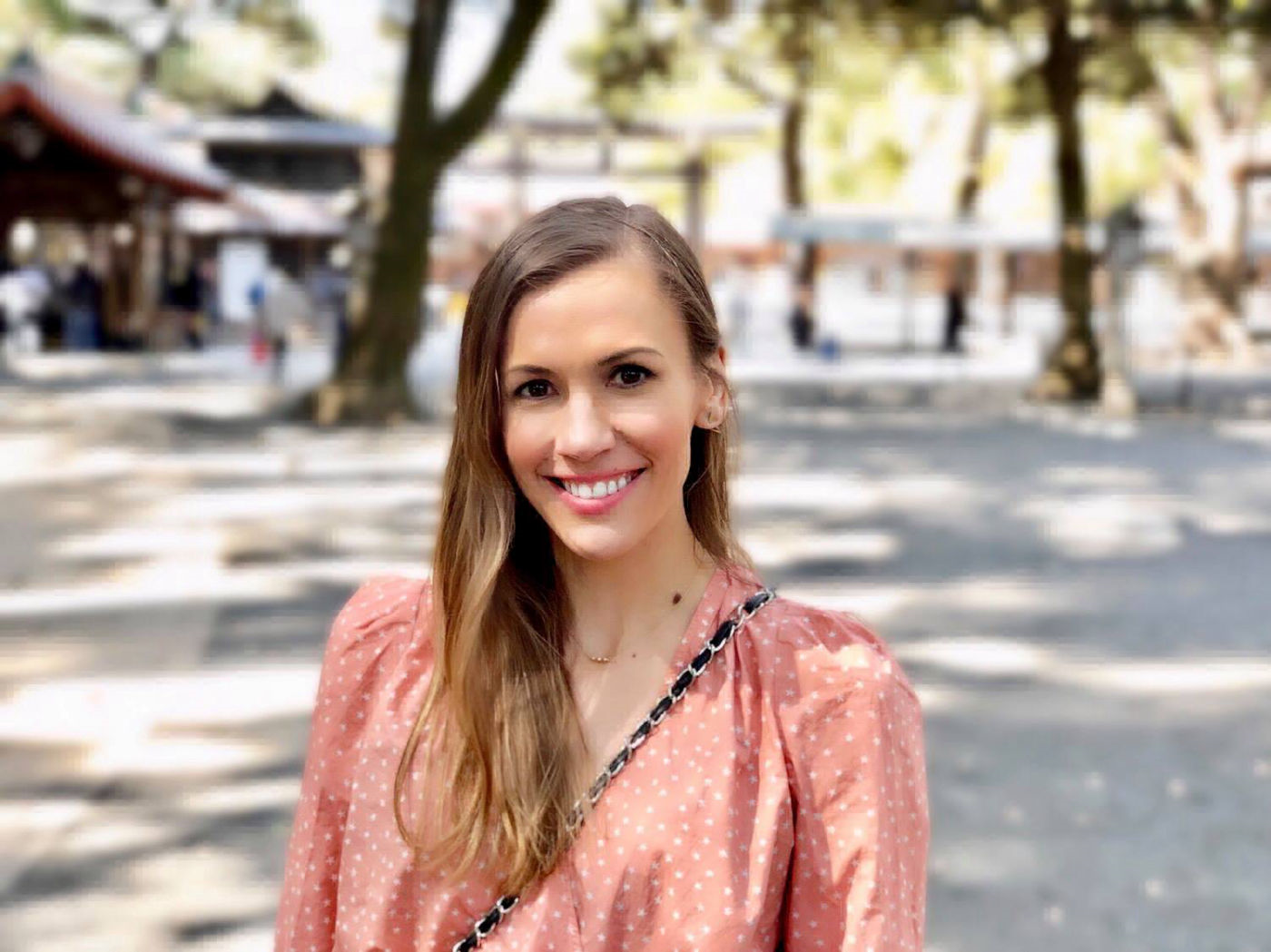
















J-M
Graduate Fellows
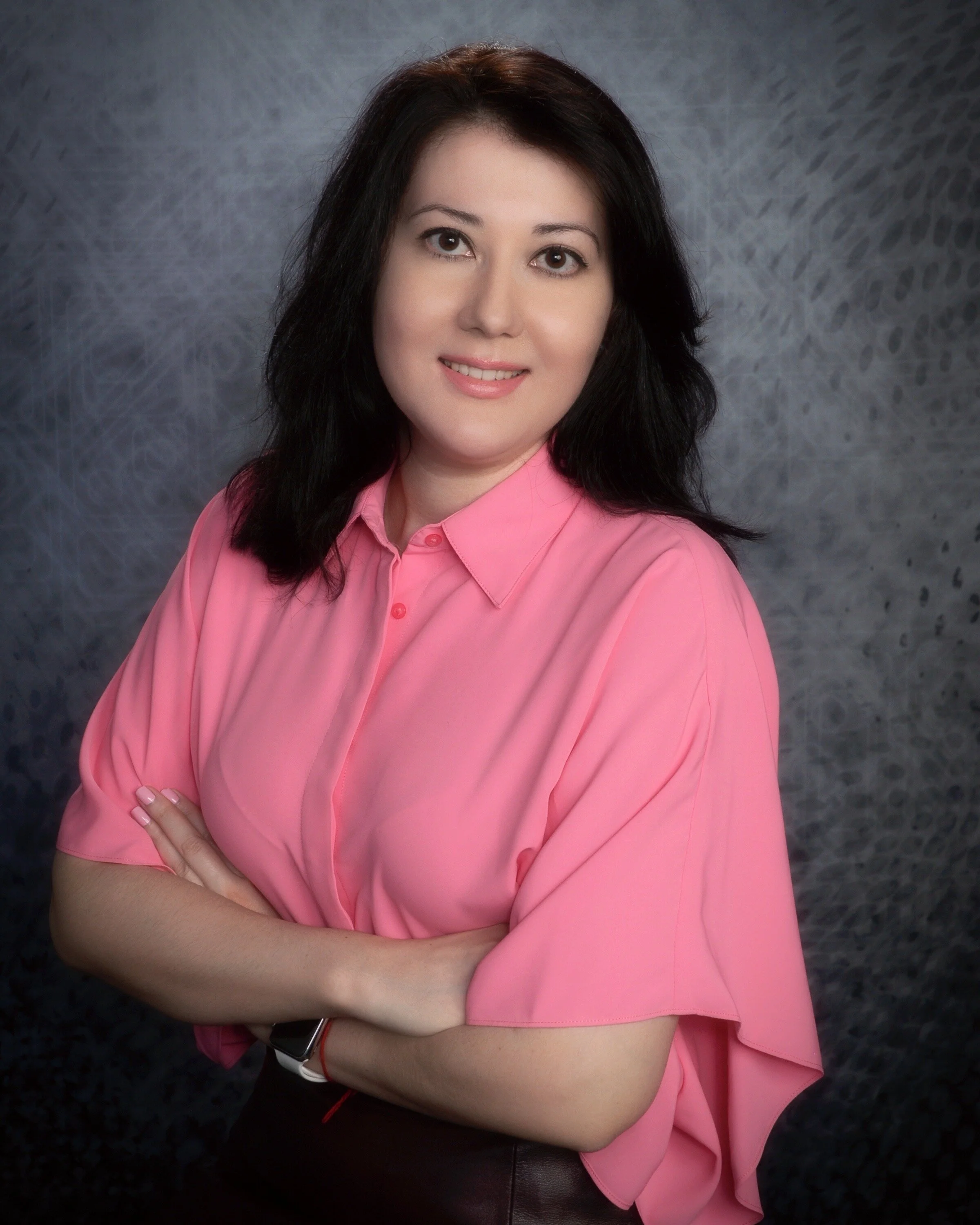
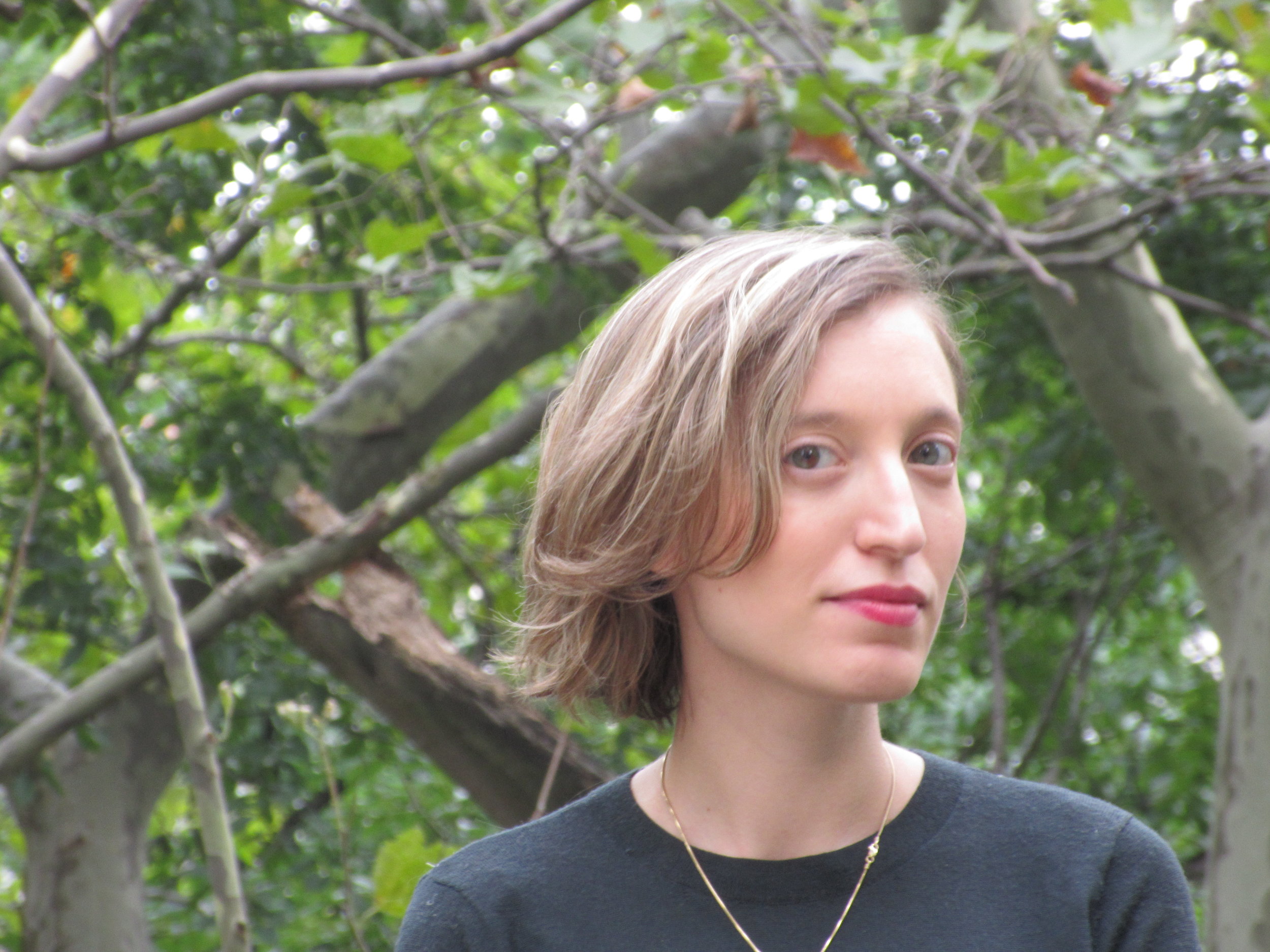
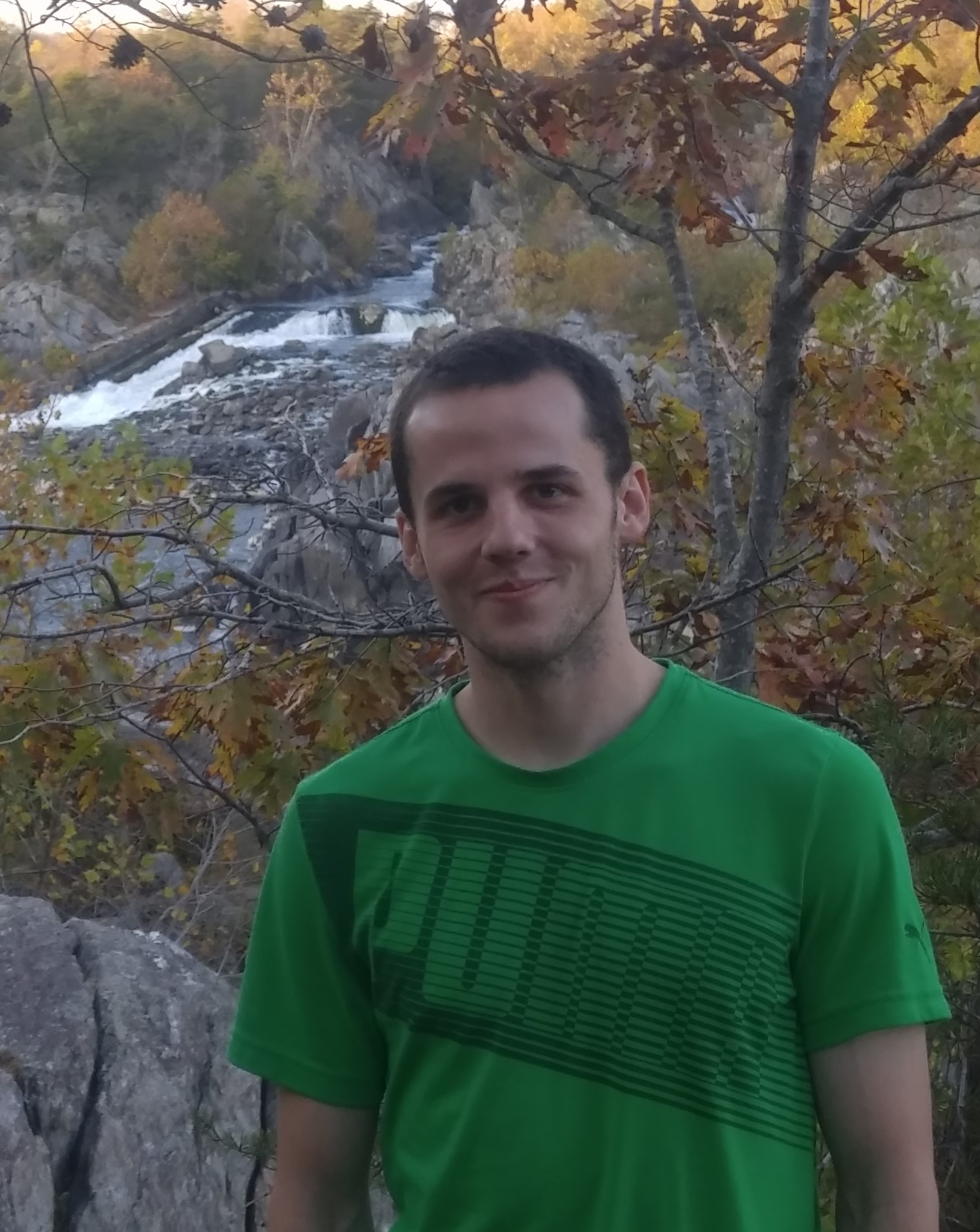
Jessica Jacolbe is a writer from Brooklyn whose work has been featured in Catapult, Garage Magazine, JSTOR Daily, and others.
Phd Student, Anthropology, Columbia University
Alyssa A.L. James is a PhD student and SSHRC Doctoral Fellow whose research examines the consequences of recasting colonial history for Caribbean subjectivities and futures. She interrogates the discourses and practices that transform commodities into heritage - and history into commodity - as it unfolds through Martinique’s nascent coffee revival project.
Doctoral Student, Narrative Medicine, Columbia University
Courtni Jeffers is currently a graduate student in the Narrative Medicine Program at Columbia University. Prior to her time at Columbia she earned a bachelor’s degree in Medical Humanities and a bachelor’s degree in Biology at IUPUI in Indianapolis, Indiana. After completing her M.S. in Narrative Medicine, Courtni hopes to pursue osteopathic medicine with a specialty in hospice care. She is passionate about writing and hopes to use the art of storytelling to facilitate honest and healing conversations about the end of life, with her hospice patients and their families.
Doctoral Student, Human Rights, Columbia University
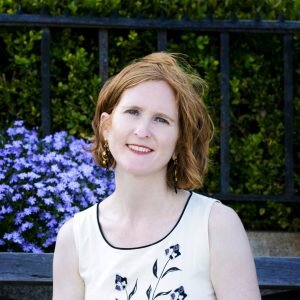
Anna Jiang is a currently a Human Rights M.A. student here at Columbia. Her thesis concerns how traditions and cultural heritage informs reproductive/menstrual health and gender in the space of contemporary China.
Graduate Student, Systems Biology, Columbia University
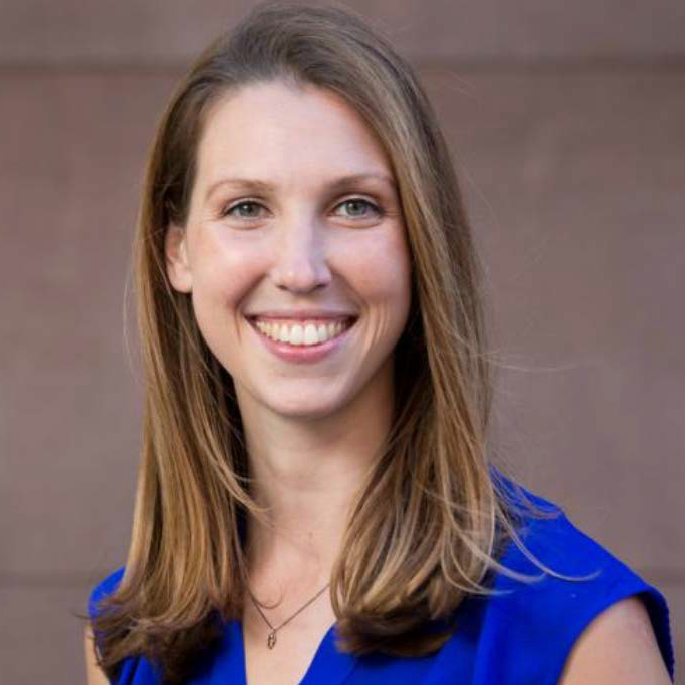
Sunny Jones is a graduate student in the Systems Biology department working with Dr. Andrea Califano. Her research involves developing algorithms for analyzing cancer genomics data with the goal of better understanding their biology as well matching patients to highly specific treatments as based on their genetics. She has previous research experience in nutrient metabolism and is currently working in conjunction with a startup to build a platform for providing optimal meals and dietary suggestions to cancer patients and survivors. In her free time she enjoys rock climbing, biking and exploring New York City.
Doctoral Student, Education, Columbia University
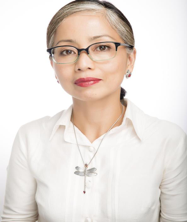
Nick Juravich is a doctoral student in United States History, studying education, labor organizing, social policy, urban history, and social movements in the twentieth century. His dissertation, provisionally titled "An Education in Democracy: Paraprofessionals in Schools, Communities, and the Labor Movement, 1965-1980," examines the changing relationships between public schools, local communities, and public sector unions in this era.
PhD Student, History, Columbia University
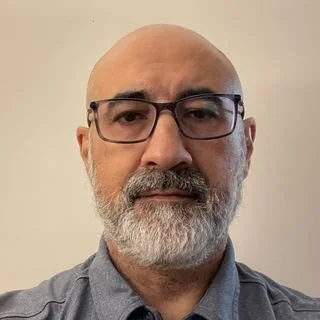
Suzanne Kahn is a Ph.D. candidate in the U.S. History program. She works at the intersection of legal history, women’s history, and American Political Development. Her dissertation, “Divorce and the Politics of the Social Welfare Regime, 1969-2001,” examines how rising divorce rates shaped the politics and policies around women’s access to economic resources.
Graduate Student, Narrative Medicine, Columbia University
Guneet Kaur is originally from the Bay Area, CA and graduated from Scripps College earlier this year with a degree in Biology and Feminist, Gender, and Sexuality Studies with a concentration in race. She is currently pursuing her Masters in Narrative Medicine here at Columbia University, looking at the intersections of bioethics, social justice, and clinical practice, with an emphasis on the use of patient narrative as a means of healing. She is passionate about the intersections of social justice and medicine in caring for underserved communities- particularly conversations around chronic condition management, mental health, and reproductive health.
Doctoral Student, Narrative Medicine, Columbia University
Robin J. Kemper is currently studying for her M.S. in Narrative Medicine at Columbia University. Hoping professionally to write and teach on disability-related matters, Robin has twice taught a Narrative Medicine seminar to Columbia University postbaccalaureate premedical students and undergraduate premedical students. She is also a Curriculum Committee Representative in the Narrative Medicine program. Robin earned her J.D. at Yale Law School and her B.A. in English at Yale University.
Phd Candidate, Anthropology & Education, Teachers College, Columbia University
Corinne Kentor is a Ph.D student in Anthropology & Education at Teachers College, Columbia University. Her research focuses on the intersection of immigration and higher education policy. Her dissertation explores the educational experiences of older and younger siblings in mixed status families, with a specific focus on the institutional policies that shape their respective trajectories after high school.
Doctoral Student, Bioethics, Columbia University
Dhaval Khamar is a graduate student in Columbia’s bioethics program and previously attended the University of Central Florida, earning a B.S. in Biology and a B.A. in Religion and Cultural Studies both with honors. His areas of interest in bioethics are end of life ethics, access to medical innovation, and health policy ethics. Dhaval has also contributed to health policy efforts in New York as an intern at the New York State Task Force on Life and the Law.
Doctoral Student, Gender, Sexuality, and Women’s Studies, University of Pennsylvania
Shenila Khoji-Moolji received her doctorate in Education and additional certification in Feminist Theory from Columbia University in 2016. Her research interests include examining discourses on gender and education, and their entanglement with practices of power. Dr. Khoja-Moolji’s work problematizes the centering of girls’ education and empowerment as a solution to societal problems, especially in relation to Muslim-majority nations.
Doctoral Student, Molecular Genetics and Microbiology, Duke University
Sarah Kleinstein is a Ph.D. candidate in the Department of Molecular Genetics and Microbiology at Duke University, currently studying under Dr. David Goldstein in the Institute for Genomic Medicine at Columbia University. Her primary research focus is determining the genetic underpinnings behind differential responses to infectious diseases, such as HIV-1, HSV-2, HCV, and HBV. Kleinstein also holds a BS in Biochemistry and an MS in Genetic Epidemiology (both from the University of Washington, Seattle).
Doctoral Student, Narrative Medicine, Columbia University
Julia Knox is a researcher at the Columbia Mailman School of Public Health, and an M.S. Candidate in Narrative Medicine in the Columbia Department of Medical Humanities and Ethics. She is interested in the methods by which data takes narrative form in our society. The focus of her research includes exposure to environmental mixtures, maternal/paternal-child health, and transgenerational epigenetics.
Ph.D. student, History, Columbia University
Nancy Ko is a scholar of race, capital, and migration working at the intersection of Jewish and Middle East Studies. A Ph.D. student in the Department of History at Columbia University, her present research traces the consequences of the emergence of Sephardic identity politics in the global Middle East. Nancy holds an MPhil at the University of Oxford, where she was a Rhodes Scholar, and a B.A. from Harvard University, where she was a founding organizer of the Open Hillel movement.
Doctoral Student, English, City College of New York
Leah Kogen-Elimeliah is a poet, essayist, short story and nonfiction writer from Moscow, currently living in New York City. She is an MFA candidate at City College of New York, is the Founder and Director of WordShedNYC Reading Series and an Editorial Associate for Fiction literary magazine.
Doctoral Student, Sociomedical Sciences, Mailman School of Public Health, Columbia University
Kathleen Kraus is a second year Master of Public Health student at Columbia Mailman School of Public Health in the Department of Sociomedical Sciences. Her academic focus includes chronic disease prevention and health policy. Prior to attending Mailman, Kathleen worked as an Associate at Voz Advisors (formerly MK&A), a patient advocacy relations consultancy to the pharmaceutical industry.
Ph.D. Candidate, English & Comparative Literature, Columbia University
Anna Krauthamer is a Ph.D. candidate in Columbia's English & Comparative Literature department, where she studies and writes about contemporary novels, theories of literary character, and disability. She is currently beginning a dissertation project focused on character typologies in contemporary fiction.
PhD Student, Genetics & Development, Columbia University
Daniel Krizay is a PhD student in the department of Genetics & Development, who is currently a researcher in the lab of Dr. David Goldstein in the Institute for Genomic Medicine. Daniel is originally from Centreville, Virginia and attended Northeastern University where he received his B.S. degree in Biochemistry. Before moving to New York City for graduate school, Daniel worked full-time for nearly two years in Boston as a researcher in fields ranging from antibiotic characterization to Spinal Muscular Atrophy research.
Doctoral Student, Narrative Medicine, Columbia University
Hippocrates said, “Wherever the art of medicine is loved – there is also a love of humanity.” This quote explains her own reflections and values in life. She loves humanity, and she chose to devote her life to science and medicine because she wants to make a difference in patients’ lives, alleviate patients’ suffering, and positively influence the healthcare system of the United States and worldwide. Presently, she is a graduate student in the Program of Narrative Medicine at Columbia University.
Ph.D. Candidate, English and Comparative Literature, Columbia University
Aya Labanieh is a Ph.D. candidate in the English and Comparative Literature Department, where she works on imperial conspiracies and their conspiracy-theory afterlives in 20th and 21st century Middle Eastern literature and politics. Her broader interests include conspiratorial thinking within a global digital context, and how conspiracy theories function as alternate histories, heretical discourses, popular critiques, epistemic injuries, and modern enchantments.
Doctoral Student, Narrative Medicine, Columbia University
Delilah Leibowitz is currently a graduate student studying Narrative Medicine at Columbia University. She graduated magna cum laude from the University of Southern California in 2019. She holds a B.A. in Health and the Human Sciences, with an emphasis in Internal Health. Delilah participated in several research labs throughout her undergraduate studies, ranging from studying fluoresced vasculature pathways of Zebrafish embryos to her work in understanding the relationship between blood proteins and cognitive function.
PhD Student, Sociology, Columbia University
Moran Levy is a Doctoral Candidate at the Department of Sociology at Columbia University and a fellow with the working group on Precision Medicine: Ethics, Politics and Culture. Moran’s research focuses on classification of patients and diseases. She examines the role of social institutions in shaping biomedical classification as well the social consequences of diagnostic practices.
PhD Student, Biological Sciences, Columbia University
Aaron Limoges is a PhD student in the Department of Biological Sciences. His doctoral research is performed at the New York State Psychiatric Institute, where he studies cell- and circuit-level mechanisms through which stress affects cognition and mood. As a neuroscientist, Aaron wants to find new ways to merge biological and behavioral data.
Doctoral Student, Narrative Medicine, Columbia University
Penelope Lusk is a graduate student in the Narrative Medicine program at Columbia University. She holds a BA in English Literature from Bowdoin College. Born and raised in Brooklyn, New York, she currently she works as a Project Associate for the Program for Medical Education Innovations and Research at New York University. In the future, she hopes to continue working at the crossroads of medical education and the health humanities.
Doctoral Student, Graduate School of Arts and Sciences, Columbia University
Trisha Maharaj is a MA candidate in the Human Rights Studies program at Columbia University. Her research focuses on cultural and religious practices related to menstruation and women’s experiences and attitudes in the Hindu diaspora of Trinidad.
Doctoral Student, Journalism, Columbia University
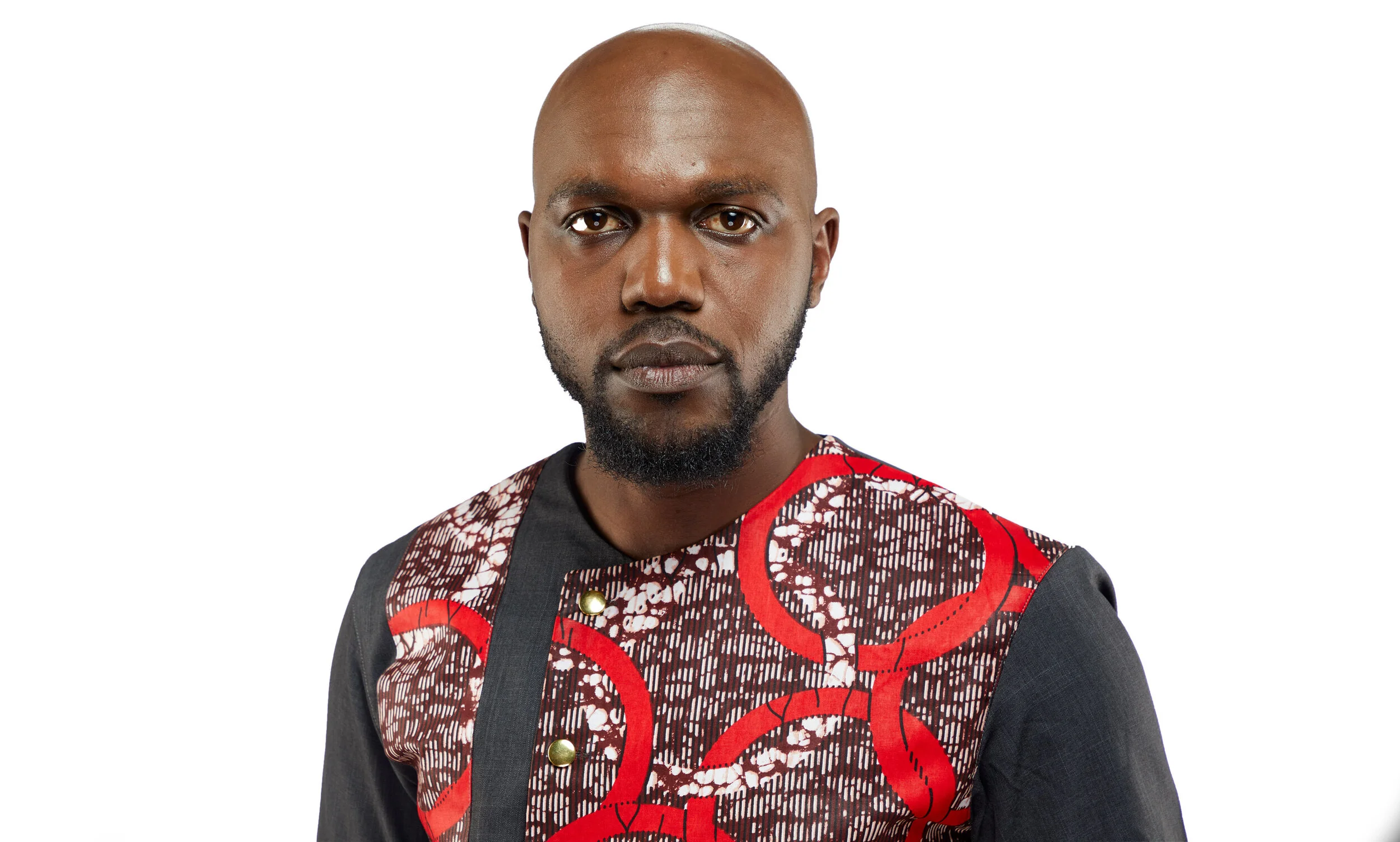
Larry Madowo is a Knight-Bagehot Fellow in Economics and Business Journalism at Columbia University. He is also a candidate for an M.A. in Business and Economics at Columbia Journalism School. Before taking up the fellowship in New York City, he was the BBC Africa Business Editor. Larry launched 6 syndicated BBC TV shows in English, Swahili and French and led the broadcaster’s coverage of business in Africa.
Doctoral Student, Clinical Psychology, Columbia University
Amar Mandavia is currently a second-year doctoral student pursuing clinical psychology at Teachers College, Columbia University from where he also holds a master’s degree in clinical psychology. In his current involvement with ELSI, Amar is assisting in a systematic review to identify genetic markers and subsequent variations among different racial and ethnicity groups to inform PMI research efforts. His master’s thesis focused on analyzing longitudinal epidemiological data to identify prospective psychosocial factors that impact transition to and recovery from homelessness among adults in the US.
Doctoral Student, Global Health, Columbia University Medical Center
Lianna Marks is a Pediatric Hematology and Oncology Fellow at the Children's Hospital of New York and Columbia University Medical Center. She is a graduate of Columbia College and the Indiana University School of Medicine and completed her pediatric residency at the Children's Hospital of Philadelphia. Her interest in Global Health has lead her to clinical work in Kenya, Guatemala, Costa Rica, and the Dominican Republic. Her research investigates using natural killer cell immunotherapy in the treatment of cancer.
Doctoral Student, Genetic Counseling, Columbia University
Bree Martin is from Los Angeles, CA, and received a bachelor’s degree in psychobiology with a minor in philosophy from UCLA. She is currently pursuing a master’s degree at Columbia University in Genetic Counseling. Bree has past research experience in genetic factors in schizophrenia, and was an active member of UCLA’s Bioethics Society. She hopes to be an advocate for equitable healthcare, specifically within genetic medicine.
N-S
Graduate Fellows
Doctoral Student, Narrative Medicine, Columbia University
Katie Neimeyer is a graduate student in the Narrative Medicine program at Columbia University, where she also works as a research coordinator in the Taub Institute and Sergievsky Center on several neurogenetic studies. As an intern in the Summer Internship for Indigenous Peoples in Genomics Canada (SING Canada) 2019 program at the University of Alberta, she participated in a dialogue about Indigenous bioethics and approaches to genomic sciences. She plans on pursuing a career in genetic counseling after she completes her M.S. in Narrative Medicine.
Doctoral Student, Social Personality Psychology, CUNY
Akemi Nishida is a doctoral student in the social personality psychology PhD program and an adjunct lecturer in Psychology and Disability Studies at City University of New York. Using frameworks of social justice studies and critical disability studies, her work focuses on the politicization of disabled people and community building in relation to intersecting oppression and privilege. She is also a performer in a project ‘GIMP’ by Heidi Latsky Dance and a starting member of DISLABELEDtv, a media organization by disabled youth/young adults.
Doctoral Student, Biomedical Science, Columbia University
Christie Oliver will be starting at Columbia University, School of Professional Studies, as a graduate student in the Bioethics program in Fall 2017. She is from Edinburgh, Scotland and has a Bachelor’s degree with honors in Biomedical Science (Anatomy) from University of Aberdeen. Her thesis focused on fetal testosterone and the role it plays in the development of autism spectrum disorders. She is fascinated by the differences in health care systems globally and is passionate about the development of emerging medical fields. She is an active runner and loves to do yoga.
Curator, Oral History and Art, Elgiz Museum of Contemporary Art Istanbul
Işın Önol is a curator and writer based in New York. She has been working as an independent curator (predominantly in the USA, Austria and Turkey) since 2009. Before that, she led the Elgiz Museum of Contemporary Art Istanbul as its director and curator. (2006-2009). Her curatorial research focuses on interconnecting archival information with oral histories to create platforms for collective memory through collaborative art practices
PhD Student, American Studies, Yale University
Ittai is a Ph.D. candidate in American Studies. His dissertation is an intellectual history of intelligence and intellectual ability in 18th- and 19th-century America with a focus on popular literary texts. His other areas of expertise include the history of race, sexuality and gender studies, disability studies, and the history of capitalism. He has been a tutor for the undergraduate non-fiction writing course “Daily Themes,” a writing instructor, and an LSAT-prep tutor and instructor. His work has been published in American Quarterly and Public Books, and he has presented at the Modern and Contemporary Studies Initiative, American Studies Association and the Modern Language Association.
Doctoral Student, General Studies, Columbia University
Jeremy Orloff is a premed postbac student in the School of General Studies. Prior to his interest in medicine, he studied political science and history at Johns Hopkins University. He later worked in local New York City government relations. As a postbac, Jeremy has been involved in clinical research around obesity and related diseases.
Doctoral Student, International Finance and Economic Policy, Columbia University
Giovanni Pagán Vélez is a student from San Juan, Puerto Rico. He is an MPA candidate at Columbia SIPA, concentrating in International Finance and Economic Policy.
Doctoral Student, Medicine, Columbia University
Ming Pei is currently a pre-health student in the Pre-Medical Post Baccalaureate Program at Columbia University. Previously, she attended University of California, Berkeley earning a B.A. in Statistics and B.A. in Economics. She is interested in public health research and aims to make an impact on healthcare policy making.
Doctoral Student, Biomedical Informatics, Columbia University
Adrienne Pichon is a Research Coordinator under Dr. Noemie Elhadad in Columbia University’s Department of Biomedical Informatics. Her research interests center around leveraging emerging health technologies coupled with user-centered design to improve access to health-related information, access to care, and meaningful and actionable personal insights, particularly for vulnerable and marginalized populations.
Hannah Pivo is a Ph.D. candidate specializing in 19th- and 20th-century design and architecture, with a focus on the history of graphic design and information visualization. Her work has appeared in the journals Design Issues and Public Art Dialogue and she has contributed to exhibition catalogs on various topics in modern and contemporary art and design.
PhD Student, Sociomedical Sciences, Columbia University
Ronna A. Popkin is a Ph.D. Candidate in Sociomedical Sciences (SMS) with a concentration in Sociology at Columbia University. She was a Fellow in SMS's NICHD predoctoral training program in Gender, Sexuality, and Health. Her multi-disciplinary research interests span the fields of sociology, public health, science and technology studies, and gender studies, and include adolescent and young adult sexual and reproductive health, genetic risk, and women’s health in the United States. Prior to attending Columbia, Ms. Popkin worked as a community sexuality educator for Planned Parenthood of Wisconsin and lectured courses at the University of Wisconsin-Madison on sexuality education, women’s health, and the politics of fertility control. Ms. Popkin earned her M.S. in Health Education and B.S. with Honors in Women’s Studies from the University of Wisconsin-Madison.
Doctoral Student, Public Health, Columbia University
Kenia has a clinical background and is an MHA '22 graduate of the Mailman School of Public Health, Columbia University.
Ph.D. Candidate, Sociology, Columbia University
Hannah Pullen-Blasnik is a Ph.D. student and Paul F. Lazarsfeld Fellow in the Department of Sociology at Columbia University. She is also a Graduate Research Fellow at the Columbia Justice Lab on the Pennsylvania Solitary Study and the Rikers Island Longitudinal Study. Her primary research interests include social movements, political economy, and algorithms and technology.
Doctoral Student, Precision Medicine, State University of Bangladesh
Sikder Nahidul Islam Rabbi completed his Bachelor and Master’s in clinical pharmacy and pharmacogenetics from State University of Bangladesh. In the arena of research, he has worked with clinical pharmacokinetics, drug protein binding study, pharmacogenetics, SNP genotyping, HLA research and cancer genetics, better understanding about drug activation and pharmacodynamics variation based on patient’s genetics. His research interest includes, epigenetics, proto-oncogene mutation, cancer genetics and neuroscience.
Doctoral Student, Public Health, Columbia University
Syed Raza is a master of public health candidate in the department of Sociomedical Sciences at Columbia University where he is also completing a certificate in the Social Determinants of Health. His work focuses on the political economy, sociocultural aspects, and research methodologies of public health. His research interests include historical sociology, geopolitics, science and technology studies, social epidemiology, world-ecology analysis, and critical animal studies.
PhD Student, Systems Biology, Columbia University
Andrew Ressler is a PhD Candidate in the department of Systems Biology. Andrew is currently a researcher in the Institute for Genomic Medicine in Dr. David Goldstein’s lab. He received his Bachelors of Science in Applied Math and Biology from Brown University in 2013. After graduating, Andrew worked as an associate in finance at Amgen for two years before beginning his PhD at Columbia University in 2015. As a graduate student, Andrew’s research focuses on developing methods to model and characterize neuropsychiatric disease using human stem cell derived cultured neuronal networks.
Doctoral Student, Anthropology, Columbia University
Chazelle Rhoden is a third-year doctoral student of anthropology at Columbia University. She conducts research through a transnational black feminist lens on the relationship between climate change conservation and race in Brazil.
Doctoral Student, Performance Studies, New York University
Leticia Robles-Moreno is a PhD student at New York University’s Department of Performance Studies. She received her Bachelor’s degree in Humanities with emphasis in Linguistics and Literature from the Pontificia Universidad Católica del Perú. She also holds a Master’s degree in Latin American Literature from the University of Colorado at Boulder, and has taught Spanish, Latin American culture, and Writing classes in several college levels.
Graduate Student, Narrative Medicine, Columbia University
Leah Rosen was raised in Denver, CO and graduated from Duke University in Durham, NC. At Duke, she created her own interdisciplinary major titled "Illness and Identity" and completed that in conjunction with the standard pre-med curriculum. She would describe the "Illness and Identity" curriculum as a medical humanities approach to patient-centered care--pulling from disciplines including psychology, neuroscience, philosophy, religious studies, and biology. She is excited to pursue a degree in Narrative Medicine at Columbia and then hopefully continue onto medical school.
PhD Candidate, Latin American and Iberian Cultures, Columbia University
Daniel S. Sáenz is a Colombian-Canadian Settler, writer, art historian, and occasional independent curator based in Lenapehoking (New York City) and Tiohtiá:ke (Montréal). He is currently a Ph.D. student and Teaching Fellow in the Department of Latin American and Iberian Cultures at Columbia University, where he holds a Doctoral Fellowship from the Social Sciences and Humanities Research Council of Canada.
Doctoral Student, Creative Writing, The City College of New York
Laura Salvatore is a poet, currently pursuing her MFA in Creative Writing at The City College of New York, where she will be completing her thesis this fall. She studied Art History and English at Southern Connecticut State University.
Doctoral Student, Bioethics, Columbia University
Taylor Santoro is a graduate student in the Bioethics program at Columbia University School of Professional Studies. In May 2017 she graduated with honors from Wake Forest University with a double B.A. in Economics and Studio Art. After graduate school she plans to attend medical school and continue to pursue her research interests in the biomedical field. In her free time she focuses the majority of her time between her passion for cooking and completing her current painting projects!
Doctoral Student, Counseling and Clinical Psychology, Columbia University
Srishti Sardana is a graduate student in the Department of Counseling and Clinical Psychology, in the Global Mental Health Lab, Teachers College, Columbia University. She is also a Research Assistant at the New York State Psychiatric Institute and Columbia University Medical Center. She has assisted on various projects with the aim to build skills needed to conduct high-impact mental health research in low-resource settings.
Doctoral Student, Nursing, Columbia University
Maureen Saylor is currently a student in the Master's Direct Entry program at Columbia University School of Nursing. She also graduated in May 2019 from Mailman School of Public Health with her MPH in Population and Family Health. Previously, she served as a Peace Corps Volunteer in Botswana where she primarily worked on projects related to HIV/AIDS and issues surrounding gender-based violence. She is passionate about participatory qualitative research and hopes to pursue a career in community health upon graduating from the MDE program in summer 2020.
Doctoral Student, English, Rutgers University
Katherine Schaap Williams is a doctoral candidate in the department of English at Rutgers University. She has held fellowships from the graduate school and the Center for Cultural Analysis at Rutgers University, where she is a fellow in the 2011-2012 “Public Knowledge: Institutions, Networks, Collectives” seminar. Her research interests include sixteenth and seventeenth-century English literature and culture, disability studies, and performance theory, and she is writing a dissertation tentatively titled Irregular Bodies: Disability on the Early Modern Stage.
T-Z
Graduate Fellows
PhD Student, Sociocultural Anthropology, Columbia University
Rishav is currently a third year PhD student in sociocultural anthropology at Columbia University. He studies articulations of, and claims around, identity and belonging in Assam, India.
Ph.D. candidate, Film, Columbia University,
Madiha Tahir has a Ph.D. from Columbia University, and is a writer, filmmaker, and former journalist focusing on drone warfare, surveillance, and empire. She is the director of Wounds of Waziristan, a short documentary essay film on survivors of drone attacks.
Doctoral Student, Health Policy Management and Infectious Disease Epidemiology, Columbia University
Jade Tan is a graduate student in Public Health at Columbia University, concentrating in Health Policy Management and Infectious Disease Epidemiology. She has a B.A. from the University of Virginia in Political Philosophy, Policy, and Law (PPL), as well as Biomedical Ethics. Her work and interests focus on human genetic engineering ethics, precision medicine technology, neuroscience, synthetic biology, philosophy of mind, jurisprudence and constitutional law, and the ethical, philosophical, sociopolitical, legal, and deeply human dimensions of future technologies.
Doctoral Student, Medicine, Columbia University
Lewis is a student associate of On the Frontlines: Nursing Leadership in Pandemics. He completed Columbia University’s post-baccalaureate pre-medical program in May 2019, and is currently in the process of applying to medical school.
Fern Thompsett is a PhD candidate in the Department of Anthropology at Columbia University. Her dissertation research explores the Anti-Civilization Movement, an anarchist environmental movement that coheres around an anti-colonial, anti-capitalist critique of mass agriculture.
Doctoral Student, Genomic Medicine, Columbia University
Solomon Torres currently works at the Columbia University’s Institute for Genomic Medicine as the Operations Manager for the All of Us Research Program. In the present-day where big-data and genomics are shaping the future of medical care and public health, he is interested in gaining the skills in epidemiological research methods and biostatistical analysis to contribute to the advancement of biomedical and public health research. Through the PMEPC project, he hopes to gain additional insight as to the research that will make use of the precision medicine approach to address health disparities, inequalities, and emerging diseases nationally and globally with an emphasis in Latin America.
Doctoral Student, English and Comparative Literature, Columbia University
Kate Trebuss is a fourth-year doctoral student in the Department of English and Comparative Literature at Columbia University. Her dissertation, entitled "Critical Care: Medical Life Writing, Memory, and the Politics of Health," investigates how contemporary autobiographical stoies of illness and medical care facilitate the remembering and forgetting of certain histories and current conditions of violence, oppression, invisibility and inequality, as well as the connections between them.
Ph.D. Candidate, Anthropology, Columbia University
Brendane Tynes is a queer Black feminist scholar and storyteller from Columbia, South Carolina. She received her Bachelor of Arts with Distinction in Cultural Anthropology with a minor in Education from Duke University. She is a Ph.D. candidate in Anthropology at Columbia University, where she studies the affective responses of Black people to multiple forms of violence within the Movement for Black Lives. Her scholarship receives generous support from the Ford Foundation and Wenner-Gren Foundation.
Doctoral Student, Philosophy, CUNY
Alanna Valdez is a Master’s student in philosophy at the City University of New York, Graduate Center. She also holds a Master’s degree in Ethics, Peace, and Global Affairs from American University’s School of International Service, where she wrote her thesis on how the recently ratified UN Convention on the Rights of Persons with Disabilities shifts disability rights to a human rights perspective. Her philosophical interests include: personhood, agency, and non-rational justifications for human rights.
Doctoral Student, Behavioral Cardiovascular Health, Columbia University
Stephanie Valentinetti is a Project Coordinator at the Center for Behavioral Cardiovascular Health at Columbia University Medical Center and a graduate student in Columbia's Master's in Bioethics program. She studies ethical issues related to mHealth technology, wearable devices, and data ownership. Stephanie's thesis will focus on the ethics of professional athletes' use of wearable and biometric technologies. Prior to CUMC, she spent four years at Major League Baseball working in anti-doping for the Department of Investigations.
Ph.D. Candidate, Architecture, Planning and Preservation, Columbia University
Ife Salema Vanable is an architect, theorist, and historian who holds professional and post-professional degrees in architecture from Cornell and Princeton Universities. Ife is founder and leader of i/van/able, a New York based architectural workshop and think tank. She is an Adjunct Assistant Professor at the Irwin S. Chanin School of Architecture of the Cooper Union and a Ph.D. candidate in architectural history and theory at Graduate School of Architecture Planning and Preservation (GSAPP).
Doctoral Student, Health, Medicine and Society, University of Cambridge
Naazanene Vatan is a medical student at Washington University School of Medicine in St. Louis. Her interests include the intersections of literature and medicine; pregnancy and childbirth; and philosophies of scientific progress. Naazanene graduated with a B.A. from Columbia College in Biology and Medicine, Literature, and Society.
Doctoral Student, Art History, Hunter College
Emmanuel von Schack is a deaf art history graduate student at Hunter College; his master's thesis focuses on German artists who were veterans of the First World War and the works of art they created during and after the War. By interweaving disability theories with Foucauldian feminist and queer theories, he explores the complex relationship between masculinity and disability as conveyed in Weimar culture and art. He works as an educator at the Metropolitan Museum of Art and the Solomon R.
PhD Student, Sociology, Columbia University
Amy Weissenbach is a first-year PhD student in sociology at Columbia University. She is interested in the sociology of knowledge and expertise, cultural sociology, and law and society. She aims to understand dynamics among individuals and institutions shaping notions of social responsibility in tech, and in biotech in particular. She holds an MPhil in History and Philosophy of Science, Technology and Medicine from Cambridge University and a B.A. from Stanford University.
PhD Candidate, English and Comparative Literature, Columbia University
Kevin Windhauser is a PhD Candidate in the Department of English and Comparative Literature at Columbia University, writing on the relationship between Renaissance literature and the development of library systems in sixteenth and seventeenth-century England.
Doctoral Student, Neuroscience, Biobehavioral Sciences, Columbia University
Glenn Wolther is a Master of Science candidate in Neuroscience within the Biobehavioral Sciences Department. His diverse research interests include the interrelated genetic, transcriptional, and proteomic changes involved with short- and long-term synaptic potentiation; ways of better integrating research in neurobiology at the molecular, cellular and systems level with cognitive and affective neuroscience and neuropsychology; and the relationship of neuroscience to the law.
Doctoral Student, Bioethics, Columbia University
Alexa Woodward is a newly accepted graduate student in the Bioethics program at Columbia University School of Professional Studies. She graduated with honors from California State University Chico with a B.S. in Cellular and Molecular Biology in 2015, having also competed an Honors Thesis focused on autonomy, futility, and end of life issues. After graduate school, she plans on attending medical school or pursuing a Ph.D. program. Outside of academia, Alexa is an ardent fitness enthusiast, artist, and vocalist.
Doctoral Candidate, Latin American and Iberian Cultures, Columbia University
Daniella Wurst is a Doctoral Candidate in the Department of Latin American and Iberian Cultures at Columbia University. She is a graduate member at the Institute for Research on Women, Gender and Sexuality and a Teaching Scholar at the Graduate School of Arts and Sciences at Columbia University.
Ph.D. Candidate, Spanish & Portuguese, New York University
Lee Xie is a Ph.D. candidate in the Department of Spanish & Portuguese at New York University. She holds a B.A. in Spanish (high honors) and Journalism (double major) from New York University. She works at the intersections of diaspora studies and feminist aesthetics: her dissertation considers how Chinese diasporas are remembered in contemporary feminist aesthetic practices in Latin America and the Caribbean
PhD Student, Anthropology, Harvard University
Armanc Yildiz is a PhD student in the Department of Anthropology at Harvard University. His current research interests are sexuality, race, labor, political economy, colonialism, migration, Germany, and the anthropology of Europe. He received his master’s degree (with Distinction) in International Performance Research at the University of Warwick. He has a bachelor’s degree (with Honors) in Cultural Studies with a minor on Art Theory and Criticism at Sabanci University.
Doctoral Student, Bioethics, Columbia University
Jon Zaikowski is the co-founder of CapCell Biologics, a NASA-spinout biotechnology startup developing implants to treat rare diseases. He is a graduate student in Bioethics at Columbia University, having previously graduated cum laude from Wake Forest University with a BA in History and Philosophy.
Doctoral Student, Political Science, Jawaharlal Nehru University,
Rafia Zaman is presently pursuing her doctoral thesis in Political Science at Jawaharlal Nehru University, India under the supervision of Prof. Gurpreet Mahajan. She is interested in the intersectionality of gender and identity politics represented by Muslim women. As part of her M.Phil, she wrote a dissertation on the topic “ ‘Islamic Feminism’: A Critical Appraisal”. Her current research focuses on Muslim women’s activism in India from the period following the Shah Bano controversy till the present.
PhD Candidate, Philosophy, Columbia University
Helen Zhao is a PhD candidate in Philosophy at Columbia University, specializing in the philosophy of science and medicine. As the inaugural Graduate Fellow in Medical Humanities, she is the Network Administrator for the CHCI Health and Medical Humanities Network.
A-D
Faculty FELlows
Professor, Department of Anthropology, Barnard College
Nadia Abu El-Haj is professor in the Departments of Anthropology at Barnard College and Columbia University, and Co-Director of the Center for Palestine Studies. She is the author of Facts on the Ground: Archaeological Practice and Territorial Self-Fashioning in Israeli Society (2001), and The Genealogical Science: The Search for Jewish Origins and the Politics of Epistemology (2012), both published by the University of Chicago Press.
Professor, Department of Education, Barnard College
Thea Renda Abu El-Haj, Professor in Education, is an anthropologist of education. Prior to joining Barnard College, she was an associate professor at the Graduate School of Education at Rutgers University. She currently serves as the President of the Council on Anthropology and Education of the American Anthropological Association. Abu El-Haj’s research explores questions about belonging, rights, citizenship, and education raised by globalization, transnational migration, and conflict.
Professor, Department of English and Comparative Literature, Columbia University
Rachel Adams is the director of the “Precision Medicine: Ethics, Politics and Culture.” She is Professor of English and American Studies at Columbia University, where she specializes in 19th- and 20th-century literatures of the United States and the Americas, media studies, theories of race, gender, and sexuality, medical humanities and disability studies.
Assistant Professor, Department of Anthropology, Columbia University
Vanessa Agard-Jones is Assistant Professor of Anthropology at Columbia University, where she maintains affiliations with the Institute for Research on Women, Gender and Sexuality, the Center for Science and Society, the Earth Institute, and the Department of African American and African Diaspora Studies. At its most expansive, Agard-Jones’ work asks how coloniality is made material: in social forms, in human and nonhuman bodies, and in the landscapes in which we live.
Professor, Department of Astronomy, Columbia University
Marcel Agüeros is an associate professor of astronomy at Columbia University. A native New Yorker and a Columbia College alumnus, Marcel received his Ph.D. from the University of Washington in 2006, returned to
Columbia as a National Science Foundation Astronomy & Astrophysics Post-doctoral Fellow that year, and joined the faculty in 2010. Marcel is an observational astrophysicist who uses new approaches to address classic questions in stellar evolution.
Professor, Department of Contemporary Art History, Barnard College and Columbia University
Alexander Alberro, Virginia B. Wright Professor of Modern and Contemporary Art History at Barnard College and Columbia University, is the author and editor of numerous books, including Abstraction in Reverse: The Reconfigured Spectator in Mid-Twentieth Century Latin American Art (2017); Luis Camnitzer In Conversation with Alexander Alberro (2014) and What is Contemporary Art Today? (2012).
Zeynep Çelik Alexander is Associate Professor in the Department of Art History and Archaeology at Columbia University. Her work focuses on the history and theory of architecture since the eighteenth century. She is the author of Kinaesthetic Knowing: Aesthetics, Epistemology, Modern Design (Chicago and London: University of Chicago Press, 2017), the recipient of the 2019 Charles Rufus Morey Book Award.
Professor, Department of Psychology, Columbia University
Dima Amso is a Professor of Psychology in the Department of Psychology at Columbia University. She has a BS in psychology from Tufts University, was trained at Cornell University and received a PhD in psychology from New York University in 2005. She served on the faculty at the Weil Medical College of Cornell University before joining the faculty at Brown University in 2010 and Columbia University in 2020. Her research examines the development of attention, executive functions, and memory, with an emphasis on how environmental variables shape these trajectories.
Associate Professor, Department of Medicine, Columbia University Irving Medical Center
Dr. Askanase completed her fellowship in Rheumatology at New York University School of Medicine/NYU Hospital for Joint Disease and continued there as an investigator where she participated in multiple NIH and industry sponsored clinical trials, and gained extensive experience with SLE patients. She is currently the Director of the Lupus Center and Director of Rheumatology Clinical Trials at Columbia University Medical Center.
Assistant Professor, Department of Social Work, Columbia University
Dr. Ballan's research, teaching and service is dedicated to individuals with disabilities. Her research focuses on prevention and treatment interventions for individuals with intellectual and developmental disabilities. She is the recipient of the prestigious 2010 Columbia University Presidential Teaching Award. She has received the Texas Excellence Teaching Award, the Services for Students with Disabilities Faculty Award and twice, Columbia students bestowed her with the excellence in teaching award.
Professor, Department of English, Barnard College
Professor Baswell rejoins the faculty at Barnard and Columbia after a period as Professor of English and Associate Director of the Center for Medieval and Renaissance Studies at UCLA, 2001-2008. Baswell’s earliest research was in the reception and transformation of classical literature, especially narratives of empire and dynastic foundation, in the vernacular cultures of the European Middle Ages. He has approached these issues through the optic of original manuscripts, and in the light of the multilingualism of medieval France and England.
Professor, Department of Arts, Columbia University School of Arts
Carol Becker is Dean of Faculty and Professor of the Arts at Columbia University School of the Arts. She was previously Dean of Faculty and Senior Vice President for Academic Affairs as well as Professor of Liberal Arts at the School of the Art Institute of Chicago. She earned her B.A. in English literature from State University of New York at Buffalo and her PhD in English and American literature from the University of California, San Diego.
Assistant Professor, Department of Medicine, Columbia University Medical Center
Natalie Bello is a clinician scientist at the Columbia University Irving Medical Center where she practices cardiology with a specialty in multimodality imaging. She received her BS from Cornell University, her MD from University of Rochester, and a MPH degree from Harvard University. Dr. Bello is the director of research for the Columbia Women’s Heart Center and her broad scholarly interest is elucidating gender differences in cardiovascular health and disease.
Professor, Department of Journalism, Columbia University
Helen Benedict is a novelist and journalist specializing in social injustice and war. Her most recent writings have focused on women soldiers, military sexual assault, and Iraqi refugees, and she is credited with breaking the story about the epidemic of sexual assault of military women serving in the Iraq and Afghanistan wars.
Professor, Department of History, Columbia University
Volker Berghahn specializes in modern German history and European-American relations. He received his M.A. from the University of North Carolina, Chapel Hill (1961) and his Ph.D. from the University of London (1964). His publications include: America and the Intellectual Cold Wars in Europe (2001); Quest for Economic Empire (ed., 1996); Imperial Germany (1995); The Americanization of West German Industry, 1945-1973 (1986); Modern Germany (1982); and Europe in the Era of Two World Wars (2006).
Associate Professor, Department of Journalism, Columbia University
Nina Berman is Associate Professor of Journalism at Columbia University. She is a documentary photographer with a primary interest in the American political and social landscape. She is the author of two acclaimed monographs “Purple Hearts – Back from Iraq,” portraits and interviews with wounded veterans, and “Homeland,” an exploration of post September 11 America.
Professor, Department of Political Science, Barnard College
Sheri E. Berman is professor of political science. Her main interests are European politics and political history, democracy and democratization, globalization, and the history of the left. Her two books, The Social Democratic Moment; Ideas and Politics in the Making of Interwar Europe and The Primacy of Politics: Social Democracy and the Making of Europe's Twentieth Century have examined the role played by social democracy in determining political outcomes in 20th-century Europe. Her book Democracy and Dictatorship in Europe: From Ancien Regime to the Present Day is forthcoming from Oxford University Press.
Associate Professor, Department of Women’s, Gender, and Sexuality Studies and Sociology, Barnard College
With Janet Jakobsen, Elizabeth Bernstein is currently serves as co-director of the Barnard Center for Research on Women’s project on Gender, Justice, and Neoliberal Transformations, a comparative and synthetic interdisciplinary project comprising researchers from ten countries. She is the author of Temporarily Yours: Intimacy, Authenticity, and the Commerce of Sex (University of Chicago Press, 2007).
Assistant Professor, Department of Urban Planning, Columbia University
Hiba Bou Akar is an Assistant Professor in the Urban Planning program at Columbia GSAPP. Her research focuses on planning in conflict and post-conflict cities, the question of urban violence, and the role of religious political organizations in the making of cities.
Visiting Scholar in the Charles Warren Center for Studies in American History at Harvard University
Jordan T. Camp is the author of Incarcerating the Crisis: Freedom Struggles and the Rise of the Neoliberal State (University of California Press, 2016), co-editor (with Christina Heatherton) of Policing the Planet: Why the Policing Crisis Led to Black Lives Matter (Verso, 2016), and co-editor (with Laura Pulido) of the late Clyde Woods’ Development Drowned and Reborn: The Blues and Bourbon Restorations in Post-Katrina New Orleans (University of Georgia Press, 2017).
Professor, Department of Women’s, Gender and Sexuality Studies, Barnard College
Tina Campt's work theorizes gender, memory and racial formation among African Diasporic communities in Europe and Germany in particular. She is the author of Other Germans: Black Germans and the Politics of Race, Gender and Memory in the Third Reich (2004), which examines the mutual constitution of racial and gendered formations among German Blacks in the Third Reich. Her new project, Imaging Black Europe: Archive, Photography and the African Diaspora, studies how Black Britons and Black Germans used photography as an expressive cultural practice to create forms of identification and community in the first half of the twentieth century in Germany and the UK.
Professor, Department of Religion, Barnard College
Elizabeth A. Castelli is a cultural historian of late ancient Christianity and a translator. She is the author of Martyrdom and Memory: Early Christian Culture Making and Imitating Paul: A Discourse of Power; co-author, as a member of the Bible and Culture Collective, of The Postmodern Bible; and editor of Women, Gender, Religion: A Reader; Interventions: Activists and Academics Respond to Violence (with Janet Jakobsen); Reimagining Christian Origins (with Hal Taussig); and special issues of the Journal of the History of Sexuality, differences: A Journal of Feminist Cultural Studies, and Scholar and Feminist Online.
Professor, Department of Clinical Medicine, Columbia University College of Physicians and Surgeons
Rita Charon is Professor of Clinical Medicine and Director of the Program in Narrative Medicine at the Columbia University College of Physicians and Surgeons. A general internist with a primary care practice in Presbyterian Hospital, Dr. Charon took a Ph.D. in English when she realized how central is telling and listening to stories to the work of doctors and patients. She directs the Narrative Medicine curriculum for Columbia's medical school and teaches literature, narrative ethics, and life-telling, both in the medical center and Columbia's Department of English.
Professor, Department of History, Columbia University
Amy Chazkel, Bernard Hirschhorn Associate Professor of Urban Studies, is a historian of Brazil with broad interests in the urban humanities, law and society, crime and justice, policing, slavery, abolition, and post-abolition societies in the Atlantic world. In her own research and writing, she has principally explored the urban and legal history of post-colonial Brazil.
Professor, Department of English and Africana Studies, Barnard College
Yvette Christiansë is a South African-born poet, novelist, and scholar. She is the author of two books of poetry: Imprendehora (2009) and Castaway (1999). Her novel Unconfessed (2006) was a finalist for the Hemingway/PEN Prize for first fiction and received a 2007 ForeWord Magazine BEA Award. Her poetry has been published in the U.S., South Africa, Australia, Canada, France and Italy. She teaches poetry and prose of former English colonies (with an emphasis on South Africa, the Caribbean and Australia), narratives of African Diaspora, 20th Century African American Literatures, poetics and creative writing.
Senior Research Scientist, INCITE (Interdisciplinary Center for Innovative Theory and Empirics), Director, Columbia Center for Oral History Research
In addition to being the Director of the Columbia University Center for Oral History Research in INCITE, Mary Marshall is the co-founding director of Columbia’s Oral History Master of Arts (OHMA) degree program (with Peter Bearman) created in 2008-09, the first oral history master’s program in the United States. Mary Marshall has been involved in the oral history movement since 1991, and was president of the United States Oral History Association from 2001-2002.
Associate Director, The Center for New Narratives in Philosophy, Columbia University
Skye C. Cleary PhD MBA is the Associate Director of the Center for New Narratives in Philosophy at Columbia. She also teaches at Columbia, Barnard College, and City College of New York.
E-H
Faculty Fellows
Professor, Department of English and Comparative Literature, Columbia University
Brent Hayes Edwards is a Professor in the Department of English and Comparative Literature at Columbia University. He is the author of The Practice of Diaspora: Literature, Translation, and the Rise of Black Internationalism (Harvard, 2003), which was awarded the John Hope Franklin Prize of the American Studies Association, the Gilbert Chinard Prize of the Society for French Historical Studies, and was runner-up for the James Russell Lowell Prize of the Modern Language Association.
Associate Professor, Department of Biomedical Informatics, Columbia University
Noémie Elhadad is an Associate Professor of Biomedical Informatics, affiliated with Computer Science Department and Data Science Institute at Columbia University. Her research is at the intersection of machine learning, technology, and medicine. She leads Even, the Data-Powered Women's Health Research Initiative at Columbia University as well as the Citizen Endo project.
Professor, Department of Law, Columbia University Law School
Elizabeth Emens is an Isidor and Seville Sulzbacher Professor of Law at Columbia Law School. Her principal areas of research and teaching include disability law, family law, anti-discrimination law, contracts law, and law and sexuality. Her publications about disability law and theory include Intimate Discrimination: The State’s Role in the Accidents of Sex and Love (Harvard Law Review, 2009); Integrating Accommodation (University of Pennsylvania Law Review, 2008); Shape Stops Story (Narrative, 2007); and a work in progress entitled Framing Disability.
Assistant Professor, Pediatric Hematology, Oncology, and Stemcell Transplantation, Columbia University Medical Center
Dr. Katie Ender is a pediatric hematologist and assistant professor in the Division of Pediatric Hematology, Oncology, and Stem Cell Transplantation at Columbia University Medical Center. Her primary clinical expertise and research experience have focused on sickle cell disease. She has a Master’s of Science in Clinical Investigation from Northwestern University and is currently pursuing a Master’s of Science in Bioethics at Columbia University. Dr.
Lecturer, English Department, Yale College, Writer in Residence, Yale University School of Medicine, and Adjunct Professor, Columbia University Graduate School of Journalism
Randi is a medical writer and a reporter for the London Bureau of the Associated Press and was the London bureau chief of Physicians’ Weekly. Randi’s writing focuses on the interplay between medicine and society. In other words, how cultural attitudes influence medical treatment, public health and research, and vice versa.
Professor, School of International and Public Affairs, Columbia University
Yasmine Ergas is Director of the Specialization on Gender and Public Policy, Lecturer in International and Public Affairs, and Associate Director of the Institute for the Study of Human Rights. A lawyer and sociologist, she has worked on issues regarding gender and women’s rights as a policy analyst and advisor, scholar and advocate. She has served as a consultant to international and domestic policy organizations, including the OECD, UNESCO, the Millennium Villages Project, the New York City Commission on Human Rights, and CENSIS, a major applied social research institute in Italy, and been on the staff of the Social Science Research Council.
Professor, Department of Religion, Columbia University
Katherine Pratt Ewing is Professor of Religion and Director of the Institute for Religion, Culture and Public Life at Columbia University. She has carried out ethnographic fieldwork in Pakistan, Turkey, and India, and among Muslims in Europe and the United States. Her research has focused on debates among Muslims about the proper practice of Islam in the modern world, the place of Muslims within the German national imaginary, and sexualities, gender, and the body in South Asia.
Professor, Department of Sociology, Columbia University
Gil Eyal is the director of the Precision Medicine: Ethics, Politics and Culture Project. He is a Professor of Sociology at Columbia University. Gil Eyal's work deals with sociology of expertise, intellectuals and knowledge, in particular as it relates to broader political processes and to the interstitial spaces between fields.
Professor, Department of Religion, Columbia University
Matthew Engelke is an anthropologist with research interests in Christianity, secular humanism, media, materiality, semiotics. He has conducted fieldwork in Zimbabwe and in Britain. He is currently working on a book about secularity and death, based on research among humanist funeral celebrants in London. Before joining the Columbia faculty in 2018, Engelke taught in the Department of Anthropology at the London School of Economics and Political Science for 16 years. He received his BA from the University of Chicago in 1994 and his PhD from the University of Virginia in 2002.
Assistant Professor of Music, Columbia University
Kevin Fellezs is an Assistant Professor of Music at Columbia University, where he shares a joint appointment in the Institute for Research in African-American Studies. His book titled Birds of Fire: Jazz, Rock, Funk and the Creation of Fusion (Duke University Press) is a study of fusion (jazz-rock-funk) music of the 1970s, which won the 2012 Woody Guthrie Book Award.
Andrea teaches courses on reproductive and sexual health, public policy, and economic inequality at the Mailman School for Public Health at Columbia University. She received her MPA and MPH from Columbia University, and her BA in journalism and women’s studies from Syracuse University. You can follow Andrea on Twitter @dreaflynn.
Professor, Department of Law, Columbia Law School
Katherine Franke is the Sulzbacher Professor of Law at Columbia Law School, where she also directs the Center for Gender and Sexuality Law and is the faculty director of the Public Rights/Private Conscience Project. She is a member of the Executive Committee for the Institute for Research on Women, Gender and Sexuality, a member of the Steering Committee for the Center for the Study of Social Difference, and an Affiliated Faculty member for the Center for Palestine Studies. She is among the nation's leading scholars writing on law, religion and rights, drawing from feminist, queer, and critical race theory.
Professor, Department of Population and Family Health, Columbia University Medical Center
Lynn P. Freedman, JD, MPH, currently directs the Mailman School of Public Health Averting Maternal Death and Disability (AMDD) Program, a global program of research, policy analysis, and technical support that, since 1999, has worked with UN agencies, NGOs, and governments in more than 50 countries in Asia, Africa, and Latin America to reduce maternal mortality. Before joining the faculty at Columbia University in 1990, Professor Freedman worked as a practicing attorney in New York City.
Fellow, Heyman Center for the Humanities, Columbia University
Meredith Gamer specializes in the visual and material culture of eighteenth- and nineteenth-century Europe, with a focus on Britain and the British Empire. Her research and teaching interests include the relationship between art and violence, print culture, medical illustration, and representations of race and slavery. Professor Gamer’s current book project, The Sheriff’s Picture Frame: Art and Execution in Eighteenth-Century Britain, centers on the spectacle of punishment in Britain’s long eighteenth century.
Professor, Department of Contemporary Urban Problems, Columbia School of Social Work
Irwin Garfinkel is the co-founding director of the Columbia Population Research Center (CPRC). Of the 37 population research centers funded by the National Institute of Child Health and Human Development (NICHD), CPRC is the only one to have been founded within a school of social work. Its signature area is children, youth, and families. A social worker and an economist by training, he has authored or co-authored over 200 scientific articles and 16 books, including, most recently, Wealth and Welfare States: Is America Laggard or Leader?
Professor, Department of Ethnicity and Race, Columbia University
Ana M. Ochoa Gautier is Professor and Chair of the Department of Music, and faculty member at the Center for the Study of Ethnicity and Race at Columbia University. Her recent book, Aurality, Listening and Knowledge in Nineteenth-Century Colombia (Duke University Press, 2014) was awarded the Alan Merriam Prize by the Society for Ethnomusicology. She is also the author of Músicas locales en tiempos de globalización (Buenos Aires: Norma 2003) and Entre los Deseos y los Derechos: Un Ensayo Crítico sobre Políticas Culturales (Bogotá: Ministerio de cultura, 2003).
Ralph Ghoche is a nineteenth-century architecture and urbanism historian and Assistant Professor in the Department of Architecture at Barnard College, Columbia University.
Digital Scholarship Coordinator for the Humanities and History Division, Columbia University Library
Alex Gil is Digital Scholarship Coordinator for the Humanities and History Division at Columbia University Library, Affiliate Faculty of the English and Comparative Literature Department, and one of the founders of the Studio@Butler, a technology atelier for faculty, students and librarians. He has published in journals across the Atlantic and the Americas, while sustaining an open and robust online research presence on the subject of digital humanities, textual scholarship, and Caribbean Studies. In 2010-2012 he was a fellow at the Scholars' Lab and NINES at the University of Virginia.
Eileen Gillooly directs the Society of Fellows and Heyman Center for the Humanities at Columbia University, where she holds an appointment in English and Comparative Literature, the Institute for Comparative Literature and Society, and the Institute for Gender and Sexuality Studies. Her work as a center director has led to partnerships with other centers and institutions on projects that promote public engagement and scholarship, including the Justice-in-Education Initiative, for which she serves as Principal Investigator and which has been supported by grants from the Andrew W. Mellon Foundation since 2015.
Associate Professor, Deparment of French and Africana Studies, Barnard College
Kaiama L. Glover is Associate Professor of French and Africana Studies at Barnard College. She is the author of Haiti Unbound: A Spiralist Challenge to the Postcolonial Canon (Liverpool UP 2010), first editor of Marie Vieux Chauvet: Paradoxes of the Postcolonial Feminine (Yale French Studies 2016), and translator of Frankétienne’s Ready to Burst (Archipelago Books 2014). Her work has appeared in The Journal of Haitian Studies, French Forum, The French Review, Research in African Literatures, The Journal of Postcolonial Writing, Public Books, Public Culture, and Small Axe, among other publications.
Herbert and Doris Wechsler Clinical Professor of Law
Suzanne Goldberg, one of the country’s foremost experts on gender and sexuality law and a leading advocate for the LGBTQ community, serves as the Herbert and Doris Wechsler Clinical Professor of Law. She also leads the Law School’s Center for Gender and Sexuality Law and its Sexuality and Gender Law Clinic.
Professor, Department of Classics, English, and Comparative Literature, Columbia University
Stathis Gourgouris is a Professor of Classics, English, and Comparative Literature, Columbia University and former Director of the Comparative Institute for Literature and Society. Professor Gourgouris writes and teaches on a variety of subjects that ultimately come together around questions of the poetics and politics of modernity and democracy. He is the author of Dream Nation: Enlightenment, Colonization, and the Institution of Modern Greece (Stanford, 1996); Does Literature Think?
Assistant Professor, Department of Emergency Medicine and the Institute of Comparative Literature, Columbia University
Rishi Goyal, MD, PhD is an Assistant Professor in the Department of Emergency Medicine and the Institute of Comparative Literature at Columbia University where he is the Director of the Medicine, Literature and Society Major. Dr. Goyal is also an Adjunct Associate Professor of Humanities at the University of Southern Denmark. Dr. Goyal received his MD (2001) and his PhD in English and Comparative Literature (2010) from Columbia University. He was Chief Resident in Emergency Medicine at New York-Presbyterian Hospital (2009-10). Dr. Goyal’s research, writing and teaching focuses on the reciprocal transformations that result when new ideas about health, disease and the body find forms of expression in fiction and memoirs.
Associate Professor, Department of Clinical Pathology and Cell Biology, Columbia University College of Physicians and Surgeons
Ellen Greenebaum is a Clinical team member studying people who were children (in utero to 18 years old) at time of Chernobyl nuclear power plant accident April 26, 1986 to determine effect on thyroid and reviewing fine needle aspirates (FNA) of thyroid nodules and their subsequent surgical pathology. She is an Editorial Board Member of Diagnostic Cytopathology and a participant in a mission with CerviCusco & International Cervical Cancer Foundation, non-profit organization dedicated to the early detection, diagnosis, & treatment of pre-cancers of the female genital tract.
Professor, Film and Media Studies, Columbia University
Ron Gregg is Senior Lecturer in the Discipline in Film and Media Studies at the School of the Arts at Columbia University. He writes and teaches courses on queer, experimental, Hollywood, and global cinema. He co-chaired the Yale conferences on “Postwar Queer Underground Cinema, 1950-1968” and “Secrets of the Orient: Costume, Movement, and Duration in the Cinematic Experience of the East” and organized the film series “Six Lesbian Filmmakers/Six Queer Films” bringing six leading filmmakers to Yale University. His most recent writings include “Fashion, Thrift Stores, and the Space of Pleasure in 1960s Queer Underground Film” and “Sanitizing the Beatles for Revolution: Music, Film, and Fashion in 1960s A Hard Day’s Night.”
Professor, Department of English & Comparative Literature and African-American Studies, Columbia University
Professor Griffin's major fields of interest are American and African American literature, music, history and politics. The recipient of numerous honors and awards for her teaching and scholarship, in 2006-2007 Professor Griffin was a fellow at the New York Public Library Cullman Center for Scholars and Writers. She is the author of Who Set You Flowin’: The African American Migration Narrative (Oxford, 1995), If You Can’t Be Free, Be a Mystery: In Search of Billie Holiday (Free Press, 2001), Clawing At the Limits of Cool: Miles Davis, John Coltrane, and the Greatest Jazz Collaboration Ever (Thomas Dunne, 2008), among others.
Associate Professor, Department of Political Science, Barnard College and Columbia University
Ayten Gündoğdu's research draws on the resources of modern and contemporary political theory for the purposes of addressing problems related to human rights, migration, citizenship, and sovereignty. She has recently published Rightlessness in an Age of Rights: Hannah Arendt and the Contemporary Struggles of Migrants (Oxford University Press, 2015; ISA Theory Honorable Mention).
Halberstam works in the areas of popular, visual and queer culture with an emphasis on subcultures. Halberstam’s first book, Skin Shows: Gothic Horror and the Technology of Monsters (1995), was a study of popular gothic cultures of the 19th and 20th centuries and it stretched from Frankenstein to contemporary horror film. Her 1998 book, Female Masculinity (1998), made a ground breaking argument about non-male masculinity and tracked the impact of female masculinity upon hegemonic genders.
Kim F. Hall joined the Barnard faculty in 2006. Previously, she held the Thomas F.X. Mullarkey Chair of Literature at Fordham University. She has also taught at the University of Pennsylvania, Swarthmore College, and Georgetown University. Professor Hall's research and scholarship have been supported by the Folger Institute, the ACLS, and the Ford Foundation. She has also received an NEH/Newberry Fellowship, and is listed in Who's Who of American Women as well as Who's Who Among African Americans. Professor Hall's first book, Things of Darkness, was named an outstanding academic book by Choice magazine. She is currently working on a book, tentatively entitled Sweet Taste of Empire, which examines women, labor, and race in the Anglo-Caribbean sugar trade during the seventeenth century.
Professor, Department of Political Science, Columbia University
Bernard E. Harcourt joined the Columbia University faculty in July 2014. His scholarship intersects social and political theory, the sociology of punishment, and penal law and procedure. He is the author most recently of Exposed: Desire and Disobedience in the Digital Age (Harvard University Press, 2015), which has been recently reviewed in the New York Review of Books, the L.A. Review of Books, The Intercept, Book Forum, The New Republic, and the Times Literary Supplement.
I-Mc
Faculty Fellows
Abosede George is the Tow Associate Professor of History at Barnard College and Columbia University in New York. She teaches courses in urban history, the history of childhood and youth in Africa, and the study of women, gender, and sexuality in African History.
Assistant Professor, Department of the Core Curriculum, Columbia University
Turkuler Isiksel (Ph.D., Yale) works in contemporary political theory and is particularly interested in political institutions beyond the nation-state. Professor Isiksel combines the perspectives of normative theory, legal analysis, and institutionalist political science in her research. She is particularly interested in how descriptive and normative categories tailored to the nation-state apply to institutions that wield political power beyond that context.Professor Isiksel is currently at work on a book manuscript that evaluates the extent to which constitutionalism, as a normative and empirical concept, can be adapted to supranational institutions.
Professor, Department of American History, Columbia University
Karl Jacoby has devoted his career to understanding the ways in which the making of the United States intertwined with the unmaking of a variety of other societies—from Native American nations to the communities of northern Mexico—and the ecologies upon which they rested. His scholarship is distinguished by its close attention to questions of narrative and storytelling, in-depth micro-historical approach, and border-crossing nature.
Professor, Department of Women's Gender and Sexuality Studies, Barnard College
Janet R. Jakobsen is Claire Tow Professor and Chair of Women's Gender and Sexuality Studies at Barnard College, Columbia University. She served fifteen years as Director of the Barnard Center for Research on Women (BCRW), and she has also served as Dean for Faculty Diversity and Development.
Senior Research Scholar at the Institute for Social and Economic Research and Policy (ISERP), College of Arts and Sciences, Columbia University
Wilmot James is a Senior Research Scholar at the Institute for Social and Economic Research and Policy (ISERP), College of Arts and Sciences, Columbia University. An academic by background with a Ph.D. from the University of Wisconsin at Madison, he was previously a Member of Parliament (South Africa) and opposition spokesperson on health. Wilmot is the author and/or editor of 17 books that include the policy-oriented Vital Signs: Health Security in South Africa (2020), a set of essays on the public understanding of science titled Nature’s Gifts: Why we are the way we are (2010), a coedited book Biotechnology and Health: South Africa’s aspirations in health-related biotechnology (2007) and a co-edited collection of Nelson Mandela’s presidential speeches Nelson Mandela In His Own Words (2003), the latter having the distinction of containing forwards by Bill Clinton and Kofi Annan and given to the late Nelson Mandela on his 85th birthday.
Associate Professor, Department of Art History and Archaeology, Columbia University
Art historian Dr. Kellie Jones teaches in the Department of Art History and Archaeology as well as the Institute for Research in African American Studies at Columbia University. Her research interests include African American and African Diaspora artists, Latino/a and Latin American Artists, and issues in contemporary art and museum theory. Dr. Jones’s writings have appeared in numerous exhibition catalogues and journals, and her book EyeMinded: Living and Writing Contemporary Art (2011, Duke) was named one of the top art books of 2011 by Publishers Weekly.
Professor, Department of Women’s, Gender, and Sexuality Studies, Barnard College
Rebecca Jordan-Young is Professor and Chair of Women’s, Gender, and Sexuality Studies at Barnard College, Columbia University. A sociomedical scientist, Jordan-Young explores reciprocal relations between biomedical sciences and social hierarchies of gender, sexuality, race, and class.
Assistant Professor, Department of American Studies, Barnard College
Manu Karuka is the author of Empire's Tracks: Indigenous Nations, Chinese Workers, and the Transcontinental Railroad (University of California Press, 2019). He is a co-editor, with Juliana Hu Pegues and Alyosha Goldstein, of “On Colonial Unknowing,” a special issue of Theory & Event, and with Vivek Bald, Miabi Chatterji, and Sujani Reddy, he is a co-editor of The Sun Never Sets: South Asian Migrants in an Age of U.S. Power (NYU Press, 2013).
Associate Professor, Department of English, Barnard College
Jennie A. Kassanoff is the author of Edith Wharton and the Politics of Race (Cambridge, 2004). Her research focuses on post-Civil War American culture. She is currently at work on a book about voting, race and gender in American culture, the working title of which is Voter Writes. Her essays have appeared in various books and journals, including American Literature, American Literary History and PMLA. She teaches courses in nineteenth- and early twentieth-century American literature and culture and has earned both of Barnard's major teaching awards: the Teaching Excellence Award in 2003 and the Emily Gregory Award in 2011.
Fellow, Human Rights, Columbia University
Purvaja Kavattur is a staff associate at the Institute for the Study of Human Rights at Columbia University. She currently is working on a review of menstrual health policies in Senegal, Kenya, India, and the United States.
Professor, Department of American History, Columbia University
Alice Kessler-Harris, R. Gordon Hoxie Professor of American History. She is also Professor in the Institute for Research on Women and Gender. Dr. Kessler-Harris specializes in the history of American labor and the comparative and interdisciplinary exploration of women and gender. She received her B. A. from Goucher College (1961) and her Ph.D. from Rutgers (1968). Her most recent published works include: In Pursuit of Equity: Women, Men and the Quest for Economic Citizenship in Twentieth Century America (2001) and A Difficult Woman: The Challening Life and Times of Lillian Hellman (2012).
Professor, Department of Anthropology, Barnard College and Columbia University
Brian Larkin is Professor of Anthropology at Barnard College and Columbia University and the author of Signal and Noise: Media Infrastructure and Urban Culture in Nigeria (Duke University Press, 2008). With Lila Abu-Lughod and Faye Ginsburg he co-edited Media Worlds: Anthropology on New Terrain (University of California Press, 2000). His research examines the introduction of media technologies in Nigeria – cinema, radio, digital media - and the religious, political, and cultural changes they bring about.
Professor, Department of Italian, Columbia University
Elizabeth Leake's research interests include Twentieth Century narrative and theatre, psychoanalytic, ideological, and disability studies in Italian literature, fascist Italy, Italian cinema, and early Danish cinema. She is a recipient of the Modern Language Association Aldo and Jeanne Scaglione Publication Award for a Manuscript in Italian Literary Studies for her book The Reinvention of Ignazio Silone (2003). Her latest book, After Words: Suicide and Authorship in Twentieth Century Italy, was published in February 2011.
Associate Professor, Department of Latin American and Iberian Cultures, Columbia University
Ana Paulina Lee is Associate Professor of Latin American and Iberian Cultures at Columbia University. She is the author of Mandarin Brazil: Race, Representation, and Memory (Stanford University Press).
Professor, Department of Education, Teachers College
Nancy Lesko's interests center around curriculum theory and history, conceptions of children and youth in theory and practice, gender issues in education, and citizenship education in times of war. Her recent publications include "Denaturalizing adolescence: The politics of contemporary representations" (Youth & Society); "Past, present, and future conceptions of adolescence" (Educational Theory); "The leaky needs' of school-aged mothers: An examination of US programs and policies" (Curriculum Inquiry); Act Your Age: A Cultural Construction of Adolescence (Routledge Press); Masculinities at School (Sage Press); Reducing the Risk: Schools as Communities of Support (Falmer Press).
Assistant Professor, Department of History, Columbia University
Natasha Lightfoot teaches Caribbean, Atlantic World, and African Diaspora History focusing on the subjects of slavery and emancipation, and black identities, politics, and cultures. She received her B.A. in History from Yale University and her M.A. and Ph.D. in History from New York University. She has received fellowships from the Yale Gilder-Lehrman Center for the Study of Slavery, Emancipation & Resistance, the American Antiquarian Society, and the Ford Foundation. She has published articles in the CLR James Journal and Slavery & Abolition. Her forthcoming book, Troubling Freedom: Antigua and the Aftermath of British Emancipation, 1831-1858 focuses on black working people’s struggles and everyday forms of liberation in Antigua after slavery’s end.
Professor, Department in the Humanities, Columbia University
Lydia H. Liu is a theorist of media and translation, a scholar of comparative literature, and a bilingual writer in Chinese and English. She is the Wun Tsun Tam Professor in the Humanities and the Director of the Institute for Comparative Literature and Society at Columbia University.
Professor, Department of of Anthropology, CSER and Latino/a Studies, Columbia University
Professor Claudio Lomnitz works on the history, politics and culture of Latin America, and particularly of Mexico. His first book, Evolución de una sociedad rural (Mexico City, 1982) was a study of politics and cultural change in Tepoztlán, Mexico. Following the publication of this book, he developed an interest in conceptualizing the nation-state as a kind of cultural region, a theme that culminated in Exits from the Labyrinth: Culture and Ideology in Mexican National Space (California, 1992). In that work, he concentrated on the social work of intellectuals, a theme that he developed in various works on the history of public culture in Mexico.
Professor, Department of Government MESAAS, International Affairs, and Anthropology, Columbia University
Mahmood Mamdani specializes in the study of African history and politics. His works explore the intersection between politics and culture, a comparative study of colonialism since 1452, the history of civil war and genocide in Africa, the Cold War and the War on Terror, and the history and theory of human rights. He has received numerous awards and recognitions, including being listed as one of the 'Top 20 Public Intellectuals' by Foreign Policy (US) and Prospect (UK) magazine in 2008. His most recent books include Saviors and Survivors: Darfur, Politics, and the War on Terror (2009); Good Muslim, Bad Muslim: America, the Cold War and the Roots of Terror (2004).
Professor, Department of English and Comparative Literature, Columbia University
Sharon Marcus is Dean of Humanities and co-founder and co-editor in chief of Public Books, a bimonthly review of books, arts, and ideas. A literary critic, cultural historian, and feminist theorist, Sharon Marcus is the author of two books: Apartment Stories: City and Home in Nineteenth-Century Paris and London (University of California Press, 1999), and the prize-winning Between Women: Friendship, Desire, and Marriage in Victorian England (Princeton: 2007). She has guest edited several special issues of scholarly journals, including a controversial 2009 issue of Representations, "The Way We Read Now" (co-edited with Stephen Best).
Professor, Department of Architecture, Graduate School of Architecture, Planning, and Preservation, Columbia University
Reinhold Martin is a founding co-editor of the journal Grey Room and has published widely on the history and theory of modern and contemporary architecture. He is the author of The Organizational Complex: Architecture, Media, and Corporate Space (MIT Press, 2003), and Utopia’s Ghost: Architecture and Postmodernism, Again (Minnesota, 2010), as well as the co-author, with Kadambari Baxi, of Multi-National City: Architectural Itineraries (Actar, 2007). His most recent book, The Urban Apparatus: Mediapolitics and the City was published in 2016 from the University of Minnesota Press. Currently, Martin is working on a history of the nineteenth century American university as a media complex.
Professor, Department of Psychology, Columbia University
Caroline Marvin is a Lecturer and the Director of Instruction and Academic Affairs in the Department of Psychology at Columbia University, where she oversees curriculum- and teaching-related needs of the department. Dr. Marvin also serves as Director of Undergraduate Studies for the Neuroscience & Behavior major, advising and mentoring undergraduate students pursuing study in neuroscience. Dr. Marvin’s research focuses on curiosity -- what motivates people to seek and learn new information, how curiosity takes shape in response to various types of information and differing contingencies, how the motivation to learn ultimately influences memory, and how curiosity may change throughout the lifespan.
Associate Professor, Department of Education, Barnard College
Maria S. Rivera Maulucci, Associate Professor of Education, joined the faculty of Barnard in 2004. She is a proud member of the Class of 1988 at Barnard and serves as Co-Fund Chair. Prior to coming to Barnard, Maria served as Director of the Science Professional Development Center for Region One in the Bronx. Her expertise in science pedagogy and teacher education draws on 16 years of experience teaching at the elementary, secondary, and postsecondary levels. Her interdisciplinary scholarship focuses on how teachers learn to teach for social justice and the role of language, identity, and emotions in teacher development. Professor Rivera is the Principal Investigator for the Barnard College Robert Noyce Teacher Education Scholars Program (BNTSP) funded by the National Science Foundation.
Professor, Department of Architecture, Graduate School of Architecture, Planning, and Preservation, Columbia University
Mary McLeod teaches architecture history and theory, and occasionally studio. Her research and publications have focused on the history of the modern movement and on contemporary architecture theory, examining issues concerning the connections between architecture and ideology. She is co-editor of Architecture, Criticism, Ideology and Architecture Reproduction, and is the editor of and contributor to the book Charlotte Perriand: An Art of Living (Abrams, 2003). She also initiated and helped curate the exhibition Charlotte Perriand: Interior Equipment, held at the Urban Center in New York.
Assistant Professor, Department of Sociology, Columbia University
Tey Meadow is assistant professor of sociology at Columbia. She is the author of Trans Kids: Being Gendered in the Twenty-First Century, and the coeditor of Other Please Specify: Queer Methods in Sociology. Her work has appeared in Gender & Society, Sexualities, Contemporary Ethnography, Race & Ethnic Studies, Politics & Society and a number of edited volumes.
Professor, Department of Philosophy, Columbia University
Christia Mercer is the Gustave M. Berne Professor of Philosophy at Columbia University, general editor of Oxford Philosophical Concepts, and co-editor of Oxford New Histories of Philosophy, a book series devoted to making philosophy more inclusive. As a part-time activist, she teaches in prison as part of Columbia University’s Justice-in-Education Initiative and publishes regularly on the need to make higher education more widely available and on justice reform.
Jennifer Middleton is a Lamont Assistant Research Professor in the geochemistry division of the Lamont-Doherty Earth Observatory at Columbia University. Her research seeks to better understand the inner workings of Earth’s climate system using the chemical fingerprints of present-day phenomena and geologic records of Earth’s climate history. This work helps guide predictions for the way the oceans, atmosphere, ice sheets, and land surface will continue to respond to human-driven emissions of greenhouse gases. Middleton is committed to the promotion of justice, diversity, equity, and inclusion in STEM (Science, Technology, Engineering and Math) and in considerations of society’s best paths forward in the face of modern climate change.
Assistant Professor, Department of Epidemiology, Columbia University
Dr. Strasser is a public health professional with 30 years of experience in nursing and public health. She is the senior director for human resources for health (HRH), providing leadership, guidance and direction for the development, implementation, and assessment of programs to develop human resources for health across ICAP's portfolio of programs.
Assistant Professor, Department of Theater, Barnard College
Shayoni Mitra is an Assistant Professor of Theater at Barnard College. Professor Mitra works at the intersection of performance and politics. Her interest in political theatre stems from her years as an actor with Delhi based street theatre group Jana Natya Manch. She is currently revising toward publication her manuscript, “Contesting Capital: A History of Political Theatre in Postcolonial Delhi,” which interrogates the ever shifting, adapting expressions of political theatre under different configurations of power. It is a historical look at both proscenium and street theatre from the decade of Independence in the 1940s to the twenty first century. The manuscript covers a range of styles including folk and revolutionary singing troupes, large open-air performances, topical agit-prop plays, intimate and improvized activist pieces and feminist performances.
Md-Sc
FAculty Fellows
Professor, Department of Latin America and Iberian Cultures, Columbia University
Professor at the Department of Latin America and Iberian Cultures, Columbia University. She specializes in modern Latin American Culture with a focus on contemporary cultural practices. She is co-editor of The Argentina Reader: History, Culture, and Politics (2002).
Professor, Department of Sociology, Barnard College
Mignon Moore is Chair and Professor of Sociology at Barnard College, Columbia University. She is the author of Invisible Families: Gay Identities, Relationships and Motherhood among Black Women (2011), which examines the intersection of race with sexual orientation for family-building and lesbian identity among African-American women.
Professor, Center for the Study of Ethnicity and Race, Columbia University
Ed Morales is an author and journalist who has written for The Nation, The New York Times, The Los Angeles Times, Rolling Stone, the Guardian, and City Limits, among many others. He is a former Village Voice staff writer and Newsday columnist and the author of Living in Spanglish (St. Martins) and The Latin Beat (Da Capo Press), as well as the upcoming Raza Matters (Verso Press). He is currently a lecturer at Columbia University’s Center for the Study of Ethnicity and Race, and hosts a show on WBAI-FM, 99.5 Pacifica Radio.
Professor, Department of Anthropology, Columbia University
Rosalind Morris focuses her fieldwork in two main areas: Thailand and South Africa. Over the past decade, she has devoted her attention to thinking about a number of inter-related issues and questions concerning: the history of modernity in Southeast Asia and the place of the mass media in its development; the relationships between value and violence; the sexualization of power and desire; the theorization of gender; and the history of anthropological thought and social theory. In her writings on all of these issues, she attends to questions of representation.
Debashree Mukherjee is Associate Professor in the Department of Middle Eastern, South Asian, and African Studies (MESAAS) at Columbia University. Her first book, Bombay Hustle: Making Movies in a Colonial City (2020), approaches film history as an ecology of material practices and practitioners, and her next book develops a media history of indentured migration and plantation capitalism in the Indian Ocean region. Debashree has published on feminist film historiography, labor, cities, and increasingly on energy and exhaustion in various film journals and anthologies.
Assistant Professor, Department of International Politics, School of International and Public Affairs
Dipali Mukhopadhyay is a faculty affiliate of the Saltzman Institute of War and Peace Studies. She recently published the book Warlords, Strongman Governors and State Building in Afghanistan (Cambridge, 2014). Prior to joining SIPA and Saltzman, Mukhopadhyay spent 2011 as a post-doctoral fellow at Princeton University. She has been conducting research in Afghanistan since 2007 and made her first trip to the country for a project with the Aga Khan Development Network in 2004. She also conducted research along the Turkey-Syria border in 2013 and 2014.
Dr. Bahia Munem holds a PhD in Women’s and Gender Studies from Rutgers University. Her work has appeared in Genero: Journal of Feminist Theory and Cultural Studies, Território & Fronteiras, Liquid Borders (Routledge), and in Critical Diálogos in Latina & Latino Studies (NYU Press). She has held fellowships at Rutgers University and Washington University in St. Louis.
Professor, Department of Political Science and International Affairs, Columbia University
María Victoria Murillo is Professor of Political Science and International Affairs at Columbia University. Her work focuses on distributive politics, electoral behavior, institutional weakness, Latin American politics, agricultural and conservation policies. She is the author of Labor Unions, Partisan Coalitions, and Market Reforms in Latin America (Cambridge University Press 2001), Political Competition, Partisanship, and Policymaking in the Reform of Latin American Public Utilities (Cambridge University Press, 2009), and with Ernesto Calvo of Non-Policy Politics: Richer Voter, Poorer Voter and the Diversification of Parties Electoral Strategies (Cambridge University Press, 2019).
Professor, Department of History, Barnard College
Premilla Nadasen is professor of history at Barnard College, a 2018-2019 Fulbright Scholar, and president of the National Women’s Studies Association. She has published extensively on the multiple meanings of feminism, alternative labor movements, and grassroots community organizing and is most interested in visions of social change, and the ways in which poor and working-class women of color have fought for social justice.
Associate Director, Barnard Center for Research on Women
Tami Navarro is a cultural anthropologist who holds a Ph.D. from Duke University. She is the Associate Director of the Barnard Center for Research on Women and Executive Editor of the Center’s online journal, Scholar and Feminist Online. Her work has been funded by the Mellon Foundation, the Wenner-Gren Foundation, the Social Science Research Council, the American Anthropological Association, and the Ford Foundation. Her work has been published in the journals Cultural Anthropology, Transforming Anthropology, and The Caribbean Writer. She is currently at work on a manuscript entitled Virgin Capital: Financial Services as Development in the US Virgin Islands.
Associate Professor, Department of Africana Studies and History, Barnard College
Celia E. Naylor explores the multifaceted connections between African-Americans, Black Indians and Native Americans in the U.S. Her book, African Cherokees in Indian Territory: From Chattel to Citizens, was published by the University of North Carolina Press in May 2008 (John Hope Franklin Series in African American History and Culture). This work charts the experiences of enslaved and free Blacks in the Cherokee Nation from the Trail of Tears to Oklahoma’s entry into the Union in 1907. Her interests include African-American and Caribbean history; Native American history; women's history and literature in the African Diaspora; and colonialism and neocolonialism in the Americas.
Professor, Department of English and Comparative Literature, Columbia University
Frances Negrón-Muntaner is a filmmaker, writer, curator, scholar and professor at Columbia University, where she is also the founding curator of the Latino Arts and Activism Archive. Among her books and publications are: Boricua Pop: Puerto Ricans and the Latinization of American Culture (CHOICE Award, 2004), The Latino Media Gap (2014), and Sovereign Acts: Contesting Colonialism in Native Nations and Latinx America (2017). Her most recent films include Small City, Big Change (2013), War for Guam (2015) and Life Outside (2016).
Professor, Department of Sociology and Women and Gender Studies, Columbia University
Alondra Nelson is the author of Body and Soul: The Black Panther Party and the Fight Against Medical Discrimination (University of Minnesota Press, 2011), which was recognized with four scholarly awards, including the Mirra Komarovsky Book Award from the Eastern Sociological Society and the Distinguished Contribution to Scholarship Book Award from the American Sociological Association (Section on Race, Gender and Class). A finalist for the C. Wright Mills Award, Body and Soul is the first book-length exploration of the radical organization’s health-focused activities.
Professor, Department of Asian American Studies and History, Columbia University
Mae M. Ngai is Lung Family Professor of Asian American Studies and Professor of History, and Co-Director of the Center for the Study of Ethnicity and Race.
Professor, Department of Population and Family Health and Pediatrics, Columbia University Medical Center
Dr. Nicholas, an academic general pediatrician, is a pioneer in the care of HIV-infected children and an advocate for the medically underserved in Harlem, Washington Heights, and the Dominican Republic, where his work has primarily taken place over the past 25 years. He has created innovative community-based educational experiences for medical and public health students and resident physicians.
Associate Director, the Lerner Center for Public Health Promotion, Mailman School of Public Health
Azure Nowara, MPH, is the Associate Director at the Lerner Center for Public Health Promotion, Mailman School of Public Health. Azure manages Center initiatives, programming, finance and communications. She coordinates the Certificate in Health Communication and organizes the Turning the Tide conference series.
Professor, Department of Legal History, Columbia Law School
Christina Duffy Ponsa is the George Welwood Murray Professor of Legal History at Columbia Law School, where she teaches constitutional law and American legal history. Professor Ponsa is the author of several articles on the constitutional law and history of American territorial expansion and empire, and co-editor of Foreign in a Domestic Sense: Puerto Rico, American Expansion, and the Constitution (Duke U. Press, 2001). Before joining the Columbia faculty in 2007, she served as a law clerk to Judge José A. Cabranes on the Second Circuit Court of Appeals and to Justice Stephen G. Breyer on the United States Supreme Court.
Associate Professor, Department of Islamic Studies, Columbia University
Kathryn Spellman Poots is a Visiting Associate Professor at Columbia University and Academic Program Director for the MA in Islamic Studies. She is also Associate Professor at the Aga Khan
Professor, Department of Anthropology and Women’s and Gender Studies, Columbia University
Elizabeth Povinelli's writing has focused on developing a critical theory of late liberalism. This critical task is grounded in theories of the translation, transfiguration and the circulation of values, materialities, and socialities within settler liberalisms. Her first two books focused on impasses within liberal systems of law and value as they meet local Australian indigenous worlds, and the effect of these impasses on the development of legal and public culture in Australia. Her most recent book examines how a set of ethical and normative claims about the governace of lowve, sociality, and the body circulate in liberal settler colonies in such a way that life and death, rights and recognition, goods and resources are unevenly distributed there.
Associate Professor, Department of History, Columbia University
Anupama Rao has research and teaching interests in the history of anti-colonialism; caste and race; historical anthropology, social theory and intellectual history, and comparative urbanism. She is Senior Editor, Comparative Studies in South Asia, Africa and the Middle East. She has served as President, Society for the Advancement of South Asian History (American Historical Association), and on the South Asia Council of the Association for Asian Studies. Her work has been supported by fellowships at the Center for Advanced Study in the Behavioral Sciences (Stanford) and the National Humanities Center (North Carolina), and by grants for the American Institute for Indian Studies, and the National Endowment for the Humanities.
Professor, Department of Emerita of Disease Prevention and Health Promotion, School of Nursing, Columbia University
Nancy King Reame, MSN, PhD, FAAN authored the chapter "Toxic Shock Syndrome and Tampons: The Birth of a Movement and a Research Vagenda" in The Palgrave Handbook of Critical Menstruation Studies (Bobel et al) 2020. The handbook, which is free and down-loadable can be found here: https://link-springer-com.ezproxy.cul.columbia.edu/book/10.1007%2F978-981-15-0614-7.
Professor, Department of History, Columbia University
Jason Resnikoff is a Core Lecturer in the History Department at Columbia University, and formerly an organizer for the United Auto Workers. He specializes in labor history, the history of global capitalism, intellectual history, and the history of technology. His book, Labor’s End: How the Promise of Automation Degraded Work, explores the ideological origins of automation in the US in the middle of the twentieth century.
Dr. Samuel Kelton Roberts, Jr., PhD, PhD, is Associate Professor of History (Columbia University School of the Arts and Sciences) and Sociomedical Sciences (Columbia University’s Mailman School of Public Health), and is also a former Director of Columbia University’s Institute for Research in African American Studies (IRAAS).
Associate Professor, Department of History and French, Columbia University
Camille Robcis specializes in modern European intellectual history, with a focus on nineteenth- and twentieth-century France. Her interests have circled around three issues: the historical construction of norms, the intellectual production of knowledge, and the articulation of universalism and difference in modern French history. Prior to coming to Columbia, she taught at Cornell for ten years.
Professor, Department of Latin America and Iberian Cultures, Columbia University
Jesús Rodríguez-Velasco teaches Medieval and Early Modern Studies at Columbia. He has taught at the University of California, Berkeley, Universidad de Salamanca, Université de Paris III (Sorbonne Nouvelle), and the École Normale Supérieure (Lettres et Sciences Humaines). Among his publications are books and articles on Medieval and Early Modern knighthood, history of the book and reading, medieval political theory, law and culture, Occitan poetry, etc. He is one of the executive directors of the Journal of Medieval Iberian Studies and a member of the MLA Committee on Scholarly Editions.
Professor, Department of English and Comparative Literature, Columbia University
Victoria Rosner specializes in modernist literature and culture, with particular interests in architecture and design, gender and sexuality studies, and life writing. She is the author of Modernism and the Architecture of Private Life (Columbia UP, 2005), winner of the Modernist Studies Association Book Prize. She is also the editor ofThe Cambridge Companion to the Bloomsbury Group (Cambridge UP, 2014) andThe Global and the Intimate: Feminism in Our Time (Columbia UP, 2012; with Geraldine Pratt).
Garnet Russell’s research explores how countries rely on the education system to promote peacebuilding and transitional justice and how they use global models around human rights and citizenship. She draws on a sociological disciplinary perspective and mixed quantitative and qualitative methods to investigate questions related to education in post-conflict contexts, particularly in Sub-Saharan Africa, including Rwanda and South Africa.
Sd-Z
FAculty
Assistant Professor, Department of Architecture, Columbia University
Anooradha Iyer Siddiqi is an Assistant Professor of Architecture at Barnard College, Columbia University, and co-editor of “Feminist Architectural Histories of Migration” (2020) and Spatial Violence (2016). Her book manuscript Architecture of Migration: The Dadaab Refugee Camps and Humanitarian Settlement analyzes the history, visual rhetoric, and spatial politics of the Dadaab refugee camps in Northeastern Kenya.
Professor, Department of Neuroscience and Psychology , Barnard College
Rae Silver is the Helene L. and Mark N. Kaplan Professor of Natural & Physical Sciences and the head of the Silver Neurobiology Laboratory. Since 1976, Professor Silver has been a member of Barnard’s faculty and has taught courses in Quantitative Reasoning, Neuroscience and Psychology. The National Science Foundation, the National Institutes of Mental Health, and National Institute of Neurological Disorders and Stroke, Air Force Office of Scientific Research, and the Office of Naval Research, are among the organizations that have supported her research.
Associate Professor, Department of Anthropology, Columbia University
Audra Simpson is Associate Professor of Anthropology at Columbia University. She is the author of Mohawk Interruptus: Political Life Across the Borders of Settler States (Duke University Press, 2014), winner of the Native American and Indigenous Studies Association’s Best First Book in Native American and Indigenous Studies Prize, the Laura Romero Prize from the American Studies Association as well as the Sharon Stephens Prize from the American Ethnological Society (2015). She is co-editor of Theorizing Native Studies (Duke University Press, 2014). She has articles in Cultural Anthropology, American Quarterly, Junctures, Law and Contemporary Problems and Wicazo Sa Review. In 2010 she won Columbia University’s School for General Studies “Excellence in Teaching Award.” She is a Kahnawake Mohawk.
Associate Professor, Department of Sociomedical Sciences, Columbia University.
Kavita Sivaramakrishnan is an Associate Professor of Sociomedical Sciences at Columbia University. She is the author of As the World Ages: Rethinking a Demographic Crisis (2018), on the global politics of aging. She is a public health historian of South Asia with a focus on the politics of health, medicine, and science in the global South. Her research has focused on the politics of ‘indigenous’ Ayurvedic medicine and its reconfiguring in a late colonial context in North India and social histories of epidemics and the role played by experts and scientific evidence.
Associate Professor, Department of English and Comparative Literature, Columbia University
Joseph Slaughter teaches and publishes in the fields of postcolonial literature and theory, African, Caribbean, and Latin American literatures, postcolonialism, narrative theory, human rights, and 20th-century ethnic and third world literatures. His many publications include articles in Human Rights Quarterly, Research in African Literatures, The Journal of Human Rights, Politics and Culture, and Tulsa Studies in Women's Literature. His essay, “Enabling Fictions and Novel Subjects: The Bildungsroman and International Human Rights Law," appeared in a special issue on human rights of PMLA (October 2006) and was honored as one of the two best articles published in the journal in 2006-7.
Associate Professor, Department of Journalism, Columbia Journalism School
Alisa Solomon directs the Arts & Culture concentration in the M.A. program at the Journalism School. She came to Columbia in 2005 after nearly 20 years as a professor of English/Journalism at Baruch College-CUNY and as a professor in the Ph.D. programs in Theater and in English at the CUNY Graduate Center. In addition to contributing occasionally to The Nation, The Forward, The New York Times, and other publications, she was on staff at The Village Voice for 21 years, where she was a regular theater critic and cultural and political reporter, winning awards for stories on reproductive rights, electoral politics, women's sports, and immigration policy. Solomon's book, Re-Dressing the Canon: Essays on Theater and Gender, won the George Jean Nathan Award for Dramatic Criticism.
Assistant Professor, Department of Women’s, Gender and Sexuality Studies, Barnard College
Marisa Solomon is an Assistant Professor of Women’s, Gender and Sexuality Studies at Barnard College, where she is affiliated with The Earth Institute. Her work draws upon Black feminist Marxism, queer of color critique, feminist intersectional science studies, and standpoint epistemologies to explore how scales of racial and ecological injury are linked from the body, to the neighborhood, to the region, to the Black Atlantic.
Associate Professor, Department of Sociomedical Sciences, Mailman School of Public Health, Columbia University
Marni Sommer, DrPH, MSN, RN, has worked in global health and development on issues ranging from improving access to essential medicines to humanitarian relief in conflict settings. Dr. Sommer's particular areas of expertise include conducting participatory research with adolescents, understanding and promoting healthy transitions to adulthood, the intersection of public health and education, gender and sexual health, and the implementation and evaluation of adolescent-focused interventions.
Associate Professor, Department of English, Columbia University and Barnard College
Maura Spiegel has a joint appointment at Columbia University and Barnard College, where she teaches literature, film and American Studies, and she is Associate director of the Program for Narrative Medicine at Columbia College of Physicians and Surgeons, she teaches film to second-year medical students, as well as graduate students in the Master of Science Program in Narrative Medicine at Columbia. She recently ran a writing workshop for the staff of the NYU/Bellevue Program for Survivor’s of Torture. She is the co-author of The Grim Reader: Writings on Death, Dying and Living on (Anchor/Doubleday).
Professor, Department of Comparative Literature, Columbia University
Gayatri Chakravorty Spivak is University Professor and Founder of the Institute for Comparative Literature and Society at Columbia University. She was educated at the University of Calcutta, and came to Cornell University in 1961 to finish doctoral work.
Adjunct Professor, Department of Ethnicity and Race and Anthropology, Columbia University
Elsa Stamatopoulou is the Director of the Indigenous Peoples' Rights Program at the Institute for the Study of Human Rights at Columbia University. Born in Athens, Greece, Stamatopoulou has devoted 21 years of her UN work to human rights, in addition to several years exclusively focusing on Indigenous Peoples rights. Most recently, she directed the work program of the Secretariat of the UN Permanent Forum on Indigenous Issues (UNPFII) as its first Chief from its inception in 2003 to 2010. She supervised the production of the first ever State of the World’s Indigenous Peoples publication of the United Nations (2010).
Associate Professor, Department of History, Columbia University
Rhiannon Stephens is an Associate Professor of History at Columbia University. She is the author of A History of African Motherhood: The Case of Uganda, 700-1900 (2013), which traces the social institution and ideology of motherhood across over a millennium of Ugandan political, economic and social change, and co-editor of Doing Conceptual History in Africa (2018), which critically examines what it means to write conceptual history on the continent.
Professor, Department of Journalism, Columbia University
Sarah Stillman is a staff writer at The New Yorker magazine and has written on topics ranging from asset forfeiture abuse to the return of debtors prisons, and from Mexico's drug cartels to Bangladesh's garment factories. Her coverage of human trafficking on U.S. military bases in Iraq and Afghanistan won the National Magazine Award, the Michael Kelly Award for the “fearless pursuit and expression of truth,” and the Hillman Prize for Magazine Journalism, among other prizes. Her current work focuses on the toll of Trump-era immigration enforcement: the human face of ICE raids, family detention, and asylum-seekers' expedited removals, including the gendered impacts of these policies. She is a 2016 MacArthur Fellow.
Professor of Women's, Gender, and Sexuality Studies
Neferti X. M. Tadiar is Professor of Women's, Gender & Sexuality Studies at Barnard College and Director of the Center for the Study of Race and Ethnicity at Columbia University. She is the author of Things Fall Away: Philippine Historical Experience and the Makings of Globalization (2009) and Fantasy-Production: Sexual Economies and Other Philippine Consequences for the New World Order (2004), and co-editor with Angela Y. Davis of Beyond the Frame: Women of Color and Visual Representation (2005).
Associate Professor of English and Comparative Literature, Columbia University
His teaching and research happen at the intersection of people, texts, and technologies. Tenen received his doctorate in Comparative Literature at Harvard University under the advisement of Professors Elaine Scarry and William Todd. A co-founder of Columbia’s Group for Experimental Methods in the Humanities, he is the author of Plain Text: The Poetics of Computation(Stanford University Press, 2017).
Nash Professor of Law, Columbia Law School
Kendall Thomas is the Nash Professor of Law and co-founder and Director of the Center for the Study of Law and Culture. His teaching and research interests include U.S. and comparative constitutional law, human rights, legal philosophy, feminist legal theory, Critical Race Theory and Law and Sexuality. A past Visiting Professor at Stanford Law School, and Visiting Professor in American Studies and Afro-American Studies at Princeton University, Thomas has taught or lectured in France, The Netherlands, England, The Czech Republic, Germany, Haiti and South Africa. His writings have appeared in several academic journals and volumes of collected essays.
Lilith Todd is a Ph.D. candidate in Columbia's Department of English and Comparative Literature, where she is studying 17th- and 18th-century British and Transatlantic literature. Broadly, her research interests include representations of domesticity, maternity, and bodily sensations, the histories of nursing, sex work, and surrogacy, and the various flows of water, bodily fluids, products, and poetic beats.
Assistant Professor of Medicine, Columbia University Irving Medical Center
Dr. Tolani received her medical degree with honors from New York University School of Medicine. She completed her internship, medical residency and her fellowship in cardiovascular medicine at Columbia University Irving Medical Center in New York City. Dr. Tolani the co-Director of the Women’s Heart Center At Columbia University and a part of the Hypertension Center. As part of her cardiology fellowship, Dr. Tolani spent several years studying the interplay of cholesterol and inflammation and how this interaction impacts atherosclerosis.
Assistant Professor of Economics, Barnard College
Anja Tolonen is an Assistant Professor of Economics at Barnard College, Columbia University. She works on economic development and gender. One strand focuses on health and gender, including menstruation and school absenteeism, stigma around menstruation, and household health investment and knowledge.
Mailman School of Public Health and Department of Anthropology, Columbia University
Carole S. Vance, PhD, works on integrating sexuality with human rights frameworks and rights-based health interventions. She has written widely on sexuality, science, gender, and policy; policy controversies about sexual expression and imagery; and sexuality theory and research methods. For the past ten years, she has directed a program on sexuality, gender, health and human rights, which advances policy-relevant scholarship and facilitates exchange between researchers and advocates on sexual health and rights issues.
Class of 1933 Professor in the Humanities, Department of English & Comparative Literature
Gauri Viswanathan has published widely on education, religion, and culture; nineteenth-century British and colonial cultural studies; and the history of modern disciplines. She has held numerous visiting chairs, among them the Beckman Professorship at Berkeley, and was recently an Affiliated Fellow at the American Academy in Rome and a Visiting Mellon Scholar at the University of Cape Town. She has received Guggenheim, NEH, and Mellon fellowships, and was a fellow at various international research institutes. Viswanathan’s current work is on genealogies of secularism and the writing of alternative religious histories. She has published extensively on the cultural influence of Theosophy, with two recent articles appearing in PMLA.
History, Barnard College
Professor Wennerlind specializes in seventeenth- and eighteenth-century Europe, with a focus on intellectual history and political economy. He is particularly interested in the historical development of money and credit, as well as attempts to theorize these phenomena. He is the author of Casualties of Credit: The English Financial Revolution, 1620-1720 (Harvard University Press, 2011) and is currently at work on two books -- one on the history of scarcity (tentatively titled A History of Scarcity: Humanity, Nature, and the World of Goods) and one on David Hume's political economy (tentatively titled Hume's Wordly Philosophy). In addition to his co-edited volumes David Hume’s Political Economy (with Margaret Schabas) and Mercantilism Reimagined: Political Economy in Early Modern Britain and its Empire (with Phil Stern), Wennerlind’s work has appeared in journals such as the Journal of Political Economy, Journal of Economic Perspectives, History of Political Economy, and Hume Studies.
Associate Professor, English and Comparative Literature and MESAAS, Columbia University
Jennifer Wenzel's areas of interest include: postcolonial theory and decolonization; African and South Asian literatures; environmental humanities; energy studies. Her book, Bulletproof: Afterlives of Anticolonial Prophecy in South Africa and Beyond, published by Chicago and KwaZulu-Natal in 2009, was awarded Honorable Mention for the Perkins Prize by the International Society for the Study of Narrative. She is currently at work on two book manuscripts: "Reading for the Planet: World Literature and Environmental Crisis," and "Contrapuntal Environmentalisms: Nature, North and South." She has co-edited with Imre Szeman and Patricia Yaeger an anthology of keywords on energy.
Claire Tow Professor of Anthropology, Barnard College and Columbia University
Paige West, former Director of Columbia University's Center for the Study of Social Difference, joined the faculty at Barnard College and Columbia University in 2001, the year after earning her Ph.D. in cultural and environmental anthropology at Rutgers University. She is currently The Claire Tow Professor, an endowed chair in Anthropology. Dr. West has worked in Papua New Guinea since 1996 and has conducted over 90 months of field-based research in the country.
Lynnette Widder works on sustainable, resilient and equitable built environment practice. Her architectural work has been featured in the New York Times, on HGTV and in other US, European, Asian and Australian publications; and currently focuses on low-embodied energy, low-carbon renovation of Modernist buildings, including an award-winning renovation of Kaneji Domoto's 1949-50 Lurie House.
James L. Dohr Professor of Law, Columbia Law School
Patricia J. Williams practiced as deputy city attorney in the Office of the Los Angeles City Attorney and as staff lawyer for the Western Center on Law and Poverty. She has served on the faculties of the University of Wisconsin School of Law, City University of New York Law School, and Golden Gate University School of Law. Williams has been at Columbia since 1991, and is a fellow at the School of Criticism and Theory, Dartmouth College, as well as the Center for Advanced Study in the Behavioral Sciences. She is published widely in the areas of race, gender, and law, and on other issues of legal theory and legal writing. Her books include The Alchemy of Race and Rights; The Rooster's Egg; and Seeing a ColorBlind Future: The Paradox of Race.
Gayatri Gopinath
Fellow, Gender and Sexuality, New York University
Gayatri Gopinath is Associate Professor in the Department of Social and Cultural Analysis, and the Director of the Center for the Study of Gender and Sexuality at New York University. She works at the intersection of transnational feminist and queer studies, postcolonial studies, and diaspora studies, and is the author of Impossible Desires: Queer Diasporas and South Asian Public Cultures (Duke UP, 2005), and Unruly Visions: The Aesthetic Practices of Queer Diaspora (forthcoming from Duke UP in November 2018).
Gayatri Gopinath
Associate Professor, Department of Social and Cultural Analysis, Director of the Center for the Study of Gender and Sexuality, New York University
Gayatri Gopinath is Associate Professor in the Department of Social and Cultural Analysis, and the Director of the Center for the Study of Gender and Sexuality at New York University. She works at the intersection of transnational feminist and queer studies, postcolonial studies, and diaspora studies, and is the author of Impossible Desires: Queer Diasporas and South Asian Public Cultures (Duke UP, 2005), and Unruly Visions: The Aesthetic Practices of Queer Diaspora (forthcoming from Duke UP in November 2018). She has published numerous essays on gender, sexuality, and queer diasporic cultural production in journals such as Journal of Middle East Women’s Studies, GLQ, Social Text, and positions.
Recent articles and book chapters include: “Queer Visual Excavations: Akram Zaatari, Hashem El Madani, and the Reframing of History in South Lebanon,” Journal of Middle East Women’s Studies 13:2 (July 2017); “Who’s Your Daddy? Queer Diasporic Reframings of the Region,” in The Sun Never Sets: South Asians in the Age of US Empire, eds. Vivek Bald et al (NYU Press, 2013); “Archive, Affect and the Everyday: Queer Diasporic Re-Visions” in Political Emotions, eds. Ann Cvetkovich et al (Routledge, 2010) and “Queer Regions: Locating Lesbians in Sancharram,” in The Blackwell Companion to LGBT Studies, edited by Molly McGarry and George Haggerty (Blackwell, 2007).
Working Group Affiliation
Linda Gordon
Fellow, History, New York University
Linda Gordon is a professor of history and a University Professor of the Humanities at New York University. Her early books focused on the historical roots of social policy issues, particularly as they concern gender and family issues. More recently, she has explored other ways of presenting history to a broad audience, publishing the microhistory The Great Arizona Orphan Abduction(Harvard University Press, 1999) and the biography Dorothea Lange: A Life beyond Limits (W.W. Norton, 2009), both of which won the Bancroft Prize. She is one of only three historians to have won this award twice.
Linda Gordon
Department of History, New York University
Linda Gordon is a professor of history and a University Professor of the Humanities at New York University. Her early books focused on the historical roots of social policy issues, particularly as they concern gender and family issues. More recently, she has explored other ways of presenting history to a broad audience, publishing the microhistory The Great Arizona Orphan Abduction(Harvard University Press, 1999) and the biography Dorothea Lange: A Life beyond Limits (W.W. Norton, 2009), both of which won the Bancroft Prize. She is one of only three historians to have won this award twice.
Gordon is writing about social movements in the 20th-century United States, including not only progressive movements such as the New Left and the women's liberation movement, but also right-wing movements such as the Ku Klux Klan. She is also examining New Deal (1930s) artists and photographers as part of an artistic social movement, considering the contributions and limitations of art that attempts to support social justice.
Gordon holds a BA from Swarthmore College and a PhD from Yale University. She has won many prizes and fellowships, including the Albert J. Beveridge Award for best history book on any part of the Americas, the Berkshire Conference of Women Historians Book Prize, and the Los Angeles Times Book Prize in biography; American Council of Learned Societies, Bunting Institute, and Guggenheim fellowships; and a grant from the National Institute of Mental Health for her work on family violence.
Working Group Affiliation

Alo Gorozpe
Fellow, Performance Arts, Brooklyn College
Alo Gorozpe is an artist, curator and community organizer. Born in Mexico City, Alo has a bachelor in Architecture from Universidad Iberoamericana (México City) and an MFA in Performance Arts from Brooklyn College. Alo´s most recent artistic and curatorial work presents itself as a series of communal performances in public spaces.
Alo Gorozpe
Artist, Curator, and Community Organizer

Alo Gorozpe is an artist, curator and community organizer. Born in Mexico City, Alo has a bachelor in Architecture from Universidad Iberoamericana (México City) and an MFA in Performance Arts from Brooklyn College. Alo´s most recent artistic and curatorial work presents itself as a series of communal performances in public spaces. As part of his community-driven process, Alo proposes the design and production of his performances as community building activities that lead up to shared transformative experiences. As a public performance designer and curator, Alo has collaborated with a diverse array of artists, institutions and communities both in Mexico and New York City. For more information on his work visit: www.alonsogorozpe.com
Working Group Affiliations
Zip Code Memory Project: Practices of Justice and Repair, Social Engagement Project
Stathis Gourgouris
Professor, Department of Classics, English, and Comparative Literature, Columbia University
Stathis Gourgouris is a Professor of Classics, English, and Comparative Literature, Columbia University and former Director of the Comparative Institute for Literature and Society. Professor Gourgouris writes and teaches on a variety of subjects that ultimately come together around questions of the poetics and politics of modernity and democracy. He is the author of Dream Nation: Enlightenment, Colonization, and the Institution of Modern Greece (Stanford, 1996); Does Literature Think?
Stathis Gourgouris
Professor of Classics, English, and Comparative Literature, Columbia University
Stathis Gourgouris is a Professor of Classics, English, and Comparative Literature, Columbia University and former Director of the Comparative Institute for Literature and Society. Professor Gourgouris writes and teaches on a variety of subjects that ultimately come together around questions of the poetics and politics of modernity and democracy. He is the author of Dream Nation: Enlightenment, Colonization, and the Institution of Modern Greece (Stanford, 1996); Does Literature Think? Literature as Theory for an Antimythical Era (Stanford, 2003); and Lessons in Secular Criticism (Fordham 2013). Outside these projects he has also published numerous articles on Ancient Greek philosophy, political theory, modern poetics, film, contemporary music, and psychoanalysis. He is currently completing work on two other book projects of secular criticism: The Perils of the One and Nothing Sacred. He writes regularly in internet media (such as The Huffington Post, Los Angeles Review of Books, Al Jazeera, Open Democracy, The Immanent Frame), as well as major Greek newspapers and journals on political and literary matters.
Professor Gourgouris has a Ph.D. in Comparative Literature, UCLA 1990. He has taught Comparative Literature at Princeton, Yale, UCLA, and the National Technical University in Athens and spent time as Research Fellow at the American School of Classical Studies in Athens (National Endowment for the Humanities), the International Institute at the University of Michigan, and the Center for Cultural Analysis at Rutgers. He has also served as Director of the Institute for Comparative Literature and Society at Columbia (2009-2015); President of the Modern Greek Studies Association (2006-2012); and at the Board of Supervisors of the English Institute, Harvard University (2006-2009). In 2015 he was honored with the Lenfest Distinguished Columbia Faculty Award.
Working Group Affiliation
Bandung Humanisms, Project Director
Rishi Goyal
Assistant Professor, Department of Emergency Medicine and the Institute of Comparative Literature, Columbia University
Rishi Goyal, MD, PhD is an Assistant Professor in the Department of Emergency Medicine and the Institute of Comparative Literature at Columbia University where he is the Director of the Medicine, Literature and Society Major. Dr. Goyal is also an Adjunct Associate Professor of Humanities at the University of Southern Denmark. Dr. Goyal received his MD (2001) and his PhD in English and Comparative Literature (2010) from Columbia University. He was Chief Resident in Emergency Medicine at New York-Presbyterian Hospital (2009-10). Dr. Goyal’s research, writing and teaching focuses on the reciprocal transformations that result when new ideas about health, disease and the body find forms of expression in fiction and memoirs.
Rishi Goyal
Assistant Professor, Department of Emergency Medicine and the Institute of Comparative Literature, Columbia University
Rishi Goyal, MD, PhD is an Assistant Professor in the Department of Emergency Medicine and the Institute of Comparative Literature at Columbia University where he is the Director of the Medicine, Literature and Society Major. Dr. Goyal is also an Adjunct Associate Professor of Humanities at the University of Southern Denmark.
Dr. Goyal received his MD (2001) and his PhD in English and Comparative Literature (2010) from Columbia University. He was Chief Resident in Emergency Medicine at New York-Presbyterian Hospital (2009-10). Dr. Goyal’s research, writing and teaching focuses on the reciprocal transformations that result when new ideas about health, disease and the body find forms of expression in fiction and memoirs. His most recent work explores the political, aesthetic, and social dimensions of the representation of physical trauma in literature. His writing has appeared in The Living Handbook of Narratology, Aktuel Forskning. Litteratur, Kultur og Medier, and The Los Angeles Review of Books among other places. He is a co-founding editor of the online journal, Synapsis: A Health Humanities Journal, and is the recipient of multiple grants and awards including a recent NEH grant.
Working Group Affiliation
Motherhood and Technology, Project Director
Milena Grass
Fellow. Theater Scholar, Pontificia Universidad Católica de Chile
Milena Grass Kleiner, translator and theater scholar, is a professor at Pontificia Universidad Católica de Chile. She holds a master's degree in Latin American Studies from Universidad de Chile and a PhD in Literature from Pontificia Universidad Católica de Chile. She has published Spanish translations of English, American, and French plays, as well as books on Chilean history and theater studies. Her main fields of research have been theater and ritual, history, and memory in post-conflict contexts.
Milena Grass
Milena Grass Kleiner, translator and theater scholar, is a professor at Pontificia Universidad Católica de Chile. She holds a master's degree in Latin American Studies from Universidad de Chile and a PhD in Literature from Pontificia Universidad Católica de Chile. She has published Spanish translations of English, American, and French plays, as well as books on Chilean history and theater studies. Her main fields of research have been theater and ritual, history, and memory in post-conflict contexts. Her longstanding work on practice and research methodologies can be found in the book La investigación de los procesos teatrales: Manuel de uso (Santiago: Frontera Sur/Ediciones Apuntes, 2011). From 1996 to 2004 she was the manager of Teatro UC, the professional theater of the Pontificia Universidad Católica de Chile, created in 1943. Since the year 2008, she has been the director of the drama school at the Pontificia Universidad Católica de Chile.
Working Group Affiliation
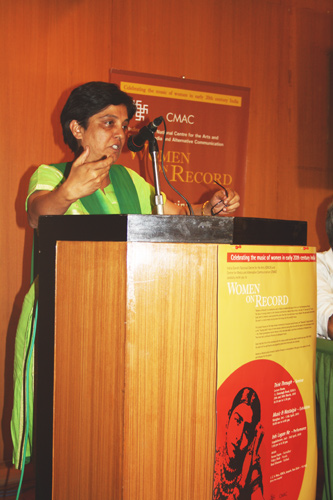
Urmila Bhirdikar
Professor, Delhi University
Urmila Bhirdikar has MA in English and Sociology, M Phil in English and has recently submitted her Ph D thesis entitled “ A Sociological Study of the Practice of Female Impersonation in Marathi Theatre in the 19th and Early 20th Century”, from the Department of Sociology, University of Delhi. She has taught English literature in H V Desai College Pune and in Mahindra United World College of India, Pune. She has trained in North Indian Classical vocal music and was invited to teach a course in Music and Modernity at JNU in 2006 and 2010.
Urmila Bhirdikar
Professor, Delhi University
Urmila Bhirdikar has MA in English and Sociology, M Phil in English and has recently submitted her Ph D thesis entitled “ A Sociological Study of the Practice of Female Impersonation in Marathi Theatre in the 19th and Early 20th Century”, from the Department of Sociology, University of Delhi. She has taught English literature in H V Desai College Pune and in Mahindra United World College of India, Pune. She has trained in North Indian Classical vocal music and was invited to teach a course in Music and Modernity at JNU in 2006 and 2010. Her research interests are in the fields of translation studies and practice, gender and sexuality, performance studies and narrative and literary theory.
Lisa Bjorkman
Lisa Björkman received her PhD in political science from the New School for Social Research in New York City in 2011. Her research explores the politics of water access in the Indian city of Mumbai, with a particular focus on the infrastructural effects of the city’s rapidly-changing built environment, and on emergent forms of political subjectivity and political possibility. She is presently based in Mumbai, where she is studying the role of political spectacle and ethno-religious discourse in municipal election campaigning.
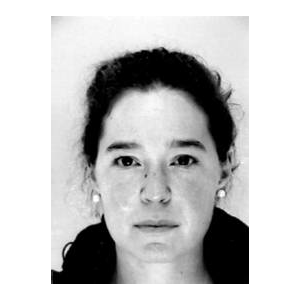
Lisa Bjorkman
Lisa Björkman received her PhD in political science from the New School for Social Research in New York City in 2011. Her research explores the politics of water access in the Indian city of Mumbai, with a particular focus on the infrastructural effects of the city’s rapidly-changing built environment, and on emergent forms of political subjectivity and political possibility. She is presently based in Mumbai, where she is studying the role of political spectacle and ethno-religious discourse in municipal election campaigning.
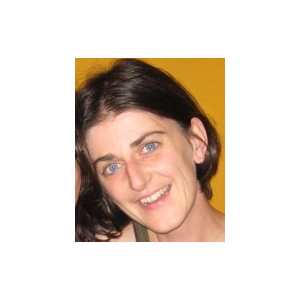
Sarah Bracke
Sarah Bracke is Assistant Professor of Sociology of Religion and Culture at the Faculty of Social Sciences at the KULeuven. She studied sociology at the Catholic University of Leuven and holds a PhD in Women’s Studies from Utrecht University (2004, Women Resisting Secularisation in an Age of Globalisation. Four Case-studies in a European Context), was a Marie Curie fellow at the University of California Santa Cruz and Utrecht University (2006-2008), and is currently a fellow at the Centre for Humanities at Utrecht University.
Sarah Bracke
Sarah Bracke is Assistant Professor of Sociology of Religion and Culture at the Faculty of Social Sciences at the KULeuven. She studied sociology at the Catholic University of Leuven and holds a PhD in Women’s Studies from Utrecht University (2004, Women Resisting Secularisation in an Age of Globalisation. Four Case-studies in a European Context), was a Marie Curie fellow at the University of California Santa Cruz and Utrecht University (2006-2008), and is currently a fellow at the Centre for Humanities at Utrecht University. Her work is situated at the intersection of feminist theory, critical theory and post-colonial theory; it explores questions of modernity, religion and secular – in particular transformations of the secular – in relation to notions of subjectivity, agency and gender.
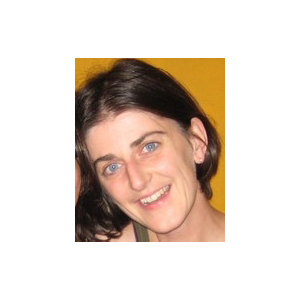
Judith Greenberg
Fellow, Trauma Studies, New York University
Judith Greenberg's research and teaching interests focus on questions of memory and trauma Studies, especially through a feminist lens. She holds a degree in comparative literature and her courses are informed by psychoanalysis, film Studies, Holocaust Studies, and her years teaching in French departments.
Judith Greenberg
New York University
Judith Greenberg's research and teaching interests focus on questions of memory and trauma Studies, especially through a feminist lens. She holds a degree in comparative literature and her courses are informed by psychoanalysis, film Studies, Holocaust Studies, and her years teaching in French departments. She is the editor of Trauma at Home: After 9/11 and author of a variety of chapters and articles related to trauma and its representations, including "Trauma and Transmission: Echoes of the Missing in Dora Bruder" (Studies in 20th and 21st Century Literature), "Surviving Charlotte Delbo's Auschwitz and After: How to Arrive and Depart," (in the MLA publication Teaching the Representation of the Holocaust), "Paths of Resistance: French Women Working from the Inside," (in Experience and Expression: Women, Nazis and the Holocaust) and "The Trauma of Echo and the Echo of Trauma," (in American Imago). She has also taught and written about Virginia Woolf, including publications in Woolf Studies Annual and Virginia Woolf: Turning the Centuries. Greenberg received Gallatin's Jewish Studies grant in 2007 for a manuscript on which she is currently working, Cypora's Shadow, which takes a cousin's memoir written in a Polish ghetto during the final days before the ghetto's liquidation and then explores the trans-generational transmission of trauma, particularly from mothers to daughters.
Veronica Gregg
Fellow, Africana and Puerto Rican/Latino Studies, Hunter College
Professor Gregg’s scholarly interests include Anglophone Caribbean literature, Caribbean women’s writing, Caribbean intellectual traditions, African American literature, and literature of the African Diaspora. Her publications include Jean Rhys’s Historical Imagination (1995) and Caribbean Women: An Anthology of Non-Fiction Writing (2005).
Her forthcoming book is "This Past that Waits for Me.” Anglophone Caribbean Women Writers and the Challenge of History.
Veronica Gregg
Department of Africana and Puerto Rican/Latino Studies, Hunter College
Professor Gregg’s scholarly interests include Anglophone Caribbean literature, Caribbean women’s writing, Caribbean intellectual traditions, African American literature, and literature of the African Diaspora. Her publications include Jean Rhys’s Historical Imagination (1995) and Caribbean Women: An Anthology of Non-Fiction Writing (2005).
Her forthcoming book is "This Past that Waits for Me.” Anglophone Caribbean Women Writers and the Challenge of History.
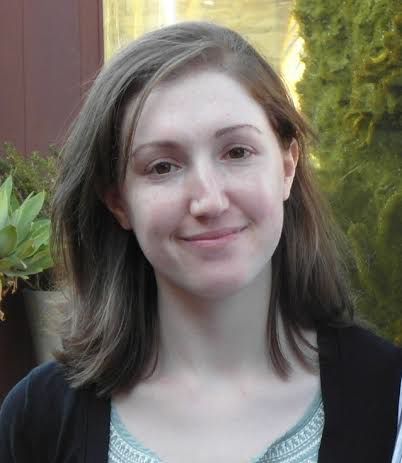
Alyssa Greene
PhD Student, Germanic Languages, Columbia University
Alyssa Greene is a Ph.D. student in the Department of Germanic Languages and the Institute for Comparative Literature and Society at Columbia University. She studies twentieth-century German and Austrian literature, with a particular emphasis on the post-Second World War era. Her research interests include memory discourses in the postwar period; migration (especially in the German-Turkish context); feminist and postcolonial criticism; the figure of the child and depictions of childhood in Cold War and post-Cold War narratives of authoritarian states.
Alyssa Greene
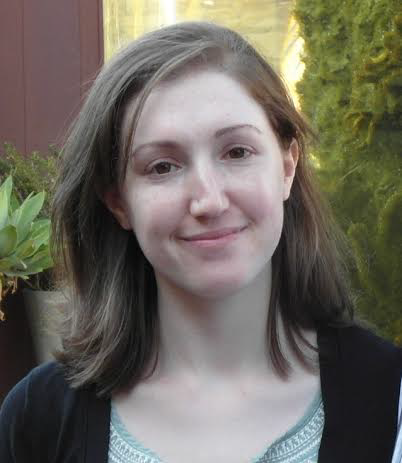
Alyssa Greene is a Ph.D. student in the Department of Germanic Languages and the Institute for Comparative Literature and Society at Columbia University. She studies twentieth-century German and Austrian literature, with a particular emphasis on the post-Second World War era. Her research interests include memory discourses in the postwar period; migration (especially in the German-Turkish context); feminist and postcolonial criticism; the figure of the child and depictions of childhood in Cold War and post-Cold War narratives of authoritarian states.
Working Group Affiliation