
Constanza Ambiado Cortes
Historian, Universidad de Chile
Historian, Universidad de Chile
Working Group Affiliation
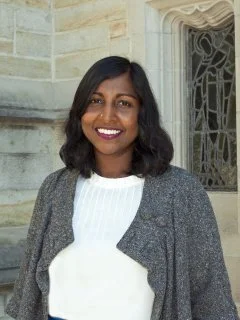
Anna Arabindan-Kesson
Fellow, Black Diasporic Art, Princeton University
I am an immigrant art historian, writer and curator. At Princeton University I hold the position of Assistant Professor of Black Diasporic Art with a joint appointment in the Departments of African American Studies and Art and Archaeology. I was born in Sri Lanka but later moved to Australia and New Zealand where I trained and worked as a Registered Nurse, a career that also took me to the United Kingdom and Ghana. After studying for a BA at the University of Western Australia I transitioned to a career in the humanities, completing my PhD in African American Studies and Art History at Yale University.
Anna Arabindan-Kesson
Assistant Professor of Black Diasporic Art, Princeton University

I am an immigrant art historian, writer and curator. At Princeton University I hold the position of Assistant Professor of Black Diasporic Art with a joint appointment in the Departments of African American Studies and Art and Archaeology. I was born in Sri Lanka but later moved to Australia and New Zealand where I trained and worked as a Registered Nurse, a career that also took me to the United Kingdom and Ghana. After studying for a BA at the University of Western Australia I transitioned to a career in the humanities, completing my PhD in African American Studies and Art History at Yale University. It has been an honor to receive several awards and fellowships for my work, including from Yale University, the Smithsonian American Art Museum, Winterthur Library, Museum and Gardens, the Paul Mellon Center for British Art and the American Council of Learned Societies. I have also been involved in several curatorial projects and I currently serve on three boards. I am an advisory council member for the Jamaican artist-run initiative NLS Kingston and 12 Gates Arts and serve on the Board of Trustees for the contemporary photography organization Philadelphia Photo Arts Center.
Working Group Affiliation

Margaret Araneo-Reddy
Fellow, Theater, Brooklyn College
Margaret Araneo-Reddy is a New York-based scholar and theatre artist. She is currently a doctoral candidate at the Graduate Center, City University of New York and an Instructor of Drama at New York University. Her current research focuses on the intersection of neuropsychology and popular performance in the late nineteenth and early twentieth centuries. Using a cultural model of disability, Margaret examines the ways the small forms of cabaret and vaudeville (in Paris and New York respectively) both represent and embody neurological diversity in performance.
Margaret Araneo-Reddy
Adjunct Assistant Professor of Theater, Brooklyn College
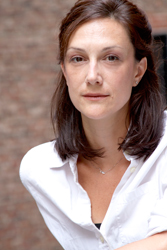
Margaret Araneo-Reddy is a New York-based scholar and theatre artist. She is currently a doctoral candidate at the Graduate Center, City University of New York and an Instructor of Drama at New York University. Her current research focuses on the intersection of neuropsychology and popular performance in the late nineteenth and early twentieth centuries. Using a cultural model of disability, Margaret examines the ways the small forms of cabaret and vaudeville (in Paris and New York respectively) both represent and embody neurological diversity in performance. Ultimately, this research will be included in a larger project on modernist performance and corporeal difference—one that looks to embodied experiences of disability and impairment to challenge and expand existing models of modernism and modernity.
Working Group Affiliation
Amin Younes Aoussar

Amin Younes Aoussar is a social and political anthropologist and with a special interest in migration and North African and West Asian studies. He finished his BA and MA in anthropology at the University of Copenhagen and has since worked on trafficking in persons issues at the United Nations Office on Drugs and Crime and as a research assistant at the Centre for Global Criminology at the University of Copenhagen before starting his PhD project at the Centre for Advanced Migration Studies at the University of Copenhagen.
His PhD project, titled ‘Peripatetic Precarity,’ investigates how unaccompanied migrant children in Morocco move from rural households to urban centres and into the EU, and how they survive. The project delivers a novel ethnographic analysis of the relation between possibility and exploitation for vulnerable migrant children and sheds light on the social and political dynamics and implications of irregular migration.
Working Group:
Urooj Arshad
Fellow, Human Rights, International Youth Health and Rights at Advocates for Youth
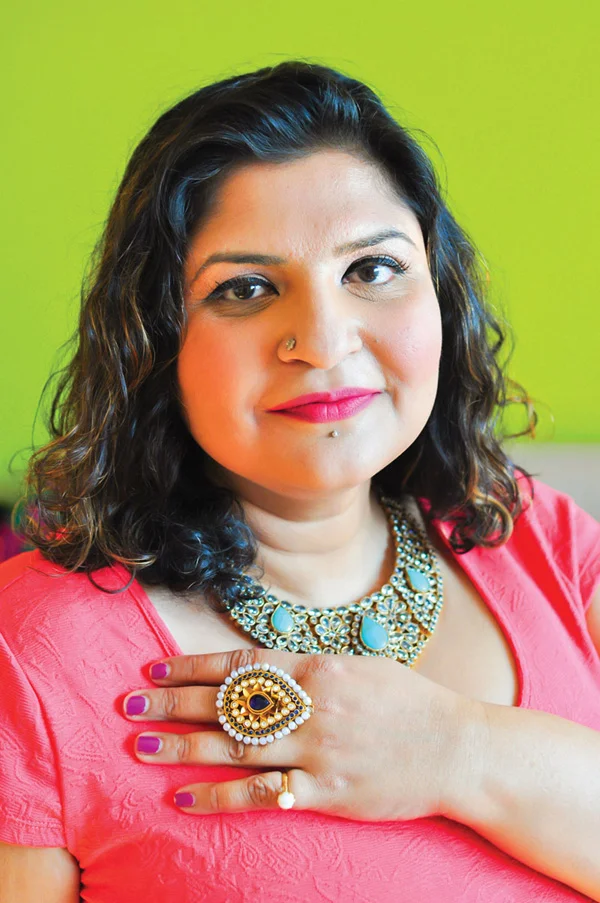
Urooj Arshad is the Associate director of International Youth Health and Rights at Advocates for Youth. She manages a project of the International Division that builds the capacity of youth-driven organizations in Africa, Asia, Latin America, and the Caribbean to empower young people.
Urooj Arshad
Associate director, International Youth Health and Rights at Advocates for Youth
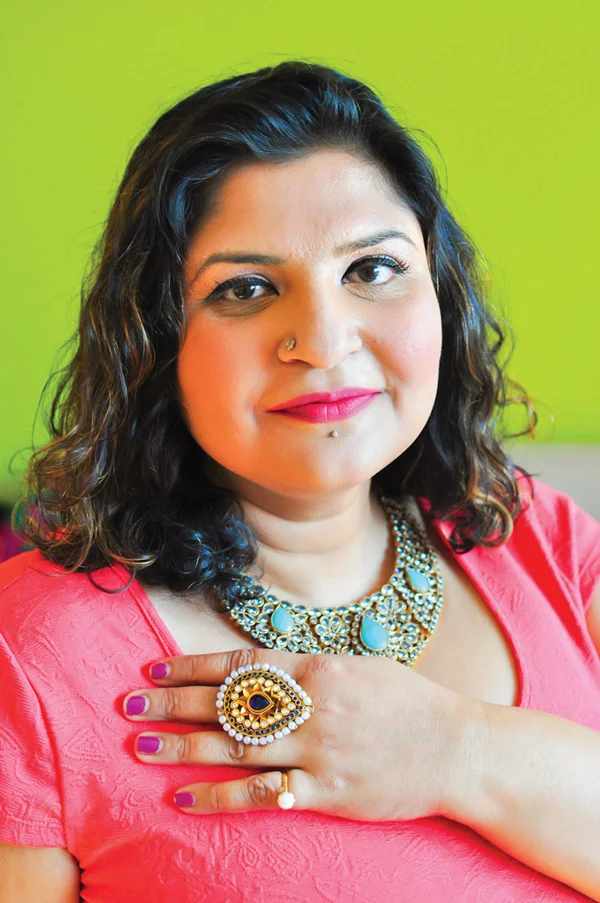
Urooj Arshad is the Associate director of International Youth Health and Rights at Advocates for Youth. She manages a project of the International Division that builds the capacity of youth-driven organizations in Africa, Asia, Latin America, and the Caribbean to empower young people as strong advocates within their own countries and at international forums on reproductive and sexual health and rights of youth, especially young women and LGBTQ youth. She has also designed a project that seeks to address the reproductive and sexual health needs of Muslim-identified youth. Previously, Urooj provided capacity-building services to community-based organizations working with youth of color around reproductive and sexual health. She has sixteen years of experience organizing within LGBTQ communities of color, especially addressing issues of Islamophobia, violence, sexism, transphobia, and ageism. Urooj is a steering committee member of the Muslim Alliance for Sexual and Gender Diversity (MASGD) which seeks to address the intersectional impact of Islamophobia, homophobia, and transphobia. She has been a member of the Center for American Progress’ Women’s Health Leadership Network and its Faith and Reproductive Justice Institute. Urooj has been a fellow with the American Muslim Civic Leadership Institute and a current member of the Kalamazoo College Arcus Center for Social Justice Leadership Global Advisory Board. She is the recipient of several awards including the National Queer Asian Pacific Islander Alliance’s 2012 NQAPIA Community Catalyst Award and the Young Women of Color HIV/AIDS Coalition’s We Speak award. Urooj was selected to serve on the U.S delegation to the 59th Session of the United Nations Commission on the Status of Women.
Working Group Affiliation

Adrienne Asch
Fellow, Epidemiology and Population Health and Family and Social Medicine, Albert Einstein College of Medicine
Dr. Adrienne Asch is the Edward and Robin Milstein Professor of Bioethics and Director of the Center for Ethics at Yeshiva University, as well as Professor of Epidemiology and Population Health and Family and Social Medicine at the Albert Einstein College of Medicine. Dr. Asch provides overall leadership to the Center for Ethics. In addition, she teaches courses throughout the university on bioethics and professional ethics. She publishes widely in books and peer-reviewed journals and presents at conferences throughout the world on issues related to her teaching and research.
Adrienne Asch
Edward and Robin Milstein Professor of Bioethics, Yeshiva University; Professor of Epidemiology and Population Health and Family and Social Medicine, Albert Einstein College of Medicine
Dr. Adrienne Asch is the Edward and Robin Milstein Professor of Bioethics and Director of the Center for Ethics at Yeshiva University, as well as Professor of Epidemiology and Population Health and Family and Social Medicine at the Albert Einstein College of Medicine. Dr. Asch provides overall leadership to the Center for Ethics. In addition, she teaches courses throughout the university on bioethics and professional ethics. She publishes widely in books and peer-reviewed journals and presents at conferences throughout the world on issues related to her teaching and research. Her scholarly work has focused on ethical issues in reproduction, death and dying, and justice for disadvantaged minorities in American society. She is editor with Erik Parens of Prenatal Testing and Disability Rights, published in 2000 by Georgetown University Press and a co-editor of The Double-Edged Helix: Social Implications of Genetics in a Diverse Society, published in 2002 by the Johns Hopkins University Press. Dr. Asch is a past board member of the American Society for Bioethics and Humanities, past president and board member of the Society of Disability Studies, a fellow of the Hastings center, and a member of the NY State Task Force on Life and the Law.


Athena Athanasiou
Fellow, Social Anthropology, Panteion University of Social and Political Sciences,
Athena Athanasiou teaches at the Department of Social Anthropology at Panteion University of Social and Political Sciences, in Athens, Greece. She has studied history, archaeology and philosophy at the Universities of Athens and Thessaloniki, Greece. She has received her Ph.D. in Social Anthropology from the New School for Social Research, in New York, and was a postdoctoral fellow at the Pembroke Center for Teaching and Research on Women, at Brown University, USA (2001-2002).
Athena Athanasiou
Panteion University of Social and Political Sciences, Greece
Athena Athanasiou teaches at the Department of Social Anthropology at Panteion University of Social and Political Sciences, in Athens, Greece. She has studied history, archaeology and philosophy at the Universities of Athens and Thessaloniki, Greece. She has received her Ph.D. in Social Anthropology from the New School for Social Research, in New York, and was a postdoctoral fellow at the Pembroke Center for Teaching and Research on Women, at Brown University, USA (2001-2002). Her publications include: Life at the Limit: Essays on Gender, Body and Biopolitics (in Greek, Ekkremes, 2007); Judith Butler – Conversations with Athena Athanasiou, Dispossession: The Performative in the Political (Polity Press, 2012); Feminist Theory and Cultural Critique (ed., in Greek, Nissos, 2006); Rewriting Difference: Luce Irigaray and ‘the Greeks’ (co-ed. with Elena Tzelepis, SUNY Press, 2010); Biosocialities: Perspectives on Medical Anthropology (ed., in Greek, Nissos, 2011). She has been research supervisor in the FP6 European consortium “Values, Equality and Difference in Liberal Democracies: Debates about Female Muslim Headscarves in Europe” (2006-09). Her research interests include gender, feminist and queer theory, biopolitics, technologies of the body, antimilitarist movements, affect, nationalism, and memory.

Hadeel Aziz
Fellow, Executive Director, Justice Center for Legal Aid in Jordan
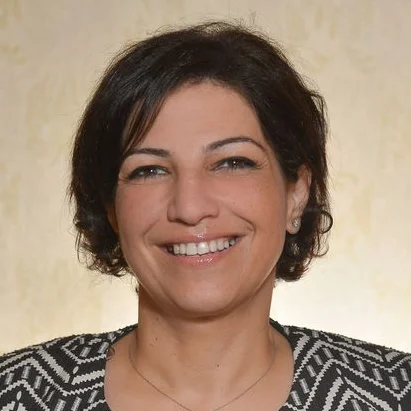
Hadeel Aziz is the Executive Director of the Justice Center for Legal Aid in Jordan. In 2008, Hadeel pioneered free legal assistance in Jordan when she left a multi-million dollar USAID project on the rule of law to co-found the Justice Center for Legal Aid (JCLA).
Hadeel Aziz
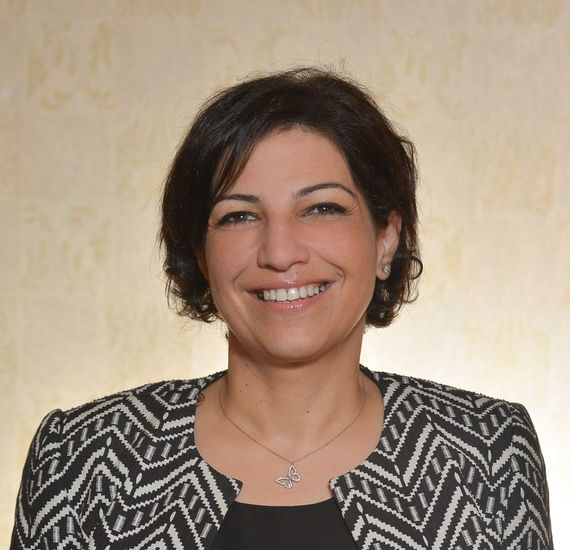
Hadeel Aziz is the Executive Director of the Justice Center for Legal Aid in Jordan. In 2008, Hadeel pioneered free legal assistance in Jordan when she left a multi-million dollar USAID project on the rule of law to co-found the Justice Center for Legal Aid (JCLA). Her organization provides legal services to the poor, underprivileged and vulnerable, a service previously available only to those who could afford it. JCLA is now the largest legal aid provider in the country. In her role, Hadeel is responsible for setting and monitoring strategy, overseeing advocacy and ensuring sustainability of the center. Hadeel is currently establishing a comprehensive country- wide pro bono attorney program and expects to partner with the Jordanian Bar association and the Ministry of Justice to spur a significant culture change. She has investigated public justice in the U.S., including advocacy, and women and children’s issues.
Working Group Affiliation
Delali Margaret Badasu
Fellow, Geography, University of Ghana
Delali Margaret Badasu is a Senior Research Fellow at the Regional Institute for Population Studies, University of Ghana. She specializes in demography, geography, and medical geography.
Delali Margaret Badasu
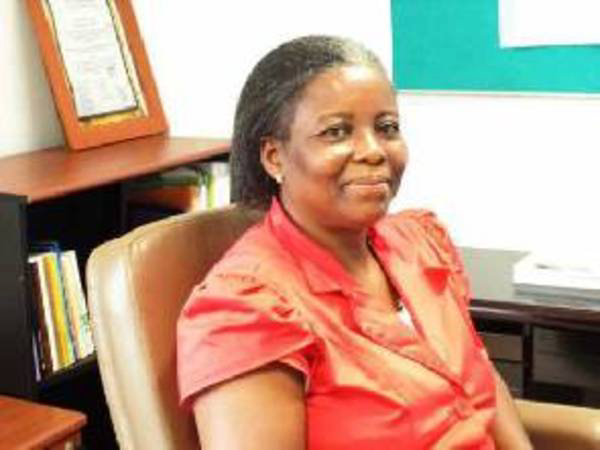
Delali Margaret Badasu is Senior Research Fellow, Regional Institute for Population Studies, University of Ghana. She holds a Ph.D in Geography and Resource Development, an M.A in Population Studies and a B.A. in Economics/Geography from the University of Ghana. She also holds an M.A. in Geography from the University of Alberta, Canada. She specializes in demography, geography, and medical geography. She has researched and published a number of works on population and development and health-related issues. Her current research focuses on socio-cultural dimensions of health, using mainly qualitative research methods. Her major works in this regard are on Ghana’s health policy and tertiary health care for children. She has just completed a study on care for children with chronic diseases at the Korle Bu Teaching Hospital. She has published on population and health related issues in the African Studies Research Review, Bulletin of the Ghana Geographical Association, Health Transition Review, and African Population Studies. She is a member of the Union for African Population Studies and the International Union for the Scientific Study of Population (IUSSP).
Working Group Affiliation
The Rural-Urban Interface: Gender and Poverty in Ghana and Kenya, Statistics and Stories

Kamal Badhey
Fellow, Urban Studies, University of London
Kamal Badhey (she/her) is a photographer, artist-educator and independent curriculum designer of South Asian ancestry with an MA in Photography and Urban Cultures from Goldsmiths, University of London, and an MS in Museum Education from Bank Street College. She is a member of the Urban Photographers Association and South Asian Women’s Creative Collective. Her work intersects with diaspora, using photography, oral storytelling, and family history to stitch together stories. It follows the Telugu saying, ’Katha kanchiki, manam intiki’, ‘The story goes far far away, and now we are back in our homes’. Her project Portals and Passageways, exhibited internationally traces her jeweler ancestor and great great grandfather Annam Rathnaiah from unknown origins to a former British colonial bazaar in Secunderabad, India. Kamal brings two decades of experience collaborating with youth and adults in public schools, transitional housing, community centers, civic engagement, and universities. She was a Lewis Hine Documentary Fellow and a Claremont Documentary Fellow.
Kamal Badhey

Kamal Badhey (she/her) is a photographer, artist-educator and independent curriculum designer of South Asian ancestry with an MA in Photography and Urban Cultures from Goldsmiths, University of London, and an MS in Museum Education from Bank Street College. She is a member of the Urban Photographers Association and South Asian Women’s Creative Collective. Her work intersects with diaspora, using photography, oral storytelling, and family history to stitch together stories. It follows the Telugu saying, ’Katha kanchiki, manam intiki’, ‘The story goes far far away, and now we are back in our homes’. Her project Portals and Passageways, exhibited internationally traces her jeweler ancestor and great great grandfather Annam Rathnaiah from unknown origins to a former British colonial bazaar in Secunderabad, India. Kamal brings two decades of experience collaborating with youth and adults in public schools, transitional housing, community centers, civic engagement, and universities. She was a Lewis Hine Documentary Fellow and a Claremont Documentary Fellow.
Working Group Affiliations
Zip Code Memory Project: Practices of Justice and Repair, Social Engagement Project

Benjamin Conisbee Baer
Fellow, Comparative Literature, Princeton University
Benjamin Conisbee Baer is an Associate Professor of Comparative Literature, Princeton University. His research interests include: Marxism, deconstruction, postcolonial literature and theory, translation problems, and subaltern predicaments.
Benjamin Conisbee Baer
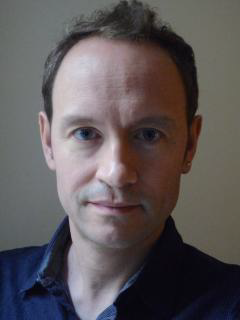
Benjamin Conisbee Baer's research interests include: Marxism, deconstruction, postcolonial literature and theory, translation problems, subaltern predicaments. His teaching, research, and writing focus on problems of representation, language, idiom, and translation; the politics of culture and cultural politics; historical and contemporary modes and situations of subalternity; differentiated patterns of modern imperialism and colonialism; Marxism in an international framework. The parts of the world he works on are generally pockets of South Asia, Europe, the Caribbean and Africa; mainly focusing on modern and contemporary conjunctures. He also teaches Marxist theory, deconstruction, and postcolonial theory. Baer's current book is a series of overlapping case studies that takes on board the complex cultural politics of indigeneity and vanguardism in the interwar period. It examines literary and political problems in instances as diverse as the Harlem Renaissance, the Mexican Revolution, the Gandhian uprisings in India, the fringes of fascism in Europe, and the colonial French Caribbean. New research is on the history of the working class Internationals and efforts toward epistemic change outside Europe. Ongoing group interdisciplinary projects include: Radiating Globality (prehistories of so-called globalization in Senegambia and French India); Rethinking South Asian Studies/Himalayan Regionalism (Kolkata-Kathmandu-Kunming); academic consultancy on Documenting the Mother Tongues of Africa (large consortial multimedia/digital project).
Working Group Affiliation
The Rural-Urban Interface: Gender and Poverty in Ghana and Kenya, Statistics and Stories
Faime Alpagu
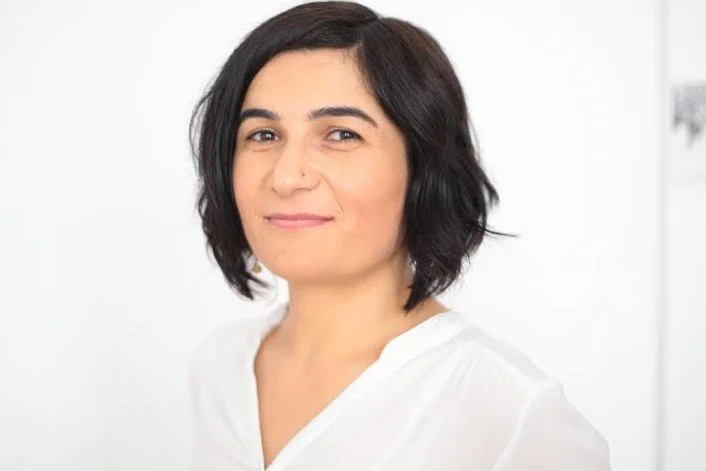
Faime Alpagu is a postdoctoral researcher funded by the MAX KADE Foundation in New York City. She holds a Ph.D. in sociology from the University of Vienna. Her dissertation project entitled Migration Narratives Juxtaposed: A Sociological Analysis of Biographies, Photos and (Audio) Letters of “Guest Workers” from Turkey living in Austria was funded by a doctoral scholarship from the Austrian Academy of Sciences. Faime Alpagu received several awards such as the Research Award for Research on Migration and Integration 2021 by the Austrian Integration Fund (ÖIF) and the Dissertation Award for Research on Migration from the Austrian Academy of Sciences. Her research has been further supported by the Institute for Human Sciences Vienna (IWM), the IFK Internationales Forschungszentrum Kulturwissenschaften Wien and vorarlberg museum.
Her current research focuses on the intersections between migration/refugee studies, audio-visual studies, biographical research, and memory, applying an interpretative social research approach. Her current research focuses on the intersections between migration/refugee studies, audio-visual studies, archive studies, biographical research, and memory, applying an interpretative social research approach.
A. George Bajalia
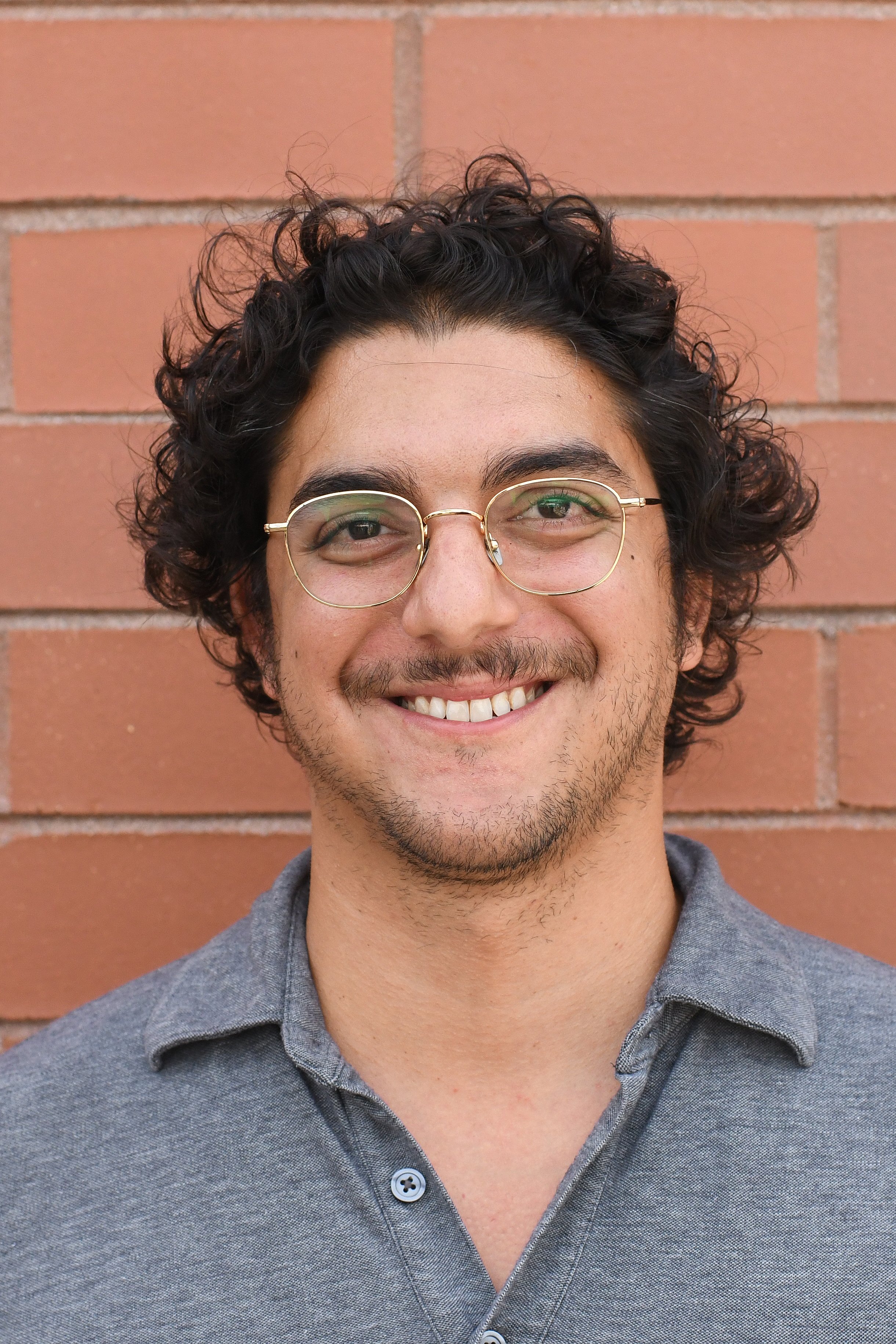
A. George Bajalia is Assistant Professor of Anthropology at Wesleyan University. His work is concerned with borderlands, primarily in the Western Mediterranean region.
A. George Bajalia
A. George Bajalia is Assistant Professor of Anthropology at Wesleyan University. His work is concerned with borderlands, primarily in the Western Mediterranean region. His current book project, Waiting at the Border: Language, Labor, and Infrastructure in the Strait of Gibraltar, dwells on the political, social, and cultural forms that emerge during time spent waiting among cross-border workers and West and Central African immigrants living and working around the Moroccan-Spanish borderlands.
His work argues that lives lived while waiting, whether in the city of Tangier among im/migrants or in the commodity warehouses that abut the land border between the Spanish enclave of Ceuta and the Moroccan coast, form consequential habits that sediment into social life and become fields for potential political claims grounded in communal sentiments. As both an intellectual and political project, he is interested in exploring the consequences of these communal sentiments across the many borders of the Strait of Gibraltar and how these sentiments cannot be solely contained within the categories typically associated with border-crossing, categories such as “migrant,” “refugee,” and “asylum-seeker.”
Bajalia has held research fellowships from the Mellon Foundation-CAORC, Fulbright-Hays, Fulbright-IIE, and the American Institute for Maghrib Studies. He is the co-founder and co-director of the Youmein Festival, an annual 48-hour contemporary art and performance festival and residency in Tangier, Morocco. Bajalia received his Ph.D. from the Department of Anthropology at Columbia University.
Working Group: Refugee Cities
Michael J. Balick
Michael J. Balick (New York Botanical Garden and Columbia University) Vice President for Botanical Science, Director and Philecology Senior Curator Institute of Economic Botany, The New York Botanical Garden. For more than four decades, Dr. Balick has studied the relationship between plants and people, working with traditional cultures in tropical, subtropical, and desert environments. He is a specialist in the field known as ethnobotany, working with indigenous cultures in many parts of the world to document their plant knowledge, understand the environmental effects of their traditional management systems, and develop sustainable utilization systems-while ensuring that the benefits of such work are always shared with local communities. Dr. Balick has also conducted research in New York City, studying traditional healing practices in ethnic communities of the urban environment. He is the author or editor of 30 books and monographs.

Mia Bay
Fellow, Race and Ethnicity, Rutgers University
Mia Bay is a historian who teaches at Rutgers University, where she also serves as the Associate Director of the Rutgers Center for Race and Ethnicity. The author of a number of works, including The White Image in the Black Mind: African American Ideas about White People 1830-1925 (2000), she has recently completed a new book entitled To Trouble the Waters Freely: The Life and Times of Ida B. Wells (2009).
Mia Bay
Associate Director of the Rutgers Center for Race and Ethnicity, Rutgers University

Mia Bay is a historian who teaches at Rutgers University, where she also serves as the Associate Director of the Rutgers Center for Race and Ethnicity. The author of a number of works, including The White Image in the Black Mind: African American Ideas about White People 1830-1925 (2000), she has recently completed a new book entitled To Trouble the Waters Freely: The Life and Times of Ida B. Wells (2009).
Working Group Affiliation
Toward an Intellectual History of Black Women, Project Director
Asef Bayat
Fellow, Global and Transnational Studies, University of Illinois
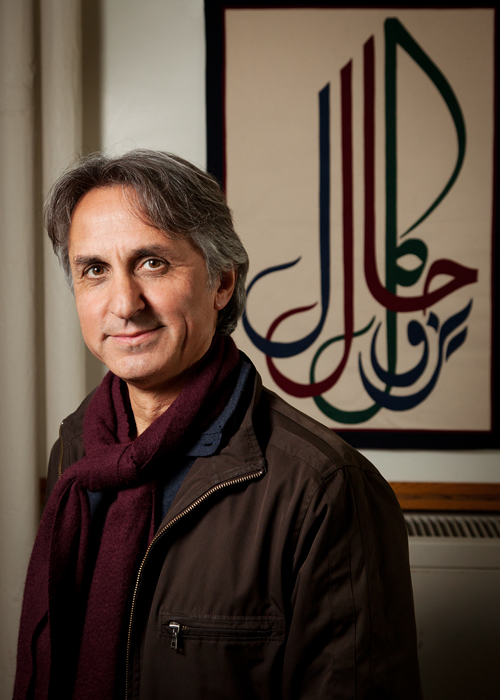
Asef Bayat, the Catherine and Bruce Bastian Professor of Global and Transnational Studies, teaches Sociology and Middle Eastern studies at the University of Illinois, Urbana-Champaign. He was the Academic Director of the International Institute for the Study of Islam in the Modern World (ISIM) and ISIM Chair of Islam and the Modern World at Leiden University from 2003 until 2009. He writes on Egypt and Iran, and has published widely on issues of political sociology, social movements, urban space and politics, religious politics, contemporary Islam, and the Muslim Middle East. His latest book is: Life as Politics: How Ordinary People Change the Middle East (2013, 2nd edition).
Asef Bayat
Catherine and Bruce Bastian Professor of Global and Transnational Studies, University of Illinois, Urbana-Champaign
Asef Bayat, the Catherine and Bruce Bastian Professor of Global and Transnational Studies, teaches Sociology and Middle Eastern studies at the University of Illinois, Urbana-Champaign. He was the Academic Director of the International Institute for the Study of Islam in the Modern World (ISIM) and ISIM Chair of Islam and the Modern World at Leiden University from 2003 until 2009. He writes on Egypt and Iran, and has published widely on issues of political sociology, social movements, urban space and politics, religious politics, contemporary Islam, and the Muslim Middle East. His latest book is: Life as Politics: How Ordinary People Change the Middle East (2013, 2nd edition).
Jonathan Beller
Fellow, English and Humanities, Pratt Institute
Jonathan Beller is Professor of English and Humanities and Critical and Visual Studies, Pratt Institute. He is the author of The Cinematic Mode of Production: Towards A Political Economy of the Society of the Spectacle, (Lebanon: Dartmouth College/University Press of New England, 2006) and Acquiring Eyes: Philippine Visuality, Nationalist Struggle and The World Media-System, (Manila: Ateneo de Manila University Press, 2006).
Jonathan Beller
Associate Professor of English and Humanities, Pratt Institute
Jonathan Beller is Professor of English and Humanities and Critical and Visual Studies, Pratt Institute. He is the author of The Cinematic Mode of Production: Towards A Political Economy of the Society of the Spectacle, (Lebanon: Dartmouth College/University Press of New England, 2006) and Acquiring Eyes: Philippine Visuality, Nationalist Struggle and The World Media-System, (Manila: Ateneo de Manila University Press, 2006). He haswritten numerous articles including “21st Century Fascism, ‘Political’ Killing, and the Crisis of Representation,” Kontra-Gahum: Academics Against Political Killings, ed., Sarah Raymundo, Manila: Ibon Publications, 2006, “Kino-I, Kino World: Notes on the Cinematic Mode of Production,” in The Visual Culture Reader, Second Edition, ed. Nicholas Mirzoeff, Routledge, 2002 and “Third Cinema in a Global Frame: Curacha, Yahoo!, andIshmael Bernal’s Manila By Night,” Positions9:2 Fall 2001, 331-368. He has also written the entries for “Third Cinema and Visual Culture” in The New Dictionary of the History of Ideas, New York: Scribner’s Sons, 2005 and a variety of occasional pieces including film reviews for radio, newspaper and the web. His current book project is entitled, The Tortured Signifier: Signs of the State of Exception. For his work on Philippine Visual Culture he has been the recipient of a Fulbright Senior Scholar Award and a Getty Grant. Recent grants and honors include Mellon Research Stipends and Travel Awards in 2005, 2006 and 2007 and the selection of his essay “Paying Attention,” published in Cabinet #24 (New York: Distributed Art Publishers, 2007), for Documenta XII. He has taught at Barnard College, Pratt Institute, University of California, Santa Cruz, San Francisco State University, and the University of the Philippines.
James Berger
Fellow, American Studies and English, Yale University
James Berger is Senior Lecturer in American Studies and English at Yale University. He is author of After the End: Representations of Post-Apocalypse and editor of Helen Keller's The Story of My Life: The Restored Edition. He is currently completing The Disarticulate: Language, Impairment, and the Narratives of Modernity, to be published by New York University Press.
James Berger
Senior Lecturer in American Studies and English, Yale University
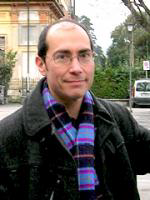
James Berger is Senior Lecturer in American Studies and English at Yale University. He is author of After the End: Representations of Post-Apocalypse and editor of Helen Keller's The Story of My Life: The Restored Edition. He is currently completing The Disarticulate: Language, Impairment, and the Narratives of Modernity, to be published by New York University Press.
Working Group Affiliation
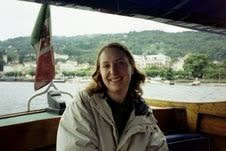
Sara Bergstresser
Visiting Lecturer, Anthropology, Boston University
Sara Bergstresser is a medical and cultural anthropologist, and she is currently a Visiting Lecturer in Anthropology at Boston University. Her research addresses the intersection of health and society, including mental health policy and stigma, global bioethics, and religion and health. She holds a PhD in Anthropology from Brown University and an MPH from Harvard University. She is also working on an M.S. in Bioethics at Columbia on a part-time basis.
Sara Bergstresser
Visiting Lecturer, Anthropology, Boston University
Sara Bergstresser is a medical and cultural anthropologist, and she is currently a Visiting Lecturer in Anthropology at Boston University. Her research addresses the intersection of health and society, including mental health policy and stigma, global bioethics, and religion and health. She holds a PhD in Anthropology from Brown University and an MPH from Harvard University. She is also working on an M.S. in Bioethics at Columbia on a part-time basis.

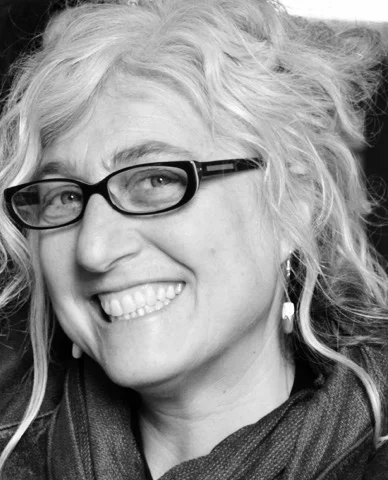
Chris Bobel
Associate Professor of Women’s, Gender & Sexuality Studies, University of Massachusetts Boston
Chris Bobel is Associate Professor of Women’s, Gender & Sexuality Studies at the University of Massachusetts Boston where she teaches courses on Gender & the Body, Feminist Theory, Feminist Research Methods, Women in US Social Movements and Feminist Activism.
Chris Bobel
Associate Professor of Women’s, Gender & Sexuality Studies, University of Massachusetts Boston
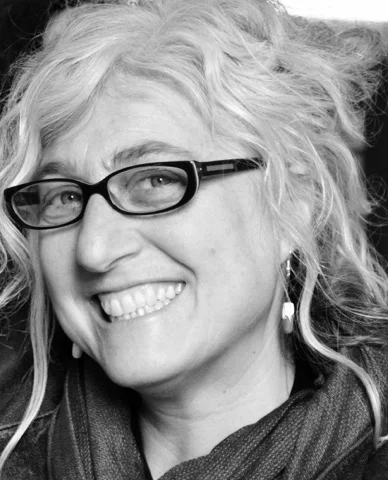
Chris Bobel is Associate Professor of Women’s, Gender & Sexuality Studies at the University of Massachusetts Boston where she teaches courses on Gender & the Body, Feminist Theory, Feminist Research Methods, Women in US Social Movements and Feminist Activism. Her scholarship lies at the intersection of social movements, gender, health and embodiment, sites where feminist thinking becomes feminist doing.
Since 2003, Chris has been engaged in the study of efforts to advance menstrual health as a matter of human rights and reproductive justice. Her publications include New Blood: Third Wave Feminism and the Politics of Menstruation and The Managed Body: Developing Girls and Menstrual Health in the Global South (forthcoming in late 2018). She is also co-editor (with Samantha Kwan) of Body Battlegrounds: Transgressions, Tensions, Transformations (forthcoming in 2019) and Embodied Resistance: Challenging the Norms, Breaking the Rules. She is also at work co-editing the first ever Handbook of Critical Menstruation Studies.
To see a more complete listing of Chris’s work and media mentions, go to https://works.bepress.com/chris_bobel/
Working Group Affiliation