
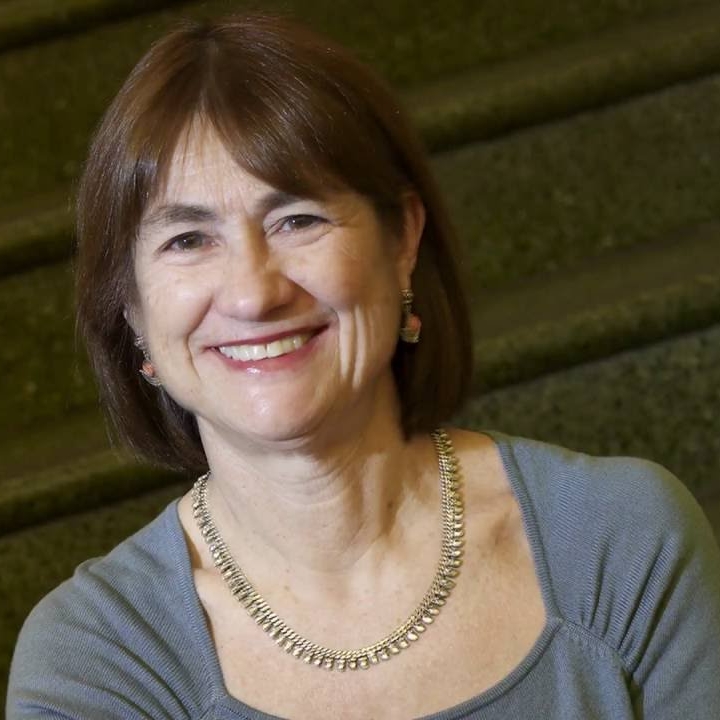
Sally Engle Merry
Fellow, Anthropology, New York University
Sally Engle Merry's recent books include Colonizing Hawai‘i (Princeton, 2000), Human Rights and Gender Violence (Chicago, 2006), Gender Violence: A Cultural Perspective (Blackwell, 2009) and The Practice of Human Rights, (co-edited with Mark Goodale; Cambridge, 2007). Her most recent book, The Seductions of Quantification: Measuring Human Rights, Gender Violence, and Sex Trafficking (Chicago: University of Chicago Press, 2016) examines indicators as a technology of knowledge used for human rights monitoring and global governance. She received the Hurst Prize for Colonizing Hawai‘i in 2002, the Kalven Prize for scholarly contributions to sociolegal scholarship in 2007, and theJ.I. Staley Prize for Human Rights and Gender Violence in 2010.
Sally Engle Merry
Silver Professor of Anthropology, New York University

Sally Engle Merry is Silver Professor of Anthropology at New York University. She is also a Faculty Director of the Center for Human Rights and Global Justice at the New York University School of Law, and past president of the American Ethnological Society. Her recent books include Colonizing Hawai‘i (Princeton, 2000), Human Rights and Gender Violence (Chicago, 2006), Gender Violence: A Cultural Perspective (Blackwell, 2009) and The Practice of Human Rights, (co-edited with Mark Goodale; Cambridge, 2007). Her most recent book, The Seductions of Quantification: Measuring Human Rights, Gender Violence, and Sex Trafficking (Chicago: University of Chicago Press, 2016) examines indicators as a technology of knowledge used for human rights monitoring and global governance. She has co-edited two books on quantification, The Quiet Power of Indicators, with Kevin Davis and Benedict Kingsbury (Cambridge University Press, 2015) and A World of Indicators, with Richard Rottenburg, Song-Joon Park, and Johanna Mugler (Cambridge University Press 2015), 2015. She is the author or editor of fifteen books and special journal issues. She received the Hurst Prize for Colonizing Hawai‘i in 2002, the Kalven Prize for scholarly contributions to sociolegal scholarship in 2007, and theJ.I. Staley Prize for Human Rights and Gender Violence in 2010. In 2013 she received an honorary degree from McGill School of Law and was the focus of an Author Colloquium at the Center for Interdisciplinary Research (ZIF) at the University of Bielefeld, Germany. She is an Honorary Professor at Australian National University.
Working Group Affiliations
Ruth Milkman
Fellow, Sociology, CUNY Graduate Center
Ruth Milkman is a sociologist of labor and labor movements who has written on a variety of topics involving work and organized labor in the United States, past and present. Her early research focused on the impact on U.S. women workers of economic crisis and war in the 1930s and 1940s. She went on to study the restructuring of the U.S. automobile industry and its impact on workers and their union in the 1980s and 1990s; in that period she also analyzed the labor practices of Japanese-owned factories in California. More recently she has written extensively about low-wage immigrant workers, analyzing their employment conditions as well as the dynamics of immigrant labor organizing. She co-authored a 2013 study of California’s paid family leave program, focusing on its impact on employers and workers.
Ruth Milkman
Sociology, CUNY Graduate Center
Ruth Milkman is a sociologist of labor and labor movements who has written on a variety of topics involving work and organized labor in the United States, past and present. Her early research focused on the impact on U.S. women workers of economic crisis and war in the 1930s and 1940s. She went on to study the restructuring of the U.S. automobile industry and its impact on workers and their union in the 1980s and 1990s; in that period she also analyzed the labor practices of Japanese-owned factories in California. More recently she has written extensively about low-wage immigrant workers, analyzing their employment conditions as well as the dynamics of immigrant labor organizing. She co-authored a 2013 study of California’s paid family leave program, focusing on its impact on employers and workers.
She was elected as the 2016 President of the American Sociological Association, where her presidential address focused on Millennial-generation social movements. She has also conducted extensive policy-oriented research on such topics as wage theft, unionization trends, paid sick leave, and the aging workforce. After 21 years as a sociology professor at UCLA, where she directed the Institute for Research on Labor and Employment from 2001 to 2008, she returned to New York City in 2010. She is currently Distinguished Professor of Sociology at the CUNY Graduate Center and at the Joseph S. Murphy Institute for Worker Education and Labor Studies, where she teaches Labor Studies and also serves as Research Director.
Working Group Affiliation

Nancy K. Miller
Fellow, English, French and Comparative Literature, Graduate Center, CUNY
Nancy K. Miller is currently working on a project about the experience of girls and young women in the American 1950s, about private life and middlebrow culture; also a project on the nature of extreme experience and its recording in testimony and other documents. Continuing interests include questions of autobiography and memoir, feminist theory, women's writing, trauma and testimony.
Nancy K. Miller
Professor of English, French and Comparative Literature, Graduate Center, CUNY
Nancy K. Miller is currently working on a project about the experience of girls and young women in the American 1950s, about private life and middlebrow culture; also a project on the nature of extreme experience and its recording in testimony and other documents. Continuing interests include questions of autobiography and memoir, feminist theory, women's writing, trauma and testimony. Her publications include: Getting Personal: Feminist Occasions and Other Autobiographical Acts (New York and London: Routledge, 1991); French Dressing: Women, Men and Ancien Régime Fiction (New York and London: Routledge, 1995); and Bequest and Betrayal: Memoirs of a Parent's Death (New York: Oxford University Press, 1996, paperback edition, Bloomington: Indiana University Press, 2000).


Mara Mills
Fellow, Media, Culture, and Communication, New York University
Mara Mills is Assistant Professor of Media, Culture, and Communication at New York University. She received her Ph.D.
Mara Mills
Assistant Professor of Media, Culture, and Communication, New York University
Mara Mills is Assistant Professor of Media, Culture, and Communication at New York University. She received her Ph.D. in History of Science from Harvard. She is completing a book (On the Phone: Deafness and Communication Engineering) on the significance of phonetics and deaf education to the emergence of “communication engineering” in early twentieth-century telephony; this concept and set of practices later gave rise to information theory, digital coding, and cybernetics. Articles from this project can be found in Social Text, differences, and The Oxford Handbook of Sound Studies. Her second book project, Print Disability and New Reading Formats, examines the reformatting of print over the course of the past century by blind and other print disabled readers, with a focus on Talking Books and electronic reading machines. Mills is the co-editor of a recent issue of Grey Room on the “audiovisual” and the recipient of the 2010 Irving K. Zola Award for Emerging Scholars in Disability Studies.


Susannah B. Mintz
Fellow, English, Skidmore College
Susannah B. Mintz is associate professor of English at Skidmore College in Saratoga Springs, NY. She is the author of Threshold Poetics: Milton and Intersubjectivity (2003) and Unruly Bodies: Life Writing by Women with Disabilities (2007), and co-editor with Lisa Johnson of On the Literary Nonfiction of Nancy Mairs: A Critical Anthology (2011). Her current project is entitled Hurt and Pain: A Literary History.
Susannah B. Mintz
Associate Professor of English, Skidmore College
Susannah B. Mintz is associate professor of English at Skidmore College in Saratoga Springs, NY. She is the author of Threshold Poetics: Milton and Intersubjectivity (2003) and Unruly Bodies: Life Writing by Women with Disabilities (2007), and co-editor with Lisa Johnson of On the Literary Nonfiction of Nancy Mairs: A Critical Anthology (2011). Her current project is entitled Hurt and Pain: A Literary History. She has published and presented numerous papers on the intersections of disability representation and life writing, and has served on the executive committee of the MLA Division on Disability Studies for the past five years.

Ziba Mir-Hosseini
Fellow, Anthropology, SOAS, University of London (the School of Oriental and African Studies)
Ziba Mir-Hosseini is a legal anthropologist, specializing in Islamic law, gender and development. She has a BA in Sociology from Tehran University (1974) and a PhD in Social Anthropology from University of Cambridge (1980).
Ziba Mir-Hosseini
SOAS, University of London (the School of Oriental and African Studies)
Ziba Mir-Hosseini is a legal anthropologist, specializing in Islamic law, gender and development. She has a BA in Sociology from Tehran University (1974) and a PhD in Social Anthropology from University of Cambridge (1980). A Professorial Research Associate at the Centre for Middle Eastern and Islamic Law, University of London, she has held numerous research fellowships and visiting professorships, including Fellow of the Wissenschaftskolleg zu Berlin (2004-5), and Hauser Global Law Visiting Professor at New York University (2002-8). She is a founding member of the Musawah Global Movement for Equality and Justice in the Muslim Family.
Her publications include Marriage on Trial: A Study of Islamic Family Law in Iran and Morocco (I. B. Tauris, 1993, 2002), Islam and Gender: The Religious Debate in Contemporary Iran (Princeton University Press, 1999), Islam and Democracy in Iran: Eshkevari and the Quest for Reform (with Richard Tapper; I. B. Tauris, 2006), Control and Sexuality: the Revival of Zina Laws in Muslim Contexts (with Vanja Hamzic; Women Living Under Muslim Laws, 2010), and Gender and Equality in Muslim Family Law: Justice and Ethics in the Islamic Legal Tradition, edited with Lena Larsen, Christian Moe and Kari Vogt (London: I. B. Tauris forthcoming April 2013). She has also directed (with Kim Longinotto) two award-winning feature-length documentary films on contemporary issues in Iran: Divorce Iranian Style (1998) and Runaway (2001).

Nicholas Mirzoeff
Fellow, Art and Art Education, New York University
Nicholas Mirzoeff is a visual culture theorist and professor in the Department of Media, Culture and Communication at New York University. He is best known for his work developing the field of visual culture and for his many books and his widely used textbook on the subject.
Nicholas Mirzoeff
Professor of Art and Art Education, NYU
My research is in the general field of visual culture. In the past few years, I have concentrated in four areas
a decolonial genealogy of "visuality," a key term of art for the field, which owes its existence to the practice of Naopleonic-era generals in visualizing a battlefield that they could not see. Visuality imagined the social as war and was opposed to all emancipations and liberations. Visual culture is, therefore, against visuality. My book The Right to Look: A Counterhistory of Visuality is forthcoming with Duke University Press in 2011.
I work on texts for general academic use in the field, such as An Introduction to Visual Culture (2nd ed. 2009) and The Visual Culture Reader (3rd ed. forthcoming 2012).
I work extensively with contemporary artists, most recently with Carl Pope and Jeremy Deller.
I am a contributing editor for the online project Media Commons and a co PI with the Melllon-funded Alliance for Networking Visual Culture, which is developing "Scalar," a multi-media born-digital authoring software,
I am currently working on a project on the visual culture of climate change in conjunction with the not-for-profit Islands First
Selected Presentations
Enfin, on se regarde: for the right to look
Keynote for Visual Studies Colloque, Paris, Jan. 6, 2011.
Links
Degrees Held
BA Honours Oxford University 1980
Modern HistoryPhD University of Warwick 1990
Art History and History
Awards
2011 : Shpilman Grant in Photography and Philosophy
2010 : NEH Summer Fellow "Broadening the Digital Humanities" University of California Humanities Research Institute/University of Southern California IML
2009 : Co P.I. for Mellon grant "Networking Visual Culture"
2006 : Steinhardt Challenge Grant
2005 : Visiting Canterbury Fellow, University of Canterbury, New Zealand
2002 : Visiting Fellow, Sterling and Francine Clark Art Institute, Williamstown MA
2002 : Leverhulme Visiting Professor, University of Nottingham, UK
2001 : Visiting Fellow, Humanities Research Center, Australian National University, Canberra, Australia
2001 : William Andrews Clark Memorial Library, UCLA, Visting Fellow
1996 : Postdoctoral Fellow, Humanities Institute, Stony Brook University
1994 : Huntington Library, Pasadena, CA, Visiting Fellow
1993 : Yale Center for British Art, Visiting Fellow
1992 : J. Paul Getty Center, Postdoctoral Fellow in the History of Art and the Humanities
1991 : NEH Postdoctoral Fellow, UCLA Center for 17th and 18th Century Studies
Selected Publications
The Right to Look: A Counter-History of Visuality (forthcoming, Duke University Press)
An Introduction to Visual Culture (London and New York: Routledge, 1999) translations into Italian, Spanish, Korean and Chinese Second fully revised edition, 2009
Seinfeld: A Critical Study of the Series (British Film Institute, 2007)
Watching Babylon: the War in Iraq and Global Visual Culture (Routledge, 2005) translated into Italian as Guardare la Guerra (Rome: Meltemi, 2005)
(as editor) Diaspora and Visual Culture: Representing Africans and Jews (London and New York: Routledge, 2001)
(as editor) The Visual Culture Reader (London and New York: Routledge, 1998) Second fully revised edition, 2002.
Bodyscape: Art, Modernity and the Ideal Figure (London and New York: 1995) translated into Korean
Silent Poetry: deafness, sign and visual culture in modern France (Princeton and London: Princeton University Press, 1995)
Courses
MCC-UE 1410 - Global Visual Cultures
MCC-UE 1352 - Empire, Revolution and Media
MCC-GE 2405 - Communism and the Cold War: Legacies for Visual and Cultural Studies
MCC-GE 2420 - Visual Culture Methods
MCC-GE 2404 - Modernity and Climate Change
Editorial Boards
2007-- Journal of Photography and Culture Editorial Board Member
2001-Present: The Journal of Visual Culture, Editorial Board Member
2002-Present: Situation Analysis, Editorial Board Member
2004-2007: British Film Institute Television Classics Editorial Board Member
Research Interests
Visual Culture
Cultural Studies
Climate Chnage
Contemporary Art and New Media
Disability Studies

Jennifer Mittelstadt
Fellow, History, Rutgers University
I am a political historian of the United States writing about women and gender, race, and the state.
Jennifer Mittelstadt
Associate Professor

I am a political historian of the United States writing about women and gender, race, and the state. I specialize in the twentieth century, especially post-World War II, and my interests in politics are quite broad. They include social policy and social politics; liberalism; second-wave feminism; and most recently, the military and militarization. I have published articles and opinion pieces in the Journal of Policy History, International Labor and Working Class History, the Journal of Women’s History, Social Politics, the New York Times, and the Los Angeles Times, among others. I am currently writing a book on the United States Army, social welfare, and politics in the late twentieth century.
Working Group Affiliation
Hlonipha Mokoena
Fellow, Anthropology, Wits Institute for Social and Economic Research, University of the Witwatersrand, Johannesburg
Hlonipha Mokoena's main area of interest is South African intellectual history. One of the defining characteristics of South Africa is that it is a society that ostensibly lacks a collective history or shared philosophical and political traditions. The main objective of Professor Mokoena's teaching is to introduce students to the contested histories of South African political ideas and traditions. Some of the themes and topics examined in her courses include: othering discourses and the emergence of a Cape discourse; slavery, free labour and the history of paternalism; frontier violence and resistance to conquest; and the emergence of African and Afrikaner nationalisms. Professor Mokoena's current research is on Magema M. Fuze, author of the Abantu Abamnyama Lapa Bavela Ngakona (1922) / The Black People and Whence They Came (1979).
Hlonipha Mokoena
Assistant Professor of Anthropology, Wits Institute for Social and Economic Research, University of the Witwatersrand, Johannesburg
Hlonipha Mokoena's main area of interest is South African intellectual history. One of the defining characteristics of South Africa is that it is a society that ostensibly lacks a collective history or shared philosophical and political traditions. The main objective of Professor Mokoena's teaching is to introduce students to the contested histories of South African political ideas and traditions. Some of the themes and topics examined in her courses include: othering discourses and the emergence of a Cape discourse; slavery, free labour and the history of paternalism; frontier violence and resistance to conquest; and the emergence of African and Afrikaner nationalisms.
Professor Mokoena's current research is on Magema M. Fuze, author of the Abantu Abamnyama Lapa Bavela Ngakona (1922) / The Black People and Whence They Came (1979). As an author and an aspirant historian, Magema Fuze represents a set of questions about the emergence and arrested development of a black intelligentsia and literati in nineteenth- and early twentieth-century South Africa. His life and writings reveal both his singular attempt to create, under adverse cultural, political and social conditions, a literary career and a body of knowledge while also participating in the constitution of a discourse community or a public sphere of Zulu-speaking intellectuals.
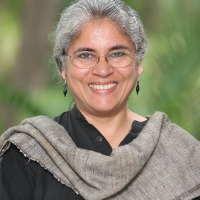
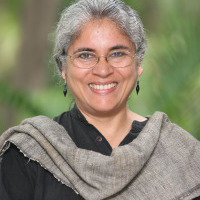
Anjali Monteiro
Fellow, Media and Cultural Studies, Tata Institute of Social Sciences
Dr. Anjali Monteiro is Professor and Dean, School of Media and Cultural Studies, Tata Institute of Social Sciences, Mumbai. She has a Masters degree in Economics and a Ph.D. in Sociology. She is involved in documentary production, media teaching and research. Jointly with K.P. Jayasankar, she has made over 35 documentary films. Their work has been screened extensively at film festivals all over the world and they have won twenty-two national and international awards.
Anjali Monteiro
Professor and Dean, School of Media and Cultural Studies, Tata Institute of Social Sciences
Dr. Anjali Monteiro is Professor and Dean, School of Media and Cultural Studies, Tata Institute of Social Sciences, Mumbai. She has a Masters degree in Economics and a Ph.D. in Sociology. She is involved in documentary production, media teaching and research. Jointly with K.P. Jayasankar, she has made over 35 documentary films. Their work has been screened extensively at film festivals all over the world and they have won twenty-two national and international awards.
Awards: From the Diary of a Genetic Counsellor, Best Programme Award, Open/General category, Fifth UGC Country-wide Classroom Video Festival, 1992, Hyderabad
The Plot Thickens…, First Prize and the award for Individual Technical Excellence in Editing, Sixth UGC Country-wide Classroom Video Festival, 1993, Calcutta
Identity- The Construction of Selfhood, Prix Futura Berlin 1995, Asia Prize Prix Futura Berlin 1995- International Radio and Television Festival; Second Prize, Education and Literacy category, International Video Festival on Science, Society and Development , September, 1995, Thiruvanathapuram
Odhni- A Collective Exploration of Our Selves, Our Bodies, Second Prize, Health and Population category, International Video Festival on Science, Society and Development, September, 1995, Thiruvanathapuram.
Kahankar: Ahankar, Jury's Special Mention at the Mumbai International Film Festival (MIFF), 1996
YCP 1997, Certificate of Merit, Mumbai International Film Festival (MIFF) 1998 and the Jury’s Award for Best Innovation, Astra Festival of Anthropological Documentary Film, Sibiu, Romania, 1998
Saacha, Second Prize, New Delhi Video Forum, 2001
SheWrite, Best documentary Prize, IV Three Continents International Documentary Festival, Venezuela 2005 and Indian Documentary Producers Association Awards 2005: The First Technical Award for Sound Design
Our Family, Special Jury Award, Signs Film Festival, Thiruvananthapuram, 2007, Certificate of Merit, Mumbai International Film Festival 2008, Indian Documentary Producers Association (IDPA) Gold for Best Sound Design, Gold for Best Script, Silver for Editing and Certificate of Merit for the best documentary.
Do Din Ka Mela, Indian Documentary Producers Association (IDPA) Gold for Best Script, Silver for Editing and Certificate of Merit for the best documentary.
Fellowships: Dr. Monteiro was a Howard Thomas Memorial Fellow in Media Studies, attached to University of Western Sydney in 2000 and a Fulbright International Lecturer at the University of California, Berkeley, 2007.
Teaching: She teaches in the MA (Media and Cultural Studies Programme at TISS. She is visiting faculty at several media and design institutions in India.
Publications: Areas of research interest include Television: Texts and Audience Reception, Media Education, Critical Perspectives on Development Communication, Documentary Film, Censorship, Media and Cultural Studies

Annelies Moors
Fellow, Anthropology and Sociology, University of Amsterdam
Annelies Moors studied Arabic at the University of Damascus and Arabic and anthropology at the University of Amsterdam. She holds the chair for contemporary Muslim societies at the department of sociology and anthropology at the University of Amsterdam. She is co-director of the research programme group ‘Globalizing Culture and the Quest for Belonging: Ethnographies of the Everyday’, and director of the research programme Muslim Cultural Politics at the AiSSR (Amsterdam Institute for Social Science Research).
Annelies Moors
Professor of Anthropology and Sociology, University of Amsterdam
Annelies Moors studied Arabic at the University of Damascus and Arabic and anthropology at the University of Amsterdam. She holds the chair for contemporary Muslim societies at the department of sociology and anthropology at the University of Amsterdam. She is co-director of the research programme group ‘Globalizing Culture and the Quest for Belonging: Ethnographies of the Everyday’, and director of the research programme Muslim Cultural Politics at the AiSSR (Amsterdam Institute for Social Science Research). She also is Honorable Visiting Professor at the London School of Fashion (London University of the Arts) and a core group member of the Arab Families Working Group (AFWG).
From 2001-2008 she has been the Amsterdam chair of the International Institute for the Study of Islam in the Modern World. She has held visiting positions at the University of San’a, Yemen. She also was the primary investigator of an international NORFACE research programme on ‘The emergence of Islamic fashion in Europe’, and is the primary investigator of a NWO Cultural Dynamics programme on ‘Islamic cultural practices and performances: New youth cultures in Europe’.
She has published widely on gender, nation and religion in such fields as Muslim family law and Islamic marriages, wearing gold, the visual media (postcards of Palestine), migrant domestic labor, Islamic fashion, and wearing face-veils. She is currently working on three publications, an edited volume with Emma Tarlo on ‘Islamic fashion in new spaces: Europe and beyond’, a single authored book on ‘Face-veiling in the Netherlands’ and a publication on ‘Informal Islamic marriages in the Netherlands and beyond’.

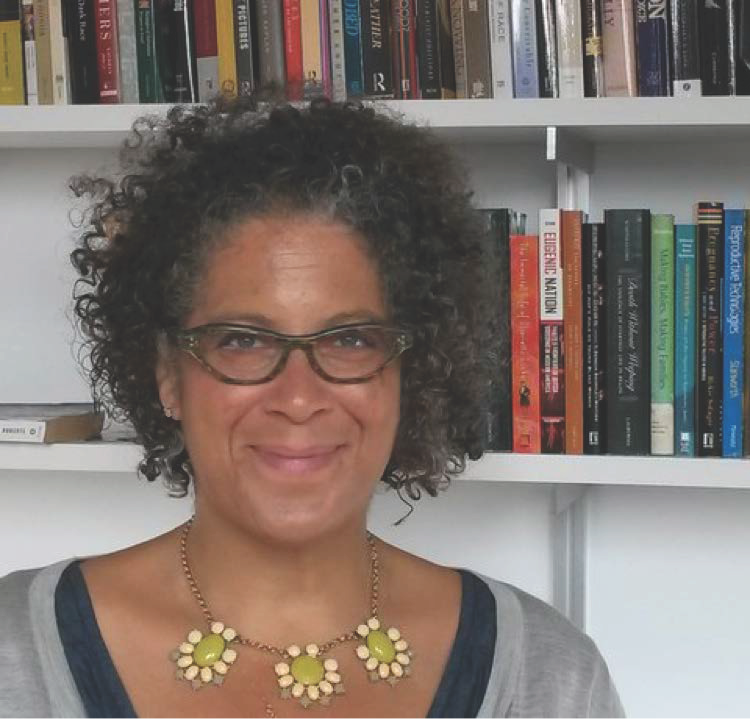
Jennifer L. Morgan
Fellow, Social and Cultural Analysis and History, NYU
Jennifer L. Morgan is professor of history and of social and cultural analysis at New York University. Her research examines the intersections of gender and race in colonial America, and she is author of Laboring Women: Gender and Reproduction in the Making of New World Slavery (2004). She is currently at work on a project that considers colonial numeracy, racism, and the rise of the transatlantic slave trade, tentatively entitled “Accounting for the Women in Slavery.”
Jennifer L. Morgan
Professor of Social and Cultural Analysis and History, NYU
Duke University, PhD 1996
Office Address: 20 Cooper Square, 4th Floor
Email:jennifer.morgan@nyu.edu
Phone:212.998.2135
Field of Study:
United States
Areas of Research/Interest:
Early African American History, Comparative Slavery, Histories of Racial Ideology, Women and Gender
External Affiliations:
American Historical Association, Berkshire Conference of Women's Historians, McNeil Center for Early American Studies.
Selected Works:Books:
Laboring Women: Gender and Reproduction in New World Slavery (Philadelphia: University of Pennsylvania Press, 2004).
Articles:
“Gender and Family Life,” in The Slavery Reader, ed. Trevour Bernard and Gad Heuman (New York: Routledge, forthcoming, 2010).
“Experiencing Black Feminism,” in Telling Histories: Black Women Historians in the Ivory Tower, ed. Deborah Gray White, (Chapel Hill: UNC Press, 2007).
The Sexual Body: The Women’s Studies Quarterly, 35 (Spring/ Summer 2007), edited with Shelley Eversley.
“Why I Write,” in Why We Write: The Politics and Practice of Writing for Social Change, Jim Downs ed. (New York: Routledge, 2006)
“Sex, Race, and the Colonial Project,” with Kirsten Fischer, in The William and Mary Quarterly, 60 (January 2003): 197-99.
“Slavery and the Slave Trade, 1600-1760,” in A Companion to American Women’s History, Nancy Hewitt ed. (Malden, Mass and London: Blackwell, 2002).
“‘Some Could Suckle Over Their Shoulder’: Male Travelers, Female Bodies, and the Gendering of Racial Ideology, 1500-1770,” The William and Mary Quarterly, 3rd Series, LIV (January 1997): 167-92.
Working Group Affiliation

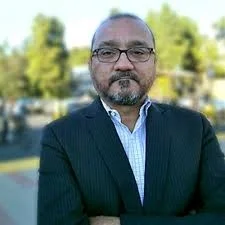
Aamir Mufti
Fellow, Comparative Literature, UCLA
Aamir Mufti is interested in understanding a range of forms of inequality in the contemporary world and how they impede the possibilities for historically autonomous action by social collectivities in the South. His work also explores the possibilities of critical knowledge of these societies within the dominant practices of the modern humanistic disciplines. Mufti has a Ph.D. in literature from Columbia University and was trained in Anthropology at Columbia, the London School of Economics, and Hamilton College.
Aamir Mufti
Professor of Comparative Literature, UCLA

Aamir Mufti is interested in understanding a range of forms of inequality in the contemporary world and how they impede the possibilities for historically autonomous action by social collectivities in the South. His work also explores the possibilities of critical knowledge of these societies within the dominant practices of the modern humanistic disciplines. Mufti has a Ph.D. in literature from Columbia University and was trained in Anthropology at Columbia, the London School of Economics, and Hamilton College. His publications include the books Forget English! Orientalisms and World Literatures (2016, Harvard University Press) and Enlightenment in the Colony: The Jewish Question and the Crisis of Postcolonial Culture (2007, Princeton University Press).
Working Group Affiliation

Corinna Mullin
Fellow, International Relations, University of Tunis
Corinna Mullin is a Part-Time Faculty member at the New School and John Jay College, and was a Visiting Assistant Professor at the University of Tunis for five years. Her book manuscript, Tunisia and imperial security architectures: Race, class, empire and the (re)making of a global south security state, illuminates intersections between security, imperialism, and racial capitalism through insights from international relations and political economy, American Studies, and critical race, law, and decolonial theory.
Corinna Mullin
Part-Time Faculty Member, The New School and John Jay College. Assistant Professor, University of Tunis
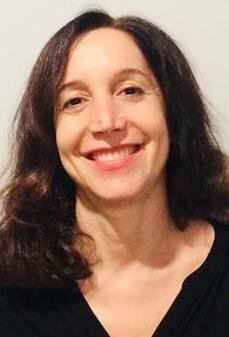
Corinna Mullin is a Part-Time Faculty member at the New School and John Jay College, and was a Visiting Assistant Professor at the University of Tunis for five years. Her book manuscript, Tunisia and imperial security architectures: Race, class, empire and the (re)making of a global south security state, illuminates intersections between security, imperialism, and racial capitalism through insights from international relations and political economy, American Studies, and critical race, law, and decolonial theory. Her research examines imperialism and militarization in Africa through analysis of securitization, labor economies, value extraction, and wealth drain, as well as decolonizing struggles of the Tunisian university, raising questions of power, knowledge production, and epistemic de-linking.
Working Group Affiliation
Sarah Muir
Fellow, Linguistic Anthropology, CUNY Graduate Center
Sarah Muir's research is situated at the intersection of linguistic, political-economic, and historical anthropology and grounded in ethnographic fieldwork and archival research in Argentina. Thematically, her work examines the practical logics of economic investment, ethical evaluation, and political critique, with a particular focus on financial crisis and social class.
Sarah Muir
Assistant Professor and Deputy Chair, Department of Anthropology, Gender Studies, and International Studies, City College, CUNY
Affiliated Faculty, Linguistic Anthropology, CUNY Graduate Center
Sarah Muir (Ph.D., University of Chicago 2011) is Assistant Professor at The City of University of New York. At The City College of New York, she teaches in the Department of Anthropology, Gender Studies, and International Studies and directs the International Studies Program. She also teaches linguistic anthropology in the Anthropology Program at The Graduate Center. Her research is situated at the intersection of linguistic, political-economic, and historical anthropology and examines the practical logics of economic investment, ethical evaluation, and political critique. Her first book, Routine Crisis: An Ethnography of Disillusion (University of Chicago Press, 2021), traces the lived consequences of Argentina's history of repeated financial crises. She is currently researching a new book project, Accounting for Kith and Kin: Financial Ethics and the Space-Time of Obligation, which interrogates the social life of economic numbers in Argentina. Her work has appeared in journals such as Annual Review of Anthropology, Cultural Anthropology, Comparative Studies in Society and History, Current Anthropology, Dialogues in Human Geography, City and Society, Journal of Cultural Economy, Journal of the Royal Anthropological Institute, and Review of the Italian Academic Association of Cultural Anthropologists. Formerly a Distinguished Scholar at the Advanced Research Collaborative (CUNY Graduate Center) and the Co-Director of the Unpayable Debt Working Group (Center for the Study of Social Difference, Columbia University), she has also helped curate and author works of public scholarship such as the "Global Debt Syllabus" and the "Caribbean Debt Syllabus."
Working Group Affiliation
Unpayable Debt: Capital, Violence, and the New Global Economy, Project Director

Donna Murch
Fellow, History, Rutgers University
Donna Murch is an associate professor of history at Rutgers University and a former codirector of the Rutgers Center for Historical Analysis, where she directed the Black Atlantic seminar. Her teaching and research focus on postwar U.S. history, modern African American history, twentieth-century urban studies, and the political economy of drugs. She is the author of Living for the City: Migration, Education, and the Rise of the Black Panther Party in Oakland, California (2010), which won the Phillis Wheatley Book Award.
Donna Murch
Associate Professor of History, Rutgers University
Donna Murch is an associate professor of history at Rutgers University and a former codirector of the Rutgers Center for Historical Analysis, where she directed the Black Atlantic seminar. Her teaching and research focus on postwar U.S. history, modern African American history, twentieth-century urban studies, and the political economy of drugs. She is the author of Living for the City: Migration, Education, and the Rise of the Black Panther Party in Oakland, California (2010), which won the Phillis Wheatley Book Award. The book highlights the importance of urbanization and southern migration to the rise of Bay Area black power, broadening the scholarship of the long civil rights movement by documenting the contributions of black students and youth. She is currently researching a new book on the rise of crack cocaine and the war on drugs in Los Angeles, which explores how economic marginalization contributed to the growth of a vibrant and destructive informal economy in illicit drugs.


Amber Jamila Musser
Fellow, American Studies, George Washington
Amber Jamila Musser is a Professor of American Studies at George Washington University and the author of Sensational Flesh: Race, Power, and Masochism (NYU, 2014) and Sensual Excess: Queer Femininity and Brown Jouissance (NYU Press, 2018). Musser has published widely on race, critical theory, queer femininities, sexuality, and queer of color critique.
Amber Jamila Musser
Professor, American Studies, George Washington University
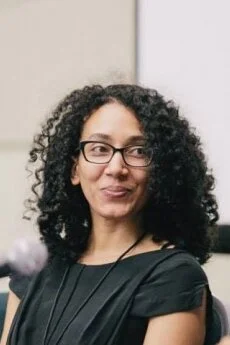
Amber Jamila Musser is a Professor of American Studies at George Washington University and the author of Sensational Flesh: Race, Power, and Masochism (NYU, 2014) and Sensual Excess: Queer Femininity and Brown Jouissance (NYU Press, 2018). Musser has published widely on race, critical theory, queer femininities, sexuality, and queer of color critique. A new project on sweat and the Black body explores its racialization, the workings of bodies exposed to ever-proliferating heat events, and narratives about bodies and their disciplining. This work moves between the eroticization of the sweat that glistens on black dancers’ bodies and the racist myth of malodorous black bodies. This swerves between the use of sweating as the product of exuberant and racialized embodiment and sweat as a sign of racial difference shows both sweat’s polyvalence and material components of desirability and disgust. Importantly, sweat brings us toward breath and the conditions of possibility.
Working Group Affiliation
Lydia Waithira Muthuma
Fellow, Visual Arts, Technical University of Kenya
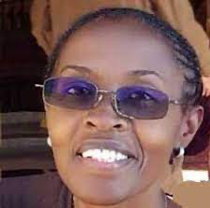
Lydia Waithira Muthuma is a Lecturer in Visual Arts at the Technical University of Kenya and the current chair of UNESCO’s national committee for memory of the world. Muthuma’s current research interests are the historiography of contemporary art in Eastern Africa and the conservation of public monuments as a tool for building collective identity in Nairobi. Through aesthetic critique, art history, and analysis of spatial politics and visual culture, her work examines the built environment in Kenya in order to ascertain who it belongs to and how this identity has been manifested.
Lydia Waithira Muthuma
Lecturer, Visual Arts, The Technical University of Kenya
Lydia Waithira Muthuma is a Lecturer in Visual Arts at the Technical University of Kenya and the current chair of UNESCO’s national committee for memory of the world. She is the author of Changing Perspectives: Nairobi past and present, a photographic story and exhibition hosted by Bristol Archives and National Museums of Kenya in June-September 2019. Through aesthetic critique, art history, and analysis of spatial politics and visual culture, her work examines the built environment in Kenya in order to ascertain who it belongs to and how this identity has been manifested. Dr. Muthuma’s current research interests are the historiography of contemporary art in Eastern Africa and the conservation of public monuments as a tool for building collective identity in Nairobi.
Working Group Affiliation
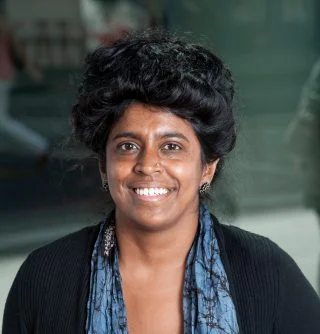
Vasuki Nesiah
Fellow, Legal Scholar, NYU Gallatin School of Law
Vasuki Nesiah is a legal scholar with a focus on public international law at NYU Gallatin School of Law. Her main areas of research include the law and politics of international human rights and humanitarianism, with a particular focus on transitional justice.
Vasuki Nesiah
Legal Scholar, NYU Gallatin School of Law
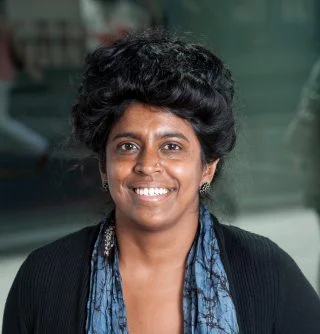
Vasuki Nesiah is a legal scholar with a focus on public international law at NYU Gallatin School of Law. Her main areas of research include the law and politics of international human rights and humanitarianism, with a particular focus on transitional justice. She has published widely on the history and politics of human rights, humanitarianism, international criminal law, international feminisms and colonial legal history. These continue to be areas of research and writing but the primary focus of her current research is reparations. A volume which she co-edited with Luis Eslava and Michael Fakhri, A Global History of Bandung and Critical Traditions in International Law will be published by Cambridge University Press later this year. This work reflects her continued interest in critical approaches to international law that find their intellectual and political home in the global south and in the grappling with decolonization. She is one of the founding members of the Third World Approaches to International Law (TWAIL) and has continued as an active participant in this global network of scholars for over two decades. Nesiah teaches human rights, law and social theory, and the politics of war and memory at NYU. She also continues as core faculty in Harvard Law School’s Institute for Global Law and Policy (IGLP); In this capacity, she has taught for six years in the IGLP summer and winter workshops in Cambridge, Doha, Capetown, Madrid and Bangkok. Currently, she is also a Senior Fellow at Melbourne Law School where she taught a course on human rights, gender and development in a visiting capacity. Prior to joining Gallatin, Professor Nesiah taught in the International Relations and Gender Studies concentrations at Brown University where she also served as Director of International Affairs. Formerly, she taught at the School of International and Public Affairs at Columbia University. She serves on the international editorial committees of the journals Feminist Legal Studies and the London Review of International Law and on the International Advisory Board of the Institute of International Law and the Humanities at the University of Melbourne; she is also an Associate Fellow with the Asia Society in New York. Before entering the academy full time, Professor Nesiah spent over seven years in practice at the International Center for Transitional Justice (ICTJ), where she worked on law and policy issues in the field of post-conflict human rights. Originally from Sri Lanka, she earned her BA in Philosophy and Government at Cornell University, was a visiting student in the Philosophy, Politics, and Economics Program at Oxford University, and earned her JD and SJD, an interdisciplinary doctorate in public international law, at Harvard Law School. She was awarded a fellowship for a post-doctoral program in human rights at Columbia Law School.
Working Group Affiliation