
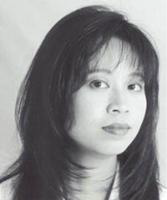
Anne Cheng
Fellow, English, Princeton
Anne Anlin Cheng is Professor of English and the Associate Chair in the Department of English and a core faculty in the Center for African American Studies at Princeton University. She specializes in race studies and psychoanalytic theory and works in twentieth-century American literature, with special focus on Asian American and African American literatures. She is the author of The Melancholy of Race: Assimilation, Psychoanalysis, and Hidden Grief (Oxford University Press), which explores the notion of racial grief at the intersection of culture, history, and law.
Anne Cheng
Professor of English and the Associate Chair in the Department of English, Princeton
Anne Anlin Cheng is Professor of English and the Associate Chair in the Department of English and a core faculty in the Center for African American Studies at Princeton University. She specializes in race studies and psychoanalytic theory and works in twentieth-century American literature, with special focus on Asian American and African American literatures. She is the author of The Melancholy of Race: Assimilation, Psychoanalysis, and Hidden Grief (Oxford University Press), which explores the notion of racial grief at the intersection of culture, history, and law. She is currently completing a manuscript on Josephine Baker and the intimate relationship between the theatricalization of racialized skin in the early twentieth century and the Modernist ideal of the denuded surface.


Sarah Chinn
Fellow, English, Hunter College
Sarah Chinn teaches nineteenth century literature at Hunter College, CUNY. Her work primarily explores questions of race, embodiment, sexuality, and gender in U.S. literature and culture, particularly in the 19th century. She is the author of Technology and the Logic of American Racism: A Cultural History of the Body as Evidence (Continuum, 2000) and The Invention of Modern Adolescence: Children of Immigrants in Turn-of-the-Century America (Rutgers University Press, 2008).
Sarah Chinn
Associate Professor of English, Hunter College, CUNY

Sarah Chinn teaches nineteenth century literature at Hunter College, CUNY. Her work primarily explores questions of race, embodiment, sexuality, and gender in U.S. literature and culture, particularly in the 19th century. She is the author of Technology and the Logic of American Racism: A Cultural History of the Body as Evidence (Continuum, 2000) and The Invention of Modern Adolescence: Children of Immigrants in Turn-of-the-Century America (Rutgers University Press, 2008). She is currently working on two book-length projects: Spectacular Men: Race, Gender, and Nation on the Early American Stage, and Feeling Our Way: The Ethics of Lesbian Writing.
Working Group Affiliation
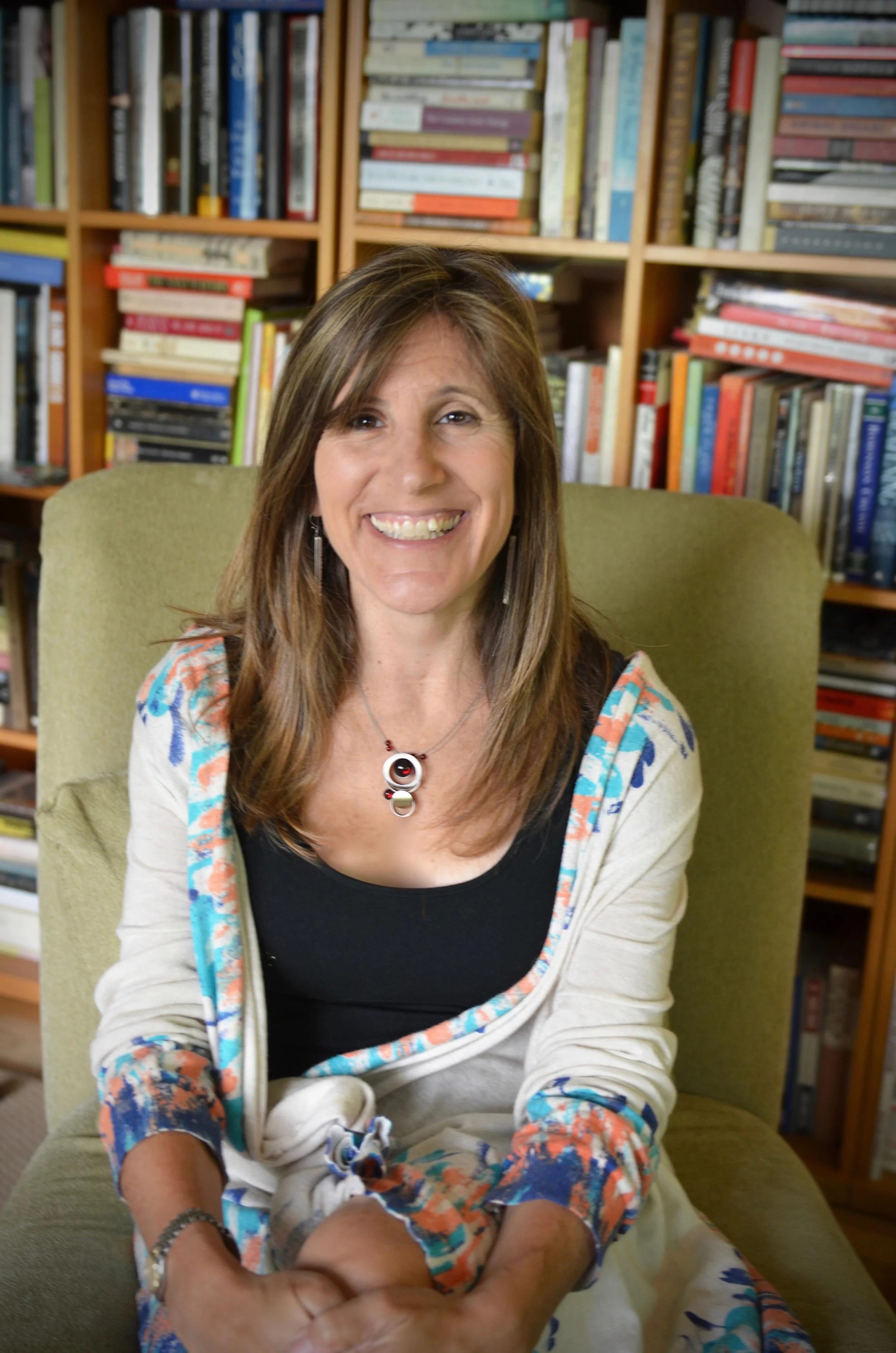
Laura Ciolkowski
Fellow, Women, Gender, Sexuality Studies, University of Massachusetts Amherst
Laura Ciolkowski’s teaching and research interests include gender & sexuality studies, feminist pedagogies, social justice movements, literary and cultural theory, the literature and theory of mass incarceration, and sexual and gender-based violence.
Laura Ciolkowski
Senior Lecturer, Women, Gender, Sexuality Studies, University of Massachusetts Amherst

Laura Ciolkowski’s teaching and research interests include gender & sexuality studies, feminist pedagogies, social justice movements, literary and cultural theory, the literature and theory of mass incarceration, and sexual and gender-based violence. Her work has been published in a range of journals, including: Twentieth Century Literature; Studies in the Novel; Genders;Novel: A Forum on Fiction; Public Books; and Victorian Literature and Culture. Her "Rape Culture Syllabus," published inPublic Books, was widely shared and circulated by scholars and activists across the country. In addition to her scholarly research, Laura is a writer and book critic whose articles and reviews have appeared in the New York Times, the New Yorker Magazine, the Washington Post, the Chicago Tribune, the Boston Globe, the LA Times, the Philadelphia Inquirer, theInternational Herald Tribune, and the San Francisco Chronicle.
Laura has taught a wide range of WGSS courses over the last 15+ years as a faculty member at Columbia University, where she was also Associate Director of the Institute for Research on Women, Gender, and Sexuality. Laura is especially interested in and passionate about prison education and, as a faculty member at the Center for Justice at Columbia, she taught humanities and WGSS courses at Taconic Correctional Facility, a medium security women’s prison in Bedford, NY, in a program for incarcerated students pursuing a college degree.
Laura received her PhD and MA in Literature from Brown University and graduated from Columbia University, Phi Beta Kappa and magna cum laude, with a BA in English and Comparative Literature.
Working Group Affiliation
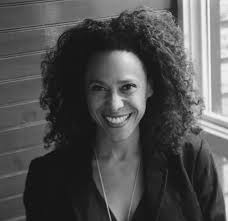
Beth Coleman
Fellow, Writing and New Media, MIT
Beth Coleman is Assistant Professor of Writing and New Media in the Program in Writing and Humanistic Studies and Comparative Media Studies. She is faculty director of the C3 game culture and mobile media initiative. Her fields of research interest include new media, contemporary aesthetics, electronic music, critical theory and literature, and race theory. Under the name M. Singe, she co-founded the SoundLab Cultural Alchemy project, established in 1995.
Beth Coleman
Assistant Professor of Writing and New Media, MIT
Beth Coleman is Assistant Professor of Writing and New Media in the Program in Writing and Humanistic Studies and Comparative Media Studies. She is faculty director of the C3 game culture and mobile media initiative. Her fields of research interest include new media, contemporary aesthetics, electronic music, critical theory and literature, and race theory. Under the name M. Singe, she co-founded the SoundLab Cultural Alchemy project, established in 1995.
Her scholarly and literary writings have been published by the British pavilion for the Venice Bienale, 2003; Broadway/Random House; Gagosian Gallery; Sammlung Goetz Collection; and New York University Press, as well as in journals including Artforum, Artbyte, and Nka: Journal for African Art. Coleman is a 2003-4 Rockefeller New Media Fellow and a 2004 Ford Foundation fellow. Her artwork has been exhibited internationally at P.S.1 Museum of Contemporary Art, Mirror's Edge exhibition, ARC/Musee d'Art moderne de la Ville de Paris, Massachusetts Institute of Technology List Gallery, among other venues. She has been working internationally as a sound artist since 1997, with her music appearing on various electronic music labels including SoundLab Records.
Coleman received the BA from Yale University in 1991, and the Ph.D. in comparative literature from NYU in 2004. Before arriving at MIT, she was a 2004 artist-in-residence at the Waag Society for Old and New Media, Amsterdam where she completed the art and architectural installation, Music Box. She is currently working on a mongraph entitled Difference Engines: Race as Technology.

David J. Connor
Fellow, Education, Hunter College, CUNY
David J. Connor is an Associate Professor in the School of Education of Hunter College, CUNY. He is the author of three books and numerous articles on disability and education. David's areas of interest include teacher education, learning disabilities, inclusive education, and social justice issues. For the last decade he has contributed to the development of the growing field of Disability Studies in Education.
David J. Connor
Associate Professor, School of Education, Hunter College, CUNY
David J. Connor is an Associate Professor in the School of Education of Hunter College, CUNY. He is the author of three books and numerous articles on disability and education. David's areas of interest include teacher education, learning disabilities, inclusive education, and social justice issues. For the last decade he has contributed to the development of the growing field of Disability Studies in Education.
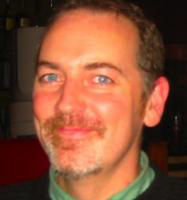

Qudsiya Contractor
Fellow, Inclusive Policies, Tata Institute of Social Sciences Centre
Qudsiya Contractor is an Assistant Professor at the Tata Institute of Social Sciences Centre for Study of Social Exclusion and Inclusive Policies, School of Research Methodology.
Qudsiya Contractor
Assistant Professor, Tata Institute of Social Sciences

Qudsiya Contractor is an Assistant Professor at the Tata Institute of Social Sciences Centre for Study of Social Exclusion and Inclusive Policies, School of Research Methodology. Qudsiya completed her PhD in 2014 as a Max Planck Institute Doctoral Fellow at the School of Development Studies, TISS. Her research interests include: Social identities; anthropology ofcities and development; communal politics; health, illness and society. She has previously worked in the development sector on issues of displacement, human rights and urbanization. She was a visiting fellow at MPI Göttingen in 2015. Her recent work has been on the politics of the “meat-ban” in Hindu-Muslim relations.
Working Group Affiliation
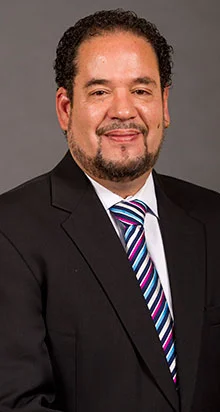
Hector Cordero-Guzmán
Fellow, Department of Sociology, Baruch College
Hector Cordero-Guzmán
Professor, Department of Sociology, Baruch College

Dr. Héctor R. Cordero-Guzmán received his M.A. and Ph.D. degrees in Sociology from The University of Chicago is a Professor at the Austin W. Marxe School of Public and International Affairs at Baruch College of the City University of New York. He is also a Professor in the Ph.D. Programs in Sociology and in Urban Education at the City University of New York (CUNY) Graduate School and University Center. Prior to joining the Marxe School at CUNY, Dr. Cordero-Guzman was a Program Officer in the Economic Development and the Quality Employment Units of the Asset Building and Community Development Program at The Ford Foundation.
Between 2002 and 2007, Dr. Cordero-Guzman was a Professor and the Chair of the Black and Hispanic Studies Department at Baruch College of the City University of New York where he was responsible for managing and overseeing the work in Black and Hispanic Studies. Before joining the faculty at Baruch College of the City University of New York, Dr. Cordero-Guzman spent six years as an Assistant Professor at the Robert J. Milano Graduate School of Management and Urban Policy at the New School for Social Research where he taught a range of graduate courses in statistics, research methods, and social welfare policy. He also worked as the Research Director for Political Economy at the Center for Puerto Rican Studies at Hunter College of the City University of New York, the largest Latino focused research center in the eastern United States and was an adjunct instructor in Latin American Studies at Rutgers University in New Jersey.
Dr. Cordero-Guzman has published his academic research on issues related to education, employment, poverty, race and inequality, non-profit organizations, international migration, transnational processes, economic development, and social welfare policy in American Behavioral Scientist, The Journal of Small Business Management, The Annals of the American Academy of Political and Social Science, Racial and Ethnic Studies, International Migration, Journal of Ethnic and Migration Studies, Social Forces, Diaspora, The Review of Black Political Economy, Migration World and in a number of other volumes. Dr. Cordero-Guzman is also the editor of Migration, Transnationalization and Race in a Changing New York (with Dr. Ramon Grosfoguel and Dr. Robert Smith) and was involved in drafting a report for The White House Initiative on Educational Excellence for Hispanic Americans on community based services and programs that focus on Latino youth entitled What Works for Latino Youth.
Dr. Cordero-Guzman has served on the Board of Directors of a number of non-profit organizations including ACCION-New York, the largest micro-lending organization in the United States; the Community Service Society of New York (CSS), the oldest and largest anti-poverty group in New York City; the Upper Manhattan Empowerment Zone (UMEZ), a federally chartered multi-million dollar economic development initiative; St. Ann's Corner of Harm Reduction, one of the largest and oldest needle exchange programs in New York City; El Barrio Popular Education Program, an adult education program; and is on the advisory board of New York City's Young Men Initiative (YMI). Currently, Dr. Cordero-Guzman serves on the Board of Director of the Association for Research of Non Profit Organizations and Voluntary Action (ARNOVA), a professional association; The Economic Policy Institute in Washington, DC; The Afro-Latin Jazz Alliance; and El Museo Del Barrio, the largest Puerto Rican\Latino Museum in the United States.
Working Group Affiliation
Unpayable Debt: Capital, Violence, and the New Global Economy

G. Thomas Couser
Fellow, Disability Studies, Hofstra University
G. Thomas Couser retired in 2011 from Hofstra University, where he was a professor of English and founding director of the Disability Studies Program.
G. Thomas Couser
Professor Emeritus of English and Founding Director, Disability Studies Program, Hofstra University

G. Thomas Couser retired in 2011 from Hofstra University, where he was a professor of English and founding director of the Disability Studies Program. He is the author of American Autobiography: The Prophetic Mode (Massachusetts, 1979), Altered Egos: Authority in American Autobiography (Oxford, 1989), Recovering Bodies: Illness, Disability, and Life Writing (Wisconsin, 1997), Vulnerable Subjects: Ethics and Life Writing (Cornell, 2004), and Signifying Bodies: Disability in Contemporary Life Writing (Michigan, 2009), as well as about fifty articles or book chapters. His latest book, Memoir: An Introduction, will be published by Oxford University Press in November 2011. He is currently writing a book about contemporary American “patriography” (memoirs of fathers by sons and daughters) and a memoir of his own father.
Working Group Affiliation

Aimee Meredith Cox
Fellow, African American Studies and Anthropology, Yale University.
Aimee Meredith Cox is an Associate Professor in the departments of African American Studies and Anthropology at Yale University. She is the editor of Gender: Space (MacMillan) and co-editor of a special issue of Public: A Journal of Imagining America on art and knowledge production in the academy. Cox’s first monograph, Shapeshifters: Black Girls and the Choreography of Citizenship (Duke 2015), won a 2016 Victor Turner Book Prize in Ethnographic Writing.
Aimee Meredith Cox
Associate Professor, African American Studies and Anthropology, Yale University

Aimee Meredith Cox is an Associate Professor in the departments of African American Studies and Anthropology at Yale University. Cox’s first monograph, Shapeshifters: Black Girls and the Choreography of Citizenship (Duke 2015), won a 2016 Victor Turner Book Prize in Ethnographic Writing, and Honorable Mention from the 2016 Gloria E. Anzaldúa Book Prize, given by the National Women’s Studies Association. She is the editor of Gender: Space (MacMillan) and co-editor of a special issue of Public: A Journal of Imagining America on art and knowledge production in the academy. Cox is also a former professional dancer--she danced on scholarship with the Dance Theatre of Harlem and toured extensively with Ailey II. Her next ethnographic project, Living Past Slow Death, explores the creative protest strategies individuals and communities enact to reclaim Black life in the urban United States, focused on the riverine communities of the Mississippi. She is a member of the Social Text Collective.
Working Group Affiliation

Christina Crosby
Fellow, Feminist, Gender, and Sexuality Studies, Wesleyan University
Christina Crosby has worked at Wesleyan University since 1982, where she is Professor of English and Feminist, Gender, and Sexuality Studies. Her subfields are Victorian studies and Feminist Studies. She has published The Ends of History: Victorians and the 'Woman Question' and essays and reviews in Victorian Studies, PMLA, College English, and elsewhere.
Christina Crosby
Professor of English and Feminist, Gender, and Sexuality Studies, Wesleyan University
Christina Crosby has worked at Wesleyan University since 1982, where she is Professor of English and Feminist, Gender, and Sexuality Studies. Her subfields are Victorian studies and Feminist Studies. She has published The Ends of History: Victorians and the 'Woman Question' and essays and reviews in Victorian Studies, PMLA, College English, and elsewhere. Her current book project is autobiographical: "An Account of Myself," an exploration of living with a spinal cord injury, drawing on feminist theories of embodiment, queer phenomenology, and critical disability studies.


Benjamin Mier-Cruz
Benjamin Mier-Cruz

Benjamin Mier-Cruz is an assistant professor of Scandinavian Studies and Gender and Women’s Studies at the University of Wisconsin-Madison. Their research examines Nordic writers and filmmakers of color and intersectional representations of gender, sexuality, and race. Their research also explores transgender cinema and the figure of the vampire in literature and film. Their current book project studies constructions of subjecthood and self-representation by filmmakers of color in Swedish documentary cinema and visual culture.
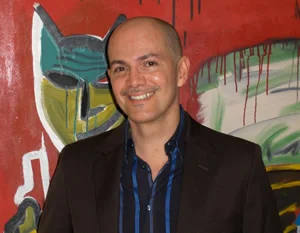
Arnaldo Cruz-Malavé
Fellow, Modern Languages and Literatures, Fordham University
Arnaldo Cruz-Malavé
Professor, Department of Modern Languages and Literatures, Fordham University


Jordan Corine Cruz
Fellow, Photography, School of Visual Arts
Jordan Corine Cruz (b. 1993) is a Puerto Rican interdisciplinary artist working in sculpture, installation, photography, video, and sound. Using traditional materials, imagery, and layered sound as cultural signifiers, Cruz creates interactive spaces and objects that focus on the intersections between self-identification, labor, gender, and displacement.
Jordan Corine Cruz
Interdisciplinary Artist, Bronx, New York
Jordan Corine Cruz (b. 1993) is a Puerto Rican interdisciplinary artist working in sculpture, installation, photography, video, and sound. Using traditional materials, imagery, and layered sound as cultural signifiers, Cruz creates interactive spaces and objects that focus on the intersections between self-identification, labor, gender, and displacement. Her work considers how communities of color utilize nostalgia to create strategies for survival. Cruz’s practice centers on cultural archives ranging from family lore, Puerto Rican traditional practices, and block culture.
Cruz received a BFA in Photography and an MFA in Photography, Video, and Related Media from the School of Visual Arts. Her work has been shown in Haul Gallery, SoMad Studio, La Mama Galleria, and SVA Chelsea Gallery. Cruz was granted the BRIO award by the Bronx Council on the Arts in 2020. Additionally, she has organized and hosted a panel talk focusing on Latinx Women Photographers in collaboration with El Museo del Barrio in New York City. Cruz lives and works in The Bronx, New York.
Working Group Affiliations
Zip Code Memory Project: Practices of Justice and Repair, Social Engagement Project

Rubén Cruz-Malavé
Fellow, Spanish and Portuguese, New York University
Director, Creative Writing Program, Professor, Department of Spanish and Portuguese, New York University
Aastha D
Aastha D.
Working Group: Insurgent Domesticities
Managing Editor
Working Group: Insurgent Domesticities
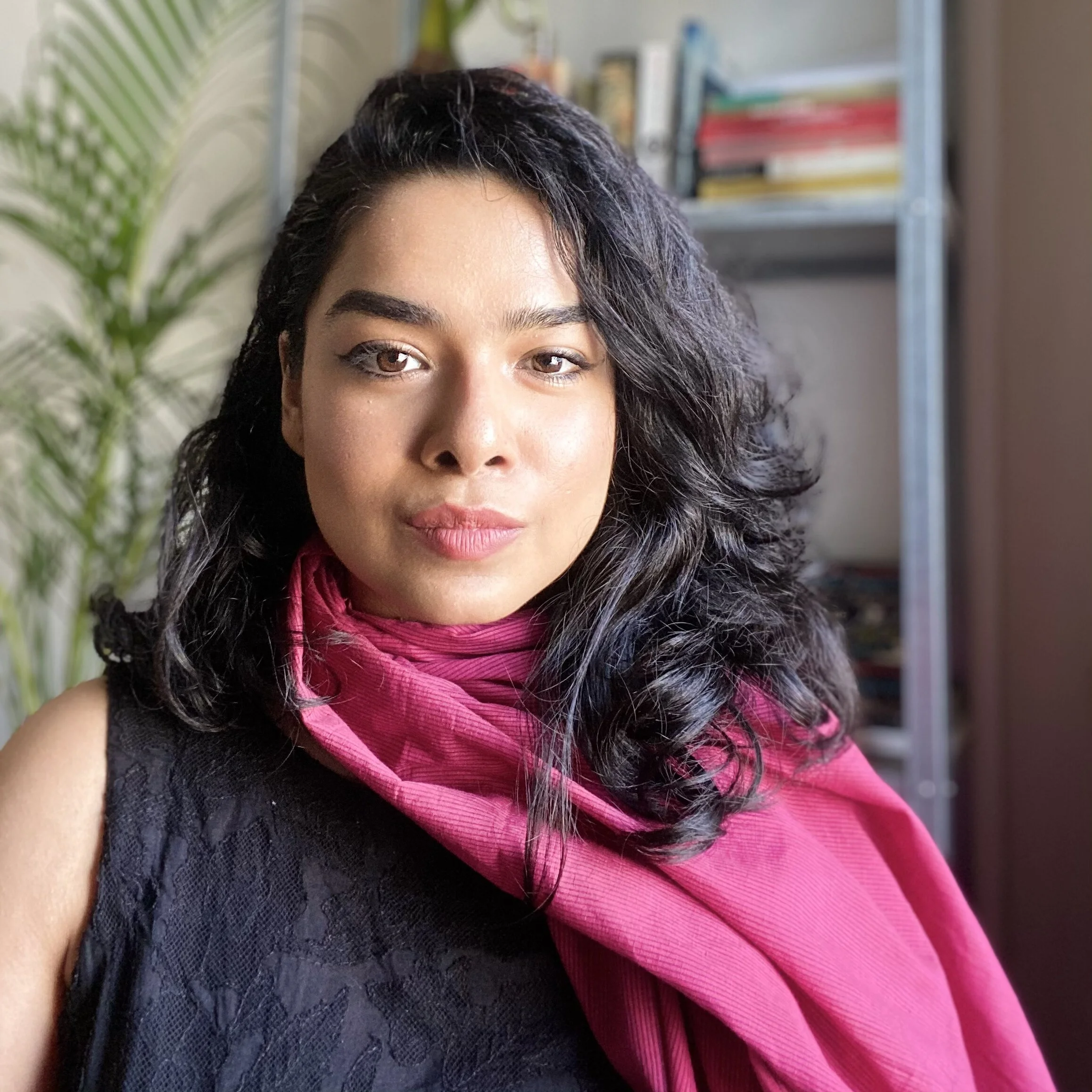
Aastha D (she/they) is an independent scholar, essayist, designer and educator. She has a background in architecture, with a masters from Columbia University, New York. As the Founding Editor of Proseterity, a literary publication, they work with thinkers and writers (especially those kept in the margins) who pose new ‘what if?’s to disrupt the status quo, forging an alternative present and future.
Aastha’s writings on design and culture are informed by their anti-caste, anti-racism, feminist politics, and appear in Tribune Magazine, Metropolis New York, STIRworld, Disegno etc. In the recent past, she has held editorial positions at publications in New York and Mumbai, edited books, curated exhibitions and events.
As an educator Aastha teaches critical thinking, creative writing, research methodology with a focus on ‘disrupting the episteme’ as it is known.

Lennard Davis
Fellow, English, University of Illinois at Chicago
Lennard J. Davis is Professor in the English Department in the School of Arts and Sciences at the University of Illinois at Chicago, where he had also served as Head. In addition, he is Professor of Disability and Human Development in the School of Applied Health Sciences of the University of Illinois at Chicago, as well as Professor of Medical Education in the College of Medicine. He is also director of Project Biocultures a think-tank devoted to issues around the intersection of culture, medicine, disability, biotechnology, and the biosphere.
Lennard Davis
Distinguished Professor of English; Professor of Disability and Human Development, School of Applied Health Sciences, University of Illinois at Chicago; Professor of Medical Education, University of Illinois College of Medicine
Lennard J. Davis is Professor in the English Department in the School of Arts and Sciences at the University of Illinois at Chicago, where he had also served as Head. In addition, he is Professor of Disability and Human Development in the School of Applied Health Sciences of the University of Illinois at Chicago, as well as Professor of Medical Education in the College of Medicine. He is also director of Project Biocultures a think-tank devoted to issues around the intersection of culture, medicine, disability, biotechnology, and the biosphere. Davis is the author of two works on the novel–Factual Fictions: The Origins of the English Novel (Columbia U. Press, 1983, rpt. University of Pennsylvania Press, 1996) and Resisting Novels: Fiction and Ideology (Routledge, 1987, rpt. University of Pennsylvania Press, 2001) and co-editor of Left Politics and the Literary Profession. His works on disability include Enforcing Normalcy: Disability, Deafness, and the Body (Verso, 1995), which won the 1996 Gustavus Myers Center for the Study of Human Rights’ annual award for the best scholarship on the subject of intolerance in North America, and The Disability Studies Reader (Routledge, 1996). His memoir My Sense of Silence (University of Illinois Press, 2000), was chosen Editor’s Choice Book for the Chicago Tribune, selected for the National Book Award for 2000, and nominated for the Book Critics Circle Award for 2000. He has appeared on National Public Radio’s Fresh Air to discuss the memoir, which describes his childhood in a Deaf family. Davis has also edited his parents’ correspondence Shall I Say a Kiss: The Courtship Letters of a Deaf Couple, 1936-38 (Gallaudet University Press, 1999). Davis is a co-founder of the Modern Language Association’s Committee on Disability Issues in the Profession, and he is on the board of several academic journals.
Having written widely for newspapers and magazines, Davis is also the author of a novel entitled The Sonnets (State University of New York Press, March 2001). A collection of his essays entitled Bending Over Backwards: Disability, Dismodernism, and Other Difficult Positions was published by New York University Press in August 2002. He was awarded a Guggenheim Fellowship in 2002-2003 for Obsession: A History (University of Chicago Press, 2008). His book Go Ask Your Father: One Man's Obsession to Find Himself, His Origins, and the Meaning of Life Through Genetic Testing will be published in 2009 by Random House. He has written numerous articles in The Nation, The New York Times, The Chicago Tribune, The Chronicle of Higher Education and other print media. Davis has also been a commentator on National Public Radio’s All Things Considered, and appeared on Morning Edition, This American Life, Odyssey, The Leonard Lopate Show and other NPR affiliates. His current interests include disability-related issues; literary and cultural theory; genetics, race, identity; and biocultural issues.


Ana Luiza de Abreu Claudio
Fellow, Sustainability, Columbia University
Over 16 years of experience as project coordinator in Information and Communication Technologies (ICTs), Sustainability, Social Responsibility, Sociocultural and Socioenvironmental Education and research. Coordination of +50 long, medium and short term projects in the areas of human rights, social memory, community media, environment, preservation of material and immaterial cultural heritage, with wide experience in complex environments such as conflict zones, isolated communities and extreme poverty.
Ana Luiza de Abreu Claudio
Project Coordinator: Geographies of Injustice: Gender and the City

Ana Luiza de Abreu Claudio holds a BA in Journalism from the Federal University of Viçosa (UFV), and an MA in Social Sciences from the Federal Rural University of Rio de Janeiro (UFRRJ). Her research focuses on visual arts and social memory from under-represented territories, especially favelas and indigenous communities, with an emphasis on photography. From a broader perspective, she aims to work with the Latin American feminist visual arts scene and their connections with activism and the geopolitical imagination.
Before Columbia, Ana Luiza worked for 16 years as an art curator, researcher in visual arts and as a project coordinator and teacher in photography. Ana Luiza has wide experience in complex environments such as conflict zones, isolated communities, and extreme poverty territories. Throughout her career she developed a variety of projects across Brazil and abroad, including several initiatives in the Amazon rainforest, the Cerrado region, Rio’s favelas, the US, Europe, and the Middle East.
Ana Luiza has undertaken efforts in the visual arts, digital humanities, preservation of material and immaterial cultural heritage, community and popular media, socio-environmental programs, and communications projects with indigenous groups. Ana Luiza has accomplished such work in the domain of public institutions and non-governmental organizations but has also developed partnerships in the private sector.
Before joining Columbia University in the Fall of 2022, Ana Luiza worked for 8 years as the coordinator of the Social Action department of the Moreira Salles Institute (IMS), Brazil’s most influential cultural institution. Ana is a PhD student in Latin American and Iberian Cultures at Columbia University.
Working Group Affiliation

Silvina Der-Meguerditchian
Fellow, Art Studies, Kulturakademie Tarabya
The artist is the granddaughter of Armenian immigrants to Argentina and was born in Buenos Aires in 1967. Since 1988 she has lived in Berlin. Her artistic work deals with issues related to the burden of national identity, memory, the role of minorities in the society and the potential of a space "in between". Her work uses a very heterogeneous language (installation, video, sound installation, rugs).
Silvina Der-Meguerditchian
Artist

Portrait by Hervé Thouroude
The artist is the granddaughter of Armenian immigrants to Argentina, since 1988 she lives in Berlin.
Her artistic work deals with issues related to the burden of national identity, the role of minorities in society and the potential of a space "in between." Der-Meguerditchian is interested in the impact of migration on the urban texture and its consequences. Reconstruction of the past and the building of archives are a red thread in her artistic research. Her work is multidisciplinary and uses different medias. Since 2010 she has been the Artistic Director of Houshamadyan, a project to reconstruct Ottoman Armenian town and village life. In 2014/15 she was awarded a fellowship at the Kulturakademie Tarabya, a residency program of the German Foreign Ministry and the Goethe Institute in Istanbul. Further, she participated in "Armenity,” the Pavilion awarded with the Golden Lion at the 56th Venice Biennial for the best national participation. Her work has been shown in many exhibitions around the world, including, among others, Germany, Argentina, the US and Turkey. Her last initiated and coordinated collective project "Grandchildren, new geographies of belonging" (DEPO Cultural Center- Istanbul) was supported by the Goethe Institut and the German Foreign Ministry in 2015. In 2018 she participated in Hello World Revising a Collection, a critical inquiry into the collection of the Nationalgalerie and its predominantly Western focus at the Hamburger Bahnhof in Berlin. Since 2014 she has worked with Women Mobilizing Memory. She is represented by Kalfayan Galleries in Athens.
Working Group Affiliation
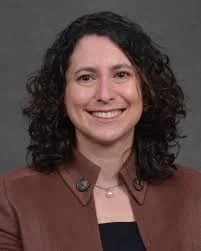
Deborah Dinner
Fellow, Law History, Emory
Deborah Dinner is a legal historian whose scholarship examines the interaction between social movements, political culture, and legal change. Dinner’s research focuses in particular on how law responds to vulnerabilities that derive from familial and employment relationships, at home and at work. Her courses and curricular interests include Property, the Fourteenth Amendment, Family Law, Employment Discrimination, and Legal History.
Deborah Dinner
Professor of Law, Emory University School of Law
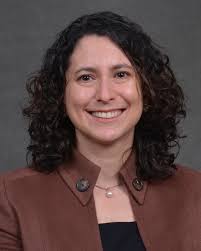
Deborah Dinner is a legal historian whose scholarship examines the interaction between social movements, political culture, and legal change. Dinner’s research focuses in particular on how law responds to vulnerabilities that derive from familial and employment relationships, at home and at work. Her courses and curricular interests include Property, the Fourteenth Amendment, Family Law, Employment Discrimination, and Legal History.
Dinner’s book-in-progress Contested Labor: Gender and the Law in Neoliberal America(forthcoming Cambridge University Press)examines debates about the meaning of sex equality in the late twentieth century. The book argues that neoliberal ideology, the rise of the New Right, and the transition from an industrial to a service economy foreclosed feminists’ efforts to achieve greater state protection for workers and caregivers, even as women made significant strides toward equal employment opportunity. Dinner’s most recent article “Beyond ‘Best Practices’: Employment Discrimination in the Neoliberal Era,” published in the Indiana Law Journal, shows that the rise of antidiscrimination ideals in the late twentieth century was intertwined with the deregulation of labor and with cutbacks in the welfare state. Her article “The Divorce Bargain: The Fathers’ Rights Movement and Family Inequalities” offers the first legal history of the fathers’ rights movement and analyzes its consequences for class-differentiated experiences of fatherhood. The article was selected for presentation at the 2014 Yale/Stanford/Harvard Junior Faculty Forum and was published by Virginia Law Review in 2016. Dinner has published several other articles on the legal history of gender, work, and the welfare state in the Washington University Law Review, Harvard Civil Rights-Civil Liberties Law Review, Yale Journal of Law & Feminism, and Law & History Review.
Dinner joined Emory in 2015, after serving as an associate professor at Washington University in St. Louis School of Law. Dinner earned her JD and PhD in history at Yale. Following law school, she clerked for Judge Karen Nelson Moore of the US Court of Appeals for the Sixth Circuit and served as the Raoul Berger–Mark DeWolfe Howe Legal History Fellow at Harvard University and the Samuel I. Golieb Fellow in Legal History at New York University School of Law.
Working Group Affiliation

Elizabeth J. Donaldson
Fellow, English, New York Institute of Technology
Elizabeth J. Donaldson is Associate Professor of English at New York Institute of Technology, where she teaches courses in American literature, writing, and medical humanities. She has published essays on mental illness in film, antipsychiatry in Lauren Slater’s memoirs, physiognomy and madness in Jane Eyre, teaching Melville online, and the poetry of Amy Lowell, among other subjects. She is a member of the editorial board of the Journal of Literary and Cultural Disabilities Studies and is co-editor (with Catherine J.
Elizabeth J. Donaldson
Associate Professor of English, New York Institute of Technology

Elizabeth J. Donaldson is Associate Professor of English at New York Institute of Technology, where she teaches courses in American literature, writing, and medical humanities. She has published essays on mental illness in film, antipsychiatry in Lauren Slater’s memoirs, physiognomy and madness in Jane Eyre, teaching Melville online, and the poetry of Amy Lowell, among other subjects. She is a member of the editorial board of the Journal of Literary and Cultural Disabilities Studies and is co-editor (with Catherine J. Prendergast) of a recent special issue, “Emotion and Disability.” Her current research project focuses on schizophrenia and psychotomimesis: the imitation and representation of psychosis in medicine and literature.
Working Group Affiliation