

Carla Shedd
Fellow, Urban Education, CUNY Graduate Center
Carla Shedd's work focuses on timely issues related to criminal justice; race, law and society; social inequality; and urban policy. Her current research centers on New York City’s juvenile justice system, specifically investigating how young people’s institutional experiences influence their placement on and movement along the carceral continuum. She is the author of Unequal City: Race, Schools, and Perceptions of Injustice (Russell Sage Foundation, 2015), which explores obstacles facing urban adolescents in Chicago; the book received the 2015 C. Wright Mills Award from the Society for the Study of Social Problems and the 2016 Distinguished Contribution to Scholarship Book Award Presented by the American Sociological Association’s Section on Race, Gender, and Class. Shedd has been published in the American Sociological Review and Sociological Methods & Research. Shedd’s current research examines the juvenile justice system in New York City, investigating how young people’s linked institutional experiences influence their placement on and movement along the carceral continuum.
Carla Shedd
Associate Professor, Urban Education, CUNY Graduate Center
Carla Shedd's work focuses on timely issues related to criminal justice; race, law and society; social inequality; and urban policy. Her current research centers on New York City’s juvenile justice system, specifically investigating how young people’s institutional experiences influence their placement on and movement along the carceral continuum. She is the author of Unequal City: Race, Schools, and Perceptions of Injustice (Russell Sage Foundation, 2015), which explores obstacles facing urban adolescents in Chicago; the book received the 2015 C. Wright Mills Award from the Society for the Study of Social Problems and the 2016 Distinguished Contribution to Scholarship Book Award Presented by the American Sociological Association’s Section on Race, Gender, and Class. Shedd has been published in the American Sociological Review and Sociological Methods & Research. Shedd’s current research examines the juvenile justice system in New York City, investigating how young people’s linked institutional experiences influence their placement on and movement along the carceral continuum.
Maya Sabatello
Assistant Professor, Department of Psychiatry, Columbia University, College of Physicians and Surgeons
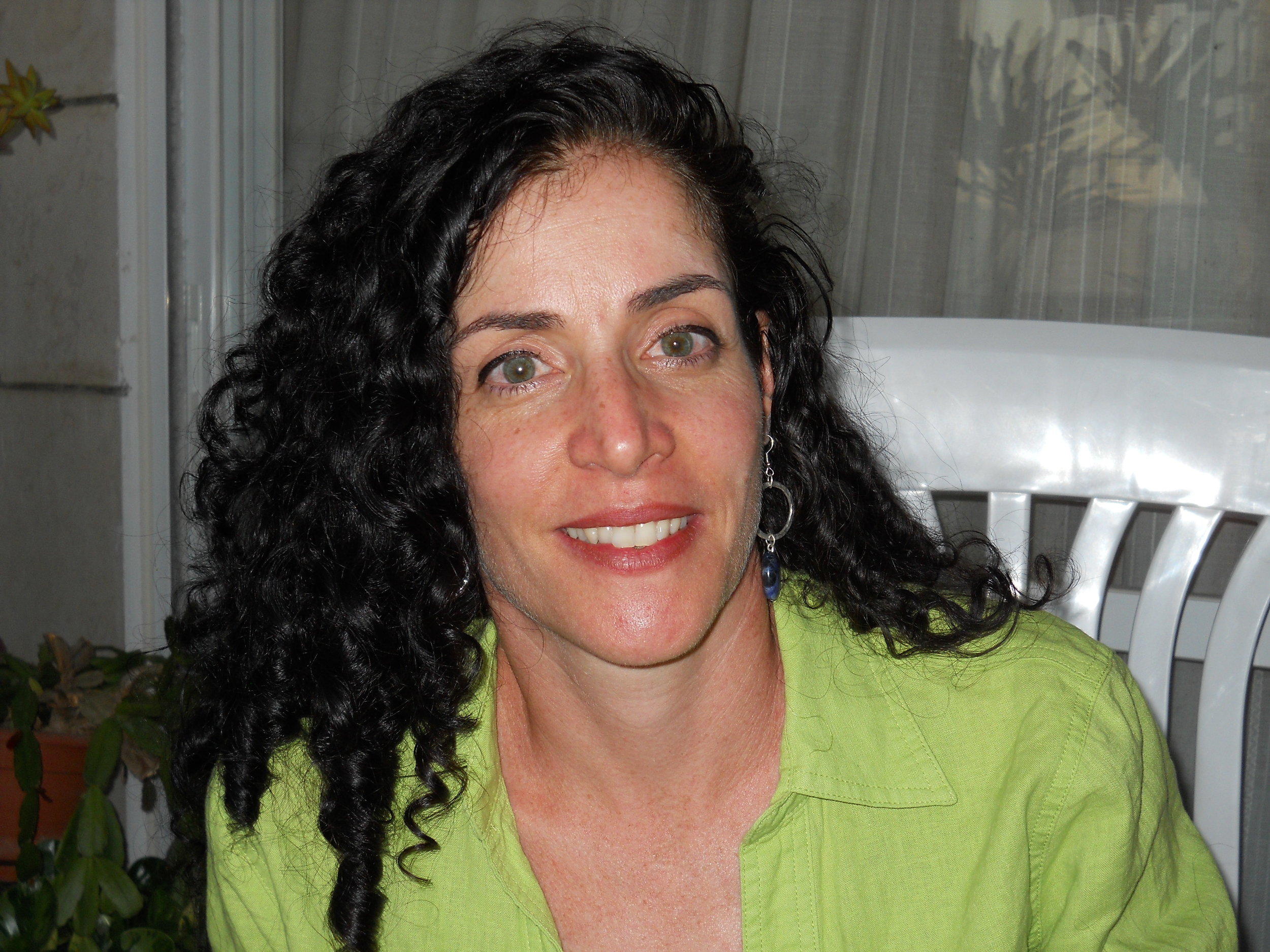
Maya Sabatello is an Assistant Professor of Clinical Bioethics, at the Department of Psychiatry, and a Lecturer, at the Institute for the Study of Human Rights, Columbia University. A lawyer with a PhD in political science, and post-doctoral training from Harvard Medical School and Columbia University Medical Center, she specializes in bioethics, medical ethics, disability studies, international law and comparative human rights. Her research focuses on law, society, and disability; a child-centered approach to assisted reproductive technologies; and the ethical, legal, and social implications of genetics, especially in pediatrics and judicial settings.
Maya Sabatello
Assistant Professor of Clinical Bioethics, Department of Psychiatry, Columbia University College of Physicians and Surgeons
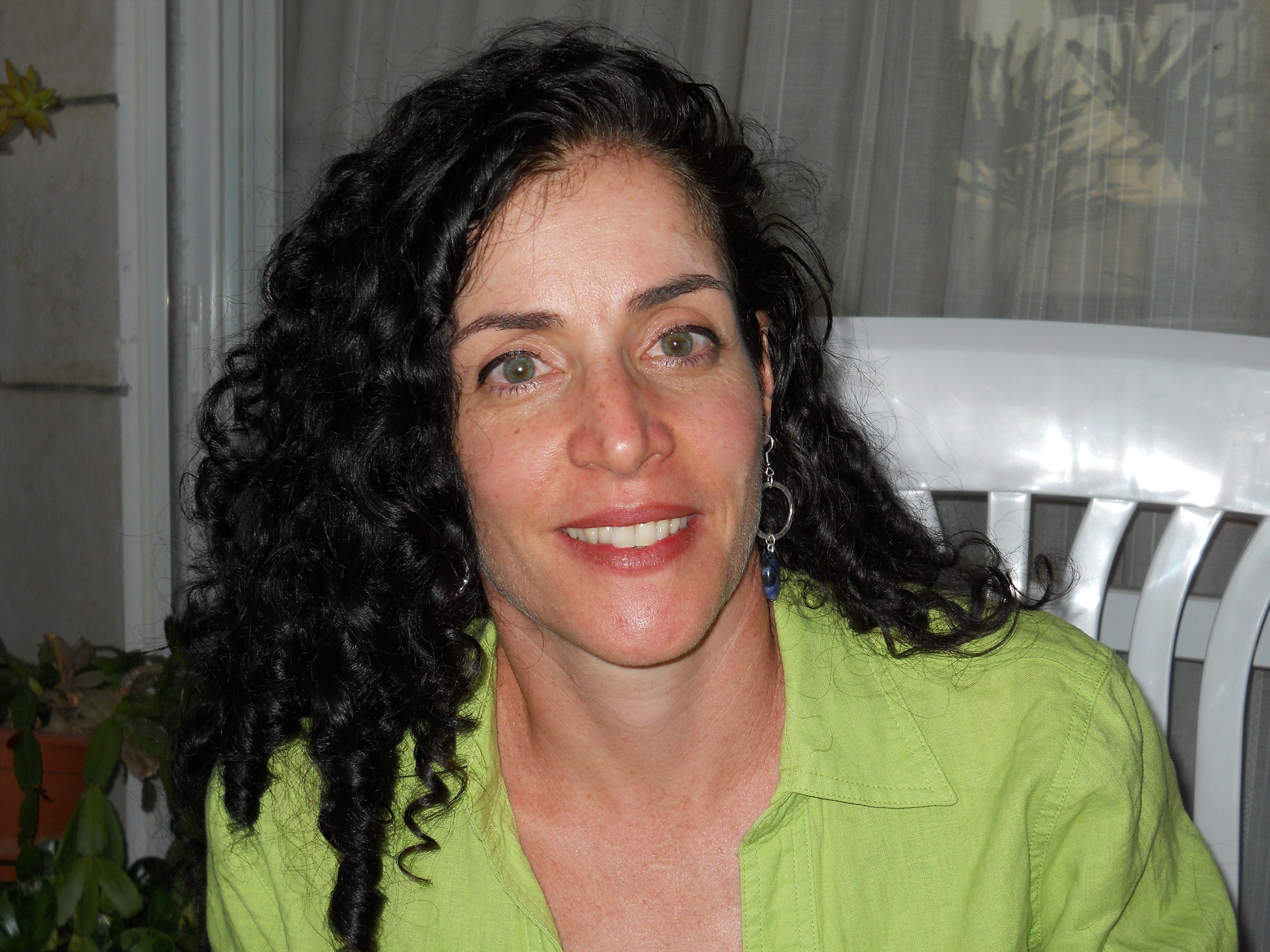
Maya Sabatello is an Assistant Professor of Clinical Bioethics, at the Department of Psychiatry, and a Lecturer, at the Institute for the Study of Human Rights, Columbia University. A lawyer with a PhD in political science, and post-doctoral training from Harvard Medical School and Columbia University Medical Center, she specializes in bioethics, medical ethics, disability studies, international law and comparative human rights. Her research focuses on law, society, and disability; a child-centered approach to assisted reproductive technologies; and the ethical, legal, and social implications of genetics, especially in pediatrics and judicial settings. She authored Children's Bioethics (Martinus Nijhoff/ Brill Publishing, 2009) and co-edited (with Marianne Schulze) Human Rights and Disability Advocacy (Penn University Press, 2014). Previously, Sabatello litigated cases of medical malpractice and has worked as a legal adviser to national and international nongovernmental organizations to promote health-related and disability rights.
Working Group Affiliation
Precision Medicine: Ethics, Politics and Culture, Project Director

Leticia Sabsay
Fellow, Politics and International Studies, The Open University
Leticia Sabsay is a Research Associate at the Department of Politics and International Studies at The Open University. Her appointment is part of the ‘Oecumene - Citizenship after Orientalism’ ERC project. Her areas of specialism encompass: critical social theory; feminist cultural and visual studies; and queer theory. Prior to taking on this role she studied sociology, and subsequently became Assistant Professor of Communications, at the University of Buenos Aires before leaving Argentina in 2002.
Leticia Sabsay
Department of Politics and International Studies, The Open University
Leticia Sabsay is a Research Associate at the Department of Politics and International Studies at The Open University. Her appointment is part of the ‘Oecumene - Citizenship after Orientalism’ ERC project. Her areas of specialism encompass: critical social theory; feminist cultural and visual studies; and queer theory. Prior to taking on this role she studied sociology, and subsequently became Assistant Professor of Communications, at the University of Buenos Aires before leaving Argentina in 2002. Since then, she has continued to collaborate with this University as a faculty member of the Gino Germani Research Institute in the Faculty of Social Sciences.


Sahar Sadjadi
Fellow, Sexuality, Women's and Gender Studies, Amherst College
Sahar Sadjadi is a physician, anthropologist and assistant professor of Sexuality, Women’s and Gender studies at Amherst College. She is currently completing a book based on an ethnographic multi-sited study of the clinical practices around gender non-conforming children in the US and the revision of the psychiatric category, Gender Identity Disorder in Children.
Sahar Sadjadi
Sexuality, Women's and Gender Studies, Amherst College
Sahar Sadjadi is a physician, anthropologist and assistant professor of Sexuality, Women’s and Gender studies at Amherst College. She is currently completing a book based on an ethnographic multi-sited study of the clinical practices around gender non-conforming children in the US and the revision of the psychiatric category, Gender Identity Disorder in Children.
She studied medicine at Tehran University of Medical Sciences and received her PhD in medical anthropology at Columbia University. She conducted an ethnographic multi-sited study of the clinical practices around gender non-conforming children and the revision of the psychiatric category, Gender Identity Disorder in Children. Her research has been funded by the Wenner-Gren Foundation and National Science Foundation. During the 2012-13 academic year, Dr. Sadjadi was a Mellon Postdoctoral Fellow at the Committee for Interdisciplinary Science Studies, The Graduate Center, City University of New York. She joined Amherst College faculty in 2013 for the position of Gender, Science and Technology. She is currently writing about the medical interventions that suppress or delay puberty in children.
Working Group Affiliation
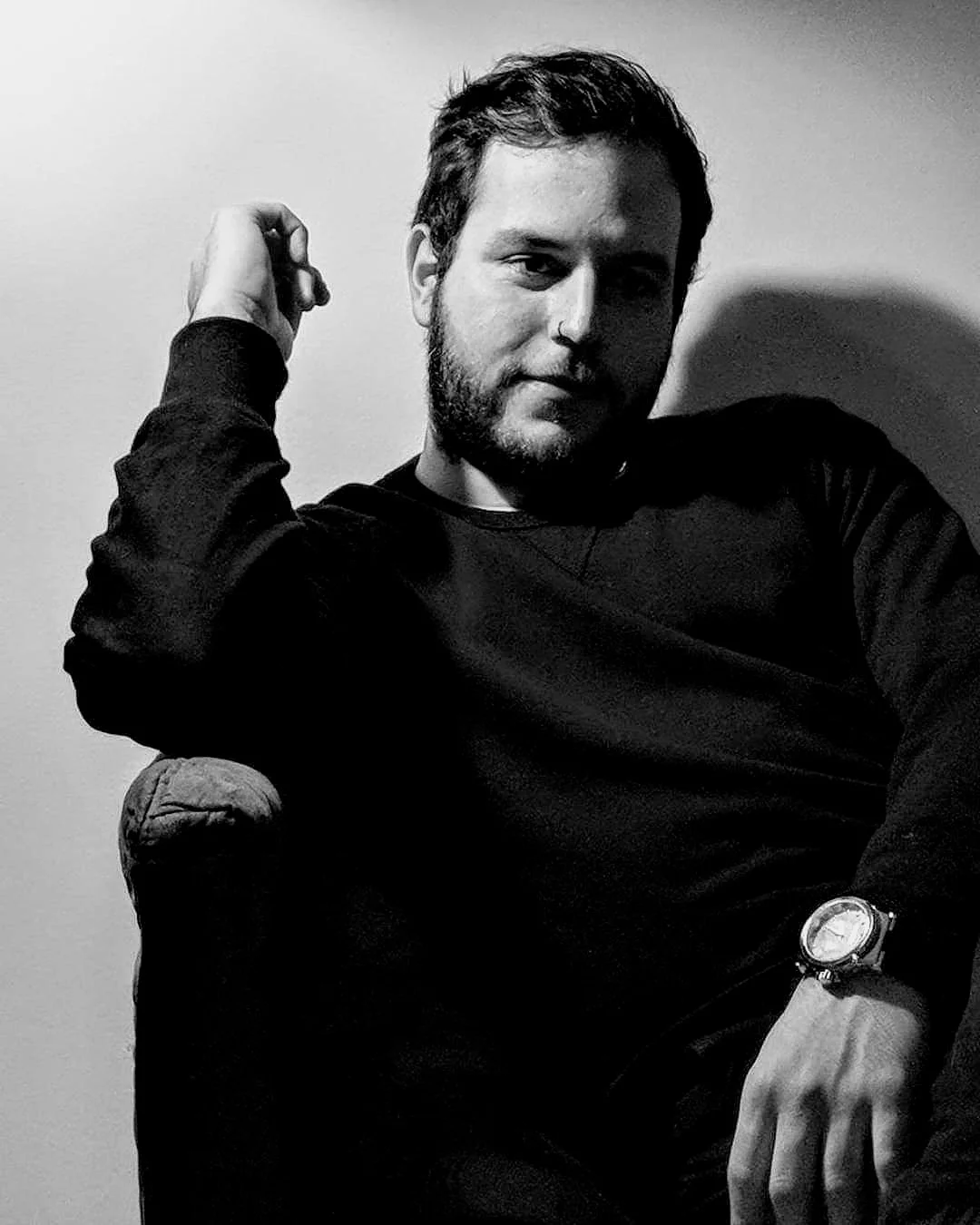
Daniel S. Sáenz
PhD Candidate, Latin American and Iberian Cultures, Columbia University
Daniel S. Sáenz is a Colombian-Canadian Settler, writer, art historian, and occasional independent curator based in Lenapehoking (New York City) and Tiohtiá:ke (Montréal). He is currently a Ph.D. student and Teaching Fellow in the Department of Latin American and Iberian Cultures at Columbia University, where he holds a Doctoral Fellowship from the Social Sciences and Humanities Research Council of Canada.
Daniel S. Sáenz
PhD Candidate, Department of Latin American and Iberian Cultures, Columbia University
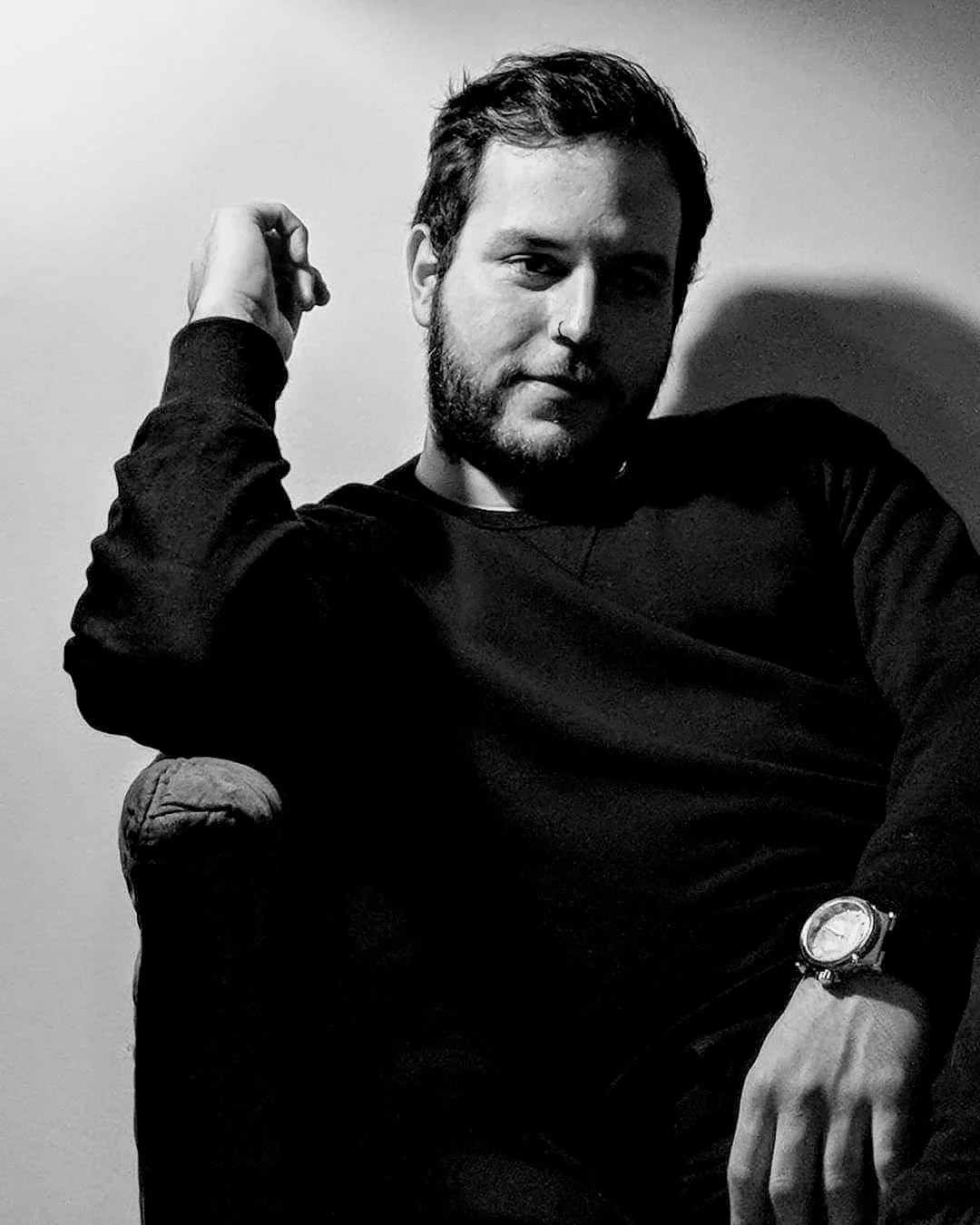
Daniel S. Sáenz is a Colombian-Canadian Settler, writer, art historian, and occasional independent curator based in Lenapehoking (New York City) and Tiohtiá:ke (Montréal). He is currently a Ph.D. student and Teaching Fellow in the Department of Latin American and Iberian Cultures at Columbia University, where he holds a Doctoral Fellowship from the Social Sciences and Humanities Research Council of Canada. Under the supervision of Professor Alessandra Russo, Daniel’s research focuses on three interrelated areas: the relationship between artistic theory and European imperial expansion in the sixteenth and seventeenth centuries; the visual culture of masculinities and dissident sexualities in the early modern circum-Atlantic world; and the history, theory, and practice of Christian art. Drawing from contextual and decolonial methodologies, Daniel’s work seeks to shed light on the role of travelling artists in the construction of artistic, religious, and gender discourses at the time of Iberian imperial expansion.
At Columbia, Daniel is also affiliated with the Institute for Research on Women, Gender, and Sexuality, the Institute for Comparative Literature and Society, the European Institute, and the Graduate Certificate in Medieval and Renaissance Studies. He is the 2019-2020 Graduate Assistant for Queer Theory: Here, Now, and Everywhere.
Working Group Affiliation
Queer Aqui, Graduate Assistant
Maryam Saleh
Fellow, International Relations, Northwestern University
Maryam Saleh is an editor and reporter at The Intercept’s Washington, D.C. bureau, where she covers immigration, politics, and foreign policy. She is a graduate of Northwestern University’s Medill School of Journalism.
Maryam Saleh
Editor and Reporter, The Intercept
Maryam Saleh is an editor and reporter at The Intercept’s Washington, D.C. bureau, where she covers immigration, politics, and foreign policy. She is a graduate of Northwestern University’s Medill School of Journalism. She is also a lawyer with experience working on immigration and civil rights issues. Maryam has most recently been published by U.S. News & World Report, PRI, UPI and McClatchy DC. She has written about the Syrian conflict for Syria Deeply and The Majalla, and has written op-eds for The Tampa Bay Times and The National. She has reported for radio as well, including co-producing an episode of Florida Matters for WUSF, Tampa Bay’s NPR affiliate.
Working Group Affiliation

Samia Salfiti
Jordan
Samia Salfiti
Jordan
Samia Salfiti graduated from the American University of Beirut with a degree in Business Administration and a minor in History. She worked briefly with the Central Bank of Jordan, after which she got married and had her three boys. Upon coming back to Jordan after the civil war of Lebanon, Samia dedicated her time to volunteerism. She was long time Chair and one-time President of the Young Women’s Christian Association that worked diligently in the Palestinian refugee camp in Baqa. Samia also served for two terms on the Municipal Council of Amman. Additionally, she is a past member of the National Center for Human Rights and a former Board member of the Royal Film Commission. She is currently a member of the Board of Trustees at the Children’s Museum of Jordan and a member of the Board of the Ahliyya and Bishop School, where she chairs the New Building Committee. She is currently a member of the Jordanian chapter of the International Women’s Forum, a U.S. based women’s movement.
Zakia Salime
Fellow, Sociology and Women's and Gender Studies, Rutger's
How to understand the complicities and cross-fertilizations of the discursive regimes of war and terror and neoliberal globalization? What are the gendered spaces in which states and neoliberal economic forces interest to produce gendered subjectivities, desires and agency? How does this interplay of classed, racialized and gendered forces create marginalization and subordination but also spaces for participation and contention ?
Zakia Salime
Associate Professor in Sociology and Women's and Gender Studies, Rutger's
How to understand the complicities and cross-fertilizations of the discursive regimes of war and terror and neoliberal globalization? What are the gendered spaces in which states and neoliberal economic forces interest to produce gendered subjectivities, desires and agency? How does this interplay of classed, racialized and gendered forces create marginalization and subordination but also spaces for participation and contention ? How has the mobilization of the discourse of gender equality, religious identity, and citizenship rights shaped movements and state transitions in North Africa and the Middle East?
These questions locate Salime’s research and teaching at the zones of frictions and tensions between universalist regimes and racialized categories of development, democratization and rights, and their gendered configurations.
Salime’s book: Between Feminism and Islam: Human Rights and Sharia Law in Morocco (Minnesota, 2011) illustrates this interplay of global regimes of rights and local alternatives, by looking at the interactions among the feminist and the Islamist women’s movements. The book shows how these interactions have transformed the state gender policies, the public discourse about women’s rights and the movements themselves. Salime ethnographic analysis illustrates the importance of certain ‘movement movements’ as entry for understanding continuities and ruptures in these movements’ strategies, discourse and forms of organization. Locating her analysis at the intersection of feminist and Islamist politics, Salime shows how these negotiations of rights and democratic participation has led to the feminization of the Islamist movement one the one hand, and the Islamization of the feminist movement on the other. Her book shows how these movements’ endeavor to influence the state legislation of women’s rights, their transnational forums, and their effective use of the media and political alliances, have led to some of the most spectacular forms of protest by women in North Africa and the Middle East.
Between Feminism and Islam critically re-assesses fissures in liberal feminist theory, which has primarily looked at Muslim women as objects of a discourse of liberation rather than as agents negotiating global policies and building alternative understandings of rights. Salime is currently working on a second book manuscript on urban youth movements of cultural expression and the gendered spaces in the context of revolutionary Middle East.

Yara Sallam
Fellow, Human Rights, Egyptian Initiative for Personal Rights (EIPR)
Ms. Yara Sallam is the Transitional Justice officer at the Egyptian Initiative for Personal Rights (EIPR). Yara previously worked as the Women Human Rights Defenders Program director at Nazra for Feminist Studies (Egypt), a professional legal assistant at the African Commission on Human and Peoples’ Rights (ACHPR) in The Gambia, as a researcher on Freedom of Religion and Belief at EIPR, and as a research assistant at the Institute of Research for Development (IRD) focusing on women’s rights in Egypt. Yara earned two degrees of law (LL.B) – a Licence of Law from Cairo University in Egypt and Maîtrise of Commercial Law from Paris I University Pantheon Sorbonne in France in 2007. She has also been awarded a Master of Laws degree (LL.M.) in International Human Rights Law at the Law School of Notre Dame University, the United States of America (2010).
Yara Sallam
Transitional Justice Officer, Egyptian Initiative for Personal Rights (EIPR)
Ms. Yara Sallam is the Transitional Justice officer at the Egyptian Initiative for Personal Rights (EIPR). Yara previously worked as the Women Human Rights Defenders Program director at Nazra for Feminist Studies (Egypt), a professional legal assistant at the African Commission on Human and Peoples’ Rights (ACHPR) in The Gambia, as a researcher on Freedom of Religion and Belief at EIPR, and as a research assistant at the Institute of Research for Development (IRD) focusing on women’s rights in Egypt. Yara earned two degrees of law (LL.B) – a Licence of Law from Cairo University in Egypt and Maîtrise of Commercial Law from Paris I University Pantheon Sorbonne in France in 2007. She has also been awarded a Master of Laws degree (LL.M.) in International Human Rights Law at the Law School of Notre Dame University, the United States of America (2010).

Laura Salvatore
Doctoral Student, Creative Writing, The City College of New York
Laura Salvatore is a poet, currently pursuing her MFA in Creative Writing at The City College of New York, where she will be completing her thesis this fall. She studied Art History and English at Southern Connecticut State University.
Laura Salvatore
Creative Writing MFA student, The City College of New York

Laura Salvatore is a poet, currently pursuing her MFA in Creative Writing at The City College of New York, where she will be completing her thesis this fall. She studied Art History and English at Southern Connecticut State University. Laura currently works at Sotheby’s Institute of Art as part of the Global Online division. Her poetry has been published in Pith journal, Angel City Review, and Apricity Magazine, amongst others.
Working Group Affiliations
Zip Code Memory Project: Practices of Justice and Repair, Social Engagement Project

J.C. Salyer
Assistant Professor of Practice in Human Rights and Anthropology, Barnard College
J.C. Salyer is an anthropologist and a lawyer whose work focuses on law and society, immigration law, and social justice. He is also the staff attorney for the Arab-American Family Support Center, a community-based organization in Brooklyn, and runs the organization’s immigration clinic. His current research focuses on migration, disruption, and displacement related to climate change in the southwestern Pacific.
J.C. Salyer
Associate Professor of Practice in Human Rights and Anthropology, Barnard College

J.C. Salyer is an anthropologist and a lawyer whose work focuses on law and society, immigration law, and social justice. He is also the staff attorney for the Arab-American Family Support Center, a community-based organization in Brooklyn, and runs the organization’s immigration clinic. His current research focuses on migration, disruption, and displacement related to climate change in the southwestern Pacific.
Working Group Affiliation
Migrant Personhood and Rights: Crises of Recognition, Project Director
Pacific Climate Circuits: Moving Beyond Science, Technology, Engineering, and Economics, Project Director
Catherine Sameh
Professor, Department of Women’s and Gender Studies, Columbia University
Catherine Sameh is managing editor of The Scholar & Feminist Online. She is also in charge of transnational collaborations with peer centers globally. Catherine’s work at the Center draws on her expertise on transnational feminism developed in her dissertation, “Signatures, Networks, Rights: Iranian Feminism in the Transnational Sphere.” Her dissertation explores the role of transnational networks, cyberspace, and print technologies in coalescing new political cultures, and considers how Iranian feminists reframe the putative opposition between religious (Islam) and secular (rights) discourses.
Catherine Sameh
Associate Director, Barnard Center for Research on Women
Catherine Sameh is managing editor of The Scholar & Feminist Online. She is also in charge of transnational collaborations with peer centers globally. Catherine’s work at the Center draws on her expertise on transnational feminism developed in her dissertation, “Signatures, Networks, Rights: Iranian Feminism in the Transnational Sphere.” Her dissertation explores the role of transnational networks, cyberspace, and print technologies in coalescing new political cultures, and considers how Iranian feminists reframe the putative opposition between religious (Islam) and secular (rights) discourses.

George Emilio Sanchez
Fellow, Social Practice Artist, Abrons Arts Center
George Emilio Sanchez is a writer, performance artist and social activist living and working on the ancestral homelands of the Lenapehoking, or Land of the Lenape, today known as Fort Greene, Brooklyn, New York. Most recently he premiered XIV at Dixon Place in New York City in 2019. He recently was named the Keith Haring Fellow by the MacDowell in New Hampshire, and he is a Social Practice artist-in-residence at Abrons Arts Center in New York City.
George Emilio Sanchez
Performance Artist and Activist
George Emilio Sanchez is a writer, performance artist and social activist living and working on the ancestral homelands of the Lenapehoking, or Land of the Lenape, today known as Fort Greene, Brooklyn, New York. Most recently he premiered XIV at Dixon Place in New York City in 2019. He recently was named the Keith Haring Fellow by the MacDowell in New Hampshire, and he is a Social Practice artist-in-residence at Abrons Arts Center in New York City. He teaches at the City University of New York’s College of Staten Island and is the Performance Director for Emergenyc, a program that explores the intersection between arts and activism. Following the premiere of his latest work In the Court of the Conqueror at Abrons Arts Center in March 2022, the piece will be presented at Su Teatro in Denver, Co. and the Hopkins Center for the Arts at Dartmouth College.
Working Group Affiliations
Zip Code Memory Project: Practices of Justice and Repair, Social Engagement Project

Rebecca Sanchez
Fellow, English, City University of New York
Rebecca Sanchez is an Assistant Professor of English at Fordham University and a member of the MLA’s Committee on Disability Issues in the Profession. Her research interests include transatlantic modernism, Deaf and disability studies and poetics. She is currently working on a book project entitled Deafening Modernism, which analyzes the impact of communicative norms on twentieth century writing.
Rebecca Sanchez
Assistant Professor of English, City University of New York

Rebecca Sanchez is an Assistant Professor of English at Fordham University and a member of the MLA’s Committee on Disability Issues in the Profession. Her research interests include transatlantic modernism, Deaf and disability studies and poetics. She is currently working on a book project entitled Deafening Modernism, which analyzes the impact of communicative norms on twentieth century writing.
Working Group Affiliation

Taylor Santoro
Doctoral Student, Bioethics, Columbia University
Taylor Santoro is a graduate student in the Bioethics program at Columbia University School of Professional Studies. In May 2017 she graduated with honors from Wake Forest University with a double B.A. in Economics and Studio Art. After graduate school she plans to attend medical school and continue to pursue her research interests in the biomedical field. In her free time she focuses the majority of her time between her passion for cooking and completing her current painting projects!
Taylor Santoro
Graduate Student, School of Professional Studies, Columbia University

Taylor Santoro is a graduate student in the Bioethics program at Columbia University School of Professional Studies. In May 2017 she graduated with honors from Wake Forest University with a double B.A. in Economics and Studio Art. After graduate school she plans to attend medical school and continue to pursue her research interests in the biomedical field. In her free time she focuses the majority of her time between her passion for cooking and completing her current painting projects!
Working Group Affiliation

Srishti Sardana
Doctoral Student, Counseling and Clinical Psychology, Columbia University
Srishti Sardana is a graduate student in the Department of Counseling and Clinical Psychology, in the Global Mental Health Lab, Teachers College, Columbia University. She is also a Research Assistant at the New York State Psychiatric Institute and Columbia University Medical Center. She has assisted on various projects with the aim to build skills needed to conduct high-impact mental health research in low-resource settings.
Srishti Sardana
Graduate Student (Doctoral Scholar), Teachers College, Columbia University.

Srishti Sardana is a graduate student in the Department of Counseling and Clinical Psychology, in the Global Mental Health Lab, Teachers College, Columbia University. She is also a Research Assistant at the New York State Psychiatric Institute and Columbia University Medical Center. She has assisted on various projects with the aim to build skills needed to conduct high-impact mental health research in low-resource settings. She has worked with faculty and advanced graduate students on several studies including examining the feasibility and acceptability of evidence-based psychotherapy (specifically, interpersonal psychotherapy) to address the mental health needs of adolescent girls trafficked for sex work and prostitution in India; communities impacted by the Syrian refugee crisis in Lebanon; and implemented a pilot study to assess the mental health needs of home-based female sex workers in rural India for her Master’s thesis, at Teachers College. Srishti is currently examining how the precision medicine initiative may benefit a larger population by ensuring an equitable racial representation of individuals of different ethnic groups. Before enrolling at Columbia University, Sardana was employed in the juvenile offender unit at the Institute of Juvenile Justice, Delhi Police where she initiated a narrative therapy-based intervention project for youth offenders. She also helped a local mental health NGO with the Building Bonds project, which trained 100,000 men and boys to become active stakeholders in prevention of violence against women and girls in Delhi, India. Srishti is the co-founder of Sishu Vikas, an NGO, where she assisted in clinical work focused on providing therapeutic support for child and adult clients in need for crisis and suicide assessment and intervention for individuals exposed to violence, neglect, and sexual abuse. As a doctoral student, Srishti’s research is focused on bridging the gap in clinical science research and practice, with a specific focus on socially disadvantaged communities with severe mental illnesses.
Working Group Affiliation
Abhay Sardesai
Fellow, Cultural Studies, Doshi Women’s College of Arts
Abhay Sardesai has been the Editor of ART India, the premier art magazine of India, since November 2002. Under his editorship, the magazine has developed a Culture Studies-oriented approach and has become more inter-disciplinary in its theme-based explorations. He has been a Visiting Faculty in Aesthetics at the Department of English, University of Mumbai, and has also been the Chair of Humanities, Kamla Raheja Vidyanidhi Institute of Architecture, Mumbai. He teaches at the Smt. P. N. Doshi Women’s College of Arts and also at various other institutions like Jnanapravaha and TISS.
Abhay Sardesai
Smt. P. N. Doshi Women’s College of Arts
Abhay Sardesai has been the Editor of ART India, the premier art magazine of India, since November 2002. Under his editorship, the magazine has developed a Culture Studies-oriented approach and has become more inter-disciplinary in its theme-based explorations. He has been a Visiting Faculty in Aesthetics at the Department of English, University of Mumbai, and has also been the Chair of Humanities, Kamla Raheja Vidyanidhi Institute of Architecture, Mumbai. He teaches at the Smt. P. N. Doshi Women’s College of Arts and also at various other institutions like Jnanapravaha and TISS. He writes in English and translates from Marathi, Konkani and Gujarati. An associate of the research collective PUKAR, he was the Director of the Writing Across the City project which explored the inter-relationships between literatures and literary cultures in the city of Mumbai. He has written widely on Art and Literature and read from his work at various places including the University of Princeton, University of Cambridge, Mumbai University, S.N.D.T. University, Sarai and NGMA.
Barbara D. Savage
Fellow, History, University of Pennsylvania
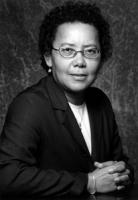
Barbara D. Savage is Geraldine R. Segal Professor of American Social Thought and Professor of History at the University of Pennsylvania, where she has taught since 1995. She teaches graduate and undergraduate courses in twentieth century African American history; the history of American religious and social reform movements; and the history of the relationship between media and politics.
Barbara D. Savage
Geraldine R. Segal Professor of American Social Thought and Professor of History, University of Pennsylvania

Toward an Intellectual History of Black Women
Barbara D. Savage is Geraldine R. Segal Professor of American Social Thought and Professor of History at the University of Pennsylvania, where she has taught since 1995. She teaches graduate and undergraduate courses in twentieth century African American history; the history of American religious and social reform movements; and the history of the relationship between media and politics.
She is the author of Broadcasting Freedom: Radio, War, and the Politics of Race, 1938-1948 (University of North Carolina Press, 1999) which won the Herbert Hoover Presidential Library Award for the best book in American history in the period 1916-1966. In addition, she is co-editor of Women and Religion in the African Diaspora (Johns Hopkins University Press, 2006), a collection of new work from scholars associated with a three-year Ford Funded project coordinated with Professor R. Marie Griffith at Princeton University.
Her most recent book, Your Spirits Walk Beside Us: The Politics of Black Religion (Harvard University Press, 2008), is an historical examination of debates about the public responsibility of black churches and the role of religion in racial leadership. Savage has published several articles related to that project, including "Biblical and Historical Imperatives: Toward a History of Ideas about the Political Role of Black Churches," in African Americans and the Bible: Sacred Texts and Social Textures, ed., Vincent Wimbush (New York: Continuum Press, 2000) and "W. E. B. Du Bois and 'the Negro Church,'" Annals of the American Academy of Political and Social Science (March, 2000).
She was awarded a Postdoctoral Fellowship by the Smithsonian Institution for work on her first book. She also has received fellowship awards for work on her current project from: the Radcliffe Institute for Advanced Studies, Harvard University; the Princeton University Center for the Study of Religion; and the Scholars-in-Residence Program at the Schomburg Center on Black Culture.
Savage received her doctorate in history from Yale in 1995, and also holds a law degree from Georgetown University and an undergraduate degree from the University of Virginia. Prior to entering graduate school, she worked in Washington, DC, as a Congressional staff member and as a member of the staff of the Children's Defense Fund. During graduate school, she served as Director of Federal Relations, Office of the General Counsel at Yale University.
At Penn, among other University commitments, she served as a member of the recent Presidential Search Committee. She also is a faculty member for the National Endowment for the Humanities College and University Teachers' Institute on the Civil Rights Movement, held during the summers at Harvard University's W. E. B. Du Bois Institute.
Working Group Affiliation
Toward an Intellectual History of Black Women, Project Director
Skye Shannon Savage
Project Coordinator
Working Group: Motherhood and Technology

Project Coordinator
Working Group: Motherhood and Technology
Email: s.savage@columbia.edu
Skye Shannon Savage is a doctoral student in the Germanic Languages Department. Their research focuses broadly on the medical humanities in both the 20th and 18th centuries. They are currently writing a dissertation on authors Unica Zürn and Ingeborg Bachmann and their relation to post-war medical discourses, entitled The Performativity of Diagnosis: Medicine, Fascism, and Identity in Post-War Germany. They have previously presented research on Karl Philipp Moritz and his work with Deaf learners and their impact on his pedagogical theories.
In addition to their academic work in the department, they are extremely active in teaching development at the university, having held multiple positions at the Center for Teaching and Learning. They currently serve as a Teaching Consultant where they provide peer support for fellow graduate instructors seeking to improve their teaching. They have also conducted research in adult second-language acquisition and metalinguistic knowledge in the university foreign language classroom. Prior to beginning studies at Columbia, Skye served as an English teacher for a Denver-area refugee resettlement non-profit.
Lena Sawyer
Lena Sawyer

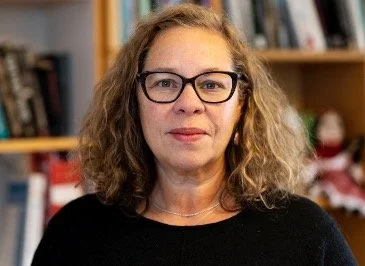
Lena Sawyer is a cultural anthropologist who teaches in the Department of Social Work at Gothenburg University, Sweden. I am interested in exploring creative and revolutionary pedagogies, methodologies, and collective knowledge-making practices. During the last few years, I have worked collaboratively on exploratory Arts-Based projects. For example one project with Nana Osei-Kofi, engaged the coloniality of Swedish public commemoration (a performance paper and video installation around the statue The Iron Well in Gothenburg). Another, together with the writing group Kollektiv Omsorg, co-created practices of black feminist care through letter writing.