

Athena Athanasiou
Fellow, Social Anthropology, Panteion University of Social and Political Sciences,
Athena Athanasiou teaches at the Department of Social Anthropology at Panteion University of Social and Political Sciences, in Athens, Greece. She has studied history, archaeology and philosophy at the Universities of Athens and Thessaloniki, Greece. She has received her Ph.D. in Social Anthropology from the New School for Social Research, in New York, and was a postdoctoral fellow at the Pembroke Center for Teaching and Research on Women, at Brown University, USA (2001-2002).
Athena Athanasiou
Panteion University of Social and Political Sciences, Greece
Athena Athanasiou teaches at the Department of Social Anthropology at Panteion University of Social and Political Sciences, in Athens, Greece. She has studied history, archaeology and philosophy at the Universities of Athens and Thessaloniki, Greece. She has received her Ph.D. in Social Anthropology from the New School for Social Research, in New York, and was a postdoctoral fellow at the Pembroke Center for Teaching and Research on Women, at Brown University, USA (2001-2002). Her publications include: Life at the Limit: Essays on Gender, Body and Biopolitics (in Greek, Ekkremes, 2007); Judith Butler – Conversations with Athena Athanasiou, Dispossession: The Performative in the Political (Polity Press, 2012); Feminist Theory and Cultural Critique (ed., in Greek, Nissos, 2006); Rewriting Difference: Luce Irigaray and ‘the Greeks’ (co-ed. with Elena Tzelepis, SUNY Press, 2010); Biosocialities: Perspectives on Medical Anthropology (ed., in Greek, Nissos, 2011). She has been research supervisor in the FP6 European consortium “Values, Equality and Difference in Liberal Democracies: Debates about Female Muslim Headscarves in Europe” (2006-09). Her research interests include gender, feminist and queer theory, biopolitics, technologies of the body, antimilitarist movements, affect, nationalism, and memory.

Hadeel Aziz
Fellow, Executive Director, Justice Center for Legal Aid in Jordan
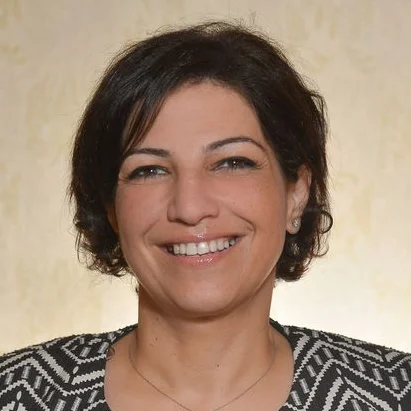
Hadeel Aziz is the Executive Director of the Justice Center for Legal Aid in Jordan. In 2008, Hadeel pioneered free legal assistance in Jordan when she left a multi-million dollar USAID project on the rule of law to co-found the Justice Center for Legal Aid (JCLA).
Hadeel Aziz
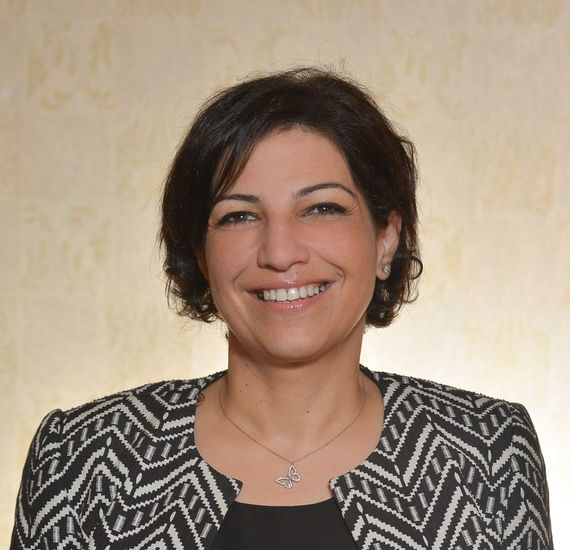
Hadeel Aziz is the Executive Director of the Justice Center for Legal Aid in Jordan. In 2008, Hadeel pioneered free legal assistance in Jordan when she left a multi-million dollar USAID project on the rule of law to co-found the Justice Center for Legal Aid (JCLA). Her organization provides legal services to the poor, underprivileged and vulnerable, a service previously available only to those who could afford it. JCLA is now the largest legal aid provider in the country. In her role, Hadeel is responsible for setting and monitoring strategy, overseeing advocacy and ensuring sustainability of the center. Hadeel is currently establishing a comprehensive country- wide pro bono attorney program and expects to partner with the Jordanian Bar association and the Ministry of Justice to spur a significant culture change. She has investigated public justice in the U.S., including advocacy, and women and children’s issues.
Working Group Affiliation

Kamal Badhey
Fellow, Urban Studies, University of London
Kamal Badhey (she/her) is a photographer, artist-educator and independent curriculum designer of South Asian ancestry with an MA in Photography and Urban Cultures from Goldsmiths, University of London, and an MS in Museum Education from Bank Street College. She is a member of the Urban Photographers Association and South Asian Women’s Creative Collective. Her work intersects with diaspora, using photography, oral storytelling, and family history to stitch together stories. It follows the Telugu saying, ’Katha kanchiki, manam intiki’, ‘The story goes far far away, and now we are back in our homes’. Her project Portals and Passageways, exhibited internationally traces her jeweler ancestor and great great grandfather Annam Rathnaiah from unknown origins to a former British colonial bazaar in Secunderabad, India. Kamal brings two decades of experience collaborating with youth and adults in public schools, transitional housing, community centers, civic engagement, and universities. She was a Lewis Hine Documentary Fellow and a Claremont Documentary Fellow.
Kamal Badhey

Kamal Badhey (she/her) is a photographer, artist-educator and independent curriculum designer of South Asian ancestry with an MA in Photography and Urban Cultures from Goldsmiths, University of London, and an MS in Museum Education from Bank Street College. She is a member of the Urban Photographers Association and South Asian Women’s Creative Collective. Her work intersects with diaspora, using photography, oral storytelling, and family history to stitch together stories. It follows the Telugu saying, ’Katha kanchiki, manam intiki’, ‘The story goes far far away, and now we are back in our homes’. Her project Portals and Passageways, exhibited internationally traces her jeweler ancestor and great great grandfather Annam Rathnaiah from unknown origins to a former British colonial bazaar in Secunderabad, India. Kamal brings two decades of experience collaborating with youth and adults in public schools, transitional housing, community centers, civic engagement, and universities. She was a Lewis Hine Documentary Fellow and a Claremont Documentary Fellow.
Working Group Affiliations
Zip Code Memory Project: Practices of Justice and Repair, Social Engagement Project
A. George Bajalia
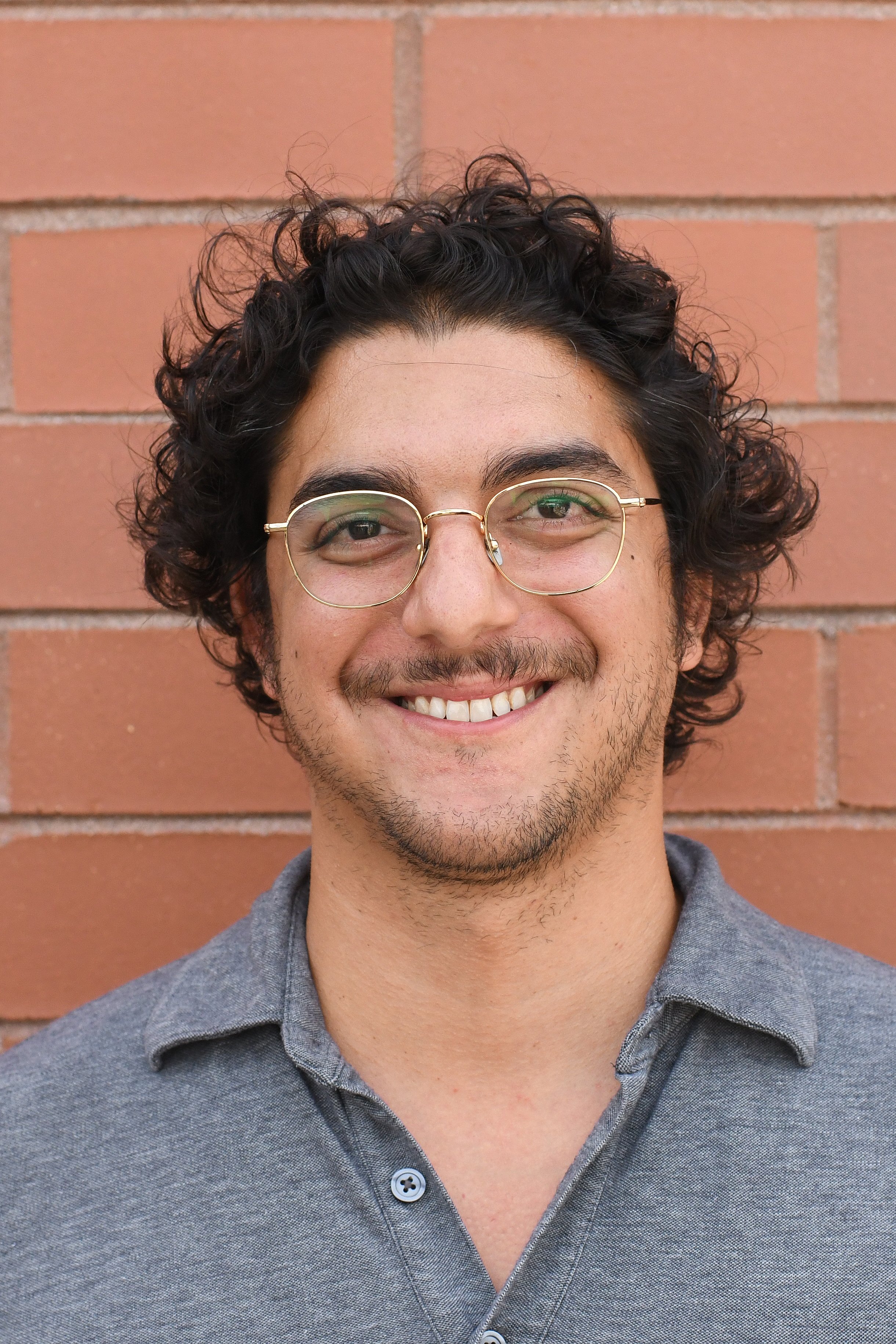
A. George Bajalia is Assistant Professor of Anthropology at Wesleyan University. His work is concerned with borderlands, primarily in the Western Mediterranean region.
A. George Bajalia
A. George Bajalia is Assistant Professor of Anthropology at Wesleyan University. His work is concerned with borderlands, primarily in the Western Mediterranean region. His current book project, Waiting at the Border: Language, Labor, and Infrastructure in the Strait of Gibraltar, dwells on the political, social, and cultural forms that emerge during time spent waiting among cross-border workers and West and Central African immigrants living and working around the Moroccan-Spanish borderlands.
His work argues that lives lived while waiting, whether in the city of Tangier among im/migrants or in the commodity warehouses that abut the land border between the Spanish enclave of Ceuta and the Moroccan coast, form consequential habits that sediment into social life and become fields for potential political claims grounded in communal sentiments. As both an intellectual and political project, he is interested in exploring the consequences of these communal sentiments across the many borders of the Strait of Gibraltar and how these sentiments cannot be solely contained within the categories typically associated with border-crossing, categories such as “migrant,” “refugee,” and “asylum-seeker.”
Bajalia has held research fellowships from the Mellon Foundation-CAORC, Fulbright-Hays, Fulbright-IIE, and the American Institute for Maghrib Studies. He is the co-founder and co-director of the Youmein Festival, an annual 48-hour contemporary art and performance festival and residency in Tangier, Morocco. Bajalia received his Ph.D. from the Department of Anthropology at Columbia University.
Working Group: Refugee Cities
Michael J. Balick
Michael J. Balick (New York Botanical Garden and Columbia University) Vice President for Botanical Science, Director and Philecology Senior Curator Institute of Economic Botany, The New York Botanical Garden. For more than four decades, Dr. Balick has studied the relationship between plants and people, working with traditional cultures in tropical, subtropical, and desert environments. He is a specialist in the field known as ethnobotany, working with indigenous cultures in many parts of the world to document their plant knowledge, understand the environmental effects of their traditional management systems, and develop sustainable utilization systems-while ensuring that the benefits of such work are always shared with local communities. Dr. Balick has also conducted research in New York City, studying traditional healing practices in ethnic communities of the urban environment. He is the author or editor of 30 books and monographs.

Mia Bay
Fellow, Race and Ethnicity, Rutgers University
Mia Bay is a historian who teaches at Rutgers University, where she also serves as the Associate Director of the Rutgers Center for Race and Ethnicity. The author of a number of works, including The White Image in the Black Mind: African American Ideas about White People 1830-1925 (2000), she has recently completed a new book entitled To Trouble the Waters Freely: The Life and Times of Ida B. Wells (2009).
Mia Bay
Associate Director of the Rutgers Center for Race and Ethnicity, Rutgers University

Mia Bay is a historian who teaches at Rutgers University, where she also serves as the Associate Director of the Rutgers Center for Race and Ethnicity. The author of a number of works, including The White Image in the Black Mind: African American Ideas about White People 1830-1925 (2000), she has recently completed a new book entitled To Trouble the Waters Freely: The Life and Times of Ida B. Wells (2009).
Working Group Affiliation
Toward an Intellectual History of Black Women, Project Director
Asef Bayat
Fellow, Global and Transnational Studies, University of Illinois
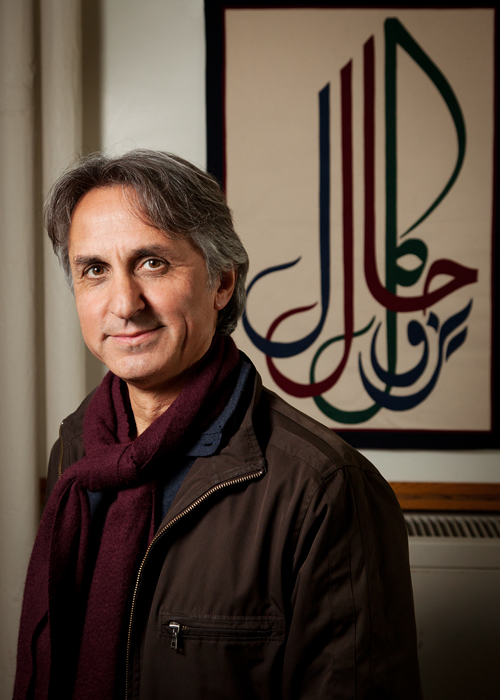
Asef Bayat, the Catherine and Bruce Bastian Professor of Global and Transnational Studies, teaches Sociology and Middle Eastern studies at the University of Illinois, Urbana-Champaign. He was the Academic Director of the International Institute for the Study of Islam in the Modern World (ISIM) and ISIM Chair of Islam and the Modern World at Leiden University from 2003 until 2009. He writes on Egypt and Iran, and has published widely on issues of political sociology, social movements, urban space and politics, religious politics, contemporary Islam, and the Muslim Middle East. His latest book is: Life as Politics: How Ordinary People Change the Middle East (2013, 2nd edition).
Asef Bayat
Catherine and Bruce Bastian Professor of Global and Transnational Studies, University of Illinois, Urbana-Champaign
Asef Bayat, the Catherine and Bruce Bastian Professor of Global and Transnational Studies, teaches Sociology and Middle Eastern studies at the University of Illinois, Urbana-Champaign. He was the Academic Director of the International Institute for the Study of Islam in the Modern World (ISIM) and ISIM Chair of Islam and the Modern World at Leiden University from 2003 until 2009. He writes on Egypt and Iran, and has published widely on issues of political sociology, social movements, urban space and politics, religious politics, contemporary Islam, and the Muslim Middle East. His latest book is: Life as Politics: How Ordinary People Change the Middle East (2013, 2nd edition).
Jonathan Beller
Fellow, English and Humanities, Pratt Institute
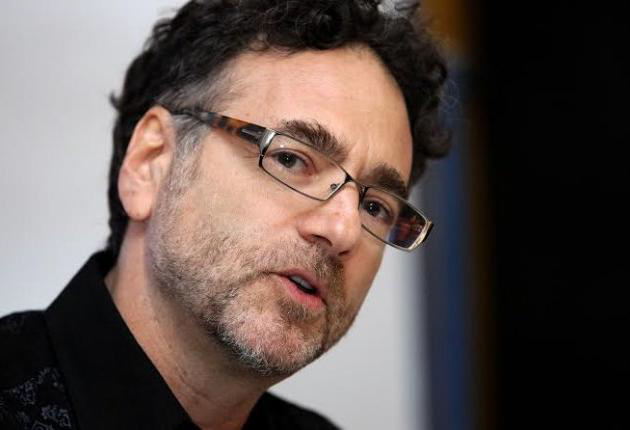
Jonathan Beller is Professor of English and Humanities and Critical and Visual Studies, Pratt Institute. He is the author of The Cinematic Mode of Production: Towards A Political Economy of the Society of the Spectacle, (Lebanon: Dartmouth College/University Press of New England, 2006) and Acquiring Eyes: Philippine Visuality, Nationalist Struggle and The World Media-System, (Manila: Ateneo de Manila University Press, 2006).
Jonathan Beller
Associate Professor of English and Humanities, Pratt Institute
Jonathan Beller is Professor of English and Humanities and Critical and Visual Studies, Pratt Institute. He is the author of The Cinematic Mode of Production: Towards A Political Economy of the Society of the Spectacle, (Lebanon: Dartmouth College/University Press of New England, 2006) and Acquiring Eyes: Philippine Visuality, Nationalist Struggle and The World Media-System, (Manila: Ateneo de Manila University Press, 2006). He haswritten numerous articles including “21st Century Fascism, ‘Political’ Killing, and the Crisis of Representation,” Kontra-Gahum: Academics Against Political Killings, ed., Sarah Raymundo, Manila: Ibon Publications, 2006, “Kino-I, Kino World: Notes on the Cinematic Mode of Production,” in The Visual Culture Reader, Second Edition, ed. Nicholas Mirzoeff, Routledge, 2002 and “Third Cinema in a Global Frame: Curacha, Yahoo!, andIshmael Bernal’s Manila By Night,” Positions9:2 Fall 2001, 331-368. He has also written the entries for “Third Cinema and Visual Culture” in The New Dictionary of the History of Ideas, New York: Scribner’s Sons, 2005 and a variety of occasional pieces including film reviews for radio, newspaper and the web. His current book project is entitled, The Tortured Signifier: Signs of the State of Exception. For his work on Philippine Visual Culture he has been the recipient of a Fulbright Senior Scholar Award and a Getty Grant. Recent grants and honors include Mellon Research Stipends and Travel Awards in 2005, 2006 and 2007 and the selection of his essay “Paying Attention,” published in Cabinet #24 (New York: Distributed Art Publishers, 2007), for Documenta XII. He has taught at Barnard College, Pratt Institute, University of California, Santa Cruz, San Francisco State University, and the University of the Philippines.
James Berger
Fellow, American Studies and English, Yale University
James Berger is Senior Lecturer in American Studies and English at Yale University. He is author of After the End: Representations of Post-Apocalypse and editor of Helen Keller's The Story of My Life: The Restored Edition. He is currently completing The Disarticulate: Language, Impairment, and the Narratives of Modernity, to be published by New York University Press.
James Berger
Senior Lecturer in American Studies and English, Yale University
James Berger is Senior Lecturer in American Studies and English at Yale University. He is author of After the End: Representations of Post-Apocalypse and editor of Helen Keller's The Story of My Life: The Restored Edition. He is currently completing The Disarticulate: Language, Impairment, and the Narratives of Modernity, to be published by New York University Press.
Working Group Affiliation
Sara Bergstresser
Visiting Lecturer, Anthropology, Boston University
Sara Bergstresser is a medical and cultural anthropologist, and she is currently a Visiting Lecturer in Anthropology at Boston University. Her research addresses the intersection of health and society, including mental health policy and stigma, global bioethics, and religion and health. She holds a PhD in Anthropology from Brown University and an MPH from Harvard University. She is also working on an M.S. in Bioethics at Columbia on a part-time basis.
Sara Bergstresser
Visiting Lecturer, Anthropology, Boston University
Sara Bergstresser is a medical and cultural anthropologist, and she is currently a Visiting Lecturer in Anthropology at Boston University. Her research addresses the intersection of health and society, including mental health policy and stigma, global bioethics, and religion and health. She holds a PhD in Anthropology from Brown University and an MPH from Harvard University. She is also working on an M.S. in Bioethics at Columbia on a part-time basis.

Emily Bloom
Mellon Public Humanities Fellow, Sarah Lawrence College
Emily Bloom is a Mellon Public Humanities Fellow at Sarah Lawrence College. She is the author of The Wireless Past: Anglo-Irish Writers and the BBC, 1931-1968 (Oxford University Press, 2016), which was awarded the First Book Prize by the Modernist Studies Association.
Emily Bloom
Mellon Public Humanities Fellow, Sarah Lawrence College
Emily Bloom is a Mellon Public Humanities Fellow at Sarah Lawrence College. She is the author of The Wireless Past: Anglo-Irish Writers and the BBC, 1931-1968 (Oxford University Press, 2016), which was awarded the First Book Prize by the Modernist Studies Association. Her current work explores the interrelations between disability, media, technology, gender, and literature. She has contributed chapters to The Edinburgh Companion to Modernism and Technology, Irish Literature in Transition (Cambridge UP), and The Critic as Amateur (Bloomsbury) and has published articles in The Irish Times, International Yeats Studies, Éire-Ireland, and Texas Studies in Literature and Language. Her review essay, “Mother of a Pandemic,” on motherhood, pandemics, and the gothic appeared in Public Books in January 2021. Dr. Bloom is currently at work on a work of narrative non-fiction about motherhood and technology.
Working Group Affiliation

Yarimar Bonilla
Associate Professor of Anthropology and Caribbean Studies, Rutgers University
Yarimar Bonilla is an Assistant Professor of Anthropology and Caribbean Studies at Rutgers University.
Yarimar Bonilla
Associate Professor of Anthropology and Caribbean Studies, Rutgers University

PhD, U Chicago, 2008; Assistant Professor, SAS) Political and Historical Anthropology, Postcolonialism, Social Movements, Sovereignty, Citizenship; Caribbean, France
yarimar.bonilla@rutgers.edu
EDUCATION
2008 Ph.D. Socio-Cultural Anthropology, University of Chicago
2003 M.A. Socio-Cultural Anthropology, University of Chicago
1998 M.A. Latin American Studies, University of New Mexico
1996 B.A. University of Puerto Rico - Rio Piedras
ACADEMIC POSITIONS
2011+ Assistant Professor of Anthropology and Caribbean Studies, Rutgers University
2008-11 Assistant Professor, Department of Anthropology, University of Virginia
2006-08 Research Fellow, Carter G. Woodson Institute, University of Virginia
PRIZES
2010 Crystal Award for Best Dissertation, awarded by the Caribbean Studies Association
2009 Daniel F. Nugent Dissertation Prize for Distinguished Work in the field of Historical
Anthropology, awarded by the University of Chicago Department of Anthropology
RESEARCH STATEMENT
I teach and write about social movements, political imaginaries, colonial legacies and historical memory in the non-sovereign Caribbean and the French Outremer. I focus particularly on the non-sovereign Caribbean: societies with lingering colonial relationships and ambiguous political identities that disrupt traditional understandings of citizenship, nationality, sovereignty, and autonomy. I am particularly attentive to the political possibilities that exist outside of the traditional rubrics of state and nation building, and to the formation of political identities that disrupt the assumed relationships between a land, a people, and a state. These concerns have combined with an interest in the role of history in the Caribbean political imagination, and the ways in which Caribbean populations understand and negotiate their past – particularly their experiences with colonialism and slavery.
My first book grounds these questions in an ethnographic study of labor activism in the French Caribbean island of Guadeloupe. I argue that in the wake of what some describe as “failed” nationalist movements, a new kind of labor politics has emerged throughout the Former French colonies that combines the ideological and tactical repertoires of anti-colonial struggles with the political strength of the French labor tradition. The result is a form of “postcolonial syndicalism” that infuses traditional labor struggles with battles over collective memory, creole language politics, cultural revalorization, and nontraditional claims to self-determination. However, unlike the iconic forms of post-war anti-colonialism from which these labor movements emerged, these new political actors do not seek “national liberation” or political independence. Instead they are attempting to carve out alternative forms of political and economic autonomy within the context of French and European integration.
In addition to my work in Guadeloupe, I am also in the process of developing a larger program of comparative research in the non-sovereign Caribbean in order to re-theorize the colonial legacies and contemporary politics of the region. I contend that we need to examine non-sovereignty as a model, not just for non-independent territories, but also for the nominally sovereign territories within and beyond the Caribbean that are mired in postcolonial crises of structural adjustment, international trade regulations, NGO shadow states, post disaster recovery, and the (often inadvertent) effects of international aid. By approaching the region through the frame of the “non-sovereign” I seek to break with the linguistic divides that have plagued the field of Caribbean studies in order to bring together research on the French, English, Spanish, and Dutch speaking Caribbean and to highlight points of commonality in both the historical trajectories and contemporary political forms and processes of the region.
PUBLICATIONS
2011 The Past Is Made by Walking: Labor Activism and Historical Production in
Postcolonial Guadeloupe. Cultural Anthropology 26(3):313–339
2010 Guadeloupe Is Ours. The Prefigurative Politics of the Mass Strike in the French
Antilles. Interventions: International Journal of Postcolonial Studies 12(1):125-137
2010 Puerto Rico in Crisis: Government Workers Battle Against Neoliberal Reform (written
with Rafael Boglio) NACLA Report on the Americasforthcoming January 43(1):6-8
2009 Guadeloupe on Strike: A New Political Chapter in the French Antilles. NACLA Report on
the Americas 42(3):6-10
2009 Labor and Protest in Guadeloupe. International Encyclopedia of Revolution and
Protest. Immanuel Ness, Ed. Blackwell pp 1468-1471
Working Group Affiliations
Unpayable Debt: Capital, Violence, and the New Global Economy
Jayna Brown
Professor, Humanities and Media Studies, Pratt Institute
Jayna Brown is a Professor in the Department of Humanities and Media Studies at Pratt Institute and is the co-editor of Social Text. Her areas of knowledge and interest include black expressive cultures, film, queer of color critique, anarchism, materialism, and science fiction.
Jayna Brown
Professor of Humanities and Media Studies, Pratt Institute,

Jayna Brown is Professor in the Department of Humanities and Media Studies at Pratt Institute and is the co-editor of Social Text. Her areas of knowledge and interest include black expressive cultures, film, queer of color critique, anarchism, materialism and science fiction. Her first book, Babylon Girls: Black Women Performers and the Shaping of the Modern (Duke University Press, 2008) won Best Book awards from both the American Society for Theatre Research and the Theater Library Association. She has also published on African American race film and popular performance in various journals including The Journal of Popular Music Studies, GLQ, Social Text and Women and Performance. Her new book, Black Utopias: Speculative Life and the Music of Other Worlds (Duke University Press, Spring, 2021) traces black radical utopian practice and performance, from the psychic travels of Sojourner Truth to the cosmic transmissions of Alice Coltrane and Sun Ra. A current project on terraformation, or the modification of inhabitable environments to make them livable for the human species, asks after the ethics of human habitation in this moment, for neither the scorched earth nor the burning surface of Mars can provide us with virgin soil upon which to start over.
Working Group Affiliation

Dilara Çalışkan
Fellow, Cultural Studies, Sabancı University
Dilara Çalışkan is currently working at Sabancı University’s Gender and Women’s Studies Forum. In 2014, she graduated from Sabancı University’s Cultural Studies Master Program with a thesis titled “Queer Mothers and Daughters: The Role of Queer Kinship in the Everyday Lives of Trans Sex Worker Women in Istanbul.” Since 2010, she has been involved with Istanbul’s LGBTI Solidarity Association, which particularly focuses on human rights violations based on sexual orientation and gender identity, opposes the criminalization of sex work, and supports its recognition as work.
Dilara Çalışkan
Cultural Studies, Sabancı University

Dilara Çalışkan is currently working at Sabancı University’s Gender and Women’s Studies Forum. In 2014, she graduated from Sabancı University’s Cultural Studies Master Program with a thesis titled “Queer Mothers and Daughters: The Role of Queer Kinship in the Everyday Lives of Trans Sex Worker Women in Istanbul.” Since 2010, she has been involved with Istanbul’s LGBTI Solidarity Association, which particularly focuses on human rights violations based on sexual orientation and gender identity, opposes the criminalization of sex work, and supports its recognition as work.
Working Group Affiliation

Hazel Carby
Fellow, African American Studies and American Studies, Yale University
Hazel Carby is the Charles C. and Dorothea S. Dilley Professor of African American Studies, Professor of American Studies, and Director of the Initiative on Race Gender and Globalization at Yale University. Her books include Reconstructing Womanhood (OUP, 1987), Race Men (Harvard, 1998), and Cultures in Babylon (Verso, 1999).
Hazel Carby
Professor of African American Studies and American Studies, Yale University

Hazel Carby is the Charles C. and Dorothea S. Dilley Professor of African American Studies, Professor of American Studies, and Director of the Initiative on Race Gender and Globalization at Yale University. Her books include Reconstructing Womanhood (OUP, 1987), Race Men (Harvard, 1998), and Cultures in Babylon (Verso, 1999). Recent publications include: “A Strange and Bitter Crop: The Spectacle of Torture,” Open Democracy; the Foreword to making race matter: bodies, space & identity, eds. Claire Alexander and Caroline Knowles; and two essays, “The New Auction Block: Blackness and the Marketplace,” in Companion to African American Literature, ed. Lewis Gordon and “Postcolonial Translations” for Ethnic and Racial Studies. She recently completed the manuscript “Imperial Intimacies,” an auto-history of the intimate imperial entanglements of the islands of Britain and Jamaica from the anti-Napoleonic war to the anti-fascist war.
Working Group Affiliation

Todd Carmody
Fellow, History and Literature, Harvard University
Todd Carmody is a Lecturer on History & Literature at Harvard University, where he teaches broadly in nineteenth- and twentieth-century American and African American literature and in disability studies. He previously held an ACLS New FacultyFellowship in UC Berkeley’s Department of English and a Sheila Biddle Ford Foundation Fellowship from Harvard’s W.E.B.
Todd Carmody
Lecturer on History and Literature, Harvard University
Todd Carmody is a Lecturer on History & Literature at Harvard University, where he teaches broadly in nineteenth- and twentieth-century American and African American literature and in disability studies. He previously held an ACLS New FacultyFellowship in UC Berkeley’s Department of English and a Sheila Biddle Ford Foundation Fellowship from Harvard’s W.E.B. Du Bois Institute for African and African American Research. Carmody is at work on a book entitled “Racial Handicap”: The Disability History of Uplift, which explores how postbellum discourses of black progress were shaped both by disability culture and by the legal, economic, and political developments that produced disability as a coherent social category. Recent essays and reviews have appeared or are forthcoming in J19: The Journal of Nineteenth-Century Americanists, Callaloo, Cultural Critique, Criticism, The Journal of Modern Literature, and Modern Philology.

Leonard Cassuto
Fellow, English, Fordham University
Leonard Cassuto, a professor of English at Fordham University, has been teaching and writing about disability since Rosemarie Garland-Thomson lighted his path into the field more than fifteen years ago. His most recent piece is “Disability Studies 2.0,” which appeared in American Literary History in 2010.
Leonard Cassuto
Professor of English, Fordham University
Leonard Cassuto, a professor of English at Fordham University, has been teaching and writing about disability since Rosemarie Garland-Thomson lighted his path into the field more than fifteen years ago. His most recent piece is “Disability Studies 2.0,” which appeared in American Literary History in 2010.

Rana Zincir Celal
Fellow, Economics, London School of Economics
As Senior Program Manager at Columbia Global Centers | Istanbul, Rana Zincir Celal worked with Columbia University faculty to design and implement collaborative programs in Turkey.In Cyprus, she was involved in establishing the Home for Cooperation, producing art exhibitions on contested histories, developing educational materials on enforced disappearance with The Elders and the International Center for Transitional Justice, and advocating for a gender perspective in the peace process.
Rana Zincir Celal
Senior Program Manager
As Senior Program Manager at Columbia Global Centers | Istanbul, Rana Zincir Celal is the Deputy Director of the Atlantic Fellows programme at the London School of Economics. Previously, worked with Columbia University faculty to design and implement collaborative programs in Turkey. In Cyprus, she was involved in establishing the Home for Cooperation, producing art exhibitions on contested histories, developing educational materials on enforced disappearance with The Elders and the International Center for Transitional Justice, and advocating for a gender perspective in the peace process. Between 2005 and 2009, she served as Vice-President of Programs for Chrest Foundation, leading its grantmaking in Turkey. She also launched programs on social justice philanthropy and cultural cooperation with the Third Sector Foundation of Turkey, Anadolu Kültür and the Christensen Fund. Before relocating to Turkey in 2002, Rana was based with the Ford Foundation's Economic Development Program in New York as a Program Associate. Rana is currently a trustee of Greenpeace International, board member of Greenpeace Mediterranean, advisor to the European Cultural Foundation 'Connected Action for the Commons Program,' member of the Greek Turkish Forum and Anadolu Kültür’s Executive Committee. She has also served on the European Cultural Foundation's Princess Margriet Award Jury and the Hrant Dink Foundation International Human Rights Award Committee. She holds degrees from Columbia University (BA, Political Science) and the London School of Economics (MSc, Development Studies).


Ruchi Chaturvedi
Fellow, Anthropology, Hunter College
Ruchi Chaturvedi received her Ph.D. in Anthropology from Columbia University in 2007. Ruchi’s research focuses on questions of political violence, popular politics and its contentious relationship with the ideology and institutions of liberal democracy. The lifeworlds of local level political workers of the Marxist Left and Hindu Right in Kerala, South India, their acts and experiences of violence, and the criminal courts where these workers have been tried have been Ruchi’s key ethnographic resources so far.
Ruchi Chaturvedi
Assistant Professor of Anthropology, Hunter College
Ruchi Chaturvedi received her Ph.D. in Anthropology from Columbia University in 2007. Ruchi’s research focuses on questions of political violence, popular politics and its contentious relationship with the ideology and institutions of liberal democracy. The lifeworlds of local level political workers of the Marxist Left and Hindu Right in Kerala, South India, their acts and experiences of violence, and the criminal courts where these workers have been tried have been Ruchi’s key ethnographic resources so far. Duke University Press has contracted to publish her book Democratic Dark Side: The Work of Politics, Violence, and Law in South India.
Ruchi’s second project concentrates on so-called lumpens active in popular and party politics in various towns of North India. At Hunter College, she teaches courses on Power and Politics, Anthropology of War, Legal Anthropology and Violence and Ethnic Conflict in South Asia.


Lilian Chee
Fellow, Architecture, National University of Singapore.
Lilian Chee is an Associate Professor at the National University of Singapore. She is the author of Architecture and Affect: Precarious Spaces (2019) and co-editor of Asian Cinema and The Use of Space (2015). She conceptualized, researched and collaborated on the award-winning architectural essay film about single women occupants in Singapore’s public housing 03-FLATS (2014). Her work is situated at the intersections of architectural representation, gender, and affect in a contemporary interdisciplinary context.
Lilian Chee
Associate Professor, Architecture, the National University of Singapore

Lilian Chee is an Associate Professor at the National University of Singapore. She is the author of Architecture and Affect: Precarious Spaces (2019) and co-editor of Asian Cinema and The Use of Space (2015). She conceptualized, researched, and collaborated on the award-winning architectural essay film about single women occupants in Singapore’s public housing 03-FLATS (2014). Her work is situated at the intersections of architectural representation, gender and affect in a contemporary interdisciplinary context. A writer, academic, designer, curator, and award-winning educator, her research explores the emergence of architecture through everyday encounter, often in domestic spaces.
Publications:
Chee, Lilian. Architecture and Affect: Precarious Spaces. Oxon and New York: Routledge, 2023. https://doi.org/10.4324/9781315604565.
Chee, Lilian. ‘Domesticity, Gender, and Architecture’. In The Routledge Companion to Contemporary Architectural History, edited by Duanfang Lu, 185–201. Routledge, 2023. https://doi.org/10.4324/9781315674469.
Jane Simon, Sophia Maalsen, Lilian Chee & Cathy Smith (2023). Reflections on, and from, Feminist Practice: Introduction to the ‘Home’ Special Issue, Australian Feminist Studies, DOI: 10.1080/08164649.2023.2267178
Audrey Yue, Lilian Chee, Jane M. Jacobs & Natalie Pang (2023). Making do: young people and mobilities at home, Journal of Youth Studies, DOI: 10.1080/13676261.2023.2261859
Lilian Chee (2022). ‘Housing and Domesticity’, Architecture and Culture, 10:3, 554-558, DOI: 10.1080/20507828.2022.2121898
Lilian Chee, Silvia Federici and Daniela Ortiz dos Santos. “Domestic Work and the Architecture of Emancipation.” Contemporary Feminist Spatial Practice, Arch+ v.246, (February 2022), 66-75.
Chee, Lilian, Jane M. Jacobs, Audrey Yue, and Natalie Pang. ‘Foundations for Home-Based Work: A Singapore Study (A Project Funded by the Social Science Research Council)’. Singapore: Foundations for Home-based Work (NUS), 2022. https://foundationsforhomebasedwork.com.
Mun, Ian and Lilian Chee. Objects for Thriving. Documentary. Singapore: NUS and Roving Productions, 2022. https://www.youtube.com/watch?v=ZYtBmE4_Qrk.
Chee, Lilian. ‘Keeping Cats, Hoarding Things: Domestic Situations in the Public Spaces of the Singaporean Housing Block’. The Journal of Architecture 22, no. 6 (18 August 2017): 1041–65. https://doi.org/10.1080/13602365.2017.1362024.
Lei, Yuan Bin and Lilian Chee. 03-FLATS. Architectural Essay Film. Singapore: National University of Singapore and 13 Little Pictures, 2014, http://www.03-flats.com/