

Mary Marshall Clark
Senior Research Scientist, INCITE (Interdisciplinary Center for Innovative Theory and Empirics), Director, Columbia Center for Oral History Research
In addition to being the Director of the Columbia University Center for Oral History Research in INCITE, Mary Marshall is the co-founding director of Columbia’s Oral History Master of Arts (OHMA) degree program (with Peter Bearman) created in 2008-09, the first oral history master’s program in the United States. Mary Marshall has been involved in the oral history movement since 1991, and was president of the United States Oral History Association from 2001-2002.
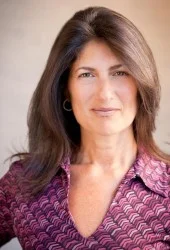
Mary Marshall Clark
Senior Research Scientist, INCITE (Interdisciplinary Center for Innovative Theory and Empirics), Director, Columbia Center for Oral History Research.
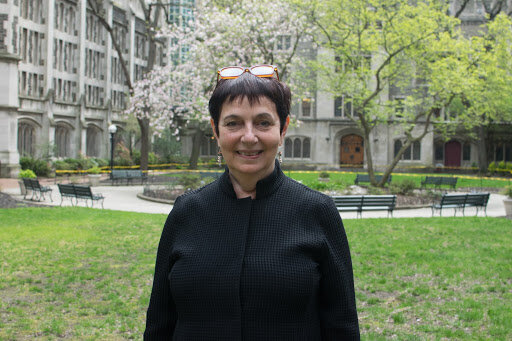
In addition to being the Director of the Columbia University Center for Oral History Research in INCITE, Mary Marshall is the co-founding director of Columbia’s Oral History Master of Arts (OHMA) degree program (with Peter Bearman) created in 2008-09, the first oral history master’s program in the United States. Mary Marshall has been involved in the oral history movement since 1991, and was president of the United States Oral History Association from 2001-2002. She was the co-principal investigator (with Peter Bearman) of The September 11, 2001 Oral History Narrative and Memory Project, a longitudinal oral history project through which over 1,000 hours of interviews were taken with eye-witnesses, immigrants and others who suffered in the aftermath of the events. She also directed related projects on the aftermath of September 11th in New York City. Mary Marshall has directed projects on the Carnegie Corporation, the Atlantic Philanthropies, the Council on Foreign Relations, and the Japanese Internment on the East Coast. She founded the Guantanamo Rule of Law Oral History Project in 2009, through which over 350 hours of oral history was collected with advocacy and constitutional lawyers, lawmakers, judges, representatives from the department of state, former prisoners and psychologists who protested the American Psychological Association’s involvement in torture. Mary Marshall was president of the national Oral History Association in 2001-2002, and participated in the founding of the International Oral History Association. Mary Marshall has conducted life history interviews with lead figures in the media, human rights, African American history, South Africa history and recorded women’s achievements in journalism, politics and the arts. Mary Marshall directs Columbia University’s biannual Summer Institute in Oral History, which in 2013 focused on indigenous oral history. She writes on issues of memory, the mass media, trauma, and ethics in oral history. Mary Marshall is an editor of After the Fall: New Yorkers Remember September 11, 2001 and the Years that Followed, published by The New Press in September, 2011. She is a co-author of the human rights publication Documenting and Interpreting Conflict through Oral History: A Working Guide, co-produced by Columbia University and TAARII, the American Institute for Research in Iraq. She is editor of the Columbia University Press Oral History Series, announced in 2019. Currently, Mary Marshall is a co-principal investigator and interviewer on the Obama Presidency Oral History Project and is the director of the Human Rights Campaign Oral History Project, tracing the history of the Human Rights Campaign in advocating for the rights of LGBTQ people in the United States.
Working Group Affiliations
On the Frontlines: Nursing Leadership in Pandemics
The Rural-Urban Interface: Gender and Poverty in Ghana and Kenya, Statistics and Stories
Skye Cleary
Associate Director, The Center for New Narratives in Philosophy, Columbia University
Skye C. Cleary PhD MBA is the Associate Director of the Center for New Narratives in Philosophy at Columbia. She also teaches at Columbia, Barnard College, and City College of New York.
Skye Cleary
Associate Director, The Center for New Narratives in Philosophy, Columbia University
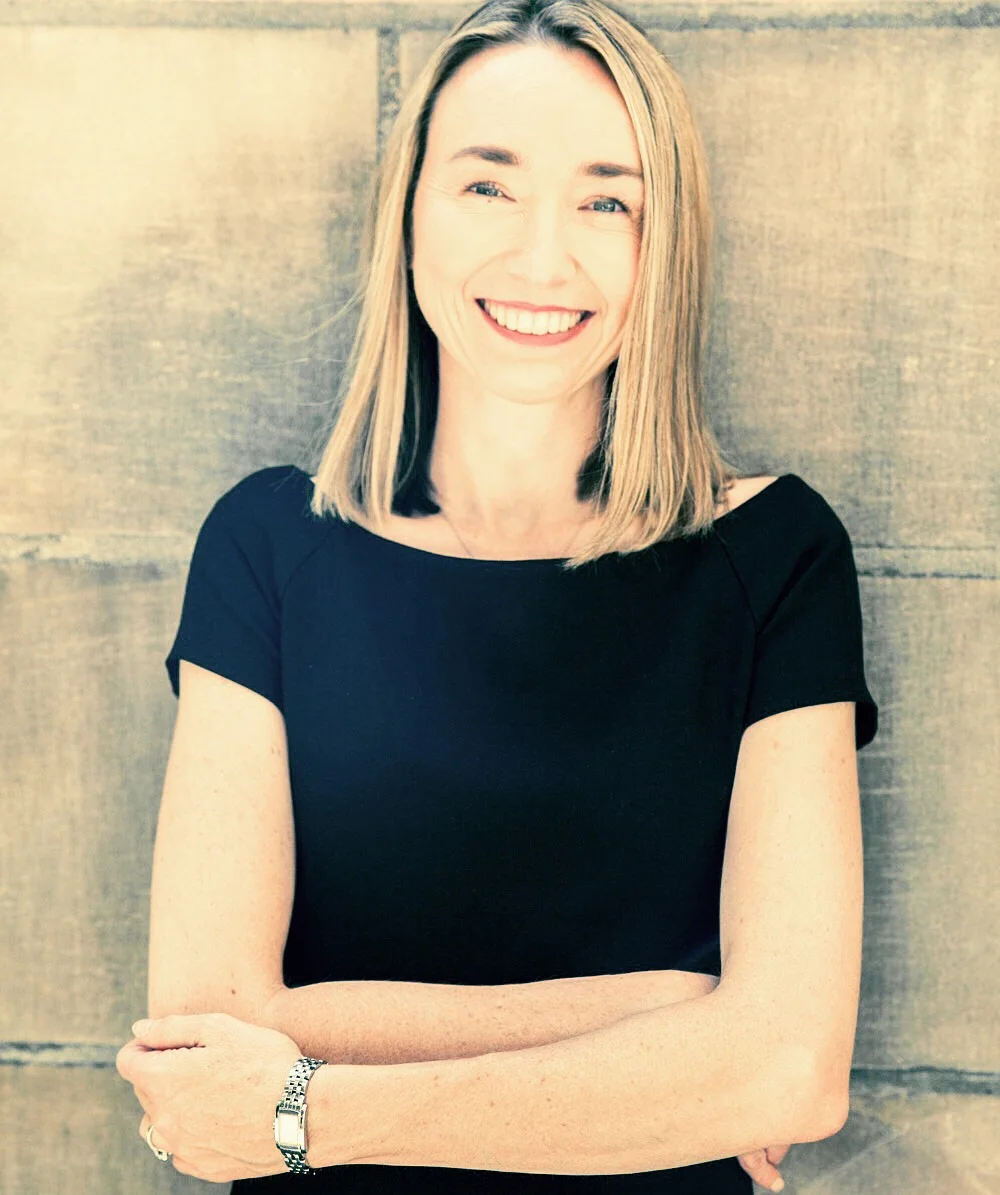
Skye C. Cleary PhD MBA is the Associate Director of the Center for New Narratives in Philosophy at Columbia. She also teaches at Columbia, Barnard College, and City College of New York, and is the Lead Editor of the Blog of the American Philosophical Association.
Working Group Affiliation

Katherine Cohn
Katherine Cohn is a Master's student in Art History and Archaeology at Columbia University in the MODA Program.
Katherine Cohn
Katherine Cohn is a Master's student in Art History and Archaeology at Columbia University in the MODA Program.

Sarah Cole
Professor, Department of English and Comparative Literature, Columbia University
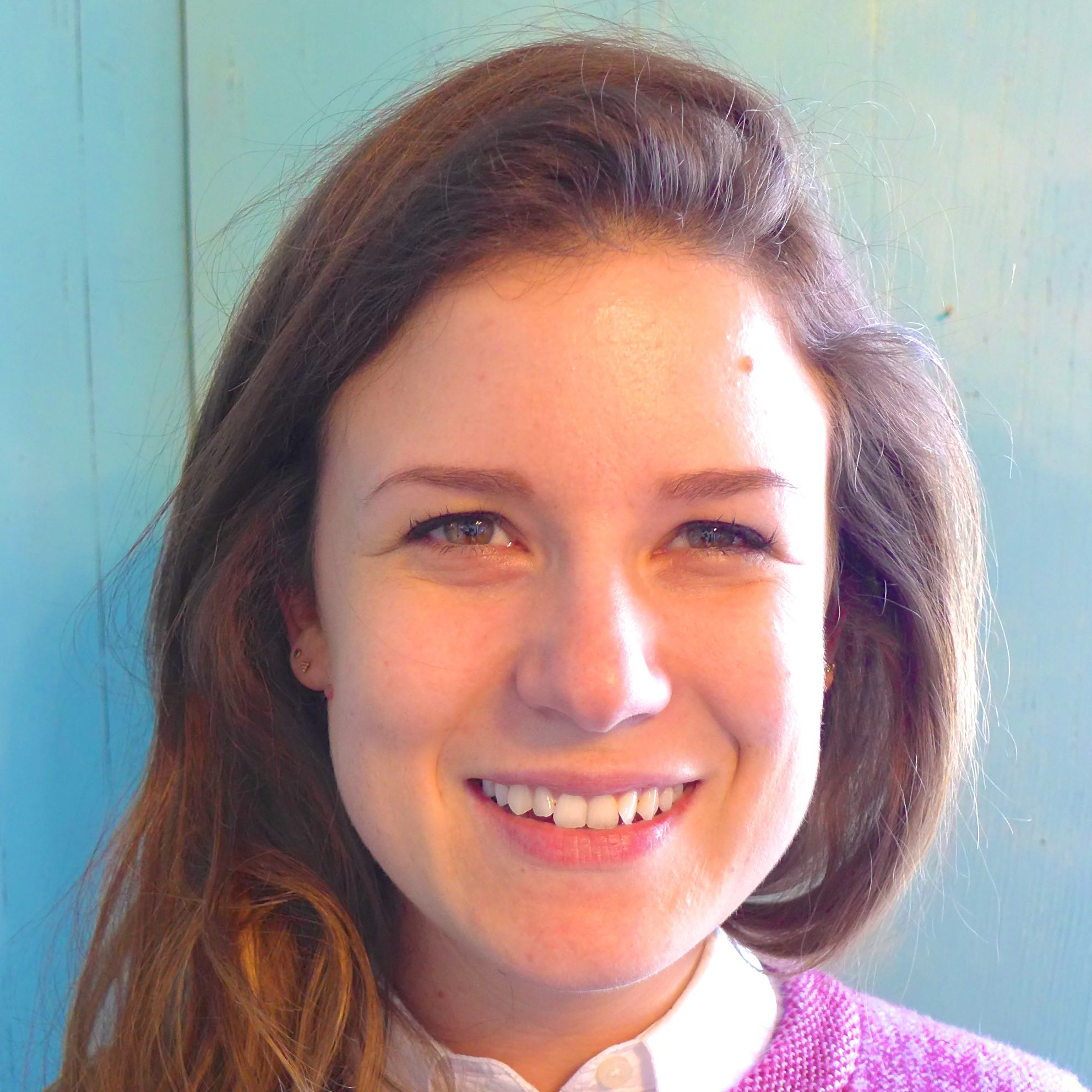
Ph.D., University of California, Berkeley (1997); B.A., Williams College (1989). Sarah Cole specializes in British literature of the 19th and 20th centuries, with an emphasis on the modernist period. Areas of interest include war; violence, sexuality and the body; history and memory; imperialism; and Irish literature of the modernist period.
Sarah Cole
Professor of English and Comparative Literature, Department Chair, Columbia University
Ph.D., University of California, Berkeley (1997); B.A., Williams College (1989). Sarah Cole specializes in British literature of the 19th and 20th centuries, with an emphasis on the modernist period. Areas of interest include war; violence, sexuality and the body; history and memory; imperialism; and Irish literature of the modernist period. She is the author of two books, most recently At the Violet Hour: Modernism and Violence in England and Ireland (Oxford University Press, 2012) and Modernism, Male Friendship, and the First World War (Cambridge University Press, 2003). She has published articles in ELH, Modern Fiction Studies, Modernism/Modernity, and PMLA, and has written essays for a variety of edited collections. Sarah Cole is the recipient of a 2014 Guggeinheim Fellowship for a book project entitled "The Wells Era."
Beth Coleman
Fellow, Writing and New Media, MIT
Beth Coleman is Assistant Professor of Writing and New Media in the Program in Writing and Humanistic Studies and Comparative Media Studies. She is faculty director of the C3 game culture and mobile media initiative. Her fields of research interest include new media, contemporary aesthetics, electronic music, critical theory and literature, and race theory. Under the name M. Singe, she co-founded the SoundLab Cultural Alchemy project, established in 1995.
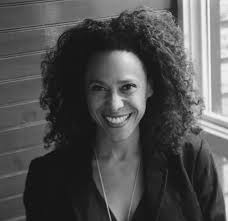
Beth Coleman
Assistant Professor of Writing and New Media, MIT
Beth Coleman is Assistant Professor of Writing and New Media in the Program in Writing and Humanistic Studies and Comparative Media Studies. She is faculty director of the C3 game culture and mobile media initiative. Her fields of research interest include new media, contemporary aesthetics, electronic music, critical theory and literature, and race theory. Under the name M. Singe, she co-founded the SoundLab Cultural Alchemy project, established in 1995.
Her scholarly and literary writings have been published by the British pavilion for the Venice Bienale, 2003; Broadway/Random House; Gagosian Gallery; Sammlung Goetz Collection; and New York University Press, as well as in journals including Artforum, Artbyte, and Nka: Journal for African Art. Coleman is a 2003-4 Rockefeller New Media Fellow and a 2004 Ford Foundation fellow. Her artwork has been exhibited internationally at P.S.1 Museum of Contemporary Art, Mirror's Edge exhibition, ARC/Musee d'Art moderne de la Ville de Paris, Massachusetts Institute of Technology List Gallery, among other venues. She has been working internationally as a sound artist since 1997, with her music appearing on various electronic music labels including SoundLab Records.
Coleman received the BA from Yale University in 1991, and the Ph.D. in comparative literature from NYU in 2004. Before arriving at MIT, she was a 2004 artist-in-residence at the Waag Society for Old and New Media, Amsterdam where she completed the art and architectural installation, Music Box. She is currently working on a mongraph entitled Difference Engines: Race as Technology.


Isobel Coleman
New York
Isobel Coleman
New York

Isobel Coleman is an author, foreign policy expert, consultant and former diplomat who served as one of the United States’ ambassadors to the UN during the Obama Administration. For decades, her research, writing and public speaking have focused on the economic, social and political benefits of empowering women and girls. She is the author of numerous publications, including the critically acclaimed book Paradise Beneath Her Feet: How Women are Transforming the Middle East (Random House, 2010). Prior to her time with the State Department, Isobel was a senior fellow at the Council on Foreign Relations (CFR) where she was the founding director of CFR’s Women and Foreign Policy Program. She started her career with McKinsey & Co., providing strategy and management consulting to leading global financial institutions and becoming a partner in 1998. She holds a BA degree from Princeton University and MPhil and DPhil degrees from Oxford University which she attended as a Marshall Scholar. She serves on several boards and advisory councils.
César Colón-Montijo
Graduate Student, Music, Columbia University
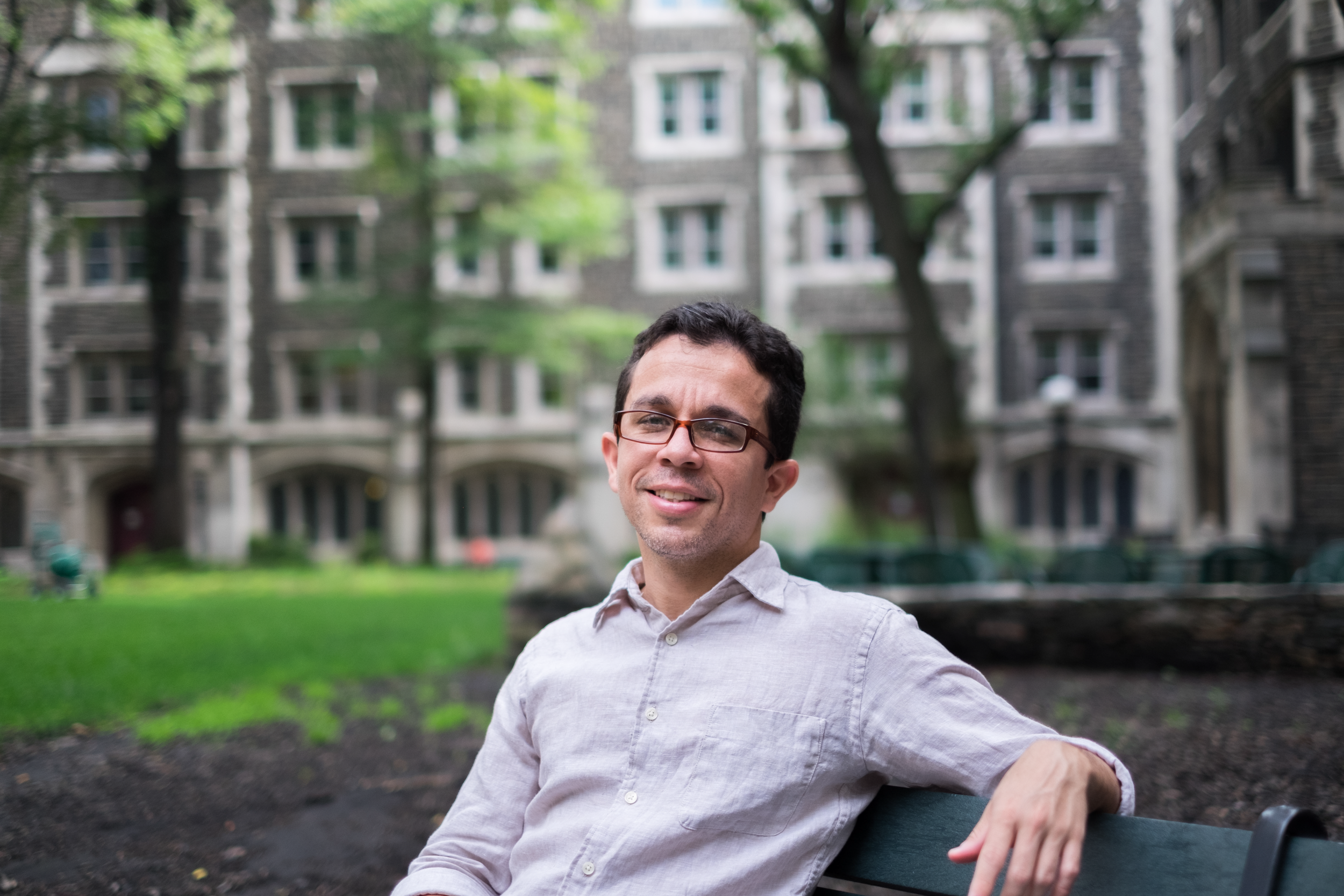
César Colón-Montijo is a journalist and doctoral candidate in ethnomusicology at Columbia University. He obtained a Master's in anthropology and audiovisual communication from the University of Barcelona, Spain in 2005, and previously completed a B. A. in communications at the University of Puerto Rico, Río Piedras Campus in 2003. César is the editor of the Cocinando Suave: Ensayos de Salsa en Puerto Rico (2015), a landmark collection of scholarly, historical, and journalistic essays, poems, and photo-essays about the histories of salsa.
César Colón-Montijo
Graduate Student, Music, Columbia University
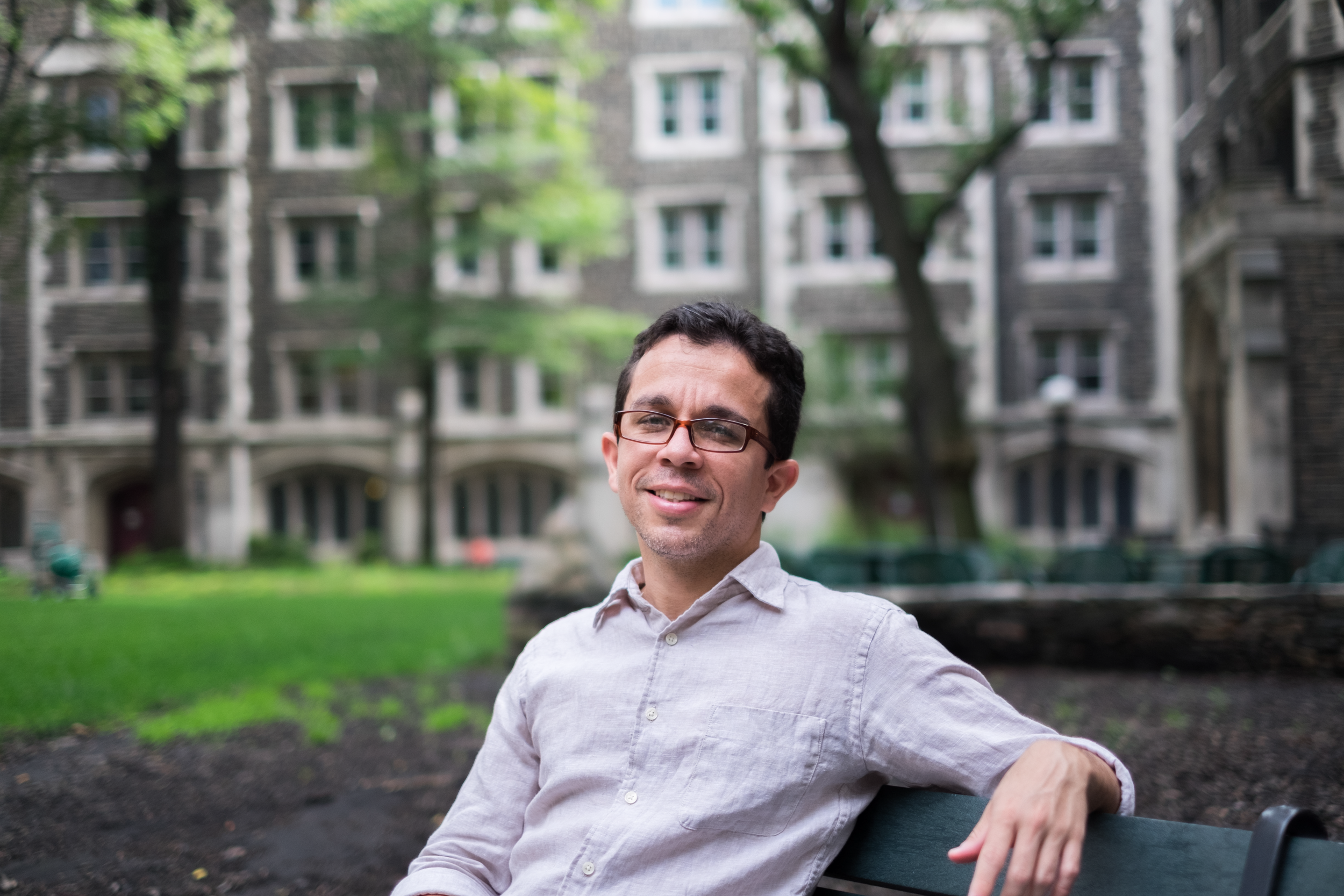
César Colón-Montijo is a journalist and doctoral candidate in ethnomusicology at Columbia University. He obtained a Master's in anthropology and audiovisual communication from the University of Barcelona, Spain in 2005, and previously completed a B. A. in communications at the University of Puerto Rico, Río Piedras Campus in 2003. César is the editor of the Cocinando Suave: Ensayos de Salsa en Puerto Rico (2015), a landmark collection of scholarly, historical, and journalistic essays, poems, and photo-essays about the histories of salsa. He recently published Viaje a La Casita: Notas de Plena en el Rincón Criollo (2016), an ethnographic chronicle based on his research about Puerto Rican music and culture in the South Bronx. His doctoral dissertation studies the music and legacy of Afro-Puerto Rican salsa singer Ismael ‘Maelo’ Rivera (1931-1987). Through ethnographic research conducted in Venezuela, Panamá, Puerto Rico, and New York since 2006, César studies the politico theological specters haunting Maelo’s oeuvre and the ways in which his music serves as a medium for the articulation of affective relations amongst his fans, peers, friends, and family in these geographies.
Working Group Affiliation
Unpayable Debt: Capital, Violence, and the New Global Economy
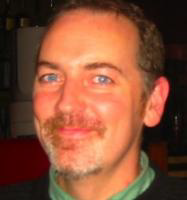
David J. Connor
Fellow, Education, Hunter College, CUNY
David J. Connor is an Associate Professor in the School of Education of Hunter College, CUNY. He is the author of three books and numerous articles on disability and education. David's areas of interest include teacher education, learning disabilities, inclusive education, and social justice issues. For the last decade he has contributed to the development of the growing field of Disability Studies in Education.
David J. Connor
Associate Professor, School of Education, Hunter College, CUNY
David J. Connor is an Associate Professor in the School of Education of Hunter College, CUNY. He is the author of three books and numerous articles on disability and education. David's areas of interest include teacher education, learning disabilities, inclusive education, and social justice issues. For the last decade he has contributed to the development of the growing field of Disability Studies in Education.
M Constantine
Ph.D. candidate, Anthropology, Columbia University.
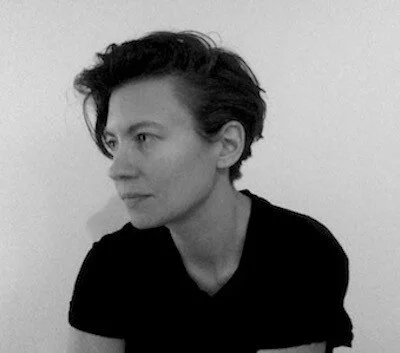
M. Constantine is a Ph.D. candidate in Anthropology at Columbia University. She is a writer and editor and has produced publications and projects with a number of art and architecture organizations including Slavs and Tatars, the Whitney Museum of American Art, and Cornell University Department of Architecture. Her dissertation focuses on collectivity and the politics of knowledge in contemporary art, analyzing the interface where the political imaginaries and pragmatic concerns of critical collectives meet the institutional and discursive structures of the art world in which they circulate.
M Constantine
Ph.D. Candidate, Anthropology, Columbia University.

M Constantine is a Ph.D. candidate in Anthropology at Columbia University. She is a writer and editor and has produced publications and projects with a number of art and architecture organizations including Slavs and Tatars, the Whitney Museum of American Art, and Cornell University Department of Architecture. Her dissertation focuses on collectivity and the politics of knowledge in contemporary art, analyzing the interface where the political imaginaries and pragmatic concerns of critical collectives meet the institutional and discursive structures of the art world in which they circulate. Her research explores how aesthetic concepts and practices shape the transformation of lives, intimacies, and social power.
Working Group Affiliation

Qudsiya Contractor
Fellow, Inclusive Policies, Tata Institute of Social Sciences Centre
Qudsiya Contractor is an Assistant Professor at the Tata Institute of Social Sciences Centre for Study of Social Exclusion and Inclusive Policies, School of Research Methodology.
Qudsiya Contractor
Assistant Professor, Tata Institute of Social Sciences

Qudsiya Contractor is an Assistant Professor at the Tata Institute of Social Sciences Centre for Study of Social Exclusion and Inclusive Policies, School of Research Methodology. Qudsiya completed her PhD in 2014 as a Max Planck Institute Doctoral Fellow at the School of Development Studies, TISS. Her research interests include: Social identities; anthropology ofcities and development; communal politics; health, illness and society. She has previously worked in the development sector on issues of displacement, human rights and urbanization. She was a visiting fellow at MPI Göttingen in 2015. Her recent work has been on the politics of the “meat-ban” in Hindu-Muslim relations.
Working Group Affiliation
Hector Cordero-Guzmán
Fellow, Department of Sociology, Baruch College
Hector Cordero-Guzmán
Professor, Department of Sociology, Baruch College

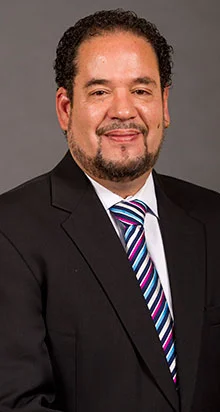
Dr. Héctor R. Cordero-Guzmán received his M.A. and Ph.D. degrees in Sociology from The University of Chicago is a Professor at the Austin W. Marxe School of Public and International Affairs at Baruch College of the City University of New York. He is also a Professor in the Ph.D. Programs in Sociology and in Urban Education at the City University of New York (CUNY) Graduate School and University Center. Prior to joining the Marxe School at CUNY, Dr. Cordero-Guzman was a Program Officer in the Economic Development and the Quality Employment Units of the Asset Building and Community Development Program at The Ford Foundation.
Between 2002 and 2007, Dr. Cordero-Guzman was a Professor and the Chair of the Black and Hispanic Studies Department at Baruch College of the City University of New York where he was responsible for managing and overseeing the work in Black and Hispanic Studies. Before joining the faculty at Baruch College of the City University of New York, Dr. Cordero-Guzman spent six years as an Assistant Professor at the Robert J. Milano Graduate School of Management and Urban Policy at the New School for Social Research where he taught a range of graduate courses in statistics, research methods, and social welfare policy. He also worked as the Research Director for Political Economy at the Center for Puerto Rican Studies at Hunter College of the City University of New York, the largest Latino focused research center in the eastern United States and was an adjunct instructor in Latin American Studies at Rutgers University in New Jersey.
Dr. Cordero-Guzman has published his academic research on issues related to education, employment, poverty, race and inequality, non-profit organizations, international migration, transnational processes, economic development, and social welfare policy in American Behavioral Scientist, The Journal of Small Business Management, The Annals of the American Academy of Political and Social Science, Racial and Ethnic Studies, International Migration, Journal of Ethnic and Migration Studies, Social Forces, Diaspora, The Review of Black Political Economy, Migration World and in a number of other volumes. Dr. Cordero-Guzman is also the editor of Migration, Transnationalization and Race in a Changing New York (with Dr. Ramon Grosfoguel and Dr. Robert Smith) and was involved in drafting a report for The White House Initiative on Educational Excellence for Hispanic Americans on community based services and programs that focus on Latino youth entitled What Works for Latino Youth.
Dr. Cordero-Guzman has served on the Board of Directors of a number of non-profit organizations including ACCION-New York, the largest micro-lending organization in the United States; the Community Service Society of New York (CSS), the oldest and largest anti-poverty group in New York City; the Upper Manhattan Empowerment Zone (UMEZ), a federally chartered multi-million dollar economic development initiative; St. Ann's Corner of Harm Reduction, one of the largest and oldest needle exchange programs in New York City; El Barrio Popular Education Program, an adult education program; and is on the advisory board of New York City's Young Men Initiative (YMI). Currently, Dr. Cordero-Guzman serves on the Board of Director of the Association for Research of Non Profit Organizations and Voluntary Action (ARNOVA), a professional association; The Economic Policy Institute in Washington, DC; The Afro-Latin Jazz Alliance; and El Museo Del Barrio, the largest Puerto Rican\Latino Museum in the United States.
Working Group Affiliation
Unpayable Debt: Capital, Violence, and the New Global Economy
Alexandra Cornelius-Diallo
Fellow, History, Florida International University
Dr. Cornelius's research examines the development of “racial science” during the nineteenth century. Her book manuscript titled /'More Approximate to the Animal:' African American Men and Women’s Resistance to the Rise of Scientific Racism in Mid-Nineteenth Century America/ provides a gendered analysis of the ways in which African Americans - enslaved and free, lettered and illiterate - addressed scientific theories of racial differences.
Instructor, Department of History, Florida International University
Dr. Cornelius's research examines the development of “racial science” during the nineteenth century. Her book manuscript titled /'More Approximate to the Animal:' African American Men and Women’s Resistance to the Rise of Scientific Racism in Mid-Nineteenth Century America/ provides a gendered analysis of the ways in which African Americans - enslaved and free, lettered and illiterate - addressed scientific theories of racial differences. Cornelius argues that a gendered analysis of the development of scientific racial discourse illuminates the ways in which the scientific constructions of human differences served racist, sexist, and imperialist political agendas.
Previous studies of racial science during the nineteenth century have ignored the centrality of scientific efforts to construct the black female body as a laboring body, one bereft of “motherly” instincts. Upon publication of the manuscript, Cornelius's next research project will focus on scientific constructions of black motherhood as they informed social policy makers between the mid nineteenth to late twentieth centuries.
Although it is clear that science historically has been misused, Cornelius encourages students to move beyond a simple vilification of science. Instead, they are challenged to consider the ways practitioners may use medicinal and scientific knowledge as a tool of resistance.

Trevor Corson
Department of English, Columbia University
Trevor Corson is the author of two books, including the worldwide popular-science bestseller The Secret Life of Lobsters. His work has been anthologized in The Best American Science Writing and he was managing editor of the literary magazine Transition when it won three consecutive Alternative Press Awards for International Reporting. He has written for The Atlantic, The New York Times, and many other publications.
Trevor Corson
Department of English, Columbia University
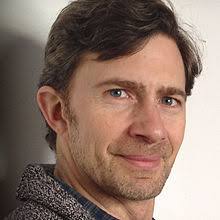
Trevor Corson is the author of two books, including the worldwide popular-science bestseller The Secret Life of Lobsters. His work has been anthologized in The Best American Science Writing and he was managing editor of the literary magazine Transition when it won three consecutive Alternative Press Awards for International Reporting. He has written for The Atlantic, The New York Times, and many other publications.
Trevor began his career in writing as an editorial assistant at The Atlantic, and went on to serve for three years as the managing editor of the literary journal Transition, published by Henry Louis Gates, Jr. and Kwame Anthony Appiah at the W.E.B. Du Bois Institute in the Department of African and African American Studies at Harvard University. During Trevor’s tenure at Transition the journal won three consecutive Alternative Press Awards for International Reporting and was nominated for a National Magazine Award in General Excellence. An essay Trevor wrote for Transition on the science and spirituality of brain death and organ transplantation, titled “The Telltale Heart,” was named a Notable Essay of the Year by Best American Essays.
Trevor teaches writing at Columbia University in New York City, where he co-directs the American Studies course track in the undergraduate writing program in the Department of English, and where he is an adjunct professor in the graduate program in creative writing in the School of the Arts. In the past he has been a lecturer in the graduate program in science journalism at Boston University, a visiting writer in the M.F.A. program at the University of Memphis, a lecturer at The New School, and a faculty member at Brooklyn Friends School. He has taught writing workshops at the Key West Literary Seminar and the Nieman Conference on Narrative Journalism at Harvard University.
Working Group Affiliation
G. Thomas Couser
Fellow, Disability Studies, Hofstra University
G. Thomas Couser retired in 2011 from Hofstra University, where he was a professor of English and founding director of the Disability Studies Program.
G. Thomas Couser
Professor Emeritus of English and Founding Director, Disability Studies Program, Hofstra University
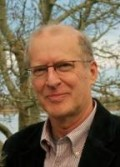
G. Thomas Couser retired in 2011 from Hofstra University, where he was a professor of English and founding director of the Disability Studies Program. He is the author of American Autobiography: The Prophetic Mode (Massachusetts, 1979), Altered Egos: Authority in American Autobiography (Oxford, 1989), Recovering Bodies: Illness, Disability, and Life Writing (Wisconsin, 1997), Vulnerable Subjects: Ethics and Life Writing (Cornell, 2004), and Signifying Bodies: Disability in Contemporary Life Writing (Michigan, 2009), as well as about fifty articles or book chapters. His latest book, Memoir: An Introduction, will be published by Oxford University Press in November 2011. He is currently writing a book about contemporary American “patriography” (memoirs of fathers by sons and daughters) and a memoir of his own father.
Working Group Affiliation

Aimee Meredith Cox
Fellow, African American Studies and Anthropology, Yale University.
Aimee Meredith Cox is an Associate Professor in the departments of African American Studies and Anthropology at Yale University. She is the editor of Gender: Space (MacMillan) and co-editor of a special issue of Public: A Journal of Imagining America on art and knowledge production in the academy. Cox’s first monograph, Shapeshifters: Black Girls and the Choreography of Citizenship (Duke 2015), won a 2016 Victor Turner Book Prize in Ethnographic Writing.
Aimee Meredith Cox
Associate Professor, African American Studies and Anthropology, Yale University
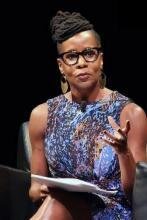
Aimee Meredith Cox is an Associate Professor in the departments of African American Studies and Anthropology at Yale University. Cox’s first monograph, Shapeshifters: Black Girls and the Choreography of Citizenship (Duke 2015), won a 2016 Victor Turner Book Prize in Ethnographic Writing, and Honorable Mention from the 2016 Gloria E. Anzaldúa Book Prize, given by the National Women’s Studies Association. She is the editor of Gender: Space (MacMillan) and co-editor of a special issue of Public: A Journal of Imagining America on art and knowledge production in the academy. Cox is also a former professional dancer--she danced on scholarship with the Dance Theatre of Harlem and toured extensively with Ailey II. Her next ethnographic project, Living Past Slow Death, explores the creative protest strategies individuals and communities enact to reclaim Black life in the urban United States, focused on the riverine communities of the Mississippi. She is a member of the Social Text Collective.
Working Group Affiliation
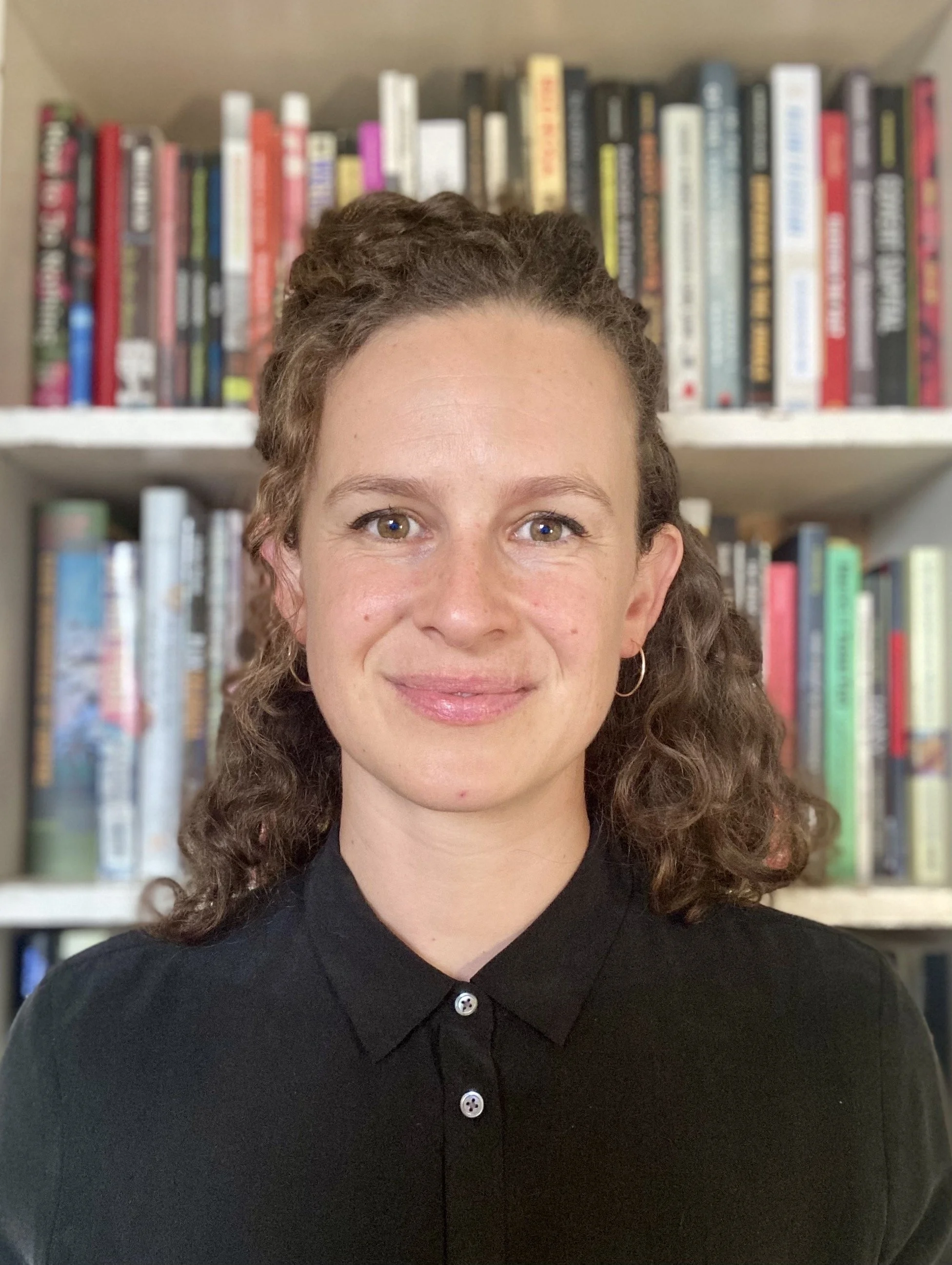
Emma Shaw Crane
Emma Shaw Crane is a Postdoctoral Fellow in the Society of Fellows at Columbia University, where she is affiliated with the Center for the Study of Race and Ethnicity and the Department of Anthropology. She received her PhD in American Studies from New York University in 2021.
Emma Shaw Crane
Emma Shaw Crane is a Postdoctoral Fellow in the Society of Fellows at Columbia University, where she is affiliated with the Center for the Study of Race and Ethnicity and the Department of Anthropology. She received her PhD in American Studies from New York University in 2021. Emma is a scholar of race, urban space, and U.S. empire in the Americas. Her in-progress book manuscript explores the routinization of counterinsurgent war in a peripheral suburb of Miami, Florida, and possibilities for refuge, remediation, and repair in the wake of war. She researches and writes with a coalition of community organizers fighting the intersection of carceral and environmental violence in South Florida.
Working Group: Refugee Cities
Julie Crawford
Professor, Department of English and Comparative Literature, Columbia University
Julie Crawford is Mark van Doren Professor of Humanities in the Department of English and Comparative Literature at Columbia University. She has published widely on authors ranging from William Shakespeare and Philip Sidney to Anne Clifford and Mary Wroth, and on topics ranging from the history of reading to the history of sexuality. She is the author of a book about cheap print and the English reformation entitled Marvelous Protestantism (Johns Hopkins UP, 2005), and Mediatrix: Women, Politics and Literary Production in Early Modern England (Oxford UP, 2014).

Julie Crawford is Mark van Doren Professor of Humanities in the Department of English and Comparative Literature at Columbia University. She has published widely on authors ranging from William Shakespeare and Philip Sidney to Anne Clifford and Mary Wroth, and on topics ranging from the history of reading to the history of sexuality. She is the author of a book about cheap print and the English reformation entitled Marvelous Protestantism (Johns Hopkins UP, 2005), and Mediatrix: Women, Politics and Literary Production in Early Modern England (Oxford UP, 2014). She is currently writing a book entitled “Margaret Cavendish’s Political Career.”
Christina Crosby
Fellow, Feminist, Gender, and Sexuality Studies, Wesleyan University
Christina Crosby has worked at Wesleyan University since 1982, where she is Professor of English and Feminist, Gender, and Sexuality Studies. Her subfields are Victorian studies and Feminist Studies. She has published The Ends of History: Victorians and the 'Woman Question' and essays and reviews in Victorian Studies, PMLA, College English, and elsewhere.
Christina Crosby
Professor of English and Feminist, Gender, and Sexuality Studies, Wesleyan University
Christina Crosby has worked at Wesleyan University since 1982, where she is Professor of English and Feminist, Gender, and Sexuality Studies. Her subfields are Victorian studies and Feminist Studies. She has published The Ends of History: Victorians and the 'Woman Question' and essays and reviews in Victorian Studies, PMLA, College English, and elsewhere. Her current book project is autobiographical: "An Account of Myself," an exploration of living with a spinal cord injury, drawing on feminist theories of embodiment, queer phenomenology, and critical disability studies.

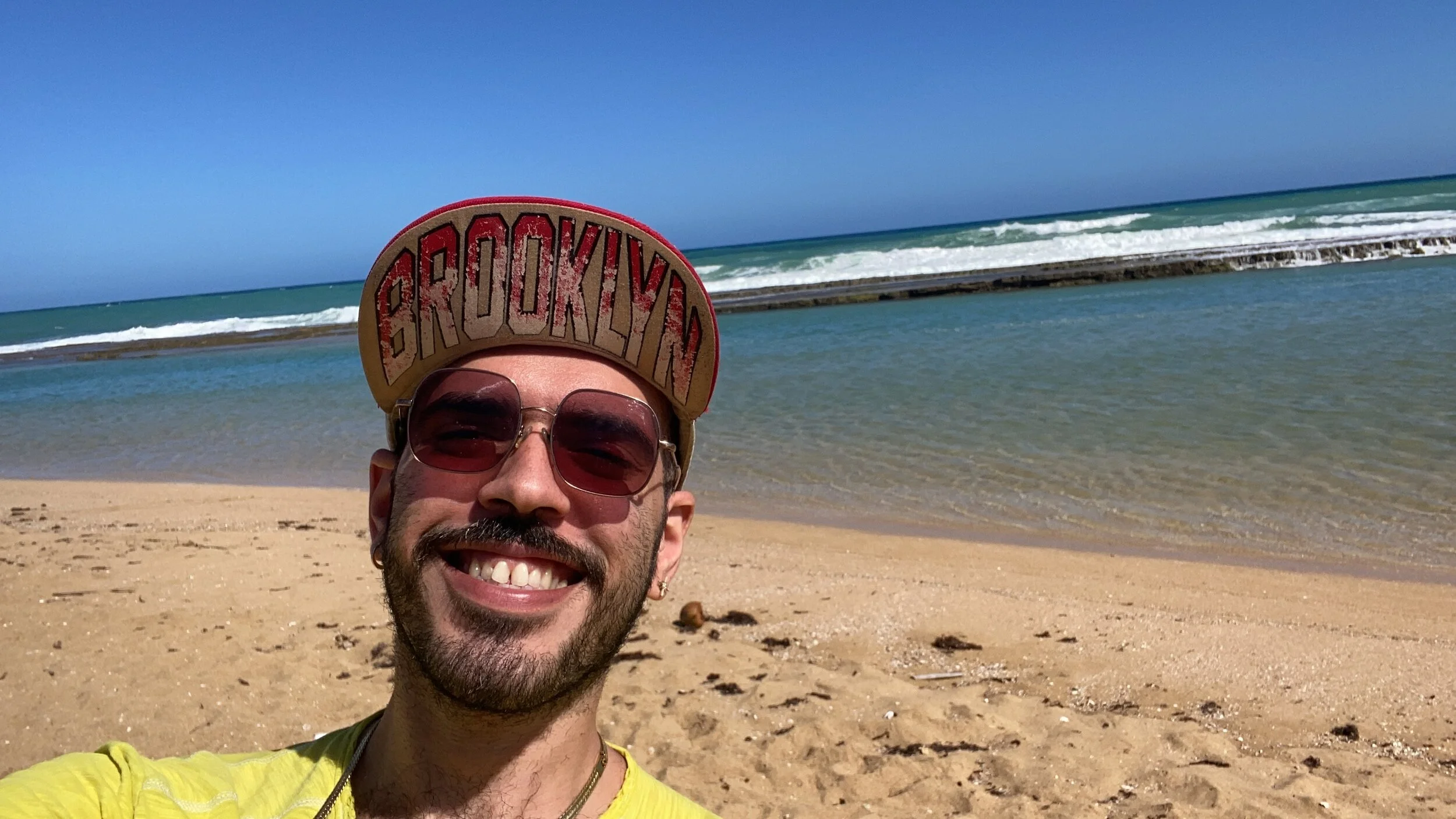
Gabriel Carle
Ph.D. candidate, Spanish and Portuguese Languages and Literatures, NYU
Gabriel Carle (San Juan, 1993) completed a B.A. in Escritura Creativa at Universidad de Puerto Rico, Río Piedras, and an M.F.A. in Creative Writing in Spanish at New York University. Their creative and academic research interests center on issues of Queerness, Indigeneity, and Blackness in Caribbean literature and activism.
Gabriel Carle
Ph.D. candidate, Spanish and Portuguese Languages and Literatures, NYU
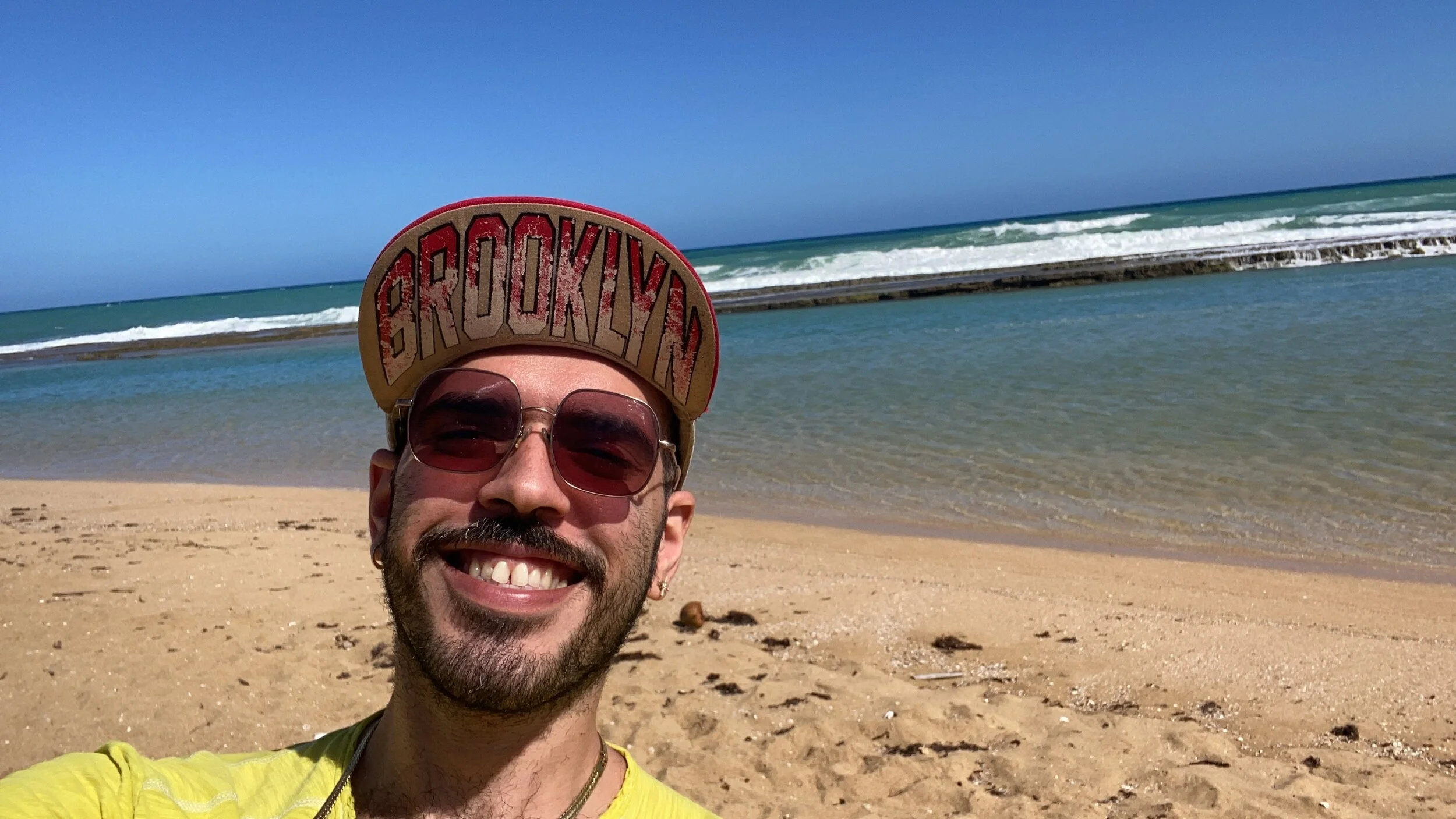
Gabriel Carle (San Juan, 1993) completed a B.A. in Escritura Creativa at Universidad de Puerto Rico, Río Piedras, and an M.F.A. in Creative Writing in Spanish at New York University. Their creative and academic research interests center on issues of Queerness, Indigeneity, and Blackness in Caribbean literature and activism. They have won literary prizes at UPR-RP and University of Houston. In 2018, they published their first short story collection, Mala leche. They are currently pursuing a Ph.D. in Spanish and Portuguese Languages and Literatures at NYU.
Working Group Affiliations
Zip Code Memory Project: Practices of Justice and Repair, Social Engagement Project
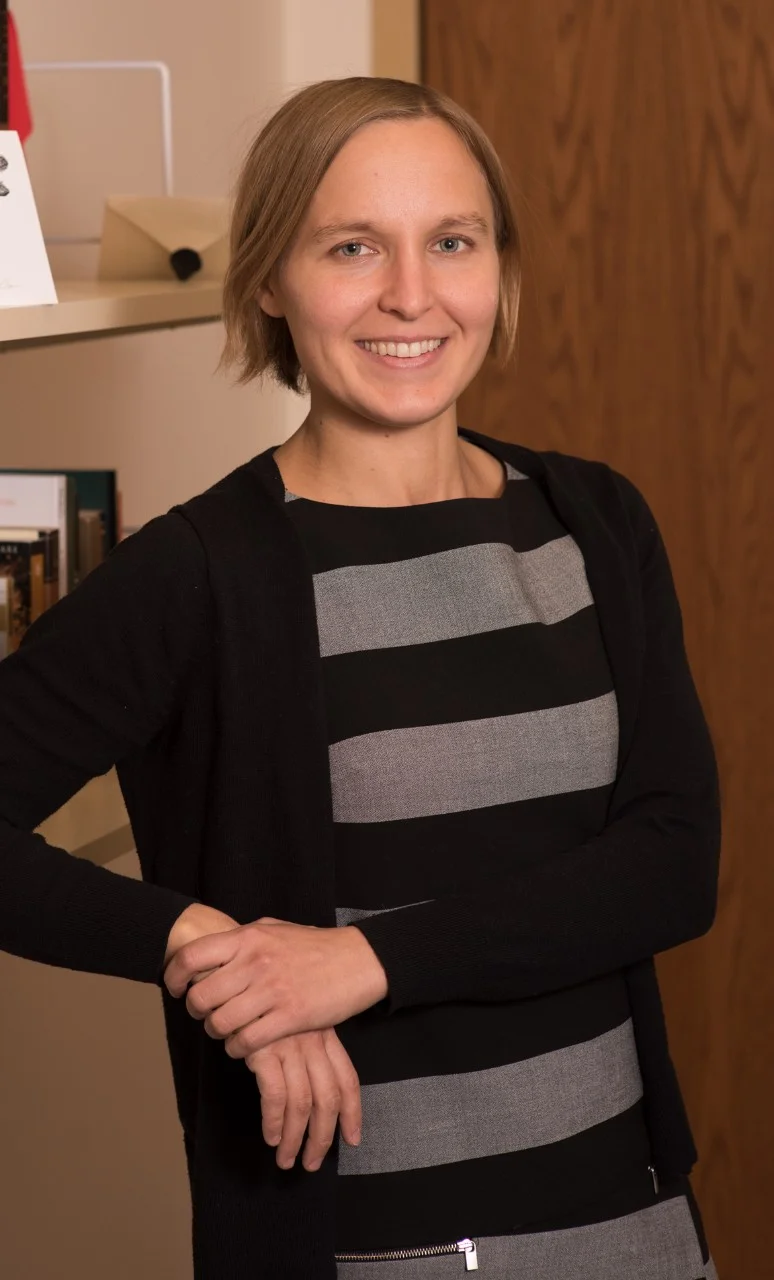
Andrea Crow
PhD Student
Andrea Crow is a PhD student at Columbia in the department of English and Comparative literature. Her research focuses on seventeenth-century literature and food politics as well as on academic labor and the future of the university. Her work has been published in Early Modern Women and Shakespeare Quarterly, and she has been the recipient of a grant-in-aid from the Folger Shakespeare Library to pursue her research. Andrea received a B.A. in English with a minor in Latin from Gonzaga University and an M.A.
Andrea Crow
Assistant Professor, Boston College
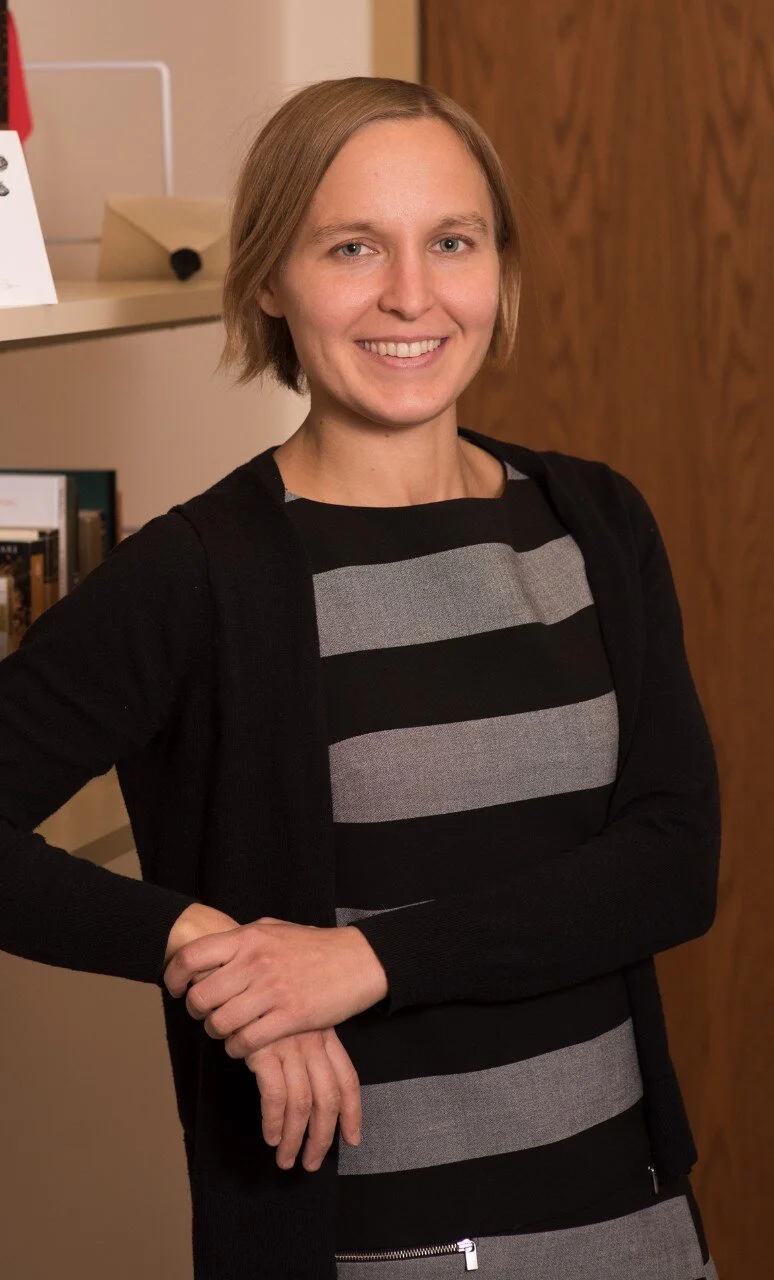
Andrea Crow specializes in early modern English poetry and drama. She is currently working on a book project on diet and food scarcity in seventeenth-century Anglophone literature. Her research interests include food history, gender and sexuality studies, the intersection of England and the Arab world, and academic labor and the future of the university. Her work has appeared or is forthcoming in Christianity and Literature, Early Modern Women, Shakespeare Quarterly, and SEL Studies in English Literature 1500-1900.
Working Group Affiliation