

Nikita Shepard
Nikita Shepard (they/them) is a PhD student in history at Columbia, exploring gender and sexuality, LGBTQ communities, social movements, data and surveillance, and radical politics in the twentieth century United States and beyond.
Ph.D. candidate, History, Columbia University

Nikita Shepard (they/them) is a PhD student in history at Columbia, exploring gender and sexuality, LGBTQ communities, social movements, data and surveillance, and radical politics in the twentieth century United States and beyond. They serve as the graduate intern for the Lehman Center for American History and an affiliate of the Columbia Research Initiative on the Global History of Sexualities, and have worked for the Center for Spatial Research and the Columbia Oral History Archives. They founded the "Data, Algorithms, and Social Justice" working group at the Center for the Study of Social Difference in 2019, and hold a position as an Oral History Fellow for the Digital Ethics and Governance working group at the Jain Family Institute.
Working Group Affiliation
Data Algorithms and Social Justice, Graduate Director

Wilson Sherwin
PhD Student, Sociology, CUNY Graduate Center
Wilson Sherwin is a native New Yorker and a PhD candidate in sociology at the CUNY Graduate Center. Her work centers around Marxist theory, feminism, social movements and the sociology of labor. She is currently beginning dissertation research on solutions to unemployment that foster autonomy from waged labor, and on current proposals for Universal Basic Income.
PhD Student, Sociology, CUNY Graduate Center

Wilson Sherwin is a native New Yorker and a PhD candidate in sociology at the CUNY Graduate Center. Her work centers around Marxist theory, feminism, social movements and the sociology of labor. She is currently beginning dissertation research on solutions to unemployment that foster autonomy from waged labor, and on current proposals for Universal Basic Income.
Working Group Affiliation

Jeremy Shropshire
Graduate Student, Columbia University
Jeremy Shropshire is a Louisiana native from Hammond, La. He is a recent graduate of Xavier University of Louisiana with a Bachelors of Science in Chemistry. At Xavier, Jeremy conducted research under the mentorship of Dr. Stassi DiMaggio in the Department of Organic Chemistry. His project focused on developing stimuli-responsive nanomaterials in order to be used as potential drug-delivery systems. He is also a Minority Access to Careers Scholar, Ronald E. McNair Scholar, and a member of the Alpha Phi Alpha Fraternity Inc. He is currently enrolled in the Masters of Bioethics Program at Columbia University in the City of New York via the HBCU Fellowship Initiative.
Graduate Student, Columbia University

Jeremy Shropshire is a Louisiana native from Hammond, La. He is a recent graduate of Xavier University of Louisiana with a Bachelors of Science in Chemistry. At Xavier, Jeremy conducted research under the mentorship of Dr. Stassi DiMaggio in the Department of Organic Chemistry. His project focused on developing stimuli-responsive nanomaterials in order to be used as potential drug-delivery systems. He is also a Minority Access to Careers Scholar, Ronald E. McNair Scholar, and a member of the Alpha Phi Alpha Fraternity Inc. He is currently enrolled in the Masters of Bioethics Program at Columbia University in the City of New York via the HBCU Fellowship Initiative. Jeremy has an acute interest in healthcare policy and the way that law regulates ethical practices. Jeremy looks forward to embracing his role as an Associate Fellow by contributing and learning from the Precision Medicine Program.
Working Group Affiliation

Anooradha Iyer Siddiqi
Assistant Professor, Department of Architecture, Columbia University
Anooradha Iyer Siddiqi is an Assistant Professor of Architecture at Barnard College, Columbia University, and co-editor of “Feminist Architectural Histories of Migration” (2020) and Spatial Violence (2016). Her book manuscript Architecture of Migration: The Dadaab Refugee Camps and Humanitarian Settlement analyzes the history, visual rhetoric, and spatial politics of the Dadaab refugee camps in Northeastern Kenya.
Assistant Professor, Architecture, Barnard College

Anooradha Iyer Siddiqi is an art and architectural historian specializing in histories of modernity, migration, and settlement. She is an Associate Professor at Barnard College, Columbia University, and her writing and teaching builds on yearslong research in Africa, Asia, and Europe for two scholarly monographs, Architecture of Migration (Duke University Press) and Ecologies of the Past. These two projects inform her research on histories of architecture, craft, settlement, and land, experiences of migration and territorial partition, and knowledge of the past through architectural practice, pedagogy, and discourse on the African continent and South Asian subcontinent. For more, please see https://www.anooradhaiyersiddiqi.net/.
Insurgent Domesticities, Co-Director
Black Archipelago, Working Group Member
Geographies of Injustice, Working Group Member
Edited Books
Architecture of Migration: The Dadaab Refugee Camps and Humanitarian Settlement (Duke University Press, Theory in Forms) available open access
Minnette De Silva: Intersections (Mack Books)
Dina M. Siddiqi
Fellow, Anthropology, BRAC University
Dina M. Siddiqi divides her time between New York and Dhaka, where she is Professor of Anthropology, BRAC University. Her publications, grounded in the study of Bangladesh, cover a broad spectrum: the global garment industry; gender justice and non-state dispute resolution systems, and the intersections of Islam, nationalism and feminist cultural politics. She is currently working on a book entitled Elusive Solidarities: “Muslim” Women and Transnational Feminism at Work. Siddiqi is on the editorial board of Routledge’s Women in Asia Publication Series, a member of the South Asia Council of the Association of Asian Studies (AAS), and on the Gender Advisory Council of the Lahore School of Management Sciences (LUMS). She is also part of the Advisory Council of the South Asian Network of Gender Activists and Trainers (SANGAT). She has extensive research experience with Bangladeshi human rights organizations, including Ain o Salish Kendra (ASK) and Bangladesh Legal and Services Trust (BLAST).
Professor of Anthropology, BRAC University

Dina M. Siddiqi is Associate Professor in Liberal Studies at New York University. She has also been a Visiting Professor of Anthropology at BRAC University since 2013. She serves on the editorial board of Routledge’s Women in Asia Publication Series; and is Chair of the South Asia Council (SAC), the Association of Asian Studies (AAS). She is on the Advisory Committees of the Saida Waheed Gender Initiative, Lahore University of Management Sciences (LUMS); the Political Conflict, Gender and Peoples' Rights Project (Berkeley and Columbia University) and the South Asian Feminist Network (SANGAT). Siddiqi’s research and publications cover a range of issues grounded in the study of the politics of gender, sexuality and Islam in Bangladesh. She is the author of “Secularism Quests, National Others: Revisiting Bangladesh’s Constituent Assembly Debates” in Asian Affairs: Journal of the Royal Society for Asian Affairs (2015), "Scandals of Seduction and the Seductions of Scandal" in Comparative Studies of South Asia, Africa and the Middle East (2015), “Starving for Justice: Bangladeshi Garment Workers in a ‘Post-Rana Plaza’ World” in International Labor and Working Class History (2015), and “Solidarity, Sexuality and Saving Muslim Women in Neoliberal Times”in Women’s Studies Quarterly (2014).
Working Group Affiliation

Tobin Siebers
Fellow, English and Art and Design, University of Michigan
Tobin Siebers is V. L. Parrington Collegiate Professor, Professor of English and Art and Design at the University of Michigan. He has been a fellow of the Michigan Society of Fellows and the John Simon Memorial Guggenheim Foundation and a Visiting Scholar at the Ecole Polytechnique in Paris.
V. L. Parrington Collegiate Professor, Professor of English and Art and Design, University of Michigan
Tobin Siebers is V. L. Parrington Collegiate Professor, Professor of English and Art and Design at the University of Michigan. He has been a fellow of the Michigan Society of Fellows and the John Simon Memorial Guggenheim Foundation and a Visiting Scholar at the Ecole Polytechnique in Paris. His major publications include The Mirror of Medusa (California 1983), The Romantic Fantastic (Cornell 1984), The Ethics of Criticism (Cornell 1988), Morals and Stories (Columbia 1992), Cold War Criticism and the Politics of Skepticism (Oxford 1993), The Subject and Other Subjects: On Ethical, Aesthetic, and Political Identity (Michigan 1998), Among Men (Nebraska 1999), Disability Theory (Michigan 2008), Zerbrochene Schönheit (Transcript 2008) and Disability Aesthetics (Michigan, 2010). He is also the editor of Religion and the Authority of the Past (Michigan 1993), Heterotopia: Postmodern Utopia and the Body Politic (Michigan 1994), and The Body Aesthetic: From Fine Art to Body Modification (Michigan 2000). His recent work on disability studies has been published in American Literary History, Cultural Critique, Literature and Medicine, Journal for Cultural and Religious Theory, Michigan Quarterly Review, PMLA, and the MLA volume on disability studies. He is currently at work on a project on the visual representation of female mental disability.

Irina Carlota Silber
Fellow, Anthropology, City University of New York
Irina Carlota (Lotti) Silber received her PhD from NYU and is currently an Associate Professor of Anthropology at the City College of New York (CCNY) in the Department of Interdisciplinary Arts and Sciences, which is housed at the Center for Worker Education. She is also the Director of the MA Program in the Study of the Americas. She is the recipient of various dissertation fellowships (i.e.
Associate Professor of Anthropology, City University of New York
Irina Carlota (Lotti) Silber received her PhD from NYU and is currently an Associate Professor of Anthropology at the City College of New York (CCNY) in the Department of Interdisciplinary Arts and Sciences, which is housed at the Center for Worker Education. She is also the Director of the MA Program in the Study of the Americas. She is the recipient of various dissertation fellowships (i.e. Fulbright Hays, IAF, OAS, Charlotte Newcombe) and postdoctoral fellowships (Rockefeller Fellow at the Virginia Foundation for the Humanities, Rutgers Center for Historical Analysis, Rockefeller Fellow at Berkeley –declined) and has most recently received several CUNY wide grants. Lotti has published her work in Gender & History, Women’s Studies Quarterly, and in peer reviewed volumes published by Duke University Press, Rutgers University Press, University of Pittsburgh Press, and PAIDOS (Argentina). Her book, Everyday Revolutionaries: Gender, Violence and Disillusionment in Postwar El Salvador is recently published by Rutgers University Press in their Genocide, Political Violence, and Human Rights Series. She currently has two projects underway, one that continues her long interest in the entanglements of war and displacement through a comparative study of Central American migration in Europe, and a second project entitled The Texture of Illness which explores childhood genetic difference.
Working Group Affiliation

Rae Silver
Professor, Department of Neuroscience and Psychology , Barnard College
Rae Silver is the Helene L. and Mark N. Kaplan Professor of Natural & Physical Sciences and the head of the Silver Neurobiology Laboratory. Since 1976, Professor Silver has been a member of Barnard’s faculty and has taught courses in Quantitative Reasoning, Neuroscience and Psychology. The National Science Foundation, the National Institutes of Mental Health, and National Institute of Neurological Disorders and Stroke, Air Force Office of Scientific Research, and the Office of Naval Research, are among the organizations that have supported her research.
Natural & Physical Sciences and head of the Silver Neurobiology Laboratory, Barnard College

Rae Silver is the Helene L. and Mark N. Kaplan Professor of Natural & Physical Sciences and the head of the Silver Neurobiology Laboratory. Since 1976, Professor Silver has been a member of Barnard’s faculty and has taught courses in Quantitative Reasoning, Neuroscience and Psychology. The National Science Foundation, the National Institutes of Mental Health, and National Institute of Neurological Disorders and Stroke, Air Force Office of Scientific Research, and the Office of Naval Research, are among the organizations that have supported her research.
Over the course of her career, Professor Silver has held many positions on committees in services to the educational community, the scientific and research community, and the Barnard and Columbia communities. Currently, she is a US Representative and serves as Vice-chair on the Council of Scientists for the Human Frontiers Science Program and a member of the National Academy of Sciences Institute of Medicine Forum on Neuroscience. Her work as Senior Advisor at the National Science Foundation helped to create a series of workshops to examine opportunities for the next decade in making advances in Neuroscience through the joint efforts of biologists, chemists, educators, mathematicians, physicists, psychologists and statisticians. She served as co-chair of the NASA committee that prioritized biological research for the International Space Station. She is a fellow to the American Academy of Arts and Sciences.
Her two research areas focus on sleep-wake cycles and their neural bases, and on immune – nervous system interactions in the brain.
Working Group Affiliation
Bertram Silverman
Fellow, Economics, Hofstra University
Bertram Silverman is a professor of economics emeritus and former director of the Center for the Study of Labor and Democracy at Hosftra University. He has worked as a trade union economist and has organized and directed a joint university-trade union college degree program for working adults. Silverman has written about labor problems in the United States, Latin America, and Europe. He is editor of Man and Socialism in Cuba: The Great Debate and co-editor with Murray Yanowitch of The Worker in “Post-Industrial” Capitalism; Labor and Democracy in the Tran
Emiritus Professor of Economics, Hofstra University
Bertram Silverman is a professor of economics emeritus and former director of the Center for the Study of Labor and Democracy at Hosftra University. He has worked as a trade union economist and has organized and directed a joint university-trade union college degree program for working adults. Silverman has written about labor problems in the United States, Latin America, and Europe. He is editor of Man and Socialism in Cuba: The Great Debate and co-editor with Murray Yanowitch of The Worker in “Post-Industrial” Capitalism; Labor and Democracy in the Transition to a Market System; and Double Shift: Transforming Work in Post-Socialist and Post-Industrial Societies.
Working Group Affiliation

Audra Simpson
Associate Professor, Department of Anthropology, Columbia University
Audra Simpson is Associate Professor of Anthropology at Columbia University. She is the author of Mohawk Interruptus: Political Life Across the Borders of Settler States (Duke University Press, 2014), winner of the Native American and Indigenous Studies Association’s Best First Book in Native American and Indigenous Studies Prize, the Laura Romero Prize from the American Studies Association as well as the Sharon Stephens Prize from the American Ethnological Society (2015). She is co-editor of Theorizing Native Studies (Duke University Press, 2014). She has articles in Cultural Anthropology, American Quarterly, Junctures, Law and Contemporary Problems and Wicazo Sa Review. In 2010 she won Columbia University’s School for General Studies “Excellence in Teaching Award.” She is a Kahnawake Mohawk.
Associate Professor, Anthropology, Columbia University

Audra Simpson is Associate Professor of Anthropology at Columbia University. She is the author of Mohawk Interruptus: Political Life Across the Borders of Settler States (Duke University Press, 2014), winner of the Native American and Indigenous Studies Association’s Best First Book in Native American and Indigenous Studies Prize, the Laura Romero Prize from the American Studies Association as well as the Sharon Stephens Prize from the American Ethnological Society (2015). She is co-editor of Theorizing Native Studies (Duke University Press, 2014). She has articles in Cultural Anthropology, American Quarterly, Junctures, Law and Contemporary Problems and Wicazo Sa Review. In 2010 she won Columbia University’s School for General Studies “Excellence in Teaching Award.” She is a Kahnawake Mohawk.
Working Group Affiliations
Pacific Climate Circuits: Moving Beyond Science, Technology, Engineering, and Economics

Simpreet Singh
Fellow, Sociology, Boğaziçi University
Simpreet Singh is an Indian activist who since quitting his career as a successful engineer, has worked relentlessly on exposing housing scams and corruption in the city of Mumbai, where slum-dwellers are being evicted, in many cases unfairly, to make way for upmarket developments.
Professor of Sociology, Boğaziçi University
Simpreet Singh is an Indian activist who since quitting his career as a successful engineer, has worked relentlessly on exposing housing scams and corruption in the city of Mumbai, where slum-dwellers are being evicted, in many cases unfairly, to make way for upmarket developments.
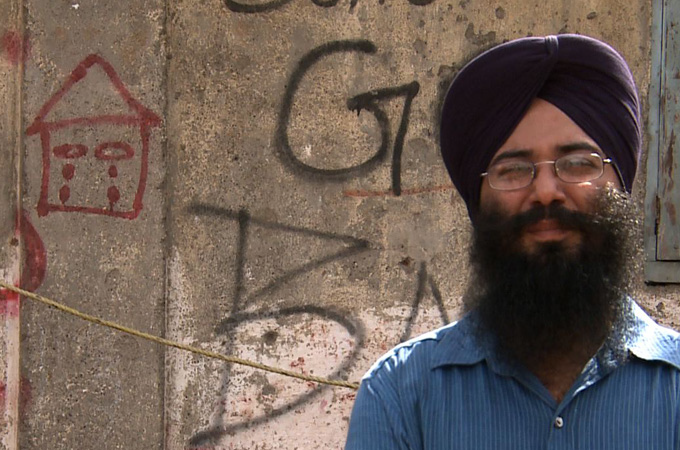
Simpreet is fighting to stop these land grabs, by using India's Right To Information laws. As part of his work with the Ghar Bachao Ghar Banao (GBGB) Movement, he persistently investigates alleged scams involving public land and environment violations. Simpreet is employed at the Tata Institute of Social Sciences (TISS) and he is a member of the National Alliance of the Peoples Movement (NAPM). He is also currently pursuing a Phd on Mumbai's slums.

S. Mona Sinha
New York

S. Mona Sinha is an advocate for gender equality in business and society. She has parlayed a career in finance (Morgan Stanley), marketing (Unilever), and restructuring (Elizabeth Arden/Unilever) to work at the intersection of social justice and women’s leadership. Mona uses business tools to build organizational capacities for sustainability that unlock the economic potential of women/girls across different sectors. She has been described as having a muscle for finance and a passion for justice.
She is co-founder of Raising Change to address the funding gap in mission-driven organizations for social change. She also founded the Asian Women's Leadership University, to bring liberal arts pedagogy to train future women leaders.
She is currently the Board Chair of Women Moving Millions, a community of women who fund big and bold ($1 million+) to create a gender-equal world. She is also the Board Chair of the ERA Coalition Fund for Women’s Equality which seeks to codify the 28th constitutional amendment of equal rights on the basis of sex. She is an Executive Producer of Disclosure, a documentary film on the representation of trans peoples, which premiered at Sundance in January 2020 and was released on Netflix during Pride month June 2020.
Mona serves on several non-profit boards including Breakthrough USA, which uses media and popular culture to shift prevalent norms of violence against women, and the Center for High Impact Philanthropy at the University of Pennsylvania. She is on the Advisory boards of Apne Aap International to end sex trafficking, the Museum of Natural History which among many educational efforts, sponsors science education for inner-city girls, and Columbia Business School Tamer Center Social Enterprise Program that pioneered the concept of connecting business leaders to purpose beyond profits. She also works with Women Creating Change at Columbia University supporting the dissemination of diverse voices in teaching and pedagogy, and Columbia Global Mental Health program that aims to destigmatize mental health through research and global collaboration. She is a trustee emerita of Smith College, where she was Vice-Chair of the Board of Trustees and co-led the $486 million Women for the World capital campaign, the largest to-date for women’s education.
Mona is a financial investor in women-led businesses and mentors several hundred young people. She has a BA in Economics and Art History (magna cum laude, Phi Beta Kappa) from Smith College and an MBA in Finance and Marketing (Beta Gamma Sigma) from Columbia University. She is a published contributor to “What I Told My Daughter - Lessons from Leaders on Raising the Next Generation of Empowered Women" edited by Nina Tassler & Cynthia Middleton. Her story is featured in She is Me, by Lori Sokol.
Next April, Columbia Business School will recognize Mona with the Horton Award for Excellence in Social Enterprise. Women’s eNews is naming her one of 21 Leaders for the 21st Century. In 2019, Breakthrough honored Mona with a Lifetime Inspiration Award. She received the 2018 Exemplary Leadership in Development award from Smith College. In 2017, Mona was awarded The Last Girl Champion award by Gloria Steinem on behalf of Apne Aap. In 2015, she received the Ellis Island Medal of Honor, which is presented annually to US citizens whose accomplishments in their field and service to the world are cause for celebration.
Nükhet Sirman
Fellow, Sociology, Boğaziçi University
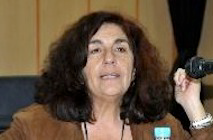
Professor of Sociology at Bogazici University. She received a Bachelor of Artsand PhD at the University College of London in 1976 and 1988 respectively. Dr. Sirman’s areas of interest include gender, family and kinship, postcolonial societies, interpretive methods.
Professor of Sociology, Boğaziçi University
Professor of Sociology at Bogazici University. She received a Bachelor of Artsand PhD at the University College of London in 1976 and 1988 respectively. Dr. Sirman’s areas of interest include gender, family and kinship, postcolonial societies, interpretive methods.


Kavita Sivaramakrishnan
Associate Professor, Department of Sociomedical Sciences, Columbia University.
Kavita Sivaramakrishnan is an Associate Professor of Sociomedical Sciences at Columbia University. She is the author of As the World Ages: Rethinking a Demographic Crisis (2018), on the global politics of aging. She is a public health historian of South Asia with a focus on the politics of health, medicine, and science in the global South. Her research has focused on the politics of ‘indigenous’ Ayurvedic medicine and its reconfiguring in a late colonial context in North India and social histories of epidemics and the role played by experts and scientific evidence.
Associate Professor, Sociomedical Sciences, Columbia University

Kavita Sivaramakrishnan is an Associate Professor of Sociomedical Sciences at Columbia University. She is the author of As the World Ages: Rethinking a Demographic Crisis (2018), on the global politics of aging. She is a public health historian of South Asia with a focus on the politics of health, medicine and science in the global South. Her research has focused on the politics of ‘indigenous’ Ayurvedic medicine and its reconfiguring in a late colonial context in North India (through claims and representations based on language and religion), and social histories of epidemics and the role played by experts and scientific evidence (including the plague and its national and regional politics). She is developing a book project on the history of consumption and disease risks.
Working Group Affiliation

Joseph Slaughter
Associate Professor, Department of English and Comparative Literature, Columbia University
Joseph Slaughter teaches and publishes in the fields of postcolonial literature and theory, African, Caribbean, and Latin American literatures, postcolonialism, narrative theory, human rights, and 20th-century ethnic and third world literatures. His many publications include articles in Human Rights Quarterly, Research in African Literatures, The Journal of Human Rights, Politics and Culture, and Tulsa Studies in Women's Literature. His essay, “Enabling Fictions and Novel Subjects: The Bildungsroman and International Human Rights Law," appeared in a special issue on human rights of PMLA (October 2006) and was honored as one of the two best articles published in the journal in 2006-7.
Associate Professor, English and Comparative Literature, Columbia University
Joseph Slaughter teaches and publishes in the fields of postcolonial literature and theory, African, Caribbean, and Latin American literatures, postcolonialism, narrative theory, human rights, and 20th-century ethnic and third world literatures. His many publications include articles in Human Rights Quarterly, Research in African Literatures, The Journal of Human Rights, Politics and Culture, and Tulsa Studies in Women's Literature. His essay, “Enabling Fictions and Novel Subjects: The Bildungsroman and International Human Rights Law," appeared in a special issue on human rights of PMLA (October 2006) and was honored as one of the two best articles published in the journal in 2006-7.
Selected book chapters appear in Humanitarianism and Suffering, African Writers and Their Readers, Emerging Perspectives on Chinua Achebe, Modernism and Copyright, and Women, Gender, and Human Rights. Slaughter is a founding co-editor of Humanity: An International Journal of Human Rights, Humanitarianism, and Development; he has co-edited a special issue on "Human Rights and Literary Form" of Comparative Literature Studies. His book, Human Rights, Inc.: The World Novel, Narrative Form, and International Law (Fordham UP, 2007), which explores the cooperative narrative logics of international human rights law and the Bildungsroman, was awarded the 2008 René Wellek prize for comparative literature and cultural theory.
He is currently working on two book manuscripts, “Pathetic Fallacies: Essays on Human Rights, Humanitarianism, and the Humanities” and "New Word Orders: Plagiarism, Postcolonialism, and the Globalization of the Novel," which considers the role of plagiarism (and other piratical textual practices) in the circulation and development of the novel form.


Iván Smirnow
Psychologist, Gender and Culture Studies, Universidad de Chile
Iván Smirnow received his Bachelors of Science in Psychology at the Universidad Diego Portales, and is currently pursuing a Master’s degree in Personal Coaching and Leadership from the University of Barcelona. He plans to apply to the Masters Program in Gender and Culture Studies in Latin America, Department of Philosophy and Humanities a the Universidad de Chile with a proposed thesis: “Cuerpos-hechos-por/para-el-trabajo: cuerpo, memoria y trabajo precario.”
Psychologist, Gender and Culture Studies, Universidad de Chile

Iván Smirnow received his Bachelors of Science in Psychology at the Universidad Diego Portales, and is currently pursuing a Master’s degree in Personal Coaching and Leadership from the University of Barcelona. He plans to apply to the Masters Program in Gender and Culture Studies in Latin America, Department of Philosophy and Humanities a the Universidad de Chile with a proposed thesis: “Cuerpos-hechos-por/para-el-trabajo: cuerpo, memoria y trabajo precario.”
Iván Smirnow es psicólogo chileno, radicado en Santiago de Chile. Ha trabajado en docencia e investigación y actualmente trabaja en su tesis (titulada Cuerpos-hechos-por/para-el-trabajo: cuerpo, memoria y trabajo precario) para obtener el grado de Magíster en Estudios de Género y Cultura Latinoamericana en la Facultad de Filosofía de la Universidad de Chile.
Working Group Affiliation
Amitoj Singh
Graduate Student, School of Journalism, Columbia University
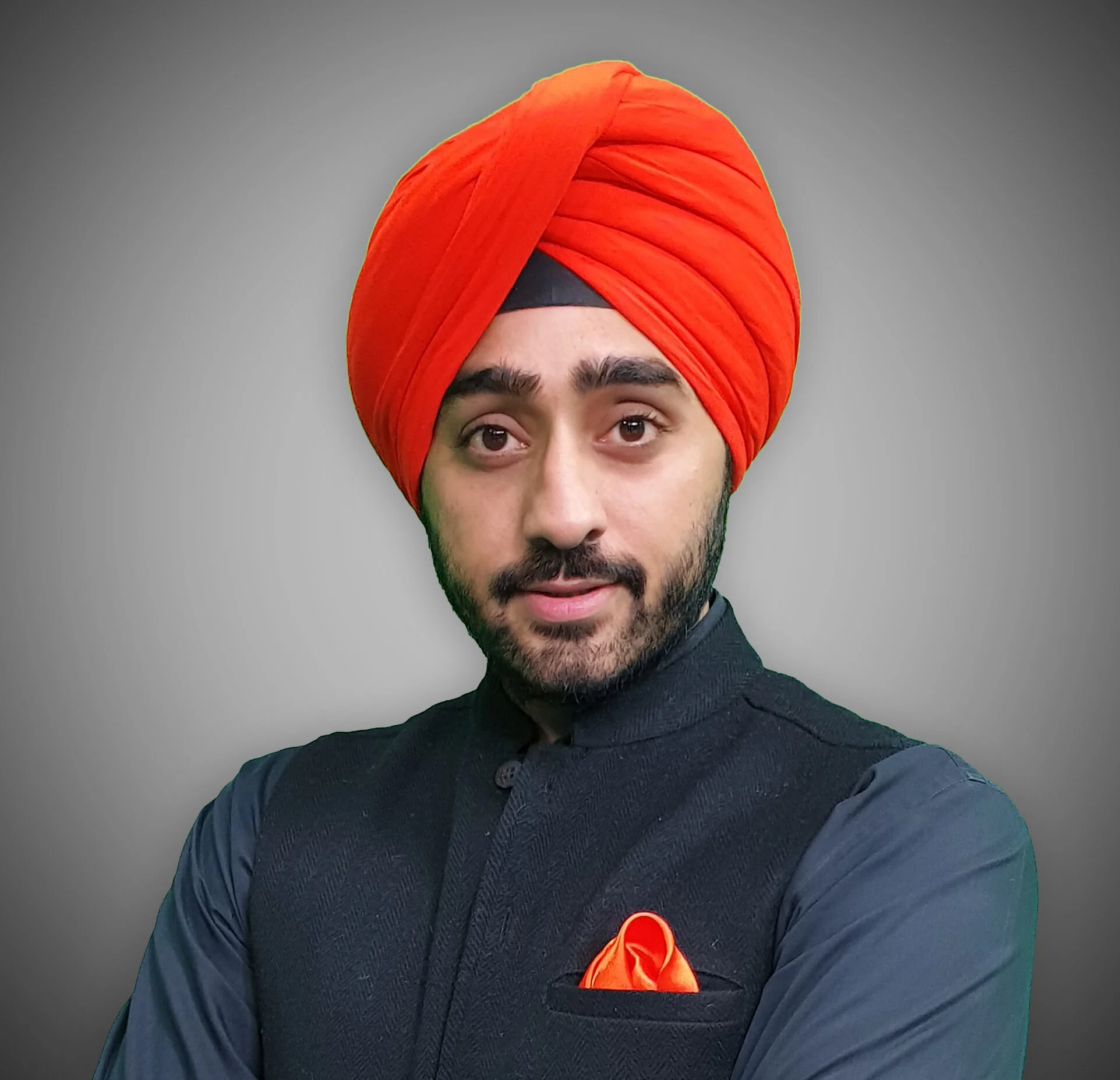
Amitoj Singh is currently an M.A Candidate in the Political Concentration at the Columbia School of Journalism. Amitoj has recently returned from Iraq where he was working towards reporting a multimedia project highlighting the colossal social devastation that ISIS has caused the Yazidi women.
Graduate Student, School of Journalism, Columbia University
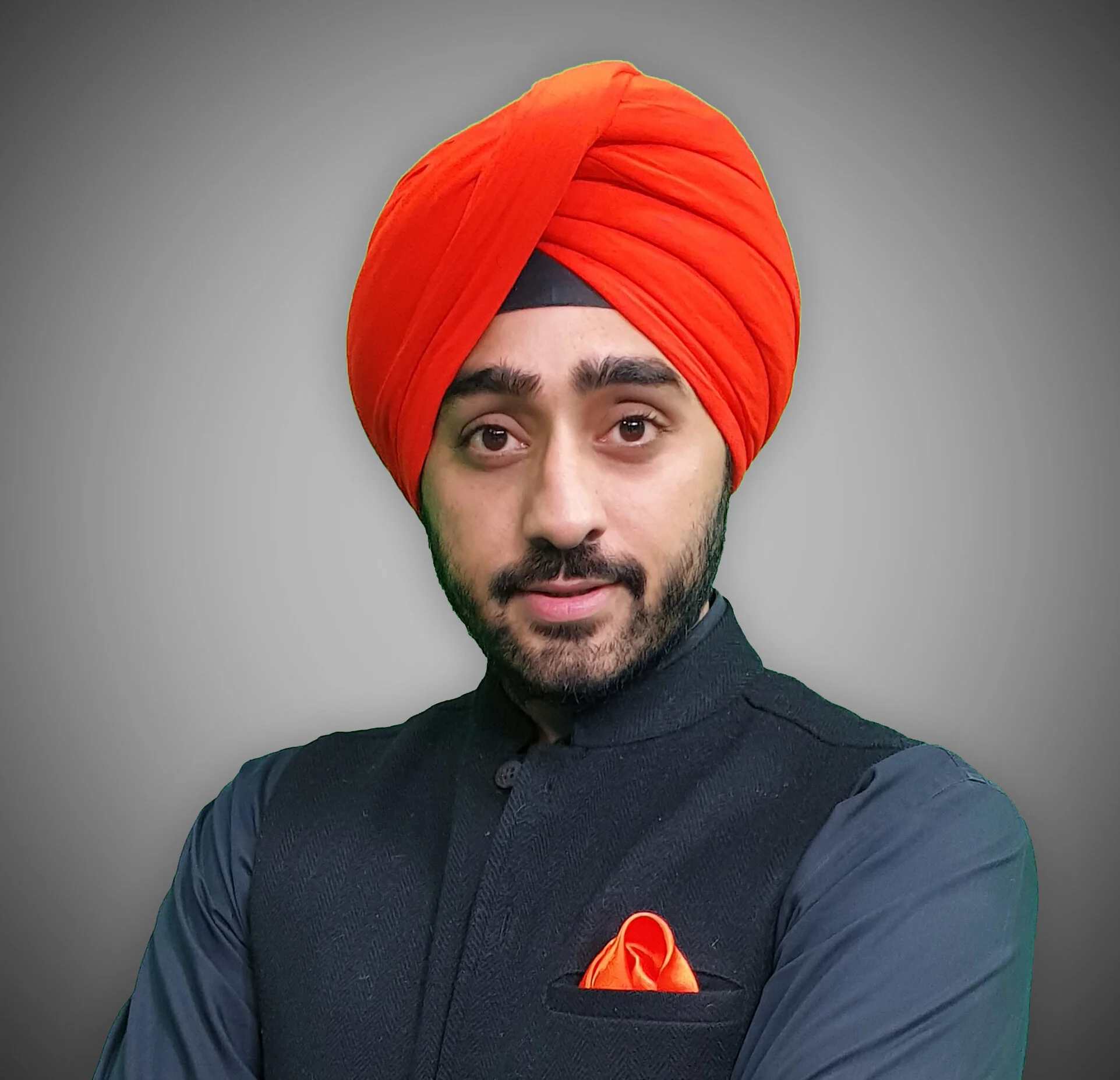
Amitoj Singh is currently an M.A Candidate in the Political Concentration at the Columbia School of Journalism. Amitoj has recently returned from Iraq where he was working towards reporting a multimedia project highlighting the colossal social devastation that ISIS has caused the Yazidi women. In particular, he intends to find the words to relate the pain, suffering, and stigma of Yazidi women who had to leave their children, born of ISIS fathers, behind because their community wouldn’t accept them.
Previously, Amitoj has been News Editor and Principal Anchor of India’s NDTV (New Delhi Television), a pioneer in India’s news television and digital journalism, with a large English-language viewership.
Most recently, he won the Dag Hammarskjöld Journalism fellowship to the United Nations which allowed him to work as a journalist for 3 months at the UN headquarters in New York in 2018.
Amitoj has reported and presented news surrounding the 2019 General Elections in India, the 2018 Midterm Elections in the USA, the World Economic Forum in Davos, Switzerland 2018, the Presidential Election in Colombo, Sri Lanka, the focus of Facebook and Whatsapp in fighting fake news in San Francisco, and the 2015 ICC Cricket World Cup in Australia.
While at NDTV for more than 12 years, he anchored NDTV’s Flagship and Primetime shows ‘Jai Jawan’, Trending @10PM, Good Morning India, Livestream, India vs Fake News, Versus, Youthquake, Newsbreak and Turning Point, amongst numerous breaking news developments.
Working Group Affiliation
Menstrual Health and Gender Justice, Media Fellow (2020)
Darby Minow Smith

Darby Minow Smith (Adjunct Assistant Professor in Undergraduate Studies in Creative Writing) teaches nonfiction writing, writes for science magazines, and mentors young journalists on climate stories. Together with Lynnette Widder, she tested a 6-week seminar and workshop on Writing Cultural Landscapes. Prior to Columbia, she was the long-time senior editor of the environmental magazine Grist, where she managed a National Magazine Award-nominated project on civic engagement.
Working Group: Seeds of Diaspora

Carroll Smith-Rosenberg
Fellow, History, University of Michigan
Carroll Smith-Rosenberg is the Mary Frances Berry Collegiate Professor of History, Women's Studies and American Culture, University of Michigan, Emerita. The author of several books and more than 40 essays on American history and culture and women's history, she has twice received the Binkley-Stephenson Award for best article in the Journal of American History. Her most recent book is This Violent Empire: The Birth of an American National Identity (2010).
Professor Emeritus of History, University of Michigan
Carroll Smith-Rosenberg is the Mary Frances Berry Collegiate Professor of History, Women's Studies and American Culture, University of Michigan, Emerita. The author of several books and more than 40 essays on American history and culture and women's history, she has twice received the Binkley-Stephenson Award for best article in the Journal of American History. Her most recent book is This Violent Empire: The Birth of an American National Identity (2010).

Alisa Solomon
Associate Professor, Department of Journalism, Columbia Journalism School
Alisa Solomon directs the Arts & Culture concentration in the M.A. program at the Journalism School. She came to Columbia in 2005 after nearly 20 years as a professor of English/Journalism at Baruch College-CUNY and as a professor in the Ph.D. programs in Theater and in English at the CUNY Graduate Center. In addition to contributing occasionally to The Nation, The Forward, The New York Times, and other publications, she was on staff at The Village Voice for 21 years, where she was a regular theater critic and cultural and political reporter, winning awards for stories on reproductive rights, electoral politics, women's sports, and immigration policy. Solomon's book, Re-Dressing the Canon: Essays on Theater and Gender, won the George Jean Nathan Award for Dramatic Criticism.
Associate Professor of Journalism, Columbia Journalism School
Alisa Solomon directs the Arts & Culture concentration in the M.A. program at the Journalism School. She came to Columbia in 2005 after nearly 20 years as a professor of English/Journalism at Baruch College-CUNY and as a professor in the Ph.D. programs in Theater and in English at the CUNY Graduate Center. In addition to contributing occasionally to The Nation, The Forward, The New York Times, and other publications, she was on staff at The Village Voice for 21 years, where she was a regular theater critic and cultural and political reporter, winning awards for stories on reproductive rights, electoral politics, women's sports, and immigration policy. For radio, she has contributed theater commentaries to WNYC and has served for more than a decade as a contributor to the weekly program "Beyond the Pale: Radical Jewish Culture and Politics" (WBAI). Solomon's book, Re-Dressing the Canon: Essays on Theater and Gender, won the George Jean Nathan Award for Dramatic Criticism. She is the editor of three anthologies: Wrestling with Zion: Progressive Jewish-American Responses to the Israeli-Palestinian Conflict (with Tony Kushner); "Theater and Social Change" (Theater, 31:3); and The Queerest Art: Essays on Lesbian and Gay Theater (with Framji Minwalla). Most recently, she edited and wrote the Introduction to The Reverend Billy Project: From Rehearsal Hall to Super Mall with the Church of Life After Shopping, by Bill Talen and Savitri D. Solomon holds a doctorate in Dramaturgy and Dramatic Criticism from Yale. Her book, Wonder of Wonders: A Cultural History of Fiddler on the Roof, was published by Metropolitan Books/Holt in 2013.
Working Group Affiliations